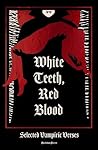
BOOK: “White Teeth, Red Blood” by Various

White Teeth, Red Blood: Selected Vampiric VersesWhite Teeth, Red Blood: Selected Vampiric Verses by Lord Byron
My rating: 5 of 5 stars

Publisher Site – Pushkin Press

This anthology gathers poetry with at least a vaguely vampiric theme. About half of the poets fit into the category of well-known to a general readership (e.g. Goethe, Byron, Coleridge, Tennyson, Yeats, Dickinson, Kipling, Baudelaire, Millay, etc.) and the others will be less familiar to most readers — either by virtue of being modern poets or having a body of work that didn’t age as well, on the whole. Even the pieces from familiar poets don’t tend to be among those artists’ most anthologized works by virtue of the specialized theme of the selection. Most of the pieces are older works, but there are modern poems included as well, and it follows that most of the works are rhymed / metered, with free verse mostly seen among the newest poems.

The twenty-nine poems in the anthology are arranged between three sections. The first is the longest part, taking up about 3/4th of the book, and consists of nine poems (including a few excerpts of book-length narrative poems,) all of long format. The second section includes eleven shorter poems (between one and a few pages long,) and the last section contains nine poems, most of which are quite short (as short as a quatrain.)

There is a brief introduction by Claire Kohda, but otherwise there is no ancillary matter. That was fine by me. There is no padding, and — even though there are fewer than thirty poems — the poems fill out the book because so many of them are long pieces or excerpts.

I enjoyed this book and its varied selection of poems. While I read poetry extensively and have read my share of vampire fiction, this was the first work I can remember reading at their intersect. This meant that, for me, there was a good amount of unfamiliar material (despite there being relatively few recent poems.) If you’re in the same boat, you’ll probably enjoy this anthology.

View all my reviews

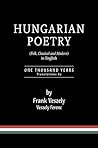
BOOKS: “Hungarian Poetry” trans./ed. by Frank Veszely

Hungarian Poetry (Folk, Classical and Modern) in English: 1000 yearsHungarian Poetry (Folk, Classical and Modern) in English: 1000 years by Frank Veszely
My rating: 5 of 5 stars

Author Site

This anthology of Hungarian poetry translated into English presents some interesting and evocative examples of Hungarian poetry, ranging from anonymous folk poetry of early kingdoms to 20th century pieces by still-living poets. I can’t speak to how the translations compare to the originals, but I will say that they were a pleasure to read and employed metering and rhyme to maintain some of the feel of the originals. This book introduced me to many poets with whom I was only familiar from names on subway stations, city squares, and parks, having traveled extensively in Hungary (plus a few of whom I’m sure I’ve never heard. Note: poetry is huge in Hungary, but because the Hungarian language is not broadly spoken, it remains largely a secret to outsiders.)

That said, the anthology is not so broad ranging as one might expect from its subtitle. The nineteenth and twentieth century selections take up the bulk of the volume. It does make sense that there is a much larger (and more likely to have survived) selection from recent times. However, there also aren’t as many poets included as one might expect. Ostensibly, one reason for this is that Veszely doesn’t shy away from including lengthier pieces. Whereas an anthology like this would often favor short pieces and / or excerpts (and, thus, might include more voices,) this one contains many multi-page poems. That said, while most of the biggest names seem accounted for (e.g. Vorosmarty, Csokonai Vitez, Arany, Petofi, Jozsef Attila, etc.,) there are conspicuous absences of prominent and important poets (and, perhaps, of categories of poets as well.)

Short bios of each of the contributing poets make this an introduction to many interesting figures scarcely known to non-Hungarians, as well as it is a sampling of their poetry. Each of the four sections also has some background historical information. This history is useful because there is a lot of nationalistic / jingoistic poetry in this volume, particularly among the nineteenth century poets (as was the style of the day.)

I should point out that some will find this book excessively nationalistic. (A book titled for the state can be expected to have some superpatriotic pieces, but this goes a bit beyond that.) For my part, I was not troubled by the poetry content, knowing that nineteenth century Hungarian poetry was notoriously nationalistic. Also, once one gets into the twentieth century poetry it gains much more diversity of content, e.g. nature, art, etc. My own concern about nationalism was more about the Part Four introduction, which paints Hungary as an innocent little lamb, always being victimized. Taking history from this introduction, one might think that Hungary was forced into the Axis and struggled to get free of it from the onset. This view would be more defensible if the invasion of Nazi Germany to firm up the Hungarian alliance had occurred in, say, 1941, instead of the spring of 1944 (when everyone knew the Third Riech was on its death bed.) In point of fact, Hungary’s leadership seem to have had their own ambitions (not to mention their own rampant antisemitism) going into this alliance.

I enjoyed these translations immensely, and felt I learned about the poets and the times in which they lived. That said, while I did like that Veszely included some longer pieces in full, it might have been nice to see a bit more diversity in the selection as well.

View all my reviews

BOOKS: “How to Love in Sanskrit” Trans. by Anusha Rao & Suhas Mahesh

How to Love in SanskritHow to Love in Sanskrit by Anusha Rao
My rating: 4 of 5 stars

Amazon.in Page

As one can tell from the title and cover, this is an anthology of poems translated from Sanskrit to English on the subject of love, relationships, and eroticism. The source poems come from a diverse collection of writings.

The translators made an editorial / translation decision to place the translations in a modern context. By that I mean that the poems, most of which were written hundreds of years ago, have references to cell phones and dating apps, as well as many colloquialisms and expressions du jour. Some readers will love how this makes it readable and relatable in the present-day. Others will find that it distracts and takes one out of the experience of reading classical literature. I’m not saying the decision is good or bad, but it is something of which a potential reader should be aware. The only critical comment I have on the matter is that, if you should be reading the book ten years from now, there will likely be both language and technical references that have not aged well, and which you will probably have to go to your AI historian to figure out. (Some expressions are cliched now.)

I did enjoy how much ground the collection covered. The poems are grouped into categories sticking to the “How To” motif of the book, e.g. “How to Flirt,” “How to Yearn,” etc. I will say I went through a period early in the reading in which it seemed like poem after poem was confusing teeny-bopper lust for love, seemingly celebrating pathologies like jealousy and co-dependence. Throughout this phase of the book there were a number of poems that read like bad schoolboy poetry. However, in later chapters there were more poems that were dignified and reflected a more mature grasp of the subject.

There were some features of the book that I loved. First of all, most of the poems have explanatory notes at the end that can be very helpful both because (as mentioned) most of the poems were written long ago and because I am a foreign reader. Secondly, there is an appendix with romanizations of the original Sanskrit.

Ultimately, I’d say a major factor in whether this anthology is for you will be whether you enjoy the colloquial tone and free verse form or find it off-putting.

View all my reviews

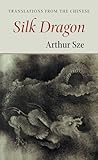
BOOKS: “Silk Dragon II” ed. & trans. by Arthur Sze

Silk Dragon: Translations from the Chinese (Kage-an Books)Silk Dragon: Translations from the Chinese by Arthur Sze
My rating: 5 of 5 stars

Amazon.in Page

Release Date: May 28, 2024

Let me begin with a note of clarification: The edition that I read was the “Silk Dragon II” collection, which is due out in May of 2024. I mention this because there is potential for confusion in that this book looks like a sequel (i.e. a completely new set of poems,) but really it is something between a new edition and a sequel. That is to say, while it has a substantial amount of new material, it is built on the original “Silk Dragon” volume. This edition adds eighteen new poem translations, most of which are from poets of the modern era (I mean that loosely, not technically, so 20th century onwards.) I’d recommend readers get this edition, but not both this and the original.

This collection includes a wide range of poems from ancient times through China’s various dynasties to the modern day. It includes translations that are extremely well-known, such as Li Bai’s “Drinking Alone with the Moon” and Liu Zongyuan’s “Snow on the River.” But it also includes many pieces that are likely to be new to most poetry readers, particularly given they will be reading translations (i.e. Non-specialists in Chinese poetry.) As mentioned, the bulk of the new poems are from recent decades and tend to be free verse. [Though there are four new classical poems, as well.]

I found the translations to be evocative and approachable. I am unable to comment on how well Sze captures the feel of the original, but I can say that the translations of poems I’m familiar with were at least on par with other translations that I’ve read. The translations don’t always display the sparseness one sees in classical Chinese poetry, but the challenge of conveying form and meaning and metaphor through translation is immense and, at some level, impossible.

I’d highly recommend this poetry collection for readers of poetry and translated literature.

View all my reviews

BOOK REVIEW: 100 Poems to Break Your Heart ed. Edward Hirsch

100 Poems to Break Your Heart100 Poems to Break Your Heart by Edward Hirsch
My rating: 5 of 5 stars

Amazon.in Page

Release Date: January 31, 2023

This anthology (and the accompanying analytical essays by Hirsch) covers over two-hundred years of poetry and works with a large set of translated languages as well as poems of English language origin. Therefore, the poems include an eclectic set of forms and schools of poetry. There are narrative poems and philosophical poems. There are sparse poems and elaborate poems. Besides the fact that they are all short to intermediate length poems (a few pages, at most,) the only thing the included poems have in common is some serious subject matter at each poem’s core. There are elegies and cathartic poems of illness or ended relationships, as well as tales of various types of tragedy (personal, global, and of scales in between.)

That said, not all of the poems feature a dark and melancholic tone. There are several poems that are humorous — in a gallows humor sort of way. Such poems include: Dunya Mikhail’s “The War Works Hard,” Harryette Mullen’s “We Are Not Responsible,” and Stanley Kunitz’s “Halley’s Comet.”

Of course, there are many poems that are as devastatingly sad as the title leads one to expect. Of these, Eavan Boland’s “Quarantine,” the story of a man carrying his illness-ravaged wife in search of survival during a famine in Ireland in 1847 takes the award for saddest. There are poems in this book that are more brutal, encompass vaster scales of suffering, or combine lyrical skill and emotional experience more artfully. But none of those poems socked me in the chest like Boland’s. One thing that struck me during my reading was what an intense force multiplier story is in creating poignant poems. Several others among my favorites told stories that made for visceral reads. These include: “Song” by Brigit Pageen Kelly, “The Race” by Sharon Olds, “Terminus” by Nicholas Christopher (also among the most savage tear-jerkers,) and “The Gas-Poker” by Thom Gunn.

Other favorites include: Langston Hughes’s “Song for a Dark Girl,” Miklós Radnóti’s “The Fifth Eclogue,” Stevie Smith’s “Not Waving but Drowning,” and “Mendocino Rose” by Garrett Hongo.

I’d highly recommend this book for poetry readers.


View all my reviews

BOOK REVIEW: Poems to See By ed. by Julian Peters

Poems to See by: A Comic Artist Interprets Great PoetryPoems to See by: A Comic Artist Interprets Great Poetry by Julian Peters
My rating: 5 of 5 stars

Available March 31, 2020

Amazon page

This anthology of twenty-four classic poems is set apart by the artwork used to convey the illustrator / anthologist’s view of each poem. The poets are all virtuosos, including: Dickinson, Angelou, Cummings, Langston Hughes, Auden, Seamus Heaney, Wordsworth, Shelley, Yeats, Poe, and Eliot. The poems are sometimes, but not always, among the most anthologized of the respective poet’s work. I would say that most poetry readers will probably find something that they haven’t read, but – even if not – it’s worth re-reading them as you enjoy the artwork.

The illustrator, Julian Peters, makes a bold decision to use the widest variety of artistic styles in an attempt to more aptly capture the tone of each poem. I recently reviewed a similar book, Chris Riddell’s “Poems to Live Your Life By,” and that book used a consistent style through out (which isn’t to say that tone and reality / surrealism didn’t change.) I’m not an artist, and don’t really have a vocabulary to describe the various artistic styles employed, but will attempt to give one some insight. There is the obvious shift between monochrome and color strips, but even within each of those categories there is great variation. Some monochrome strips were mostly gray, while others were exclusively black-and-white. Color works ranged from shocking dayglo to subdued pastels to dominant single color (e.g. blue) pics. Various poems were represented by a modern comic book style art, an old fashion comic strip approach, those which looked like paintings, those that were highly realistic, those that were surreal, those that were retro-chic, and even one [for Maya Angelou’s “Caged Bird”] that was in a quilt-like style.

I enjoyed this work tremendously. Most of the poems were short works, single pagers, and the fact that I’d read possibly all of them before wasn’t a problem because these are the kind of poems that should be revisited. Only the postscript poem, Eliot’s “The Love Song of J. Alfred Prufrock” was of substantial length.

I’d highly recommend this book for poetry readers, particularly those interested in are of imagery and how it’s conveyed and perceived.

View all my reviews

BOOK REVIEW: Poems to Live Your Life By selected & illustrated by Chris Riddell

Poems to Live Your Life ByPoems to Live Your Life By by Chris Riddell
My rating: 5 of 5 stars

Amazon page


This is an anthology of forty-eight poems arranged into eight life-related topical areas. The connective theme is poems that the editor, Chris Riddell, found to contain valuable life lessons. The span runs from Rumi to poets of the present day. It’s a nice selection in that it includes not only old and new (thus varied styles of verse,) but also greater and lesser known poems and poets. [That’s not to say that any of the poets are unknowns, but some of the oldies are remembered through the ages more than others, and some of the newer individuals are better known for other activities – e.g. Neil Gaiman (novelist / storyteller,) Leonard Cohen (recording artist,) and Riddell, himself (graphic artist.)] There are several much anthologized inclusions that almost any poetry reader will have read, including: Frost’s “The Road Not Taken,” Shakespeare’s “Sonnet 18” and the “To be, or not to be” soliloquy from Hamlet, Carroll’s “Jabberwocky,” and Dylan Thomas’s “Do Not Go Gentle into that Good Night.” However, there are many lesser known gems as well, many by masters of poetry such as Seamus Heaney, Christina Rossetti, and Philip Larkin.

The eight topical areas are: Musings, Youth, Family, Love, Imaginings, Nature, War, and Endings. Most of the sections contain five or six poems, though — tellingly — Love contains the most at twelve and War the least at three.

While Riddell not only selected the poems and include a couple of his own, he also illustrates the book. There are beautiful line drawings throughout that offer insight into Riddell’s interpretation of each poem.

I enjoyed this anthology. As I said, it’s a beautiful selection of poems, and the artwork is skillfully done as well. I’d highly recommend this book for poetry readers.

View all my reviews

BOOK REVIEW: Modern British Poetry ed. by Louis Untermeyer

Modern British PoetryModern British Poetry by Louis Untermeyer
My rating: 4 of 5 stars

Amazon page (not the same edition)


This is an anthology of 183 poems written by 77 British authors. Given the title, “Modern British Poetry,” the first thing that should be stated is that the original work came out around 1920, and so the bulk of these poems are from the 19th century. That may fit perfectly with your classification of modern poetry, but if you’re looking for present-day poets, this isn’t the book you’re after.

However, the good news is that you might still find some unexpected treasures. Often collections of public domain poetry like this gather poems that are ubiquitous and which are probably already on the shelves of most poetry readers in various collections and anthologies. But of the almost 80 poets included, only a handful will be household names for a general reader—particularly if you aren’t from the UK and thus didn’t get exposed to the more obscure British poets. Of course, there are a number who have stood the test of time: Thomas Hardy, Robert Louis Stevenson, Oscar Wilde, A.E. Housman, William Butler Yeats, Rudyard Kipling, G.K. Chesterton, Alfred Noyes, D.H. Lawrence, Edith Sitwell, and Robert Graves spring to mind. Furthermore, the poems chosen aren’t a straightforward “greatest hits” list. (e.g. “If” isn’t among the four Rudyard Kipling entries.)

As one might expect of a 230 page anthology that contains 183 poems (plus author bios and the occasional footnote), the poems selected are brief. In a few cases, excerpts from longer works are included, but for the most part these are poems that fit comfortably on a single page. This is great for someone trying to get a feel for the various poets and for those who enjoy more compact works over epic poems—which, if we’re being honest, is most of us.

The anthologist, Louis Untermeyer, includes brief bios for each of the poets in front of their entries in the anthology. Generally, each included poet has between one and four poems. While the poems are organized by poet, the poets seem to be organized chronologically (at least as near as I can tell; it begins with Thomas Hardy [1840 – 1928] and ends with Robert Graves [1895 – 1985.])

I read a Kindle version of this work and found it to be far better organized than most of these public domain compilations. It not only had an index that would take one to individual poems or poet bios, but it also contained a hyperlinked index. Unfortunately, I obtained the book some time ago and I couldn’t find the same edition when I looked for it while doing the review. Most of the Kindle editions now seem to bundle Untermeyer’s “Modern American Poetry” with his “Modern British Poetry” but the edition I had was just the British poets.

I recommend this book for poetry readers. In addition to having some exemplary short form poetry from both well-known and forgotten poets, it happens to contain the first poem I ever memorized in it—a powerful little poem by John McCrae entitled “In Flanders Fields” (if you don’t know it, read it; it’s war poetry at its finest.)

View all my reviews

BOOK REVIEW: Futureland by Walter Mosley

FuturelandFutureland by Walter Mosley

My rating: 4 of 5 stars

Amazon page

As suggested by the subtitle, this is a collection of nine short stories about a dystopian world. What makes it a particularly intriguing read is that the stories take place in one world, and the events all exist within a greater context that could qualify the book as a loosely plotted novel had the writer not defined it as a story collection.

Some characters recur in different stories. For the most part the recurring characters are cameo appearances (e.g. Folio Johnson, a detective and the lead in one story, commiserates at a bar in another). However, the character of Ptolemy “Popo” Bent is a critical character in both the first and penultimate chapters.

Race and politics aren’t subtle in this book. Given the [sad] proclivity of American readers to only read / enjoy politically charged works with which they agree (unless the book in question is making fun of the opposition), it’s safe to say that—on the whole–those at the left-end of the political spectrum will find this book more palatable and on-point and those to the right-end will find it unbelievable and overbearing in its message.

Having said that, I’m of the persuasion that finds Mosley’s dystopian vision strains credulity, and yet I thoroughly enjoyed this collection of stories. This book’s dystopia is characterized by global domination by a corporation and a religion called the “Infochurch,” both led by the same man. The corporate control of the world storyline is a little hard to swallow. A monopoly can’t enslave people (or even enforce its monopoly status) unless it has a monopoly on force, and it’s hard to imagine a path by which a private business gets the people to give them a monopoly on force. That being said, Mosley’s stories are engrossing, creative, and readable.

The nine stories are as follows:

1.) Whispers in the Dark (6 Chapters): A man makes the ultimate sacrifice to help nurture a brilliant child’s special gift.

2.) The Greatest (9 Chapters): A female boxer becomes the world champion while seeking to help her father, whose addition to a drug called Pulse has left him in dire health. (The father’s story, Voices, appears later in the collection.)

3.) Dr. Kismet (4 Chapters): The man who is, for all intents and purposes, Emperor of the World tries to co-opt the co-chair of the 6th Radical Congress—a leading member of his opposition.

4.) Angel’s Island (5 Chapters): A hacker, sent to prison for Antisocial Behavior, has a device called a snake-pack installed that can control him by administration of drugs and shocks. But the ultimate hacker might not be the most easily controlled using technology.

5.) Electric Eye (4 Chapters): Folio Johnson, a private eye with an electronic eye, is hired to find out why young International Socialists are dropping dead left and right. Johnson learns that any hardware, even his eye, can be hacked.

6.) Voices (8 Chapters): Professor Jones, father of the female boxer from The Greatest, undergoes a transplant of neural matter to repair damage from his Pulse addition. After having dreams and memories that are not his own, Jones discovers that his treatment is not all that it seemed.

7.) Little Brother (3 Chapters): Frendon Blythe is on trial before a computer that acts as both judge and prosecutor. He pleads his own case, and finds he was a pawn.

8.) En Masse (12 Chapters): A worker gets sent to a new division only to find that it’s nothing like his previous divisions. Instead of strict rules, GEE-PRO-9 has no rules. He wonders if it might be a test by the management. It turns out that it is a test–just not of the type he imagined.

9.) The Nig in Me (6 Chapters): After a plot to destroy certain races backfires, a surviving man finds himself missing those with whom he was closest.

There’re no stinkers among these stories. They are all intriguing and readable, but a few of them stood out as being particularly good. These were: Whispers in the Dark, Angel’s Island, Voices, and En Masse.

I’d recommend this for readers of soft science fiction.

View all my reviews

BOOK REVIEW: Rashōmon and Other Stories by Ryūnosuke Akutagawa

Rashomon and Other Stories (Tuttle Classics)Rashomon and Other Stories by Ryūnosuke Akutagawa

My rating: 5 of 5 stars

Amazon page

Six stories make up this brief collection. All six are intriguing, well-written, and shine a light onto the dark side of mankind. The works of Akutagawa collected herein are all morality tales, but aren’t written in a moralistic tone. In fact, it’s not clear that the author wishes to convey lessons on virtue and vice as he’s intrigued with the instant at which an ordinary person turns bad. That instant, and the inflamed passions that often inspire it, is a prevailing theme throughout most of this small anthology. Akutagawa beats AMC by the better part of a century in showing us how bad breaks.

The first story is entitled In a Grove. This is a murder mystery in which we are given conflicting accounts of a man’s murder through the process of the investigation of the act. The final account that we are offered is that of the victim himself–as presented by a psychic medium. [Only two of these stories contain supernatural elements–this one and the last. Most of the collection involves realist premises. One must remember that Akutagawa was writing in the early part of the 20th century, and scientific rationality hadn’t yet gotten as strong a hold as it does today.] In this case, the use of a psychic is really just a plot device to give the reader insight into a truth which couldn’t otherwise be revealed. Having heard the perspectives of the murder and the dead man’s wife, one is left with questions owing to the self-serving nature of those statements. Of course, the final section reveals a twist–that I won’t spoil.

The second story is the title story, Rashōmon. The title is the name of a gate in Kyōto, the largest gate of Kyōto, in fact. However, Kyōto has fallen on hard times, and our protagonist is a newly masterless samurai who has sought the gate’s shelter from the rain. There, he contemplates whether he should take up a life of crime, which seems to be his only means of survival in the current economy given his skill set. The gate has become a repository for the corpses that are amassing as victims of the hard times accumulate. Within the gate, he finds an old hag who loots bodies for a living. His interaction with the old woman helps him to decide his own destiny.

The third story is called Yam Gruel. While “yam gruel” (or anything with the word gruel in it) might not sound appealing given today’s usage, a fact one must know is that during the time of the story it was a highly-prized and rare dish. The story follows a milquetoast administrator who leads a rather pathetic life in which he has but one ambition, to eat his fill of yam gruel. As a member of the samurai class, he’s invited to an Imperial banquet each year. However, because of his low status and the high-value of yam gruel, he never gets more than a taste. One year he openly bemoans the fact that he never gets his fill. A powerful samurai overhears this complaint, and it puts a seed of mischief in his mind. While this tale isn’t about breaking bad, it is about inflamed passions.

The fourth story sticks out as different from the others. While the bulk of the stories center on that moment at which a more-or-less good person goes bad, The Martyr tells us about a protagonist that never goes bad, despite having every right to. This might seem like a sea change in theme, but in reality it’s just another way of shining a light on the dark seed that resides in people. Only this time it does it by way of contrast. All of the other characters are deeply flawed, and we see that most vividly when contrasted against the one who always behaves virtuously. In this case, that virtuous character is Lorenzo, a novice monk who is accused of a severe breach of good conduct. Lorenzo becomes an outcast and a vagrant due to these allegations. Yet, despite all this, he acts heroically–even to assist those who’ve betrayed him.

In the fifth story we revisit the theme of breaking bad. In Kesa and Morito we are presented with two regret-filled accounts of the instant at which an adulterous couple decides to kill the husband of the woman involved in the affair. Each member of the cheating couple thinks that the other desperately wants the killing to go forward. In reality, both consider it a foolish decision driven by a brief moment of passion. This is another tale about letting one’s passions get out of control.

The final work is a retelling of the story of a monk named Hanazō who decides to prank his fellow monks because they chide him about his huge nose. Hanazō sets up a sign that says a dragon will appear from the local lake at a certain time and day to fly up into the heavens. The joke doesn’t turn out at all as the monk intended. I won’t go into the moral of the story to avoid giving too much away, but suffice it to say there is a moral.

I highly recommend this collection. As I’ve suggested, the collection isn’t just a disparate collection of tales, but has an integrating theme. Akutagawa was truly one of the masters of the short story. He wrote 150 stories before dying at the age of 35 in a suicidal drug overdose.

For those who like to see how literature is portrayed in, below one can watch the film version of Rashōmon.

View all my reviews