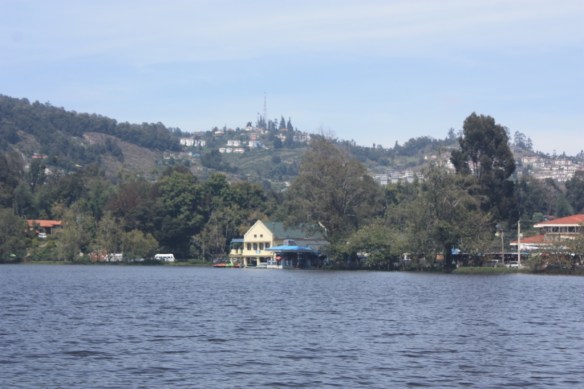
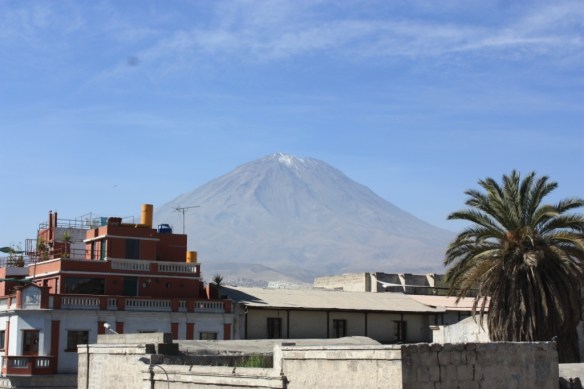
Taken in the Summer of 2010 at Ek Balam in the Yucatan
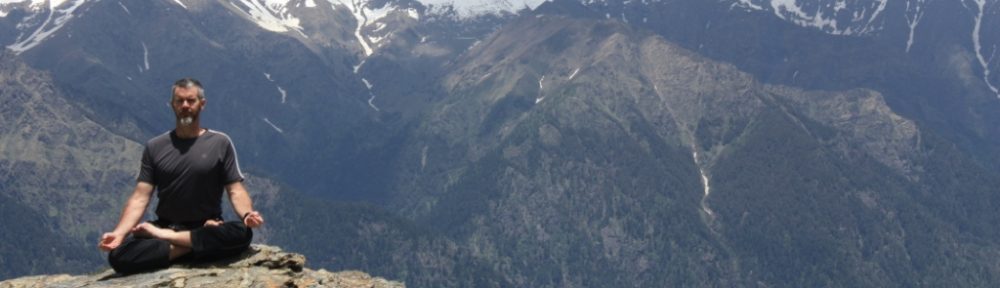
Taken in the Summer of 2010 at Ek Balam in the Yucatan
 100 American Poems by Selden Rodman
My rating: 5 of 5 stars
I picked this book up in a used bookshop (the edition is copyrighted 1948) and was excited to get to reading some poems from my native land. However, I was a little off-put when I read this sentence in the editor’s introduction: “… Poe’s ‘The Raven’ and Whitman’s ‘O Captain! My Captain!’ are inferior and unrepresentative poems by any discriminating standard.”
I thought, “Oh, no. This is one of those editors who only likes works that are too cryptic and incomprehensible for the common man (or woman) to enjoy.” The type who’ll rave about Joyce’s “Ulysses,” but will mock Huxley’s “Brave New World” as lowbrow tripe. Surely, being beloved by massive numbers of readers counts for something.
Having read the book, I’m pleased that the editor took the attitude he did — not because it presented me with “better” poems, but because it offered more obscure poems than one would expect to see in most such collections. (And they weren’t particularly arduous or tiresome examples.) The book does include all the poets who one would expect to appear, e.g. Emerson, Longfellow, Poe, Whitman, Dickinson, Frost, Sandburg, William Carlos Williams, T.S. Eliot, and E.E. Cummings, but there are many lesser known (i.e. lesser remembered) poets as well. The 100 poems include works by about 60 different poets. And, while the big names tend to have more poems per poet, their selections almost invariably don’t include the best-known works of the given poet. Long story short, if you get a chance to pick up this collection, you’re likely to find some selections that are more obscure but none-the-less great.
As one can imagine from the fact that it includes examples from those twin pillars of American poetry – Dickinson and Whitman – one can expect both metered / rhymed poems as well as free verse. [More of the former in the early part and the latter among the latter pieces.] Poems that are longer than about three pages are generally excerpted. So, there’s a mix of short and intermediate length poems, but only excerpts of long ones. The only ancillary matter is the Introduction, which does give the reader an overview of not only what he / she will be reading, but also some general information on the flow of the American poetry from colonial times through the first half of the 20th century.
I enjoyed this book and would highly recommend it for readers interested in American poetry from the early 18th through the early 20th centuries.

Taken in May of 2017 at Victoria Falls
 The Autobiography of a Flea by Stanislas de Rhodes
My rating: 5 of 5 stars
“The Autobiography of a Flea” is a historical work of erotica first published in the late 19th century anonymously, and later was attributed to Stanislas de Rhodes. Like the works of the Marquis de Sade, the book is simultaneously a socio-political commentary and philosophical novel. While the erotic elements tend to not be as extreme and perverse as Sade’s work, it shares in common a philosophy of society and a disdain for the clergy and the aristocracy / upper class (Sade’s work was earlier and straddled the French Revolution, and so things had changed on this front.) But, for example, in this book, two lascivious and hypocritical clergymen play key roles in the story that would not be unfamiliar to Sade’s readers.
The story starts with discussions (and wagers) regarding a competition that is coming up between women who work for the village’s main employer, a vintner. Whichever woman tramples the most grapes, wins a substantial prize. Our narrator is a libidinous, little flea who follows the sexual antics taking place in this French village. From the flea, we learn about the competition through discussion before, during, and after amore by two village couples. Two women who are likely to be front-runners make a salacious wager that involves the other’s husband. Each woman confesses the wager to her respective husband, but the husbands each have confidence in his wife to win, and so neither is concerned about the competition. Little do any of them know, the vintner has stacked the deck in favor of the fairest maiden in the village, who he intends to marry – despite the fact that he is old, feeble, and disgusting.
This fair (re: young and gorgeous) maiden has a suitor, and she is about to be intimate with him for the first time, when the village priest interrupts them. The priest then uses his knowledge to manipulate the young woman to his benefit. (Ultimately, he is joined by an English priest on sabbatical who involves himself with a couple village widows as well as in the priest’s nefarious plot.) The village priest simultaneously seeks to please the vintner (because the old man is the church’s leading patron), and at the same time he pursues his own pleasure. So, the young woman is forced into marriage, and into allowing consummation of said marriage — though the old vintner repeatedly shows himself not up to the task and is usually comically premature.
The author echoes a theme from Sade’s philosophy, which a society that is anarchic under its feeble institutions, i.e. in which the strong do whatever they please to the weak. The lead character, the maiden, is constantly humiliated and run roughshod over whenever she tries to move against the flow of this anarchy. Counting on the strong to behave virtuously only gets her punished and humiliated. It’s only when she starts moving with the flow so as to game the system by acknowledging and heeding this power disparity that she starts to see success in getting her way.
As with the Marquis de Sade’s work, this book could correctly be claimed to be excessively pessimistic and Hobbsean (philosopher and author of “The Leviathan” who believed people were brutish and self-interested.) I found it to be cleverer and less gratuitous than the works by Sade that I’ve read. Both the use of the narrating flea to give the reader a well-established point of view and the story — which exists (in contrast to many works in this genre, including Sade’s work “120 Days of Sodom.”) I’d recommend this book for readers of historical fiction and erotica (particularly if one enjoys — or can tolerate — the sado-masochistic dynamic.)
[Note: there are a couple versions of this book, but – as near as I can tell – the story is consistent between them. It’s the character names that vary. The book is set in France, and features one English clergyman (kindred spirit to the village priest.) However, the more common version of the book features more English-sounding names, but there is a version with more typically French names. e.g. the lead, Bella, is Laurette in the latter edition. I read the version with the more French sounding names, but read a plot summary of the other edition, and the story was the same in broad brush strokes at least.]
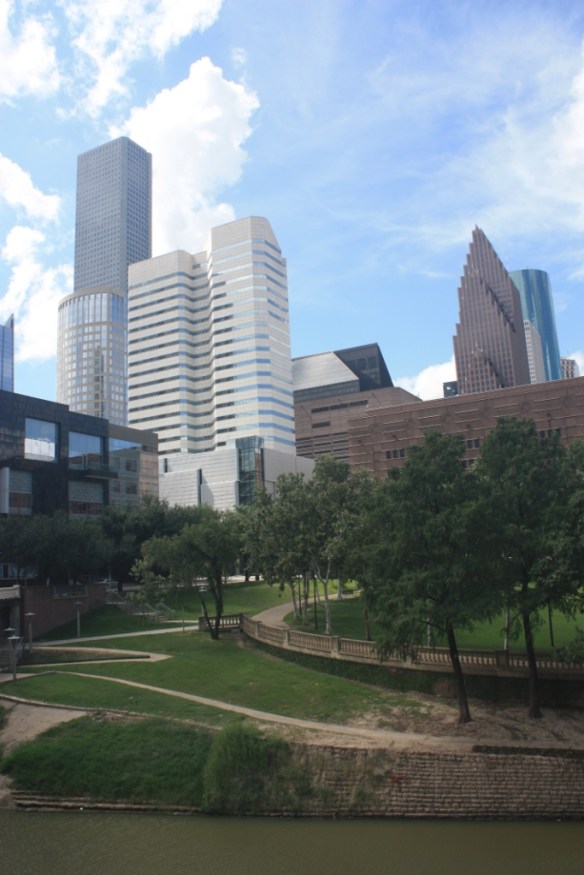
Taken in August of 2018 in Houston
white space,
where readers’ eyes go to
rewrite stories
when thoughts cease,
senseless pictures form;
minds abhor stillness
Plato’s pupil knew:
“nature abhors a vacuum,”
if not much else
the fog wall,
flush with the land’s end,
invites guesses
endless dunes,
stretching far as eyes can see
yet never the same

Taken in May of 2015 in Kathmandu
 birthing Buddha,
distant looming mountains
breed wisdom
glassy lake,
mirroring boat hulls,
a world below?
standing aside
as beam-totting porters
pass us on the trail
tea-house quarters
cozy and quaint lodging,
’til snoring starts
cool air in face,
trudging up — oblivious
to cloud-freed snowcap
glacier gone,
scoured trench, gouged in earth —
maybe next year
monkey overlook,
from sacred stupa to
the human warren