
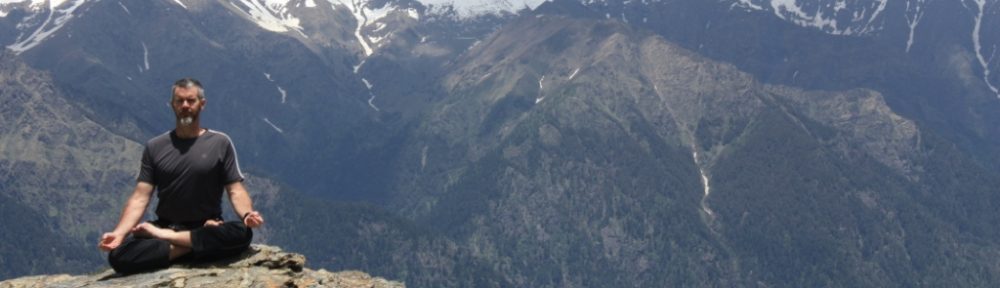
Taken on November 31, 2018 in Udaipur
Taken on November 31, 2018 in Udaipur
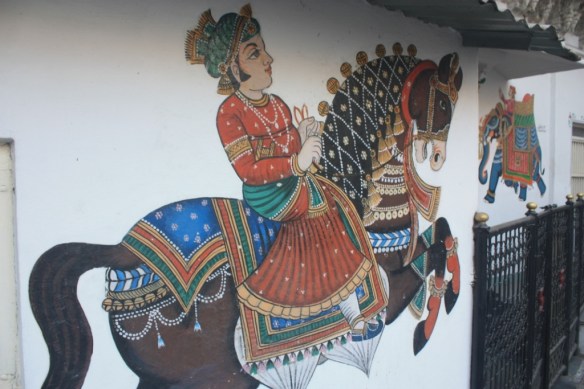
Taken on November 23, 2018 in Udaipur

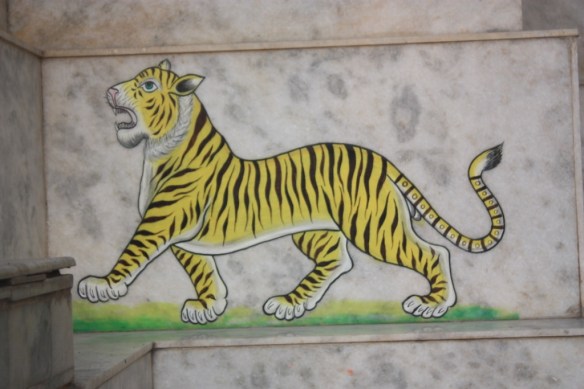
This post requires some explanation. First, miniature paintings, as a style of Indian art, aren’t necessarily small (though they can be.) Rather, the “miniature” refers to use of fine detail and the use very fine brushwork. (Sometimes involving one hair-width brushwork.)
The historical basis of all these paintings in Udaipur was that they used to be used to adorn houses involved with weddings. Not only did they lend festive decor, but they also made it easier to find the right house.
 A River in Darkness: One Man’s Escape from North Korea by Masaji Ishikawa
My rating: 5 of 5 stars
This tragic memoir tells the story of a man of mixed Japanese – Korean heritage who was, as a boy, moved to North Korea under a “repatriation” program that was designed to provide North Korea with laborers while conveniently reducing a minority problem for the Japanese. During the Second World War, Japan had imported labor from Korea for the war effort. As it happens, Ishikawa’s father was from South Korea, but – in the wake of the Korean War — it was North Korea that was looking for rank-and-file laborers.
The author’s father was eager to get out of Japan because he was treated as minorities frequently are – especially ones as rough around the edges as he, and so he swallowed the propaganda of Kim Il Sung’s regime hook-line-and-sinker. The author’s mother (and the author, himself) didn’t want to leave Japan because she didn’t speak the language and was ethnically Japanese (putting her in the minority shoes.) Little could any of them have known how bad life in North Korea would be, and how dire a mistake it was to agree to the move.
Life in North Korea was hard on everybody (except the party elite), but it was particularly hard on this family because: a.) they were discriminated against and could only attain the lowest-of-the-low in farm sector jobs; b.) they were accustomed to life in Japan and so they knew exactly how backwards North Korea was compared to its neighbors; and, c.) the wife’s family in Japan disowned them, and so even when other transplanted families began to be able to receive wealth from their kin in Japan, their family was cut off (but assumed by neighbors to be receiving packages.) From constantly having to game the system to get enough calories to survive to a series of tragic events that were largely tied to the country’s impoverished nature (e.g. inadequate healthcare,) the book features one soul-wrenching turn of events after the next.
Ishikawa grew to manhood in North Korea, married twice, and had children, but when the famine struck in the 1990’s he fled the country into China across the Yalu River, leaving his family behind. The book’s last chapter deals with Ishikawa’s challenges living in an expensive first world country – Japan – while trying to get his family back. It’s difficult to know whether Ishikawa ever serious could have thought he could get his family out once he was gone. Certainly, he proposes that he did think that, and he spoke to Japanese diplomats (who felt horrible about what had come of people like him) about it. Still, it’s hard to imagine how he could have thought so, being familiar with how the Kim dynasty operated. Still, one may have to grant a man his delusions when he makes such a hard decision while he is literally starving to death. Ishikawa was able to discover what happened to at least some of his family members, and that information is in an epilogue.
I found this book gripping and fascinating. It’s depressing reading throughout, there’s no getting around that, but it gives insight into how people live in the villages of North Korea that is not so extensively described elsewhere – not to mention what it’s like to be a member of a minority group, labeled a “hostile” and essentially relegated to a low-caste life. I would highly recommend this book for all readers. It’s one the best books of 2018 that I’ve read this year.
 Poems by Hermann Hesse by Hermann Hesse
My rating: 5 of 5 stars
If you’re like me, you may not have realized that this German author, known for short philosophical novels such as “Siddhartha,” “Steppenwolf,” and “Demian,” was also a poet. This bilingual edition consists of a selection of 31 poems picked and translated by the Pulitzer Prize winning poet, James Wright. The poems are short form poems that range from less than a page to three pages, and thus even with the inclusion of the original German verse, the book is only 80 pages.
It’s hard to imagine a more skilled editor / translator than James Wright, who was considered one of the best American poets of his time. When I was reading up on Wright, I saw that major themes in his poems were “loneliness and alienation,” and those themes are certainly seen in this selection, though I cannot tell you if they’re representative of Hesse’s poetry over all or not. The philosophical outlook of Hesse’s fiction certainly shines through in places, as does the sparse, imagery-centric approach seen in Eastern (e.g. Zen) poetry – a style that tries to keep the poet out of it by presenting scene devoid of analysis or judgment.
Though it didn’t do me much good, owing to my inability to speak or even properly pronounce German, I like that the original poems in German are included. An Italian proverb compares poetry translations to women — i.e. the more beautiful, the less faithful. So, it’s always nice for those with bilingual fluency to be able to look at them side-by-side (which is how they are printed.) Sometimes even hearing the poem without understanding meaning can give one insight into the musicality of the verse.
I enjoyed this selection of poems, and while I can’t say how much is Hesse and how much Wright, either way they were well-composed and pleasant to read. I would highly recommend this selection for poetry readers.

Taken on November 23, 2018 in Udaipur
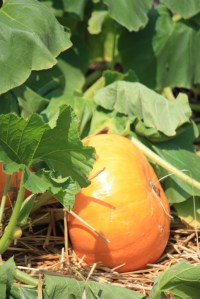 gleaming steel
plow blade turns the dirt, but
dirt taxes the blade
a weed pulled
in due time, beats one hundred
plucked too late
stalk stubble,
the haggard mourning face
of the field
mile high crazy quilt
viewed by climbing passengers,
brooding nature’s mood
when light is short,
but field days are marathon
harvest gloom

Taken in August of 2018 at Lincoln Park Zoo
 Miss Burma by Charmaine Craig
My rating: 5 of 5 stars
This novel tells the story of a mixed-race family and their trials and tribulations in Burma / Myanmar from the colonial period (before the Second World War) through the early 1960’s when a civil war was in progress. The father / husband, Benny, is ethnically Indian, religiously Jewish, works for the British, but was born and spent his early childhood in Burma. He marries a Karen woman (i.e. of the Karen tribe.) The central (and titular) character is the couple’s first child, Louisa. Louisa is a beauty, and for various reasons – none of which reflect her own preferences – she ends up a beauty queen and national celebrity.
What is fascinating about this book is how the many levels of humanity – from the individual level (e.g.Louisa / Miss Burma) to the international level – play into each other. At an individual level, each member of the family finds his or her life intruded upon by the nation’s conflicts. Benny ends up a prisoner of war of the Japanese and then later a prisoner of the Burman ruling regime. He feels beholden to the Karens because of a combination of factors involving repaying of debt, familial obligation, and friendship. Louisa ends up in the pageant – in part — because of the question of whether the leaders and Burman citizens are really serious enough about unity to allow a non-Burman into that high-status role.
At a national level, there is a rapid succession of changing situations. First, the country needs to thwart the Japanese invasion. Next, they must throw off the British colonial yoke, and, finally, Burma must figure out what kind of nation (or nations) it will become. The Burman leader wants to consolidate the country, while many tribal groups, including the Karen, want independence. Benny’s family is tied up in this conflict, in part, because of their Karen connection, but also the fact that Benny was able to exploit the post-war economy to his advantage and became rich after the war. This makes him, and his family, both important and simultaneously loved and despised.
At the international level, America and other global powers have interests in keeping Burma from disintegrating into tribal sub-states. In the early post-war period, these interests are largely economic, and involve the preference to have a solitary trading partner for Burmese goods. However, later, as “domino theory” takes center stage in American foreign policy, the interest shifts to thwarting the spread of Communism. (“Domino theory” was the idea that if a non-Communist government fell, others would proceed in a chain reaction throughout the region. It was a little simplistic, but reflected the anxiety of the times and was a large part of the justification for the Vietnam War.)
I found this book gripping and fascinating. The international intrigue and family tensions both work together to make an intensely readable work. Without getting into the ending, I will say that it feels a little bit rushed and anti-climactic. However, the events of the book give it plenty of tension overall, and there is a logic to the place the book ends. It is emotionally powerful to see how this family is repeatedly torn apart and must come together again through great difficulties. We also see how obligation and sense of duty play themselves out, often trumping other considerations.
I would highly recommend this book for readers of fiction, particularly those with interests in historical fiction and works that offer insight into a nation and a culture.


