BOOK REVIEW: Witchcraft: A Very Short Introduction by Malcolm Gaskill

Witchcraft: A Very Short IntroductionWitchcraft: A Very Short Introduction by Malcolm Gaskill
My rating: 5 of 5 stars

Amazon.in page


Witches, like ninja, so excite the popular imagination that everyone knows about them, but most of what we know is incorrect — either by virtue of being exaggerated or being imbued with cultural and narrative coloring. Gaskill’s book shows us the changing landscape of popular belief about witches and witchcraft, and it contrasts those perceptions with what the historical records show. So, for example, while there was undeniable persecution of individuals accused of witchcraft, it was less of a widespread mania than one might have been led to believe.

There were several fascinating discussions throughout the book. One such discussion is how surprisingly widespread the phenomena of witchcraft is, with witches being found in Africa who demonstrate remarkably similarities to those we are familiar with from the stories of Europe and New England. One can imagine how societies in which medicine was rooted in shamanistic practices, e.g. mixing herbal medicine with superstitious rituals, might produce practitioners that the modern, Western viewer would associate with witchcraft.

Another interesting question under discussion involved the psychology of accusations of witchcraft. For example, it’s not like every time a child died the parents leapt to the conclusion that there was some sort of voodoo witchcraft being practiced against their child, but in some circumstances it definitely happened. Under our current understanding of science and medicine, it’s hard to imagine how anyone would reach such conclusions, but it’s illuminating to explore the conditions under which our ancestors did. It tells us a great deal about humanity’s changing understanding of the world.

The book consists of eight chapters and the usual ancillary matter for the AVSI series (preface, graphics, references, and recommendations for further reading.) It begins by asking: “what is a witch, exactly.” It’s not as simple a question as one might think. Is a witch an herbal healer? Is she a malicious devil-worshipper? Is he or she just a neighbor with whom one had a beef, resulting in the use of that person’s perceived nefariousness to explain an unexpected tragedy? Is a Wiccan a witch? (This is addressed later because Wicca is a relatively recent phenomenon.) Is a witch just a popular Halloween costume based on stereotypes and story details? In some sense, the witch is all of these things wrapped into a messy mélange.

Chapter two recounts how the rise of Christianity warped the way witchcraft was viewed. As Christians attempted to both eliminate the competition of existing spiritual beliefs and to fit those who practiced witchcraft into the context of the Christian belief system, a new kind of witch came to be introduced. Chapter three delves into how the popular image of witches came to be associated with older, haggish women. (In the early days of witchcraft, women were no more associated with the practice than were men.) This chapter also has a fascinating section about cases of neighborly disputes playing out through accusations of witchcraft.

Chapter four explores how witchcraft came to be conflated with demon-worship in the popular imagination, and how beliefs about witchcraft were influenced by competing takes on Satan and what powers the devil was believed to have (or not have.) It also discusses the topic of witch hunts, and proposes that, while horrific things happened, there are many more examples of rationality and calm reflection winning the day. As I was reading this book, it sometimes felt to me like the author was acting as an apologist for the forces of persecution, but upon closer reflection I realized that he was just trying to combat an overly exaggerated view of what it was like to be amid witch hunts and trials. From what most of us have heard about the Salem Witch trials one might be led to believe that any woman in the seventeenth century who was accused of being a witch would immediately be drowned by an insane and angry mob. That was [mostly] not the case. Which is not to say it’s not horrible that it happened at all, but it is useful to understand the scale of any problem.

Chapter five investigates the nature of witch trials, and the changing face of how witchcraft was treated under the law. Witch trials have become synonymous with a vicious catch-22 in which a woman is tied to a rock and thrown into a river: if she floats out, she’s immediately killed as an agent of Satan; if she doesn’t, they say “our bad” and reward her with a Christian funeral. Gaskill emphasizes that there were people at the time who recognized and challenged how horrible and insane that approach was. [I often mention Dr. Sherrill’s formulation of the “Outhouse Fallacy,” the idea that because earlier people didn’t have indoor plumbing that they must have been complete dimwits, and the fallacy tends to apply to our popular conception of people of that era.] Chapter six dips further into crazes and panics over witchcraft. Chapters seven and eight consider different dimensions of how fantasy and reality became intertwined in how witchcraft was seen – from Macbeth’s trio of witches to modern Hollywood adaptations.

I read a lot of these AVSI titles from Oxford University Press; they are a good way to get a quick overview of a subject with which one has a limited familiarity, while ensuring the source has a high degree of scholarly competence. This edition is no different, and – in fact – owing to its fascinating topic, it’s probably more engaging than most. I enjoyed learning how my perception of witchcraft varied from reality, and how perception becomes a kind of reality unto itself. If you’re interested in learning about witch hunts, witch trials, and the like, this book provides an excellent and brief overview of the subject.

View all my reviews

BOOK REVIEW: Introducing Joyce: A Graphic Guide by David Norris

Introducing Joyce: A Graphic Guide (Introducing...)Introducing Joyce: A Graphic Guide by David Norris
My rating: 5 of 5 stars

Amazon.in page


This guide provides a concise overview of the life and work of James Joyce. I’ve now read a few of the titles in this series (they are available on Amazon Prime,) and this has been my favorite so far. To be fair, this might have to do with the nature of the subject matter (most of the volumes I’ve read previously were about more complex philosophical subject matter, topics about which it’s harder to write clearly and concisely, while still meaningfully. Which is not to say Joyce’s work can’t be daunting.)

Like the other books in the series, this one is arranged into short (1-2 page) sections (about 70 of them) that each address a particular topic. There is a general chronological flow, though some of the sections deal more with the great novelist as a person, others focus more on his books, and still others talk about influences – both those who influenced him and how he influenced others. As the subtitle suggests, there are graphics throughout. Most of these are black and white drawings in a cartoon style that serve to reiterate or dramatize key points. There is one quite useful table that maps Joyce’s “Ulysses” to Homer’s “The Odyssey,” which influenced it.

Which brings us to the value of a book like this when trying to understand Joyce’s work. Having been reading “Ulysses” of late, I’m interested in gaining more depth of insight into the man’s work. Joyce’s language is beautiful, but for me it’s been a bit more like reading poetry than prose. Story is dialed down to virtual non-existence. Referring back to the aforementioned table that describes how “Ulysses” and “The Odyssey” relate offers a great example. When one sees the title “Ulysses,” one immediately thinks of Homer’s epic poem, but a straight-forward reading of each work leaves one wondering how two books could be more different. “The Odyssey” is the harrowing tale of Odysseus’s (a.k.a. Ulysses’s) ten-year return journey after the Trojan War, it features monsters, ship wrecks, cunning lovers, a visit to the underworld, a rampaging slaughter, etc. “Ulysses” is the story of a couple guys (mostly Leopold Bloom, but also Steven Daedalus) who go about their seemingly mundane daily lives in Dublin, Ireland. There are no monsters, witches, duels to the death, and – arguably — the big excitement is the attendance of the funeral of an unknown character. However, Norris offers the reader insights into how the two works can be seen as linked.

There are similar breakdowns of other major works (i.e. “Dubliners,” and “A Portrait of the Artist as a Young Man.”) Special focus is given to the unique ways in which these works are arranged and the philosophy and psychology that inform them.

In addition to the aforementioned graphics, there is a “Further Reading” section at the end to point readers to works that will help them to further flesh out their understanding of this curious author and his notoriously challenging works.

If you’re interested in decoding Joyce, I’d recommend you check out this brief guide.

View all my reviews

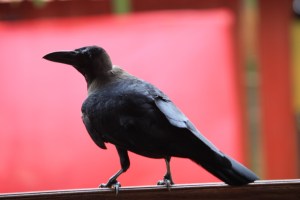
POEM: Crow in a Combative Stance

metallic beak —
rough striations worn smooth
like rough iron, burnished

feet planted wide–
one fore & one back,
in a combative stance

head low —
beak pointed accusatorily,
swiveling to resettle the eye

then, with flapping wings,

it’s gone

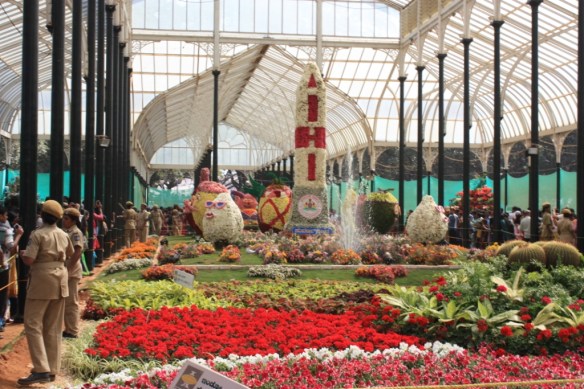
DAILY PHOTO: Blast from the Past: 2014 Republic Day Flower Show

Taken in January of 2014 at Lalbagh Botanical Gardens, Bangalore

Since there’s no Republic Day Flower Show at LalBagh this year (owing to the pandemic,) I figured I’d post a couple pics from a few years back (i.e. 2014.)

POEM: Raptor Rising [Sonnet]

A raptor climbs: it spirals higher and higher,
and what a chunk of world it must now see.
What’s it like to be that vanishing flyer?
Does it feel fear, or does it glide with glee?

It fears like one who knows not what could be.
Like Icarus, it’s naïve of the Fall?
It must know (but not care,) to be that free!
There’s not a chance its flapping wings will stall,

and still less that it will be downed by squalls.
I envy hawks, but could not live their life —
to test air that couldn’t fill my lungs at all
and climb to heights, yet not know any strife.

Oh climb, my Raptor, ride upon thin air,
and when you reach the earth, I’ll meet you there.

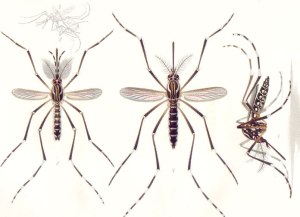
POEM: No Offense, Mr. Mosquito

Source: Wikipedia (Public Domain)

Hey there, Mr. Mosquito,
‘fraid to say, you’ve gotta go.
Sure, Black Death is on the flea,
but you’ve bought us fevers: Yellow, Nile, and Dengue.

And that’s just to name a few.
You’ve killed more folks than anything in the zoo.
There’s Malaria, Zika, and Encephalitis
that make you feel you’ve crossed a bus crash with arthritis.

I’ve never been to Rift Valley or the West Nile;
yet I fear their fevers but not their crocodiles.
Because, like Amazon, you deliver
a thousand miles from the river.

So, I guess I’ll go and get my shots,
and if our paths cross — expect some swats.
Cause when it comes to blood-sucking creatures,
I’d rather have leaches in my breeches.

DAILY PHOTO: Modern Architecture, Kathmandu

Image

Limerick of Slovenia

There was a brown bear from Slovenia
who had a bad case of anemia.
While his kin were vegetarian,
he ate campers and carrion —
Hope you don’t meet the iron-shy bear of Slovenia.

DAILY PHOTO: Green Hills Under Blue Skies

Taken in the Summer of 2019 near Middle Kolsay Lake (Kolsay-2)

POEM: The Ekstasis of a Warm Bed [in a Cold, Snowy Land]

-To watch powder cling to sill and muntin through the frosted panes,
but not be chilled by that crisp whiteness

-To slacken on the back of spastic release – lulled by discordant heartbeats,
while feeling that they — and all — are in perfect accord

-To drift into slumber with no urgency and to awaken noncommittally,
sinking ever deeper into mattress and mind

-To love the snow for its beauty
as much as for its lack of reach