Blush [Haiku]

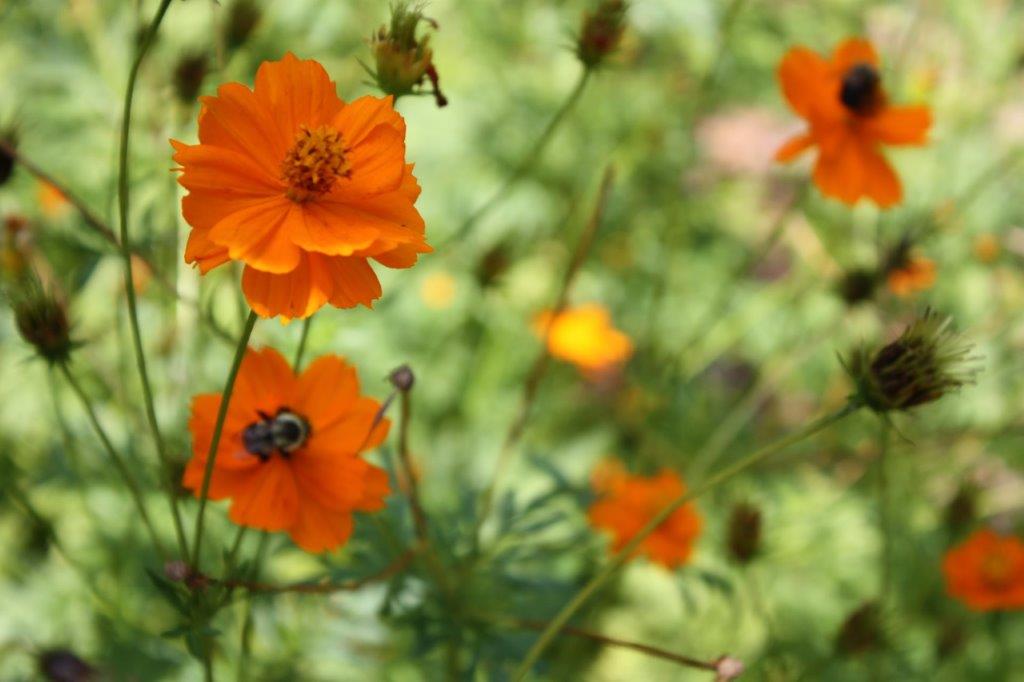
green seed pods
blush to blood red,
then split open

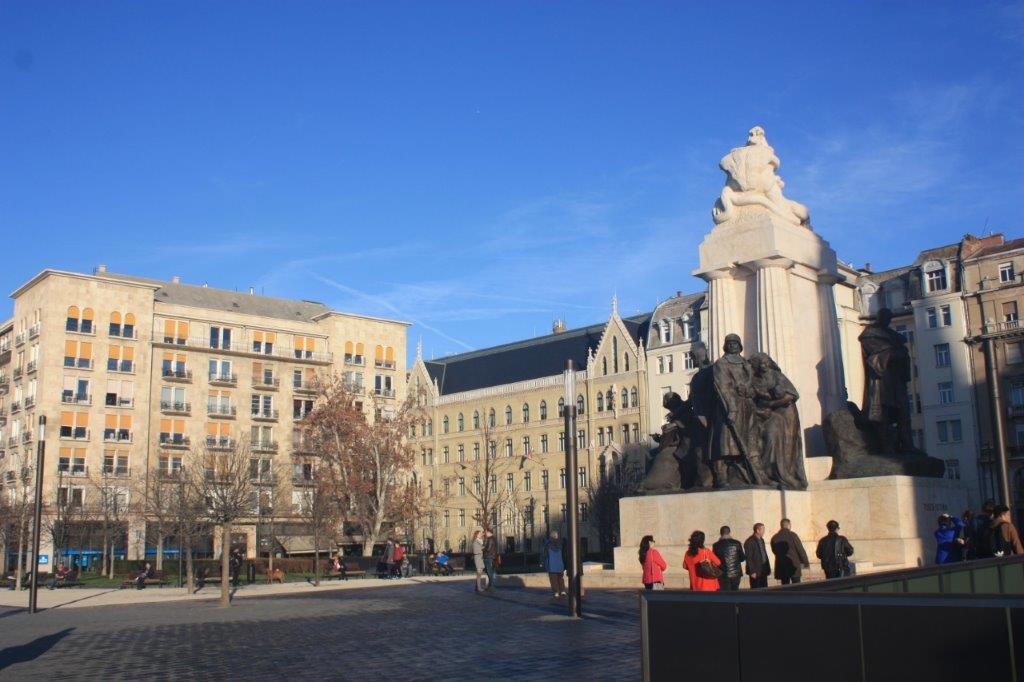
DAILY PHOTO: Monochrome Scenes from Andrássy út

Taken in December of 2014 in Budapest
Terror Haza; 60 Andrássy út

Necropolis [Free Verse]

a city of the dead
tunneled under the living,

awaiting the flip,
a shift in who's who

-the living & the dead,
-the dead & the living
-the alive and the existent
-the living dead &
those dying alive

all jumbled together
in a sea of inhumanity,
tumbling past each other,

scrambling for humanity -
for the breath of life,
for life in a breath

the musty scent of decay
in the living city
was the first sign...

those in the necropolis 
smelled flowery scents --
clean and bright --
and found those fragrant
perfumes
as revolting as the
living found the rot stench

in the brief time it took
to become acclimated to the stink,
all found themselves in the churn,
struggling for more
of something they
didn't understand

BOOK REVIEW: Jules Verne’s Lighthouse by David

Jules Verne's LighthouseJules Verne’s Lighthouse by David Hine
My rating: 5 of 5 stars

Amazon.in Page

Out: October 13, 2021

This graphic novel presents a loose adaptation of “The Lighthouse at the End of the World,” taking the story into space opera-like territory. Verne’s story is set on Earth in the Atlantic Ocean near Cape Horn at the southern tip of the Americas. Hine’s is set in a remote region of deep space that requires a beacon to navigate through a treacherous aggregation of wormholes. (I don’t know whether the latter is even remotely in compliance with the laws of physics, but the concept of a deep space navigational station seems perfectly feasible so I was untroubled by the details. An Astronomy majors’ experience may vary. In general, the book doesn’t seem to be written as hard sci-fi.)


Hine borrows Verne’s idea of a remote navigational beacon being taken over by pirates, and a survivor of the “lighthouse” crew working to foil the pirates’ plot, as well as drawing on some character details. However, it’s not meant to be a beat-for-beat retelling of Verne’s story set in the future and in space. There are many differences of plot and character from the source material. Besides robots and aliens, there is much greater diversity in the cast.


I found the story compelling. The source premise of being far from help and at a severe disadvantage is thrilling, and I think Hine did a fine job of taking the story into the future.


View all my reviews

DAILY PHOTO: Helicopter in the Mountains

Taken in May of 2018 near Annapurna Base Camp [ABC]

Mountain Fog [Free Verse]

fogged in at a teahouse,
a growing gray of view,

this world lacks 
sharp lines,
excepting the hint of:

-a sloping roofline
&
-a building's corner

 these lines are 
sharp relative to
the amorphous gray;

but fuzzy compared to 
the same line's clarity 
on a blue sky day

now,
they're blurred, 
as if the village
had been painted by a
skilled - but lazy -
painter,

a sumi-e master
with a melancholy soul

Wu Shih / “Nothing Special” [Free Verse]

a steady rain patters
into puddles
far below

i close my eyes,
listening for a
pattern

but it's chaotic -
 a random rhythm that
tugs at my eyelids,

lulling me into 
a dull state of mind

BOOK REVIEW: Writing Haiku by Bruce Ross

Writing Haiku: A Beginner's Guide to Composing Japanese PoetryWriting Haiku: A Beginner’s Guide to Composing Japanese Poetry by Bruce Ross
My rating: 5 of 5 stars

Amazon.in Page

Out: March 15, 2022

With this guide, Ross offers a compact guide to navigating Japanese poetic forms and the offshoots and variations that have evolved in America. The book does have a particular focus on the American and international style of haiku, and related forms, though the author always lays the groundwork by first exploring the “rules” of the traditional Japanese form. He also discusses concepts, such as wabi and sabi, that heavily inform Japanese poetry. However, most of the examples come from English language writers, and there’s extensive discussion of how American haiku differs in form and substance. This makes the book particularly useful for English-as-native-language writers who wish to capture the flavor of this spare and elegant poetic form, but who have limited acquaintance with the Japanese language and culture.

I didn’t think I’d need another guide for writing haiku after reading and re-reading William Higginson’s The Haiku Handbook, but Ross does cover a few topics in greater depth and detail, particular haiga (combining graphic arts with haiku,) renga (a partnered / team style) and several American variations, and ginko (a nature walk-based practice.)

The book has graphics as needed (i.e. in the haiga section,) and offers and extensive set of recommendations for further reading as well as resources.

While I’ve been writing haiku, tanka, and senryū for some time, I learned a lot from this book, and it got me excited to try some of the forms with which I’m inexperienced. I’d highly recommend this book for beginner, intermediate, and advanced haiku poets.


View all my reviews

DAILY PHOTO: A Village in Himachal Pradesh

Taken in June of 2015 in Himachal Pradesh