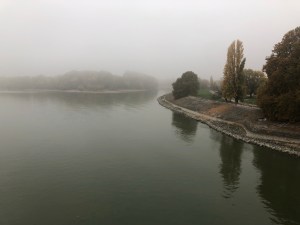
The Naked Dream [Free Verse]

There is a dream
in which one is naked.

But no one is looking at you,...
yet

And that is so much worse;
the anticipation of being gawked at 
is more disconcerting 
than being gawked at.

And, yet, one can't bring oneself 
to shout,
attracting onlookers, 
so as to end the misery of anticipation.

One can only sit with one's naked
expectations --
wading in anxiety.

Bardo Mind [Free Verse]

lost in a disembodied
Bardo state

fantastical happenings
mainlined into consciousness

with a side of swirling 
phantasm

and all the angry demons

and all the faceless gods

churn around the periphery

DAILY PHOTO: Mysore Palace Lit Up

Taken during Dasara of 2014 in Mysore

Golden Pheasant [Senryū]

the Golden Pheasant
looks committee assembled...
by first graders

DAILY PHOTO: Channagiri Wildflowers

Taken in July 2020 at Channagiri Hills
Zinnia

Snail Relativity [Haiku]

the snail moves slowly,
but carries a snazzy house --
so, not THAT slowly!

BOOK REVIEW: The Spirit of Japanese Poetry by Yoné Noguchi

The Spirit of Japanese PoetryThe Spirit of Japanese Poetry by Yoné Noguchi
My rating: 5 of 5 stars

Amazon.in Page

Free Online at Wikisource

This book-length essay, originally published in 1914, discusses the unique style and aesthetic of Japanese poetry. It’s written for an audience of English language readers and advances its objective not only by presenting illuminating translations of Japanese poetry, but also by comparing Japanese poetry to English language poetry.

Noguchi takes a no-holds-barred approach to literary criticism that is both the strength and weakness of the book, sometimes it feels as though the author’s boldness is granting deep insight into the subject, but other times it reads as though the author is tribally narrow-minded and curmudgeonly. By “tribally narrow-minded,” I mean that he takes the view that the Japanese aesthetic and approach to art is always and in everyway superior to non-Japanese art (in this case, English language poetry.) Interestingly, he frequently compliments specific artists, e.g. Walt Whitman, but doesn’t have anything nice to say about English language poetry in general. By “curmudgeonly,” I mean that he takes the popular — if biased –view that the world is going to shit, and – in the section on modern poetry – it is only after discussing how the art has fallen on hard times that he can discuss a few modern poets who’ve produced some poems worthy of adoration [and some worthy examples of the modern form (Shintaishi.)]

One might think this bigoted view would cripple his book (as bigoted views usually do,) but because what he’s promising is depth of insight into the Japanese poetic aesthetic, he is able to succeed just fine. [Also, to be fair, being highly opinionated and pretentious were hallmarks of critics of his era – just usually not so nationalistically.] Noguchi does a great job of selecting evocative examples, providing powerful translations, and illuminating the Japanese mindset as it pertains to art and poetry.

If you’re interested in Japanese poetry and the psychology that influences Japanese artistic tastes, this short book is highly recommended. [Just be prepared to be offended if you aren’t a hardcore Japanophile.]


View all my reviews