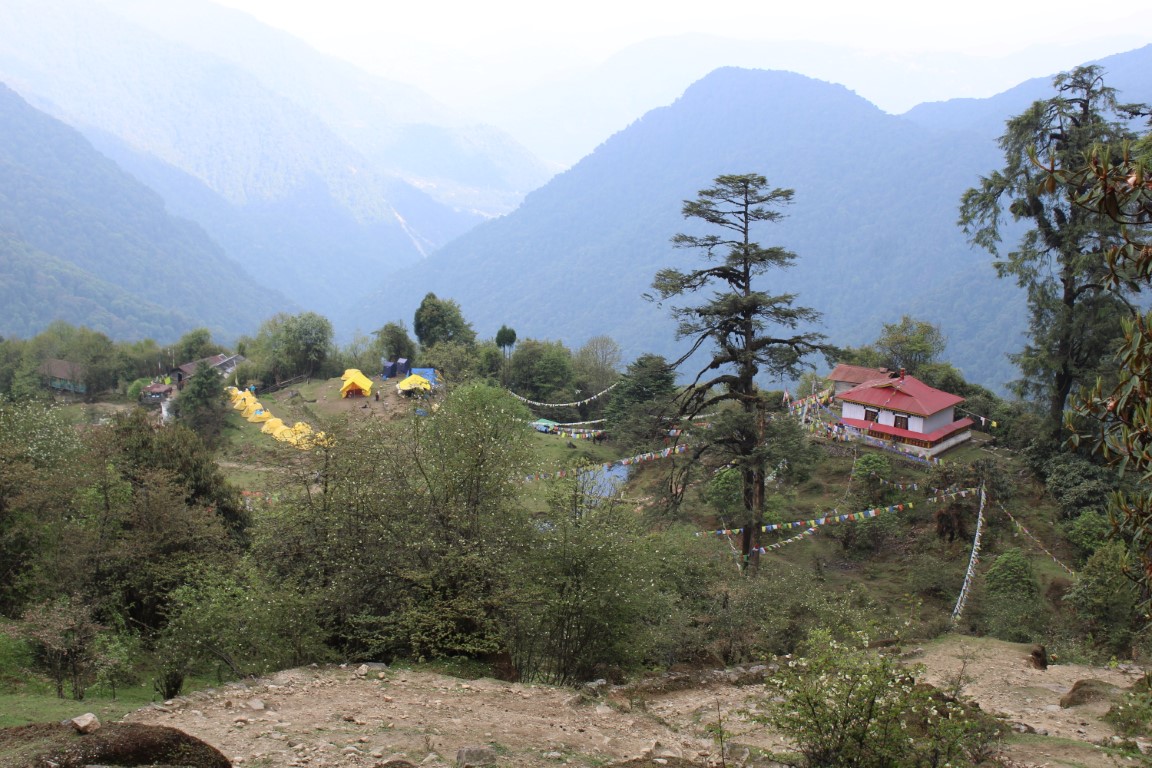
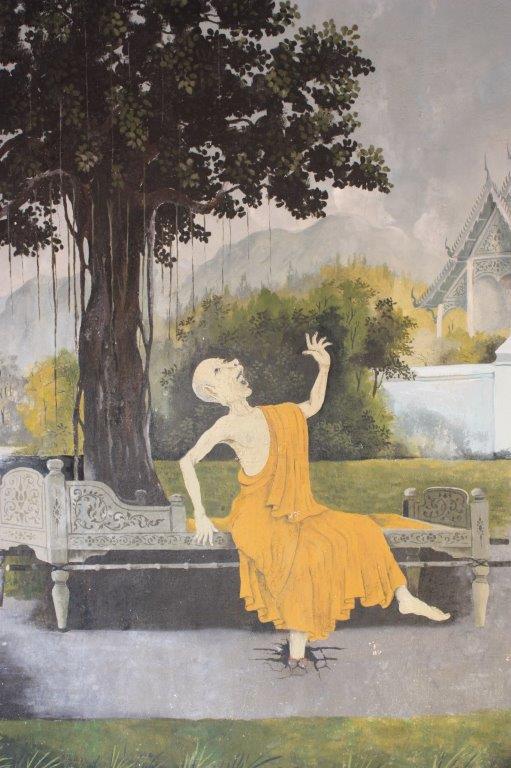
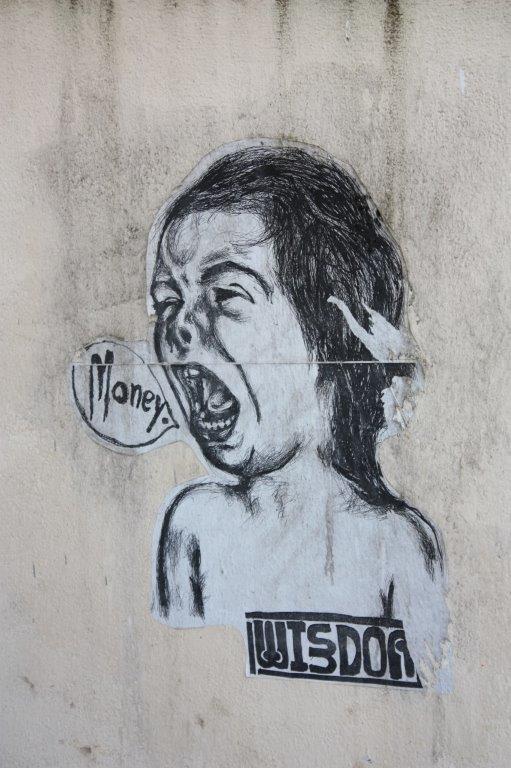
DAILY PHOTO: Papan Larangan Masuk Pura, Bali

BOOK REVIEW: Eastbound Maylis de Kerangal

EastboundEastbound by Maylis de Kerangal
My rating: 5 of 5 stars

Amazon.in Page

Release of Paperback Edition: February 7, 2023

This novella is translated from French but set in Russia. The story is short and simple, yet evocative. It’s about the attempt of its two main characters to conduct very different plans of escape. Aliocha is a soldier who’s traveling by train to a remote assignment in the East when he decides to desert. Aliocha’s desertion plan ends up hinging on the assistance of a foreign woman, Hélène, a French woman who – as it happens – is fleeing a failed relationship. For whatever reason, but perhaps because she knows the intense need to break free, Hélène decides to shelter Aliocha in her cabin until he can make clean getaway.

This is a quick but intense read. The lack of common language between the two escapees makes for an austere telling, one that adds to the emotional tone of the story. I recommend it for readers of literature in translation.


View all my reviews

BOOK REVIEW: The American Sonnet ed. by Dora Malech & Laura Smith

The American Sonnet: An Anthology of Poems and EssaysThe American Sonnet: An Anthology of Poems and Essays by Dora Malech
My rating: 5 of 5 stars

Amazon.in Page

Release date: January 12, 2023

The first one-third of this book is an anthology of sonnets by American poets that highlight some of the characteristics of form and content that evolved in America. Therefore, one shouldn’t expect these to all be fourteen lines of iambic pentameter. America is the land of Whitman, and discomfort with strict rules and constraining requirements along with a desire to etch one’s individuality and voice into all activities is part of what makes a thing American. It’s an enchanting and suitably diverse (also an inherently American requirement) selection of poems, and I think all poetry readers would enjoy reading it. Included among the almost 100 poets are: Walt Whitman, Phillis Wheatley, Natasha Trethewey, Robert Frost, Langston Hughes, Gwendolyn Brooks, Agha Shahid Ali, Claude McKay, Edna St. Vincent Millay, e.e. cummings, Countee Cullen, Natalie Diaz, Emma Lazarus, Terrance Hayes, Muriel Rukeyser, Sylvia Plath, James Wright, Gertrude Stein, Paul Lawrence Dunbar, Ralph Waldo Emerson, and Lucille Clifton. The poets run the gamut from the Colonial Era to present-day heavyweights, and their works approach the sonnet from perfectly conventionally to wildly experimentally.

The remainder of the book is a collection of short essays that discuss various aspects of the sonnet in America. While the editors don’t explicitly group the essays, I would put them in three baskets. First, there are those essays that examine the work of a particular poet and discuss that artist’s influence on the sonnet. Second, some of the essays examine sonnets through the lens of a particular demographic and investigate how poets of that demographic have influenced, been influenced by, or modified the sonnet, be it those of a particular race, sexual identity, place on the autistic spectrum, etc. Third, most of the other essays explore technical aspects such as line length, rhyme schemes, metering, etc.

As I mentioned, I believe poetry readers will enjoy the selection of poems anthologized, herein. The essays are another matter. They are much more of a mixed bag for poets and poetry readers and are more geared toward other scholars. That is to say, some of them are both interesting and useful for poets and poetry readers, but others will probably not be of much interest to the non-academic reader. While the essays are brief and most are quite readable, a number of them either delve into arcane matters or tumble so deeply down the rabbit hole of wokeness that it’s hard to grasp what the author’s point is (or whether he or she has one.)

If you enjoy poetry and are interested in the American influence on the sonnet, this book is well worth reading – at least the poems and a selection of the essays.


View all my reviews

Crash & Sizzle [Free Verse]

waves roll over 
with a soft crashing
white noise
that splays out into a sizzle
as foamy water
expands flatly over hot sand

until the sizzle is washed out
by the next wet crash

and then more sizzle

and then more crash

sizzle & crash
crash & sizzle

DAILY PHOTO: Scenes from Pandawa Beach

BOOK REVIEW: Talking to Strangers by Malcolm Gladwell

Talking to Strangers: What We Should Know About the People We Don’t KnowTalking to Strangers: What We Should Know About the People We Don’t Know by Malcolm Gladwell
My rating: 5 of 5 stars

Amazon.in Page

This book uses a model that Gladwell has employed to great success in many books. That model goes like this: 1.) find some research findings that are counter-intuitive or otherwise in opposition to the consensus view (and preferably not well-known outside academia;) 2.) carefully select some fascinating real-world cases that seem to highlight said findings; 3.) skillfully present the cases in a highly readable and evocative narrative form, making surprising reveals for maximum effect.

In this case, the beating heart of the book is research by a University of Alabama, Birmingham professor, Timothy Levine, that shows that people are bad at catching liars because we are wired to accept statements as true and that some portion of population present appearances out of kilter with their truthfulness. (i.e. Some people come across as liars — even when telling the truth, and others appear truthful with pants ablaze.) This contradicts earlier research that suggests liars always have tells. [Interestingly, if true, Levine’s research upends studies Gladwell used in his previous book “Blink,” research by Paul Ekman that suggested that liars have “leakage” of “micro-expressions” that reveal their true emotional state. Gladwell admits his views have changed on the Ekman work. It’s the price of dealing with ground-breaking counter-intuitive research: sometimes, it’s not going to validate as well as one would like – not unlike the controversy about the Anders Ericsson’s “10,000-hour rule” that is the core of Gladwell’s 2008 book “Outliers,” and which seems much less robust in light of subsequent research.)

Gladwell employs a number of compelling stories to show how even individuals who should be the best of us at telling truth from lies (e.g. counter-intelligence officers, industry experts, and veteran law enforcement officers) do dismally at spotting lies and at grasping the true nature of what strangers hold in their hearts. [It should be noted that people are better truth detectors than lie detectors because of the aforementioned truth bias.] Readers also learn quirky facts such as why the sitcom “Friends” is insanely popular in many non-native English-speaking countries. (e.g. In Vang Vieng, Laos, I witnessed this myself, with several cafes and restaurants playing “Friends” on a loop all day every day.) The book also presents discussion of research overturning the idea that facial expression of emotions is universal.

I found this book to be an intriguing read and would highly recommend it for those interested in learning why it’s impossible to “read” strangers. I don’t know how well the ideas will validate, but the cases are interesting and compelling.


View all my reviews

BOOK REVIEW: The Catcher in the Rye by J.D. Salinger

The Catcher in the RyeThe Catcher in the Rye by J.D. Salinger
My rating: 5 of 5 stars

Amazon.in Page

This book will be familiar to most Americans as high school required reading. It’s about a teenager, Holden Caulfield, who’s just been expelled from a boarding school and who goes on the adolescent version of a bender – which involves some drinking but is more a mix of attempted escape and soul-searching. At first, it seems that Holden just wants to put off having to see his parents (this not being the first school at which he’s failed,) but then it seems like he might try to escape the transition to adult life altogether.

The core premise is that Caulfield can’t adapt to adult life. This is interesting in that, in some ways, he’s preternaturally mature. The character has an unusually accurate perception of his own nature, even when that nature is petty, childish, or lazy. He doesn’t rationalize his failures but recognizes them. Ultimately, Caulfield can’t cope with the false masks required of adult living and the ever-changing nature of adult life.

Like many, I did a shoddy (at best) job of reading this book in high school. It’s not exactly an action-packed romp, and the major happenings (e.g. a fight at school, being shaken down by a pimp on behalf of prostitute whom Caulfield had paid but hadn’t had sex with, and an unwelcomed [possibly sexual] advance from a former teacher) are few, far between, and somewhat anticlimactic. That said, as literary fiction the book is readable, makes bold choices with language, builds a fascinating character, and offers plenty of interesting psychology to ponder.

I’d highly recommend this book for readers of literary fiction (or a re-read for those who half-assed it in school.)


View all my reviews

Butterfly Fickle [Haiku]

a butterfly lands;
unmoved by wind or leaf sway,
but point a camera…

DAILY PHOTO: Balinese Countryside

Taken December 31, 2022

DAILY PHOTO: Evening at Padang Bai

Taken on Bali in December of 2022.