BOOK REVIEW: The Invention of Nature by Andrea Wulf

The Invention of Nature: Alexander von Humboldt's New WorldThe Invention of Nature: Alexander von Humboldt’s New World by Andrea Wulf
My rating: 5 of 5 stars

Amazon page

If you’re like me, you had no idea who Alexander von Humboldt was prior to this surprisingly well-received book. So why read a book about him? Well, you’ve surely heard of the people he influenced: e.g. Darwin, Thoreau, Jefferson, Bolivar, Wordsworth, Samuel Taylor Coleridge and John Muir—to name a few.

Humboldt was one of the top scientists of his time, but his influence extended far beyond that aspect of his life. Much of the thrill of this book comes from Humboldt’s expeditions to Latin America and Russia. He faced alligators, electric eels, a capsized ship, and natural disasters. He also made Herculean efforts to arrange a Himalayan expedition, but politics and personalities intervened to delay him until he was too old to make the trip. (It should be noted that when Humboldt summited Mount Chimborazo in Ecuador in the early 1800’s, it was believed to be the highest peak in the world [at 6268m, or 20,600ft.] Needless to say there was a lot unknown about the Himalaya at the time—e.g. Everest is 8848m, or over 29,000ft.) While Humboldt produced specific breakthroughs and discoveries (e.g. inventing isotherms and discovering the magnetic equator), much of the inspiration he provided was in showing the interconnectedness of nature and the potential for unintended consequences.

As a Prussian aristocrat, Humboldt was born into a position to have influence but it was his ideas and his personality that made him so sought after. He could be arrogant, but was humbled in the face of nature. He was charismatic, but did not suffer fools kindly. He was adamantly anti-slavery and strongly opposed efforts of religion to stymie science in order to delay the toppling of their sacred cows.

The book is arranged into 23 chapters, divided among five parts. Part I describes his youth and the time leading up to the American expedition that would make him a legend. Part II describes his experiences gathering specimens and observations in Latin America, with a chapter about his meeting with Thomas Jefferson on his way back to Europe. Part III covers the period he spent in Europe after his expedition to the Americas. It was during this time that he wrote up his observations and hypotheses about nature. It was a productive time, but Humboldt missed nature. Part IV covers two important topics: the expedition through Russia and some of the more important ideas and people Humboldt influenced—e.g. Darwin. By this time he was well-known, and the books that had thus far come out were much in demand. Part V continues the theme of Humboldt’s influence on great thinkers, but with a focus on ideas that were a bit slower to develop.

I enjoyed this book. Interestingly, it follows a chronological format. That may seem a less than profound observation for a biography, but it’s less common to begin with the earlier years of life because those are typically the boring bits and there’s a desire to get into the meat of the story. (To some degree the author does this with a prologue that describes the Chimborazo trek.)

I’d recommend this book for those who are interested in science, ecology, and nature, as well as those interested in what it was like to make a scientific expedition in those days, well before Darwin.

View all my reviews

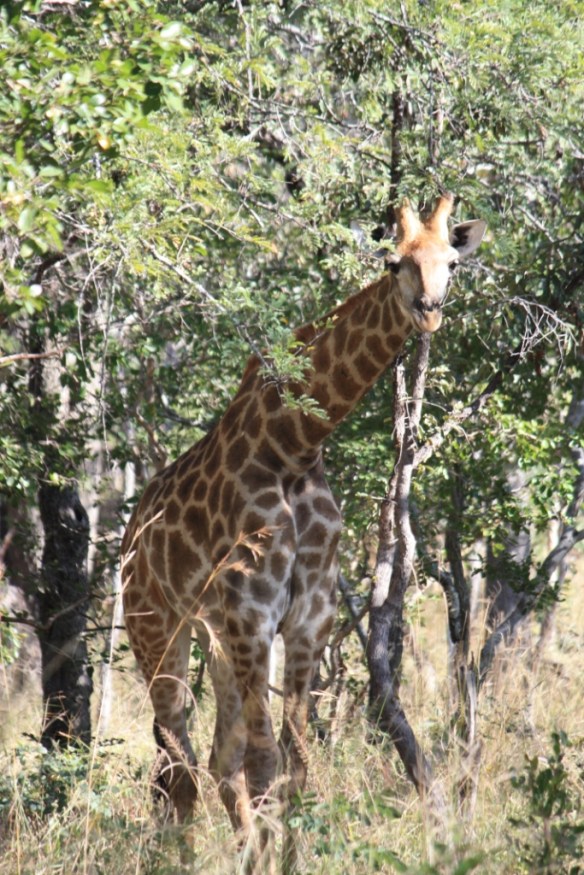
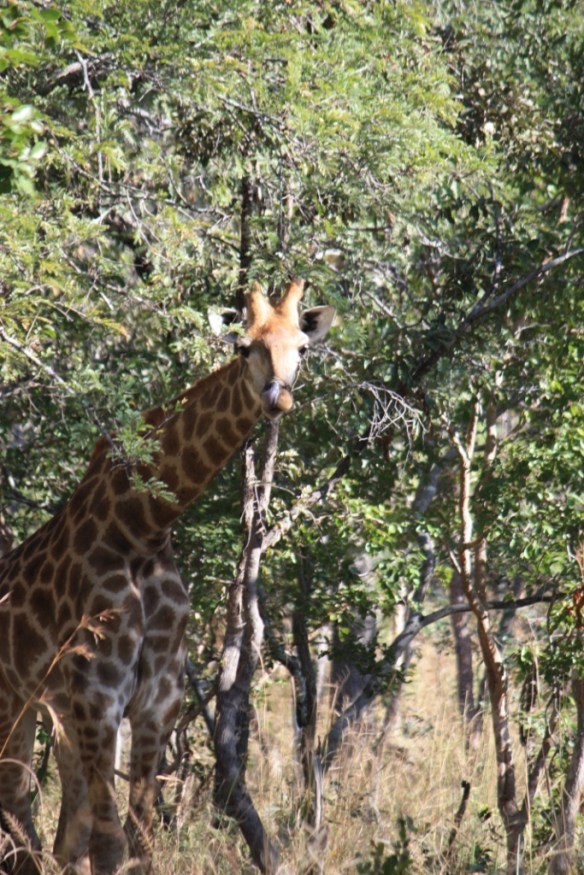
DAILY PHOTO: Giraffe Amid the Trees

Taken in May of 2016 at Chaminuka Game Reserve

Taken in May of 2016 at Chaminuka Game Reserve

IMG_0184

BOOK REVIEW: Into Africa by Martin Dugard

Into Africa: The Epic Adventures of Stanley and LivingstoneInto Africa: The Epic Adventures of Stanley and Livingstone by Martin Dugard
My rating: 5 of 5 stars

Amazon page

“Doctor Livingstone, I presume?” These iconic words are culturally embedded in the psyche of Americans (and, I assume, the British as well), but I had only a vague understanding of their meaning before reading Dugard’s account of the two expeditions that would bring the phrase into household immortality—the first of which was Dr. David Livingstone’s search to once-and-for-all find the source of the Nile and the other was Henry Stanley’s search to discover whether Livingstone was still alive.

If one isn’t a diehard history buff, it can be hard to maintain one’s interest in events of almost 150 years ago. Let me assure you, this isn’t the case for stories of African explanation—including “Into Africa.” If the author is at all skilled, these books read like novels with an almost improbably high level and pace of tension. That’s because almost everything in Africa in those days was working against the explorer, and most things were actively trying to kill him. A summary of threats include: a panoply of diseases (e.g. malaria, dysentery, etc.), an ark of animals and insects (e.g. poisonous snakes, lions, elephants, rhinos, etc.), and of course tribes and other humans (e.g. one could find oneself caught in the cross-fire between Arab slave traders and tribes who resented being enslaved, even if one had no stake in the fight.) And if none of those killers got one (and at least some of them always did), your men might desert you in the middle of the night while absconding with all your goods—and those goods were how one paid for both one’s food and for safe passage through tribal lands. In Dugard’s work, one sees each of these threats played and replayed, as well as a host of others from political conflicts, incompetence, and disgruntledness. It should be noted that there was almost no precedence for sending someone to look for a lost explorer—it was considered so unlikely to succeed in that era, not to mention likely getting a lot more killed.

The book largely alternates chapters featuring Stanley with those featuring Livingstone. This is particularly the case once the book reaches the point at which Stanley is actively on the trail. These were very different men, but the name of each man became synonymous with courage. Stanley was an American journalist who made it to the top based solely on willingness to go places and do things other reporters wouldn’t. In fact, he had trouble making a go of his career starting out, and it wasn’t until a traumatic adventure that he developed the assertiveness to make something of himself. Livingstone was already a legend when he took on this expedition, and was arguably too far past prime to be taking on such an adventure. The men were also quite different as expedition leaders. Stanley ran his caravan with an iron fist, while Livingstone was known for being lax and easily distracted—while they were at opposite end of the spectrum in this regard, it seems likely that both would have succeeded better with more moderation.

At the book’s beginning there’s a conflict at the Royal Geographical Society between Richard Burton (the explorer, not the actor) and John Speke over the source of the Nile. Livingston, a living legend, was asked to investigate and settle the issue—an objective he didn’t complete. It should be noted that finding the river’s source isn’t as easy as it sounds. Speke was correct in that the Nile reached at least to Lake Victoria (at the equator), but it wasn’t clear whether Victoria was connected to other lakes in the southern hemisphere, and—if so—how far down it went. There was a chain of lakes to the south that might have drained into the Nile, but, as it happens, flow into the Congo River.

I found this to be fascinating reading. The book consists of 40 chapters divided among five parts, and so most of the chapters are quick reads and the interspersal of the Stanley and Livingstone story lines keeps the pacing going nicely. Dugard did a good job structuring the narrative.

I’d recommend this book for anyone interested in learning about Stanley, Livingstone or who just want to know what it was like to be an explorer on the Dark Continent. [Fun-fact: While “dark continent” sounds blatantly racist, it turns out that the phrase was originally used in reference to the fact that so much of the map was blank—i.e. it was largely unmapped.]

View all my reviews

DAILY PHOTO: Signage Win in Lusaka

Taken in Lusaka, Zambia in May of 2016

Taken in Lusaka, Zambia in May of 2016


Yes, it’s a sign for “Bump, Birth, & Beyond” (a maternity and baby related center from which Bed, Bath, & Beyond clearly stole inspiration) that–interestingly enough–is located adjacent to the Planned Parenthood office.

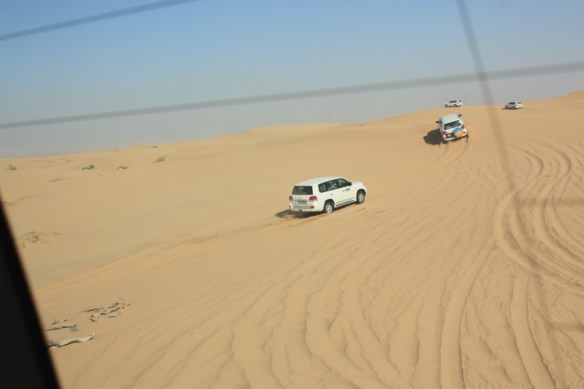
DAILY PHOTO: Dune Bashing

Taken in May of 2016 in the Desert near Dubai, UAE

Taken in May of 2016 in the Desert near Dubai, UAE

IMG_0538 IMG_0530

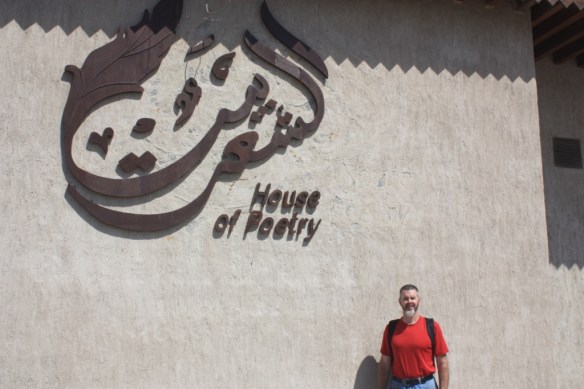
DAILY PHOTO: House of Poetry

Taken in May in 2016 in Dubai's Old Town

Taken in May in 2016 in Dubai’s Old Town

IMG_0430

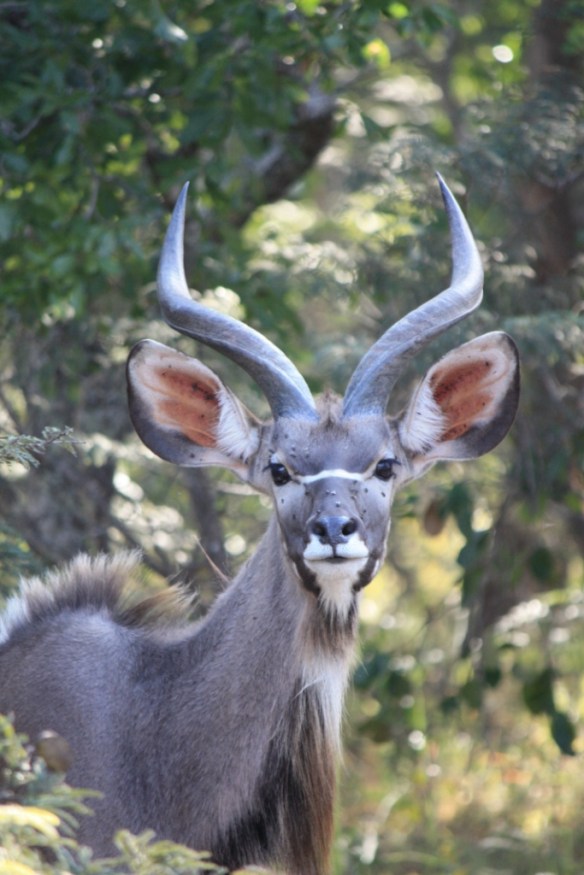
DAILY PHOTO: Who Knew this was a Kudu?

Taken in May of 2016 at Chaminuka Game Reserve near Lusaka

Taken in May of 2016 at Chaminuka Game Reserve near Lusaka

Beyond the Golden Temple: What Else Is There In Amritsar?

Tourists go to Amritsar for two reasons:

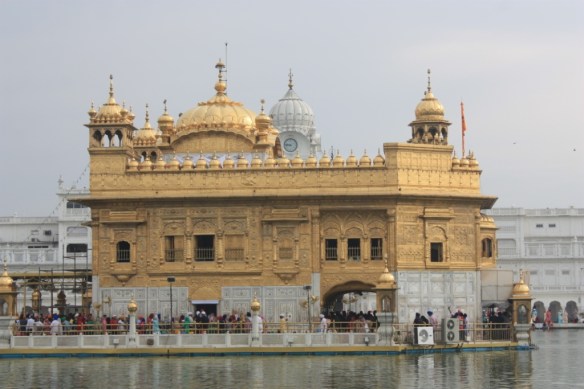
1.) The Harmandir Sahib (i.e. the Golden Temple) and adjacent Sikh sites (e.g. Gurudwara Baba Atal Sahib)

IMG_3427


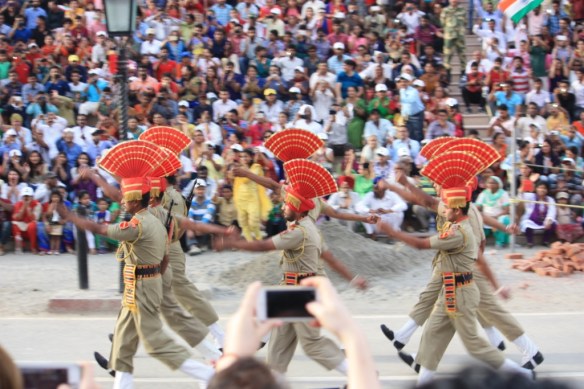
2.) As a jumping off point for the Wagah Border Crossing Retreat Ceremony:

IMG_3623


It’s quite possible that your guidebook doesn’t mention anything beyond those two, but if it does it’s probably the Jallianwala Bagh, which is a small park that serves as a memorial to a massacre conducted by a British military unit against peaceful protesters in 1919.

IMG_2843


It can be hard to justify a trip to a city in which all the sights can be packed into a day-trip when it’ll cost either a lot in time or airfare to get there. So the obvious question is whether there’s anything else worth seeing?


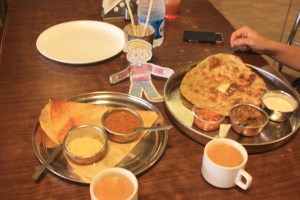
The next item on most people’s agenda tends to be the awesome food of Amritsar. And one definitely doesn’t want to miss out on the Punjabi Dhabas, food stalls, or taking a meal at the Golden Temple’s Langar Hall.

IMG_2829

IMG_2866


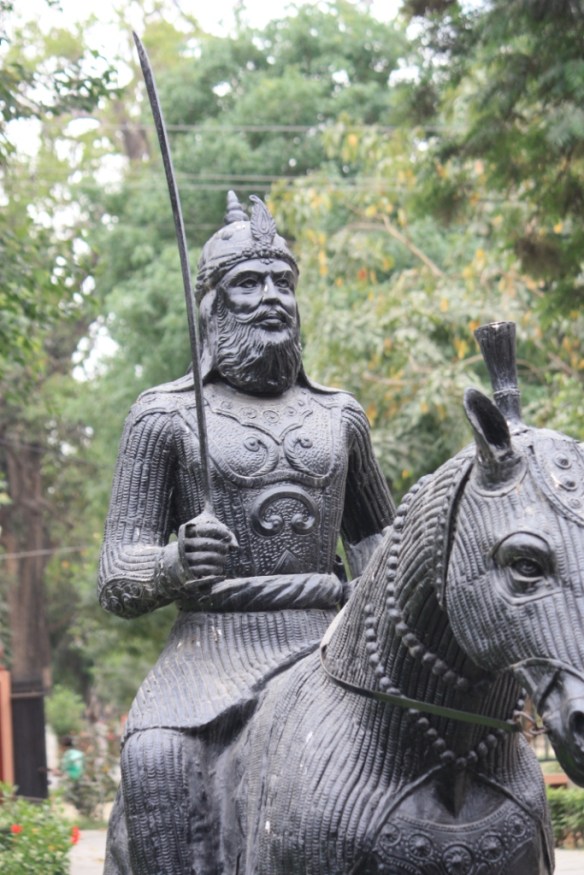
The next most important stop is the park in the southeast corner of the intersection of Mall Rd. and M.M. Malviya Rd. Much of what this area has to offer is more kitsch than photogenic, but the centerpiece is the Maharaja Rangit Singh Museum, which is small but genuinely impressive–including the well-maintained flower garden on the way in.
IMG_2940IMG_2930 IMG_2929


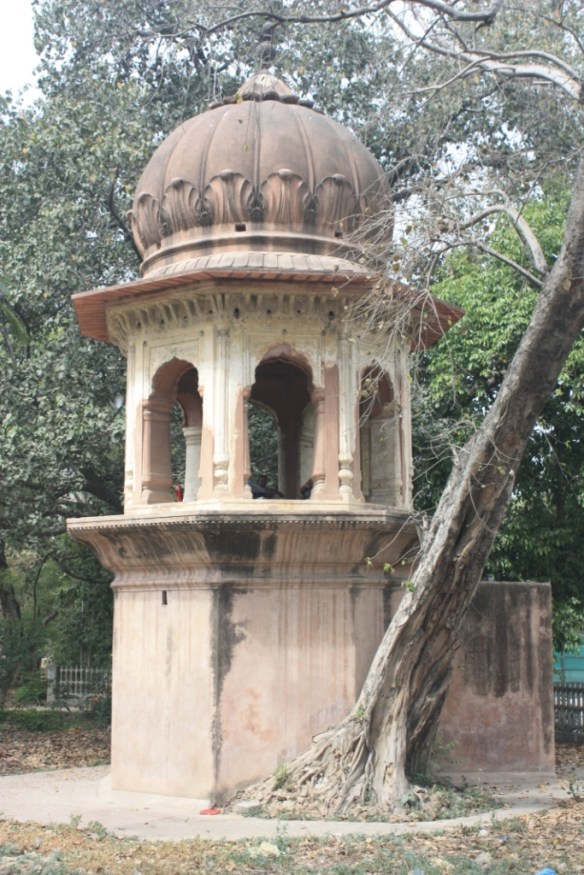
Near the museum there are some restorations of structures that were around when this was the location of the Maharaja’s summer palace. (The Palace itself was neither open nor restored at the time of our visit in the fall of 2015, but there were some smaller structures that were worth seeing.) The gate to the south of the park is the most well-restored/maintained of these structures.

IMG_2891 IMG_2972 

Now, the kitsch stuff isn’t without its virtue for amusement purposes at least, and you’ll see it as you walk around the area. The zoo of plastic animals is the best example.


IMG_2947


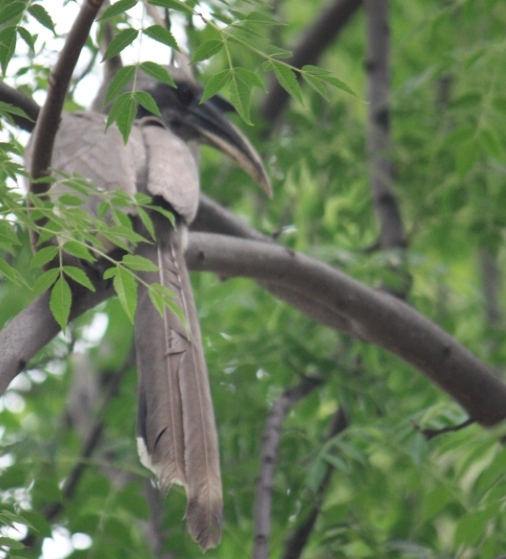
Although you might just be surprised to find some interesting real creatures.

IMG_2956


There are also a few other sights like Gobindgarh Fort (it’s restoration and opening was in limbo at the time of our visit, and apparently remains so) and a few temples if you’re not templed-out.  The City Hall is presently in decay, but looks like restoration was underway and it may one day be noteworthy.

IMG_2853


There are quite a few bazaars as well. I’d lean toward the narrow corridors near the temple as opposed to Lawrence Rd, which is more modern but is unimpressive.


You can always take the time to get some work done while you’re in town. For example, there is readily available curbside dentistry.
IMG_3070


But seriously, I enjoyed Amritsar and found it to be well worth the visit–even though it’s not particularly close / convenient to much else and it has limited attractions. Like Varanasi, Amritsar has its own unique feel that set it apart from India in general. While Varanasi was steeped in Hindu culture, I suspect Amritsar’s uniqueness has to do with the fact that the population is largely Sikh and, therefore, the people and culture are distinctive.

BOOK REVIEW: Choke by Sian Beilock

Choke: What the Secrets of the Brain Reveal About Getting It Right When You Have ToChoke: What the Secrets of the Brain Reveal About Getting It Right When You Have To by Sian Beilock
My rating: 4 of 5 stars

Amazon page

“Choke” in this book means to under-perform under high stakes. It doesn’t mean to be a poor performer, generally. This book is designed to help those who perform at a lower level when the pressure is on. It’s a condition that’s even been witnessed in Olympic caliber athletes–world champions who couldn’t get on the podium in the most important games of their careers. The book isn’t just about choking in sports; in fact, much of it is about bombing tests, and it also addresses under-performance in business environments.

“Choke” is organized into nine chapters. The first is called the “curse of expertise,” and it deals with just that—how experts are notoriously bad judges of how successful novices will be. This is because the causes of under-performance aren’t always straight forward. For example, some qualities that serve to make individuals strong contenders under low pressure conditions (e.g. a large working-memory) contribute to the cracking of the same individuals under high stakes. The second chapter explains how practice improves performance. Chapter three investigates why using our Prefrontal Cortex (i.e. our conscious mind) can do us in when the task calls for procedural memory that is unconscious to do its work.

Chapter four delves into the differences between the sexes in academic endeavors. Chapter five is about choking on tests in a scholastic environment, and it deals a lot with why minorities under-perform on standardized tests. Chapter Six presents some activities that have been shown to be successful in reducing choking including therapeutic writing, meditation, and changing one’s mode of thinking. There is a box at the end of the chapter that summarizes many of these cures.

Chapter seven discusses choking in sports. Choking in sports has some common ground with academic under-performance. However, it’s also different in that the object is often to quiet the conscious mind altogether. Some solutions for the yips in sports, such as mantras repeated in one’s mind to let the procedural memory take over, may not be as useful in an academic setting. Chapter 8 presents a range of techniques to prevent choking from practicing under more realistic conditions to getting on with it (i.e. not overthinking or slowing down) to distracting oneself to focusing on the goal (not the process.) The chapter also looks at the flip-side, why those who excel in physical performance often stink at coaching (i.e. they aren’t analytical about how it’s done.) This chapter also has a nice summary box of solutions. The final chapter looks at under-performance in a business setting, which again shares some things in common with choking in other domains, but also presents its own problems.

I found this book to be useful and thought-provoking. The advice is sound.

The discussion of bombing at tests and in the academic setting is largely applicable only to females or minorities as it focuses heavily on the issue of why these groups are disproportionately affected by academic under-performance. With respect to sports and business, the only condition necessary to benefit from the advice is a proclivity to choke or a desire to know how to help oneself or others avoid the fate. So depending upon what domain one is considering and one’s demographic, there may be other books that are either more or less relevant to one’s personal issue.

I’d recommend this book for those interested in the science of human performance.

View all my reviews

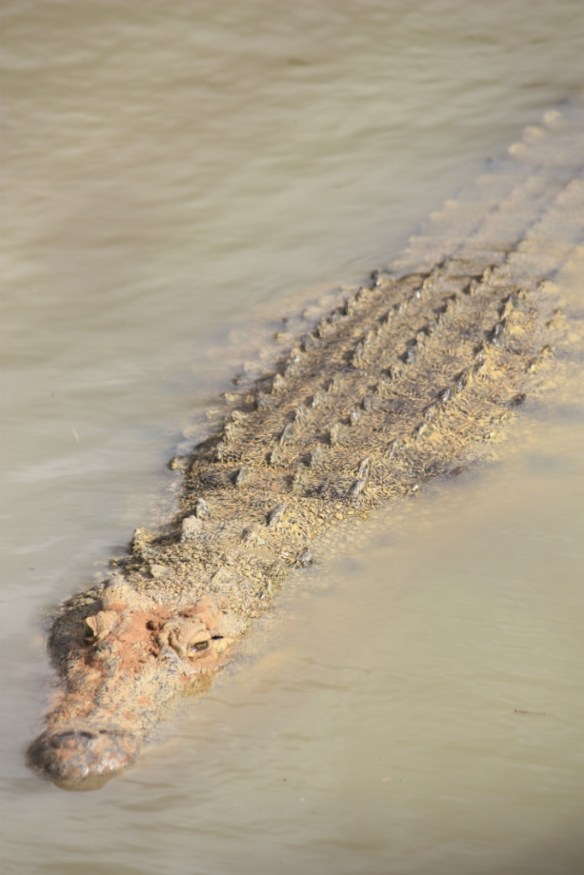
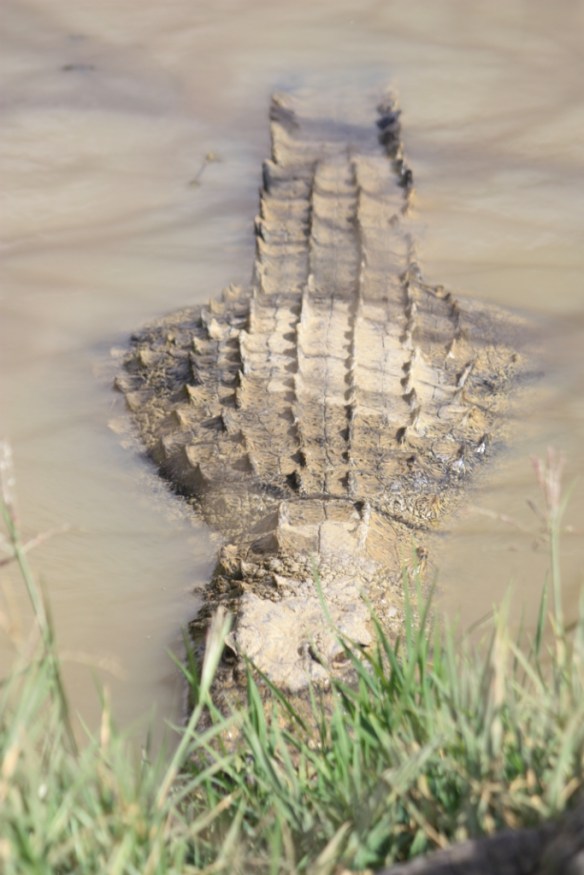
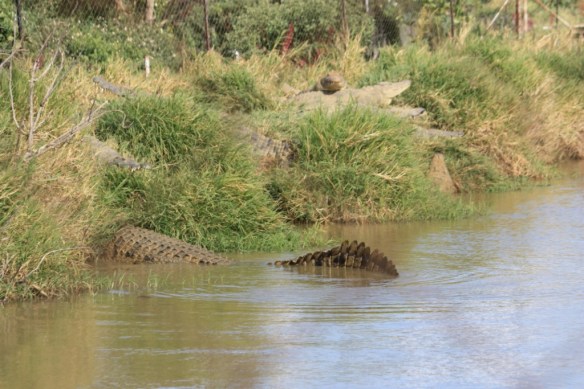
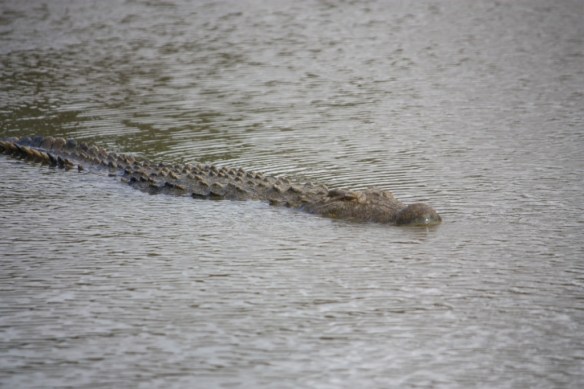
DAILY PHOTO: Crocodiles in the Water

Taken in May of 2016 at Kalimba Reptile Park near Lusaka, Zambia

Taken in May of 2016 at Kalimba Reptile Park near Lusaka, Zambia

IMG_3318

IMG_3326

IMG_3329