BOOK REVIEW: Hormones: A Very Short Introduction by Martin Luck

Hormones: A Very Short IntroductionHormones: A Very Short Introduction by Martin Luck
My rating: 4 of 5 stars

Amazon page

Let’s face it; the word “hormone” is usually reserved for questions of why a male is so horny (e.g. “His hormones were raging.”) or why a female is so moody (e.g. “She’s hormonal.”) Yet, the endocrine system is about much more than horniness and moodiness. It’s the body’s lesser known communication system, transmitting signals more slowly than the nervous system, but over a broader area and with longer-lasting results. Yes, it’s instrumental in sex, but it’s also involved in regulation of almost everything else the body does. Though we associate hormones with sex, when it comes to mass appeal it’s clearly not the sexiest of systems.

Dr. Luck’s book allows one to rectify one’s ignorance of hormones without a major investment of time or money. This is one volume in a series put out by Oxford University Press that’s designed to convey the fundamentals of a subject in about 100 pages or so (in this case it’s more like 130pgs.) I’ve done several reviews of books in this series, and will likely do more. These “Very Short Introductions” are a good way to get the gist of a topic quickly and painlessly, and they are reasonably priced on Amazon Kindle and in hard-copy at my local discount bookseller. (FYI: Your results may vary. i.e. Hard-copies at some bookstores may be pricey for what these books are—i.e. subject summaries that are optimized for concision and not for entertaining reading.)

The book has nine chapters. The first is a history of the science related to hormones and the endocrine system. (It took a while to figure out that there even was a system because of the nature of hormonal action.) The second chapter hits the basics, such as what hormones are and how they work. Chapter three tells us about the role hormones play in reproduction. The next chapter is about how hormones regulate the body’s levels of water and salt (and the effects on blood pressure.) Next, there is a discussion of the calcium cycle and how calcium is banked in bone and borrowed for the purposes of other cells. There’s a chapter that educates one about diabetes and how hormones (notably insulin) regulate blood sugar. Chapter seven is devoted to the thyroid. Chapter eight describes the role of hormones in circadian rhythms and the cycles of the body. The final chapter is about where science is going with its knowledge of hormones and the advances that are being pursued.

There are few graphics in this book. Most of them are chemical diagrams in dialogue boxes that many readers will skip because of their ominous appearance. The lack of graphics isn’t a problem. Luck does use a narrative approach on occasion (such as his telling of the story of the giant William Rice of Sutton Bonington.) This enhances the book’s readability, and is noteworthy because it’s a rarity among books in this series, which—again—are written to shotgun information and not to be entertaining reads.

I’d recommend this book for those who want to learn (or brush up on) the basics of the endocrine system. It does what it’s supposed to do, and does it quickly.

View all my reviews

An Unusual International Yoga Day Post: or, Dream Yoga and Fear Management

"The Sleep of Reason Produces Monsters" by Francisco Goya

“The Sleep of Reason Produces Monsters” by Francisco Goya

I awoke exuberant that I’d achieved lucidity in my dream and that I’d apparently slain a nasty character (picture Hans Gruber on a bad day)–a task that had seemed impossible before my eureka of “I’m lucid!” Only my exuberance was short-lived when I realized that Hans was also me. Do you have the courage to talk it out with your dream world nemesis instead of reacting from fear?

I was thinking that I should do a post on yoga for International Yoga Day (June 21st), but what to write about? My answer came in the wee hours of the morning when I had a minor breakthrough in lucid dreaming–also known as, dream yoga. I know this seems like a stretch because, despite “yoga” being right there in the name, this practice is much more firmly associated with Tibetan Buddhism than Hatha Yoga. But my last couple yoga posts (which were a while back on my experience with RYT300 teacher’s training and teaching a Yoga Kid’s Camp) were fairly conventional, so I’m due one that’s out there. Furthermore, I promise to try to make clear the relevance of dream yoga to my hatha yoga practice. (If you read the aforementioned posts, you’ll see that the theme of freeing oneself by managing one’s fears and anxieties is a recurring theme across all these posts. And that is the crux of the relevance of lucid dreaming to unifying mind, body, and breath [i.e. yoga.])


What is lucid dreaming? It’s becoming aware that one is in a dream as one is dreaming. One can then exert influence over the course of the dream. Maybe half of you have had this experience at some point in your lives, and so what I’m saying will not seem far-fetched. For those who don’t actively practice lucid dreaming, it’s much more common among the young, so maybe you had such dreams as an adolescent but don’t have them anymore.

For the other half, the whole idea may seem like poppy-cock. I could easily have been such a doubter. Without following a practice, I almost never remember dreams–let alone dreaming lucidly. At best, I get disappearing fragments of dreams that are ephemeral and hazy. I’m one of those people who might claim that he virtually never dreams, except that I read the science, which suggests that each of us dreams every night that we sleep long enough to cycle through REM (rapid eye movement) mode (and commonly 4 or 5 times a night.) We just don’t recollect these dreams. [However, I have had lucid dreams on rare occasions, and so my skepticism on the subject was curbed.]


Why do I practice dream yoga? While it wasn’t part of my formal hatha yoga training, dream yoga isn’t as far removed as one might think. I have been trained in yoga nidra (yoga sleep), which is an exercise that takes place in a hypnagogic state (on the edge between waking and falling asleep.) Commonly, yoga nidra is used as a deep relaxation exercise, but it can also help one to access the subconscious (as is reflected in repeating a sankalpa [a resolution] in the yoga nidra state.) Lucid dreaming is another approach to assessing the subconscious in order to see what’s going on in there and to try to make changes as necessary. Curiosity about the subconscious mind and its–largely unseen–influence on my daily life is what drew me to dream yoga. It’s just another aspect of knowing oneself and trying to expand one’s capacities of mind and body.


How does one practice dream yoga? Hardcore practitioners set alarms to wake themselves up when they think they’ll be in REM sleep. This, as I understand it, helps them reconnect with the dream when they drift back and greatly speeds the process. As I sleep with a wife who would clobber me with a brick if I set alarms for random times in the middle of the night, I’m not among those hardcore. My practice consists of three main aspects. First, I make resolutions to remember my dreams and to dream lucidly as I’m drifting off to sleep. Second, when I’m not making said resolutions, I try to just observe the subconsciously generated imagery that pops up as a witness–rather than letting my conscious mind go into its preferred mode of planning for an uncertain future. [One can tell the difference because the subconscious images don’t make a lick of sense, and–for me–are devoid of any verbal/language element–i.e. it’s all imagery.]  Finally, I keep a journal in which I record any dreams or fragments that I can recall–sometimes with drawings to supplement the text (though my artisticness is lacking, to say the least.) The first and last of these are among the most common recommendations one will hear from experts.

I should point out that there are a number of books on the subject by individuals much more qualified than I. Said books give detailed guidance into how one can begin one’s own practice. One that I recently finished reading and would recommend is Charlie Morley’s “Lucid Dreaming: A Beginner’s Guide to Becoming Conscious in Your Dreams.”  At some point, I’ll post a review of that book. Also, there is “Dreaming: A Very Short Introduction” by J. Allan Hobson, which I have reviewed.


As I wrote up the entry in my dream journal, I made a resolution to stop attacking the “bad guys” in my dreams and to try to understand them. Note: I don’t recommend this approach for dealing with real world axe-wielding maniacs, but I highly recommend giving it a try in one’s dreams.


Sweet dreams.

DAILY PHOTO: Footprints in the Sand

IMG_0516 IMG_0612

Taken in May of 2016 in the United Arab Emirates

Taken in May of 2016 in the United Arab Emirates

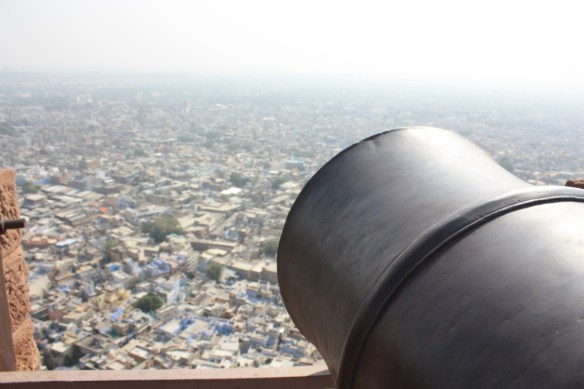
DAILY PHOTO: Cannon’s Over Jodhpur

Taken in November of 2015 in Jodhpur

Taken in November of 2015 in Jodhpur

IMG_2528 IMG_2643 IMG_2645 IMG_2646

DAILY PHOTO: Aquarium in a Shopping Mall

Taken during May of 2016 in the Mall of Dubai

Taken during May of 2016 in the Mall of Dubai


IMG_0480

DAILY PHOTO: Boats of the Dubai Museum

Taken in May of 2016 in Dubai

Taken in May of 2016 in Dubai


IMG_0316 IMG_0326 IMG_0325 IMG_0317


Dubai has an interesting museum that charts the Emirate’s history from fishing village to global transshipment megalopolis. As Dubai’s history is maritime, there are no shortage of boats.


BOOK REVIEW: Budō by Morihei Ueshiba and Kisshōmaru Ueshiba

Budo: Teachings of the Founder of AikidoBudo: Teachings of the Founder of Aikido by Morihei Ueshiba
My rating: 4 of 5 stars

Amazon page

This book is really three separate booklets bound into one. In this case, I believe the three parts work together quite well, and it doesn’t feel like a trick of padding to make a pamphlet into a salable book. I only mention this to point out that the three sections are quite different on several levels (i.e. authorship, subject, and content), and to put the reader on notice of it.

The first part is an “Introduction” by Kisshōmaru Ueshiba. The reason I put introduction in quotes is that it’s really a brief biography of Morihei Ueshiba (often called Ōsensei by practitioners of his art.) At 16 pages, it would be somewhat long for an introduction to the (130pg) book, but it introduces the martial arts master who founded the martial art of aikidō and who wrote the second part of the book nicely. The bio is a good use of space. Morihei Ueshiba wasn’t only an accomplished martial arts master, but he led an interesting life as well. I found this biography to be intriguing, and it made me want to read a full biography of the man. I must point out that there are a couple spots that will trigger the BS-meter of any rational skeptic (i.e. comments about Ueshiba being bulletproof or invincible.) Even though I don’t believe for a minute that the man was either bullet-proof or invincible, I think that most of this biography is true, and even that which isn’t gives one insight into the man as a combat veteran (and it certainly says something that some of his students literally deified him.) In addition to biographical text, this part includes various photos from both inside and outside the dōjō.

The second part is the beating heart of the book. This is a manual on martial arts written by Morihei Ueshiba, himself. It features prose, photos, technique descriptions, and even poems. While the bulk of the section consists of descriptions of techniques along with illustrative photos, there’s some philosophy of martial arts in both the early text and poems at the beginning and ending of the section. This section is almost 50 pages long, and the translator provides explanatory end-notes that help to make sense of the text for non-specialists.

The last section is technically the longest. However, it contains almost no text other than a translator’s introduction and technique names. It’s a series of technique sequence photos. The photos were taken in 1936 and were taken at the behest of the president of Kodansha Ltd. at the time, Seiji Noma—hence, they’re referred to as the “Noma Dōjō Techniques.” The shots of the sequences are tight enough that one can follow the flow of Ueshiba’s movement. For me, this section wasn’t particularly valuable. However, for practitioners of Aikidō, I can imagine how it could be invaluable. In other words, if one is familiar with the techniques, one might spot something that would give one a new insight. For the rest of us, this section just gives a crude taste of the nature of Aikidō.

I found this book to be interesting and informative. I’d recommend it not only for aikidō practitioners, but for those interested in the martial arts more generally. There is certainly insight to be gained from this phenomenal martial arts master.

View all my reviews

BOOK REVIEW: Judō: Skills and Techniques by Tony Reay

JudoJudo by Reay
My rating: 3 of 5 stars

Amazon page

Tony Reay wrote this book when he was both a 6th degree black belt and Development Officer for the British Judō Association. So his qualifications are beyond a doubt. The book is an overview of the sport of judō that covers techniques, etiquette, rules, warm-up exercises, grading approaches, and other specialty topics. It covers the gamut of issues related to the sport of judō, but without going into much detail. It would be a suitable book for a youngster who is considering whether they might want to get involved. I emphasize that it’s about “sport judō” because there are those who consider judō to be an approach to self-defense and others who think of it as a whole-life philosophy. This isn’t the book for those who want to learn more about judō as anything other than a competitive sport.

The eight chapters of the book cover: history, the grading structure, recreational judo, fitness, techniques, competition, the judō instructor, and judō as an art. However, most of the chapters are cursory. The bulk of the book is devoted to showing 69 of the art’s most fundamental techniques, including: 40 throws, 12 holds, 10 chokes, and 7 arm-locks. For each of these techniques there is a line drawing and a brief description. In a few cases there are black and white photos taken of the technique being performed in competition. This overview of techniques is mostly of value for learning names and accounting for what techniques one has (or hasn’t) learned. There’s not enough detail–either graphically or textually–to help a practitioner improve a technique that they’ve learned. (The latter isn’t a point of criticism, but rather to let people know what they are and aren’t getting in the book.) Still, there are tips scattered throughout the book that might help a practitioner improve their techniques in a general sort of way.

There is a glossary of Japanese terms commonly used in judō.

I found this book to be a fine overview of the sport of judō, and would recommend it for that purpose. While I’ve found other books on the art much more useful for my purposes, I think this is a fine book for someone looking to get into the sport from ground zero. I should point out that the book is from the mid-80’s, and so there will probably be details on rules, scoring, and grading that have changed, but the bulk of it will remain of value.

View all my reviews

DAILY PHOTO: Constrictors

Taken in May of 2016 at Kalimba Reptile Park

Taken in May of 2016 at Kalimba Reptile Park

IMG_3245

DAILY PHOTO: Many Faces of Dubai Creek

Talken in May of 2016 in Dubai

Taken in May of 2016 in Dubai

IMG_0285 IMG_0399 IMG_0446