TODAY’S RANT: Pudgy Dictators, Ugggh

This is my iron hand for which to rule you.

This is my iron hand for which to rule you.

Well, the new Kim on the block is about to pop his first nuke. This will be the third test for the PAB* Dynasty over all. Of course, as an AP article today indicates, we won’t necessarily know whether they succeed because any seismic event emanating from the country might just be a perfectly choreographed simultaneous jump by all citizens.

News reports suggest that Kim is upset about the latest sanctions. While sanctions generally don’t succeed (see Iran), we have hit the DPRK leadership where they live by restricting the flow of commemorative NBA bobble-head dolls– preventing the new Dear Leader from finishing his collection. This has led to veiled threats that he might, “Stop lavishing on the world glorious views of national splendor and brilliance… or bust a nuke up in America’s grill.'”

We need a better class of dictatorial villain. North Korea’s one success has been in killing the new Red Dawn movie by providing such an improbable nemesis. (They almost killed James Bond in the same manner.) Don’t let them kill again.

* PAB = Pudgy Ass Bastard

If you like dark DPRK humor, their state news service is hilarious.

P.S. I had real trouble deciding on which caption to use for the photo. Please let me know which caption you prefer [write-ins enabled.]

KimJongUn3

SHORT STORY REVIEW: Tenth of December by George Saunders

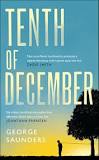
10thDecI’ve been reading the Best American Short Stories of 2012Within this anthology is a story called Tenth of December by George Saunders; it’s also the title and concluding story of Saunders’s most recent collection.

This story interweaves two arcs, one of a boy and the other an old man. It’s this contrast between a man just starting life and another nearing its end that’s the focal point for the story. The lives of these two are brought together during a tragic winter event that leaves the reader uncertain as to whether either, both, or neither of the two will survive.

Saunders’s style is sparse, not in the manner of Hemingway but in a way that happily and freely abandons the sentence as the essential basic unit of writing –as opposed to occasionally letting phrases shine. The author also forgoes the traditional approach to noting dialogue. However, like Cormac McCarthy, Saunders makes himself clearly understood nevertheless.

Saunders displays a great sense of humor in this work. This is particularly noted as we are shown the boy at play during the piece’s introduction. I cracked up when it’s mentioned in boy’s internal monologue that he invented a martial art called Toi Foi, A.k.a. “Deadly forearms.”

The author masterfully captures the varied voice of boy and old man. The contrast between the playful youth and the reflective elder is a powerful commentary on the cycle of life.

TODAY’S RANT: Emerson Haters

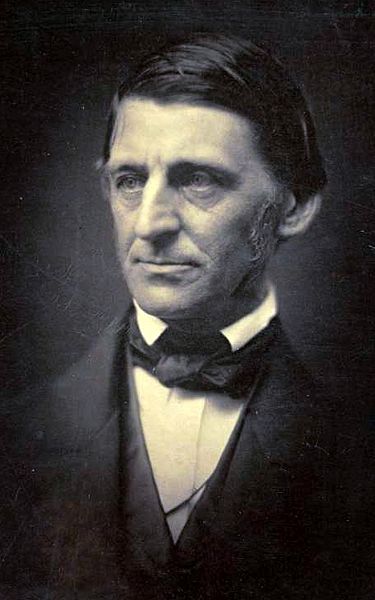
Ralph_Waldo_Emerson_ca1857_retouchedI began reading the Best American Essays of 2012 and was disappointed by the first  essay entitled, The Foul Reign of Self-Reliance by Benjamin Anastas.

Self-Reliance: In or out of the canon?:

Anastas rails against the essay Self-Reliance by Ralph Waldo Emerson. The only nice thing he has to say about Emerson (as a parenthetical insert) was that the philosopher spoke out against slavery and the poor treatment of American Indians.  Anastas suggests Emerson’s essay should be eliminated from the  canon of required reading. This desire to censor ideas that he (or his collective) find objectionable is a telling indicator of why he finds Emerson so vile. In my ideal world, students would read Emerson and Marx and Jefferson and Socrates and Confucius and eventually even the likes of Hitler and they’d make up their own minds about what ideas were sound and which were suspect. I’m  confident that on the whole that a free-thinking people will overwhelming reject the poorest and most vile of ideas. Obviously, not all will draw the same conclusions as I about which ideas are best, but I prefer the company of such people to those who completely agree with me but have turned their thinking caps off. Anastas seems to favor control of the flow of ideas to those society or teachers or some collective finds agreeable.

An undeniably powerful idea:

About all that Anastas and I agree on is that the thesis of Emerson’s Self-Reliance is powerful. By a powerful idea, I mean one that has the ability to grab a reader by the collar and demand his or her attention –whether they like it or not. Where Anastas sees Emerson’s ideas as perniciously powerful, I see them as sagely powerful. While we seem to be in near complete disagreement, I don’t want to go into a point by point refutation. I want to focus on what I believe is Anastas’s central point, that our current political dysfunction is the fault of Emersonian thinking. On this I think Anastas is shows perfection in his wrongheadedness.

The reason I don’t bother arguing point by point is because  much of my difference of opinion with Anastas comes down to being on radically different places on the Borg-Anarchist continuum. Reasonable people may disagree. I have a set of beliefs that inform my position on the Borg-Anarchist continuum that range from my opinion on free will to ideas about the value of optimizing (minimizing) what I would call “social friction” (others have used that term in another way.) That’s neither here nor there, Anastas may have his own justification for his views, though he doesn’t lay them out. For example, he uses the phrase, “excessive love of individual liberty” without indicating what he believes would be the appropriate amount to love liberty, let alone how he drew his conclusion. It may be that he doesn’t have a rationale, but rather has suborned his views to some collective that he believes is representative of society (that would be the true anti-Emersonian approach.)

The Borg-Anarchist continuum:

I should explain what I call the “Borg-Anarchist continuum” for those who are neither Star Trek fans nor wonky. Humans are inescapably both individualistic and social creatures. We know that people get morbidly depressed when they feel they aren’t valued as individuals (Tom Hanks at the beginning of Joe Versus the Volcano), but it’s also true that people go nuts when they are completely isolated from others (Tom Hanks in Castaway.) [Please, don’t draw conclusions about which is “better” on the relative merit of those two movies.] This leads to one of our most fundamental dilemmas. Where our individuality bumps up a social unit, how does one reconcile theses conflicts?

We can imagine a continuum where at one end are the Borg and at the other end are Anarchists. Borg were a powerful enemy in the Star Trek universe. The Borg were a collective in which any given individual was inconsequential and all gave themselves fully to the objective of the collective (i.e. universal domination.) Anarchists are those who feel there should be no authority over the individual. Virtually no one fits into the extreme camps because they’re both blatantly flawed. No one would have any incentive to do anything in Borg world, and an anarchy will inevitably devolve into chaos. No one would invite the Borg or Anarchists to their cocktail party. In practice, one might think of a Communist-Libertarian continuum. Communists believe the state owns the means of production and should be able to regulate ideas as intimately personal as religion, but they don’t attempt to completely stamp out all vestiges of individuality (e.g. people still have names instead of the Borg’s “4 of 7.”) Libertarians believe that authority over the individual should be minimal, but that there’s a role for governance in punishing the illegitimate use of force or the use of fraud.

Yes, I realize that in being one-dimensional, a Republican and a Democrat could occupy the exact same space on the continuum (i.e. wanting the same amount of governance, just not in the exact same domain.)

Is political dysfunction a product of Emersonian thought?:

So, let’s go back to the issue of blaming political dysfunction on Emersonian ideals. It’s my belief that we have political dysfunction because politicians aren’t following Emerson’s advice, rather than that too many are doing so. Let’s consider Anastas’s argument.

“’A man is to carry himself in the presence of all opposition,’ Emerson advises, ‘as if every thing were titular and ephemeral but he.’ If this isn’t the official motto of the 112th Congress of the United States, well, it should be.”

Anastas is saying that the idea that one shouldn’t bend to the ideas of other men, as suggested by Emerson, is the cause of the problem. However, this requires us to believe that politicians engaged in free thinking consistently come down in the perfectly bifurcated set of positions required for grid-lock to take hold on a wide range of issues.  This is dubious. I find it much more probable that politicians do not think freely, but rather they subordinate their opinion to their party and to what the people of their district think. That, my friends, is the source of the problem. Politicians are doing exactly what Anastas wants, which is subordinating their opinion to the majority in their districts. The two-part problem is that: a.) districts are drawn to have clear winners. b.) our society has abandoned the Emersonian idea and taken party and sect as a substitute for thinking. We’ve created a two-party grid-lock machine, and we’re surprised that it works.

Yes, Emerson tells us to be obstinate in holding to ones own beliefs in the face of other people. If every politician did this, our political field would be much richer with many sets of opinions and not just the two captured by the party platforms of the two ruling parties. (At least it wouldn’t hold sway always on anything important.)  What Emerson does not ask of us is to be obstinate in the face of new or better information. Anastas’s own selection of quotes says as much.

“Speak what you think now in hard words,” Emerson exhorted, “and tomorrow speak what tomorrow thinks in hard words again, though it contradict every thing you said today.”

In other words, Emerson is suggesting that one should be able to change one’s mind (one just shouldn’t do this in deference to the views of other people.) One should changes one’s mind when one has new or better information or one’s thinking about the subject is clearer. Changing one’s mind has a bad rap in our political system. There’s a kind of changing of one’s mind that should leave us with a bad taste in our mouths, and that’s pandering. However, not all mind-changing is pandering. If we ask a politician why he changed his mind and he says, “Because I learned X, and that new information made me conclude Y,” then that person should be applauded. The ideas of people of party and sect don’t change regardless of new information. This stagnancy is part of the problem as well. An individual can change his or her mind rapidly but an ideological organization is never swift. When people subordinate their thinking to their sect, this is when we end up unable to get out-of-the-way of slow-moving freight train problems like many that we face today.

The animus that characterizes our political domain is not a function of Emersonian thinking. While Emerson may not address it because it isn’t part of what he’s trying to get across in this essay, it stands to reason that if everyone thinks for themselves people will draw different conclusions. The Maytag repairman is not the loneliest person; the loneliest person in the world is a free-thinker who can’t get along with people who don’t share his exact slate of thinking across a range of  subjects. Thinking for oneself is not only consistent with tolerance, it breeds it. It’s only when one conforms one’s thinking to that of a collective that one can afford to act like people who think differently from one are pure evil.

Other thoughts on the subject:

For another post of mine about Emerson’s Self-Reliance see here.

Also, Emerson was not the only one in the 19th century who was dismayed by the trend toward subordinating political views to party, Mark Twain had a lighter essay on the subject called Corn Pone Opinions.

BOOK REVIEW: Job by Robert Heinlein

Job: A Comedy of JusticeJob: A Comedy of Justice by Robert A. Heinlein

My rating: 4 of 5 stars

In “Job: A Comedy of Justice” the protagonist, Alexander Hergensheimer, finds himself randomly drifting from one alternative universe to another. After his initial shift, he’s joined by a lover, Margrethe, who knows him from her world as Alec Graham. The couple stay together through many other ill-timed world shifts, and are only separated when Hergensheimer finds himself in heaven. Facing the question of what he’d do to be reunified with the woman he loves, the novel really gets interesting.

As you may have expected, the name of the book is the Biblical name “Job” (i.e. rhymes with lobe) and not “job” as in an occupation.

Each time the couple shifts, they are poor anew. While geography remains unchanged, history and money are different from one world to the next. Hergenshiemer washes dishes to make a living because he can’t engage in his trade, preacher, in these worlds. He can’t do anything else without valid identification.

Just as Dante inadvertently convinces us that the first circle of hell is preferable to heaven (who wouldn’t rather be in the company of Socrates and Virgil than that of Jerry Falwell and Jimmy Swaggart,) Heinlein creates an afterlife that is a good deal more complex but also more just than the Biblical version.

I recommend this humorous and thought-provoking book.

View all my reviews

BOOK REVIEW: On Killing by David Grossman

On Killing: The Psychological Cost of Learning to Kill in War and SocietyOn Killing: The Psychological Cost of Learning to Kill in War and Society by Dave Grossman

My rating: 5 of 5 stars

Grossman’s work reports on a line of research started by Army historian and author of “Men Against Fire” S.L.A. Marshall. Grossman not only brings us up-to-date on this thesis, he shows us its ramifications for modern society-at-large.

A two-part thesis was advanced by Marshall and continued by Grossman and others.

First, humans, like other species, are reluctant to kill within their species. (Marshall noted that in World War II about 75% of soldiers would not fire on the enemy when they had the opportunity. There is evidence this was true for earlier wars as well.

Second, the percentage of soldiers firing on the enemy could be increased by training that conditions them to shooting targets that look more human. i.e. Instead of shooting bulls-eyes, they should at least shoot a shape that looks like the silhouette of a man’s head and shoulders.

It turns out that the ability to condition combatants proved correct. There was a progressive increase in genuine engagement of the enemy by soldiers in subsequent wars (i.e. the Korean and Vietnam Wars.)

Grossman goes on to say that this type of conditioning is not limited to soldiers and police officers. He suggests that video games in which gamers shoot at humans and humanoid creatures will desensitize players to trigger pulling. Many scoff at this idea because they think that he is saying that such games make killers. What he is suggesting is a bit more subtle than that. He is saying that a person who is pre-dispossessed to go on a killing spree will be less reluctant if they have undergone the conditioning of this type of gaming. In essence, an high barrier to going on a killing spree will be lowered.

Grossman covers many other issues related to killing, such as the importance of distance. One intriguing fact is that an infantryman that kills a single enemy soldier in war is more likely to have problems such as Post-Traumatic Stress Disorder (PTSD) than a bombardier who drops bombs that may likely resulted in hundreds or thousands of deaths.

The book also talks about the role of authority, famously addressed by the Milgram experiments. Stanley Milgram found that most people would turn a knob that they believed was delivering a severe shock to a complete stranger, if they were told to do so by someone who seemed to be an authority figure.

I highly recommend this book for those interested in the subjects of:
– PTSD
– the role of violent video games in mass killings
– the psychological effects of killing

View all my reviews

BOOK REVIEW: Matterhorn by Karl Marlantes

Matterhorn: A Novel of the Vietnam WarMatterhorn: A Novel of the Vietnam War by Karl Marlantes

My rating: 5 of 5 stars

Marlantes gives one insight into what it was like to be a soldier, in particular a young officer, during the Vietnam War. For those confused by the name, “Matterhorn” is the name of a fictional encampment in central Vietnam in the book.

In Matterhorn, war is as it has famously been defined, “long periods of intense boredom punctuated by brief instants of sheer terror.” The author builds his characters such that the periods of intense boredom are informative. We see how the tension of the war boils over into fresh hell that interrupts the boredom.

Racial issues play a major part in the drama of the book. The main character, Waino Mellas, is white and of the variety who are almost apologetic in the presence of blacks. However, within the unit there are both black-power movement types as well as good ole boys, making for one powder kegs that erupts during the course of the book.

Race is not the only fault line we see in Matterhorn. There is also a tension between “lifers” and draftees. However, the bigger tension is between the front line troops and those who direct them from afar. The most intense section of the book involves a raid on a hill for which the men are undernourished and under-supplied.

The author was a Marine in Vietnam, and this experience no doubt contributed to the book’s authenticity.

I highly recommend this book as a powerful examination of the role that valor and vice play in war.

View all my reviews

DAILY PHOTO: Church at Tims Ford, Tennessee

On a cloudy night, this place would be CREEPY!

On a cloudy night, this place would be CREEPY!

Have you ever seen an idyllic, pristine setting, and thought, Under different circumstances this would be the perfect location for a horror film?

That was my feeling as I walked out of the woods and saw this solitary, white church and its graveyard on a hill in central nowhere (No offense, Tennessee.) Picture what this place would be like under a low, roiling, gray clouds. It’s spitting cold rain, the graveyard is leaf-strewn. From which grave will a clawing hand protrude? You don’t know. You don’t know.

TODAY’S RANT: Nukes and Ketchup

Why was there no Manhattan Project for Ketchup?

Why was there no Manhattan Project for Ketchup?

How come we mastered the thermonuclear warhead decades before we did the ketchup bottle?

Building a nuke took:

– the greatest scientific minds Hungary ever produced (You scoff, but Hungary’s claim to fame is driving out more Nobel Laureates and top-rate scientific minds than most countries will ever hope to produce. [e.g. Teller, Szilard, Wigner, von Neumann, etc.] If they didn’t let jackwagons run their country, they’d probably rule the world by now.)
– $42 billion in current-year US dollars
– the Project Manager who built the Pentagon
– and a whopping two or three years (for the fission weapon)

Building a decent ketchup bottle shouldn’t have even required an Algonquin Round-table  It could have been achieved by two morons sitting around at a barbecue.

Moron one says, “You knows what would be delightful, if this bottle was squeezable plastic, not glass.”

Moron two says, “Dude, you are so right, and what if they turned it upside-down so that all the ketchup stayed near the hole?”

Bob’s your uncle, the ketchup bottle is perfected.

Do you know what kind of Galactic douche-bags this makes humanity look like? It makes it seem like we don’t care about our condiments.
Oh, but we do. I’ve seen it. I’ve seen a man in Boise use no less than 42 packets of ketchup on his fries. I saw a rotund woman in Phoenix use half a jug of mustard on her hot dogs. I saw a canuck slather mayo on his burger (what is up with that, Canada.) From sea to that other sea, amid the prairie dogs, through the alligator-infested swamps, across those bruised mountains, I’ve seen a divinely inspired love of sauces throughout our great nation (and that ancillary nation to the north.)

No wonder aliens haven’t visited us; they probably haven’t received word across the light-years that we’ve mastered ketchup. Or maybe it’s the fact that we haven’t built a plastic fork whose tines could stick up to a sturdy gherkin. (But that outrage is for another day. Yes, manufacturers of disposable flatware, you too will taste my wrath.)

Book Review: JOHN DIES AT THE END by David Wong

John Dies at the End (John Dies at the End, #1)John Dies at the End by David Wong

My rating: 5 of 5 stars

If the movie Alien was “Jaws in space,” then John Dies at the End is “Bill and Ted’s Excellent Adventure in the Nether World.” Except that, unlike Bill and Ted’s, Wong’s book is hilarious.

The gist of this book is that two likable anti-heroes ingest a drug, “soy sauce,” that gives them the ability to pass into an alternate universe. They’re inexorably drawn down the rabbit hole (so to speak, there is no actual rabbit hole in this book.) What they find is not what they expected. It’s not what anyone expected, because it’s so mind-boggling ridiculous and richly complex.

The title character, John, oddly enough is not the main character. The author, David Wong, uses a self-named protagonist as narrator and lead. The book unfolds as Wong (the character, not the author) tells a skeptical journalist about the strange goings-on in his small, Midwestern hometown.

We see John mostly through the lens of the narrating Wong. We know that John is a storyteller. Which may sound a lot like “liar,” but that’s not the case. Have you ever known a person who would never deceive you for personal gain, but will never fail to engage in hyperbole to make a story funnier or more interesting? That is John. He has one of my favorite lines of the book:

“We’re talking about a tentacled flying lamp fucker, Dave. What are you prepared to call unlikely?”

Despite the fact that John is a booze-hound and exaggerator, he remains an endearing character. As Wong gets to know Amy, a classmate who lost her hand after they knew each other in school, we get an insightful testimonial about John:

“Let me tell you something about John. The reason I was surprised by your hand was because John never once described you as, ‘the girl with the missing hand.’”

As for Wong’s character, he is hapless but hilarious. When he gets to know Amy, he is shocked to find that she’s not retarded or crazy. They had vaguely known each other from a “Special Needs” school, but it never occurs to him that she might be at least as sane as he.

The book is a pan-genre mélange. While it’s mostly a combination of horror and humor, there are points at which it feels like action/adventure and towards the end it seems largely like sci-fi. Horror and humor are not easily mixed, but this book does it about as well as one can imagine it being done. John Dies at the End is campy, of that there can be no doubt, but Wong writes descriptions of creatures and murderous events in a way that offers grim clarity. As a lover of humor more than horror, I was obviously not put off by this dark comedy.

Throughout the book, one suspects that the whole surreal bag of events is just a bad hallucinogenic trip, and that the “soy sauce” is just LSD on steroids. Happily this is not the case… or is it?

Don’t worry; John dying is not the intriguing twist at the end of this book. There are a couple such twists though.

If the movie that comes out today (January 25, 2013) is not awesome, it’s not Wong’s fault. The trailer shows us the quirky horror, but not the humor of the book. Much of the humor is in the language – i.e. the word choice. Some of that will likely come out in dialogue and narration, but who knows how much.
View all my reviews

TODAY’S RANT: Toy Movies

Uggh!

Uggh!

I’m troubled by the devolution of movie source material. As soon as there were movies, there was a desire to convert books into films. This worked great. While it wasn’t always easy to convey the depth of a 600 page novel in a 100 page screenplay, this gave even the least of us the ability to raise ourselves up to the status of pretentious douche-bag with the mantra –say it with me: “The book is always better than the movie.”

Running low on literary fodder, movie-makers decided to shift to making movies from comic books. This worked even better. You could convey the complexity of a comic in a movie, and you had an existing visual media for continuity. The major challenge was finding actresses with huge boobs who could deliver a spinning back-kick (enter Scarlet Johansson), and figuring out what to do about the crotch bulges (or lack thereof) of male superheroes in Spandex.

Pushing the limits, directors turned to video-games. This gave us such hits as Lara Croft: Tomb Raider and Doom.  Okay, a video game may give us a nice action-packed romp of mayhem and carnage– albeit with dialogue like, “Suck on this!” (accompanying a grenade toss.) One can watch such a movie on basic cable on a Sunday afternoon while eating an entire pizza and still leave all of one’s mental faculties for contemplating such deep questions as whether this is the low point of one’s existence.

Movies based on toys and board games are the low point of Hollywood’s existence. I thought they had learned their lesson from the movie version of Clue in the 80’s, but apparently not. 

To show that I am nothing if not flexible, I will say that I’m willing to change my view if any of the studios are willing to develop  my ideas such as:

Lincoln Logs: Zombie Slayer: A rogue ex-cop, Lincoln Logs, takes a break from drinking himself to death after his family is Zombified to lure zombies into poorly constructed cabins, toppling the cabins, he crushes the Zombies to undeath. Tagline: “Eat Log, Bitches.”

Chutes and Ladders: Into Darkness: Two naughty children find out what happens when one chutes right off the board — an express ride to hell, that’s what. In order to get out they have to learn to count to 100, but the devil is teaching them to count: 1, 7, brick, egg, 14, 6, toad, biscuit… They must warm Satan’s heart, and then develop the upper-body strength to climb a ladder out of hell.  Tagline: “Numbers are Hard, Hell is Hotter.”

Lego Box: The Musical: A plucky red-headed stepchild is devastated when his siblings get all the Lego bricks, but he only gets the plastic tub they came in. However, through hard work and dedication, he becomes the lead percussionist for the Boston Philharmonic Orchestra, leaving his horrid family behind. Working Tagline: “Eat Box, Bitches.”