TODAY’S RANDOM THOUGHT: How Sad for You

success-failA man once said to me, with evident pride, that he’d never failed a test of any kind in his life.

I guess he was expecting admiration, and must have been disappointed when I blurted, “how sad for you.”

But here is a person who has never stepped outside his comfort zone, who has no idea what he is capable of, and–moreover–he’s pleased as punch with that state of affairs.

TODAY’S RANDOM THOUGHT: Bear or Squirrel?

Taken in the summer of 2011 in Hungary.

Taken in the summer of 2011 in Hungary.

There are two ways to survive a harsh winter: you can squirrel away your pile of acorns or you can bear it by just not needing much.

TODAY’S RANDOM THOUGHT: Chasing MacGuffins

What's the "Rabbit's Foot?" Source: Paramount

“What’s the ‘Rabbit’s Foot?'” “I don’t know, but I’m going to shoot her in the head if you don’t give it to me.” Source: Paramount

Critics often bemoan the effectiveness of MacGuffins. A “MacGuffin” is an object so intrinsically valuable that people are willing to kill for it, die for it, or chase each other across the universe for it… and this is the important bit…without knowing precisely why said object is so valuable. In other words, it’s a plot device designed to propel plots forward that would have no reason to advance otherwise. Its exact characteristics are unimportant, and sometimes even its general characteristics remain unrevealed.

Prime examples from the cinema include “the case” from Pulp Fiction, the “Maltese Falcon” from the same-named movie, the “one ring” from Lord of the Rings, the sword “Destiny” from Crouching Tiger, Hidden Dragon, the “Rabbit’s Foot” from Mission Impossible III, the “Tesseract” from The Avengers, or “Genesis” from Star Trek II: The Wrath of Khan.

So, why would people kill, die, or chase after something that they didn’t understand? That’s what the aforementioned critics say, but I have my own theory as to why MacGuffins work well and frequently.  MacGuffins work because people are used to spending their lives chasing something that they don’t precisely understand. Call it bliss or legacy or a missing part of oneself. If one spends one’s life chasing after a key that may or may not achieve one’s desired goal, it would be hypocritical to not have sympathy for characters who do the same.

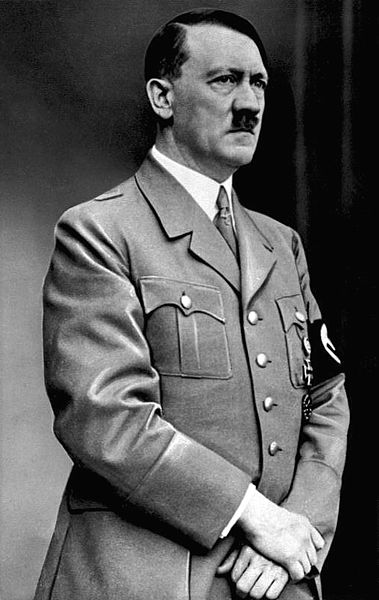
TODAY’S RANDOM THOUGHT: Hitler’s Final Victory

Source: German Federal Archives

Source: German Federal Archives

Hitler killed the short-stache (a.k.a. the “toothbrush mustache.”) Imagine that, almost 70 years after his death, he still holds power over people’s decisions about facial hair.

This is a misplaced take-away lesson. It’s the unbridled narcissism, the icy hatred, and the irrational exuberance in the power of evil of Hitler that should be abandoned (yet, somehow, those intangibles still quietly exist.) It’s not the superficial aspects of Hitler that should be shunned, but the ones at the bastard’s core.

I’m not saying the toothbrush-stache was a good look. On the contrary–as one who has had a mustache his entire adult life and has worn a beard now for several years–I’m a little offended by the lack of commitment to one’s choice of facial hair that the toothbrush-stache represents. (Incidentally, I feel the same about the sole patch and mutton chops.) In my mind, one should go full-stache or go home to shave.

Still, there being no accounting for taste, I think those individuals who would otherwise find the short-stache appealing (i.e. you know, indecisive types who wear culottes and eat with sporks) should revive the toothbrush mustache as a big fuck-you to Hitler–don’t let tyrants boss you around from the grave.

Toothbrush mustache admirers of world, unite!  (No, I won’t be joining you.)

TODAY’S RANDOM THOUGHT: Death as the Good Drunk

I don’t think Death should be depicted as a cowled, faceless Grim Reaper.

Instead, I think Death should be the wise drinking buddy who can hold his liquor.  Not the one who acts like an idiot an encourages friends to do the same. Rather, the one who spurs you to ask out a girl who’s way out of your league, and keeps you classy if (when) she declines.

BOOK REVIEW: Yoga Sutras by Patanjali [Trans. Charles Johnston]

Yoga Sutras of PatanjaliYoga Sutras of Patanjali by Charles Johnston

My rating: 4 of 5 stars

Amazon page

There are about a billion editions of Patanjali’s The Yoga Sutras. The one I got was a free or very cheap on Kindle, and is, therefore, probably not the best edition. I don’t know that the Kindle version I got still exists because it included a supplemental essay by Swami Vivekananda that the version I linked to on Amazon doesn’t. However, the translation is the same, and is by Charles Johnston.

For many old works, the edition might not matter too much, but for Patanjali’s Sutras it matters a great deal. First, there’s the issue of the quality of the translation. Beyond that, however, is the question of the analysis. The Yoga Sutras are extremely brief, consisting of only 196 aphorisms. Owing to the terse brevity of the Sanskrit language, many of these aphorisms are only a few words long. That means that there isn’t a high degree of precision in the language of the Sutras, and, consequently, there’s a great deal of room for misunderstanding and misinterpretation. It’s for good reason, therefore, that most editions are 90% or greater commentary on Patanjali’s words.

The Sutras are typically divided into 4 chapters (this convention apparently came well after Patanjali wrote them.) The first section lays out the objective of yoga. The central notion is the need for Chitta Vrtta Nirodha, which basically means to transcend the fluctuations of the mind. Patanjali’s point is that the problem faced by mankind is that people’s minds are run amok. There is a need for some system to facilitate correction of all this monkey-mindedness. That’s where Chapter 2 comes in.

The second chapter lays down an outline of Ashtanga Yoga, which is the eight-fold path of Raja Yoga (i.e. Royal Yoga). While modern-day people tend to think of yoga only as pretzel-like physical postures, that’s just one of the eight limbs of yoga. The eight limbs are: commandments (yama), rules (niyama), postures (asana), control of breath (pranayama), withdrawal of the senses (pratyahara), concentration (dhanara), meditation (dhyana), and liberation (samadhi.)

It’s interesting to note that the limb that many think of as yoga, i.e. the postures, is one of the most briefly covered. Most famously, Patanjali says in Ch.2, Sutra #46, “Sukham Sthiram Asanam” (i.e. postures should be stable and effortless.) The massive body of asana that developed in Hatha Yoga were initially just a means to give one the ability to sit still for a long periods of time comfortably enough to get one’s mind in order.

The third chapter talks a little bit about the last three of the eight limbs (i.e. concentration, meditation, and liberation.) However, the bulk of this chapter is devoted to the supposed magic powers that yogis claimed to have had as a result of their work on improving their minds. For skeptics and scientifically-minded individuals (e.g. yours truly), this is where the Sutras take a silly turn. The translation in question came out in 1912, and it’s clear that rationalism was already gaining hold and magic was getting to be a harder sell. I suspect that was the reason for the inclusion of Swami Vivekananda’s essay entitled “The Powers of the Mind”—to capitalize on the gravitas of the renowned yogi to convince people that chapter 3 isn’t bunk.

The fourth chapter wraps up the book neatly–discussing karma and the liberation of the karmic cycle achieved through the state of higher consciousness called samadhi.

If one has more than a superficial interest in yoga, it’s pretty much obligatory to read some edition of Patanjali’s The Yoga Sutras. I didn’t find this edition to be devastatingly poor, but there seems to be a consensus among reviewers that it’s not among the best translations / commentaries.

I would recommend that one read some version of these sutras, be it BKS Iyengar’s Light on the Yoga Sutras of Patanjali, Swami Vivekananda’s edition, or Swami Satchidananda’s version. I don’t have any experience with these other editions, though I have read works by BKS Iyengar and Swami Vivekananda, and found works by both to be well-written and clear. Notwithstanding the parts about magical superpowers, the book does provide a lot of food for thought, and in nice bite-sized pieces.

View all my reviews

Paleo-Stressing: Acute v. Chronic Stress

"What happened to the good ole days when I ate you people--not lived in your cages?"

“What happened to the good ole days when I ate you people–not lived in your cages?”

Paleolithic dieting is all the rage these days. I’m no expert on the paleo-diet, but–as I understand it–this refers to the practice of eating the foods consumed by our pre-agrarian ancestors. The idea is that if one consumes the foods that our species is evolutionarily-optimized to eating, one will be healthier.  Whether one believes in the merits of the paleo-diet or not on the whole, it’s hard to argue that one wouldn’t be better off eating less highly-processed and highly-refined foods and more things that look like food at a glance.


Our diet isn’t all that has changed since the days of our pre-agrarian ancestors. Modernity has brought with it an entirely new way of experiencing stress. Eliminating or reducing stress is a common topic of discussion, but not all stress is created equal. There’s a necessary form of stress, a stress that makes one better, stronger, faster, and smarter. We don’t want to willy-nilly eliminate stress; we want to reduce the wrong type of stress.


Our ancestors—like animals–experienced brief periods of intense stress (e.g. saber-tooth tiger attacks), followed by longer periods in which they were free of deadlines, carpools, and after-school activities. Now, no one likes to have a saber-tooth tiger stalking them. It’s unpleasant. Modern humanity has gone to great lengths to eliminate those short bursts of terror, but not without cost. (If you don’t believe me read Robert Sapolsky’s Why Zebras Don’t Get Ulcers.)


Whether or not you believe that eliminating acute instances of terrifying stress is bad for mankind, it’s hard to argue that modernity’s leveling process didn’t eliminate stress, but instead resulted in a chronic stress on a smaller scale. People today have impossibly long daily to-do lists, and they have to accept trade-offs between work, family, and personal development.


It’s true that you don’t get eaten by a giant cat when you drop the ball, but life is so packed diverse events that one may feel like one is dropping some ball constantly. If your boss thinks you’re a model employee, then your kids are probably going to need therapy. If you have a contented home life, your boss may have his or her eyes open for someone who can give the firm consistently 70+ hour work weeks. If you feel you’re doing alright on both the work and family front, your body and / or mind is probably a train wreck.


Chronic [mini] stress may feel better than acute [catastrophic] stress, but it takes its tolls in various ways. First, with our sympathetic nervous system (fight-or-flight reaction) constantly engaged our body’s power to heal itself is reduced. When the parasympathetic nervous system is engaged, the body devotes resources to long-term goals like getting healthier, but in stress mode activities not relevant to immediate survival shut down. This is a great system if you have periodic life and death stress, but is not so good if you’re under constant stress.


Second, chronic stress reduces sleep, and sleep is essential to one’s mental and physical well-being. There are a wide variety of symptoms associated with sleep deprivation such as forgetfulness, decreased concentration, decreased alertness, reduced reasoning ability, diminished problem-solving capacity, and depression—all of which can diminish our physical health through accidents, ailments, suicide attempts, and lack of energy for exercise.


Third, chronic stress can make one fat, with all the health issues that result. Some people use food as a coping mechanism. Other people eat too fast or choose their food poorly because of time constraints or because they are not mindful of eating as their monkey minds churn at a mile a minute. Then there is the more convoluted and complex issue of cortisol–a hormone released under stress that is linked to weight gain in at least some cases. Even if you don’t have a problem on the calorie intake side, the stressed individual may not do so well on the calorie burning side—either because of a lack of time to exercise or a lack of energy.


Modern humans are uniquely suited to chronic stress because we are the only species that achieves the same physiological stress response by remembering and obsessing about a stressful event as experiencing it. Abandoning the modern approach to living isn’t an option most are willing to entertain; but there are ways to combat chronic stress.


Move – Meditate – Mindfully Breath: The bad news is you’ve got to shoehorn these activities into your schedule daily (or at least several times a week.) The good news is that they don’t need to take up a lot of your day. There are a number of systems that address all three components in one handy package such as Qi Gong, Yoga, and some martial arts. I don’t think it matters so much which one chooses as how one goes about one’s practice.


Movement strengthens and strategically stresses the body, but it also increases one’s bodily awareness so that one becomes aware of how stress is manifesting itself in one’s body. Meditation teaches one how to live in the present moment, and it trains one to recognize the seeds of negative thought and emotion earlier so that one can counter-act them. Obviously, breathing is essential to life, but learning to be aware of one’s breathing patterns and to “manually override” the breath patterns associated with harmful emotional states is a beneficial skill.


Massage / Bodywork: Whether self-administered or other-administered (the latter allowing greater distressing–particularly if the masseuse is skilled) massage is an activity, like movement, that can help one become aware of where one is physically holding one’s stress. These physical manifestations of stress can exacerbate the whole experience of stress. One should take time periodically to have bodywork done. A day rarely goes by in which I don’t work on my own neck, shoulders, head, or face, and I occasionally get professional Thai Yoga Bodywork done.


The Places that Scare You: Force yourself to go someplace (not necessarily literally a “place”) that scares you once in a while. This needn’t be skydiving or hand-gliding—but it could be. It may be a martial arts class in which one has to put on the gloves occasionally and go at it. It may be joining Tostmasters and having to give a speech in front of a crowd. It may be traveling to some backwater where you don’t know the language, but you want to learn. This is a very personal issue. (i.e. A Type-A personality he-man may not find that skydiving is outside his comfort zone. If so, sorry, skydiving doesn’t count, he may need to learn ballroom dancing, or something else that truly takes him outside being comfortable.) KEY POINT: The problem with hiding from all stressors is that it doesn’t result in a stress-free life, what happens is that smaller and smaller stressors loom bigger and bigger in one’s mind. Which brings us to…


Perspective:  One must put life’s challenges in perspective. Each person’s problems are important to them, and I don’t want to diminish anyone’s problems, but—come on—you’re not going to be eaten by a freaking saber-tooth tiger.

First World Problems Are So Adorable


How deep is it? No one knows.

How deep is it? No one knows.

In the interest of enhancing global understanding and camaraderie, I’ve built a translator of common first world (FW) problems–putting them in terms of their Rest of the World (RoW) equivalents.

FW: This food needs salt.
RoW: This food needs food.

FW: My health insurance premiums went up $20 per month.
RoW: My right foot, which recently turned from purple to black, just fell off.

FW: My car is in the shop again.
RoW: My right foot, which recently turned from purple to black, just fell off.

FW: It’s raining again today.
RoW: My house was washed off its foundations and is currently floating down the Brahmaputra River.

FW: Looks like those devils from the other party got a majority in the legislature.
RoW: This coup was particularly bloody.

FW: Squirrels are getting into my bird feeder.
RoW: A tiger ate my family.

FW: A traffic jam made me late for Pilates class.
RoW: While limping through the Kyber Pass to get antibiotics for my right stump, I was socked in by an unanticipated blizzard.

FW: My GPS says this road cuts under the interstate, but now I’ve got to go around.
RoW: What’s GPS?

BOOK REVIEW: The Miracle of Mindfulness by Thich Nhat Hanh

The Miracle of Mindfulness: An Introduction to the Practice of MeditationThe Miracle of Mindfulness: An Introduction to the Practice of Meditation by Thích Nhất Hạnh

My rating: 4 of 5 stars

Amazon page

This book by the renowned Vietnamese Buddhist monk, activist, and poet, Thich Nhat Hanh, offers pointers on how to live a life of mindfulness. Like most of Hanh’s works, this one is brief, concise, and the front and back matter account for about as much verbiage as the chapters themselves.

The seven chapters that make up the book proper examine mindfulness from various angles, with various approaches, and have a loose organization. The most readable of these chapters–owing to its narrative format–is the last, which retells a Tolstoy story about an Emperor who receives three questions and–unable to find suitable answers by offering a reward to his subjects–dons a disguise and visits a hermit sage. Needless to say, the sage (and life events) enlighten the Emperor, and the answers revolve around the theme of mindfulness. Among the most thought-provoking of the chapters is one that proposes that one take one day of the week to focus on mindfulness. Hanh offers advice on how to best select and structure such a day.

While the appended matter of some of Thich Hhat Hanh’s books can read like filler (intended to reach a page quota), that isn’t so much the case with this book. The most valuable of the appendices gives 32 exercises for building mindfulness. Many of these exercises are variations on a theme, and some are much more extensive than others, but it’s a crucial section and might even be called the heart of the book. Likewise, there are five sutra translations that will be appreciated by readers who are actually Buddhist. (Non-Buddhists may find the sutras to be a less colorful and more repetitive restatement of what Hahn has told them in the chapters. If one pays attention to the chapters and does the exercises, reading the sutra’s isn’t necessary for those who are not students of the religion.)

There is an odd postscript by one of Hanh’s students that is like those I’ve seen in other Hanh books. It’s an odd little testimonial. I put it in the filler category as anyone buying the book knows who Thich Nhat Hanh is and about the accolades he has received and, therefore, they don’t need a prologue telling them how awesome he is. It actually detracts from his persona as a wise man, because it makes one wonder who inspired the little ego trip. I suspect this is more a publisher desired addenda than an author inspired one, but, at any rate, it’s not useful. It can be interesting to hear about the war days, but there’s an outlet for that. Furthermore, I would think the place to tell us how awesome the author is would be at the beginning of the book–not the end. If one gets to the back matter, he must have done something to impress one.

I’d recommend this book for meditators, would-be meditators, and anyone who thinks that life is slipping through his or her fingers because of constant stress and a runaway mind.

View all my reviews

BOOK REVIEW: The Tao of Jeet Kune Do by Bruce Lee

Tao of Jeet Kune DoTao of Jeet Kune Do by Bruce Lee

My rating: 4 of 5 stars

Amazon page

Jeet Kune Dō (henceforth, JKD) is Bruce Lee’s “styleless style” of martial arts. Its literal meaning is “the way of the intercepting fist.” However, Lee cautions one against attaching too much significance to that name (or any name) in the book’s final chapter. Long before “Mixed Martial Arts” became a household word, Lee was constructing this fighting system that borrowed heavily from the Western traditions of boxing, fencing (conceptually speaking), and wrestling as well as from Kung-fu, Savate, and Judō/Jujutsu. While JKD employs techniques and concepts from these systems, Lee remained adamant that no good came of organized styles built on fixed forms. In fact, that might be said to be the central theme of the book. That is, each fighter should begin with sound fundamentals and build an approach that is ultimately his or her own.

The Tao of Jeet Kune Do is an outline of the martial art. In many ways, it looks like and reads like Lee’s personal notebook. It’s illustrated with crude (but effective) hand drawings of the type one would see in a personal journal, and they are annotated with hand-written notes. (My biggest criticism is that on the Kindle version the graphics are largely unreadable. I’d recommend you get the print edition if you can, which is large-format paperback as I recall.) The book combines a philosophy of martial arts with nitty-gritty discussion of the technical aspects of combat. The philosophical chapters bookend the technical ones.

As others have pointed out, there’s not much that is new in either the philosophical discussions or the technical ones. Lee’s value-added is in how he states these concepts, how he selects the concepts of value (informed largely by a love of simplicity and a hatred of dogma), and the weight lent to the lessons by Lee’s great success story—albeit in a life far too short. Lee was a man of charisma, and one who approached endeavors with gravitas.

Now, I can imagine some readers saying, “Why are you recommending a book on real fighting by a movie martial artist? Would you recommend a book on how to conduct gall bladder surgery from someone because they were on the first two seasons of ER? Would you take martial arts lessons from Keanu Reeves because his moves looked pretty nifty in The Matrix?”

I’ll admit that there is nothing about making kung-fu movies that makes one particularly competent to give advice on close-quarters combat. However, as I said, Lee seemed to devote himself entirely to everything he did. Consider the Bruce Lee physique, which seems so common place among actors today (no doubt in part chemical and in part owing to live-in Pilates coaches) was virtually unseen in the 70’s. Yeah, he probably had good genes, but he must have trained like a maniac as well. Lee’s constant mantra of “simplicity” lends him a great deal of credibility. (It should be noted that pragmatism is not a virtue in the movie-making industry.) Lee demonstrates that he’s given a lot of thought to the subject and done the training when he discusses technical concepts. For example, while he gives high praise to Western boxing and emulates boxing moves in some regards, he also notes that boxers are insufficiently cautious owing to the rules/equipment of their sport (a comment—it should be noted–that can be leveled against any sport martial art.)

The technical material is organized in four chapters. The chapter on “tools” deals with the techniques of striking, kicking, and grappling. A chapter on preparations explains Lee’s thoughts on faints, parries and manipulations. There is a chapter on mobility that discusses footwork and various types of evasions. The last technical chapter discusses the approaches to attack, focusing heavily on JKD’s five types of attack.

The Tao of Jeet Kune Do is undeniably repetitive, but that repetition has value in hammering home key concepts. It’s also consistent with the JKD philosophy of not getting into a great deal of complexity, but rather drilling home the basics. There’s an old martial arts adage that says, “One should not fear the man who knows 10,000 techniques as much as the one that has done one technique 10,000 times.” This seems apropos here. Besides, the concepts that are repeated are often worth memorizing. e.g. Simplify. Eliminate ego. Avoid fixed forms. Be natural. Don’t think about building up as much paring away.

I’d recommend this book for martial artists of any style. Non-martial artists may find the philosophical chapters interesting, but may not get much out of the list-intensive technical chapters.

View all my reviews