A Brief Hiatus

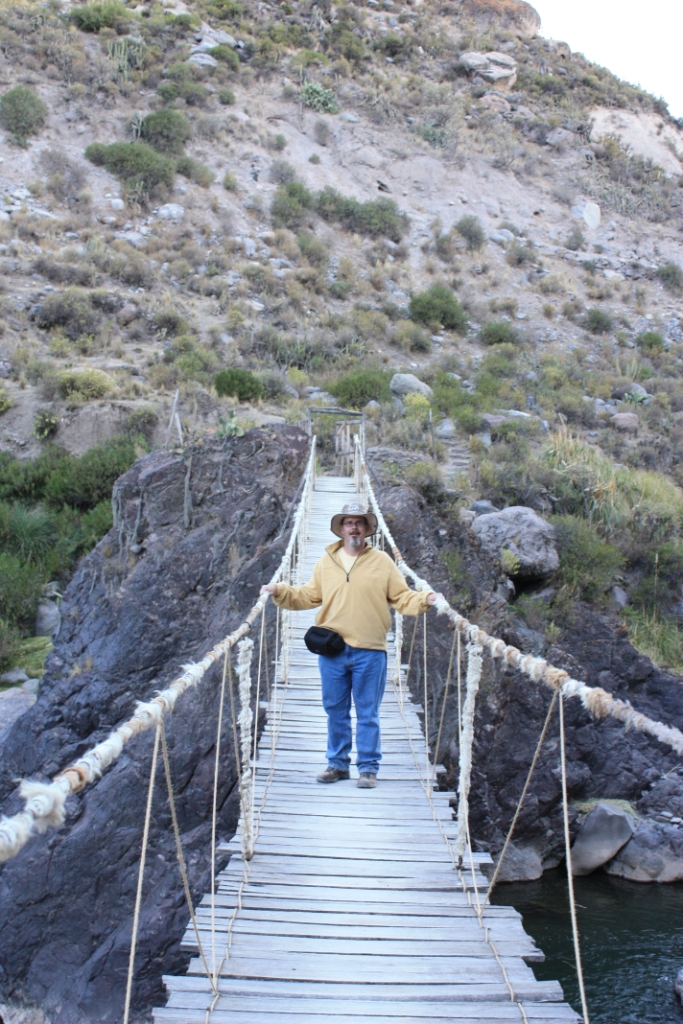
IMG_3925I’ll be traveling in Southeast Asia for the better part of a month. During this time my posts will be sporadic at best.

However, upon my return I should have plenty of photos and a few stories from my visit to Malaysia and southern Thailand. In addition to hanging out on the beach and visiting temples, shrines, and restaurants, I’ll spend a couple of weeks training muay thai and bjj in Phuket.

Best wishes,

BOOK REVIEW: Top 10 Phuket by DK Publishing

Top 10 Phuket (EYEWITNESS TOP 10 TRAVEL GUIDE)Top 10 Phuket by DK Publishing

My rating: 3 of 5 stars

Amazon page

I bought this book in Kindle format both because Amazon was having a sale on the series and because I will be traveling to Phuket soon. The sale included many—if not all—of the books in the series, not just the one on Phuket.

I’m pleased with the book given the sale price that I paid, which was substantially less than Amazon’s usual price and vastly less than list. I don’t think I would be pleased with the book at all had I paid list price, however.

As you may have realized by the title, this book contains a series of lists. The publisher tells one what they believe are the top 10 beaches, temples, bars, travel tips, etc. These lists are arranged in three sections: geographical (best of Phuket Town, best of Patong, etc.), topical (best entertainment venues, best outdoor activities, etc.) and practical (best transportation advice, best money advice, etc.)

The strengths of this book lie in its organization. It’s easy to find what one is looking for. First one finds the list one needs, and then skims the brief text of the particular enumerated items for what one wants to see. This is facilitated by hyperlinking of the table of contents and the index. There are also maps in the back that are connected by hyperlink to the text. I found the maps to be of limited use due to their small size, but I have the baseline model of Kindle, so your results may vary. The maps do put the numbers in large type, so it’s easy to find where a site is in a general sense and relative to other sites.

The weaknesses of this book have to do with lack of information and redundancy. One isn’t going to get more or better information on a given subject from this book than one would from the free tourist information one picks up at the tourism office, from a hotel rack, or online. If you’re expecting any depth or insight, and you would be if you paid the list price of $14, you’ll be sorely disappointed.

The book is only 128 pages, but, on top of that, there’s a great deal of redundancy. Because of the way the book is arranged, one will find out about the same subjects in more than one section. For example, one will read about the Phuket Vegetarian Festival in both the Phuket Town and the Festivals chapters.

A more nit-picky complaint has to do with the arbitrary limitations of the 10-list format. I suspect that some of these subjects could have benefited from longer lists, while others could have been shortened without doing harm.

My bottom line is if you can get this book on sale, like I did, you’ll probably be satisfied. If you pay list, you’ll likely be displeased. Of course, DK Books are largely about the graphics, and my black-and-white, small-format Kindle doesn’t support pictures well—so, again, your experience my vary.

Given the consistency of DK Books, I imagine the same could be said for the other books in the series.

View all my reviews

DAILY PHOTO: Herd of Elephants

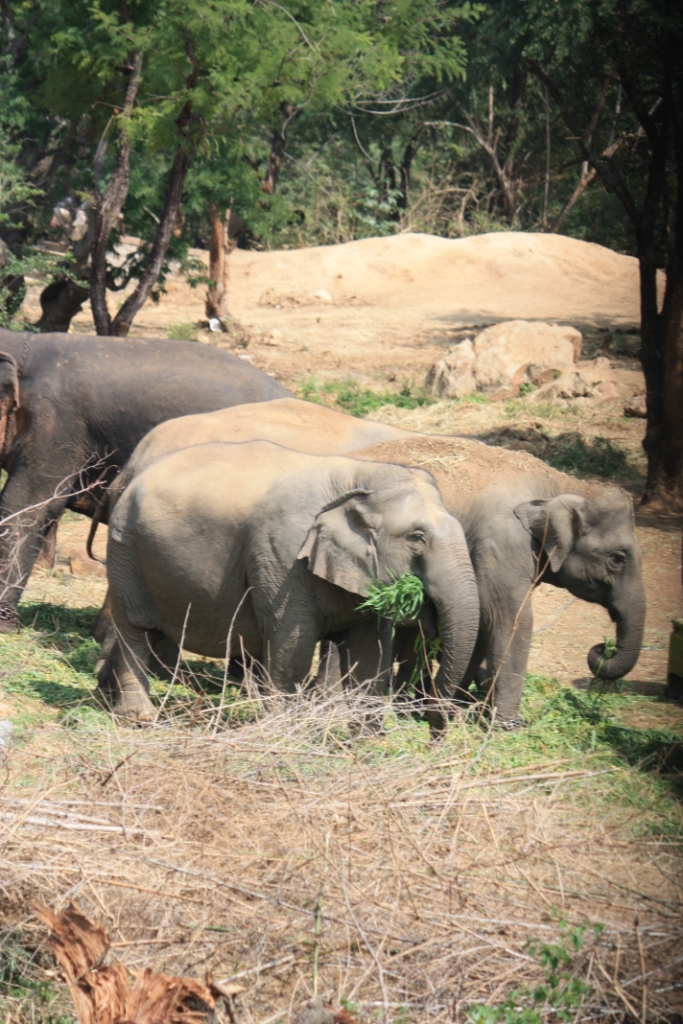
Taken November 10, 2013 at Bannerghatta

Taken November 10, 2013 at Bannerghatta

Elephants are paradoxes. They seem like gentle giants–making an end-run around tiny mice. Then you realize that humans are the only animal idiotic enough to screw with one in its natural habitat. OK, if an entire pride of lions can separate one injured elephant from its herd, they might go for it. But, generally, the most fearsome predators in the world look at an elephant and say, “Oh, that would not end well for me.” And, of course, one has to consider that they never forget. If you do piss one off, you have to worry about it coming at you all Tony Soprano-style a decade later. 

I’ve ridden an elephant in Thailand near the Mae Wang River. It was pleasant. It’s a little terrifying when it goes up or down a steep grade. You have a moment where you think, if this thing topples over, I’m a goner. (You’d have a moment where you hit the ground and said, “I’m alive, I made it.” And then you’d be like, “I didn’t know there was a solar eclipse today” and then” SPLAT!”) At one point, our driver jetted, but–it didn’t matter–the  elephant knew where it was going and how to get there. As long as you don’t run out of bananas, the elephant will get you where you’re going. Of course, you will run out of bananas. Fun fact: a person can’t carry enough bananas to satiate an elephant. Then your elephant will get all morose and brooding. 

Why I Study Thai Yoga Bodywork

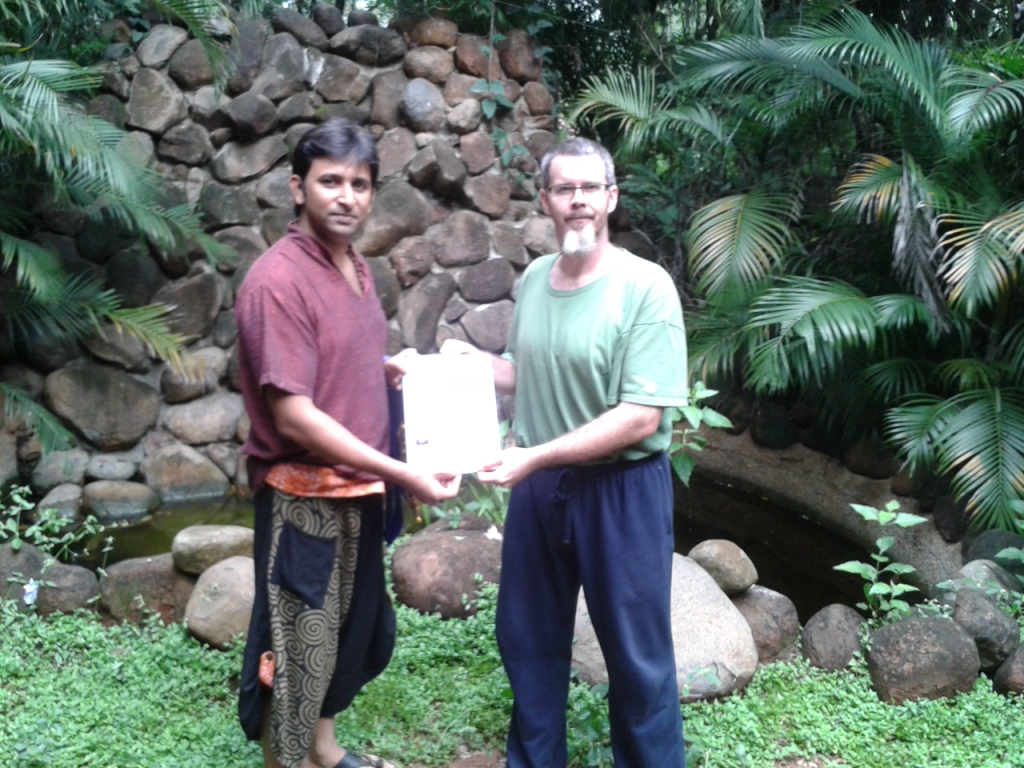
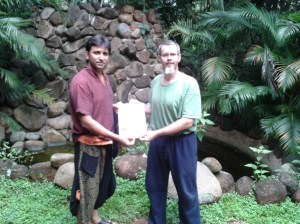
Receiving my 60 hour course certificate from the teacher.

Receiving my 60 hour course certificate from the teacher

Thai Yoga Bodywork (TYB), also called Nuad Boran (ancient bodywork) or Thai Massage, is a system that integrates assisted yoga-style stretching, reflexology, acupressure massage, and elements of Ayurvedic healing to stretch and massage the body. Its history is believed to date back 2,500 years to Northern India, where its roots lay with Jivaka Kumar Bhaccha–a physician in Buddha’s community. However, the art reached its perfection in Thailand, the nation with which it remains most closely associated.

I recently completed an introductory course in this system in Bangalore through the Inner Mountain School of Healing Arts.

Before I moved to India, I thought a lot about what I would like to learn while I was on the other side of the planet. There’s a great deal of expertise on subjects sparsely taught in the US, and it can often be had at a bargain in comparison to American prices.

Some of the skills I wanted to foster were to be expected. I wanted to learn more about meditation and the ways of living in the moment and with a quieter mind. I’ve played with such practice for a long time, and I came to believe that becoming a better martial artist  and person depended upon cultivating fudōshin— an immovable spirit. I’ve seen no route to that state that circumvents quieting the mind, and that requires observing and training the mind. One can only become more physically capable for a time, then growth depends upon the mind, on shedding petty impulses, on being incapable of manipulation, and on being unswayed my the vagaries of emotion. I’ve begun working on this objective through visits to meditation centers and by making my own practice more regular.

I also want to learn about other martial arts, besides the one I’ve been learning my entire adult life. It makes sense to learn something about the indigenous martial arts of the places I visit. I want to experience the similarities and differences of these arts, and to learn about the cultural elements that shape those differences and elements of uniqueness.

However, one of the biggest surprises has been my new-found interest in studying Thai Yoga Bodywork (TYB.) When I visited Thailand last fall I studied Muay Thai (Thai kickboxing) for a week and Thai cooking for a day, but it didn’t occur to me to take one of the many Thai Massage short courses until I was back home. My interest in TYB is reflective of a broader desire to learn more about the indigenous healing methods of Asia, and that goes back a few years.  I developed a vague feeling that I wanted to study such things a couple of years back when I realized my body was deteriorating too fast for comfort, and Western medical treatment consisted of advising me to stop doing a number of the activities that I love.  Still, I must admit that I didn’t really give  a lot of thought to this interest until I started this course.

Having now thought about it, my interest in studying TYB is closely linked to my interest in martial arts. This notion might seem hard to reconcile.  TYB is a healing art, and martial arts, while they should be grounded in a sound moral philosophy, are essentially about inflicting damage on a body. The  two disciplines seem to be at odds. Still, they have a great deal in common. In each, mindfulness is key. Control of the breath is a common element of both. In Japanese martial arts there is a word, taijutsu, which means body skills, but which implies efficient use of the body. This means favoring bigger muscle groups over smaller ones where possible and taking advantage of the body’s natural alignment (e.g. straight spine) and body weight. These concepts that I had long practiced in budō were also ubiquitous in TYB. Furthermore, a number of the points that I had learned to attack, were now targeted to heal.

Still, some of these same points could be said to be common to any system of movement done properly, be it dance or exercise. So why I was drawn to TYB in particular? The most direct reason is to learn how to fix the failings of my body, and those that I’ve witnessed in others. I experienced these methods as a recipient in Thailand, and could see their value at once.

There’s also a benefit from increased understanding of anatomy and bodily awareness. One learns about how the musculature works to move the body in a way that isn’t easily picked up from textbooks. One begins to read bodies like others read books. One gains insight into the bodily deficiencies that one has taken on without even being cognizant of them. A martial artist may, on average, be a hundred times more bodily aware than the average person, but that doesn’t mean there isn’t great room for growth. (It speaks to how sadly lacking in bodily awareness most people are as much as anything.)

Still, this isn’t the full story of why I wanted to learn this art. Another reason came to mind in the introductory session, before we even began learning the technique. The teacher was talking about how TYB teaches humility, and how one has to learn to touch a stranger’s feet with compassion and devotion to that person’s well-being–an act that doesn’t come naturally to most of us.  Admittedly, this isn’t a level of humility and compassion that I have developed in life to date. Though I am the son of a mother who–as a nurse as well as a mother–was probably more at ease with putting the well-being others above her own comfort than anyone else I’ve ever met, for me this is a struggle outside my comfort zone. The martial arts teach a kind of humility (a lesson that all too many practitioners find a way to make an end run around), but if one’s practice is separate from one’s career field it’s easy for the notion of service to be so abstract as to lose meaning.

This, of course, returns back to my earlier mention of the mind. One’s ego is the biggest barrier to personal growth. Ego makes one easily manipulated. Ego makes one subject to petty impulses. Ego makes one give into fear and anger.
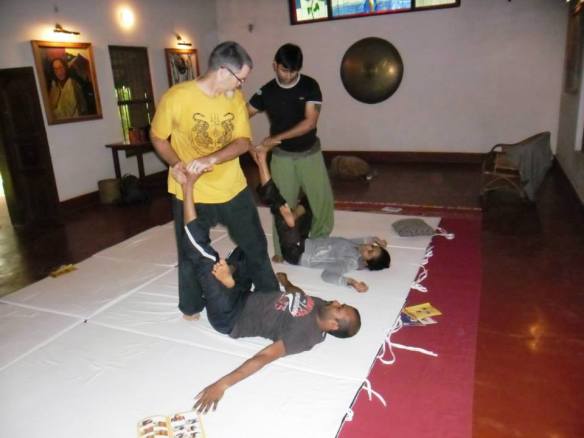
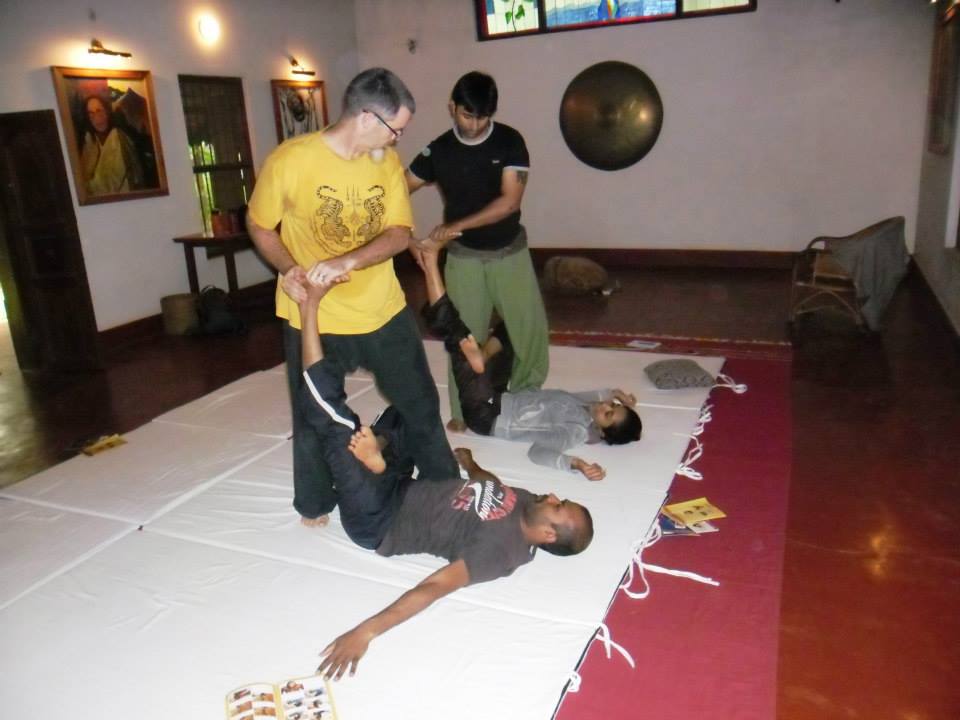
Learning a stretch

Learning a stretching technique

Lies My Tuk-Tuk Driver Told Me

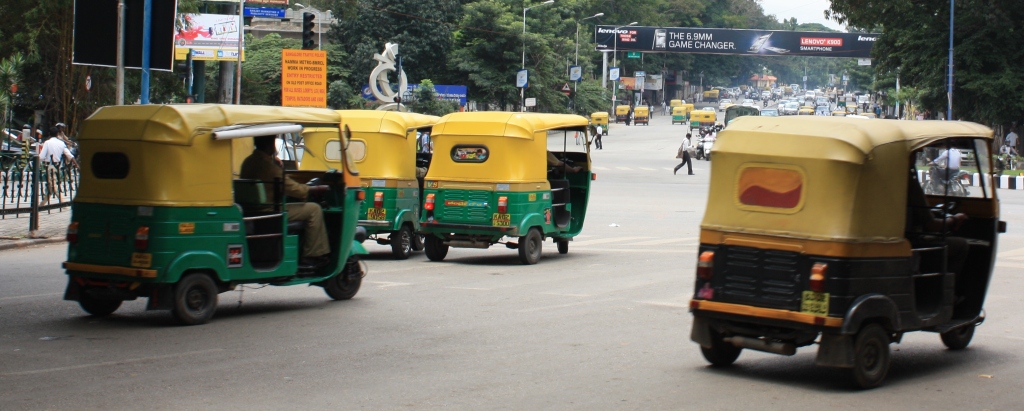
Taken Sept 5, 2013 in Bangalore, India

Taken Sept 5, 2013 in Bangalore, India

Tuk-tuks or Autorickshaws  are the ubiquitous three-wheeled vehicles-for-hire seen throughout South and Southeast Asia. (Note: Owing to their evolution from walking or pedal rickshaws, they’re sometimes just called “rickshaw” for short, or even “pedicab” or “petty cab”–the latter likely a corruption of the former.) They’re an essential way to get around in the big cities of Mega-Asia, but almost everyone has a bad experience with one at some point.

Let me point out that I’m not suggesting that most tuk-tuk drivers are amoral liars, but as a tourist (or someone who looks like one) the drivers that approach you probably will be. The vast majority of drivers are honest, hard-working men (and the elusive woman) just trying to put food on the table. That’s why my key advice to people on the subject is, “Pick your driver, and don’t ride with the ones who pick you. Then always negotiate your fare–or make sure they will use the meter– before you get in.” The drivers who pick you often have rationalized that it’s alright to treat foreigners like crap. And I’m not so much talking about charging you a little more money (which I personally don’t mind), but more that it’s alright to waste your time or take you places you didn’t ask to go [and potentially much worse.]

Well, without further ado, I’ll share some of my interactions with drivers. This is inspired by a whooper I was told yesterday.

1.) Driver: “The Temple is closed.”
Me: “But there’s a line of Caucasians and Japanese people with cameras going into the place right this moment. I can see them as we speak.”
Driver: “Uhh, monks and nuns.”

2.) Driver: “That road closed. Big protests. Throwing stones. Very dangerous!”
Me: “But I can see all the way to the corner where we need to turn, there’s nobody there.”
Driver: “They hide. [Pantomiming popping up over a wall] Throw rocks.”

3.) Driver: “Meter[ed fare is] 200 Rupee, but I’ll take– only 150 Rupee.”
Me: “I just took a trip yesterday that was 50% farther and took twice as long, and the metered fare was 50 Rupee.”

4.) Driver: “But traffic very bad, VERY BAD. Premium rate time.”
Me: “But it’s Sunday morning at 8:00am. I haven’t heard a horn for half an hour, and I happen to know that there’s no such thing as ‘premium rate time.'”
Driver: “It’s new.”

5.) Driver: “You can’t get from here to there, except go past travel office.”
Me: “Sure you can. It’s one block over and then a straight shot of five kilometers. The travel office is four kilometers out-of-the-way.”
Driver: See lie #2

DAILY PHOTO: Buddhist Mural at Wat Chiang Man

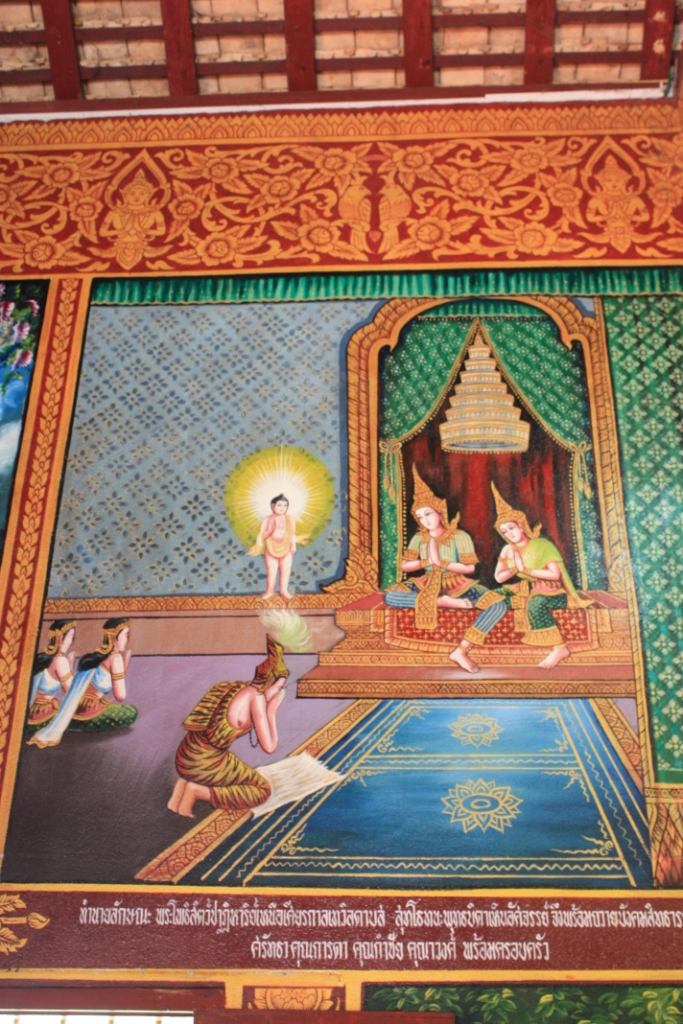
Taken October 2012 at Wat Chiang Man.

Taken October 2012 at Wat Chiang Man.

DAILY PHOTO: Otherworldly Topiary

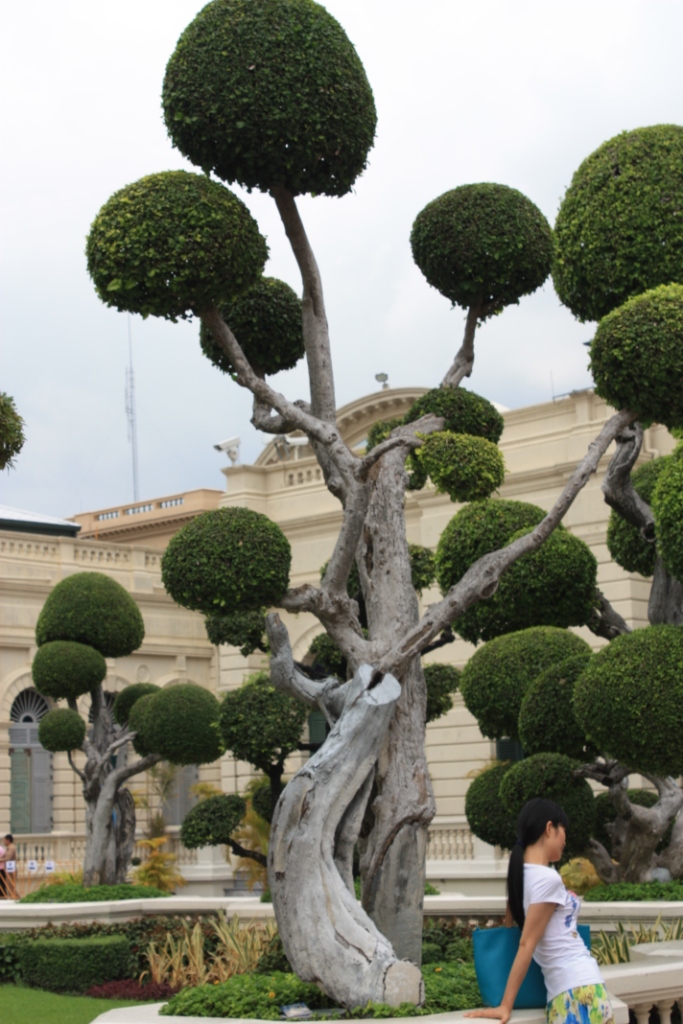
Taken in October 2012 in Bangkok

Taken in October 2012 in Bangkok

DAILY PHOTO: How Do He Move All Those Legs?

Taken in October 2012 at Wat Mahathat in Ayutthaya, Thailand.

Taken in October 2012 at Wat Mahathat in Ayutthaya, Thailand.

DAILY PHOTO: Dear old MOM, not exactly

Taken in October 2012 at Doi Suthep (near Chiang Mai.)

Taken in October 2012 at Doi Suthep (near Chiang Mai.)

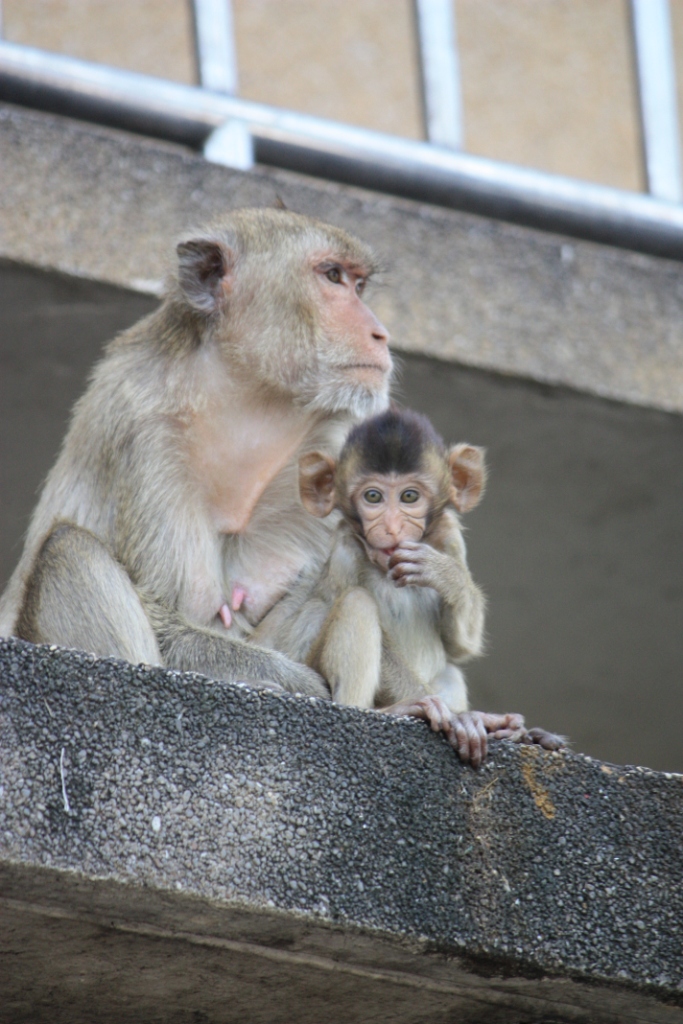
DAILY PHOTO: Aww, your baby is hideous

Taken in October of 2012 in Lopburi, Thailand

Taken in October of 2012 in Lopburi, Thailand