POEM: A Zombie’s Dilemma

brain


I ambled out the gate, down the street, and noticed:

  • Everyone was going my way.
  • Everyone was on foot.


Well, you can imagine what I thought,

I’ve fallen in with a zombie horde!


But, how to check?

Somehow asking,

“What is your stance on raw brain?”

seemed awkward.


So I concluded that I was—unquestionably—among zombies.


A sadness followed.

Couldn’t they smell that my brains were fresh, disease-free, and everything a Zombie finds delicious?

Did they know something that I didn’t?

Had my brain gone bad without my knowing?

And how could one ever know whether the thing one knows with is sour?


The sadness was short-lived.

A dilemma followed.

For I saw a man walking toward me, against the horde’s flow.

If I didn’t club him in head and try to eat his brain—given his clear unhorde-like behavior–would the horde realize that I was an imposter?


If I did… Well, I would be worse than Tom Hanks trying to get into that coconut in “Cast Away.”

Quite frankly, I had no idea how to get to the brains.

Should that be something I should know?

A piece of common knowledge I’d lost when my brain curdled?


But the horde didn’t descend on the man.


So I concluded it was–unquestionably–a defective zombie horde.


And I went about my day.

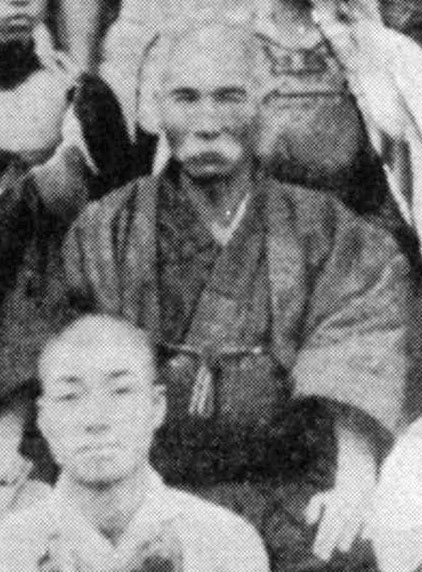
“Ankō” Itosu Transforms a Thug

Source: "The Okinawan Times" February 28, 2006

Source: “The Okinawan Times” February 28, 2006

One day Yasutsune “Ankō” Itosu walked down to the waterfront to have lunch at a local restaurant. As the renowned karate master rounded a corner, a ruffian leapt forward, launching a punch at Itosu-sensei’s midsection. The elderly Itosu subtly shifted his position and the punch glanced harmlessly off his ribs. But Itosu trapped the thug’s arm before the young man could retract it. Pivoting to face the same direction as the young hoodlum, the karate teacher scanned his surroundings seeing that the young man had friends nearby, but they weren’t coming to his assistance.

Maintaining a vice-like grip on the young man’s forearm, Itosu-sensei switched the arm under his other arm–attacking pressure points as he did.

Establishing control and taking the fight out of the young man with jolts of pain, Itosu said, “Come join me for lunch, we have much to talk about. But first, what is your name.”

“Kojo, everybody calls me Kojo,” the young man said through gritted teeth

“Pleased to meet you, Kojo. My name is Ankō Itosu,” the karate master said.

Itosu led Kojo into the restaurant. At a cursory glance it looked like the older man was walking arm-in-arm with the younger. The two sat down side-by-side.

“So, Kojo, do I know you? Have I done something to lead you to give an old man such a start?” Itosu asked.

“No. My friends dared me. They told me you were Itosu-sensei. We often come down here to test our skills,” Kojo explained.

“And how does your karate teacher feel about this?” Itosu asked.

“Uh… well, I don’t have a teacher,” Kojo replied.

“Ah. Then that’s the problem. You’ll become my student. Your technique could use improvement, and you need to stop this brawling, and especially stop trying to scare old men,” Itosu explained as he released the young man’s arm.

Kojo was taken aback, but didn’t dare turn down the teacher’s offer. He never brawled again, and eventually became a committed student.

STORY: The Most Inaccessible Place of All

I ran across this little story quoted in an academic paper while I was doing research for a writing project. It was written by Dorothy Gilman in a book called A Nun in the Closet. At any rate, I found it clever and thought you might as well. [I’m assuming that Gilman made this story up, rather than borrowing an old folktale–but that–as with all assumptions–could be wrong. Please feel free to correct me if you know otherwise. If she did come up with it from scratch, she perfectly captured the folktale.]


brain


“Once upon a time, [Bhanjan Singh, a guru-like character in the book] said, when God had finished making the world, he wanted to leave behind Him for man a piece of His own divinity, a spark of His essence, a promise to man of what he could become, with effort. He looked for a place to hide this Godhead because, he explained, what man could find too easily would never be valued by him.


“Then you must hide the Godhead on the highest mountain peak on earth,” said one of His councilors.


God shook His head. “No, for man is an adventuresome creature and he will soon enough learn to climb the highest mountain peaks.”


“Hide it then, O Great One, in the depths of the earth!”


“I think not,” said God, “for man will one day discover that he can dig into the deepest parts of the earth.”


“In the middle of the ocean then, Master?”


God shook His head. “I’ve given man a brain, you see, and one day he’ll learn to build ships and cross the mightiest oceans.”


“Where then, Master?” cried His councilors.


God smiled. “I’ll hide it in the most inaccessible place of all, and the one place that man will never think to look for it. I’ll hide it deep inside of man himself.”

The Jujutsu Murders, Plus Some Brain Science

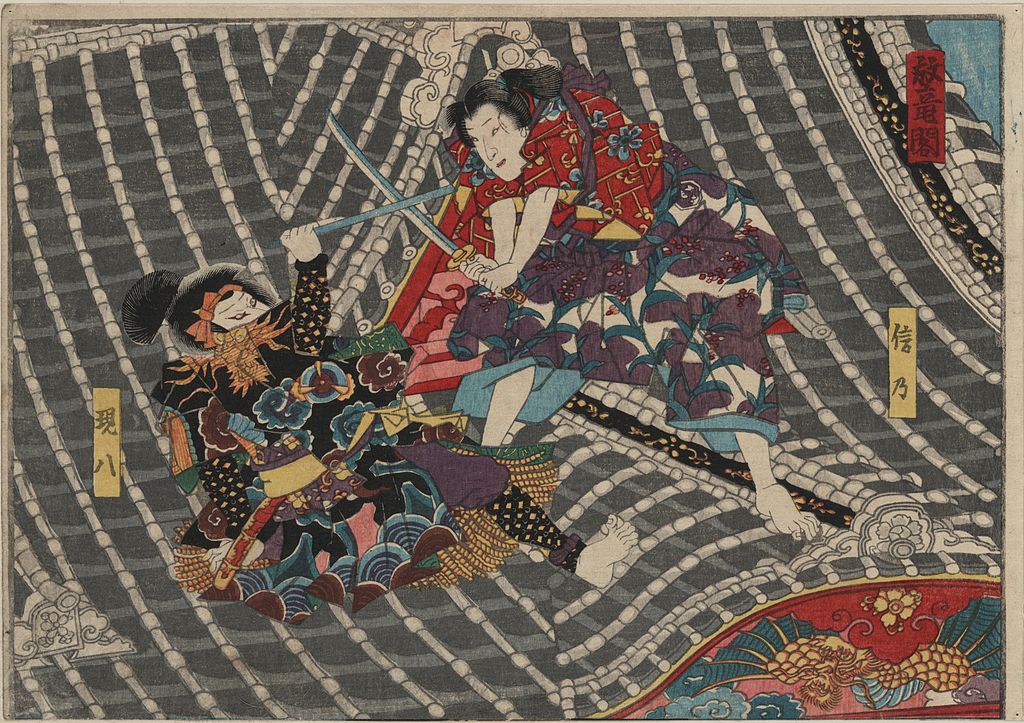
Jujutsu

Imagine you’re a detective in Edo Period Japan (1603-1868), and you’re told to investigate a case in which three highly-trained practitioners of one of the most well-respected jujutsu schools have been stabbed to death. Each of the three bodies has only one mark on it–the lethal stab wound. The wound is on the right side of the abdomen in all three cases. There are no signs of a prolonged struggle, despite the fact that each of the three had many years of training and none of the men was an easy victim. The stabbings happened independently, and there were no witnesses to any of the killings. So, who or what killed these three experts in jujutsu?


Nobody knows who killed them, but a rigid approach to training contributed to what killed them. As you may have guessed, the killer took advantage of knowledge of the school’s techniques, i.e. their “go-to” defense / counter-attack for a given attack. It’s believed that the attacker held his scabbard overhead in his right hand, and his weapon point forward in a subdued manner in his left. All three of the defenders must have instinctively responded to the feigned downward attack as the killer stabbed upward from below with the unseen blade.


It’s a true story. I read this account first in Jeffrey Mann’s When Buddhists Attack. That book offers insight into the question of what drew some of the world’s deadliest warriors (specifically, Japan’s samurai) to one of the world’s most pacifistic religions (i.e. Buddhism–specifically Zen Buddhism.)  Mann cites Trevor Leggett’s Zen and the Ways as the source of the story, and Leggett’s account is slightly more detailed.


This story intrigues because it turns the usual cautionary tale on its head. Normally, the moral of the story would be: “drill, drill, drill…”


Allow me to drop some brain science. First, there’s no time for the conscious mind to react to a surprise attack. The conscious mind may later believe it was instrumental, but that’s because it put together what happened after the fact and was ignorant of the subconscious actors involved. (If you’re interested in the science of the conscious mind’s stealing credit ex post facto [like a thieving co-worker], I refer you to David Eagleman’s Incognito.)  Second, our evolutionary hardwired response to surprise is extremely swift, but lacks the sophistication to deal with something as challenging as a premeditated attack by a scheming human. Our “fight or flight” mechanism (more properly, the “freeze, flight, fight, or fright” mechanism) can be outsmarted because it was designed to help us survive encounters with predatory animals who were themselves operating at an instinctual level. (If you’re interested in the science of how our fearful reactions sometimes lead us astray when we have to deal with more complex modern-day threats, I refer you to Jeff Wise’s Extreme Fear. Incidentally, if you’re like, “Dude, I don’t have time to read all these books about science and the martial arts, I just need one book on science as it pertains to martial arts,” I just so happen to be writing said book… but you’ll have to wait for it.)


So where do the two points of the preceding paragraph leave one?  They leave one with the traditional advice to train responses to a range of attacks into one’s body through intense repetition. Drill defenses and attacks over and over again until the action is habitual. This is what most martial artists spend most of their training effort doing. A martial art gives one a set of pre-established attacks or defenses, and it facilitates drilling them into one’s nervous system.


Of course, the astute reader will point out that the three jujutsu practitioners who were killed had done just what was suggested in the preceding paragraph, and not only didn’t it help them but–arguably–it got them killed. I should first point out that the story of the three murder victims shouldn’t be taken as a warning against drilling the fundamentals. As far as their training went, it served them well.  However, there’s a benefit to going beyond the kata approach to martial arts. One would like to be able to achieve a state of mind that once would have been called Zen mind, but–in keeping with our theme of modern science–we’ll call transient hypo-frontality, or just “the flow.” This state of mind is associated with heightened creativity at the speed of instinct. (If you’re interested in the science of how extreme athletes have used the flow to make great breakthroughs in their sports, I’d highly recommend Steven Kotler’s The Rise of Superman.) Practicing kata won’t help you in this domain, but I believe randori (free-form or sparring practice) can–if the approach is right.

BOOK REVIEW: Wired for Story by Lisa Cron

Wired for Story: The Writer's Guide to Using Brain Science to Hook Readers from the Very First SentenceWired for Story: The Writer’s Guide to Using Brain Science to Hook Readers from the Very First Sentence by Lisa Cron

My rating: 5 of 5 stars

Amazon page

There are countless books offering advice to writers. Some are good. Some are not. Good, bad, or ugly, few of these books offer anything new beyond particularly artful (e.g. humorous or poetic) explanations or superior examples. In other words, if you’ve read five writer’s guides you’ve read five thousand. Cron’s book is the rare guide worth a read even if you’ve read a hundred other such books. It’s not that Wired for Story offers radical or novel advice on story building (its writer’s tips are orthodox.) It’s the way this book couches the arguments for what can admittedly be hackneyed advice. As the title suggests, Cron’s book is about how our brains are wired to love stories–as long as said stories contain certain attributes that the brain finds appealing. (Conversely, there’s a reason why books that go wildly off the reservation with “experimentalism” are doomed.)

While I’ve read many a book on writing, I picked up Wired for Story more out of an interest in the subject of the neuroscience of story. The book doesn’t delve deeply into the science, but it does cite leading thinkers in the field as well as providing a good layman’s overview of the neuroscientific principles that inform the book’s tips. Cron’s background is in publishing and her bona fides to write this book are as someone who came from a career reading and rejecting / accepting manuscripts. However, I believe she did a good job of laying out science.

The central idea is that humans love stories because the narrative structure allows people to simulate a nasty chain of problems without suffering the real world consequences. The brain loathes uncertainty and randomness, and loves whenever it can learn about how to face a problem or make sense of the world. This is why we love conflict, tension, and an unrelenting unfolding of worst case scenarios in our stories even though we tend to hate those characteristics in our own lives. This results in both the tried advice to keep putting the protagonist through the wringer, and the qualifications that a writer should do so in a way that is believable (our brain’s BS-detector is ever on) and which will eventually force the protagonist to change. Cron offers a definition of story that has the usual elements: “A story is how what happens affects someone who is trying to achieve what turns out to be a difficult goal, and how he or she changes as a result.” As with many guides, the definitions of plot, the protagonist’s issue / goal, theme, and tone are elaborated at length—as well as being differentiated because these topics tend to be confused by neophytes—often resulting in a failure to clarify one or more of them.

Stories also give us an opportunity to anticipate what others will do, and forecasting the behavior of others gives one a nice little dopamine dump. The ability to foresee what others will do has always been a powerful evolutionary advantage, and those who did it better passed on their genes more than their oblivious counterparts. Owing to this idea, there is a great deal of advice about what should be in the book (only what is relevant), and how it should be revealed (in a way that eschews attempts to play “gotcha” with your readers.)

One may wonder why I’m so pleased with a writer’s guide that gives common advice about writing–just because it explains said tips in terms of evolutionary biology. The answer is that it’s far easier to keep these lessons in mind when they’re held together by a logic rooted in what all readers have in common (e.g. conscious and unconscious minds, emotions, instinctual drives, etc.) For example, knowing why readers hate an overly simple resolution for a problem that’s presented as insoluble (i.e. robbing them of dopamine reward for figuring it out) helps one better recognize this pitfall in all its forms and to avoid it. Such an approach allows for a deductive approach and is far more useful than having memorized “avoid deus ex machina” as a disparate tip that’s attached to a specific example. In short, it’s both easier to remember and broadly implement these ideas when one understands the rationale from the ground up.

Beyond the reason in the last paragraph, I enjoyed this book for reasons that have little to do with its advice to writers. While I now know that there are other books on the evolutionary biology of story that deal with the subject more from a scientific perspective (while I haven’t read it yet, you might try this book), this was the first book that I stumbled across on that topic. And, it’s a topic that’s well worth understanding whether you’re a writer or not. No matter what one does, understanding the universal appeal of a story can be beneficial, whether it’s in the context of teaching, parenting, or business.

I’d recommend this book for writers—particularly those who think about the world in scientific terms. Beyond writers, if you have cause to construct or use stories in your life—or suspect you should—you can benefit from this book.

View all my reviews

A Third Roti: A Story with an Elephantine Moral

IMG_0047I went to a talk at the Rangoli Metro Arts Center last night entitled, Foresters’ Elephants. The talk was hosted by a group called “Friends of Elephants,” and the panel of speakers were all Conservation Officers in South India who were responsible for public lands home to Elephants.

The discussion offered some intriguing insight into state and local politics in India. But the best explanation of the night came from the Chief Conservator of Forests for Kodagu in a story that could be titled “A Third Roti.”

The Conservator explained that, as a junior forest officer, he’d been assigned to a remote station. His housing took the form of an old decrepit colonial era building. This house had a vermin infestation, and the hungry rodents would get bold as he and his wife slept and would nibble at their fingers and toes. Of course, this made for sleepless nights. To solve this disconcerting problem, the Conservator took to getting a third roti with his meals. [For my India-inexperienced readers, a roti is a circular flat bread that’s a common element of meals in many parts of India.] Putting the third roti out for the rodents negated the rat’s need to engage in the mutually terrifying act of nibbling on the forest officer or his wife.

I don’t know if the story is true, and–if it is–whether it’s truly the Conservator’s story. It doesn’t matter. What’s important is that it’s a great use of story to make a point. The point in this case is that a solution often needs to take into account the fundamental needs of the “adversary.” In other words, regulation and punishment can’t always provide the solution–especially when basic needs are not being met. One could try to scare the rodents away or one could set traps (potentially at risk to oneself), but if the rats are driven  by hunger they might find the risk worth taking. The problem that he was addressing was the need for wood for fires, fence posts, and other needs. This caused people to enter public forests, putting themselves at risk of running into wild elephants.

The idea of trying to find a third roti for problems really resonated as an approach to creative solutions.

The Tongue-Cut Sparrow: A Japanese Folktale

800px-Tree_Sparrow_Japan_Flip[This is a well-known Japanese folk tale. There are many versions and translations of it, but the gist of the story remains the same from one to the next.]

Once upon a time, an old man was married to a shrew. The couple lived in the countryside on the edge of a mountain forest. They had no children, but the man befriended one of the sparrows that resided in the adjacent forest. The old man fed the sparrow, offering whatever he had to the small bird.

Over time, the man and the sparrow grew almost inseparable. However, one day the man had to go into town to buy provisions. It may have been that the man chose that particular day for his errand because his horrid wife was most ill-tempered on laundry days, and that was a laundry day.

While the husband was away, the sparrow came around. Seeing a pile of starch, the sparrow pecked at it. Infuriated, the old woman snatched up the bird in one hand and a scissors in the other, and she snipped part of the bird’s tongue out. Then as she tossed the sparrow free, she said, “Away with you. That’ll teach you to get into my starch.”

The bird flew deep into the mountains.

When the husband returned, he inquired as to whether his wife had seen the bird. The sparrow was usually around the homestead at that time of day.

The hag proudly told the husband of her actions and how she’d punished the insolent bird.

The old man lost no time in trudging out into the forest to try to make sure his friend was alright. He called out to the sparrow, but there was no response. He feared his wife had wounded the bird even more than she’d boasted. Eventually, exhaustion forced the old man to give up his search. He prayed that the little bird would be alright, but he couldn’t keep looking for it.


A couple of years later, the  man was foraging for mushrooms in the forest when he ran into the sparrow. The sparrow invited the man back to his home.

The sparrow offered the man food, refreshments, and even accommodations as they took several days to catch up on the events of each other’s lives. The sparrow now had a family and was doing well.

After a few days of catching up, the old man decided that he must get back, but he promised to come back around to visit occasionally. (The sparrow was reasonably reluctant to visit the man at his home with the vile woman around.) The sparrow family offered the old man a choice of parting gift, they presented two woven baskets. The baskets appeared identical, but one was light and the other was heavy. The old man didn’t feel deserving of a gift, but he took the lighter basket. He had to take one to avoid offending his host, but he didn’t wish to be greedy.

When the man got home, he was berated by the shrew for being away so long. She then interrogated him about the new basket. The man told his wife the entire story, including about how the sparrows offered him two baskets, and how he’d taken the lighter one.

His wife snatched the lid off of the basket and investigated its contents. She found that the reason the basket was so light was that it contained just a few precious jewels and several gold coins. By weight it wasn’t much, but its value was considerable.

The wife thought, Hm. I’ll go visit the sparrows. I’ll make a little apology for snipping at the bird’s tongue, and when they offer me my parting gift, I’ll be smart enough to take the heavy basket. Just imagine the riches it must contain.

The wife tricked her husband into giving her directions, saying she wanted to make a heartfelt apology. She then went to visit the sparrow family. She made a half-hearted apology for injuring the sparrow, claiming she’d only meant to scare him but the scissors had gotten away from her. The meeting was awkward and the sparrows were relieved to have the woman going on her way.

They offered the woman a choice of parting gifts as well. The woman lifted both baskets. Just as her husband had said, one basket was light and the other was heavy. She lugged the heavy basket up on her back, and without even saying her good-byes she sped toward her home as quickly as her legs would carry her. She had fantasies  about what she would do with her new-found wealth.

It wasn’t long before she needed a break because the basket was heavy and her legs weren’t used to such a burden. Standing on the forest trail, the couldn’t resist peaking at her riches.  The woman tugged the lid off and dove her head into the mouth of the basket to see what precious jewels, gold, and silver would greet her. However, what lurched out was an evil ogre, enveloped in a mist of demon spirits.

Clutching her chest, the old woman had a heart attack in the face of the horrific contents of her basket, dying where she had stood.