5 Bits of Wisdom from The Matrix Movies

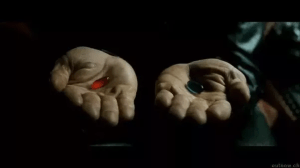
5.) Wisdom: Choice is not as it seems.

Quote: No, you’ve already made the choice. Now you have to understand it.
Said by the Oracle to Neo in “The Matrix Reloaded” as they discuss a dream in which he sees Trinity falling.

Interpretation: Studies in neuroscience have repeatedly validated the notion that by the time we think we’re making a decision at a conscious level, we’ve already made it on a subconscious level. While many suggest this means that the verdict is in and free will is completely illusory, another way of looking at it is that one must understand one’s decisions in order to begin to regain the rudder on one’s life.


4.) Wisdom: Courage elevates: or, if you don’t run, he won’t chase you.

Quote: He’s beginning to believe.
Said by Morpheus to Trinity in explanation of why Neo isn’t running from Agent Smith in the subway.

Interpretation: My mother used to say, “If you don’t run, he won’t chase you” with respect to being chased by my older brother. It seemed like insane advice at the time; the alternative to being chased being beaten down. However, now I can see that even taking a butt-whooping elevates one’s spirit over engaging in prey behavior.


3.) Wisdom: Rationality is a thin veneer.

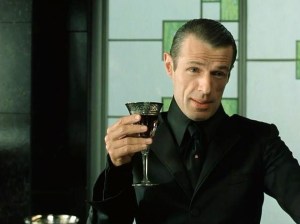
Quotes: Beneath our poised appearance we are completely out of control. & It is remarkable how similar the pattern of love is to the pattern of insanity.
Said by the Merovingian to Morpheus, Trinity, and Neo.

Interpretation: While one might like to dismiss the Merovingian’s comments as the cynicism of a hedonist, the undeniable fact is that we have animal biology and it influences us more than we pretend.


2.) Wisdom: The world contains more Cyphers than not.

Quote: Ignorance is bliss.
Said by Cypher to Agent Smith as he plots his subversion in order to be put back into the Matrix.

Interpretation: Most people are happy with their illusions, rely on them as coping mechanisms, and will respond unfavorably to attempts to strip them way. The illusion in question may not be so much that the world is completely fake as much as biases such as the self-serving bias (i.e. people attribute successes to their inherent awesomeness but blame failures on external sources.)


1.) Wisdom: There are limits to being cerebral.

Quotes: Don’t think you are, know you are. & There’s a difference between knowing the path and walking the path.
Both are said by Morpheus to Neo. The former quote is delivered in the sparring program when Neo isn’t performing up to his potential. The latter is said after Neo & Trinity rescue Morpheus and Neo tries to tell Morpheus what the Oracle revealed, but Morpheus quiets him with said words.

Interpretation: I hope I haven’t muddled this bit of wisdom by choosing quotes in which Morpheus uses the word “know” in two different ways. In the first quote, Morpheus contrasts knowing with thinking, and he means that Neo must not treat it as an intellectual exercise, but rather feel its inherent truth deep down. In the second quote, he contrasts knowing with doing, and in this case “knowing” is the cerebral / thinking activity in comparison to doing (i.e. “walking the path.”) However, the gist is the same, you must approach some things–to use the Oracle’s words–balls to bones.

BOOK REVIEW: A Wrinkle in Time by Madeleine L’engle

A Wrinkle in Time (A Wrinkle in Time Quintet, #1)A Wrinkle in Time by Madeleine L’Engle
My rating: 5 of 5 stars

Amazon page


The Murry family feels mopey. There are a number of run-of-the-mill factors in the family malaise. Meg, the story lead, doesn’t fit in in school, and is frequently in disciplinary trouble. Her younger brother, Charles Wallace, is thought to be mentally deficient because he doesn’t talk to strangers, but he is—in fact—a genius. However, the big cloud hanging over this family’s head is that their father hasn’t been heard from for a year. He isn’t the type of father who goes out to the store for cigarettes and never comes back. Instead, Alexander Murry—Meg’s dad—is a loving father and husband who happens to be a renowned scientist who sometimes does work for the government. Even when he’s off doing top-secret work, however, he checks in with his wife and kids on a regular basis, but now there’s been no communication for months. The townspeople both pity the Murrys and think them to be living in denial because they maintain that Alexander Murry will soon come back.

While the book begins with a real world premise and feel, it soon becomes apparent that things aren’t what they seem–at least not around the Murry household. (Things not being as they appear recurs as a theme throughout this book.) Our first inkling of this unusualness comes when we realize that Charles Wallace isn’t only a genius and preternaturally mature, he also appears to be psychic. Events really turn strange when Meg’s mother, Katherine, goes out to investigate a noise and comes back into the house with an old lady who—surprise of surprises–Charles Wallace knows, a Mrs. Whatsit. And, as he seems to do with everyone, Charles Wallace begins talking to the old lady as if he were a sage old man.

The story follows the adventures of Meg, Charles Wallace, a boy named Calvin O’Keefe as they go with three mysterious visitors (one of whom is the aforementioned Mrs. Whatsit) in search of Alexander Murry. While O’Keefe is a popular kid and a jock, he doesn’t really feel he fits in. In that way, he’s a counterpoint to Meg. Meg doesn’t fit in and it gets her in trouble. O’Keefe pretends to fit in, but has angst about it. Furthermore, O’Keefe seems to have some sort of supernatural ability—perhaps not of the level of Charles Wallace, but enough to exacerbate his feeling of being an outcast among his own family and community. It’s Calvin’s feeling that he’s at home with the Murrys that accelerates his inclusion in the story.

The sci-fi elements of this book, as with many other great works of children’s science fiction, facilitate the teaching of simple moral /ethical lessons. Don’t rush to judgement about people—Aunt Beast is one of the most endearing characters of the book. Fitting in is not all it’s cracked up to be, and if everyone were the same, what a dreary existence life would be. And, ultimately, love conquers all.

I’d highly recommend this book for children and adults alike. The story is highly readable owing to narrative tension and mystery.

View all my reviews

POEM: Brain Burrower

I rue the hearing of that tune

like a sandworm from planet Dune

it burrowed from ear to brain

where its bouncy pop egg was laid

but when the alien overlords arrive

fresh out of intergalactic drive

sitting parked up in our Thermosphere

we’ll offer them a welcome beer

they’ll think us weak in being kind

until we lodge that f@#%ing tune in their hive-mind

watching them gyrate in a spastic dance

their minds melted in a Zombie trance

like lemmings they’ll plummet from the ship

with that infernal tune on all eight lips


[National Poetry Month: Poem #5]

BOOK REVIEW: The Cat’s Pajamas by Ray Bradbury

The Cat's PajamasThe Cat’s Pajamas by Ray Bradbury
My rating: 5 of 5 stars

Amazon page


This is a collection of 20 short stories by Ray Bradbury written between 1946 and 2004. Bradbury was the master. Besides his imaginative gift for storytelling, he was a torch-bearer for language that was both beautifully crafted and highly readable. Bradbury often used words poetically but without detracting from story. I believe he did so through sparing and careful use. I also appreciate the way Bradbury smoothly moved between genres, and the fact that his stories could have a moral without being moralistic.

I’ll list the stories in this collection with just a few words about each.


1.) “Chrysalis”: An unlikely friendship develops. A story about race.


2.) “The Island”: The dangers of isolation. Tension skillfully ratcheted up.


3.) “Sometime Before the Dawn”: Why does the neighbor cry late at night?


4.) “Hail to the Chief”: What if Senators wagered America at an Indian casino?


5.) “We’ll Just a CT Natural”: This is one of my favorites, but it doesn’t have a complex story or involve clever sci-fi elements. It’s just a woman waiting for a visit from a man who she used to nanny, but who’s made it big as a writer. Two simple questions keep one glued to this story. Will he show up? If not, how will she handle it?


6.) “Olé, Orozco! Siqueiros, Sí!”: This is a commentary on what is art in the modern art scene.


7.) “The House”: A couple buys a fixer-upper, but there are mixed feelings between them.


8.) “The John Wilkes Booth / Warner Bros / MGM / NBC Funeral Train”: How time travel would spawn a history-entertainment complex.


9.) “A Careful Man Dies”: A hemophiliac author who’s writing a tell-all meets his match.


10.) “The Cat’s Pajamas”: A couple of lonely cat people vie for ownership of a stray that they happen upon simultaneously.


11.) “Triangle”: As in, “love triangle.” A take on the story of X loves Y, but Y is indifferent to X; while Z loves X, but X is indifferent to Z.


12.) “The Mafioso Cement-Mixing Machine”: It’s a metaphorical cement mixer, but it’s useful for—as a mobster might say—“takin’ out da trash.”


13.) “The Ghosts”: The children are enchanted with them, but their father wants to drive them off. The difference between how children and adults see the natural world, in a nutshell.


14.) “Where’s My Hat, What’s the Hurry”: A man goes through his little black book to find a woman more responsive to the “city of love” than his wife has been.


15.) “The Transformations”: This is another story about race and walking in the shoes of another.


16.) “Sixty-six”: This is a prime example of the genre-fluidity of Bradbury. It’s a murder mystery, but not just a murder mystery.


17.) “A Matter of Taste”: Human space explorers travel to a distant world and meet a species that is wise, benevolent, helpful, but they can’t get past the alien’s creepy appearance.


18.) “I Get the Blues When it Rains”: The fickle nature of nostalgia.


19.) “All My Enemies Are Dead”: A man tries to console a friend who believes it’s time to die upon seeing the obituary of the last of his enemies.


20.) “The Completist”: Having everything may include things one doesn’t want.


I’d highly recommend this collection for readers of short fiction. While some of the stories are over sixty years old, they’ve aged well.

View all my reviews

BOOK REVIEW: Doctor Strange: Way of the Weird, Vol. 1 by Jason Aaron

Doctor Strange, Vol. 1: The Way of the WeirdDoctor Strange, Vol. 1: The Way of the Weird by Jason Aaron
My rating: 4 of 5 stars

Amazon page


This is the first arc of a multi-arc story. The Volume consists of “Doctor Strange” (2015), #1-5.

Something even more mysterious and odd than usual is afoot. An unprecedented number of trans-dimensional beings have taken up residence on Earth. Magic begins to go on the fritz. The Sorcerer Supreme of other dimensions are being executed. A mysterious enemy, with powers based in technology, threatens the very existence of magic–not only in our universe, but throughout the multiverse. Magicians are constantly under attack in the world of Doctor Strange, but in this case the killing of magicians is just collateral damage in a battle of bigger stakes.

A new character, Zelma Stanton, is introduced. She’s a young librarian who seeks out the help of Doctor Strange because she has grown a nefarious looking toothy maw at the top of her skull—some kind of previously unseen mind maggot. In treating her for said maggots, the wild and weird creatures are set loose upon Strange’s Sanctum Sanctorum. Doctor Strange hires Stanton to reorganize his library. She provides a straight-man of sorts, a muggle’s eye reaction to the weird world of Doctor Strange.

The theme of this story is that there’s always a cost associated with the use of magic. This idea (which, stated differently, is also the central premise of economics—i.e. no free lunches) is an important rule for any literary world containing magic, because free lunches drain all tension from a story. In this case, it’s not just a principle sitting the background, its ramifications are explicit.

I enjoyed this book. I found the story premise intriguing and the dialogue well-written. The artwork was easy to follow and suitable strange. The art was imaginative. It can’t be easy to convey weirdness on a grand scale, but Chris Bachalo seemed to make it work.

I’d recommend this book for fans of Doctor Strange and others who like fantastical fiction.

View all my reviews

BOOK REVIEW: Black Panther: A Nation Under Our Feet, Vol. 1 by Ta-Nehisi Coates

Black Panther: A Nation Under Our Feet Vol. 1 (Black Panther (2016-))Black Panther: A Nation Under Our Feet Vol. 1 (Black Panther by Ta-Nehisi Coates
My rating: 5 of 5 stars

Amazon page


This book contains the first arc of a three arc story written by Ta-Nehisi Coates, a 2015 National Book Award winner. The volume contains “Black Panther” (2016), #1-4, and—as a bonus—“Fantastic Four” (1961) #52, which is the edition in which the Black Panther was introduced.

The premise is that Wakanda is on the brink of coming apart at the seams, and there are nefarious forces afoot trying to spur a revolution. A mysterious woman, Zenzi, uses mind control unleash people’s rage. This results in an episode of violence that is the inciting incident for the story. But Zenzi isn’t working alone; she has a powerful ally named Tetu, who can control elements of nature.

Some background maybe useful for those unfamiliar with this character and / or who haven’t seen “Captain America: Civil War”–the movie in which Black Panther / T’Challa was introduced to the Marvel Cinematic Universe (MCU.) First, Wakanda is a fictional African nation. It’s quintessentially African with respect to culture, but it’s the most technologically advanced nation in the world. It achieved this first-world modernity and wealthy in large part because it possesses most of the world’s vibranium—a much desired, but fictional, metal. Vibranium can absorb huge amounts of energy and only become stronger. The metal is most famously known for being the material from which Captain America’s shield was made, but it crops up in Marvel stories quite frequently.

Second, the superhero Black Panther is the protector of Wakanda (though in some books—not this one—he does get drawn into global affairs) and is the alter ego of the Wakandan king, T’Challa. This duality is particularly relevant in this story line. On the one hand, the Black Panther must battle Zenzi and Tetu who are working together to bring the nation down. On the other hand, as King, T’Challa is forced to recognize his responsibility for the health of the nation, and he must be a good leader and not just a good fighter. There are the makings of an inner battle that must be fought concurrently with the battle against the enemies of the state. At the end of Volume #4, T’Challa is forced to face this through the words of a trusted maternal advisor.

In addition to the main plot in which the hero fights to keep the nation from collapsing, there are a couple of subplots. One involves an ex-member of the royal guard (i.e. the all-female Dora Milaje) using stolen technology to rescue her lover, another ex-member of Dora Milaje who was sentenced to death for killing a corrupt tribal leader. The two go on a spree of rescuing Wakandans. Another subplot involves T-Challa’s sister being trapped in a limbo between life and death called the Djalia—the plane of memory.

A word on the “Fantastic Four” comic book included: In it, T’Challa woos Reed Richards (Mr. Fantastic) into bringing the Four to Wakana by way of the gift of a flying car—a technology that seemed only slightly more feasible in 1961 than it does today. (Yes, I wrote that the way I meant it. In those days anything seemed possible. But after decades without a household jet-pack, we’ve become a more technologically pessimistic people… or is it just me?) Once in Wakana, the Black Panther battles the Fantastic Four, using not only his athletic prowess but also a series of technologies tailor-made against their powers. This makes it seem like the Black Panther was introduced as a villain, but he’s hunting them for the challenge rather than out of ill-will.

As would be expected from an award-winning author, this arc is well-written and sets up a fascinating story. As this is a comic book, I should also talk about the artwork, which was done by Brian Stelfreeze. However, I don’t know what to say beyond that I liked it well enough. I’m not particularly competent to speak on the subject–other than to say that it was generally easy to tell what was going on in the frames, and the action seemed to be well conveyed. I can’t speak at all to coloring as I read the Kindle edition in black & white (Not that I’d have anything interesting to say on the subject.)

I’d recommend this comic. There’s plenty of butt-kicking, but there’s also a thought-provoking tale of political intrigue.

View all my reviews

BOOK REVIEW: The Science of The Hitchhiker’s Guide to the Galaxy by Michael Hanlon

The Science of the Hitchhiker's Guide to the GalaxyThe Science of the Hitchhiker’s Guide to the Galaxy by Michael Hanlon
My rating: 4 of 5 stars

Amazon page

There are a lot of “The Science of…” books out there using science fiction as a means to explain science. It’s easy to see the appeal for both readers and writers. For one thing, it makes complex and technical subjects approachable and palatable. For another, it provides a series of examples with which most readers will already be familiar. Triggering memories of a beloved book can’t hurt sales.

This “Science of” book is a little different in that it uses a work of absurdist humor as its muse. [In the unlikely event that you’re unfamiliar with Douglas Adams’ “The Hitchhiker’s Guide” series, you can access a review here.]One may wonder whether the book delves into this absurdity by contemplating the efficiency of infinite improbability drives (faster than light engines that run on unlikelihood) or the value of melancholy robots. It does and it doesn’t. For the most part, it relates the wildest creations of Adam’s mind to the nearest core notion that has scientific merit. [Though it does have a chapter on babel fish (an ichthyologically-based universal translator), but that’s a technology that’s already in the works—just not in fish form, but rather a phone ap.]

For the most part, the book explores science and technologies that are popular themes in the pop science literature. These include: the existence of intelligent extraterrestrial life, artificial intelligence, the end of the world, the beginning of the world, time travel, teleportation, cows that don’t mind being eaten (presumed to take the form of lab-grown meat, and not talking cows who crave flame-broiling), the simulation hypothesis (as related to Adams’ Total Perspective Vortex), parallel worlds, improbability (only tangentially related to the infinite impossibility drive, i.e. focused on understanding extremely unlikely events), and the answer to the ultimate question. There is also a chapter that I would argue is more in the realm of philosophy (or theology, depending upon your stance) than science, and that’s the question of the existence of a god or gods. (This isn’t to say that the question of whether god is necessary to explain the existence of the universe and our existence in it isn’t a question for science. It is. But Hanlon mostly critiques the numerous arguments for why there must be a god, and it’s easy to see why because they provide a lot of quality comic fodder.)

The book contains no graphics, but they aren’t missed. It has a brief “further reading” section of other popular science books, but it isn’t annotated in the manner of a scholarly work. It is well-researched and highly readable, not only because it hitches its wagon to Adams’ work but also because it’s filled with interesting tidbits of information and its own humor. The book was published in 2005, and so it’s a little old, but most of the technologies it explores are so advanced that the book has aged well. (But if you want the latest on a particular aspect of science fiction-cum-science, you may want to look at a more recent book.)

I’d recommend this book for fans of “The Hitchhiker’s Guide to the Galaxy,” and those interested in popular science generally. (Having read the five books of Adams’ “Hitchhiker’s Guide” trilogy will make the book more entertaining—though it’s not essential to make sense of it.)

View all my reviews

BOOK REVIEW: Mockingjay by Suzanne Collins

Mockingjay (The Hunger Games, #3)Mockingjay by Suzanne Collins
My rating: 4 of 5 stars

Amazon page

[Spoilers for the previous books. If you haven’t read “The Hunger Games” or “Catching Fire” you might want to before reading this review.]

This book concludes “The Hunger Games” trilogy. A rebellion has been stoked in Panem, and its architects need Katniss Everdeen to keep the fires burning. But there are two problems. Problem one is that she’s healing, disoriented, and—in a manner of speaking—mourning Peeta (who is alive but in the hands of the Capitol.) The second problem is that they want her as a celebrity spokes-model, a position at which she stinks. Once she gets her feet under her, she has other ideas, ideas that will put the Mockingjay—beloved symbol of the rebellion—in mortal peril. The reluctant heroine who refuses to play on the terms of others is a recurring theme, but it unfolds on a much different field.

Where “Catching Fire” repeated and expanded upon the “gladiatorial combat and a love triangle” theme of the first book, here the games aren’t in the arena but in rebel strongholds in the Districts and in the Capitol, itself. While the love triangle angle seems moot at the book’s beginning, it does continue to play out in an intriguingly twisted fashion. The gladiatorial combat is replaced by actual war, but the gamemakers are still around to put their diabolical stamp on the proceedings.

As an ending, “Mockingjay” is satisfying in that it ties up loose ends and leaves the story at a clear conclusion. Readers will have varying feelings about how these loose ends were resolved, the pacing of those resolutions, and the emotional tone with which one is left. (War story happy endings only get so happy.) When I read “Mockingjay” I found it a tad less enjoyable than the other books, but for reasons that I’ll admit are hard to explain. Collins presents a bitter-sweet, realist conclusion, but in the shell-shocked miasma in which the reader is left, it’s hard to tell if one is satisfied or just done. I suppose the fact that it triggers an emotional response at all makes it a good ending.

I’d recommend this book, and the rest of the trilogy as well.

View all my reviews

BOOK REVIEW: The Hunger Games by Suzanne Collins

The Hunger Games (The Hunger Games, #1)The Hunger Games by Suzanne Collins
My rating: 5 of 5 stars

Amazon page

At the risk of mortally offending fans of Lois Lowry’s “The Giver,” I’m going to introduce “The Hunger Games” as the book that launched a thousand young adult (YA) dystopias. Yes, I’m aware that Lowry’s book came out much earlier and was both a commercial and literary success. However, it came out so much earlier (i.e. 15 years earlier), and without noteworthy copycats. “Hunger Games” was immediately followed by a dystopian YA book and movie blitzkrieg. This might be a trick of timing, but I don’t think one can dismiss the Collin’s story and characters as features that spawned copies meh, bad, and ugly. (Which is to say, those who started their dystopian YA projects after reading “Hunger Games” were probably too late, but similar projects in the pipeline probably benefited enormously.)

I’m not holding all the horrible works of copycats against Collins. I think she made a tight and engaging story of a love triangle meets “The Running Man.” That’s my best summation, but to elaborate: A girl in a burgeoning relationship with a young man from her district is forced into a kill-or-be-killed futuristic version of gladiatorial games, during which she becomes attached to her fellow district tribute under the crucible of combat.

The main characters are suitably likable and flawed. Each of the main characters is in some regards a font of virtue with a tragic weakness. The lead, Katniss Everdeen, sacrifices by volunteering take her little sister’s place in the games, but she also strings along the two love interests and isn’t above the cold calculation that survival requires. Her boyfriend from back home, Gale, turns out to be even more willing to do whatever it takes. The most virtuous of the leading characters, Peeta, may lack a dark side, but he’s also comparatively milquetoast–surviving only through charisma and the kindness of others.

If the leading characters feel true in their complexity, Collins takes a calculated risk by making a host of Capitol characters that are caricatures of humanity. They are over-the-top in their shallowness and narcissism. There are exceptions, but many of these characters seem like the worst of pre-teens trapped in the lives of adults. They are obsessed with meaningless things and are numb to consequences felt by others. I’m not sure why that would appeal to readers of YA fiction, but maybe kids who read look around at the kids that don’t and see people who look a lot like these Capitol caricatures. Mere speculation.

I held off reading this series for a while, but I must admit that I enjoyed all three of the books in the series (to varying degrees.) I’d recommend “The Hunger Games” for anyone who doesn’t get too bummed out by reading dystopian fiction. It’s fast-paced and highly readable.

View all my reviews

POEM: Truth From Unlikely Places?

matrix_620

I passed a man on the street,

in the brutal noonday heat.

Blending in, but for his Tee.

It read, “Nothing is as it seems.”

I said, “Ain’t that the truth, brother.”

He walked on, like all the others.


A message sent on the sly?

From some watcher in the sky?

How’d he know it’d draw my eye?

And not be taken for a lie?

Maybe my will is not so free,

and what I “know” isn’t reality.


[Later that day…]


Rev. screamed, “We’re living in a simulation!”

“Friends, this ain’t no pre-apocalyptic nation.”

“Aliens watch us on their reality-TV station.”

“All I can offer is a bargain spaceship vacation.”

I distrust those who shout from a box,

and distrust more the joining of flocks.


But the kook’s words rattled in my mind.

Maybe lunatics get things right sometime.

What if the world is just a simulated grind,

and passersby just figments of my mind?

If this world is fake, should I abstain?

Or try much harder to entertain?