READING REVIEW: March 20, 2015

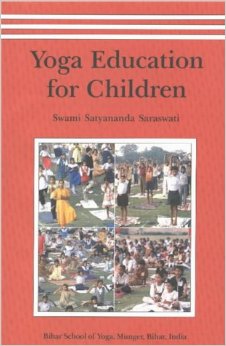
I started a Registered Children’s Yoga Teacher (RCYT) training course this week, and so it’s not been a big week for reading. The only new book I acquired and have begun reading is that course’s text, Yoga Education for Children, Vol. 1. That book is put out by the Bihar School (Swami Satyananda), which has done a vast amount of work and research about educating children through yoga.

YogaEdforChildren


I will probably finish Mary Bond’s The New Rules of Posture over the weekend, which I only have two chapters left to complete. I discussed that book in last week’s reading report.

NewRuleofPosture

Other than that I’ve been plugging away at some of the books that I’ve mentioned in previous reports when I have a moment here or there.  It’s been sort of a technical week for reading. I hope to have more to say next week.

READING REPORT: March 13, 2015

Welcome to a special–not really–Friday the 13th edition Reading Report. Were I one to plan ahead, I might have read something horrifying for this week, but I’m afraid there’s nothing to inspire dread… well, I don’t really know what your dread threshold is, but unless you have phobias about good posture or classic literature, I think you’re safe.


I bought The New Rules of Posture this week, and spent a lot of my reading time with my nose in it. It’s one of those books that has one periodically getting up to try some movement or postural experiment, but I’m about 2/3rds of the way through nonetheless. It’s written by a dancer turned Rolfer, and offers good insights on the subjects of posture and breathing for those of us who are interested in evaluating and improving such things. The line drawings, many anatomical in nature, are helpful and the readability is high for a such a book. I suspect I’ll finish it in the upcoming week and will have a review up within a couple weeks.

NewRuleofPosture


I finished only one book this week, Why Do People Get Ill? I’ve mentioned this book in earlier reports, and will soon be doing a review, so I won’t spend much time on it now. It’s essentially about the roles that stress and the inability to articulate one’s feelings about illness play in catching a disease as well as its progression.

WhyDoPeopleGetIll_Leader&Corfield


As one can see, I’ve been on a body-mind nexus reading kick lately. I’m trying to educate myself about anatomy, physiology, and related biological sciences as a means to improve  the operation of body and mind. In addition to the featured titles above, some of the other books I’ve been reading during the past week include: Zen and the Brain (there was a fascinating chapter on indigenous opioids–i.e. morphine-like substances produced within the body–among this week’s chapters), The Trigger Point Therapy Workbook, and The Sensual Body.

Zen&Brain

TriggerPtTherapy

TheSensualBody


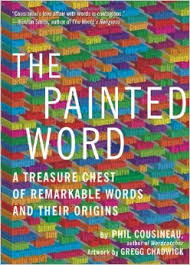
Moving beyond the body / mind books, I did do some reading that wasn’t research related. I’m about 40% through The Painted Word, having read the entries for the letters D, E, and (part of) F. My favorite word from the week was “dromomania” which means an intense passion for travel or wandering. As in, “I, Bernie Gourley, have a bad case of dromomania.”

Painted Word


The short story collection that I’m currently reading (I try not to neglect this medium) is Meeting the Dog Girls. I read about half-a-dozen stories this week (most of them are short, and a few of them–it could be argued–don’t really constitute stories), and I’m about 20% of the way through. Absurdism is a prevailing theme, though in some stories more than others. So far, I’m enjoying this collection. It’s mostly light and easily digestible reading, but has some intense moments.

Meeting the Dog Girls


With respect to novels, I slipped away from Mo Yan’s Life and Death are Wearing Me Out, and resumed reading Victor Hugo’s Les Misérables–a book which I started a while back. I’ve got to admit that reading 19th century literature can be a struggle, and–at the risk of offending–Hugo could’ve used a modern-day editor. (I realize that an alternative interpretation is that modern-day people–myself included–could use an attention span.) I’m only about 10% in, but I got through a powerful moment during which the gendarmes bring Jean Valjean before the Bishop. If you’ve read it (or seen one of the movie or theatrical adaptations) you’ll know what I’m talking about.

LesMiserables


The only other book I spent any significant time was The Taiheiki, and if–like me–you think reading a translation of 19th century French literature can be a challenge, try reading a translation of 14th century Japanese literature. As I’ve mentioned, this book is research for the novel I’m working on. The challenge is the vast cast of characters. It’s a blend of history and fiction, and if you don’t know who was allied with whom during the war between Emperor Go-Daigo and the Hojo, it’s hard to figure out who you should be rooting for–unless it’s talking about the legendary warrior Kusunoki Masashige or one of the few other really well-known samurai.  (Kusunoki was the lord of a small and inconsequential province and his name would likely have been lost to history–despite being a brilliant General–had he not become Japan’s national paragon for the virtue of loyalty.)

Taiheiki

READING REPORT: March 6, 2015

This will be a brief reading report. I finished just one book this week, as well as purchasing only one book.


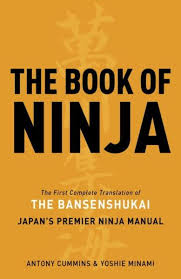
Bansenshukai

The book that I finished was a translation of the Bansenshukai, which is a 17th century ninja manual written / compiled by Fujibayashi Sabuji. The Japanese title means “10,000 Rivers Flow into the Sea,” but this English translation by Anthony Cummins and Yoshie Minami was re-titled The Book of Ninja. I ran into a hard-copy of this book in a Kuala Lumpur bookshop, but ended up purchasing the much cheaper Kindle e-book. I read about half of the book months ago, and only got around to finishing it this week.


There’s much that will forever remain unknown about the ninja and their medieval practices. The Bansenshukai is one of three well-known manuals that survived into the modern era–along with the Ninpiden and the Shoninki (each of which also has at least one English translation.) It should be noted that these manuals were generally written after the heyday of ninja activity, and still the most common sentence in this book is some variant of the phrase “There is an oral teaching”, meaning that important details have been kept out to preserve secrecy. This is a book of tradecraft, don’t expect thrilling exploits of the ninja, much of the book deals with minutiae about medieval lock picking and recipes for incendiaries. While the English translation title may beckon images of black-clad ninja stealthily rolling over the top of a wall to dispatch an unsuspecting sentry via death from above, the bulk the material is much more mundane. This is a great book for people who geek out on Japan’s Warring States period or who are doing research regarding this topic (I fit in both categories as my novel takes place in part in medieval Japan.)


FreeWill

The book I bought is Sam Harris’s Free WillHarris is a neuroscientist who studies issues that have historically been considered the domain of religion and spirituality, but he does so from a scientific point of view. What one believes about free will is likely to form the bedrock of one’s personal philosophy of life, so this is a very important topic, and I have high hopes for learning something new from this book.


The only other book that took a significant portion of my time is one that I introduced earlier:

WhyDoPeopleGetIll_Leader&CorfieldLeader and Corfield explored the immune system and issues related specifically to cancer in the chapters that I read this week. It was a pleasant turn for the book into a more scientific and less psychobabbly landscape. I continue to be intrigued by this book and it’s title question.


That’s it for now. I’ll be posting reviews for The Book of Ninja as well as last week’s Antifragile in the upcoming week.

READING REPORT: February 27, 2015

I finished three books this week.

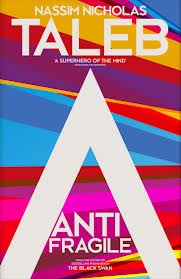
Antifragility

The first of these is Antifragile, the latest offering by Nassim Nicholas Taleb, whom you may know from Black Swan and Fooled by Randomness fame. While it’s his latest book, it came out a couple of years ago and I started it over a year ago.  The premise is that some entities become stronger when exposed to stressors and disorder,  and there are ways to nurture this tendency to be antifragile. While the ideas and many of the examples are fascinating, I put it down for a long time because Taleb is prone to rambling diatribes. After about the 1oooth time reading about how much he loathes the 98% of professors (we get it already), you may be ready to set it down as well.  [To be fair, Taleb probably gets a hundred death threats a year from enraged social science scholars whose life’s work will appear ridiculous to anyone who understands the gist of Taleb’s arguments in this and his preceding two books.] Taleb is a first-rate thinker who has delivered some very important messages about the misapplication of statistics, I’m not sure why he feels compelled go all Howard Stern about it–though it does probably sell a few extra copies and I suspect he is genuinely that way.
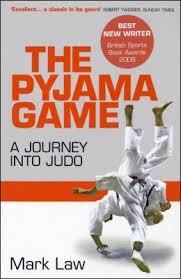


pyjamagameMark Law’s The Pyjama Game is in part a micro-history of the martial art and sport of judō, and in part is an accounting of his own experiences in taking up judō at the ripe age of 50. For me the history and evolution of judō is where the book is at its most interesting. However, if you don’t have any martial arts experience–or even if you don’t have any grappling-centric training experience–you may find Law’s discussion of testing and randori (free form training, the grappling equivalent to sparring) intriguing, or invaluable if you’re considering taking up judō, jujutsu, or sambo.
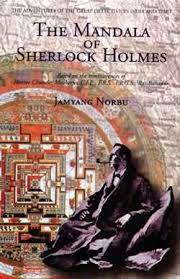
 

mantraSherlockHolmesThere is apparently a cottage industry of writers putting out their own Sherlock Holmes novels, and–in particular–writing about Holmes’s gap years. For those unfamiliar with the literary history of Sir Arthur Conan Doyle, at one point he got sick of writing these crime fiction novels and killed off Sherlock Holmes. However, there was such a clambering for the master detective that Doyle resuscitated Holmes. These gap years in which Holmes was believed dead have proven fertile soil for writers who wish to write their own spin on where Holmes went and what he did when he was traveling incognito. I saw a press post for a new one the other day in which Holmes goes to Japan. The Mandala of Sherlock Holmes, however, speculates that Holmes traveled to Bombay, and from there to Tibet and eventually to Shangri La. It’s an intriguing premise and offers some good travelogue type description of setting–however as a story it’s not as artfully executed as the Arthur Conan Doyle books.


I bought four books this week, two of which–in part–because they’ll help me complete the Book Riot 2015 Read Harder Challenge, which I will talk about below.
 

Dinosaurs_wo_Bones

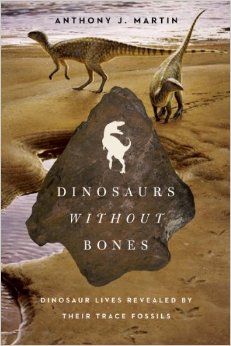
Admittedly, I bought this book, Dinosaurs Without Bones,  not because the subject jumped out at me (though I’m sure it will prove thrilling) but rather because I knew the author about a billion years ago (I know; I should take geological time more seriously when mentioning a book of this subject.) At any rate, we trained at the same martial arts school in Atlanta, Georgia. That disclaimer being made, the topic looks fascinating and I’m eager to learn more about paleontological detective work.


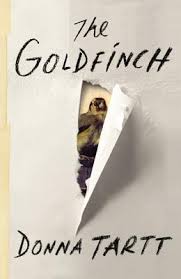
GoldfinchThe Goldfinch won the 2014 Pulitzer Prize for Literature, and so it meets an unchecked requirement for the Book Riot Challenge (recent award winner of one of the major literary prizes.) Honestly, if it weren’t for my desire to complete the challenge, I might have read Tartt’s The Secret History first. The latter books seems a little more up my alley, but I”m eager to see what this critically acclaimed novel has to offer. If it’s engaging, I’ll go back and pick up her first novel.


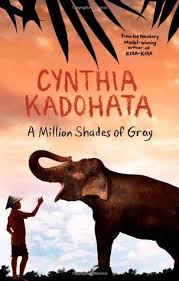
AMillionShadesofGray

No A Million Shades of Gray isn’t a mommy porn book 20,000 times more intense than E.L. James’ book. On the contrary, it’s an intriguing YA book about a teenage elephant handler who escapes into the jungle with his elephant to escape war-torn Vietnam. This book will hit on an unchecked category on the Book Riot Challenge (i.e. YA book)


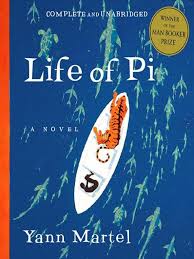
Life of Pi

Life of Pi is a book that I intended to read long before the movie came out, but still haven’t gotten around to it. It was cheap on Kindle, and so I picked it up. I’ve seen the movie, so it’ll be interesting to compare, given how visual the movie was.


I’m almost halfway through the Book Riot 2015 Read Harder Challenge. The 19 books I’ve completed thus far this year include books in 11 of the 24 categories, including:


3.) Short story collection or anthology: a.) 999: New Stories of Horror and Suspense, and b.) I Have No Mouth And I Must Scream


6.) By someone of another gender: a.) Tears in Rain, and b.) Principles of Tibetan Medicine


7.) Takes place in Asia: a.) Quarantine in the Grand Hotel, and b.) The Mandala of Sherlock Holmes


10.) A micro-history: Yoga Body: The Origins of Modern Postural Practice


12.) A science fiction novel: a.) Tears in Rain, b.) The Martian


17.) A collection of poetry: Leaves of Grass


18.) A book that was recommended: Key Muscles of Hatha Yoga


19.) A book originally published in another language: a.) Tears in Rain (Spanish), b.) Quarantine in the Grand Hotel (Hungarian)


20.) A graphic novel or comic book collection: The League of Extraordinary Gentlemen (Vol. 1)


23.) A book published in 2014: The Martian


24.) A self-improvement / self-help book: Zen Mind, Strong Body


READING REPORT: February 20, 2015

This week’s Reading Report will be short. I didn’t complete any books this week.


Most of my reading was divided between two books that I’ve mentioned in earlier reports. The first is Zen and the Brain by James H. Austin. This is probably the most expensive book that I’ve purchased since the ridiculously overpriced textbooks of college. While I’ve been known to pan decent books for being overpriced (e.g. most recently Zen Mind, Strong Body by Al Kavadlo), I will say that I’ve found this book to be worth it. There are vast numbers of books on the fascinating findings of neuroscience research. Also, there is a vast canon on Zen, meditation, and the quieting and mastering of the mind. However, there are only a small (though growing) number of books that deal with the intersection of these two subjects, and none covers the subject in as much depth as Austin’s work–as far as I’ve seen. The chapters I’ve been reading of late deal with emotions, visceral drives, and memories–all relevant issues for one who is seeking personal development in a scientifically-minded manner. The next chapter will deal with GABA. I’m looking forward to this because I know there is scientific evidence that yoga can reduce depression through its effect on GABA levels, and I look forward to having a better understanding of how this works.

Zen&Brain


The second book that’s consumed a lot of my time over the past week is The Pyjama Game. I’m about 2/3rd of the way through this book and will finish it in the upcoming week. It is in part a micro-history of judō and in part an account of what it’s like to be a practitioner of the martial art of judō. While the micro-history chapters are chronological, they’re interspersed with chapters that are more of a personal accounting of the author’s experience (and the experience of individuals with which he interacted with first-hand–i.e. other amateurs.)  The era that was covered in my reading of the past week was an interesting one. It chronicled judō’s shift from a time in which Japan completely dominated the sport to one in which Russians, Europeans, and Americans started to make headway and—in some ways–unique contributions to the art. This includes judō‘s rise to Olympic status, and how the sport has progressed since that time.

pyjamagame


There were another couple of books that I read substantial parts of as research for the novel I’m writing. The first of these is The Taiheikiwhich is–as was the style in medieval Japan–a mix of part history and part literature. It tells the story of Emperor Go-Daigo’s retention of power, largely through the efforts of valiant loyalist warriors–most notably the famous Kusunoki Masashige.

Taiheiki


The second research work is entitled Fighting Techniques of the Oriental World: AD 1200 – 1860As my novel takes place partly in 14th century Japan, China, and Southeast Asia, this reference comes in handy for learning about the activities of warriors across several nations.

FightingTechniquesOrientalWorld


I purchased three books this week. In a way, I was successfully (and happily) suckered. For those who haven’t realized, Amazon is very clever. If you look at a book once or twice, the price will often rise a little when you go back. This drives a few suckers to buy it at a higher price before it rises to some imagined peak price. I’ve noticed this on enough occasions to believe that it’s not just coincidence. Furthermore, as one trained as an economist, I know this is a sound pricing strategy. What I’d not yet experienced is that if one keeps periodically checking on the books–but not buying–the prices will creep back down to a new low, probably only a tiny bit under the first price you saw. I bought three books that I’ve been looking for both on Kindle and at my local bookstore, but which have stayed above my reservation price.


The first, and most expensive, was Buddha’s Brain, which is along similar lines to the aforementioned Zen and the Brain. The book is by a neuroscientist who specializes in neuroplasticity, and who examines how one can go about “rewiring” one’s brain to be happier and more well-adjusted.

BuddhaBrain


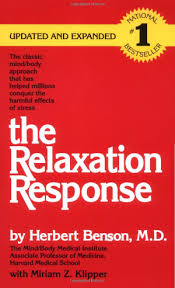
The second book is called The Relaxation Response. It was the cheapest book of the three and is much older than the book Buddha’s Brain. In it Dr. Benson (Harvard MD) describes the relaxation response as the body’s counterpoint to “fight or flight” mode. In this state of relaxation, the body–among other things–goes to work on repairing what ails it. There’s a lot of evidence that a human body can repair most of what can ail it if it gets enough rest–i.e. sufficient break from stress.

Relaxation Response


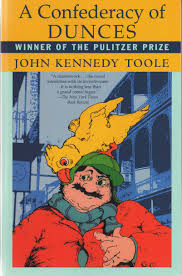
My final purchase was A Confederacy of Dunces. This book is considered to be one of the best comedic novels in American literature. It’s also a book that all depressed writers (which is to say all writers struggling to get things published) should read for the cautionary tale of the novel’s tragic back story. The author, John Kennedy Toole, committed suicide (at least in part) because he couldn’t get it published. His mother then took up the torch, shopping it around. It took her seven years, but she finally got it published after convincing the novelist Walker Percy to look at it, and having achieved his recommendation. In 1981 it won the Pulitzer Prize for fiction.

confederacy of dunces

READING REPORT: February 13, 2015

Welcome to a special Friday the 13th edition of the Reading Report. What’s so special about it? If you’re not deluded by superstition, then not much. If you are superstitious, reading this post may cause you to suffer a plague of locusts (or whatever plagues your particular geographic area.)


Now that we’ve gotten rid of the illiterate ninnies, we can get down to discussing books.


I finished two books this week–one nonfiction and one fiction. I’ll be posting book reviews within the next couple weeks.


The nonfiction book was called Yoga Body: The Origins of Modern Posture Practice. The author’s intriguing and controversial thesis is that yoga as it’s practiced in studios around the world today nothing to do with traditional Indian yoga, but, instead, owes it’s existence to European calisthenics and bodybuilding systems and the Indians that borrowed from them. I didn’t find the author’s argument compelling for a number of reasons that I’ll get into in my review. This isn’t to suggest that I’m certain he’s wrong. He may be right, but the way he constructed his argument left a great deal of room for doubt.


TLEG_Vol1

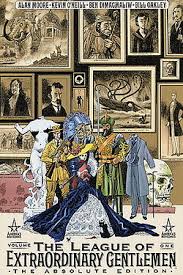
The fiction book was a graphic novel entitled The League of Extraordinary Gentlemen (Vol. 1). For those of you who haven’t seen the movie featuring Sean Connery, this comic book gathers together a team of protagonists from 19th century science fiction and adventure novels. The team consists of Mina Harker (of Bram Stoker’s Dracula), Allan Quatermain (of H. Rider Haggard’s King Solomon’s Mines), Captain Nemo (a Jules Verne recurring character), Dr. Jekyll/Mr. Hyde (Robert Louis Stevenson’s title characters), and Hawley Griffin (of H.G. Wells’ The Invisible Man). One needn’t have read all those classic stories to follow this book, but being a fan of 19th century tales of the fantastic definitely makes it more fun. The story depicted in this volume has nothing to do with the movie plot.


mantraSherlockHolmes

I’m more than halfway through a couple of books that I mentioned in earlier Reading Reports, they are Why Do People Get Ill? and The Mandala of Sherlock Holmes.  I read chapters 7 through 9 of the former book, which had to do with the expression of symptoms, the heart as a symbol and that symbol’s expression in illness, and the impact of mother’s experiences on infants and children. In the latter book, Holmes has arrived in Tibet, and the plot thickens. The author is Tibetan, and so has some unique insights. However, some chapters advance the story with action, and others are almost like travelogue.


I’m still early into reading two books that I’ve previously mentioned. The first is Zen and the BrainIn this book I’ve transitioned out of the part explaining Zen and the author’s experience of that tradition, and am now into the part that lays down the basic neuroscience. While the author writes in a readable style, for a neuroscientist, this is still challenging reading because of its scientific nature and the complexity of the brain. However, the chapters I read recently both raise some fascinating questions and provide useful information. The chapter I just finished dealt in part with the neurochemistry of addiction. I like that this book is divided up into short chapters. This is beneficial for taking in such complicated information. I need frequent think-breaks to ruminate on what I’ve read.


pyjamagame

The second is The Pyjama Game. After a slow start, the last two chapters have contained some fascinating information. One of these chapters dealt with the history of jujutsu, particularly as Japan transitioned from medieval to modern. The other chapter outlined Kanō Jigorō‘s development of judō.


I bought three books this week.


The first is entitled Healing Moves, and is by a married couple consisting of a fitness writer and a cardiologist. This book addresses a topic that is a prevailing theme in my nonfiction reading as of late, which is what movement, exercise, and physical activity can do to improve one’s health (not just one’s fitness.)

HealingMoves


The second book is Greatest Ever Boxing Workouts.  This book presents information about what boxers like Mike Tyson, Manny Pacquiao, and Floyd Mayweather do to prepare for fights. It’s a follow-up to an earlier book that included fighters like Muhammad Ali and Roy Jones Jr.

BoxingWorkouts


Finally, I just got a short story collection on Kindle Daily Deal the other day entitled Lovecraft’s Monsters.  This isn’t a collection of H.P. Lovecraft stories, but rather is an anthology of stories inspired by Lovecraft’s work.

LovecraftsMonsters

READING REPORT: February 6, 2015

I polished off three books this week. That’s not as impressive as it might seem; they were all slim volumes. I’ll do reviews on these books in the near future, but a few words about each will suffice here.

The first was Zen Mind, Strong Body; a book about which I had mixed feelings. It’s by a calisthenics expert named Al Kavadlo, who is a personal trainer, author, and YouTube phenom. On the positive side, Kavadlo is a sharp guy with many useful insights into bodyweight exercise and fitness in general. Additionally, Kavadlo eschews the snake-oil salesmanship that is rampant in the fitness world.

On the other hand, the book is basically a rehash of blog posts, and the “new / first time seen pictures” aren’t useful for learning the exercises because they’re mostly just the author standing in random places with his shirt off. Furthermore, there’s no such consolidating theme to the book as is suggested by the title. I think it just has that title (a take-off on DT Suzuki’s classic work on Zen) because “The Best of Al Kavadlo’s Blog Posts” doesn’t scream “buy me.” I thought a little extra value-added could have been provided for the people who paid for the book, but you will learn from it.

The second book was Quarantine in the Grand Hotel. This novel brings satire and humor into a locked-door mystery. It was written by a Hungarian author in the 1930’s, but remains a readable and enjoyable book.

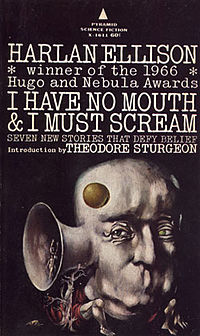
IHaveNoMouthThe third book was the short story collection by Harlan Ellison that I mentioned I would begin this week. I Have No Mouth and I Must Scream consists of seven stories that are nominally in the genre of science fiction, but could also be classified as tales of the strange. This book was first published in 1967. Ellison writes stories in a readable style, though one that can sometimes be called “trippy.” If I were going to award a “book of the week” for the book that I found most engaging, it would be this one.

I only got a couple of chapters each into the Mo Yan novel Life and Death Are Wearing Me Out and the epic poem The Aeneid. The former is readable has a fascinating premise, but the latter–not unexpectedly– is a little more of a chore to read (but is a classic and seems worth the difficulties.)

Having finished off some nonfiction in the preceding week, I made room to resume reading a book that I started a couple of months ago entitled Why Do People Get Ill? A two-man team consisting of a psychoanalyst and a neuroscientist joined together to write this book. It examines the role that stress and the mind play in illness. Yes, things like germs (i.e. bacteria and viruses) cause illness. However, that’s not the whole story, and a couple of key questions remain. First, how come some people can be repeatedly exposed to causative factors and their bodies knock out disease leaving them asymptomatic. Second, how come others readily come down with ailments–sometimes even when they haven’t been exposed to causative factors. To put matters in scholarly terms, germs may be a necessary condition for disease, but they are rarely a sufficient condition.

WhyDoPeopleGetIll_Leader&Corfield


I didn’t do much yoga or martial arts specific reading this week. However, today I finally began The Pyjama Game, which is a book about Judō that I mentioned in one of my previous Reading Reports.

I purchased four books this week, all on Kindle and mostly on sale.  Those books, which I’m sure to be discussing and reviewing on later dates are:

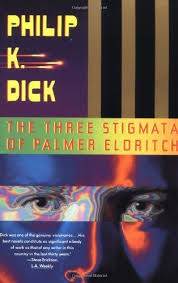
TheThreeStigmata

The Three Stigmata of Palmer Eldritch: Because I’m a huge PKD fan, and this is said to be one of his best books–of his books that I haven’t yet read. This was in the Kindle Monthly Deals.

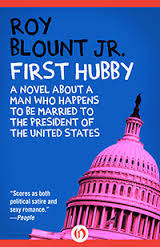
FirstHubby

First Hubby: This will be my first Roy Blount Jr. book, but I did enjoy him on that NPR game show (i.e. Wait Wait… Don’t Tell Me!) This was also a Kindle Monthly Deal as I recall.

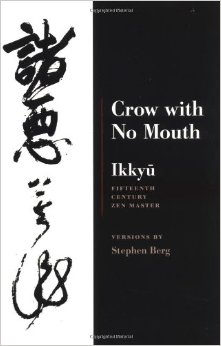
Ikkyu_Berg

Ikkyu: Crow with No Mouth: This is the story of a Zen master who lived in Kyoto in the 15th century. He sounds like a fascinating man, and was also a skilled poet. This one wasn’t on sale, but neither was it expensive at the usual price.

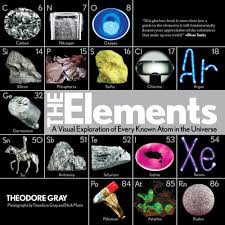
TheElementsThe Elements: This book is a Kindle Daily Deal as I’m writing this. I love me some science. I did have to look through the sample pages before buying. Even though it was inexpensive, I was concerned that it might not have much usefulness on my black&white, base-model Kindle because the graphics are an important part of the book. However, it looked like there was enough text explanation to be worth the $2.00–even if the graphics don’t show up well.

And that was my week in books.

READING REPORT: January 30, 2015

Welcome to my second weekly dispatch on what I’ve been reading. Owing to my weird approach to reading, I tend to finish books in clusters, and this week I polished off the novel The Martian, the horror short story anthology 999, and three nonfiction books (Principles of Tibetan Medicine, The Key Muscles of Hatha Yoga,  and How Pleasure Works.) The only one of these that I’ve completed a review on is Principles of Tibetan Medicine, but reviews of the others will be in the works in the upcoming week(s.)


The star of my completed pile was Andy Weir’s The Martian. It’s a spectacular science fiction read that’s engaging from beginning to end. Readers who love science will find it particularly fascinating and well-researched. For the yogis and yoginis out there, Ray Long’s book on muscles as applied to Hatha Yoga is well-organized, easy to follow, and easy to use.


The completion of several books this week creates openings in what fiction and poetry I’ll be reading on Kindle in the coming weeks. Drum-roll please… I will be starting the following books this week:


MoYan_LDWMO

1.) Life and Death Are Wearing Me Out by Mo Yan: Mo Yan won the Nobel Prize for Literature back in 2012, and this 2006 book is about a benevolent land owner who is killed on orders by Mao Zedong, and is subsequently reincarnated as a series of farm animals.


IHaveNoMouth

2.) I Have No Mouth And I Must Scream by Harlan Ellison: The title of this collection of short stories is also the title of the most prominent piece in it. The 1968 Hugo winning story is a post-apocalyptic tale of artificial intelligence run amok.


Aeneid

3.) The Aeneid of Virgil: I’m overdue to read this epic poem by the famous Latin poet written during the first century B.C.


In nonfiction, I made an impulse purchase this week that I’m about half way through reading. It’s called Zen Mind, Strong Body and it’s by Al Kavadlo. I’m having minor buyer’s remorse, not because it’s a bad book, but because it turns out to be a collection of blog posts, and so I could have probably gotten all this for free by digging around the world wide web a little. (Moral: always read the fine print on the dust jacket. I wouldn’t mind, but it was a bit pricey for rehashed blog posts.) Kavadlo is a personal trainer and advocated of calisthenics and advanced bodyweight exercises, and he has many interesting ideas on both mind and body. It has provided some interesting food for thought, but I don’t really need the hundreds of pictures of the author with his shirt off.

ZenMindStrongBody


I’m about halfway through Nassim Nicholas Taleb’s latest book, Antifragile, and would like to make some headway on that in the upcoming week. While I’m a fan of Taleb’s work, I’ve gotten bogged down in this one because it keeps going and going and going on about a rather simple concept–i.e. that some things become stronger or more robust when exposed to stressors. I’m not sure the book needed to be this long. I suspect that Taleb is the kind to throw a world class tantrum if an editor took a hatchet to a word of his writing–and now he has the following to make it work. He’s a smart guy and raises many excellent points, but he seems like a major prima donna. At any rate, maybe he’ll surprise me in the second half with something novel and interesting–in lieu of endless restatement of his (admittedly fascinating) thesis.

Antifragility


I also started a book a few weeks back called Zen and the Brain by James H. Austin that I’d like to get back to. It examines what science has to say about the practice of meditation from the perspective of a neuroscientist who’s also a Zen practitioner.

Zen&Brain


At the end of last year, I did a post about the Book Riot 2015 Read Harder Challenge. It’s a sort of scavenger hunt for readers. There are 25 categories of books, of which one is supposed to read at least one book each. If you can count the same book for several categories (I don’t see why not as long as they fit the description) then I have so far covered seven categories. (Not bad for the first month of the challenge.)

-Collection of short stories: 999: New Stories of Horror and Suspense

Author of a different gender: Tears in Rain (Rosa Montero) and Principles of Tibetan Medicine (Tamdin Rither Bradley) [Both females]

Science-fiction novel: The Martian

Collection of poetry: Leaves of Grass

A book recommended for you by someone else: The Key Muscles of Hatha Yoga

-A book originally published in another language: Tears in Rain  (Spanish)

A book published in 2014: The Martian (Some might dispute this as it was self-published in 2011, but not picked up by a publisher until 2014.)

2015 Book Riot Read Harder Challenge

From Goobe's Books, one of my favorite local bookstores in Bangalore

From Goobe’s Books, one of my favorite local bookstores in Bangalore

Recently, a FaceBook friend posted a link for the 2015 Book Riot Read Harder Challenge. This is a scavenger hunt for readers. There are 24 categories for which one should read at least one book each. For many categories there are also links to posts that will provide some recommendations.


While I’m not particularly good at planning out my reading, I thought it would be fun to give it a try.


What follows are my choices in each category.

1.) Author was under 25 years old:  The Icarus Girl  by Helen Oyeyemi

or possibly Everything is Illuminated by Jonathan Safran Foer

2.) The author was over 65 years old: All That Is by James Salter

3.) A short story collection or anthology: 999: New Stories of Horror and Suspense ed. Al Sarrantonia

4.) Indie press published book: I Have Blinded Myself Writing This by Jess Stoner (and, incidentally, SF/LD [Short Flight / Long Drive] Press)

or, alternatively: Go the Fuck to Sleep by Adam Mansbach (published by Akashic Books)

5.) By or about someone who identifies as LGBTQ: Confessions of a Mask by Yukio Mishima

6.) A book by someone of the opposite gender: House of Bathory by Linda Lafferty, or The Tale of the Genji by Murasaki Shikibu

7.) Book takes place in Asia: My Boyhood Days by Rabindranath Tagore

or, possibly, Kite Runner by Khaled Hosseini, or  Underground by Haruki Murakami. I’ll likely read several books in this category.

8.) Author is from Africa: Things Fall Apart by Chinua Achebe

9.) Book by or about someone from an aboriginal culture: Lightfinder by Aaron Paquette

10.) A microhistory: Banana: The Fate of the Fruit that Changed the World by Dan Koeppel

or The Emperor of Maladies by Siddartha Mukherjee, or The Pirate Coast by Richard Zacks,

but–most likely– Yoga Body: The Origins of Modern Posture Practice by Mark Singleton (Which I just realized qualified and I already have queued up to read soon.)

11.) A YA novel: Hunger Games by Suzanne Collins

12.) A Sci-fi novel: The Sirens of Titan by Kurt Vonnegut, or Wild Seed by Octavia Butler, or Tears in Rain by Rosa Montero, or Under the Empyrian Sky by Chuck Wendig. I’ll likely read several books in this category.

13.) A romance novel: Fifty Shades of Grey by E.L. James

14.) A recent winner of the National Book Award, the Man Booker Prize, or a Pulitzer: Behind the Beautiful Forevers by Katherine Boo (2012 National Book Award) or The Goldfinch by Donna Tartt (2014 Pulitzer)

15.) A retelling of a classic tale: The Story of Edgar Sawtelle by David Wroblewski (of Hamlet), or Going Bovine by Libba Bray (of Don Quixote.)

16.) An audiobook: (Truth be told, I probably won’t listen to any books this year. I used to get audiobooks all the time when I had a commute, but it’s not so convenient anymore. However, to play the game to its fullest): All the Light We Cannot See by Anthony Doerr

17.) A collection of poetry: Leaves of Grass by Walt Whitman

18.) A book someone has recommended for you: It may be cheating because I already have it down, but so far the only book I’ve had recommended for me recently (that I haven’t yet read) is Behind the Beautiful Forevers by Katherine Boo

If you want to keep me from being a dirty cheat, feel free to make me a recommendation.

19.) A book originally published in another language: Les Miserables by Victor Hugo, or Thirukkural by Thiruvalluvar

20.) A graphic novel or comic collection: Hyperbole and a Half by Allie Brosh, or Serenity: Leaves on Wind by Zach Whedon

21.) A guilty pleasure read: Never Go Back by Lee Child, or Valley of the Dolls by Jacqueline Susann, or Tropic of Cancer by Henry Miller

22.) A book published before 1850: The Aeneid by Virgil (19 B.C.), or Don Quixote by Miguel Cervantes (1605)

23.) A book published in 2014: Station Eleven  by Emily St. John Mandel, or The Martian by Andy Weir

24.) A self-improvement / self-help book: A Conversation with Fear by Mermer Blakeslee, or Golden Cloud, Silver Lining by Ashok Chopra


Well, there’s my list. Now I’ve got to go get cracking on doing the reading.

2014 Reads: The Most Captivating and Profound Books I Read in the Past Year

Zen in Motion: Lessons from a Master Archer on Breath, Posture, and the Path of IntuitionShantaramYogic Management Of Common DiseasesThe Strain Volume 1The Elephant Whisperer

Your Brain on YogaKalari MargamThe Heart of Yoga: Developing a Personal PracticeThe Hindu-Yogi Science Of Breath

VALISThe Essential Guide to Being Hungarian: 50 Facts and Facets of NationhoodThe AlchemistThe Golden Sayings of EpictetusMake Room! Make Room!
Sorry I Ruined Your OrgyThe Coroner's LunchNorwegian WoodThe Bhagavad Gita

I read 80-some books in 2014. A few stood out above the rest. I’d put the best of the litter in two categories: the captivating and the profound. This is a more appropriate division than fiction and nonfiction. The captivating books were the ones that I couldn’t put down because they were intriguing and intense. The profound books were the ones containing ideas that changed my approach to life. Very few–if any–of these books came out in 2014, so if you’re looking for the best books of the year you might want to look here or here.

The Captivating

1.) The Elephant Whisperer   [A wildlife preserve owner takes in an elephant herd, and learns about how the mighty animals think, feel, and communicate.]

2.) The Beach  [A traveler in search of a fabled perfect beach finds it, and ultimately wishes he hadn’t.]

3.) Shantaram [An ex-con on the lam hides in Bombay and experiences life as an ex-pat, a slumdog, a prisoner, a medic to Mujaheddin, and a gangster.]

4.) Gone Girl  [A wife goes missing, and the husband becomes the prime suspect–but nothing is as it first appears.]

5.) The Fault in Our Stars  [An ill-fated romance blossoms between two teenage cancer patients.]

6.) Norwegian Wood  [A young man’s life is shaped by his love for the girlfriend of a suicidal former best friend, and other relationships with unusual women.]

7.) History of the World in 6 Glasses  [The title says it all. How beer, wine, spirits, coffee, tea, and coca-cola shaped the world.]

8.) Dawn [A woman awakes in the custody of aliens to find that an unwanted leadership role is being thrust upon her as the Earth is to be repopulated.]

9.) Veronika Decides to Die  [A suicidal young woman is told that she has only days to live, and finds a new lease on life.]

10.) The Novice  [An old story about a young monk who stays virtuous in the face of multiple betrayals, as told by the famous Vietnamese Zen Buddhist monk, Thich Nhat Hanh.]


The Profound

1.) The Rise of Superman   [How extreme athletes are using a mental state called the Flow to achieve phenomenal feats.]

2.) Warrior Pose  [How yoga saved the life of a cancer-riddled war correspondent with a broken spine and an addiction to painkillers.]

3.) The Way of Chuang Tzu [Thomas Merton Edition- A series of Taoist stories as told by the prolific Trappist monk.]

4.) The Tao of Jeet Kune Do  [Bruce Lee’s guide to the tactics and techniques of his martial art, Jeet Kune Do.]

5.) The Introvert Advantage  [An explanation of the widely misunderstood state of introversion, and how introverts can optimize their lives in the face of their introverted nature.]

6.) The Art of Peace  [The philosophy of Morihei Ueshiba, the founder of the martial art of Aikido.]

7.) The Wild Life of Our Bodies   [We our not alone. The human body is an ecosystem, and killing off the other species that reside within us can have dire results. And a dire warning to clean freaks.]

8.) Mind Over Medicine  [A medical doctor reviews the literature 0n the body’s tremendous capacity to heal itself under the right conditions, and a discussion of how those conditions might be achieved.]

9.) The Heart of Yoga  [A guide to building a personal yoga practice by T.K.V. Desikachar, son and student of the legendary guru T. Krishnamacharya.]

10.) The Science of Yoga  [What modern science has to say about the benefits and risks of yoga.]


Bernie Gourley’s favorite books »


Share book reviews and ratings with Bernie, and even join a book club on Goodreads.