5 Reasons to Write Poetry

We’re a week into National Poetry Month. I’ve posted a few poems with more to come, but here I’ll reflect upon the benefits of writing poetry. Some may point out that this is one-sided because the pantheon of poets is littered with opium addicts and suicidal depressives. I read a BBC article citing research showing poets were 20 times more likely to be institutionalized than the non-poet population. I maintain that those bards were broken from the beginning, and that there’s another side to the story.


5.) Poems are puzzles, and puzzles make you problem-solve. This may be more true of structured poetry than free verse, but a poem wrangles words into a relationship designed to create a desired outcome–often an emotional state. With structured poetry one faces a tight puzzle that’s constrained by syllable counts, the relation of stressed and unstressed beats, or rhyme schemes. But even free verse cuts away everything that dampens a desired resonance. That’s done by a series of strategic choices.


4.) Poetry aids emotional management. A study by UCLA researchers found that poetry writing dampens the activity of the amygdala (the brain’s bringer of fear) and, of course, gives the pre-frontal cortex something to do (besides creating catastrophic scenarios–which is its go-to occupation under stress.)


3.) Poetry helps build better prose. Some writers will be more concise and others will be more graphic, but there’s always a benefit to be had. I found a NaNoWriMo blog post that tackles this topic nicely, so I’ll just link.


2.) Poetry activates attentiveness. This is especially true of a form like haiku, which consists of natural observation unembellished by analysis or sentiment. However, all poetry styles require one examine the world intensely enough to see the old anew. This post may be of interest on the topic.


1.) Poetry can access the unconscious. As a practice, I often just put pencil to paper write whatever comes without intervening or directing my conscious mind. Yes, most of it’s crap.  Or not even crap–more like gibberish. But when I go back through these later on, phrases often jump out at me as interesting or evocative, and these often find their way into the heart of actual poems. This is a particularly beneficial practice when one is stuck.

BOOK REVIEW: The Checklist Manifesto by Atul Gawande

The Checklist Manifesto: How to Get Things RightThe Checklist Manifesto: How to Get Things Right by Atul Gawande
My rating: 5 of 5 stars

Amazon page


Checklists have a bad, bureaucratic rap. Like Taylor’s time and motion studies and forms filed in triplicate, checklists seem to exist only to compound the drudgery of the workplace. Furthermore, many of the sectors in which checklists are most necessary are also those in which they are certain to be resisted—i.e. places in which there is a strong leader who is unused to having his or her instructions challenged: e.g. operating rooms and airplane cockpits. The element that ties those two locations together (along with other places where checklists are found) is that they are domains in which extremely complex activities take place, and in which one missed detail can have tragic consequences.

While the main story being told in this book is about the author’s experience leading a task force to build a surgical checklist and research its efficacy via a global study. However, Dr. Gawande takes us on the rounds of industries that found checklists before medicine did, and which had a thing or two to teach doctors about building and using them—notably the construction and air travel industries.

The book consists of nine chapters. After an Introduction that features a surgical case exemplifying how unexpected case characteristics can easily be overlooked when seconds count, the problem of extreme complexity is described as a rationale of the need for checklists in Chapter 1. While we tend to think we humans are tailor-made for complexity, the fact of the matter is that we aren’t. Mother Nature gives no capabilities that aren’t demanded to survive in the environment in which one evolved. So while we’ve done a great deal of cultural evolution to increase our capacity to deal with complexity (checklists included), the fact of the matter is that our minds and bodies are limited instruments. We can only hold a few items in short-term memory at once. We are no good at multi-tasking—despite the fact that most people feel otherwise. And when stress throws us into “fight or flight” mode, we develop tunnel-vision, not helping our capacity to see the minutiae in the big picture.

Chapter 2 delves into the checklist as solution to the aforementioned problem of extreme complexity. This chapter begins with the story of a bomber aircraft that had awesome capabilities but was deemed too complex for a single pilot to fly. (All it needed was a checklist.) The chapter then goes into medical examples. The first is a study of one of the major cause of infections: central line insertions. This offers a prime example of a procedure in which medical staff members know exactly what to do, but often small details are overlooked leading to disastrous outcomes. Then there is the case in which a little girl was saved against apparently impossible odds, in part due to a checklist performance.

Chapter 3 is entitled “The End of the Master Builder,” and as that name suggests, it’s largely about the role of checklists in construction. Construction can be compared and contrasted with medicine. The major similarity is that both fields have such high degrees of complexity that many specialists must be involved. The major difference is that time isn’t so critical in construction. (Just stopping and mulling over a solution is frequently not an option in surgery.) The biggest takeaway of this chapter is that it’s not only the tasks to be performed that need to be on the checklist but also the communication between team members.

Chapter 4 explains how centralized decision-making can be death in complex environments. The principle case discussed was how Wal-Mart out-performed the government in the wake of Hurricane Katrina in large part because leadership supported but did not dictate to managers of the stores in the storm-damaged area. However, the most fascinating piece of information for me was the explanation of why Van Halen had its infamous contract rider about having a bowl of M&M’s with all the brown ones removed. Apparently, no one cared about the candy. It was just an easy way to see at a glance whether anyone had been through the minutiae of the document–minutiae that included critical information such as how much weight the stage had to accommodate—i.e. safety issues not so easily observed but which would be potentially devastating if missed.

Chapter 5 tells the story of the World Health Organization (WHO) contacting Dr. Gawande and his first attempt at building and implementing a surgical checklist. As to be expected, there was a lot about that initial trial that wouldn’t work.

This led the author to go to what he calls “The Checklist Factory” in Chapter 6. Said “factory” is at Boeing, and it writes and updates all the checklists for Boeing aircraft—which are then modified by the individual airlines, presumably within limits governed by regulatory agencies. While the construction people taught Gawande that communication had to be on the checklist, the aircraft people taught him the need to simplify. One can’t put every detail on the list, only those that could be easily overlooked with devastating consequences. (i.e. One doesn’t need to write “Make an incision” because that’s impossible to forget, but one does include “Ensure antibiotics were delivered.”) Boeing also taught the author that there are two different flavors of checklist: READ-DO and DO-CONFIRM.

Chapter 7 describes the pilot study of the revised surgical checklist in eight hospitals in eight different countries (four developed and four developing.)

Chapter 8, “The Hero in the Age of Checklists,” explores the problem mentioned above about there being resistance in a many sectors (including medicine) because those leaders have rock star vibe going. We admire risk-takers and those who excel under pressure, but checklists seem to run counter to those traits. Thus, even when it’s clear that checklists save lives, there can be a reluctance to adopt them. Of course, as in the airline industry, eventually the checklist becomes accepted, and its use becomes second nature.

Chapter 9 tells of one of the author’s own surgical foibles, and how it led him to work to improve the procedure in order to reduce the risk of that kind of accident. It’s also an example of how the checklist kept the tragedy from being much worse.

This book has its sources annotated, but contains no graphics or other ancillary matter.

I’d recommend this book, particularly for those who work in the domain of complexity. However, I read it because it was referenced in a book I’d read on decision-making under fear. So it may also be of interest to you if you’re into questions of optimal human performance.

View all my reviews

BOOK REVIEW: Missing Link Discovered by P. Marer, Z. Buzady, and Z. Vecsey

Missing Link Discovered: Planting Csikszentmihalyi's Flow Theory into Management and Leadership Practice by using FLIGBY, the official Flow-Leadership GameMissing Link Discovered: Planting Csikszentmihalyi’s Flow Theory into Management and Leadership Practice by using FLIGBY, the official Flow-Leadership Game by Paul Marer
My rating: 4 of 5 stars

Amazon page


So, you’re a leader and you’ve experienced Flow. Self-criticism vanished. Time fell away. The task was challenging, but the performance felt effortless. Your attention was rapt, and any craving for distractions disappeared. Maybe you even had a spate of creativity. You come away feeling great. Clarity reigns. Maybe you found Flow at work, but maybe it was skiing, golfing, or composing haiku. Either way, after thinking about how to repeat the feat, your next thought is, “What could my business [or organization] achieve if my people were in this state of mind for even a fraction of each day?” Increased productivity? Decreased healthcare costs and / or disruptions from sick days? Maybe, you’d see fewer complaints between stressed co-workers, or coming from customers? Regardless, you know that Flow is elusive and fickle. It may seem that the harder you seek it, the less success you have. You pick up a couple of books on finding Flow—maybe you watch some TedTalks on YouTube–and they provide helpful tips for finding the state for yourself, but most don’t have much to say on facilitating Flow for others.


That’s where FLIGBY comes in, and “Missing Link Discovered” is a companion to FLIGBY. [Note- “FLIGBY” is short for “FLow is Good Business for You,” which ties it into the work of positive psychologist Mihaly Csikszentmihalyi who both coined the term “Flow” and wrote a book entitled “Good Business” about both achieving Flow in the workplace and how some businesses succeed in the simultaneous pursuit of profit and virtue. Csikszentmihalyi was actively involved in the development of the FLIGBY game. The “missing link” referenced in the title is between leadership and Flow.] FLIGBY is an educational video game in which the player assumes the role of General Manager (GM) of a winery. The last GM was a hard-driving pursuer of profit who left the winery’s mission and values in a muddle and its employees stressed out and at each other’s throats. The player makes about 150 decisions over the course of the 23 scenes that map to a timeline of one’s first half a year as GM. While the player still has to consider the usual business objectives–such as profitability–to succeed one also has to help one’s employees find Flow. The game is used by both by professors of business education courses (e.g. in MBA programs) and by corporate trainers.


As this is a review of the book and not the FLIGBY game, I won’t talk too much more about it beyond this paragraph. However, I did have an opportunity to play the game and found it to be both educational and engrossing. The scenes are live-action, and the cast did a great job of creating the emotional tension necessary to make one feel a stake in the decisions. There’s a narrative arc that unfolds over the course of the game, and so it appeals to the way our brains best take in information. Of course, the game also pays attention to those factors that facilitate Flow, such as offering immediate feedback and an increasing challenge such that the difficulty rises with one’s skill.


I’ll now clarify what I mean by the book being “a companion” to the FLIGBY game. It’s not a game manual. [i.e. The nuts and bolts of how to navigate the game as well as general background information are provided within the game itself as well as through a series of digital appendices—a list of which is included in the book.] Rather, “Missing Link Discovered” is intended to bring readers up to speed in three areas relevant to the FLIGBY game. These areas are delineated by the book’s three parts. Part I (Ch. 1 – 3) introduces Flow and explains how its pursuit fits into the larger scheme of leadership responsibilities. It begins with an introduction to Flow and Csikszentmihalyi’s research, then links Flow and leadership, and—finally–describes the set of leadership skills used in the game.


The second part (Ch. 4 – 8) introduces the game, situates it in the context of serious games (those for which entertainment is a secondary concern), and discusses the topic of feedback in great detail (Note: feedback is a crucial issue because delayed or inadequate feedback is one of the major reasons that people have trouble achieving Flow–particularly in a workplace setting.) The last chapter in this section is a collection of captioned photos that charts the development of the game from the first meeting with Professor Csikszentmihalyi to the game’s use for both instruction and research.


While the first two parts of the book are relevant to all players, the last part is aimed at Professors, corporate trainers, and researchers. It consists of two chapters. Chapter 9 discusses such issues as where in an individual’s education or training the game should be situated, and how it should be presented. The last chapter (Ch. 10) is a bit different in that it opens up a discussion about the research potential offered by FLIGBY. Given the game’s widespread use in both academia and the corporate world, a great deal of data is collected that can be used anonymously by researchers to study interesting research questions (e.g. how players in differing demographics or job positions make decisions.)


The book offers a number of ancillary features that increase its usability and clarity. The first of these features are two single-page summaries that introduce readers to Flow and FLIGBY, respectively. Besides the aforementioned photo chapter, the book has many diagrams and other graphics to clarify concepts addressed in the text. The book is footnoted throughout, and provides a glossary of key terms. It should also be noted that there is an introduction by Professor Csikszentmihalyi in which he describes his involvement in the project and presents his thoughts on the value of FLIGBY.


I recommend this book, particularly for those who will be playing FLIGBY or who are in the process of determining whether FLIGBY is right for one’s students or employees. From corporate programs in mindfulness to interest in Flow-based leadership, all signs point to a workplace revolution in which there is a long overdue convergence of incentives and objectives between employees and employers. It’s been a long road from Henry Ford’s plan to make sure all employees could afford the cars the company made to the explosion of Google’s “Search Inside Yourself” program and others like it, but this revolution is picking up steam and if you’re unaware, you might want to look into it.

View all my reviews

BOOK REVIEW: Mastermind by Maria Konnikova

Mastermind: How to Think Like Sherlock HolmesMastermind: How to Think Like Sherlock Holmes by Maria Konnikova
My rating: 4 of 5 stars

Amazon page


This is a book about how to be more observant while avoiding the pitfalls of drawing faulty conclusions based on unsound reasoning, tainted memory, or faulty assumptions. Examples from the canon of Sherlock Holmes (i.e. the 4 novels and 56 short stories written by Sir Arthur Conan Doyle) are prevalent throughout the book, but Konnikova also discusses Doyle’s limited real life investigations as well as those of the men who influenced the writer. Doyle lived at time when science and reason were making great strides in overcoming superstitious and spurious ways of thinking, and so the Sherlock Holmes works were cutting edge for their time.

The book is neatly organized into four parts with two chapters each. The first part is entitled “Understanding Yourself” and it unpacks what we have to work with in the human brain. One learns how one’s brain works and how it sometimes leads one astray. It also introduces how the scientific method can provide a framework to harness the brain’s strengths and avoid the hazards of its weaknesses.

Part II investigates how one can become more skilled at investigation, as well as the role played by creativity and imagination. We learn how our attention is much more limited than we feel it to be.

The third part reflects upon the building one’s powers of reasoning as well as the importance of knowledge-building in the process. Konnikova describes “deductive reasoning” using Holmes’s favorite term. [She doesn’t really get into the whole muddle of—as many have pointed out—the fact that Holmes more often uses induction than deduction, i.e. going from very specific observations to draw broader conclusions.] The second chapter considers the importance of being knowledgeable and broadly educated. Holmes’s conclusions often hinge on fairly arcane knowledge about a range of issues: animal, vegetable, and mineral. However, a large part of the discussion is about the idea of degree of confidence. It’s also pointed out that knowledge can be double-edged sword—an impediment as well as a tool. Extraneous knowledge may lead one down the wrong path.

The final part suitably closes the book with one chapter on practical advice for how to put all of the knowledge discussed in the book to work and another on the recognition that even the best minds can go astray. The first chapter summarizes as it offers pragmatic advice. The second of these chapters discusses a fascinating investigation of a supernatural phenomenon (i.e. the existence of fairies from photographic evidence) upon which even Sir Arthur Conan Doyle’s mind led him astray.

The use of the Sherlock Holmes character is beneficial as many readers have consumed the entire Holmsian canon, or will do so, because it’s short and readable even today. Even those who haven’t read it will at least be familiar with the lead character and his proclivities as well as the other essential characters, such as Dr. Watson, Professor Moriarty, and Irene Adler. There are too many television shows, movies, and pop culture references to not be aware of these characters. One needn’t have read all Doyle’s Holmes to benefit, as Konnikova offers the essential background. However, one might find it a bit more intriguing if one has read the canon. At the end of each chapter, Konnikova offers a set of references that point to the sections in the Sherlock Holmes canon relating to that chapter’s discussion. Konnikova uses quotes and stories that aren’t attributable to Doyle to good effect throughout this book as well.

Graphics are used sparsely and only as absolutely necessary. There is a “Further Reading” section at the end of the book in addition to the end of chapter pointers. Besides a list of the Sherlock Holmes books, there are chapter-by-chapter prose suggestions of relevant key readings.

I found this book interesting and informative. While it may be most useful for someone who wants to become more attentive, less prone to biases, and more effective in drawing conclusions, it could also be enjoyed by Sherlock Holmes fans as a way to drill down into stories a bit further.

View all my reviews

5 Thoughts on the Conscious Mind in Martial Arts Training

In recent years I’ve spent a lot of time trying to quiet the conscious mind in order to let the subconscious do what it does best. There’s a lot of terminology that’s used to describe the mind state in which one’s actions are effortless and one can adjust swiftly to unforeseen challenges: e.g. “in the zone,” the Flow, Zen mindset, and (in the Kotler and Wheal book I just reviewed) ecstasis. However, regardless of the name, one key to this state is a reduced activity of the part of the mind that’s self-critical and overly cautious, and that requires not letting the conscious mind do what it’s prone to do.


However, taking a course on mauythai advanced fundamentals recently has reminded me of the important roles the conscious mind plays in learning. The challenge is to use the conscious mind effectively–without letting it running amok.


The conscious mind is largely driven by anxiety about uncertainty. This makes the conscious mind a planner and worst-case scenario generator extraordinaire. (In meditation, I’ve begun to not only note what thought popped into my head before I dismiss said distraction, but I also have a classification scheme of kinds of thoughts, and “planning thoughts” are probably the most common type of thought to hijack my mind.) This planning / forecasting  proclivity can be beneficial if one is doing a job that requires such planning, anticipation of possible hazards, and the need to adjust to complex difficulties. However, it can also make one neurotic, overly risk-averse, and pessimistic.


So, here are my five thoughts on the conscious mind in martial arts training.


5.) Feed the right wolf:  There’s a well-known story about a Native American man telling his grandchild that inside each person there are two wolves at war, one good and one evil.

The child asks, “Which one wins?”

The old man replies, “The one you feed.”


This is a variation on the theme–not so much about good and evil as about positive and negative outlook. In martial arts training there are often competing emotional states. On one hand, there is often anxiety about either being injured or even about the embarrassment of being bested. (Surprisingly, it seems like the magnitude of the latter is often greater than the former.) On the other hand, there is an intense thrill that comes with making progress. For those who don’t understand how martial artists can put themselves through what they do, this is the part for which you’re probably not understanding the intensity of the high. When it clicks and you’re getting it right more often than you previously did, the feeling is transcendent.


So, when one sees either of these two feelings arising, choose the latter. If one notices the anxiety, remind oneself the promise of that awesome feeling of having it fall together.


4.) Scanning for lapses in form: The process of learning a martial art–like any movement art–is repetition of the movements until they become ingrained in one’s procedural memory. Early in the process, this feels clunky as one has to scan for imperfections in form with one’s super-intelligent but slow and cumbersome conscious mind. However, increasingly, the body begins to incorporate these movement patterns and they start to become second nature. The trick is to keep this in the moment and not let one’s thoughts linger on what one just got wrong, or any perceived ramifications of getting it wrong.


3.) Try visualization: This once would have been thought hippie guff, but now it’s entered the mainstream. Of course, the advice from #5 must be kept in mind. When I think of the technique of visualization, I’m reminded of a story that Dan Millman told about a girl that he was coaching in gymnastics. He came to check on her only to find her repeatedly cringing and grimacing. He asked what was going on, and she said she kept falling off the balance beam whenever she visualized her routine. It sounds silly, but attitude is a powerful thing, and I lot of people sabotage themselves in ways not much different from this. It’s your mind, you have the power to do the move perfectly every time, if you take the proper mindset.


2.) Conscious mind as governor of action and agent of trust: The subconscious mind can be feral. As one spars, one has to match speeds with one’s opposition so that learning can take place. While sparring looks reminiscent of fighting, the goal of sparring is learning, whereas the goal of fighting is winning (or–as a minimum in actual combat–not being destroyed.)


This is another role for the conscious mind. It can keep reminders to the fore to keep one’s movement appropriate to the occasion. It can inject an awareness that there’s a relationship of trust rather than warring competitiveness between. That one needn’t respond at the same magnitude that one would under attack.


1.) Dropping the Conscious Mind Out of the Equation: While the conscious mind is critical in the learning process, eventually one must do something that feels uncomfortable, which is shifting subconscious operations to the fore and quieting the conscious mind. Overthinking can be death in tests, competitions, not to mention, I’m told, actual combative situations. At some point you’ve got to have some trust in what you’ve trained to do up to that point. It might fail you, but not necessarily as spectacularly as if you let your conscious run amok, getting caught in a death spiral of self-criticism and futile guesswork.


Since I’ve been watching quite a few muaythai fights recently at the Rangsit Boxing Stadium, I’ve begun to wonder just how useful corner advice is. I know that people think it’s beneficial because it’s done in droves. Not only is the fighter’s trainer trying tell them what to do, but also his parents, his siblings, his granny, and a hundred random people who may or may not have put money on him. It would be interesting to see a scientific study of how fighters performed who tuned everything out between rounds versus those who tried to take in all the advice. I tried to look up whether any such study had been done, but a cursor Google search came up empty.


What comes of all the corner talk?

What comes of all the corner talk?

BOOK REVIEW: Stealing Fire by Steven Kotler and Jamie Wheal

Stealing Fire: How Silicon Valley, the Navy SEALs, and Maverick Scientists Are Revolutionizing the Way We Live and WorkStealing Fire: How Silicon Valley, the Navy SEALs, and Maverick Scientists Are Revolutionizing the Way We Live and Work by Steven Kotler
My rating: 5 of 5 stars

Amazon page


“Altered states of consciousness” conjures visions of rogue scientists hitting hallucinogens and then sealing themselves up in sensory deprivation tanks until they either have a breakthrough or a breakdown. This book may touch on such activities, but it’s about something else. It’s about the states of consciousness in which the part of the mind that is critical, overly cautious, and always creating worst case scenarios fades into the background, allowing one to be more effective, happier, and to drop one’s neurotic tendencies. Kotler and Wheal refer to this as ecstasis, borrowing from the Greek word meaning “to get outside oneself.” They differentiate it from the Flow of Mihaly Csikszentmihalyi with which it clearly has overlap. (One of the authors, Kotler, wrote a great book on the exploitation of Flow by extreme athletes entitled “The Rise of Superman.”) [I’d love to see a Venn diagram of how they see these states overlapping, but—alas—one isn’t provided, though there is some discussion of it.]


The book is organized into three parts. The first part consists of three chapters and it both explores what ecstasis is and why it’s so hard to find. The story of how the Navy SEALs designs training to build group Flow states on command is illuminating as is the second chapter’s discussion of how Jason Silva found ecstasis through freewheeling philosophizing. The third of the chapters describes three prominent barriers to achieving these states of mind. These barriers are among the reasons for the rarity of these altered states even though they’re available to everyone.


The heart of the book is the second part which describes four avenues by which people pursue these altered states of consciousness: psychology, neurobiology, pharmacology, and technology. The chapter on psychology uses a dialogue series between Oprah and Eckhart Tolle as a stepping off point, probably more because of what it tells us about the scale of yearning for ways to get outside of one’s head than because of the dialogues’ value in facilitating that condition. Positive psychology as recipient of a mantle once held by religion and spiritualism is an important theme in this chapter.


The neurobiology chapter isn’t just about the biology of the brain and nervous system; it’s about the integration of brain and body. In it, we learn about how expressions, postures, and gestures can influence our state of mind.


Many apparently believe that the story of pharmacology is a much bigger part of this book than it actually is, but it’s a part that’s hard to ignore. As one who seeks non-pharmacological approaches to Flow (I’m more about yoga, meditation, and movement) I still found this chapter fascinating, and perhaps most so in its discussion of other species’ pursuit of chemically induced highs [particularly that of dolphins.]


The technology discussed covers a range of approaches from biofeedback devices designed to help one navigate one’s way into the zone, to gear to help one engage in trigger activities at lower risk. For example, the mix of defiance of gravity and high-speed gliding experienced wing-suiting seems to be a potent trigger for ecstasis. It also seems to kill anyone who keeps doing it long enough. So the question is whether one can create the sensation and still achieve the trigger without inevitably experiencing an untimely demise.


The grimness of that last paragraph is an apropos lead-in to discussion of the book’s final part, which considers how one can organize one’s pursuit of ecstasis without running into the many pitfalls that coexist with it—from becoming a pleasure junky to dropping out of life to killing oneself. The first of three chapters in the final part discusses the Burning Man festival phenomena in great detail as well as other avenues by which people find themselves drawn into the pursuit of altered consciousness. The next chapter describes how both government and commercial firms have sought to exploit the bliss of these altered states. The last chapter is about how to merge daily life and pursuit of ecstasis in a balanced way so one avoids becoming a pleasure junky who runs his life aground on rocky shoals in pursuit of the next ecstasis fix.


The book is endnoted, and has some nice ancillary features—a number of which are available online with the link being given at the back of the book. An appendix that I found interesting was one entitled “Notes on Inside Baseball.” This section discussed a number of controversies that were outside the scope of the book, but which readers might wish to research in greater detail.


I found this book to be highly engaging. The authors use the narrative approach throughout to keep it interesting, while at the same time conveying complex ideas in an approachable fashion. They scour many disparate realms in search of this altered consciousness, and so there’s never a dull moment.


I’d recommend this book for anyone interested in learning more about how to shut down that perpetually critical and gloomy part of the brain so that one can achieve one’s optimal potential.

View all my reviews

5 Untruths Worth Pretending Are True

pretend_play_preschool


William James famously suggested that the path between emotion and expression wasn’t a one-way street. In other words, it’s not just that having an emotion causes us to express it through facial expressions and body language, but also that by assuming a given expressions we create the corresponding emotional state. James might have gone a little far in proposing the emotion can’t exist devoid of its expression, but he came by the belief that you could get to emotion through expression honestly enough.


I read about how James, suffering a bad cases of the blues, asked himself what would happen if he behaved as though he was in a happier state of mind. He decided to carry out this experiment, and he soon found himself in a much better mental state. This got me thinking about what else one might pretend that would yield positive results.


It should be noted, that there’s been a lot of research on this topic, and it’s been dubbed the “as if principle,” though colloquially people talk about it as “faking it till you make it.” Some of you may be familiar with this idea from the study showing that adopting a Wonder Woman stance made subjects feel more confident. If not, Amy Cuddy’s TED Talk can be viewed here.


So, here are five ideas–true or not–that are worth believing:


[Note: You’ve got to pretend as if you were a five-year old. Don’t bring those pathetic and puny adult imaginations.]


5.) I’m happy:  Starting with the self-ruse most widely known and which James brought to our attention. You may have heard the following advice: if you’re ever feeling down, stand up and pump your fists in the air at an upward angle such that one’s body forms a “Y” (or an “X if you want to keep your feet wide.) This is a hardwired victory behavior written into our evolutionary coding, and it’s hard to be depressed while doing it.


4. Oneness / Unity:  Try pretending that you’re connected to everything in the universe. The experience isn’t uncommon with mystics and meditators, as well as those in the Flow. This is an attempt to work it around from the other direction.

Now, some mystic-scientist out there is going to say that this isn’t an untruth because there’s evidence that we are connected to everything, citing quantum entanglement and such like. Maybe so, but as there’s no reason to believe we have a sensitivity to happenings at that quantum state, the pretending is still necessary. (i.e. Even if such entanglement exists, we can no more sense it than we could recognize if a force of 1-trillionth of a gram touched our skin.) Evolution doesn’t grant us capabilities beyond what are needed to survive to procreate, and so I’m doubtful that we have some untapped power to sense quantum entanglement lurking within us.) The oneness we feel has to do with the part of the brain that tracks the “I v.) not-I” divide fading out of operation–rather than an awareness of some web of subatomic entanglement.

This self-subterfuge is a way to simultaneously put one’s worries in perspective while not becoming demoralized about being an insignificant speck in a vast universe. One is an infinitesimal speck in an infinite universe, but one is tied into the universe such that one is simultaneously an infinite universe.


3.) Chi / Prana: I don’t think there’s any reason to believe that the immaterial energies of Eastern traditions (Taoism and Yoga, respectively) exist. However, I wouldn’t argue that there’s no benefit from imagining them to exist.  There seems to be little doubt that visualizing the flow of these energies can have benefits–regardless of whether they’re the traditionally advertised benefits or not. Even if you don’t succeed in pulling energy into one’s body directly, sans the middlemen of food and oxygen (so one can live off the dew on a single ginko leaf–ala “Kung Fu Panda”), visualization is good for the brain and the invigorated feeling one creates in pretending chi exists can’t hurt.


matrix

2.) “There is no spoon:”  This, of course, comes from the movie “The Matrix” in which a young sage / savant attempts to teach the protagonist, Neo, how he can bend a spoon with his mind. The upshot is that one doesn’t try to bend the spoon, one realizes that the spoon is a figment of the imagination.

The idea that we are part of a simulation may turn out to be less far-fetched than it seems. I cite, for example, the TED Talk by physics Nobel Laureate George Smoot.

At any rate, the virtue of the thought exercise of pretending this is true is two-fold. First, one can ask whether one would lead the same life and give events the same weight if one was to discover that one was living out a simulation designed to advance the understanding of some entity (e.g. an alien race, a colossal supercomputer, etc.) Second–and more importantly–one may become more attuned to the fact that one’s own mental / emotional world is full of dream-like simulations. One’s brain is designed to anticipate worst-case scenarios, and it’s exceedingly good at fabricating scenarios that taint our perception of the world with anticipated negative possibilities–most of which will never come to fruition. There are many variants, attributed to various speakers, of the following Mark Twain quote:

“I’ve had a lot of worries in my life, most of which never happened.”


1.) There is no I:  A core tenet of Buddhism is that there is no self. Depending what a self has to be to exist as an independent entity, science may yet converge on a similar conclusion. The self seems, at best, to be an emergent property. In the Anil Ananthaswamy book I recently reviewed, it’s compared to a center of gravity. There’s no molecule that can be called the center of gravity, it’s a property that moves around as the body does. It’s definable, but not in terms of a specific location or physical existence.

Pretending there is no self may help put many worries into perspective. Like #4, it may also help one feel more connected to a larger world. But most importantly, it may help one to turn off those parts of one’s mind that are prone to self-loathing, self-denigration, or just self-consciousness.


Happy pretending.

nightsky

BOOK REVIEW: The Man Who Wasn’t There by Anil Ananthaswamy

The Man Who Wasn't There: Investigations into the Strange New Science of the SelfThe Man Who Wasn’t There: Investigations into the Strange New Science of the Self by Anil Ananthaswamy
My rating: 5 of 5 stars

Amazon page


What is the self, and is the self a distinct entity as we feel it to be? Those are questions that philosophers and theologians have been debating for centuries, and they’re the questions at the heart of this book. Ananthaswamy takes a crack at answering by looking at several of the ailments and mental phenomena that seem to steal or morph what we think of as the self.


While there are many distinct views on the self, the predominant view has always been the one guided by the way it feels. And it feels like there is some non-material entity—call it a soul, a spirit, a consciousness—that resides in the body though is–in certain extraordinary circumstances–detachable from the body (e.g. death.) This gave rise to a widespread belief that while our physical bodies may have a shelf-life, this non-material bit is eternal—or at least not governed by physical laws.


However, as science has illuminated the workings of the brain, it looks more and more as though this “non-material entity” is, in fact, an emergent property or illusion that derives from the activity of our material brain / nervous system. One of the phenomena that a materialist explanation would have once had great difficulty in explaining is the out-of-body experience [OBE.] Historically some may have written these off as fraud, but the cases are common enough and described similarly enough that that strains credulity. However, we now have strong reason to believe that the OBE is a specific kind of hallucination, and that reason is that OBEs can now be consistently induced by neuroscientists applying an electrode to a specific point on the brain. As for the old schools of thought, it seems that the Buddhists were by far the closest when they suggested that there is no self—that it’s illusory.


Ananthaswamy’s book consists of eight chapters. Each of the chapters addresses a particular ailment or phenomena of the mind that has something to tell us about what the self is and what it isn’t. If a specific injury, ailment, or consumption of a chemical cocktail makes one feel as though one has lost part of what it feels like to be a person—then we may get some idea where the self resides or where the series of neural activities that feels like a self resides. (Spoiler: There is no single spot in the brain where the self or sense of self resides.)


The first chapter gets straight to the heart of the matter by describing Cotard’s syndrome, a disease in which a person swears that he or she doesn’t exist or is dead. This affliction seems to attack the most fundamental sense of self—the gut feeling that one is a distinct living being. Another way that we think of ourselves as that distinct living being is through our life story. Chapter two looks at how diseases like Alzheimer’s shatter this sense of self-hood.


Another basic level at which we feel the self is in its correspondence to the confines of our body. However, not even this physically rooted approach to self is unassailable. One may be familiar with cases of phantom limb syndrome in which amputees feel a lost limb. Incidentally, this is another reason people have felt there was a soul—one that didn’t know the body was amputated and kept its original non-material shape, an idea that V.S. Ramachandran’s work showed was likely not the case. Ananthaswamy, however, focuses on an ailment that is the exact opposite of phantom limb syndrome, those who feel that one or more of their limbs are foreign entities. This is where the book’s reporting is at its most intriguing as the author manages to speak with a doctor who does amputations for such people at no small risk to his medical credentials.


In chapter two, the author investigated the self as a collection of memories—in other words, the things one has done. Chapter 4 explores people who don’t feel a connection between the actions they are performing and the self even as they are performing said actions. The cases discussed involve patients with schizophrenia.


Chapter five examines depersonalization syndrome. With this syndrome, there’s an emotional disconnect which people feel as being in a dream, but during the patients waking life. The chapter focuses on two cases which give different means by which this can occur. One was an individual who was abused as a child, and the ailment seems to have been a defense mechanism to disconnect from the trauma. The other was chemically induced—though, disconcertingly, the effects went on long after all of the drugs should have been out of the woman’s system. Chapter six explores another set of afflictions involving stunted emotional response, and those are the autistic syndromes. The principle case involves a high functioning Asperger who was intelligent enough to learn how to respond even though he had no emotional cues. A quote from that individual that sums up his experience of the world nicely is, “I love my sister, but it’s done purely at a cognitive level. I think love for her; I don’t feel love for her.”


The penultimate chapter is where the author describes case of OBE and other hallucinations in which the self seems to migrate, split, or wander. The final chapter continues examining the self free of the body by considering cases of epilepsy. Epilepsy can have many powerful mental effects. One may be familiar with the many cases of “spiritual awakening” that have been attributed to temporal lobe epilepsy. And some have speculated that Joan of Arc, St. Paul of Tarsus, and Mohammed all suffered from epilepsy. Ananthaswamy also presents cases of people on psychedelics—most famously Aldous Huxley.


There’s an epilogue that both tells us what the Buddha had to say about self during his first sermon at Sarnath, and sums up what’s been learned about what the self isn’t and what it seems to be. The book is annotated, but there are no graphics or other ancillary matter. It’s really not needed as the focus throughout is narrative, the telling of fascinating cases that illuminate the experience of the self. I appreciate that the author went out and sought some unique cases. I read a fair number of pop neuroscience books, and there are a few cases that get rehashed ad infinitum (Phineas Gage, H.M. etc.) It’s not that Ananthaswamy doesn’t go retell a few of the classics, but he also does some original investigation. The chapters on depersonalization disorder and amputation show this distinct touch.


I’d highly recommend this book for those who want insight into the nature of the self from a scientific perspective. I’ve read many books that touch upon the subject as part of a broader theme, but this is the first I’ve read that focuses entirely on this subject from a scientific rather than philosophical or spiritual perspective.

View all my reviews

5 Ways to Manage Your Email & Social Media Addiction

Addiction? That seems harsh. It feels like I’m equating a person who has his phone in hand several times every hour with a heroin junky or a nymphomaniac. But, the difference is in the word “Manage.” I wouldn’t write a post entitled “How to Manage your Heroin Addition.” I’d write one called, “Quit that Shit Before it Kills You.”  I’m not suggesting that one needs to do away with checking email and social media. These are great tools that allow us to be much more productive (potentially.)


Still, if we’re honest about it, most of us at some point get caught up in the compulsive checking of emails, social media, internet feeds, click-bait sites, sale pages for online retailers, and stats pages. There’s no denying it. A pile of evidence has accumulated about the extent to which people are dismayed by their own e-world activities. I just started reading Kotler and Wheal’s “Stealing Fire” (out February 21, 2017) and they site a study that found that about 2/3rds of those surveyed admitted checking their status page when they woke up in the middle of the night. It might seem off topic for book about altered states of consciousness to report on such matters, but its not because it’s all about the pursuit of a neurochemical bump. (Also, as I’ll discuss, a major problem of this addiction is in keeping one from slipping into the Flow with one’s work, family, or hobby activities.)


So, below are five methods I’ve found useful in my own on-going struggle with this addiction.


5.) Set a timer:  The problem with this addiction is that when one falls into habitually checking one’s status, one isn’t able to stay on task, and that means that one won’t achieve that elusive state of optimal performance called Flow. One needs time to immerse oneself in a task.


When I’m writing and editing, I set a timer, and until it beeps I do nothing off topic. I don’t make it some Herculean effort. I use 60 and 90 minute intervals. After the alarm rings, I can check email, do Tai Chi, get a cup of coffee, or work on my handstands. A longer time period may be more–or less–beneficial for you. (Isaac Asimov was said to only take a break after 5,000 words, but few writers have that in them.) The point is to make it long enough that one can get into a focused state of mind, but not so long that you become distracted and run down.


4.) Know your high energy period: This point relates to the last because it’s about blocking one’s productive time, and putting the more Flow-demanding activities when one is at one’s best. e.g. Are you a lark or an owl? (i.e. morning person or evening person.)


For example, I’m a morning person. This creates a potential problem. While I find it easy to get up with the sun, I’m at risk of saying, “Oh, I’ll just check emails, Facebook, my blog stats, a couple YouTube channels, and then I’ll get to work.” Then it’s noon, and the hours in which my mind was at its very best are gone. From 7pm until I go to sleep is when I should check these feeds because by that time my mind isn’t good for editing or writing tasks that require a high level of attention to detail.


3.) Go Cold Turkey [for a few days]: Sometimes it’s easier to make changes when one is forced by circumstance to quit. Then one can be more conscientious in resumption of the activity in question. (Moving to India helped me break a lot of bad habits.) If nothing else, this will help to give you confidence that the Earth won’t roll off it’s axis just because you aren’t checking on it twice an hour.


I can offer two examples from my own life. Every year my wife and I go on an extended trek in a place where there are no bars and saving batteries is essential. The past couple years, this has been in the Himalayas because we’ve been living in India, but anywhere remote will work. I also did the Vipassana Meditation Course last year. (If you’re interested in the latter, you can read my account of it here.)

img_1397


2.) Meditate: Why? Because when you start meditating regularly, you tend to do less and less out of mindless habit. You become conscious of what you’re doing, and that’s the first step to making changes. You also start to become attuned to those very subtle dopamine bumps, and in that way you  aren’t fighting it the impulse blindly. The high of the click is infinitesimally more subtle than taking mind altering substances, and so it’s easy for this all to take place below the waterline (analogizing the mind to an iceberg but instead of the majority of the mass of ice below the waterline, it’s the conscious mind above and the subconscious below.)

img_1556


1.) Substitute: In the immortal word of the rock band “The Who.” If your problem is so extensive that it does more than block your attempts to hit the Flow, you may need to find a healthier alternative to wean yourself away.


What does one look for in a substitute? If it’s going to fill the same space, it requires immediate feedback and a mix of “fails” mixed in with “successes.” These are the components that make the e-world so addictive. We know immediately whether we got something or not, and that keeps us clicking–not unlike the famous rats that would keep pressing a button for pleasure even to the point of forgetting to eat.


Some people may work on games that will help build their brain. (Warning: just don’t trade one unproductive addiction for another.) I’m an advocate of working on physical activities (e.g. trying to develop new capabilities in calisthenics or yoga), but these often involve a demoralizing amount of fails to reach the optimal level (the optimal being that one has enough fails to keep it from being boring but not so many that one is brutalized.)

5 Books to Introduce You to Your Subconscious

In a world free of frontiers, the subconscious mind is the final frontier.


Below are a few books that I found useful. The hyperlinks forward to my review on GoodReads or the book’s GoodReads page.


Also, I’ve included three honorable mention books that I haven’t yet reviewed, but which seem both relevant and intriguing.


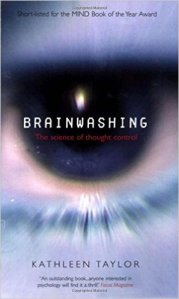
5.) Brainwashing by Kathleen Taylor: What makes some minds more malleable than others and how are minds bent to a given purpose? In learning the answers, one discovers that the bases of our beliefs are often more deep-seated than one might believe.

brainwashing_taylor


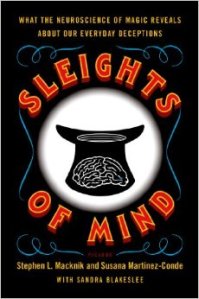
4.) Sleights of Mind by Macknik & Martinez-Conde: Magicians and mentalists are notoriously skilled at exploiting the chinks in the armor of  our minds.

sleights_of_mind


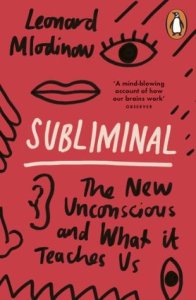
3.) Subliminal by Leonard Mlodinow: Physicist and pop science writer, Leonard Mlodinow, explores the many ways in which our behavior is more influenced from the back of the house than we feel to be the case.

subliminal


2.) The Tibetan Yogas of Dream and Sleep by Tenzin Wangyal Rinpoche: This is my nod to the fact that the Western scientific community isn’t the only entity that has something useful to say on this subject. Tibetan Buddhists have a long tradition (arguably predating Buddhism and into the Bon-era) of dream yoga (lucid dreaming) and our dreams offer the greatest portal to the subconscious.

tibetanyogas


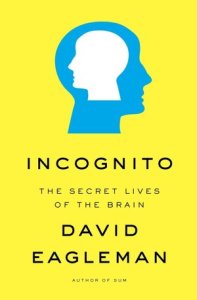
1.) Incognito by David Eagleman: Eagleman tells us that our conscious mind represents the tip of the mental iceberg, and he explores the many ways in which we are subject to the vagaries of what exists below the surface.

incognito_eagleman


Here are a few others.


The Man Who Wasn’t There by Anil Ananthaswamy: I just finished this book. In it, the author investigates whether there really is  such a thing as the self by studying a number of diseases and phenomena of the mind that look like negations of self. (e.g. Cotard’s Syndrome in which people insist they are dead, depersonalization disorder in which life seems a dream in a literal rather than poetic sense, out-of-body-experiences in which there is a hallucination that one is outside one’s body, etc.)


The Attention Merchants  by Tim Wu: I haven’t read this one yet, but it’s said to be good and is about how our programming is exploited to keep us clicking. If you’ve ever wondered why you can’t seem to just drop social media even when it seems like a phenomenal waste of time–why it exerts such a strong pull–this book delves into what proclivities of the mind have been seized upon.


Reality is Broken by Jane McGonigal: I’m about 1/3rd of the way through this one. It has some overlap with the Wu book. In it, McGonigal asks why games have so much appeal–even to the extent of becoming addictive. As with why we keep clicking, the answer has a lot more to do with the primitive parts of our mind than the high tech subject matter might suggest.