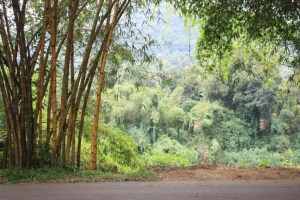
old bamboo
creaks, claps, and rattles
new bamboo…
once bats hung
on swaying bamboo
now cut down
clustered bamboo,
a dark hiding spot
on sunny days
flex like bamboo
and grow like bamboo —
be bamboo

old bamboo
creaks, claps, and rattles
new bamboo…
once bats hung
on swaying bamboo
now cut down
clustered bamboo,
a dark hiding spot
on sunny days
flex like bamboo
and grow like bamboo —
be bamboo
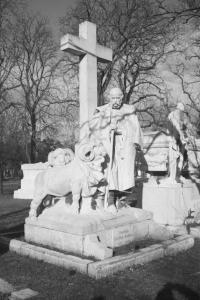 Don’t bother to bury or burn my body —
just let my bones bleach white.
Throw me in a hole in the jungle —
food for wild dogs, worms, and germs.
Nature’s truth —
a truth painful only to humans —
is that in life we are all consumers,
and in death we are all food.
In nature’s view,
big brains put us no closer to the feet of gods
than does the ancient memory of trees,
the octa-ambidexterity of an octopus,
or the network optimization of fungal mycelia.
We are all both consumer & food.
 Romeo and Juliet by William Shakespeare
My rating: 5 of 5 stars
Get Speechify to make any book an audiobook
This is one of Shakespeare’s most famous works, if not the most famous love story in the history of love stories. The central challenge of this couple’s love affair isn’t the usual fare of Shakespeare’s works – e.g. unrequited love, love triangles, or class differences. [There is an issue of unrequited love early in the play between Romeo and Rosaline, but Romeo gets over that girl in a hot minute once he meets Juliet.] The problem is that he meets Juliet by crashing her father’s party while wearing a disguise (a disguise that ultimately doesn’t fool the right people,) and the reason Romeo needs a disguise is because Romeo’s father and Juliet’s father are archenemies. Otherwise, the couple meets all requirements for wooing to commence: they each have feelings for the other, and they are of similar class status. In short, they would be a marriageable couple if their families didn’t hate each other.
[Warning: My Shakespeare reviews are far more spoiler-laden than usual because the stories are well-known to most readers and some find a detailed synopsis useful to make sense of the archaic language.] After an opening that establishes the enmity between the Montagues and Capulets, Romeo and Juliet fall for each other fast and hard, and with lightening speed have wed and consummated the marriage. However, no one other than the priest who married them, Friar Laurence, knows of the wedding. They have to keep the marriage secret because it would get back to the heads of the feuding households immediately.
Soon after the wedding, Tybalt (Juliet’s hot-headed kinsman) goes out looking for Romeo. Tybalt had recognized Romeo at the party, and wanted to fight him then, but Mr. Capulet (Juliet’s father) made him chill out because he didn’t want blood spilled during his party. But the next day Tybalt goes out intent on fighting. Tybalt finds Romeo’s friend (Mercutio) and his kinsman (Benvolio,) and Mercutio ends up crossing blades Tybalt. When Romeo comes on the scene, he steps into the middle of the fray to separate the men, and Tybalt finds an opening to thrust into Mercutio. As Mercutio dies, he famously wishes a “plague on both houses” (meaning Tybalt’s Capulets and Romeo’s Montagues.) Mercutio is but one of many who are completely fed up with the feud between these two families. The Prince of Verona has had it up to his neck with the bickering.
While Romeo is generally more a lover than a fighter, he duels and kills Tybalt immediately after Mercutio’s death. After killing Tybalt, Romeo flees the scene, later to find out he’s been banished from Verona upon threat of death. (Lady Capulet petitions the Prince for Romeo to be executed but the Prince won’t go for it, figuring Tybalt got what was coming to him for picking a fight and stabbing Mercutio. Then Lady Capulet plots to have a hit put out on Romeo, but events outpace her plot.) After meeting with Friar Laurence, Romeo flees to Mantua.
When her family informs Juliet that Tybalt has been slain by Romeo, they think she is broken up about her kinsman’s death. However, she’s really worried about her husband Romeo (who, of course, none of the family knows she’s married to.) When it seems like Juliet’s sadness for Tybalt has gone on long enough, her father sets a post-haste wedding date between Juliet and County Paris (the young man that Capulet favors for his daughter.) This is a problem for Juliet because: a.) she’s already married; and, b.) she deeply loves Romeo and finds Paris sort of Meh! She gets into a tiff with her father who thinks she’s an ungrateful whelp. [In Shakespeare’s day, the debate was whether a girl’s feelings about to whom she should be wed should be empathized with or ignored altogether. The idea that her feelings should be a major consideration was deemed laughable. Her mother comes down on the former side, but Lady Capulet accepts her husband’s conclusion of the alternative.]
Juliet goes to see Friar Laurence, who is a botanical mad scientist on the side. The Friar develops an elaborate scheme. Juliet is to go home, apologize to her father for not jumping on board the marriage train with the boy that her father so dearly loves (but to do so without sarcasm,) and then before going to sleep she will take a potion. This potion, not uncommon in Shakespearean works, will make her appear dead for a time, and then she’ll wake up perfectly fine. The family will take her to their crypt, pending the funeral. Friar Laurence sends a note to Romeo explaining the plan. Romeo is to meet Juliet when she wakes up, and they can then flee to Mantua — their families none the wiser.
Up to this point, this play could be a comedy just as easily as it is a tragedy. Sure, there have been a couple stabbing fatalities, but that’s actually pretty calm stuff compared to some of the comedies. (The dead are secondary characters.) What makes it a tragedy, is that Friar Laurence’s messenger can’t get through to deliver the memo in time because of some Black Death scare. Instead, Romeo’s (the Montague family’s) servant gets there first, and, because he’s not in on the Friar’s plot, tells Romeo the truth as he understands it – i.e. that Juliet is dead. Romeo sneaks back to the Verona cemetery with some poison he got at a shady apothecary on the way. Friar Laurence doesn’t know Romeo didn’t get the priest’s message until Romeo is already rolling up on the crypt, intent on dying with is beloved and so Laurence is late arriving to the scene.
To add to the tragedy, Paris is visiting Juliet’s grave and thinks Romeo is a villain. Romeo and Paris battle it out, and Romeo kills Paris. Romeo – knowing that Paris was betrothed to Juliet but without knowledge of Romeo and Juliet’s marriage – places Paris in the crypt near Juliet. But then he takes up position immediately beside her, and drinks the poison. As soon as Romeo dies, Juliet regains consciousness. She finds Romeo dead, and discovers that there’s not enough of the poison left for her. She tries kissing some poison off him, but when that doesn’t work, she plunges a dagger into her own chest.
After Juliet dies, authorities arrive on the scene having been summoned by a person who heard the duel between Romeo and Paris. The Prince arrives and calls for the heads of the Montague and Capulet households so that they can see what tragedy their feud has caused. The sight of the two dead star-crossed lovers (plus Paris, whom Capulet seemed to love) moves Montague and Capulet to end hostilities.
This is a must read for all readers.

If you’ve never been incensed,
challenged, or nauseous —
your reading is too safe, puny,
and far, far too cautious.
Reading should be a courageous act
that threatens all you know.
It should shove your feet into shoes
far different from your own.
If you want your world unchanged,
T.V. is right for you.
Books will insist you be torn a-
part and rebuilt anew.
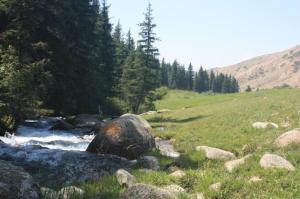
In a meadow, amid a dark forest
grows a grass so green it glows.
Never sets foot a pilgrim or tourist.
Where it lies, only an old local knows.
Plus, the grazing creatures of the forest
who wander that way when dining time comes.
It sings but silence — no insect chorus.
No sound is heard, save one’s own thin heart thrum.
Burdened is the keeper of that meadow,
with a secret for which some would murder.
But paradise is too frail to be known
to the heartless hand of human herders.
Paradise trampled is paradise lost.
So, the keeper keeps his secret at all costs.
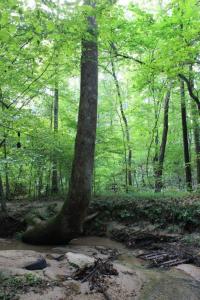 two live oaks
stretch toward each other —
a faux hug
eucalyptus,
silver trunks glow warm
in setting sunlight
one tree field,
its canopy echoes
floating clouds
a faint smell —
the secret message of an
arboreal cabal
in tree time,
the world must unfold in
seasons — not days
What’s it take to turn a symbol into something which is something [rather than symbolic of something?]
Treasuries turn high-rag paper and indelible ink into slips for which people will give one a shirt or a bicycle.
-Paper and pot metal as symbol of value
Admen turn color and font into a dollar more per kilo of a chemically-identical product. [The dollar can be used for someone’s ill-advised gas station hot dog.]
-Brand as symbol of value
Countries are defended by the potential to use weapons — not by their actual use.
-WMD as symbol of defense
Social media presents a lot of talking and the illusion of listening.
-Screaming into a dark forest as symbol of communication
Stories and verse get turned into potent chemical reactions in the body.
-Vicarious living as symbol of living
The letters of this post are symbolic of philosophy, which — in turn — is symbolic of something meaningful, which — in turn –… which — in turn –… which — in turn–…
 Rounding a mountain forest trail
from lee to the wet side,
I walk amid mossy branches
draped thick enough to hide
an ogre, troll, or a dark elf —
let ‘lone the old oak’s eyes.
So many hidden paths diverge,
and me without a guide.
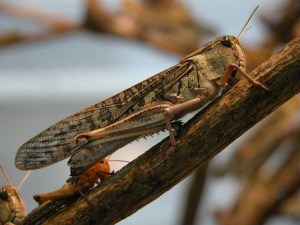
Photo Source: Jonathan Hornung (via Wikipedia)
Locusts, you were supposed to come
after the hail-fire storm.
The winged-buses got ambitious
in their desire to swarm.
Of course, pestilence of livestock
queue-jumped the frogs and gnats,
but that’s just ’cause a few people
think livestock includes bats.
Maybe it’s too late for this chain
of disasters to work.
Perhaps, we should call them all off…
[cue “Three Days in the Dark”]
I lie falling asleep —
purple Rorschach blobs
forming,
transforming,
& unforming
on the black field of my inner eyelids.
The veneer of reality felt thinner,
but my efforts to poke a finger through
shoved me back into the warm, soft reality of my bed.
[I’d so wanted to “Here’s Johnny!” my way into
an alternate dimension.]
And, once more, I’m a prisoner to reflexes
that snatch away subtle worlds.


