
Clouds curl over the mountaintop
like waves sloshing over rocks —
a thousand times slower,
but no less persistent
in their repetitive attempts
to swamp the leeward side.
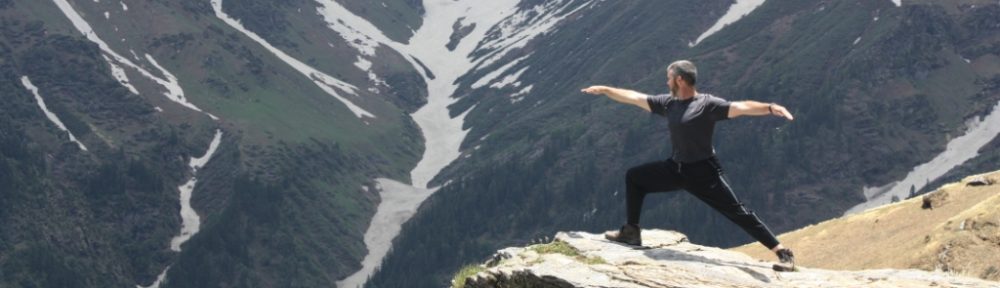
Clouds curl over the mountaintop
like waves sloshing over rocks —
a thousand times slower,
but no less persistent
in their repetitive attempts
to swamp the leeward side.

There was a safari guide in Botswana
who was quizzed on the species of fauna.
“I don’t mean to be rude,
but there’s Huge, Fast, and Food —
so, just three types of beast in Botswana.”

In greeting an old woman of Belize
a tourist praised, “You speak English with ease.”
“I know it, you fool;
they teach it in school!”
English is the state language of Belize.

There once was a man from Austria
prone to coffee house nausea.
“Our cafés are held dear,
but I can’t get near…,”
said that lonely, skinny man of Austria.

There was a short man from Nepal –
self-conscious of not being tall,
“Our mountains are grand,
but I have to stand
on a crate to see over the wall!”

A city lies under the sea,
from unknown tragedy.
Ancient pillars stand still and tall.
Could we lose a city?
If we did, there’d be no sign;
it’d be washed to refuse.
Once towns lasted, but info perished;
now engine ‘s swapped for caboose.
And bad facts are like bad pennies
while streets change year to year,
and nothing outlasts those notions
that form the sum of fear.

I donned this book like sunglasses
to tweak my old worldview,
but that intent was overshot
and I saw all anew.
I peered at the page and there saw
another universe.
Through eyes not mine, but no better —
nor in any way worse.
Eyes that’d seen things unknown to me,
but not this world of mine.
We’ll have to work together to
unravel space and time.
The brain wants to slap a label on everything it comes in contact with —
good… bad
pleasurable… painful
smart… dumb
naughty… nice
Having reached the time and disposition to tear away these labels, I find that some are stuck fast —
though they went on with the ease of a sticky note.
And so I unpack concepts and scrap labels —
sometimes with ease
&
sometimes tediously.

I
the post-perched bird
remains still, but for its eyes,
which dart about —
below, fish shoot and jink,
thinking the post oddly shaped
II
the mountains reflect
off of that glassy lake
with such clarity;
all know which mountains are true
except for the fishes
III
behind the barracks,
some local women gather
to bath at the well.
he pretends not to look
they pretend not to be seen
 Cold Mountain: One Hundred Poems by the t’Ang Poet Han-Shan by Hanshan
My rating: 5 of 5 stars
This brief collection gathers one hundred poems from the T’ang Dynasty poet Han-Shan. Most of the poems included consist of a single eight-line stanza of unrhymed verse of varied meter. [With a few exceptions that had more or fewer lines (often four or twelve.)] I do like that they didn’t pad out edition that I read with a lot of inane babble [as publishers are want to do when a volume is on the thin side.] Part of the reason that they may not have done so is that there is virtually nothing known about the author. It’s not even known whether there was a Han-Shan (i.e. as opposed to a group of people whose poems were anthologized under one name.)
The poems reflect Taoism’s disdain for pretension, authority, or scholarship for scholarship’s sake. Many of the poems reflect Zen sensibilities (which became entwined with Taoist sensibilities.) That is to say, like Zen koan, they seek to interrupt the tendency to overintellectualize matters. That said, in places the poems take a bit of a mocking attitude toward Buddhism. Nature plays prominently among the poems. And some of the poems are humorous or irreverent.
There are footnotes that are helpful in explaining verse that references teachings and events that would have been known to Han-Shan’s readership back in his day, but which most individuals who aren’t experts on Chinese folklore, literature, or religious teachings wouldn’t be likely to get, otherwise.
I enjoyed these poems tremendously. While I can’t say how they related to the original text, the translations were — on their own – works that conveyed wit and wisdom. I’d highly recommend this collection for poetry readers.


