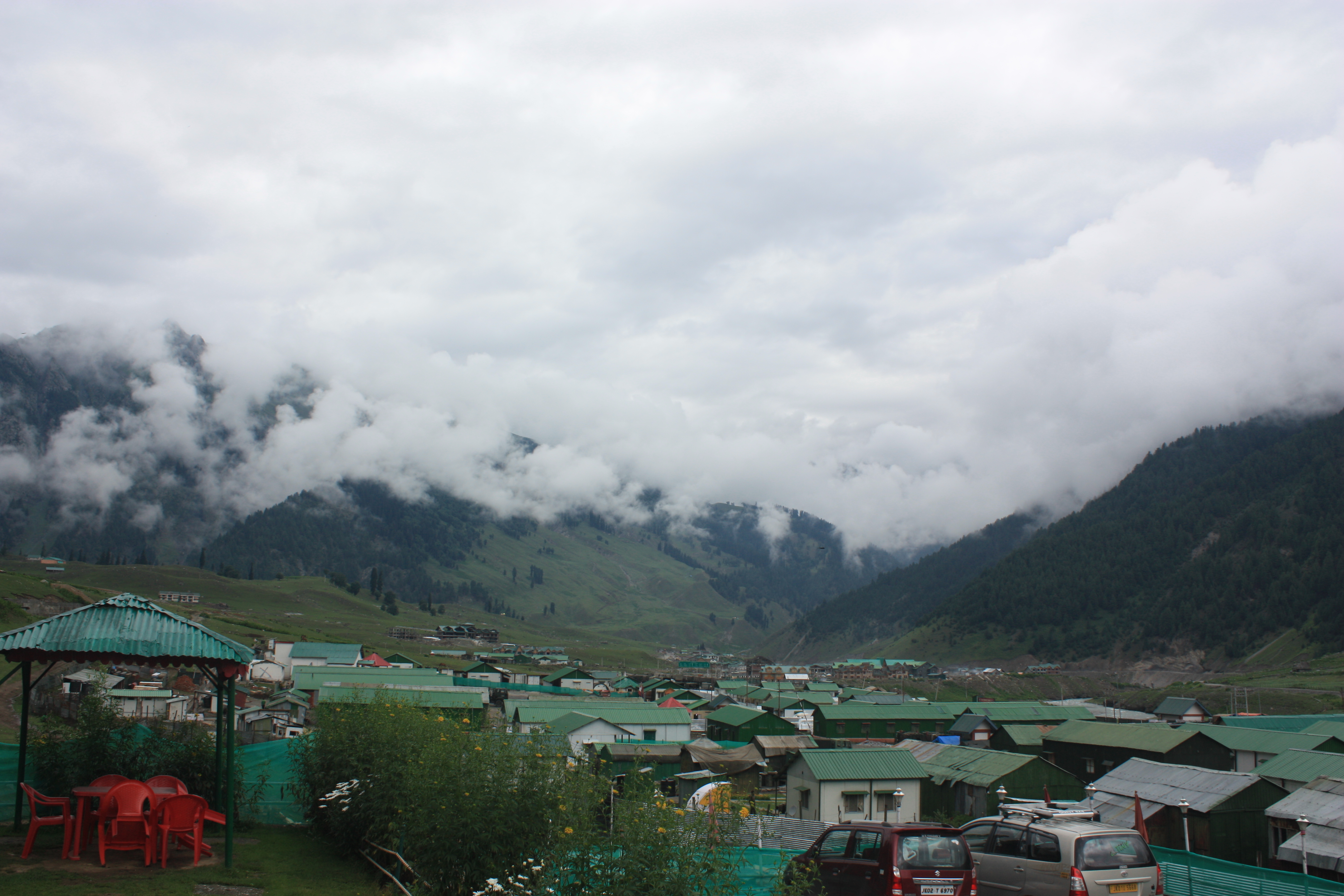
POEM: A Round Poem

I walked beside the river,
the river that rolled through town,
a town I thought had been a dream,
a dream replayed night after night,
nights that flowed like that river,
the river that rolled through town.

POEM: Moonlight Mystery [PoMo Day 13 – Ghazal]

I saw a silhouette in the moonlight,
a man who plodded snow that glowed moonlight.

I was mesmerized by the vagabond --
a night-owl nomad moving by moonlight.

What'd take me out into that night's cruel cold,
seeing only what shone in the moonlight?

A deadly urgent case must be afoot,
a riddle solved solely in harsh moonlight.

But maybe there's no beauty like the moon,
and maybe no light flatters like moonlight.

If so, the cold must be some puny stakes
against the milky glow of brisk moonlight.

And so I pull on boots and tug a hat
to venture out amongst the pale moonlight. 

And seeing night as did that wanderer,
I know the virtue life finds in moonlight.

POEM: Nimbus

Anvil-shaped cumulonimbus cloud. Pike's Peak, Colorado - NARA - 283883
An anvil crawls across the sky,
of soft shape but steel gray,
and I wonder when to expect 
the inbound tempest fray?

When comes the lightening and thunder,
the shaking window sills,
the neck hairs standing upon end --
herald of lightening chills?

Will it pass by rumbling distant
or strike the local spire?
Will it rain so hard that it puts
out its own blazing fires?

POEM: Humbling Rest [PoMo Day 12 – Kyōka]

panting, i sit
on a rock, beside the trail,
watching porters pass 
loaded with logs and plywood --
followed by cows, and goats, and...

POEM: Cyborg Days

I feel it coming, cyborg days --
locked into the machine.
My program playing out the code
of some new subroutine.

To know it can all be dialed in,
with such fine precision,
the love and loathing that provide
the root of all decision.

And will I be a mindless drone
on a robotic ride,
seeing life like Doctor Jekyll
while living as Mister Hyde?

POEM: Kim Yo-Jong [PoMo Day 11 – Clerihew]

Attribution: Kim Jinseok, Blue House
Dear Sister, Kim Yo-Jong,
won't have to wait long.
She'll take power easy as you please,
if her brother keeps eating wheels of cheese.

POEM: Moving Stillness: or, Stillness in Motion

I stare at the flowing river,
and, for a moment, it seems still,
as the world whips into
a wild ride of vertigo,

leading me to question
all I believe about
the still & the moving.

Everything that's still
is spinning, orbiting, 
and expanding

Everyone who's still
is a seven-jetted
space monkey
on a rocket ride. 

POEM: The Hands Have It [PoMo Day 10 – Free Verse]

They say hands are the hardest human part to artistically render --
to draw or sculpt or paint,
causing artists to hide hands,
or at least to not replace them 
when an earthquake or inept movers 
break them off.

I believe them.

The perfect curve is not easily attained,
all those random crenulations and creases,
the lumps and knuckle nubs,
the veins and blemishes,
all that is necessary to convey life --
be it a hard, hammer-wielding hand,
or the soft suppleness of an unworked hand.

Straight digits can create an uncanny valley
as surely as does a rubberized face. 

Emotion is expressed through hands,
as through faces.

I heard that the straightened fingers of
Olympia's left hand caused quite a controversy
when Manet presented the painting,
causing almost as much of a stir
as the fact that she was an ashen, 
syphilitic prostitute.

In Dream Yoga, we do reality checks with our hands,
looking at the hand,
looking away,
flipping it over,
and then looking at it once more.

Doing this whenever one sees 
anything strange or suspect.

It trains the brain,
which - in sleep - shuts down its suspicious bits,
to take note of the nonsensical.

If you're awake,
you just see your same old [underestimated] hand.

If you're asleep,
you won't see five perfectly curved fingers,
you might see an expansive fractal pattern,
or a cloven, bifurcated, mitt.

Even our sleeping brain can't keep track 
of five wriggling little digits. 

No wonder they give artists such fits. 

POEM: Down the Valley [PoMo Day 9 – Haibun]

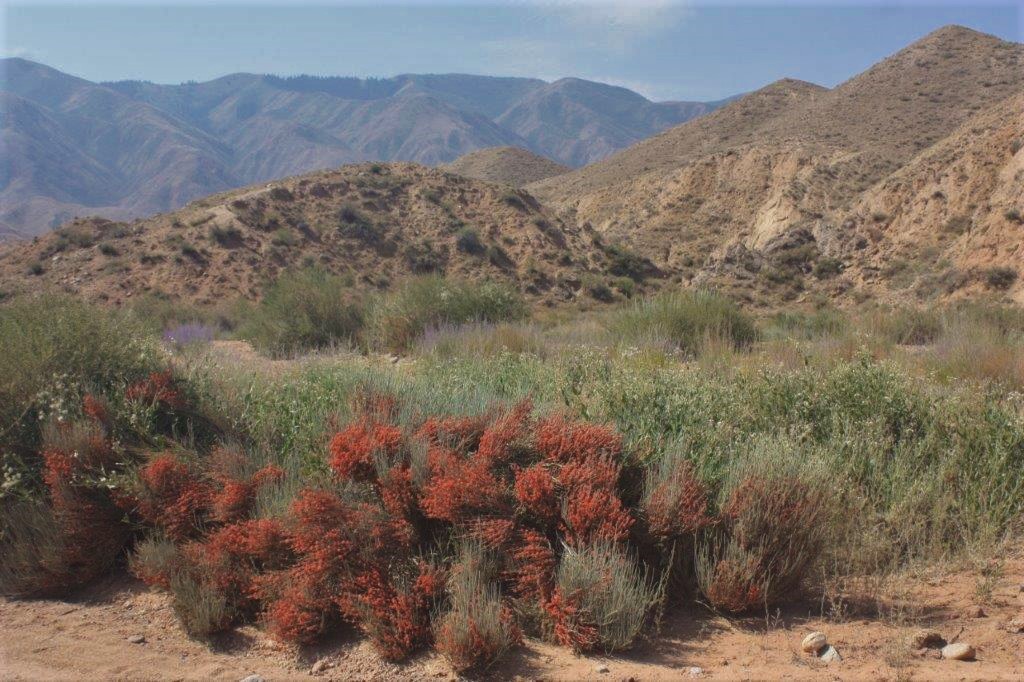
The air was dry and the valley was dry. Tufts of yellow grass clung to the hillside and to the edges of the valley floor -- where they joined with the barren, brown tines of bleak shrubbery. In the riverbed, smooth stones and boulders sprawled to the shoulders, far wide of the feeble stream that flowed at the moment. The water ran gray, having come from the edges of a glacier that scoured its way down a granite channel. And in the "V" far ahead, clouds as thick as the mountains were being lifted and dropped over a snowcapped peak, pretending they'd bring their moisture into this arid landscape.  
mountain clouds
may become your fog, or
may sit in wait

BOOK REVIEW: The Art of X-Ray Reading by Roy Peter Clark

The Art of X-Ray ReadingThe Art of X-Ray Reading by Roy Peter Clark
My rating: 5 of 5 stars

Amazon.in Page

If one asks a group of people whether a story worked or not, one is likely to hear widespread agreement, but if one asks them why it worked [or didn’t,] one is likely to get a hodgepodge of murky conclusions. The average person will struggle to put together a coherent explanation for failed stories, an explanation which may or may not be grounded in paydirt. That’s because whether writing works or not is a matter of emotional resonance, and what delivers that emotional experience is almost as hidden as the pipes and wires in the walls that deliver water and electricity. Clark’s purpose with this book is to show the reader some of the characteristics they can read for, features which may not be readily apparent when one is lost in a good book, but which make the difference between a masterpiece and a ho-hum work.

While I referred to “story” a lot in the preceding paragraph, it’s worth noting that Clark’s book does cover the gambit of creative writing activities – including a few poets, essayists, non-fiction authors, and repeated references to one very famous playwright. That said, the bulk of the works under discussion are fiction — be it a novel, short story, epic poem, or play.

The book consists of twenty-five chapters, and the subtitle is a little bit deceptive because not all of the chapters take a single work as a focal point. Each of the chapters has a core concept to convey, using one or more authors (and one or more of each writer’s works) to do so. Some of these lessons are at the level of language, such as Nabokov’s playfully poetic alliteration and assonance, Hemingway’s sparse prose, or Toni Morrison’s effective use of repetition. Other chapters explore how intrigue can be set up and sustained: such as in Shirley Jackson’s foreshadowing of the twist in her story “The Lottery,” or the way “Sir Gawain and the Green Night” turns a non-event into unexpected chills, or how Harper Lee uses the slowed experience of time to build tension. Still other chapters present techniques such as placing texts within the text as done in “A Visit from the Goon Squad,” zooming in or out with perspective as is done in Homer’s “Odyssey,” or Shakespeare’s rejection of conventions in his sonnets. Some chapters investigate how a tone is established such as in Gabriel Garcia Marquez’s magical realism, and one other focuses on intertextuality – i.e. the borrowing of ideas from past masters in a non-plagiaristic sort of way.

The authors and works selected are popular and will generally be a least familiar to avid readers of English language literature, and most readers will have read at least a few of the works under consideration. A few of my personal favorites were explored including Shakespeare, Yeats, and Hemingway, and I suspect that will be true of most readers. There was only one author of whom I had no knowledge, M.F.K. Fisher, a writer who is well-known to mid-twentieth century cookbook fans, but who is a little obscure today. Having said that, I did come away with an interest in reading the book under discussion – i.e. “How to Cook a Wolf.”

While this book is marketed towards writers, I think any serious reader would find it an interesting and worthwhile read. If you want a better understanding of what succeeds in the world of writing, you should take a look at this book.


View all my reviews