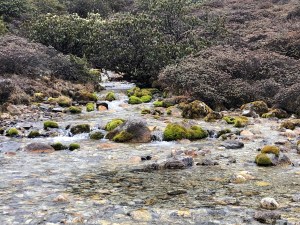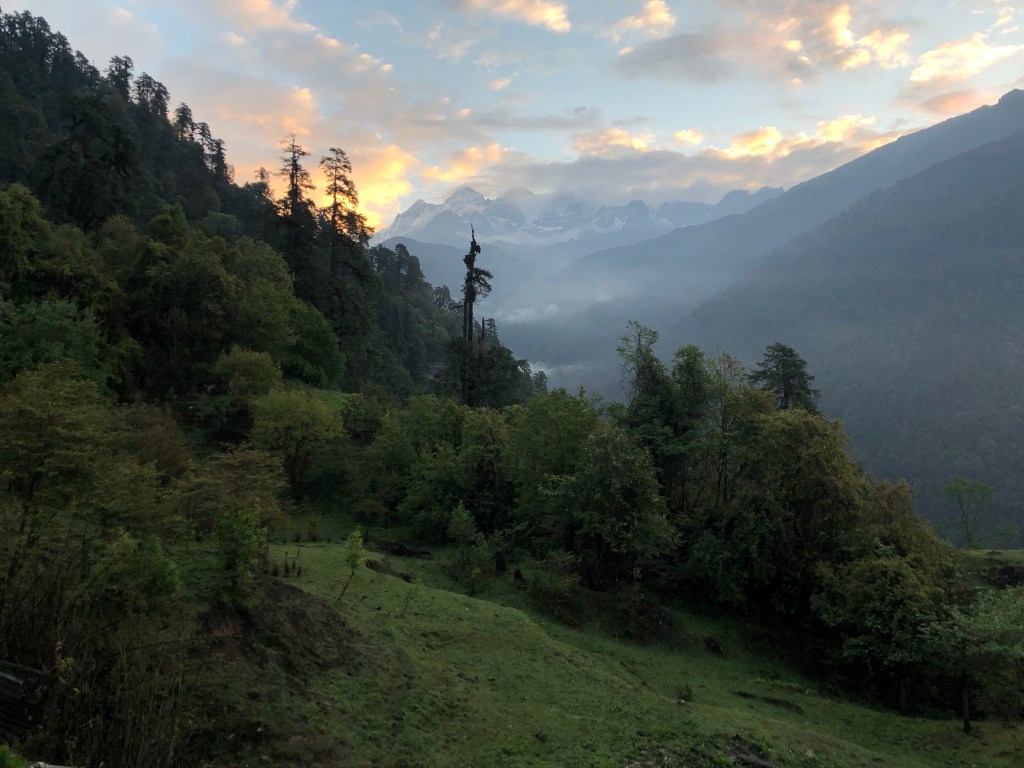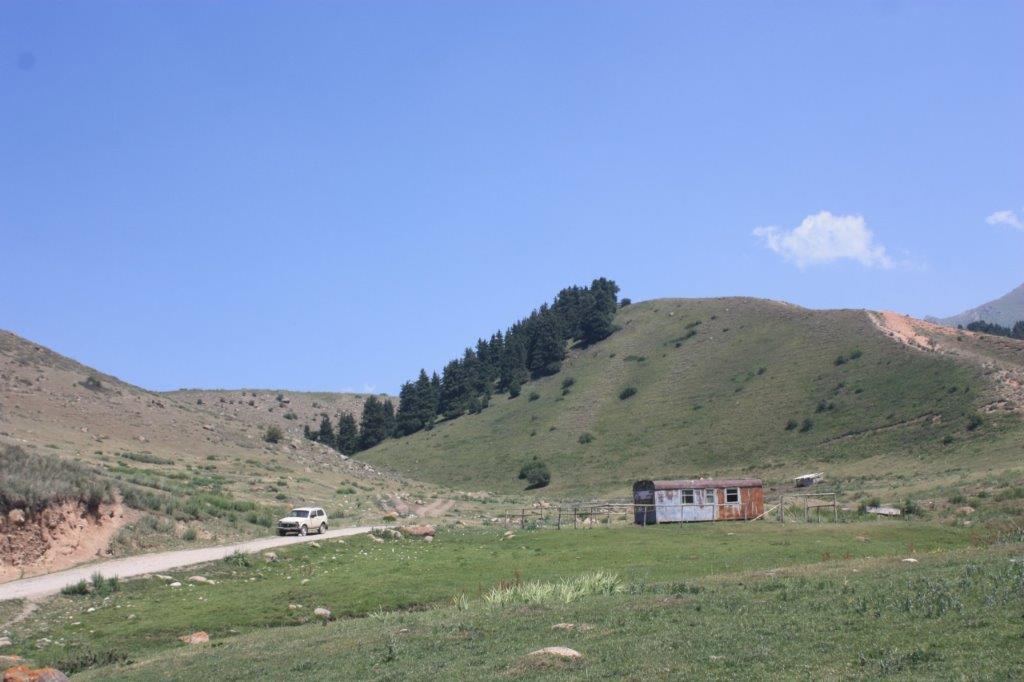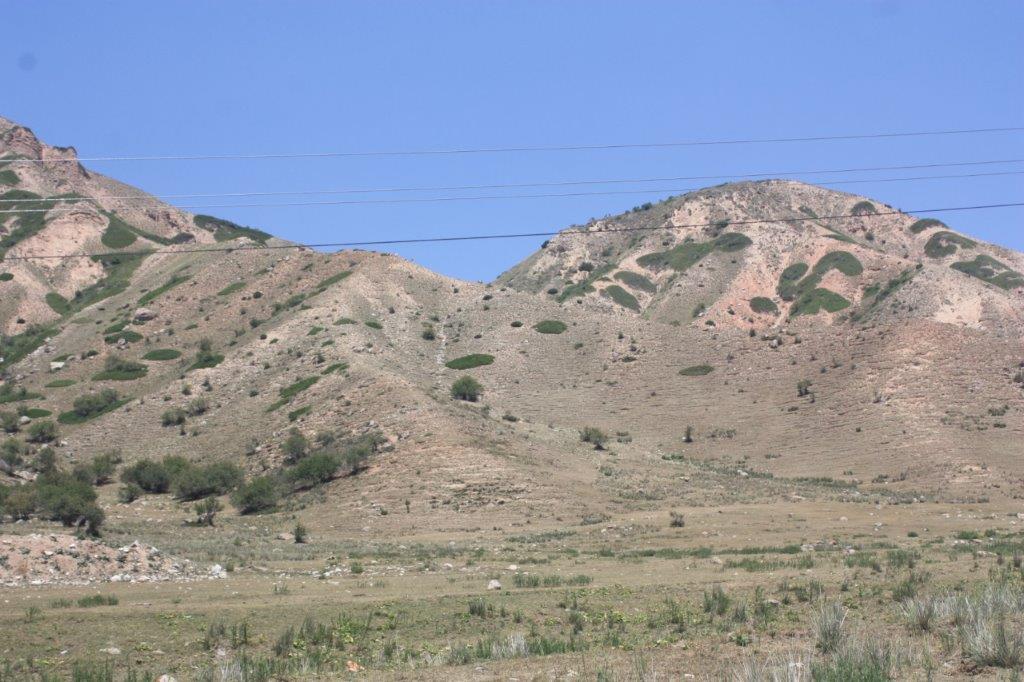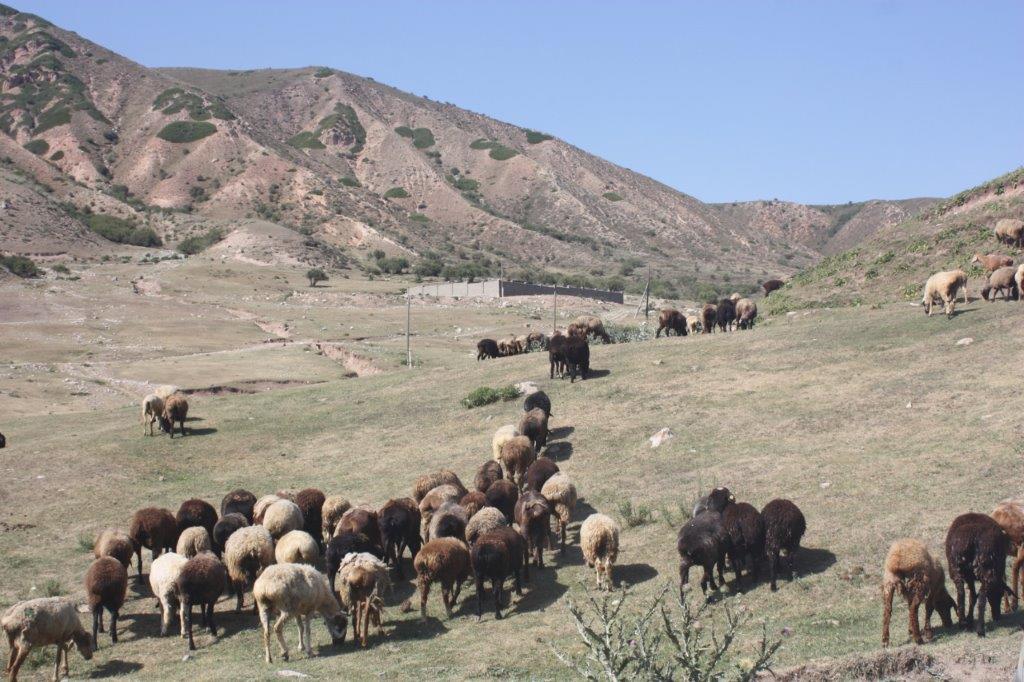
DAILY PHOTO: Evergreen Trees on the Mountain

Taken in the summer of 2019 at the Kolsai Lakes in Kazakhstan

BOOK REVIEW: Life at the Extremes by Frances Ashcroft

Life at the ExtremesLife at the Extremes by Frances Ashcroft
My rating: 5 of 5 stars

Amazon.in Page

Anyone interested in the limits of human physiology will find this book fascinating. Technically, its subject matter is broader than that, considering the environmental limits of living creatures, generally. However, all but the last chapter focuses on how humans react to (and adapt to) extreme conditions. Chapters one through six explore the challenges and limitations of humans under extreme conditions of elevation (ch. 1,) of pressure [underwater] (ch. 2,) of heat (ch. 3,) of cold (ch. 4,) of intense physical activity [running-centric, but deals with strength and power as well] (ch. 5,) and in space (ch. 6.) Then, each chapter reflects upon examples of species that are extremely well-adapted to said conditions, and why. (e.g. After learning about how and why humans have to acclimate to survive high elevation treks, one learns about the bar-headed goose, a bird that can go from sea level to flying over Everest – all in the same day.)

The final chapter (ch. 7) is a bit different in that it discusses extremophiles, creatures that can survive in a wide range of conditions (e.g. acidity, temperature, lack of moisture, lack of oxygen, etc.) that would be certain death not only for humans but for any animals. Most of the species discussed are either single-celled creatures or tiny multi-cellular life (e.g. Tardigrades.) With respect to humans, there is a discussion of the limits and present understanding of suspended animation.

This book offers an intriguing look at life at the extremes. While written by a Professor of Physiology, it’s highly readable for a general audience. It mixes narrative examples in with the discussion of physiology to make the material approachable and engaging. I’d highly recommend this book.


View all my reviews

Nordic Summer [Kyōka]

nordic summer.
the wee hours look like either
sunrise or sunset
is upon us, and
either way, it's true

BOOK REVIEW: Philosophy for Gardeners by Kate Collyns

Philosophy for Gardeners: Ideas and paradoxes to ponder in the gardenPhilosophy for Gardeners: Ideas and paradoxes to ponder in the garden by Kate Collyns
My rating: 5 of 5 stars

Amazon.in Page

Out: March 1, 2022

This book can benefit not only gardeners interested in philosophy, but also philosophers interested in gardening. [If you’re in the intersect of people expert in both philosophy and gardening, the book probably won’t hold a great deal of intrigue as it’s written for a more general audience.] The gist is examples and analogies from gardening applied to elucidating philosophical concepts. In a few cases, these examples feel a bit forced. In most cases, they work just fine. But in a few other cases, the gardening analogies offer a powerful and unique insight that one would be unlikely to take away from a single-axis philosophy guide. For example, I found the relating of utilitarianism to the gardener’s dilemma of whether to start with a wildly overgrown bed or a relatively clean one offered a fresh perspective on the topic.

The book’s twenty chapters are divided into four parts. The parts are labeled “Soil,” “Growth,” “Harvest,” and “Cycles;” which I took to apply to fundamentals, change, outcomes, and the cycle of life and death. Part I, “Soil,” investigates topics in metaphysics, governance, and taxonomy. The second part, “Growth,” explores evolutionary adaptation, altruism / cooperation, the blank slate (and its critique,) and Zeno’s paradoxes. The penultimate section, “Harvest,” delves into topics such as forms, aesthetics, the reliability of senses, epistemology, and economic philosophy. Finally, “Cycles” discusses identity, logic and linguistic limitations, ethics, and pragmatism.

The book uses retro illustrations that look like the plates one might see in a book from the 19th century. There’s a brief bibliography, primarily of philosophical classics.

I’m always on the lookout for books that consider the perspective that humans exist within nature and our ways can’t be understood divorced from our place in the natural world. In that sense, I believe the book has much to offer.

View all my reviews

Bright Heights [Haiku]

sun-warmed rooftop,
clouds down in the valley --
i breathe in bright heights

Haunted Forest [Tanka]

trees stand straight
in the woods they call "haunted;"
all i see are trees,
but maybe they're ghost trees
and I see nothing at all

DAILY PHOTO: Kangchenjunga, Two Views

Taken in December of 2021 from Darjeeling
Taken from the Batasia Loop, Darjeeling