POEM: The Vampire Rule

Edvard Munch; “Vampire”

They say a Vampire can’t enter your house unless you invite them inside.

I don’t know whether it’s true, on account of I don’t know if Vampires are a thing.

But I recognize a rule that is good and true when I hear one.

I always hear this or that person complaining about how such-and-such is,

“…living in my head, rent free.”

Well, who invited them?

The Yoga-Poetic Nexus

Note: This post is not advocating a new distraction yoga mashup of the type that I’ve been known to rant about, but is merely a discussion of the synergy to be found in practicing both yoga and poetry.

In Patanjali’s conception, the problem for which yoga presents a solution is the mind’s tendency to run amok. One would like to be able to hold the awareness on a given object, effortlessly and for extended periods of time, but the mind is insistent in its desire to roam. This roaming can be to many different ends, but often it’s ultimately about eliminating uncertainty. The mind wants a plan against the unexpected. It seeks solutions to problems — existing, anticipated, or imagined. It wants to replay entertaining stories, which is really a way to learn and store general solutions for later surprise problems that might otherwise catch one off-guard. The more anxious or emotionally charged the mind, the more turbulent it will be.

Poetry is the use of metaphor, imagery, and sound to strike an emotional chord. I don’t mean “emotional” exclusively in the sense of displaying strong, behavior-driving emotions. I mean all sorts of internal, subjective feelings, including nostalgia and the residue of memories and dreams.

Sometimes, the feelings a poem seeks to generate are primal emotions. For example, consider Emily Dickinson’s poem “A Narrow Fellow in the Grass” [1096] (about a snake, if you didn’t make that connection) that concludes:

But never met this Fellow
Attended or alone
Without a tighter Breathing
And Zero at the Bone.


Or, from Poe’s “The Raven:”

Deep into that darkness peering, long I stood there wondering, fearing,
Doubting, dreaming dreams no mortal ever dared to dream before;


Just to show that poetry isn’t all fear and melancholy, let’s look at a stanza from Whitman, from his aptly named “Poems of Joy:”


O to go back to the place where I was born!
To hear the birds sing once more!
To ramble about the house and barn, and over the
fields, once more,
And through the orchard and along the old lanes
once more.

 
So, emotion is the connection. Poetry helps one form, shape, and refine emotional content, and yoga helps one to experience that emotion without applying value judgments or allowing the motive force of emotion to drive one into endless cycles of destructive feedback. That is, one feels the need to think about an emotionally charged situation, and the more one thinks about it, the more intense the emotion becomes, and the more intense the emotion, the more one thinks about it. I’ll just call this process “wallowing” — wallowing in emotion.
 
The word “emotion” carries with it a lot of baggage. Emotion is often juxtaposed with rationality / reason, which isn’t accurate. (Reason works great for making decisions when there is adequate information, emotion forces one to move one’s ass when there isn’t sufficient information. So they are not so much opposites as complimentary systems supporting decision and behavior.)
 
In the common conception, emotion also tends to be more linked to the expression of emotion rather than the experience of emotion — which are necessarily related. (Some people very readily express intense emotion despite an easy life and others are non-expressive despite constant uncertainty or even challenges to survival.) When one imagines someone unburdened of emotion — e.g. fearless — one might picture a hero — bold and courageous — but what one sees among people who suffer afflictions (e.g. brain damage) that prevents them from feeling emotion is often paralysis by analysis. Without emotion to make decisions under uncertainty, such individuals simply get bogged down. Individuals who don’t feel fear, in particular, are also prone to carelessness.
 
The key to making one’s yoga and poetry practices simpatico is avoiding that very popular form of poetry — the wallowing poem. If one’s poems constantly spiral into ever greater depths of angst (as many a famous — and, sadly, suicidal — poet’s work has been known to) you might want reevaluate. And, perhaps, start with haiku and that forms Zen distaste for hyperbole or analysis.

My Year of Discovering How Weird the Mind Gets: Pt IV [Hypnosis]

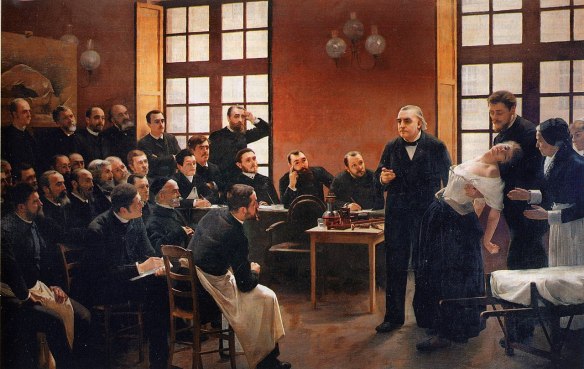
Une_leçon_clinique_à_la_Salpêtrière; Source: Wikipedia

Welcome to the fourth post on my experiences with altered states of consciousness. This past weekend, I completed the contact hours for the Level I course in Cognitive Hypnotic Coaching and Psychotherapy (CHCP) conducted by the Institute of Clinical Hypnosis & Related Sciences (ICHARS.) Over the course of three days, I had several opportunities to be hypnotized as well as to hypnotize classmates, and while it was sometimes a fumbling learning experience for me, I did gain some insight into trance states. The course focused on teaching a few methods of hypnotic induction, how to deepen a trance state, as well as the basics of how to use hypnosis for coaching or therapy. Last year, I took a quick class on self-hypnosis, but this was my first experience with hetero-hypnosis (trance induced by a hypnotist), and – unlike last month’s topic of meditation, for which I had a substantial background – this was a subject for which I was a babe in the woods.


Hypnosis is probably the most misunderstood territory I’ll travel over the course of this project (psilocybin is the only other that comes close.) Because the realm of consciousness involves subjective experiences, there’s always room for misunderstanding. Plenty of people leave their first experience with meditation thinking, “That isn’t at all what I expected it to be.” However, hypnosis presents added layers of confusion.


First, if a person has ever witnessed hypnosis, more often than not, they’ve done so via stage hypnosis. Stage hypnosis conjures images of cape-wearing Mesmerists forcing subjects to cluck like a chicken, but this isn’t at all a typical experience of hypnosis. [Achieving a deep trance usually takes much longer, people will only do what they are willing to, and the ease of trance and what kinds of suggestions will be honored varies radically from person to person.]  In stage shows, subjects go through a twin-pronged selection process. The first part of the selection is via “convincers” (e.g. rubber band fingers, raising arm, stuck eyelids, etc.) which themselves serve a dual purpose: for one, they allow for audience participation and reduce the crowd’s overall level of skepticism,  and, also, they allow the hypnotist or his crew to see which audience members are most susceptible to hypnotically-induced trance. The second part selects for gregariousness, and often this can be done by merely asking for volunteers. People who are more comfortable getting up on stage will be less resistant to acting the clown for the audience’s amusement. The rule of thumb is that a hypnotist can probably get a subject to do something they wouldn’t ordinarily do through suggestion, but he or she won’t be able to make a person do anything they don’t want to do. Therefore, the stage hypnotist wants outgoing people on stage rather than shy participants because people who like to clown around are more willing to do a wide range of activities in front of complete strangers.


Second, even the experts don’t agree on what hypnosis is (or even if it is – meaning some experts on the mind don’t believe a trance state is a unique state of consciousness and some even believe that suggestibility is more or less “playing along” or faking. However, it’s been well-documented that many surgeries – including limb amputations – have been conducted with only hypnosis as an analgesic, so if you believe a soldier in the Civil War (or a patient of Dr. Esdaile in India) could “play along,” faking a calm detachment, as a bone-saw ripped through his femur, I’ve got some lovely beachfront property to sell you.)


At any rate, there is wide disparity in beliefs about hypnosis, even among psychologists. For example, many clinicians, particularly followers of Milton Erickson, believe that all willing subjects can be hypnotized. (They base this belief on the fact that everyone seems to move in and out of trance states, unprompted, in daily life.)  However, scientific researchers in the field find that about 10 to 15% of subjects cannot be hypnotically induced into a trance. [Note: Erickson was a controversial figure, but I can’t say whether that’s because he one-upped his professional colleagues or because he engaged in dubious practices both with respect to patient ethics and reporting of results.]   I also don’t have much of a dog in the fight about whether all willing people can be induced into a trance through hypnosis. However, – in general — I favor peer-reviewed research over logical statements that seem sound, but which may not reflect the whole picture. (I’m once bitten twice shy from statements like, “You should eat what cavemen ate because that’s the diet your body is evolutionarily optimized toward.” [Sounds reasonable, but scientific studies show it to be wrong on several fronts.]) And all this controversy is without even getting into the claims of the hypnotic imperialist lunatic fringe, meaning this is more-or-less the mainstream disagreeing.


So what was my experience? I found it very relaxing, and, yes, when given suggestions that I wouldn’t be able to open my eyes or that my arm would raise, my eyes wouldn’t open and my arm would raise, respectively. And, no, I wasn’t playing along, at least if playing along means my conscious mind was voluntarily directing the lack of movement or movement, as the case may be. Does that mean the hypnotist had complete control of my mind? No. I feel pretty confident that I could have snapped my mind out of the state, if I had any compelling reason to do so. And, no, I wouldn’t have clucked like a chicken, though the suggestion might have resulted in uncontrolled giggling as (like one sometimes experiences in meditation) there can be feelings of euphoria in these highly relaxed states that are almost akin to intoxication. As I believed I mentioned in the post about my psilocybin mushroom experience, there’s a very subtle state-switching process that goes on all the time without one’s conscious awareness.  If the researchers’ bell curve is correct (i.e. 10-15% can’t be hypnotized, 10-15% are super susceptible to trance and suggestions, and the rest are at various points on the middle ground,) I’m somewhere in that meaty middle. I haven’t experienced trance amnesia, and remain aware of what happens throughout the process, even if I go pretty deep, but physical suggestions take eventually.


This is a skill I’d like to continue to develop. During the workshop, it was hard to observe the signs of depth of trance because – having not yet memorized the scripts – I had to frequently refer to the script. Mind and eyes can’t be two places at once, at least not productively so. I also have a lot to learn about voice modulation, which seems to be an art unto itself, but which is also difficult to master while one is working on just getting sequences down and trying to avoid pitfalls that may snap the subject out of trance prematurely.


All in all, I feel I developed a better understanding of the mind during this course, and believe I’d like to continue to build the skill as there is much more to learn that can only be learned through practice.


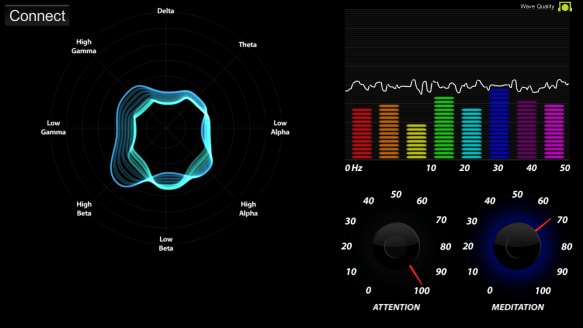
Next month I’ll be returning to meditation as my altered state, but with a technological twist. I’ll be using an EEG headset to see whether the ability to visualize brain wave states can help me to better control my mind.

My Year of Discovering How Weird the Mind Gets, Pt. III [Meditation]

This is the third installment in a series of posts on my study of altered states of consciousness. The January and February posts described my experiences with psilocybin mushroom tea and a sensory deprivation float tank, respectively.

This month (March) I’ve stepped up my meditation practice to at least an hour per day, every day of the week. (As opposed to a couple of one hour sessions as well as a couple of shorter sessions per week.) Meditation might seem tame in comparison to the previous practices (and some to come.) However, if one can quiet the mind, one experiences some of the same phenomena as are had during more dramatic practices, as well as other events that are too subtle to notice in other states. It’s easy to get more excited about practices that dial an experience up to eleven than ones that require one to listen carefully and patiently, but that’s a mistake.

Immediately after I completed the Vipassana ten-day course, I maintained a practice of this intensity for a brief period of time (as is the recommendation) before it became a bit cumbersome.  (My discussion of the Vipassana course can be found here.) For readers unfamiliar with the practice, Vipassana practice uses bodily sensations as an anchor for the mind. One repeatedly scans the body, observing any sensations that one feels along the way without judgement. It’s technically a Theravadan Buddhist practice, but is taught in a secular way. By “anchor” I mean some “object” that the awareness can be directed toward so as to make it more readily apparent when one’s mind wanders and easier to bring it back because there is something to direct the attention. Besides bodily sensation, some of the common anchors include: breath, mantra, visualizations, or external objects.

This doesn’t mean that every meditative practice requires an anchor, and the practice I’ve been using this month (by-and-large) did not.  I use an anchor (most often breath awareness) to achieve stillness of mind, but then switch to observation of what thoughts or imagery pop to mind. One might call this an anchorless meta-cognitive meditation. One just watches the mind, becoming witness to whatever arises, noting it, letting it move on, and resuming the watch. For yoga practitioners, this equates to the early stages of antar mouna, through and including chidakasha (watching subconscious imagery pop up.)

One notices many things about how the mind operates during meditation. The coarsest way of differentiating what I find arises in meditation is the distinction between conscious thoughts versus the subconscious imagery. Typically, I don’t observe the latter until the former have subsided. Conscious thoughts are often verbal as well as visual, but the subconscious matter is virtually all imagery.

One also realizes the crucial role played by memory. Often what I see is a memory residue of an image that arose. I’ve become very aware of essential memory is in our human style of consciousness. While in meditation one wants to reduce or eliminate the mental activities that come in tow with memory (i.e. analysis, making connections, elaboration, etc.,) one can’t help but notice how central such activities are to language and other learning that make us uniquely human.  Then there is recognition of the limits of memory. Just as one sometimes has an inkling of the substance of a dream, but can’t pull front and center in one’s mind, there is often the inkling of an image — gone before it registers.

If one is wondering why pick a one hour practice, it’s in part about the maximum my body is capable without needing a break to move lymph about and restore blood circulation to normal. During the Vipassana course, one has about ten hours a day of scheduled meditation, but I still needed a walk at least every hour or so. As for why not do smaller time chunks, I’ve found that I experience some phenomena past a half hour that I don’t recall experiencing in shorter practices. It takes some time to relax to a point at which one’s conscious mind stops trying to make plans or otherwise go off on tangents. Feelings of euphoria, oneness, and ease of mental quietness tend to come beyond a half of an hour for me — when they come.

I was disabused of any notions that a daily meditative practice over such a short period would lead to heightened mental clarity and emotional control. I’ve done 26 days out of 31 as of this writing, and have been as wild-minded as ever, and certainly more than the preceding months. I can’t say that this has anything to do with meditation one way or another. Perhaps, I’d have been even worse, given the nature of life’s ups and downs, if I hadn’t been practicing as such — but, of course, I can’t make such a claim — not meaningfully.

That said, I think I’ve made some interesting observations about how my mind works and what its limits are. I can’t say I experienced any wild mental phenomena, not of the nature I experienced during the long meditative days of the Vipassana course. However, I have been able to observe some fine detail about the sensation of shifting into a hypnogogic state, and other curious experiences that interest me. Subtle shifts of mind states have been a major point of curiosity for me. 

Next month, I’ll be attending a workshop on hypnosis, and the next post will be on hypnotic trance states.

POEM: Mentally Rodential

my mind jumps about
it scurries
it scampers
it lurches
it cowers

like a foraging rodent,
one at risk of starving
because it keeps dropping its acorn
at the sight of one that seems
more bulbous
more coppery
more glossy

Buddhists talk of hungry ghosts,
creatures with insatiable appetites
but mouths no good for eating

i crave knowledge and understanding,
but have a mind undisciplined
for chewing and digesting
that hardy substance

BOOK REVIEW: Psychotherapy: A Very Short Introduction by Tom Burns & Eva Burns-Lundgren

Psychotherapy: A Very Short IntroductionPsychotherapy: A Very Short Introduction by Tom Burns
My rating: 4 of 5 stars

Amazon page


The word “psychotherapy” conjures images of a patient on a burgundy recamier-style couch, a psychoanalyst in a matching stuffed armchair, neither one looking at the other as the analyst uses terse questions and monosyllabic acknowledgements to coax out the patient’s problems through interrogation about his or her childhood. While that approach, Freudian psychoanalysis, stubbornly maintains a following, there have blossomed many other varieties of therapy using talk as a tool to ease maladies of the mind. This “Very Short Introduction,” put out by Oxford University Press as part of a large and diverse series with the same subtitle, presents an overview of the various approaches to psychotherapy and its less formal cousin, counselling.

The book consists of eight chapters, and begins with a preface. The preface covers various and sundry topics useful for the reader, but most importantly it takes a step back from psychotherapy to situate this therapeutic approach in a context of psychology and psychiatry, which are subjects often confused in the popular mindset.

Chapter one continues with the basics by defining psychotherapy and offering a thumbnail of the various approaches that will be expanded upon throughout the book. The second chapter pays homage to Freud and his psychoanalytic approach. The authors maintain a diplomatic approach to psychoanalysis though it has fallen on hard times for a number of reasons, both practical (e.g. it’s a huge drain on time, often involving five hours a week for months or even years) and theoretical (e.g. it places a great deal of emphasis on the past, whereas many currently popular approaches favor the present as the relevant time.)

Chapter three explores a number of post-Freudian psychotherapists including Jung, Adler, and Erik Erikson. Chapter four moves on to what is called “Time-Limited Therapy.” As suggested in the preceding paragraph, psychoanalysis placed huge demands on a patient’s [and therapist’s] time and could go on and on with no end in sight. Time-limited therapies focused more on finding a present-day solution for the current problem, and not so much ceaselessly trolling one’s distant past for traumas.

Chapter five is about counselling, which is very much related to psychotherapy in that it involves getting a person to talk out his or her problems. The difference is that it needn’t necessarily involve a therapist with extensive training, but rather someone briefed and / or sensitive enough to know how not to become sidetracked into dangerous territory. Chapter six discusses cognitive behavioral therapy, its principles, and its variations (such as Mindfulness-Based Cognitive Therapy [MBCT], which combines elements of Buddhist mindfulness with the cognitive behavioral therapy approach to form a popular and successful therapeutic approach.) Cognitive behavioral therapy is rooted in the premise that distorted thoughts cause emotional and behavioral problems, and that one must address the thought to change the outcome. It also famously requires “homework” to be done between sessions rather than the work being contained within sessions.

Chapter seven moves away from the one-on-one therapy discussed so far, and investigates the various ways in which therapy can be carried out in groups. Groups can be beneficial because they allow the patient to see that they aren’t unique in their woes, which people often believe themselves to be. Family therapy is also discussed as it all allows family members to chip away at their problems as a familial unit. Also, there are numerous interactive forms of therapy in which patients might use various art forms to work out their problems.

The last chapter looks at where psychotherapy stands, and where it appears to be going. One of the important considerations discussed is the influence the advance of neuroscience is having on therapy. For few decades since the famous decade of the brain (i.e. the 90’s,) neuroscience has dominated the discussion of the realm of the mind. There has been less-and-less thinking in psychological terms and more and more in physiological terms. However, there still seems to be a widespread belief that solutions need to combine a recognition of both areas.

Like other books in the series, this one employs a variety of graphics (cartoon, photographic, and diagrammatic), and it also presents brief references and further reading sections to help the reader continue his or her study through other works.

This book offers a solid overview of the various approaches to psychotherapy. I would recommend it for neophytes who need to start with a concise outline of the field.

View all my reviews

BOOK REVIEW: Two Saints by Arun Shourie

Two Saints: Speculations Around and About Ramakrishna Paramahamsa and Ramana MaharishiTwo Saints: Speculations Around and About Ramakrishna Paramahamsa and Ramana Maharishi by Arun Shourie
My rating: 5 of 5 stars

Amazon page


I suspect this book is extremely controversial for many, though it echoes many of my own views. The central premise of the book is that there is a middle ground position between: a.) true believers who insist that gurus and god-men hold superpowers and can perform miracles, and b.) rational skeptics who hold that god-men are inherently frauds and their followers are necessarily either shills or dunces.

What is this middle way? First of all, it denies the existence of the supernatural and rejects the premise that certain men and women — through great virtue or intense practice — can circumvent the laws of physics. (Which isn’t to suggest that great virtue and intense practice can’t have profound impacts on a person and the community in which he or she resides.) Secondly, on the other hand, it acknowledges that scientific findings (or at least feasible hypotheses) on matters such as out-of-body experiences (OBE,) hypnotic trances states, hallucinations, epileptic seizures, the placebo effect, and near-death experiences (NDE) can offer insight into how rational, intelligent, and good-natured individuals might develop a belief in the supernatural. There is a third premise that is implicit throughout Shourie’s discussion of the life and works of these two great teachers (also which I share), which is that a lack of superpowers in no way detracts from what these two great gurus achieved.

As the subtitle suggests, the author is merely speculating as there is no way to put these ideas to the test, given these individuals are long deceased and (unlike, say, the Dalai Lama) would be unlikely to show an interest in such explorations even if they were alive. However, Shourie seeks to systematically demonstrate connections between the events described by the holy men and their followers and what scientific papers have described with respect to studies of unusual phenomena like OBE, NDE, and hallucinations. (e.g. it’s long been known that with an electrode applied to the right place on the brain a neuroscientist can induce an OBE in anyone. The widespread accounts of this feeling /experience that one is rising out of one’s body, often by respectable individuals of impeccable character, is one of the reasons for believing there must be an immaterial soul that is merely carted about by the body.)

The titular two saints that Shourie makes the centerpiece of his inquiry are the Bengali bhakti yogi Sri Ramakrishna and the jnana yogi from Tamil Nadu, Sri Ramana Maharshi. [For those unfamiliar with the terms “Bhakti Yogi” and “Jnana Yogi,” the former are those whose practice emphasize devotion and worship while the latter are those whose practice emphasize self-inquiry and study. The third leg of the stool being “Karma Yogis,” who focus upon selfless acts is the core of their pursuit of spirituality.] These two teachers were both born in the 19th century, though Sri Ramana lived through the first half of the 20th century. Besides being widely adored and seen as holy men of the highest order, they also serve as a kind of bridge between the ancient sages who lived out simple lives of spirituality in destitution and the modern gurus who often have vast commercial enterprises ranging from hair-care products to samosa mix all run from ashrams that are similar to academic universities in scope and grandeur. Some might argue that Ramakrishna and Ramana were the last of their kind in terms of being internationally sought after as teachers while not running an international commercial enterprise. Another way of looking at it is that they are modern enough that the events of their lives are highly documented, but not so modern as to have the taint modernity upon them.

The book is organized over sixteen chapters, and is annotated in the manner of scholarly works. The early chapters delve deeply into the life events of these two men, and in particular events that are used as evidence of their miraculousness. Through the middle, the author looks at how events in these individual’s life correspond to findings in studies of subjects such as the placebo effect (ch. 10,) hallucinations (ch. 7, e.g. given sleep or nutritional deprivation,) and hypnotic suggestion (ch. 9.) Over the course of the book, the chapters begin to look more generally at questions that science is still debating, but which are pertinent to spirituality – e.g. what is the nature of the self (ch. 12), what is consciousness? (ch. 13), and what does it mean for something to be real (ch. 15.) The final chapter pays homage to these two saints.

I found this book to be highly thought-provoking and well-researched. Shourie is respectful of the two teachers, while at the same time insisting that it’s not necessary for them to be super-powered for them to be worthy of emulation, respect, and study. I’d highly recommend this book for anyone interested in the questions of mystical experience and the scientific insights that can be offered into it.

View all my reviews

5 Mind Haiku

a flower
became the pivot
of my mind

thoughts form,
float ephemerally,
then burst

quiet came
my mind wordless
as pictures gel

feel emotion,
but don’t ever feed
that old goat

perfectionist?
the perfect can’t be loved,
only vied for

BOOK REVIEW: Light on the Yoga Sutras of Patanjali ed. by B.K.S. Iyengar

Light on the Yoga Sūtras of PatañjaliLight on the Yoga Sūtras of Patañjali by B.K.S. Iyengar
My rating: 5 of 5 stars

Amazon page


The “Yoga Sutras” are 196 aphorisms about yoga that were penned by a sage named Patanjali around 400 CE (i.e. AD.) Unless you’re a Sanskrit scholar with expertise in the history of yoga and the region that birthed it, it’s hard to gain anything from reading the Sutras directly. The Sutras are written in a terse style in a sparse language, and so most readers aren’t equipped to interpret them – which takes not only knowing the language but have some understanding of the context in which they were written. This means the Sutras are most commonly packaged into a book-length manuscript that includes not only the translation but also analysis and commentary.

There are many such books available, but the challenge is to find one that: a.) comes as close to the original meaning as possible without either misunderstanding or tainting the meaning with the translator’s and / or commentator’s worldview / ideas / ego; b.) is approachable to a modern reader. With respect to the latter, it’s easy to find free translations on the web, but often these were produced over a century ago, and can make for challenging reading for today’s readers. While it may seem like it would be closer to the source material, it can also be thought of as injecting another layer of culture in between the original and the present-day reader.

The Sutras are organized into four sections. The first section introduces the reader to yoga and explains the state of mind called Samadhi. The second section outlines the eight-fold practice of yoga called Ashtanga Yoga. The eight limbs include the two aspects of yogic ethics, yama and niyama, as well as postural yoga (asana,) breath exercises (pranayama,) sensory withdrawal (pratyahara,) concentration (dharana,) meditation (dhyana,) and the aforementioned Samadhi. The third section focuses on the super-normal abilities yogis are said to achieve, along with a warning that the pursuit of these abilities can become a fatal attraction with respect to one’s growth. The final section discusses the liberation, that is the ultimate objective of the practice of yoga.

The organization of this volume makes it suitable for readers of a wide range of levels of experience and scholarly understanding, and allows a reader to benefit from a shallow or deep approach to reading / research of the Sutras. It includes the original Sanskrit, then a Romanized alphabet phonetic write up of the original Sanskrit Sutra, and then a listing of the various meanings for each of the Sanskrit word. Then it has the English translation of the Sutra as literal as possible. Finally, there is B.K.S. Iyengar’s commentary and analysis. Sometimes these elaborations are just a few lines and sometimes they’re a few pages, but most commonly each is about one page. I like the approach of providing the original as well as information that facilitates the reader systematically piecing together his or her own understanding of each Sutra. I think it shows both humility and eagerness to support students on the part of the editor.

There are various appendices, indexes, and a glossary to make the book more useful.
This isn’t the first book of translation and commentary of the Sutras that I’ve read. However, it is the most readable, approachable, and useful that I’ve read. I would highly recommend this book for all practitioners of yoga.

View all my reviews

My Year of Discovering How Weird the Mind Gets, Pt. II [the Tank]

Source: Wikipedia via Floatguru

This is the second installment in my series of posts examining experiences with altered states of consciousness. This month I visited a float tank, what would have at one point been called a “sensory deprivation chamber” or an “isolation tank,” but now days they are called by more soothing sounding names such as R.E.S.T. [for “restricted environmental sensory therapy”] chamber. I like “flotation tank” because it’s the most neutral term, but it doesn’t necessarily convey what this technology does — which is to place one in body temperature water loaded with Epsom salt (increasing buoyancy) and cut out as much light and sound as possible by enclosing one in an insulated pod.

[Before I proceed, those interested in reading the first installment of this series, describing my experience with psilocybin mushroom tea — and which lays out my plan for the year — can find that post here.]

Withdrawing from sensory stimulation has a long history here in India. In yoga, it’s called pratyahara, and it’s one of the eight limbs of yoga described by Patanjali in his Yoga Sutras that date back to around 400 CE (that’s AD for the old school.) Of course, back in the day pratyahara was practiced in a cave or other isolated spot that cut one off from light, heat / cold, and sound as much as possible.

However, the technological approach is quite new in India. I visited 1000 Petals in Bangalore, which — as far as I know — is the first commercial float tank in India, and is — excepting the one at the company’s newer Mumbai (Bombay) location — among the only commercial tanks in the country as of now. [By “commercial” tanks, I mean only those that customers from the general public may visit. Who knows how may private tanks exist among India’s spice, coffee, and industrial barons? However, it’s an expensive piece of hardware for a private individual to own and maintain.]

I wasn’t sure what to expect, but had some basis for guesses. The general expectation is that with less stimulation, the brain both dials up awareness of the limited available input and may even start to create false signals. I’ve had experiences during meditation with under-stimulated sensory systems “acting up” in the face of reduced input — though this has primarily been during extended sessions of meditation. During the Vipassana 10-day meditation course, I frequently had morphing shapes play out scenes on the inside of my eyelids  — purple on a black background — and on occasion heard vivid music in my head (but which I knew was solely in my head.) Also, on a number of occasions during the Vipassana course, I had sensations that my body was stretching toward the ceiling.  I once even had an intense flowery scent that I’m not sure was an olfactory hallucination or a combination of the wind blowing just right to bring pollen into the meditation hall and my sensory attentiveness being dialed up to eleven due to under-stimulation. With possible exception of the flower smell, I never had any experience that would meet the common conception of a hallucination — i.e. sensory experience that I couldn’t tell whether was real or false. [Except in as much as I have only a vague notion of what being “real” means. An approximation suitable to getting through life in polite society.]

The question of the moment is whether the experience matched or defied my expectations? The general answer is, “both, in some measure.” Where it matched my expectations was in the fact that it was extremely relaxing. I spent much of the hour in a hypnogogic state (the state on the edge between wakefulness and sleep) and came out of the tank in the comfortably numb state that I associate with a good massage.  Unlike meditation, where one starts to have back aches and leg pains that detract from comfort, keep one awake, and eventually cause endorphins to surge through one’s system, the flotation tank makes one as comfortable as one can be from the outset. This doesn’t mean that the tank cuts one off from all tactile sensation. Just because the temperature matches one’s body and one is floating so as to not be in contact with anything but salty water, doesn’t mean one becomes completely numb. Sensations do arise, and, even though they might be so subtle that they ordinarily wouldn’t draw one’s attention, one becomes aware of them because one’s mind is so yearning for input.

The biggest way in which the flotation tank defied my expectation was the utter lack of response to the dearth of visual signal. At one point I realized I could get a little of that purple on black shape-shifting that I experienced in Vipassana, but only if I consciously turned my attention to the underside of my eyelids. It didn’t force its way to the center of my attention like it had during Vipassana. There are several factors I can imagine playing into this disparity. For one, the float tank session was just one hour, where as the Vipassana course days lasted about ten hours on the mat. For another, the float tank was pitch black or as near to it as my eyes were capable of discriminating, whereas the mediation hall had windows and was merely dim. A more personal possibility is that, having done a lot of meditation in the intervening time, my mind isn’t as distressed by a lack of sensory input as it once was.

I can’t say that my mind didn’t respond to the lack of sensory stimulation at all. It just didn’t seem to respond to the lack of visual input. I didn’t opt to wear ear plugs (which were available,) but the water went into my ears and — except for some initial sensation while settling in — there was very little to be heard. Mostly, I could hear my own breathing and occasionally hear / feel my pulse. [I found I could dully hear external sounds in the bass range such as construction workers pounding or a helicopter flying over, but not at a level that was distracting, and my mind didn’t  do anything with these stray sounds.]

As there was no smell to speak of and I could only taste the inside of my mouth if I turned my attention to it, this left tactile sensation as my primary source of stimulation. It’s funny, there is little to feel it would seem, but because one’s nervous system dials into what’s there, it begins to feel like one is laying in a perfectly form-fitting solid rather than on a liquid. And I became acutely aware of any sensations that came along. I didn’t have any strange “Alice-in-Wonderland Syndrome-eque” sensations like stretching or melting that I’ve experienced to a limited degree in meditation (possibly because those experiences may have resulted from an endorphin dump.)  I did have a couple instances of leg twitch in the hypnogogic state, and I couldn’t feel the twitch at all because the leg wasn’t against anything solid, but I knew it happened from the ripples lapping up against my torso. 

So, long story short, my mind didn’t behave strangely when subjected to an hour of sensory reduction. It was very relaxing and brought about an extended hypnogogic state — oddly without the imagery that I usually associate with that state.

Looking ahead: Next month, I’m going to be in the more familiar territory of meditation. However, I’ll be looking to see if ramping up the intensity of my practice to at least one hour every single day, produces any interesting outcomes. In April, I’ll be attending an introductory level workshop of the Institute for Clinical Hypnosis and Related Sciences (ICHARS) to learn how to extend my familiarity with hypnotic trance induction from self-hypnosis to working with others.