CLASSIC WORKS: Bushidō by Inazo Nitobe

Bushido: The Soul of JapanBushido: The Soul of Japan by Inazo Nitobe

My rating: 4 of 5 stars

Amazon page 

On the whole, people are ambivalent about feudal times. On the one hand, it was a horrible time to be alive for 99.5% of the population. Chances are that if you’d lived during that time you’d be toiling ceaselessly on the land with no hope of improving your lot in life. Everything was determined by heredity, with merit having little to do with anything. This added insult to injury because that person you’d have had to suck up to was as likely to be putz as not.

On the other hand, there is widespread nostalgia for those times because one can’t help but feel that they were the golden days of virtue. As Ralph Waldo Emerson said, we think that society is ever advancing, but, in reality, we advance like a wave–losing as much on the backside as we gain on the front.

Inazo Nitobe’s book gives us an accounting of the chivalric virtue practiced by the samurai, the warrior class of feudal Japan. Bushidō means the way of the warrior. Nitobe lived after Japan’s feudal era, in the late 19th and early 20th centuries. Nitobe was an educator, and the book has a feel of erudition. Interestingly, the author was a Quaker and received education in the West, and, therefore, is able to contrast the Japanese worldview with that of Westerners.

The book is built around discussion of the seven virtues of bushido: justice, courage, benevolence, politeness, sincerity, honor, and loyalty. Each of these virtues has a chapter devoted to it (Ch. 3 through 9.) But first the book introduces bushido as an ethical system, and then it explains the effect that Buddhism, Shintoism, and Confucianism played in the development of this system.

Later chapters outline the education and training of a samurai, the importance of stoicism, the institution of suicide (seppuku), the symbolism of the sword in Japanese society, the role of women, the role of bushido as an ethical system in the present-day (his present), and its proposed role in the future. It is interesting that the book begins by discussing those things that influenced the development of bushidō, and it ends with discussion of how bushidō influences the larger world.

Our views of virtue have changed, but at some level remain consistent. The seven virtues are all still considered virtuous, but we don’t regard them in the same way today. In some cases we are undoubtedly better off with today’s views, but that’s not always the case.

Consider the seventh precept, loyalty. We still value loyalty, but in today’s world the rule of loyalty has an ever-present Shakespearean addenda: “to thine own self be true.” In other words, we no longer believe in loyalty that is blind as was valued in the days of old.

Sincerity, by which Nitobe generally means honesty, is also seen in a different light today. As depicted in the Jim Carey movie, Liar Liar, there’s a widespread view that it’s better to fib and make someone feel better than it is to tell the truth and hurt that person’s feelings.

One of the most intriguing chapters is the one that deals with seppuku. This is a concept that has never been well-understood in the West, and it’s a major point of cultural disconnect. While the Japanese have tended to see suicide as a means to restore honor that was lost in failure, in the West we tend to see it as a more pathetic and cowardly affair. I’ve recently been reading Ian Fleming’s You Only Live Twice, and this is one of many points of diverging attitudes between “Tiger” Tanaka and James Bond.

Bushidō is definitely worth a read. It’s thought-provoking, and is one of those books to be read slowly and conscientiously.

View all my reviews

5 Classics of Martial Arts Cinema

Martial arts cinema ranges from the horrible through the campy to the excellent. There is one ever-present risk facing this genre. That is, like porn, movie makers may conclude that viewers aren’t watching for character or plot so they might as well just focus on the action. When they do that and then they blow the action– well, that’s when it’s painful to watch. By numbers, most of this genre probably falls into that category. However, sometimes they get it right.

Of course, it’s not always clear what should be categorized as a martial arts film, given many cross-genre romps. The Matrix is science fiction, but it’s also a kung fu flick. The Bourne trilogy films are spy thrillers, but their characteristic gritty hand-to-hand combat sequences are integral to the films. I’ve tried to focus on films that one would unambiguously categorize as martial arts cinema (though anything by Kurosawa is likely to be considered mainstream cinema.)

I also, admittedly, display several of my own biases. I prefer films that avoid over-the-top superhuman choreography. I don’t want to say that I prefer realism. None of it is realistic, but there’s a vast difference between Jackie Chan’s choreography and that of The Curse of the Golden Flower. Still, I do include Crouching Tiger Hidden Dragon and Kung Fu Hustle, which both rely heavily on wires and superhuman feats. I also like period pieces as opposed to modern-day films. Of course, characters with charisma also get my attention, but I don’t think I’m unique in that regard.

5.) Enter the Dragon

Enter the Dragon is Bruce Lee’s last film, and features Lee as a Shaolin practitioner cum secret agent. The film reminds me of the Ian Fleming novel You Only Live Twice in that it’s about a person being tasked to infiltrate an evil mastermind’s sprawling lair not because it makes logical or reality-based sense, but rather because the proposed infiltrator is just that damn good.


4.) Crouching Tiger Hidden Dragon

This is undoubtedly the most critically acclaimed of the films on the list. It was nominated for a Best Picture Oscar in 2000, and while it did not win in that category, it did take four Oscars that year. It’s in a class of film that includes Curse of the Golden Flower and Hero that are known for stunning cinematography and historical settings. (Unfortunately, these films are also marked by an insanely excessive use of wire-work for my taste.) This film includes a romantic component as well as the fight to possess a sword called Green Destiny. As is mandatory for Kung fu films, there’s a martial arts master whose death must be avenged.


3.) The Legend of Drunken Master (aka Drunken Master II)

Jackie Chan plays a bumbling young man who is, ironically, a master of Kung fu when completely inebriated. The plot revolves around a mix up between an agent who is trying to steal a valuable artifact and Chan’s character who is trying to smuggle ginseng to avoid paying duty on it. Incredibly, the artifact and ginseng are packaged identically, and the thief ends up with the ginseng and Chan’s character with the artifact. It’s Chan at his best, with all the comedy and creative choreography that one would expect.


2.) Hidden Fortress

I’m not including this just to prevent a Chinese sweep. (On that note: I’ve heard the Thai Ong Bak films are quite good, but I haven’t gotten around do seeing any of them.) Anyway, there are some excellent Japanese period films that involve many combat sequences that are not over-the-top. Of course, Akira Kurosawa dominates in this realm. There are other Kurosawa films, such as Seven Samurai, Yojimbo, or Ran that could equally well be included. Hidden Fortress is probably best known to American movie buffs as a major influence on George Lucas in the making of the first Star Wars film. Hidden Fortress is a about a General (played by portrayer-of-samurai-extraordinaire Toshiro Mifune) who must escort a princess and her family fortune cross-country to safety. Of course, as in every hero’s journey, there are many challenges to be confronted.


1.) Kung Fu Hustle

This comedy is set in the gang-ridden slums of 1930’s Shanghai. A tenement complex is assailed by the gangs. However, the residents offer some surprising resistance in the form of unexpected apartment-dwelling kung fu masters. Unlike Jackie Chan’s down-to-earth comedies, this one is almost cartoon-esque. It features a cast of anti-heroes that keeps the film interesting, and the protagonist has a strong narrative arc.

Haiku no Gyokko-ryū Jōryaku no Maki

throw open the gate
mindless herds will charge headlong
into the stockyard


prolong each journey
show the Emperor the sights
drop his palanquin


the guitarist’s hand
bounds chord to chord on the dot
no beat is missed


the slug ricochets
yet always finds its mark
burrowing deeply


waves washing ashore
within a rocky inlet
turn about strongly


gulls flap into flight
slowly lifting skyward in
an unrushed climb


sparks pop from the fire
with impeccable timing
uncapturable


topple the gatepost
with a splintering impact
but start with a sting


the pinky finger
of a raging wild-eyed brute
snaps like a pea-pod


once the snake constricts
all is hopelessly lost
sting first and sting deep


bears don’t crush stout trees
stout trees sometimes crush a bear
falling in tree’s time


the bull’s hoof clomps down
a statement made decisive
not to be wrangled

The Budō Fishbowl

I posted this on my martial arts blog, Jissen Budōka, but decided to re-post here.

fishbowlI’ve read and heard many quotes about the degree to which martial arts CAN’T be taught. At the extreme, there’s Miyamoto Musashi, who claimed to never have had a teacher of swordsmanship.

I recently found myself asking, “What if only 10% of budō is teachable?”

If that were the case, someone who was close to having all of the pieces that could be taught would think themselves a master–even if they were largely ignorant of the other 90%.

Such an individual would be like a fish in a fishbowl, thinking that there was nothing but emptiness above the waterline.

He would be like primitive man, thinking the stars were but pinpricks painted on a dome.

Or, in all likelihood, like the modern man who thinks that if we can just reconcile a couple sciencey bits–maybe experimentally validate string theory– that our picture of the universe would be complete.

BOOK REVIEW: The Lone Samurai by Wm. Scott Wilson

The Lone Samurai: The Life of Miyamoto MusashiThe Lone Samurai: The Life of Miyamoto Musashi by William Scott Wilson

My rating: 4 of 5 stars

Amazon page

[Note: this was previously posted in my martial arts blog, Jissen Budōka.]

This is a concise and well-researched biography of one of Japan’s most famous swordsmen. Miyamoto Musashi, however, wasn’t just a swordsman, he was also a writer, a painter, a sculptor, a Zen Buddhist, a poet, a philosopher, and a strategist. In short, he was a renaissance man. While The Lone Samurai focuses heavily on Musashi’s many duels as a traveling warrior, it also describes his artwork as it paints a portrait of a complex and beguiling character.

Musashi holds a curious allure among figures in Japanese history. The Japanese tend to be strictly bound by societal conventions, and being respectful and well-mannered is valued above all else. Musashi flouted convention whenever it served him. He used irreverence for strategic advantage. He was an astute reader of men. He often showed disrespect in order to get into his opponent’s head. This is most famously exemplified in his Ganryu Island duel with Sasaki Kojiro.

Musashi adopted a life of musha shugyo, or warrior errantry, though he could have been much wealthier and more comfortable had he chosen to be. He enjoyed simplicity, and only owned a few possessions. In his travels, he engaged in over 60 duels, and is usually credited with being undefeated [Note: I’ve heard some dispute the outcome of his second duel with Muso Gonnosuke. Wilson calls it a draw, but I’ve heard it called Musashi’s only defeat as well.] He fought as a samurai in battle at Sekigahara as well, but his adulthood was a relatively peaceful time.

One fascinating, but controversial, claim is that Musashi had no teachers–neither in swordsmanship nor in any of the fine arts he practiced. Musashi said this himself, but some historians dispute it. If true, it really takes being an extraordinary person up a notch. It should be noted that Musashi was only 13 when he had his first duel.

There is much about Musashi that is lost to the ages, but this book does a great job of pulling together what is known and weaving it into a portrait of the man.

There is an extensive series of appendices providing background information, notes, a glossary, and even a collection of pop culture (e.g. movie and novel) depictions of Musashi.

It’s well worth the read if you’re interested in strategy, history, or the biographies of incredible people.

View all my reviews

BOOK REVIEW: The Journeys of Socrates by Dan Millman

The Journeys of SocratesThe Journeys of Socrates by Dan Millman

My rating: 4 of 5 stars

The Journeys of Socrates shines the spotlight on Dan Millman’s mysterious teacher from The Way of the Peaceful Warrior. We discover that Socrates was born Sergei in Russia to a Cossack father and a Jewish mother.

His youth is scarred by tragedy. His mother died in labor with him and his father died of alcohol poisoning while Sergei was away at military school. His only remaining relative that we know of, his grandfather, dies. He flees military school to avoid having to harass Jews as a soldier, and in the process he has to battle his arch-rival. He marries into a family, but that brings its own tragedy. His family by marriage are Jews living under false identities at a time when it is very dangerous to be a Russian Jew.

It is after this tragedy that Socrates’ search for warrior skills and revenge drive the narrative. In injecting so much tragedy into his life, Millman makes the main character’s transformation all the more impressive. At every turn, Socrates is faced with events that should fill him with bitterness and hatred, but he must keep going and learn to control his emotions to become the warrior that he wants to be.

He proceeds to train under a warrior trained in the way of Japanese swordsmanship, a man named Razin. Razin only reluctantly accepts him as a student. He then lives at a hermitage, learning to reign in his mind and to respond freely and appropriately to attacks. His teacher at the hermitage, Father Serafim, teaches him to fight, while encouraging him to give up his vendetta. Finally, he travels abroad to train with a convened collection of sages from various traditions (Taoism, Buddhism, Judaism, Christianity,etc.)

Socrates narrative arc is well developed. He is pitted against a powerful enemy named Zakolyev, aka Gregor Stakkos, a military school rival who became an antisemitic Cossack gang leader. Socrates is reluctantly drawn into a final decisive battle with this nemesis, but there is a twist at the end to further complicate that event.

I’ll admit I’ve had mixed feelings about Millman’s work. I was a big fan of the original books Way of the Peaceful Warrior and to a lesser extent Sacred Journey of the Peaceful Warrior. Those books provided great insight into mind-body development in a readable narrative form. However, I later picked up one of his subsequent books and found it to be some sort of numerology/astrology drivel. That was disconcerting not only because it offended my sensibilities as a Cartesian skeptic, but even more so because it seemed to fly in the face of the Peaceful Warrior message– which was one of self-empowerment, not passive acceptance of some randomly bestowed fate.

So I picked The Journeys of Socrates reluctantly. However, I found this book to be the most readable of all. It is written like a novel or the memoir of someone who led the rare novel-shaped life.

View all my reviews

BOOK REVIEW: The Book of Five Rings by Miyamoto Musashi

A Book of Five Rings: The Classic Guide to StrategyA Book of Five Rings: The Classic Guide to Strategy by Miyamoto Musashi

My rating: 5 of 5 stars

Miyamoto Musashi is probably the most famous swordsman in Japan’s history. Oddly enough,he’s not known for his experience in battle(he lived at the tail end of the Warring States period and was only in a couple of battles), but for his time spent in musha shugyo (warrior’s errantry), during which he engaged in over 60 duels. It is The Book of Five Rings that largely accounts for his continued fame. That being said, Musashi was quite the renaissance man, a painter and sculptor of note. He also left behind a school of swordsmanship, Niten Ichi-ryū.

The Book of Five Rings is divided into five parts: earth scroll, water scroll, fire scroll, wind scroll, and void scroll.

The earth scroll provides an overview of martial science and an introduction to Musashi’s school, which is noted for its simultaneous use of both the large and short sword. A section is devoted the rhythm of martial arts, a crucial topic. It also includes what might be considered Musashi’s 9-point budō kun (a list of warrior precepts.)It’s worth mentioning a couple of these.
#7 Become aware of what is not obvious.
#9 Do not do anything useless.

The Water scroll describes Musashi’s approach to swordsmanship. It covers a range of elements of a martial art including footwork, the focus of one’s eyes, physical posture, mental posture, techniques,kiai (spirit shout), and approaches to cutting and thrusting.

The Fire scroll deals with the strategic or interactive aspects of the battle. Among my favorite quotes from this scroll is, “If your own power of insight is strong, the state of affairs of everything will be clear to you.”

The Wind scroll teaches us about other martial arts. Musashi discusses martial arts that use an unusually long sword, an atypically short sword, that focus on powerful strikes, and those that focus on many rapid strikes. He contrasts other martial arts with his own on subjects such as their focus with the eyes and their footwork.

The void scroll deals with, well, emptiness.

Musashi had great insight into strategy from his career of dueling. His book is worth being read and reread.

View all my reviews

Book Review: Takagi Oriemon, Budo Hero of Shiroishi

9781447769033Takagi Oriemon: Budō Hero of Shiroishi by Mamiya Hyoemon

My rating: 4 of 5 stars

This is an English translation of a book that was written long ago. The translation is by the Jinenkan Honbu Dojo — specifically Manaka Unsui (the head [Kancho] of the Jinenkan) and his students Robert Gray, Maurizio Mandarino, and Eric Shahan. The original is entitled Budo Shiroishi no Ei and was written in Japanese.

The book is the story of the seven-year warrior pilgrimage (musha shugyo) of a warrior named Takagi Oriemon who lived from 1625 to 1711. Takagi founded a martial arts school that, as was typical, branched out over the centuries. As I understand it, there are two or three descendant schools still in existence today.

Takagi was legendary for his strength. The book offers many accounts of descriptions of both his physical strength (from moving boulders to help farmers to chopping down a house to create a fire break) and his strength of mind (e.g. staying where others were afraid to because of hauntings.) However, mostly it portrays Takagi as a supremely humble and virtuous man. He misses no opportunity to assist those in need of help, and always humbly declines reward. He does not use his great power for wanton destruction, but does punish the wicked when no other choice remains.

Unlike Musashi’s Book of Five Rings or Yagyu’s The Life-Giving Sword, which are mostly about strategy, this book is mostly examples of virtuous living with a few strategic concepts thrown in.

I can offer a test for whether a reader might enjoy this book or not.

You’ll love this book if you:
– are fascinated by biographies of great martial artists.
– enjoy learning about life in Japan during the Tokugawa period.
– enjoy morality tales and the example set by great men and women.
– like to be inspired by people who really had their stuff together.
– don’t mind the occasional ghost story.

You won’t like this book if you:
– are an editor or English teacher and things like errant apostrophes make your head explode.
– are turned off by the flouting of conventional writing style (multi-speaker paragraphs of dialogue abound in this book.)
– find that ghost stories or supernatural elements completely ruin an otherwise down-to-earth read.
– find typos grate on your nerves.
– are really grossed out by gory manga-style line drawings (they are not all like that, but some are.)

I had to deduct at least a star for the many grammatical and formatting deficiencies of the book, but I still think everyone would gain from reading it and seeing the life example set by Takagi Oriemon: Budo Hero of Shiroishi.

View all my reviews

The Maai of Jokes

From my martial arts blog Jissen Budōka.

間合い

A duck walks into the dōjō for his first session. He’s awkward and seems to be getting everything wrong.

The Sensei calls out, “Duck!”

The duck snaps to attention and says, “Yes, Sensei” — boot to the head.

Maai often gets boiled down to “distancing.” Understanding distancing is simple, understanding maai is challenging. First, maai understood in three dimensions is maai misunderstood. The fourth dimension, time, is critical. Second, maai is always interactive. Rules of thumb will only get one so far because the peculiarities of the opponent matters. Third, the interval between recognition and response that occurs in the mind is as important as the physical distance.

It behooves the martial artist to see the maai  existing in exchanges outside the dōjō. Thinking of maai solely in terms of kenjutsu, for example, can encourage one to focus on the physical distance. The distance gap is what we can see, and that is what is most easily analyzed. However, another area in which maai is critical is joke telling, and in jokes one has to optimize for intangibles –timing and audience response to the joke.  Not that this should be an intellectual exercise (that slows everything down); I presume it’s intuitive for people with the skill. 

A joke has a two-part anatomy: 1.) a set up that is straight, plausible, and –perhaps even– factual; 2.) a punch line that must turn expectations on their head with punch. The interval between parts 1 and 2 separates masterful joke tellers from horrible ones. If one runs the punchline into the setup, one risks the joke falling flat. If the recipient doesn’t recognize the transition they may start thinking about what was said (ugh –analysis is the nemesis of humor.) However, if one pauses too long, one risks the recipient anticipating the ending. Some jokes are easier to tell than others. The one that opened this post is easily anticipated. Recognition of the dual-use of “duck” happens quickly.

For a more user-friendly joke consider the one that a scholarly survey suggested was the world’s funniest joke:

A woman gets onto a bus with an infant. The driver vomits in his mouth a little and says, “Lord, that is the ugliest baby I’ve ever seen.”

The woman is appalled and speechless. She scowls, pays the fare, and proceeds to the rear of the bus.

Sitting down, she says to the woman next to her, “I’m outraged; I can’t believe how insulting the bus driver was.”

The woman says, “Well go give him a piece of your mind. Don’t worry. I’ll hold your monkey.”

The elaborate set up makes it difficult to anticipate the ending, and the twist between kindness and cruelty is readily apparent. (“Monkey” is very visual.) The punchline is really a punchword, the very last word.

Other jokes have more balance between set up and punchline, and that increases anticipation risk.

I was in the bookstore the other day and I asked the clerk for the self-help section.

She said that if she told me it would defeat the purpose.

Here one starts getting clues much earlier.

Other joke concepts are so well-known they invite anticipation.

Blonds all want to be like Vanna White, they yearn to know the… alphabet.

As for rushing the punch line, consider the joke:

I’m thoroughly familiar with 25 letters of the alphabet. I don’t know “Y.”

While in writing the joke is clear, this is the type of joke that can easily be missed and fall flat. It’s not just because it’s not exactly hilarious, but because the recipient may have to reconstruct the joke or, worse yet, have it explained to them –both of which are death.

The other thing that one must recognize is that there are always specific exceptions that work. “Interrupting cow” is the perfect example of a rushed punchword that works.

2013 Martial Arts Movies

Chinese classic literature will make a major appearance in martial arts cinema this year, with movies entitled The Monkey King and Journey to the West. Both movies will likely featuring the staff-wielding monkey who made mischief in heaven and on earth. You may be familiar with the tale from Jet Li’s portrayal of the Monkey King in the 2008 film The Forbidden Kingdom. Readers can get the jist of the tale by reading the book.

Japanese classic literature will also be addressed, sort of. In the tradition of The Last Samurai, Keanu Reeves will star in movie that has no business having an American lead. It will be some sort of take off on the famous tale, 47 Ronin.

There will also be another iteration of the life story of Ip Man. Ip Man was a Wing Chun grandmaster who, as one can tell from the pile of films about his life, lived a fascinating life. While his fame is eclipsed by that of his most famous student, Bruce Lee, Man was a police officer who had to flee China to Hong Kong because of his support for the Kuomintang.

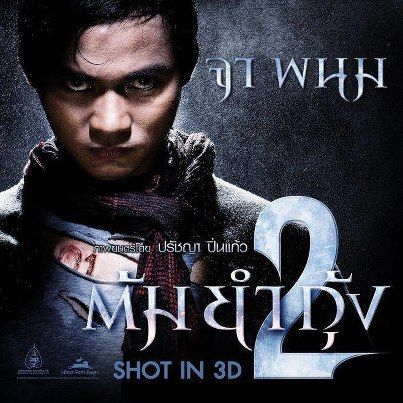
The sequel to the Tony Jaa film Tom Yum Goong (Ummm, Tom Yum) is due out this year. It will be entitled The Protector 2 in the west. The Thai star is continuing to give Chinese Kung fu cinema a run for its money.

The Grandmaster

Journey to the West

The Monkey King

Tom Yum Goong 2 (aka The Protector 2)
TYG2

47 Ronin