BOOK REVIEW: The Novice by Thich Nhat Hanh

The Novice: A Story of True LoveThe Novice: A Story of True Love by Thích Nhất Hạnh

My rating: 5 of 5 stars

Amazon page

The Novice is the retelling of a Vietnamese folk tale about a young monk who is repeatedly wronged, but who always does the virtuous thing. As I read this book, I thought the story seemed familiar, and I realized that I read the same story as The Martyr by Ryūnosuke Akutagawa. Akutagawa does a much better job of story building. The Japanese writer doesn’t reveal to the reader that Lorenzo (his novice and the equivalent of Thich Nhat Hanh’s Kihn Tâm) is a female until the end—thus definitely resolving the claim that the young monk fathered a child out-of-wedlock and in contravention of vows f0r the reader at the same time as the characters in the story learn it.

Thich Nhat Hanh tells us that the novice is a female at the beginning, and he does so via backstory that serves both to give justification for why Kihn Tâm chooses to disguise herself and become a monk and to pile onto the injustice. We learn that Kihn Tâm’s female alter ego had been married, but the marriage ended with a false accusation of attempted murder of her husband. This backstory probably isn’t worth the drag for either of the aforementioned purposes—but the former is more justifiable than the latter.

What Thich Nhat Hanh lacks in gripping narrative structure, he gains in provoking thought. The Zen monk and poet gives the reader insight into how Kinh Tâm manages to be preternaturally virtuous. In The Martyr this is a black box affair. Hanh also encourages the reader to see Kihn Tâm’s accusers as the novice does, i.e. with compassion. Akutagawa does what any writer would do; he vilifies the accusers so as to make the story resonate with the average, petty, martyr-complex prone reader—as opposed to the enlightenment-aspiring reader. Hanh leaves the other monks in Kinh Tâm’s corner, i.e. when everyone else is condemning the novice, they still believe in her. In Akutagawa’s story, monastics are not inherently so perfect.

The book offers some interesting back matter. The most substantial of the appendices is an account by Sister Chan Khong of the works of Thich Nhat Hanh and his followers both during the war and afterword when they tried to establish a monastery in Communist Vietnam. The essay echoes the themes of loving-kindness and compassion that form the core of the novella, as does the essay by Hanh that brings the book to a conclusion. While this back matter is filler to make up for the fact that the story is not novel length, it nevertheless makes for interesting reading.

I’d recommend this book for those with an interested in Zen. If you’re looking for a good story, read Akutagawa’s The Martyr, but if you want to be inspired to compassion, read Thich Nhat Hanh.

View all my reviews

A Few Thoughts on Writing Book Reviews

UlyssesOne gets an entirely different perspective on reading and writing when one starts doing book reviews. One finds that many of works that have been capturing one’s attention are, in fact, crap in one or more dimensions.


I think about books along five dimensions. I’d like to claim that I synch these five dimensions to the five-star rating system that I inherited from GoodReads, but I don’t. How I rate the book is more subjective than that, though the five dimensions are roughly the basis of my scoring. One will note that most all of my ratings are three through five. This may make it seem like I’m a softy, but it’s because I review what I want to read. By passing the twin threshold of having been started and having been finished, the books I review have generally shown themselves to have some merit in my eyes. I’ve occasionally given a lower rating to a book that was intriguingly bad or deliciously bad—or because it seemed good until the ending was botched. Just know that if someone else were picking my books, my rating distribution would be much more bell-shaped.


So, back to the five dimensions:

1.)    Language: For a book to get a five-star score, it’s usually got to impress me with its use of language. Note that I didn’t say “dazzle” me. Authors that try to “dazzle” are as likely to get points deducted for lack of readability. Not that I don’t agree with what Neil Gaiman said, “…, if one is writing novels today, concentrating on the beauty of the prose is right up there with concentrating on your semi-colons, for wasted effort.”  Still, I like to find something that intrigues in the use of language. It’s as likely to be successful use of sparseness as it is colorfulness. And, if you’re going to thwart convention, do it artfully and thoughtfully. Incidentally, it’s not just fiction in which I’m looking for creative and intriguing use of language, but it’s more likely to be pursued in that domain.

2.)    Organization: In fiction this might be a narrative arc that builds and maintains tension. In nonfiction, it can be narrative, but more likely it’s just a logical arrangement so that the information is easily consumed.

3.)    Readability: This is related to the previous items, but it’s not identical to either of them. It’s also hard to define readability except to say that it’s as easy to read and comprehend as it can be and still get the message across. Obviously, some works have a more difficult message to get across, and some works have to be purposefully vague in places. I also grade on a curve or older literature which might be needlessly purple, but right for its time. However, writing is always and everywhere and act of communication and, therefore, the clearer one can be the better. If I can read through once and not have to go back to figure out what’s going on because of what seem like conflicts, I’m usually pleased.

4.)    Uniqueness: Sure, there’s nothing new under the sun, but if you’re the four millionth teenage vampire novel, good luck getting my attention. That’s not to say that any hackneyed-looking concept can’t be done up with new and interesting specifics. Unless you have a James Patterson-like sweatshop of writers in your basement, you’re not going to catch the latest fad while it’s still a fad so give it and think creatively. It’s like they say about taxi drivers and stock market advice. You know when to sell a stock when a taxi driver gives one a hot tip to buy it.

5.)    Thought-provocation: This is simply, does the book offer food for thought. This applies not only to nonfiction works that are trying to inform. A novel, too, is hard pressed to get a five-star rating unless it makes me go “huh” about something.


It’s worth pointing out that I use GoodReads as my platform for building reviews. I use it because it’s very simple. One drops the review into a box and, when one publishes it, the cover photo and hyperlinked title and author are right there without ever having to mess with finding a photo of the book jacket or deal with building links. They also have a quick-study guide to the html code one may need for font manipulation and so forth. I do write the reviews in Microsoft Word and paste them into the GoodReads form because I’ve been twice bitten with accidently pushing some random combination of buttons that irrevocably deletes my post—inevitably as I’m putting the final edits on it.

BOOK REVIEW: Memoirs Found in a Bathtub by Stanislaw Lem

Memoirs Found in a BathtubMemoirs Found in a Bathtub by Stanisław Lem

My rating: 5 of 5 stars

Amazon page

If you enjoyed Joseph Heller’s Catch 22, which is to say you like gallows humor that scoffs at the folly of thinking of “bureaucratic logic” as anything other than an oxymoron, then Stanislaw Lem’s Memoirs Found in a Bathtub will be right up your alley. The premise is that future archeologists are trying to decipher what happened to humanity from a dearth of remaining documentation. One of the best and most extensive of these records is the memoirs of a bureaucrat telling of his experience in a subterranean complex that reads a lot like a spoof on the Pentagon. The 31st century timeline in which a future generation tries to understand the intervening dark ages is only discussed in the prologue, the remainder is the first person account of this bureaucrat of ill-chosen profession.

The narrator tells us about his final assignment, one that was so secret that his superiors couldn’t even tell him what it was. When he finally does get some written guidance, it’s stolen. Throughout the story, the author is shifting through various departments of this complex trying to figure out what is going on and with little initial success. At first he’s trying to figure out what his mission is, but later he’s just trying to figure out what’s real and meaningful–and if those concepts retain any usefulness. Along the way, odd and spectacular events occur that leave him thinking he’s being framed. He doesn’t know if he’s in a test, in the middle of a conspiracy, or amid a collection of lunatics.

There are sections that read quite like a Monty Python sketch, and the absurdist humor is sometimes like that of Douglas Adams–though more sparing and dark. There’s a scene featuring an officer who tries to talk the narrator into confessing, and I could only picture said officer in my mind as Eric Idle. Among the absurdist elements is the explanation of office operations. We are told that command was unable to deal with accurately and swiftly circulating memos because of the volume, and so they took to a random system in which paperwork was indiscriminately circulated until it happened upon the correct desk. There’s an officer who begins to chew and swallow envelopes to prevent information from falling into the wrong hands. One of the best examples of absurdist humor is a conversation with a cryptologist who suggests that everything is a code and, ignoring messages that seem to be of military value and that are not coded, takes to using a machine to “decipher” random literature into nonsensical messages.

Nothing is as it seems in this book, and the humor derives from the narrator being the only individual who insists on the world making sense. If you’ve ever been in a position where you had to interact regularly with a bureaucracy, you’ll understand the value of laughing at such humor to avoid weeping. Much of the humor comes from the desire to keep things secret while trying to know everything there is. The narrator keeps finding not-so-subtle fly-shaped spy devices on his coffee saucer. There are blatant lies about behavior that takes place right before the narrator’s eyes. When he’s institutionalized, it turns out that the other inmates are not at all who they seem to be either.

If Stanislaw Lem is not an author familiar to you (he’s a Polish writer who died in 2006), this is a good work to cut your teeth on. It’s not one of his most well-known pieces, but it’s humorous and easier to follow than Solaris. Fans of Kurt Vonnegut and Robert Heinlein are also likely to enjoy this book. I recommend it.

View all my reviews

BOOK REVIEW: Veronika Decides to Die by Paulo Coelho

Veronika Decides to DieVeronika Decides to Die by Paulo Coelho

My rating: 4 of 5 stars

Amazon page

Veronika Decides to Die is about a young Slovenian woman, Veronika, who attempts suicide, fails, is institutionalized, and is informed that her attempted suicide damaged her heart and she has only five days to live. In the hospital she has to come to grips with what it means to be dying, but also what it means to be insane.

The book deals with the effect of Veronika’s death sentence diagnosis on her as well as on other patients with whom she interacts. The first patient Veronika comes in contact with is a depressive named Zedka who offers Veronika advice and insight. Then there is Maria, a woman who withdrew from her professional and family life to be institutionalized because she was having inexplicable panic attacks. Finally, there is Eduardo, a schizophrenic who is virtually non-functional when he meets Veronika, but who ends up in a relationship with the young woman nonetheless. These patients come to realize that they are hiding out at the hospital. They stay in the hospital because they are free to defy norms without judgment. When Veronika decides she doesn’t want to die hiding out, it has a profound impact on the others.

The book borrows heavily upon Coelho’s personal experience. He was institutionalized as a young man by parents who were disturbed when he went artsy and began hanging out with undesirables. Interestingly, Coelho has a cameo role in the book as himself. In the book he writes an article that playfully asks the question, “Where is Slovenia?” When Veronika is waiting to die from her overdose, she reads the article and decides to write a letter to the editor claiming that she killed herself because of the depressing effect of Coelho’s suggestion that nobody who’s anybody knows or cares where Slovenia is located.

In the end Veronika finds that she is truly free. Veronika seems to have everything at the beginning of the story: a job, boyfriends, and popularity. However, it’s those things that she comes to feel enslave her, and that’s what leads to the attempted suicide. In a way, Veronika is doubly freed. She is free because she is dying, and what can one do to a dying person. Second, she has been labeled crazy, and, having such a label, people expect her to act oddly. She has the freedom to do those things she has been too frightened to do all her life.

I’d recommend this book. It’s short, readable, and offers clear food for thought.

View all my reviews

BOOK REVIEW: Dawn by Octavia Butler

Dawn (Xenogenesis, #1)Dawn by Octavia E. Butler

My rating: 5 of 5 stars

Amazon page

Dawn is the story of a woman, Lilith, who awakens in the custody of aliens. This is no run-of-the-mill alien abduction. Lilith is one of a small number of human survivors of nuclear holocaust. The aliens are akin to a merchant ship that comes upon the survivor-baring life rafts of a sunken cruise ship—or at least they appear to be. They offer rescue, the hope of survival, and a promise to allow human survivors to rebuild their society in a low-radiation area of Earth when they are sufficiently trained in the necessary survival skills.

However, for Lilith the situation is not akin to shipwreck rescue because there’s a stark in-group / out-group conflict to get over. And it features the most challenging and terrifying out-group imaginable—an intelligent alien race. Lilith instinctively fears and distrusts the aliens. She discovers that she’s been awakened and put back in stasis on more than one occasion. While Lilith’s fear turns out to be unfounded, her distrust proves sound. The aliens genuinely want to help the humans and mean them no harm, but they do have their own plans and see a means to benefit from their interaction with humanity. While the aliens don’t lie, they do withhold information, only gradually doling it out as they see fit. As Lilith’s fear subsides and her trust–at least in a limited sense–grows, this restricted information is a constant source of tension between Lilith and her alien handlers.

While Lilith is initially terrified and completely incapable of interacting with the aliens, she does by gradual turns accept the truth of the situation and begins to interact with the aliens, trying to discover their end-game. Her (relatively) calm and open-minded nature was—in part–why she was chosen. She’s to be a liaison between other newly awakened human survivors and the aliens. She and the humans she has already awakened will be the only beings that the newly awakened humans will see until they are deemed ready by the aliens. Of course, this makes Lilith distrusted among her fellow humans. Most of them are frozen in a Cold War mindset and think they are under the control of the Russians, refusing to believe the “nonsense” about aliens.

The heart of this novel is about Lilith being unwillingly cast as both Uncle Tom and Judas Goat to her fellow survivors. She has powers, albeit limited, granted to her by the aliens, and these only make her more suspect. These include the ability to awaken humans from stasis and to reconfigure the area in which they live, but it also includes rapid healing and enhanced physical capacities. These are given her so she can hold her own against the hostile newly awakened. The aliens know there will be physically violent individuals because they experienced it firsthand. In fact, they are hoping that using Lilith as an intermediary will ease this proclivity. However, it does nothing of the kind, and instead makes Lilith and those who are close to her targets for the rest.

This book is sci-fi because it’s futuristic, speculates about alien life, and proposes a world in which amazing technological advances have been made. However, if there was a genre called psych-fi (psychological fiction), it might be more apropos. The heart of this story is about fear and trust, and how people treat in-group and out-group people and those seen as crossing over. It also addresses the issue of the dissolution of in-group characteristics and the innate fear that creates. What if humanity does not survive, but rather some race that is in large part human, but also inhuman?

Warning to the squeamish, there’s a recurring theme of attempted rape in the book. In the first case, this is visceral and believable. However, there’s a straining of credulity when people later are coming straight out of stasis and succumbing to their most base prurient urges. Sex is a powerful driver, but in such a situation it would seem that more immediate survival drivers would dominate. In other words, it has to be the rare horn-dog who wakes up from a 300 year stasis aboard an alien vessel, and the first thing he thinks of is getting his freak on.

I enjoyed this book and found it quite thought-provoking. The concept hooked me from the start. Butler’s use of language can be beautiful, but she doesn’t go overboard with elaborate language that distracts or bogs down the story.

This book could be enjoyed not only by fans of science fiction, but by those who like a good story in general and, in particular, those who like to think about what makes people tick.

It should be mentioned that this is the first book of a trilogy. The other books are Adulthood Rites and Imago, respectively. The entire trilogy, often called the Xenogenesis trilogy, can be purchased in one volume entitled Lilith’s Brood.

View all my reviews

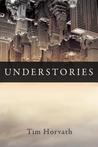
BOOK REVIEW: Understories by Tim Horvath

UnderstoriesUnderstories by Tim Horvath

My rating: 4 of 5 stars

Amazon page

Two traits of Tim Horvath are rapidly revealed in reading the collection of stories entitled, Understories. First, he’s an academic to the core. Second, he loves words and the way they can be jigged around to create not only meaning but feeling. Combined, these characteristics yield both positive and negative outcomes.

On the positive side, Horvath writes what he knows, and this can be seen in tales like: The Understory, The Discipline of Shadows, Tilkez, and even Circulation. Horvath paints a vivid picture of life in academia with The Understory and The Discipline of Shadows in particular, replete with scholarly rivalry and interdepartmental politics. While that may make the book sound stunningly boring, those two stories are among the strongest–in part because the author knows how to build tension and character in this domain. His bookish characters are constructed with wit and depth.

On the other hand, this book is for the ones who love language more than they love story. The readability isn’t high. Horvath peppers the text with words that many of us memorized to take our GRE test but never used after receipt of our acceptance letter. Many avid readers never learned such words in the first place. This is where the Kindle edition, and its capability for instantaneous word lookup, comes in handy. (Though, the author does manage to stymie Kindle’s internal dictionary on a number of cases.) The shorter pieces tended to leave me wondering if Horvath had a point other than to dazzle with verbiage. To be fair, it’s not just monosyllabic and pretentious words that Horvath loves. He has a taste for all sorts of words that are evocative and powerful, be they whimsical, sexual, or emotional.

Understories consists of 21 short stories, but I use the term “story” loosely. Some of the chapters are stories in a conventional sense. That is, they have a beginning, a middle, and an end, and a character who takes some sort of personal journey. Other pieces are the literary equivalent of the masturbatory orgasm; they’re pleasant to experience but beg the question of what the objective is. The contents of the book are below. I’ll restrict my commentary to the more substantial pieces, and leave the reader to figure out what Horvath was trying to get at with the others.

1. The Lobby: This is really an artistic introduction and rules for reading the book.

2. Urban Planning: Case Study #1: This is the first of 8 such “case studies.” With the exception of one, they’re all flash pieces.

3. Circulation: If I had to pick a best story of the anthology, it would be this one. It’s about a man whose eccentric father is in the hospital with mind and body that aren’t what they used to be. The man is Director of Circulation for his hometown library, and the father has one published book and spent much of his life working on an unfinished Atlas of the Voyages of Things. The sub-story about the books as a reflection of the man is what gives this something extra beyond the usual “Cats in the Cradle” (Harry Chapin reference) narrative.

4. Urban Planning: Case Study #2: Another brief piece.

5. The Understory: This is one of the full length stories, and is one of the best pieces. It’s about the bringing together and falling apart of a platonic relationship between two scholars. Set in pre-war Germany, the story opens with a scholarly rivalry between two professors who become good friends. However, one of the men is a Jew and the other is promoted to a Deanship because he has appeal with the Nazis.

6. Urban Planning: Case Study #3

7. The Discipline of Shadows: This is the story of a professor in the Department of Umbrology. What’s Umbrology? It’s the study of shadows. An interdisciplinary department with a unifying theme of shadows provides and intriguing background for a story that’s not so out of the ordinary. The story delves into scholastic politics and a sordid intradepartmental love triangle.

8. Urban Planning: Case Study #4

9. Planetarium: This is story proper. It’s about the reunion of two high school buddies, and their differing recollections of a seminal event of their youth involving shenanigans at a planetarium. The story is an odd sort of confession.

10. The Gendarmes: This story will appeal to lovers of the surreal. It’s about a man who discovers that a team of scientists are playing baseball on his roof.

11. A Box of One’s Own: An eloquent tale of the curiosity inspired by boxes.

12. Internodium: This is another short piece.

13. Urban Planning: Case Study #5: This one probably ties for my favorite flash piece. It’s about a city that evolves into all restaurants.

14. Runaroundandscreamalot!: There’s a lot of humor sprinkled throughout this book, but this is the one story one might put in the humor genre. It’s funny from the title onward, which is the protagonist’s pet name for a generic Chuck-E-Cheese-esque place called “Playalot”—which is a medieval-themed kid’s play palace. The protagonist, a divorced man, takes his daughter there and meets a woman that he proceeds to try to get to know better despite only knowing her as “Hanh’s Mom” for most of the story.

15. Urban Planning: Case Study #6: This is the other tie-holder for best flash piece. It’s about a city in denial.

16. Pocket: A flash piece on, well… pockets.

17. Altered Narrative: A short and experimental piece.

18. Urban Planning: Case Study #7: This is the only one of these “Urban Planning Case Studies” that is a short story in the usual sense. It’s about a [grown man] film projectionist who abandons his post after seeing his wife with another man.

19. The Conversations: There’s a fair amount of surrealism sown throughout this book, but this is one of the more speculative pieces. That said, it’s really just about the death and resurrection of the conversation—along with “mint.” The sci-fi component revolves around speculation about precisely caused it and what the difference is between a “Conversation” and a “conversation.” The latter being what we normally think of (i.e. and informal discussion), and the former being the subject of the story.

20. Tilkez: The protagonist is a creepy little man who writes down everything and the story is about his relationship with both a female and language (I think. The female might be symbolic.)

21. Urban Planning: Case Study #8: One last flash piece.

View all my reviews

BOOK REVIEW: Poems: Three Series, Complete by Emily Dickinson

Poems: Three Series, CompletePoems: Three Series, Complete by Emily Dickinson

My rating: 5 of 5 stars

Amazon page

Three series are collected into one volume. Each series is organized into four parts: Life, Love, Nature, and Time & Eternity. The connection between these themes and the verse contained therein is generally clear, and the latter category is largely concerned with death—a popular topic for Dickinson. While Dickinson is known for being morose, her poems often manage to be both playful and dark at the same time. The best example of this odd combo of grim / playfulness may be one of her most quoted poems, The Chariot.

Because I could not stop for Death,
He kindly stopped for me;
The carriage held but just ourselves
And Immortality.

We slowly drove, he knew no haste,
And I had put away
My labor, and my leisure too
For his civility.

We passed the school where children played,
Their lessons scarcely done;
We passed the fields of gazing grain,
We passed the setting sun.

We paused before a house that seemed
A swelling of the ground;
The roof was scarcely visible,
The cornice but a mound.

Since then ‘t is centuries; but each
Feels shorter than a day
I first surmised the horses’ heads
Were toward eternity.

Dickinson’s life story is well-known, at least in broad brushstrokes. She was a 19th century poet who was introverted in the extreme, and eventually became an outright recluse. According to her own words, she didn’t take up writing poetry until she was in her 30s. This existence was facilitated by the fact that she was from a well-to-do family and had no pressing need of a husband or an income.

Dickinson’s introverted nature is touched on throughout her work, and no doubt contributes to her appeal among those similarly afflicted. The opening poem of the Second Series, another of Dickinson’s most famous, speaks to this aspect of her personality.

I’m nobody! Who are you?
Are you nobody, too?
Then there’s a pair of us! Don’t tell!
They’d banish us, you know.

How dreary to be somebody!
How public, like a frog
To tell your name the livelong day
To an admiring bog.

I enjoy Dickinson’s work, but it’s the playful nature, rather than the macabre, that appeals to me. This is accomplished by short lines, use of rhyme, or at least slant rhyme, that makes the poems melodious to the ear. I’m fond of lines such as:

Success is counted sweetest
By those who ne’er succeed


God permits industrious angels
Afternoons to play


Hope is the thing with feathers
That perches in the soul


Faith is a fine invention
For gentlemen who see;
But microscopes are prudent
In an emergency!


A word is dead
When it is said,
Some say.
I say it just
Begins to live
That day.


There is no frigate like a book
To take us lands away,


You cannot fold a flood
And put it in a drawer,–
Because the winds would find it out,
And tell your cedar floor.


He fumbles at your spirit
As players at the keys
Before they drop full music on;
He stuns you by degrees,


Deals one imperial thunderbolt
That scalps your naked soul.


For we must ride to the Judgement,
And it’s partly down hill.


While simple-hearted neighbors
Chat of the ‘early dead,’
We, prone to periphrasis,
Remark that birds have fled!


And if my stocking hung too high,
Would it blur the Christmas glee,
That not a Santa Claus could reach
The altitude of me?


This Kindle version is readable. A common complaint about good books, particularly those that are cheap or free, is that the Kindle formatting detracts from the reading experience. That is not the case here. There is a first line index at the back. This is useful as most of the poems don’t have titles, and Dickinson’s first lines are often attention grabbers.

I’d recommend this for poetry readers.

View all my reviews

BOOK REVIEW: Heart of Darkness by Joseph Conrad

Heart of Darkness Heart of Darkness by Joseph Conrad

My rating: 4 of 5 stars

Amazon page

Heart of Darkness is a story within a story (i.e. a frame narrative) in which the protagonist, Marlow, tells a group of men on a ship on the Thames about his adventures captaining a boat on the Congo River. The use of a frame narrative both gives this novella/ novel a confessional feel, but also imagines Marlow’s audience feeling his tale particularly viscerally as some of them might be caught up in similar intrigues themselves.

Marlow’s job in the Congo is transporting ivory. However, the core of the story revolves around a trip to extract an agent of the ivory trade named Kurtz, and to transport the ill man to medical care. Kurtz is an intriguing character. This isn’t a man one can feel indifferently towards. Some love his intellect, charisma, or even his ruthlessness. Others despise him as the face of villainy. Kurtz represents imperialism at its most vile. Some natives are at war with him. Others respect and fear him. However, he’s willing to destroy them all on a whim to make the flow of ivory come more swiftly.

Marlow isn’t a member of Kurtz’s fan club initially and thinks the agent is completely insane, but he becomes intrigued with him as their journey progresses. In a way, Marlow is the moderate face of Imperialism. He doesn’t like the way the natives are treated, or the power plays and bureaucracy of the trade. However, he’s an active and willing participant, and, ultimately, when given a choice to work against the system or in support of it he chooses the latter. He hands over Kurtz’s report on the “Suppression of Savage Customs.” He also shows his sympathy towards Kurtz through his interaction with the dead man’s fiance.

This is definitely 19th century literature. While the book is very short, it’s readability isn’t high by today’s standards. It’s organized into just three parts or chapters, and the prose isn’t built for speed. Also, while it turns out to be a gripping tale, it’s slow off the blocks. It must also be put in the context of 19th century literature because the themes of imperialism and suppression of “savagery” have long since been settled. Viewed through today’s lens, the story might not ring true. Though I suppose there’s still a heart of darkness in urban environments today, behind walls rather than across seas.

What are the book’s strengths? While it may seem silly, the title is pure-D awesomeness. Also, while it’s not organized or written for readability by today’s standards, by 19th century standards it’s a page-turner. It’s certainly a compact tale. As I indicated, I’m not sure whether to call it a novel or a novella. Reading this book isn’t a major time investment, and it does pay off. Conrad’s use of descriptive language is often beautiful. Conrad’s characters all ring true and serve to sit one in a world of darkness beyond the imaginings of the London elite, where sad and terrible things happen to make their world possible.

Lastly, the book makes one think. Like Kurtz, one is likely to love it or hate it.

View all my reviews

BOOK REVIEW: Rashōmon and Other Stories by Ryūnosuke Akutagawa

Rashomon and Other Stories (Tuttle Classics)Rashomon and Other Stories by Ryūnosuke Akutagawa

My rating: 5 of 5 stars

Amazon page

Six stories make up this brief collection. All six are intriguing, well-written, and shine a light onto the dark side of mankind. The works of Akutagawa collected herein are all morality tales, but aren’t written in a moralistic tone. In fact, it’s not clear that the author wishes to convey lessons on virtue and vice as he’s intrigued with the instant at which an ordinary person turns bad. That instant, and the inflamed passions that often inspire it, is a prevailing theme throughout most of this small anthology. Akutagawa beats AMC by the better part of a century in showing us how bad breaks.

The first story is entitled In a Grove. This is a murder mystery in which we are given conflicting accounts of a man’s murder through the process of the investigation of the act. The final account that we are offered is that of the victim himself–as presented by a psychic medium. [Only two of these stories contain supernatural elements–this one and the last. Most of the collection involves realist premises. One must remember that Akutagawa was writing in the early part of the 20th century, and scientific rationality hadn’t yet gotten as strong a hold as it does today.] In this case, the use of a psychic is really just a plot device to give the reader insight into a truth which couldn’t otherwise be revealed. Having heard the perspectives of the murder and the dead man’s wife, one is left with questions owing to the self-serving nature of those statements. Of course, the final section reveals a twist–that I won’t spoil.

The second story is the title story, Rashōmon. The title is the name of a gate in Kyōto, the largest gate of Kyōto, in fact. However, Kyōto has fallen on hard times, and our protagonist is a newly masterless samurai who has sought the gate’s shelter from the rain. There, he contemplates whether he should take up a life of crime, which seems to be his only means of survival in the current economy given his skill set. The gate has become a repository for the corpses that are amassing as victims of the hard times accumulate. Within the gate, he finds an old hag who loots bodies for a living. His interaction with the old woman helps him to decide his own destiny.

The third story is called Yam Gruel. While “yam gruel” (or anything with the word gruel in it) might not sound appealing given today’s usage, a fact one must know is that during the time of the story it was a highly-prized and rare dish. The story follows a milquetoast administrator who leads a rather pathetic life in which he has but one ambition, to eat his fill of yam gruel. As a member of the samurai class, he’s invited to an Imperial banquet each year. However, because of his low status and the high-value of yam gruel, he never gets more than a taste. One year he openly bemoans the fact that he never gets his fill. A powerful samurai overhears this complaint, and it puts a seed of mischief in his mind. While this tale isn’t about breaking bad, it is about inflamed passions.

The fourth story sticks out as different from the others. While the bulk of the stories center on that moment at which a more-or-less good person goes bad, The Martyr tells us about a protagonist that never goes bad, despite having every right to. This might seem like a sea change in theme, but in reality it’s just another way of shining a light on the dark seed that resides in people. Only this time it does it by way of contrast. All of the other characters are deeply flawed, and we see that most vividly when contrasted against the one who always behaves virtuously. In this case, that virtuous character is Lorenzo, a novice monk who is accused of a severe breach of good conduct. Lorenzo becomes an outcast and a vagrant due to these allegations. Yet, despite all this, he acts heroically–even to assist those who’ve betrayed him.

In the fifth story we revisit the theme of breaking bad. In Kesa and Morito we are presented with two regret-filled accounts of the instant at which an adulterous couple decides to kill the husband of the woman involved in the affair. Each member of the cheating couple thinks that the other desperately wants the killing to go forward. In reality, both consider it a foolish decision driven by a brief moment of passion. This is another tale about letting one’s passions get out of control.

The final work is a retelling of the story of a monk named Hanazō who decides to prank his fellow monks because they chide him about his huge nose. Hanazō sets up a sign that says a dragon will appear from the local lake at a certain time and day to fly up into the heavens. The joke doesn’t turn out at all as the monk intended. I won’t go into the moral of the story to avoid giving too much away, but suffice it to say there is a moral.

I highly recommend this collection. As I’ve suggested, the collection isn’t just a disparate collection of tales, but has an integrating theme. Akutagawa was truly one of the masters of the short story. He wrote 150 stories before dying at the age of 35 in a suicidal drug overdose.

For those who like to see how literature is portrayed in, below one can watch the film version of Rashōmon.

View all my reviews

BOOK REVIEW: American Gods by Neil Gaiman

American Gods (American Gods, #1)American Gods by Neil Gaiman

My rating: 5 of 5 stars

Amazon page

American Gods is the story of a hapless and gentle brute who goes by the nickname “Shadow.” We meet Shadow as he is being released from prison a few days early because the wife that he loved dearly has passed away. While the description of Shadow’s imposing size and criminal activity might lead us to believe he’s an unsavory character, we find him sympathetic from the outset–though we don’t learn that it was virtue more than vice that landed him in prison until late in the book.

Given that the name of the book is American Gods others who’ve read it may wonder why I say it’s about Shadow instead of being about a war between America’s old gods and its new ones (e.g. technology and mass media.)The latter statement is more likely what one will read on the dust jacket. However, for me it was the character of Shadow that kept me reading. As with any great novel’s main character, Shadow is put in predicament after predicament, and one must see how he’ll handle them. Eventually, we suspect that enough will be enough and he will have to choose to act in his own best interest rather than in the moral manner.

The importance of character in this novel doesn’t mean that it’s lacking a plot. Early on we are given a great hook when Shadow is introduced to the character of “Wednesday.” The hook is that Wednesday seems to know things about Shadow that no one could, and he makes a proposal to Shadow. The reader is thus drawn in and wants to know how Wednesday knows the impossible and whether Shadow will agree to the vague offer. While we don’t know what agreeing will mean for Shadow, we suspect that it’s tailor-made to land him back in hot water.

While Shadow seems to be always ending up with the short end of the stick, what makes things interesting is that he’s not dumb. He doesn’t stumble into these traps unwittingly. Rather, Shadow defies convention and, by some measures, is really quite a sharp man. Often, he sees the folly of his decisions but is compelled by virtue to act in ways that put him at risk.

Shadow is on a journey of self-discovery throughout the book, and what he ultimately discovers about himself is spectacular.

In a way American Gods is Neil Gaiman’s commentary on America, and Shadow represents America at its most virtuous. We see plenty of America’s faults and failings in the process, its vainglory and hunger for power. But in Shadow we see a character who is honor bound to do what he thinks is the right thing–even when it comes at great personal cost and even when he knows he is being manipulated.

I found this novel to be highly readable and would recommend it. It has Gaiman’s characteristic humor, darkness, and dark humor.

View all my reviews