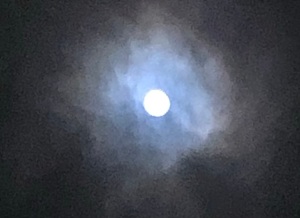
Slowly, silently, the moon
 Walks the night in her silver shoon;
 This way, and that, she peers, and sees
 Silver fruit upon silver trees;
One by one the casements catch
 Her beams beneath the silvery thatch;
 Couched in his kennel, like a log,
 With paws of silver sleeps the dog;
From their shadowy cote the white breasts peep
 Of doves in a silver-feathered sleep;
 A harvest mouse goes scampering by,
 With silver claws, and silver eye;
And moveless fish in the water gleam,
 By silver reeds in a silver stream.
All the world's a stage,
 And all the men and women merely players:
 They have their exits and their entrances;
 And one man in his time plays many parts,
 His acts being seven ages. At first the infant,
 Mewling and puking in the nurse's arms;
 Then the whining school-boy, with his satchel
 And shining morning face, creeping like a snail
 Unwilling to school. And then the lover,
 Sighing like furnace, with a woeful ballad
 Made to his mistress' eyebrow. Then a soldier,
 Full of strange oaths, and bearded like the pard,
 Jealous in honour, sudden and quick in quarrel,
 Seeking the bubble reputation
 Even in the cannon's mouth. And then the justice,
 In fair round belly with good capon lin'd,
 With eyes severe and beard of formal cut,
 Full of wise saws and modern instances;
 And so he plays his part. The sixth age shifts
 Into the lean and slipper'd pantaloon,
 With spectacles on nose and pouch on side.
 His youthful hose, well sav'd, a world too wide
 For his shrunk shank; and his big manly voice,
 Turning again toward childish treble, pipes
 And whistles in his sound. Last scene of all,
 That ends this strange eventful history,
 Is second childishness and mere oblivion;
 Sans teeth, sans eyes, sans taste, sans everything.
NOTE: Sometimes called the “Seven Ages of Man,” this soliloquy is spoken by Jacques in Act II: Sc. 7 of As You Like It.
The thirsty Earth soaks up the Rain,
 And drinks, and gapes for drink again.
 The Plants suck in the Earth, and are
 With constant drinking fresh and faire.
The Sea itself, which one would think
 Should have but little need of Drink,
 Drinks ten thousand Rivers up,
 So fill'd that they o'erflow the Cup.
The busy Sun (and one would guess
 By 's drunken fiery face no less)
 Drinks up the Sea, and when he's done,
 The Moon and Stars drink up the Sun.
They drink and dance by their own light,
 They drink and revel all the night.
 Nothing in Nature 's Sober found,
 But an eternal Health goes round.
Fill up the Bowl then, fill it high,
 Fill all the Glasses there, for why
 Should every creature drink but I,
 Why, Man of Morals, tell me why?
From our low seat beside the fire
 Where we have dozed and dreamed and watched the glow
 Or raked the ashes, stopping so
 We scarcely saw the sun or rain
 Above, or looked much higher
 Than this same quiet red or burned-out fire.
To-night we heard a call,
 A rattle on the window-pane,
 A voice on the sharp air,
 And felt a breath stirring our hair,
 A flame within us: Something swift and tall
 Swept in and out and that was all.
Was it a bright or dark angel? Who can know?
It left no mark upon the snow,
 But suddenly it snapped the chain
 Unbarred, flung wide the door
 Which will not shut again;
 And so we cannot sit here anymore.
We must arise and go:
 The world is cold without
 And dark and hedged about
 With mystery and enmity and doubt,
 But we must go
 Though yet we do not know
 Who called, or what marks we shall leave upon the snow.
Tomorrow, and tomorrow, and tomorrow,
 Creeps in this petty pace from day to day,
 To the last syllable of recorded time;
 And all our yesterdays have lighted fools
 The way to dusty death. Out, out, brief candle!
  Life's but a walking shadow, a poor player,
   That struts and frets his hour upon the stage,
   And then is heard no more. It is a tale
   Told by an idiot, full of sound and fury,
   Signifying nothing.
I
The grey sea and the long black land;
 And the yellow half-moon large and low;
 And the startled little waves that leap
 In fiery ringlets from their sleep,
 As I gain the cove with pushing prow,
 And quench its speed i' the slushy sand.

II
Then a mile of warm sea-scented beach;
 Three fields to cross till a farm appears;
 A tap at the pane, the quick sharp scratch
 And blue spurt of a lighted match,
 And a voice less loud, thro' its joys and fears,
 Than the two hearts beating each to each!
Remember me when I am gone away,
   Gone far away into the silent land;
   When you can no more hold me by the hand,
 Nor I half turn to go yet turning stay.
 Remember me when no more day by day
   You tell me of our future that you plann'd:
   Only remember me; you understand
 It will be late to counsel then or pray.
 Yet if you should forget me for a while
   And afterwards remember, do no grieve:
   For if the darkness and corruption leave
   A vestige of the thoughts that once I had,
 Better by far you should forget and smile
  Than that you should remember and be sad.