PROMPT: Youthful Attachments

Daily writing prompt
Describe an item you were incredibly attached to as a youth. What became of it?

I had a guitar, a black and white Fender Stratocaster knock-off. [Actually, technically, I don’t think it was a knock-off, but rather the lowest of low-end mass-produced Strats made by a subsidiary of Fender, Squier.] What happened to it? I realized I was tone deaf and lacked the finger dexterity to be the sequel to Eddie Van Halen. So, ostensibly, it ended up donated or sold in a garage sale. There’s a small chance it’s taking up space in a closet somewhere, but not in my closet.

Not to reveal a pattern, but I also had a yellow and blue BMX bike that I was quite fond of. What happened to it? I learned that I lacked the flight characteristics to be a great BMX racer (or possibly I rode it until it fell apart into its component pieces.) Youth was a long time ago.

PROMPT: Mission

What is your mission?

To be a better version of myself.

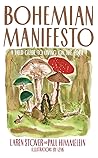
BOOKS: “Bohemian Manifesto” by Laren Stover, Paul Himmelein, and Patrisha Robertson

Bohemian Manifesto: A Field Guide to Living on the Edge (Kindle Edition)Bohemian Manifesto: A Field Guide to Living on the Edge by Laren Stover
My rating: 5 of 5 stars

Amazon.in Page

The central premise of this book is that not only does the Bohemian artist live on, but she does so in five distinct varieties: the Beat, the Zen Bohemian, the Dandy, the Folkloric Bohemian, and the Nouveau Bohemian. While the title calls this book a “manifesto,” the term used in the subtitle, i.e. “field guide,” is far more apropos. Like a field guide to birds or mushrooms, it lays out
characteristics and distinctions, the characteristics of Bohemians, generally, and the five flavors thereof, more specifically, and it does so in a way that separates them from the other varieties of human.

One might be wondering, why are these varied categories classed as Bohemian, as it seems they are their own distinct class. One way to understand this is to consider the “Zen Bohemian,” who often bears little resemblance to the “Zen Buddhist” for which one might mistake him. The Zen Buddhist has both a strong connection to and a depth of knowledge of Zen Buddhism, but the Zen Bohemian often rather has a strong connection to a broad hodge-podge of Eastern philosophies and spiritual traditions that he may or may not properly understand the distinctions between.

This book is quite readable, and informative in an easy-going way, but it’s also perplexing. It’s informative in that it clarifies the characteristics of Bohemians across many criteria (e.g. food, clothing, tastes in literature, art, movies, and music, interest in boxing, etc.) It’s perplexing in that it starts with the premise that Bohemians are, at their core, free spirits who refuse to be hemmed in by convention, but then the bulk of the book is about the various tribe-signaling boxes that the Bohemian puts himself within to conform to the norms of the group. It seems that the authors are aware of this and actually produce humor through oddly specific statements such as, “They [Bohemians] still adore Laurie Anderson even though their yuppie brother went to see her.” It feels like they are aware that, to the extent Bohemians are truly free spirits, any description the authors give will be wrong at some level of granularity, and so they lean into it with great (sometimes comedic) specificity.

I enjoyed reading this book and picked up a number of interesting references to other books and whatnot. (I’m currently reading Kliph Nesteroff’s “The Comedians” because of a reference to it in this book.) I did find bits on subjects like wardrobes and astrology to be a bit tedious, but just skimmed through them.

View all my reviews

“Thoughts in a Zoo” by Countee Cullen [w/ Audio]

They in their cruel traps, and we in ours,
Survey each other's rage, and pass the hours
Commiserating each the other's woe,
To mitigate his own pain's fiery glow.
Man could but little proffer in exchange
Save that his cages have a larger range.
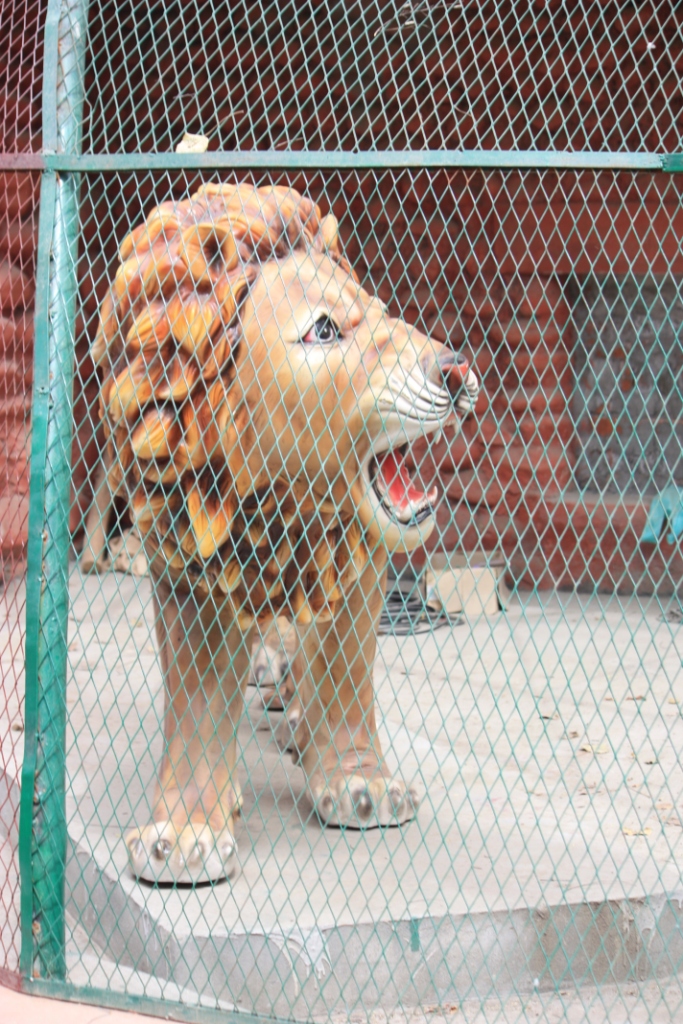
That lion with his lordly, untamed heart
Has in some man his human counterpart,
Some lofty soul in dreams and visions wrapped,
But in the stifling flesh securely trapped.
Guant eagle whose raw pinions stain the bars
That prison you, so men cry for the stars!
Some delve down like the mole far underground,
(Their nature is to burrow, not to bound),
Some, like the snake, with changeless slothful eye,
Stir not, but sleep and smoulder where they lie.
Who is most wretched, these caged ones, or we,
Caught in a vastness beyond our sight to see?

PROMPT: Longevity

What are your thoughts on the concept of living a very long life?

As long as I’m of sound mind and capable body, I’m fine with it, but not at any cost. I’d rather shuffle off this mortal coil than drag out the suffering of immobility and / or dementia.

I think Atul Gawande’s “Being Mortal” is good required reading. Among other things, he talks about the smoke and mirrors of our species’s increased lifespan. (i.e. increased lifespan, yes, but too often at the cost of diminished quality of life through those additional years.)

Crucible [Lyric Poem]

It was a dreary winter day;
 The world was cold, monotone gray.
But then, I caught a hint of heat:
 Felt on my face, not on my feet.

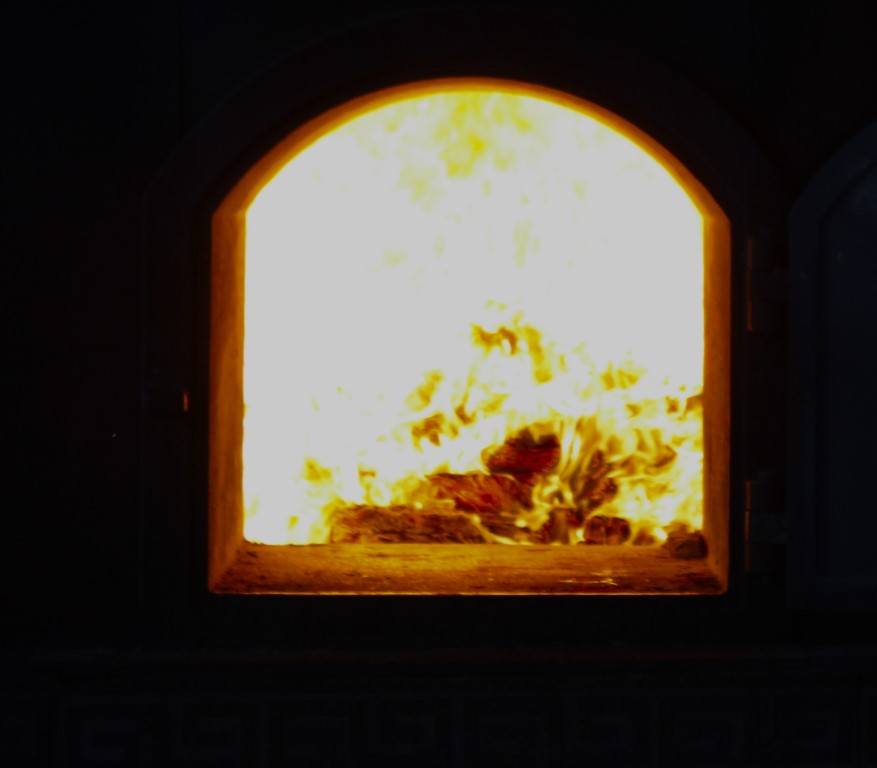
A furnace burned in a dark place.
 I felt it flush my frigid face --
Frigid once, but not any more
 I stood inside that foundry's door.

The orange glow danced on my face.
 It must have shown demon's disgrace.
Like a poor creature lit on fire,
 Or the living dead on a pyre.

Cold as the day and my feet were,
 I heard a voice - just a whisper.
"You must flee now, or you'll jump in,
 and they'll not find a fleck of shin."

“A BLOCKHEAD” by Amy Lowell [w/ Audio]

Before me lies a mass of shapeless days,
 Unseparated atoms, and I must
 Sort them apart and live them. Sifted dust
Covers the formless heap. Reprieves, delays,
There are none, ever. As a monk who prays
 The sliding beads asunder, so I thrust
 Each tasteless particle aside, and just
Begin again the task which never stays.
 And I have known a glory of great suns.
When days flashed by, pulsing with joy and fire!
Drunk bubbled wine in goblets of desire,
 And felt the whipped blood laughing as it runs!
Split is that liquor, my too hasty hand
Threw down the cup, and did not understand. 

PROMPT: Future Past

Do you spend more time thinking about the future or the past? Why?

I spend the most time trying to figure out how to live mostly in the present. The past is dead and the future is unknowable, so I might as well settle into this moment.

PROMPT: Birth Year

Share what you know about the year you were born.

Wow. Not a lot. The war in Vietnam was in full swing, and Nixon was in the White House, but nothing else springs to mind. Over the years, I’ve looked it up, including the big books and films of the year, but it’s all utterly unrememberable. It hasn’t been long since I looked up what film won the Oscar, and I forgot it — something that no one but film school students and niche art historians are aware of today. (i.e. Nothing that shows up on your Netflix “Classic Films” feed.)

“Happy the Man” by Horace; Translated by John Dryden [w/ Audio]

Happy the man, and happy he alone,
He who can call today his own:
He who, secure within, can say,
Tomorrow do thy worst, for I have lived today.
Be fair or foul, or rain or shine
The joys I have possessed, in spite of fate, are mine.
Not Heaven itself, upon the past has power,
But what has been, has been, and I have had my hour.