PROMPT: People Say

Daily writing prompt
Tell us one thing you hope people say about you.

I hope they say, “He was kind of loud, never kept to himself, and we always thought he might be a serial killer.”

PROMPT: Five Things

Daily writing prompt
Share five things you’re good at.
1.) Remaining incognito. (I conceal my identity by being no one of interest.)

2.) Calling animals. (They do not come, but I maintain that I'm effective at getting their attention. They give perplexed looks and seem to be thinking, "Why is that dumb-ass human making strange noises?")

3.) Slipping on ice. (It's effortless to me.)

4.) Conveying an air of indifference. (At any given moment, you'd probably conclude that I don't give a shit.)

5.) Eating rotisserie chicken. (It's not pleasant to watch, but I leave not a scrap of meat. It's like a sun-bleached skeleton when I'm done with it.)

PROMPT: Pet Peeves

Daily writing prompt
Name your top three pet peeves.

In no particular order: farting on the escalator, eating rotisserie chicken during the opera, and the shouting of “fire” during a flash flood.

BOOKS: “Funny Stuff” ed. by Laura LaPlaca and Ryan Lintelman

Funny Stuff: How Comedy Shaped American HistoryFunny Stuff: How Comedy Shaped American History by Laura LaPlaca
My rating: 4 of 5 stars

Publisher Site — Rutgers University Press

Release Date: May 12, 2026

As the subtitle suggests, this book explores the nexus between American History and comedy across many, varied media (i.e. writing, theater, standup, improv, radio, television, movies, etc.) It’s an interesting book, but I don’t know that it has the right title. Considering the title, a reader might expect a fuller coverage of American History, drawing on whatever humorous outlets existed at the time (e.g. op-eds and satirical articles.) This book is more of a history of comedic content in the US with a substantial discussion of how comedy addressed / participated in changing views on sex, race, and sexuality and with occasional mention of how comedy was involved in other social issues, such as changing views on free speech and expression. You’re not going to learn how comedic writers addressed Smoot-Hawley or the Sinking of the Maine. (i.e. The book leads with comedic content and leans the discussion toward societal influence [rarely toward policy influence.] It does not lead with historical events and draw on appropriate comedic content.)

The book covers a lot of the same ground as Kliph Nesteroff’s The Comedians, though with quite different emphases. Nesteroff focuses on the gritty underside of comedy and the oft unseen dark side of comedians, while this book focuses on comedy as a factor in changing views on race and sex [as well as on the changing technological outlets for comedy.] Funny Stuff does spend a little more time on pre-20th century America than does Nesteroff, but not much more. Both books are heavily weighted toward the late 20th century to present. To be fair, there is much more volume of comedic output in this period. (That said, there were artists I expected coverage of, e.g. Josh Billings, that weren’t included. That’s where the book seems more like a history of comedy and its varied outlets.)

If you’re interested in the development of comedy in America, and its influence on social issues — most extensively attitudes towards race — I’d recommend this book.

View all my reviews

BOOK: “The Serious Guide to Joke Writing” by Sally Holloway

The Serious Guide to Joke Writing: How to Say Something Funny about AnythingThe Serious Guide to Joke Writing: How to Say Something Funny about Anything by Sally Holloway
My rating: 4 of 5 stars

Google Books Page

This book presents a textual version of the author’s joke writing seminar. It offers a few techniques for joke writing that are informed by the premises that: 1.) jokes exist out in the world for one to find — rather than to create; 2.) Anyone who is funny with his or her friends can be a funny joke writer, BUT not without effort. That effort comes in the form of training oneself to look at words and phrases in unconventional ways and in applying (largely mechanical) processes to coax or wheedle the jokes out of the ether. I say “largely mechanical” because there is a chapter on stream-of-consciousness joke writing, but the heart of the book is a process called joke-web building that is a step-by-step approach to finding humor wherever it may hide.

The book alternates practical and “theoretical” chapters. The “theoretical” chapters are mostly about the psychology that gets in one’s way as a joke writer and the ways around it. That is, those parts deal with the value of breaks and the need to manage anxiety. The practical chapters explain the procedures and have Q&A style troubleshooting sections in addition to a description of the process.

I found the book to be interesting and a quick read. Some of the procedures seem a bit tedious, but they do produce results. It may be possible to streamline them to one’s own situation.

View all my reviews

PROMPT: Pet

Daily writing prompt
What is good about having a pet?

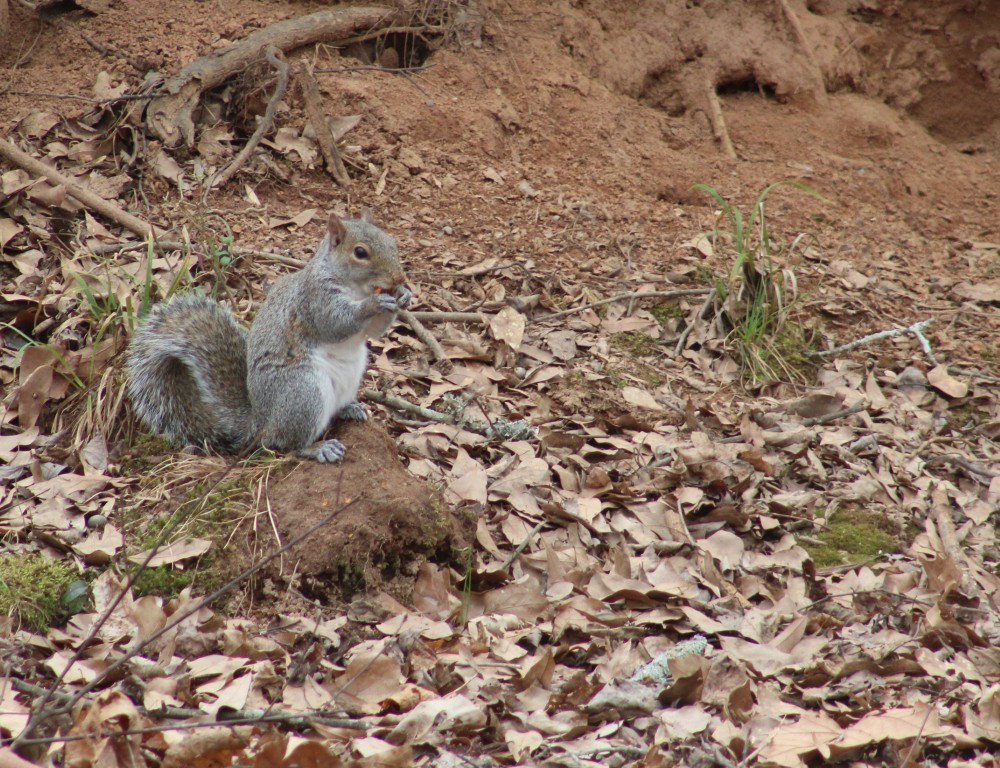
It’s a friend who may not understand what you’re going through, but who will never talk… and sometimes eagerly helps with the digging when you’re burying the body. Try finding a human friend like that.

CZECH REPUBLIC LIMERICK

A parachutist from Czech Republic
never ever did have too much luck.
He dodged a tall spire,
bounced off a high wire,
hit a wall and knocked loose some pub bricks.

SOUTH KOREA LIMERICK

There was a young man from South Korea
who was prone to verbal diarrhea.
“But better that kind
than from the behind,”

Said that fast-talking lad from Korea.

THAILAND LIMERICK

There was a wise pot seller in Thailand
whose customers always claimed to be scammed.
You see, he sold metal pots –
Ganja varietals, not –
but he truly had the strongest pot in the land.

AUSTRIA LIMERICK

There once was a man from Austria
prone to coffee house nausea.
“Our cafés are held dear,
but I can’t go near…”
said that lonely, skinny man of Austria.