BOOK REVIEW: Embrace the Suck by Stephen Madden

Embrace the Suck: A Crossfit MemoirEmbrace the Suck: A Crossfit Memoir by Stephen Madden
My rating: 3 of 5 stars

Amazon page

Embrace the Suck is one man’s account of his experience with Cross-fit and other high intensity fitness regimens, including SEALFIT 20X. While Madden comes across as a regular Joe, i.e. not one of those crazed individuals who wreck their bodies through lack of rest, failure to heed the body’s warnings, or by way of starvation diets pursued to get that perfect cut, he’s a cheerleader for Cross-fit. If one is looking for an unbiased account of the strengths and weaknesses of Cross-fit, there are probably more objective accounts of the system’s pros and cons. This book is for someone who’s trying to psych themselves up for high intensity interval training. In that regard, the book does a good job because Madden always portrays himself as a human with the unique set of strengths, weaknesses, and limitations that condition entails. He succeeds because he guts it out in the company of the people around him who are portrayed as being more fit (at least in some dimensions) and driven than he.

Still, Madden’s account does give one a taste of the ugly side of the notoriously cult-like fitness system. For example, there is the trainer who refers to orange juice as poison–because it’s a high glycemic index carbohydrate. Even more disturbing is the wife who chastises him upon seeing a photo of him smiling as he crossed the finish line in a marathon–because it showed he hadn’t pushed hard enough. [Come on, it’s not as if, even if he’d died upon crossing the finish line from exhausting all bodily resources, that some Kenyan wouldn’t have been hours ahead of him.] Madden does include a chapter about pain and injuries, but it just suggests one should know what is run-of-the-mill fatigue and what is an actual injury. He mentions an example of a shoulder injury from his own body that he “should probably get checked out.” Furthermore, the final chapter seems to be a cautionary tale about packing too much training into too few days.

The book lays out the Cross-fit approach to exercise, and explains why it is so successful without getting deeply into the research. For those unfamiliar with high intensity interval training (HIIT), the general principle is that one constantly varies one’s workout, and that said workouts are done at maximum intensity with short and regimented rest breaks (though the core workout—i.e. the so-called WOD, workout of the day, is often quite short, i.e. 15 -20 minutes.) The track record for increasing fitness for this approach is good. Studies have indicated that one can get about the same level of cardiovascular benefit as one does from traditional cardiovascular exercise while building muscle (endurance activities like running pursued in isolation tend to result in muscle wastage) and reducing risk of repetitive stress injuries (because one is always changing one’s workout / movement.)

It sounds like there’s no down-side. The workouts are short (granted you may puke, but you’re out the door in an hour or less.) The benefits are high, and it doesn’t seem to be deficient in cardio—the one area in which one might think it would be. The jury is still out on the injury risk. Cross-fit puts out guidelines (which Madden explains) on how frequently one should take a rest day and on the need for perfect form. Those who follow the guidelines may not have any higher risk than other exercisers (the science remains insufficient.) However, the problem may be that it’s hard to maintain the aforementioned perfect form when a trainer is shouting, “faster, faster, faster” in one’s face. Furthermore, moderation and following rest suggestions has apparently not proven the strong suit for many Cross-fitters, some of whom come down with rhabdomyolysis (a deterioration of skeletal muscle from over-exertion / insufficient rest.)

Diet is, of course, an essential topic for any book on fitness, and Madden touches on the two diets that are popular with Cross-fitters. One of the diets, The Zone, is quickly dismissed as being of little use to him because it requires weighing out one’s food portions, and that level of anal retentiveness is beyond his capabilities. The other diet popular in Cross-fit is the one that Madden practices and addresses in the chapter on diet. It’s the so-called Paleo diet—in which one is supposed to eat like one’s pre-agrarian ancestors–except if it involves a high glycemic index food that our ancestors ate, in which case, no. Madden stresses the 80% rule that other Cross-fitter put him on to. That is, follow the diet in a strict way 80% of the time, but allow for a cheat here and there of no more than 20%. Madden’s approach to diet, like his workout drive, seems more moderate and approachable than that of other individuals one sees in the book.

The most fascinating chapter was his description of completing the SEALFIT 20X challenge. This is a one [long] day program in which one trains like a Navy SEAL. It’s part of a fitness and mental toughness conglomeration headed by former-SEAL Mark Divine. This training is a bit different from the Cross-fit workouts in that endurance is a major challenge, and the mind is challenged as much as the body. I don’t just mean that will is important, but the SEALFIT program tests one’s ability to use one’s brain under the pressure of intense physical training.

I’d recommend this book for those interested in learning about the Cross-fit and SEALFIT 20X experience. If one is trying to get an unvarnished view of Cross-fit, you may want to start with another book before getting to this one. It’s readable and thought-provoking.

View all my reviews

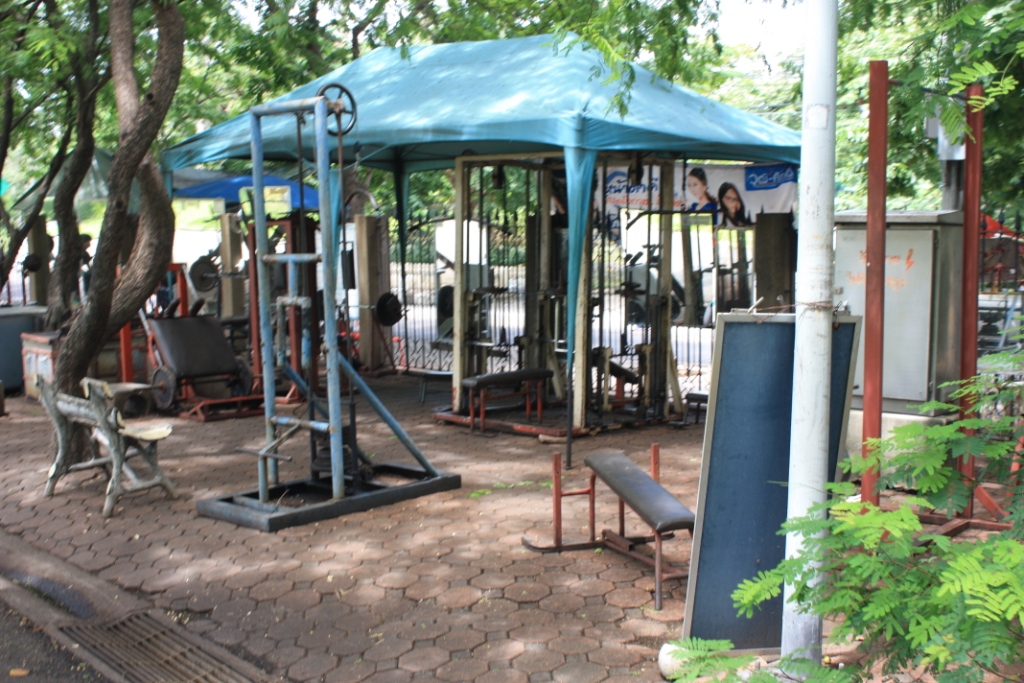
DAILY PHOTO: Fitness Trail

Taken September 20, 2015 in Jatujak Park

Taken September 20, 2015 in Jatujak Park


Thailand has some of the best parks in the world. They make the pursuit of fitness easy whether you’re an athlete or an elderly grandma.

IMG_3063 IMG_3079

IMG_3084

BOOK REVIEW: Buddha’s Brain by Rick Hanson

Buddha's Brain: The Practical Neuroscience of Happiness, Love, and WisdomBuddha’s Brain: The Practical Neuroscience of Happiness, Love, and Wisdom by Rick Hanson
My rating: 4 of 5 stars

Amazon page

This is one of those books whose title leaves one unclear as to the book’s nature. The title has religious connotations, but its subtitle, The Practical Neuroscience of Happiness, Love, and Wisdom suggests a secular and rationalist work. The subtitle might clear things up if it weren’t for the fact that there are so many New Agey, spiritualist types who like to glom onto scientific terminology—presumably in an attempt to lend credibility to ideas that are “out there.” Thus, one may reasonably wonder whether this is just another Biomechanics of Chakra Fluffing style book—actually, I made that one up, but if you can see why such a title would be oxymoronic you know where I’m coming from. Without further ado, let me state that this book is rooted in the science of the brain, and, while it uses its fair share of concepts from Eastern religion as pedagogic devices, it doesn’t presuppose need to believe in anything [or anybody] for which there is no evidence. [What remains less clear is whether this book is properly considered self-help or pop science?] This issue with the title may be why Hanson came out with the more secularly-titled Hardwiring Happiness book a few years later that seems to cover similar territory (though, I’ve not yet read the latter.)

The central premise of Buddha’s Brain is that the brain’s neuroplasticity allows one to change the way one experiences life by changing the way one perceives and responds to life’s little trials and tribulations. Over time, one can become happier, more loving, and wiser—i.e. one can have a brain more like the Buddha’s. “Spiritual” matters are always at the periphery of what Hanson is discussing because this type of practice has historically been in the bailiwick of religious traditions—specifically Eastern (and other mystic) traditions that focus on looking inward to be a more virtuous person. However, where said traditions have often relied on assumptions unsupported by current science—such as the existence of a unitary (i.e. universally interconnected) consciousness, Hanson considers the issue from the perspective of our current understanding of the brain. In particular, he focuses on the fact that we are capable of training our brain to respond more positively to events.

Evolution, beautiful and elegant as it may be, has made us pessimistic and prone to disproportionately focus on the negative. This is because survival depended on being ready for worst case scenarios. So we imagine what that worst case is, and endlessly replay scenarios to prepare ourselves for how to deal with said worst cases. While this approach may have enhanced our ancestor’s survival probability, it can easily get out of hand and for far too many people it has. In the book, Hanson proposes three evolutionary strategies (i.e. creating separations [us / them, I / you, etc.], maintaining stability, and threat avoidance / opportunity seizure) that often end up tainting our worldview, raising our stress levels, and causing declining health and well-being. The book does get into the mechanics of stress reduction as well as how to change the way one experiences the world so as to be exposed to less stress.

Rick Hanson is a psychologist who holds a Senior Fellowship at a center at the University of California at Berkeley. He also founded his own center called The Wellspring Institute for Neuroscience and Contemplative Wisdom.

The book is organized into 13 chapters arranged in four parts. The four parts are: I.) The Causes of Suffering, II.) Happiness, III.) Love, and IV.) Wisdom. These parts are preceded by front matter which includes the first chapter which lays out the basics of the brain in layman’s terms as well as discussing the evolutionary survival strategies that sometimes fail to serve us well in modern living. More detailed discussion of the brain is introduced throughout the book at is relevant to the discussion at hand, but the level of this discussion should be approachable to all readers. Each chapter is divided into many subsections to make the reading easily digestible. One of the nice features of this book is that each chapter has a bullet point summary at the end. Actually, the author uses bullet points prominently throughout the book. There is one appendix which explores questions of nutrition for brain health. There is an extensive reference section containing largely scholarly references, as one would expect of a science book.

I mentioned earlier that I wasn’t certain whether to classify this as a self-help or popular science book. In many ways it’s both. It does give a great deal of practical advice about what one can do to change one’s life. On the other hand, it offers more background into the science than your average self-help book—though always at a layman’s level.

I’d recommend this book if you are interested in self-improvement, the science of the mind, or both.

View all my reviews

BOOK REVIEW: You Are Your Own Gym by Mark Lauren

You Are Your Own Gym: The bible of bodyweight exercisesYou Are Your Own Gym: The bible of bodyweight exercises by Mark Lauren
My rating: 4 of 5 stars

Amazon page

As the title suggests, this is a guide to bodyweight exercises, and—specifically—periodized callisthenic training without equipment. Periodization is an approach in which the volume and intensity of workouts is in constant flux, as opposed to the regular approach that used to be the norm. It’s with regard to coping with a lack of fixed equipment that this book really seeks to separate itself from the many high-intensity interval training (HIIT) books in bookstores today. Obviously, calisthenics require much less equipment than weight training. However, without at least a pull-up bar and dip bars, it’s hard to get a well-rounded bodyweight workout. You Are Your Own Gym shows the exercises done with makeshift apparatus where necessary. Some of the suggested substitutes look safer than others, and a few of them (e.g. door pull-ups) work muscles a little differently than the basic. However, the examples get one into the habit of considering how one can use one’s environment creatively to get a good workout. [I would recommend exercising caution and safety when using the demonstrated improvised methods.] Even if one has access to equipment in day-to-day life, frequent travelers often have trouble getting a good workout in on the road. This book can be helpful in assisting one in avoiding the dead spots in one’s training regimen due to inability to get to a fitness facility.

The author, Mark Lauren, is a former Combat Controller and Special Operations fitness instructor. For readers who aren’t familiar with the US Air Force, Combat Control is one of two special operations career fields in the Air Force (excepting pilots and crew who fly special operators around.) Combat Controllers usually serve with Army Special Forces, facilitating the provision of air support in the midst of combat operations. Lauren certainly has the bona fides to write intelligently on the subject.

The book consists of 12 chapters, but it’s the penultimate and final chapters that present the meat of the work. Chapter 11 presents a thorough collection of bodyweight exercises organized by the area of the body worked. In most cases, the exercise descriptions include a photo, as well as modifications to provide a more or less strenuous version of the exercise. The latter feature makes Lauren’s program nicely scalable. The reader can optimize exercises to his or her needs.

The last chapter lays out the program. Because varying the characteristics of the workout is the key to the periodization approach, varied workout structures are discussed. These include well-known approaches such as interval sets, super sets, and tabatas, as well as less familiar approaches such as stappers (cycling through a fixed number of repetitions of a few exercises for a set amount of time without rest periods—but with a low enough number of reps to avoid failure) and ladders (i.e. long sets in which one does on rep, rests for one, does two reps, rests for two, etc. up to just before the point of failure, and then working back down to one rep in a symmetric manner.) While one can certainly make up one’s own workout with the knowledge gained to this point in the book, there are 10-week sample programs at four different levels (starting with beginners and working toward advanced practitioners of calisthenics.) If you’re not sure which level is right for you, the author provides a set of exercises that one should be able to carry out as a minimum to begin work at a given level.

The first ten chapters deal with a range of subjects including: diet, strength training myths, motivation, intensity, and the nature of bodyweight exercise. These short chapters lay out basic concepts helpful to engage in the program. There are three appendices that discuss equipment issues, a summary of guiding principles, and a discussion of the science of the program. The latter is beneficial, given some claims by the author that old school fitness buffs might find hard to accept–such as the lack of need for high volume endurance activities for cardio (i.e. one doesn’t need go for a run to get cardio benefits.)

I found this book to be beneficial. I like the fact that Lauren addresses the science of the approach rather than just throwing his approach out there with all the fad workouts. I found the advice to be sound, and have become more creative when considering how I can get a good workout on the road as a result of reading the book. As I write this, I’m in the 10th (and final) week of one of the sample workout sequences. I believe I’ve gotten good strength workouts from the program. I enjoy the scalability of the program, and have taken advantage of both easier and harder variants of the exercises.

I’d recommend this book if you’re looking for a bodyweight exercise program—particularly if you travel a lot, don’t have access to fitness facilities, or just like to workout at home.

View all my reviews

7 Stress Fighting Tips with Relevant Monty Python Song Interludes and Book Recommendations

In writing this post, I realized that Monty Python provides the I-Ching of life wisdom. If they don’t say it, it may not need being said. So I’ve let them expound upon my points wherever possible.


1.) Always  Usually look on the bright side: Our brains are programmed to constantly be on the look for potential problems and ruminate over solutions. This isn’t without its advantages. However, as your brain takes flight with this problem anticipation mode, it can begin to taint how one sees the world.

My high school psychology teacher told us a story of what he called the “gestalt of expectations.” The story goes like this: One is driving across southwestern America and there’s a gas station coming up, but one still has half a tank. Being from the East, one doesn’t realize how rare service stations can be in the desert, so one passes it by. Of course one runs out of gas (it wouldn’t be much of a story otherwise.) As one is walking back toward the service station, one begins to obsess over how the service station attendant is going to screw one over. After all, the unknown individual knows one is in a desperate situation. The more one walks under a burning sun, the more one inflates the gas station attendant’s ill-intentions, and one suitably escalates one’s mentally rehearsed response. Finally, disheveled and weary, one reaches the service station. A concerned-looking attendant bursts out of the station to meet one, saying, “Geez, you look beat, what can I do for you?” And that’s when one punches him right in the nose.

BuddhaBrainThe good news is that one can gradually train one’s brain to take a more positive perspective. A neuroscientist, Rick Hanson, has written a few books on how one can go about this cognitive rewiring. Buddha’s Brain is probably the most well-known of these books. The book lays out the science behind the brain and negative thinking in particular, and then goes on to present suggestions as to how one can change this cycle and yield the benefits of a more positive outlook. While the title of this book makes it seems like a religious tract, it’s really secular and scientific. If you’re still concerned, you might check out the more secularly titled Hardwiring Happiness.


2.) Make rest part of the process–and an essential one at that: Duh?  Yeah, it sounds self-evident, but  too many people think of rest as the slacking off that one does between doing “useful stuff.” What isn’t valued is given short shrift. Don’t think of rest as a necessary evil. Equating rest with goofing off results in two problems. First, the obvious one, people don’t get as much rest as they should. Second, while one thinks he or she is resting, one may be under chronic stress (the bad kind) as one’s minds churns over what they should be doing and the adverse impacts of not doing it. Just as one should have rests built into one’s workout for maximal effect, one should have rest times built into the day, week, and year.


3.) Find your bliss, and just do “it”: You probably think that by “it” I’m referring to sex. Actually, sex isn’t a bad “it,”  as its go, but it’s not the only it. Exercise, work the heavy bag, do a vinyasa (yoga flow sequence), go to work solving the problem at hand, or practice your Silly Walk. This also sounds like a “duh!” kind of statement, but far too many people wallow when they feel overwhelmed. What do they wallow in? Negative feelings. They worry that they can’t possibly hit the deadline or find the perfect solution. They worry that they’ll let someone down. They get angry at other people, the world, or a god or gods for putting them in their present predicament. They bristle at the unfairness of the universe. All of this snowballs into a stress monster–to mix my metaphors up nicely. If one can’t meditate or keep one’s mind on one’s breath, one may find relaxation in exhaustion. It’s all about inertia. It’s hard to get moving when one thinks one’s world has gone to shit, but that movement will make one feel much better–even if it doesn’t seem it can solve the problem at hand. One might need to change one’s life’s course altogether and become a lumberjack.


4.) Don’t create false monsters:  Remember what Michel de Montaigne said, “My life has been full of terrible misfortunes most of which never happened.” As this is really just expanding on a point in item #1, instead of elaborating, I will offer you this Monty Python skit to consider.


5.) Exhale: Each exhalation trips the “rest & digest” circuit (i.e. the Parasympathetic Nervous System [PNS])  just a little. Granted, this subtle relaxation effect is easily overwhelmed by the countervailing forces of stressors and even the antagonistic effect of inhalation with its–also minute–fight or flight mode (of the Sympathetic Nervous System [SNS.]) Still, if you don’t know what to do, controlling your breath while elongating each exhalation is a good start. This will help in two regards. First, it helps the PNS gain a little ground. Second, it’ll break your conscious mind’s obsession with the problem (or potential problem) at hand. One’s mind will wander and one will lose track of the breath, but the more one practices quietly returning one’s attention to the breath the better off one will be. Becoming frustrated with these diversions only strengthens the stress monster–so don’t do it.

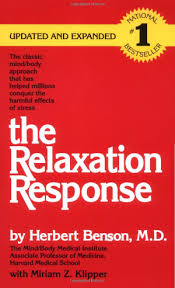
Relaxation ResponseThe bible of the rest and digest mode is Herbert Benson’s Relaxation ResponseThis book was first written over a quarter of a century ago, but it remains readily available. It’s telling that Walter B. Cannon’s work on “fight or flight” mode predates Benson’s work by such a long time. In other words, the medical and scientific community were researching the body under stress for decades before it ever occurred to anyone to think in terms of rest mode as a state that could be studied and advanced–as opposed to just being the normal state of affairs. This should give one an insight into how the human mind goes about considering problems.


6.) Recognize that stress is like cholesterol–there’s a good kind as well as the bad: Acute stress can serve one well during instances of danger. We have this response for good reason. The problem is chronic stress. When one’s body is in a stressed state, it’s not taking care of general maintenance tasks like healing itself. That’s fine in a short term, but problems compound over time. Chronic stress brings a high likelihood of illness because the body isn’t dealing with its run of the mill chores as it should be.

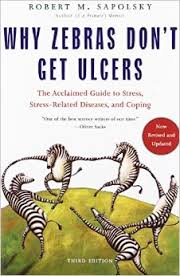
ZebrasUlcers_SapolskyThere are a number of books that expand upon this issue and which offer advice for keeping one’s stress of a healthy type. Robert Sapolsky’s Why Zebras Don’t Get Ulcers is among the best. It’s a long book and goes into great detail, but Sapolsky’s sense of humor helps to continue reading when the scientific minutiae might seem overwhelming. Another book on this topic that I found to be quite informative was Lissa Rankin’s Mind Over Medicine.  Rankin is a medical doctor, and so she offers a little different perspective from that of Sapolsky. (The latter is a biologist / neurologist.)


7.) Realize that you are a speck in a vast universe and, so, how big or long-lasting can your problem be?: Yeah, it’s a double-edged sword because it’s–in a way–a demoralizing thought as well as a comforting one. Therefore, one should first watch this bit of Monty Python wisdom:


But then one can keep things in perspective through the realization that one is not yet dead.

Saving the Knees: Preventing Knee Injuries in the Martial Arts

Public Domain Image from Wikipedia

Public Domain Image from Wikipedia


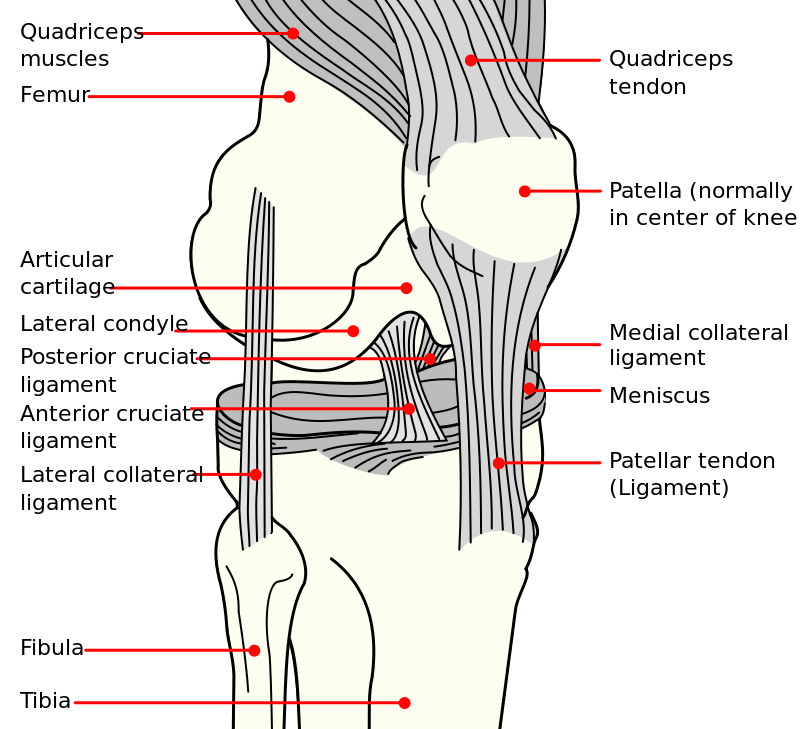
The knee is a hinge joint. It’s designed to flex and extend with the thigh bone (femor) and the shin bone (tibia) in the same plane. A healthy joint can tolerate a certain amount of torquing or poor distribution of the body’s weight on occasion, but repetitive movements of that nature and /or severe uncontrolled movements can lead to permanent damage. Healthy knees are stable when straight (extended), but become slack when bent (flexed.)


Knee damage among martial artists is all too common, and the causes may or may not be self-evident. Martial artists whose practice includes kicks that require pivoting on a support leg or which involve landing leaping maneuvers may be intimately aware of the risks. However, the first martial art that I ever trained in had no twisting / pivoting kicks and few leaps (that were rarely practiced), but knee injuries were epidemic. The culprit in this case was low postures which required the thigh to be turned out (externally rotated and abducted) with the knee deeply flexed.


Well, I should say those postures were the culprit in conjunction with lack of flexibility and/or strength in all the right places. This isn’t to say that the individuals who developed knee problems weren’t strong or flexible, but the areas that needed work weren’t necessarily the big muscle groups that leap to mind when workout time comes around.   Emphasis on the big muscle groups (quadriceps and hamstrings) with neglect of the muscles involved with adduction, abduction, external rotation, internal rotation and stabilization can create some problems. If you’re a runner or a weightlifter (with good form) you may be able to get away with such a stretching and strengthening emphasis. [Note: I’m not advocating such an approach for anyone. What I’m saying is that if your knee is only worked with the knee straight below the hip and pointed forward in a hinge fashion, your risks are not the same as someone who works with a flexed knee with the thigh turned out. The likely injuries are different.]

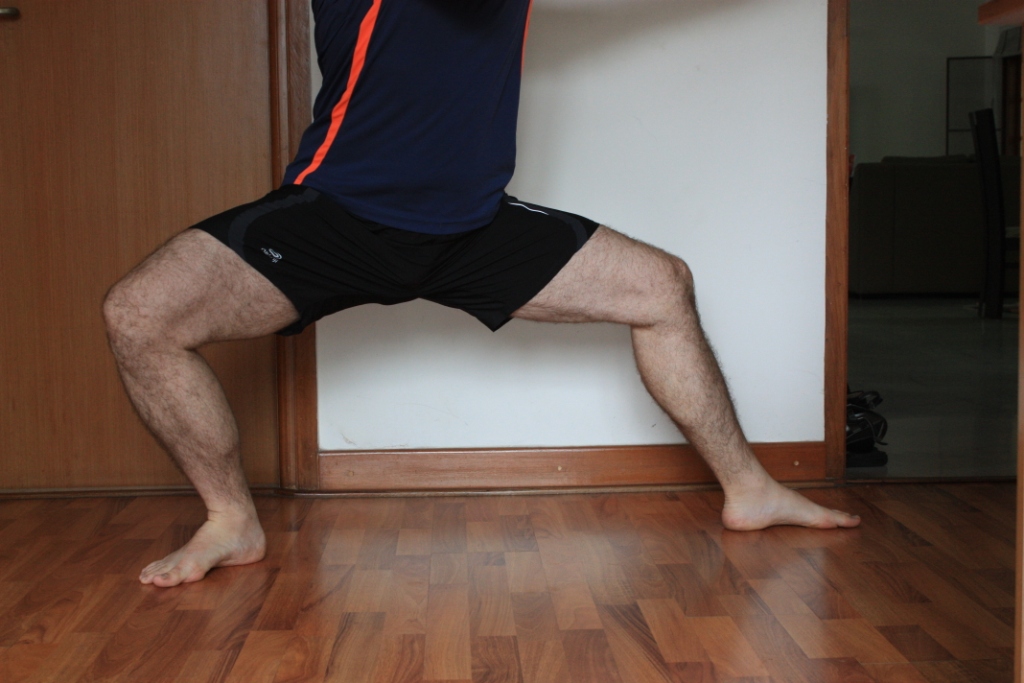
Note: Knees pointing the same direction as the toes. (The back knee might be a little far back but that's an issue for the ankle health post.)

Note: Knees pointing the same direction as the toes. (The back knee might be a little far back but that’s an issue for the ankle health post.)

WRONG: Note: if one dropped a line down from the knee it would be well inside the foot. That means the ligaments are having to work too hard and your skeleton isn't doing enough

WRONG: Note: if one dropped a line down from the knee it would be well inside the foot. That means the ligaments are having to work too hard and your skeleton isn’t doing enough


To do a posture like the one above, one needs the flexibility to keep the knee wide enough so that it points the same direction as the toes.  The joint shouldn’t be wrenched or torqued with load on it. The four ligaments (Anterior Cruciate Ligament [ACL], Posterior Cruciate Ligament [PCL], Medial Collateral Ligament [MCL], and the Lateral Collateral Ligament [LCL]) and the surrounding musculature keep the joint snug during movements. And, as mentioned earlier, when the knee is deeply flexed it’s more sloppy than when extended.


-Increase flexibility in the muscles that internally rotate and adduct  the thigh: When one goes into a wide-legged stance, one’s thigh is pulled away from the body’s center-line (abducted) and the thigh externally rotates. If the muscles that act in the opposite direction (pulling the thigh back on center and rolling the thigh inward) are too tight to allow the knee to move into proper position, then the load of the body weight will be going into the ground through a kinked joint. Furthermore, one will end up torquing through the joint as one moves. Below are a few hip openers that will help one achieve the requisite range of motion.

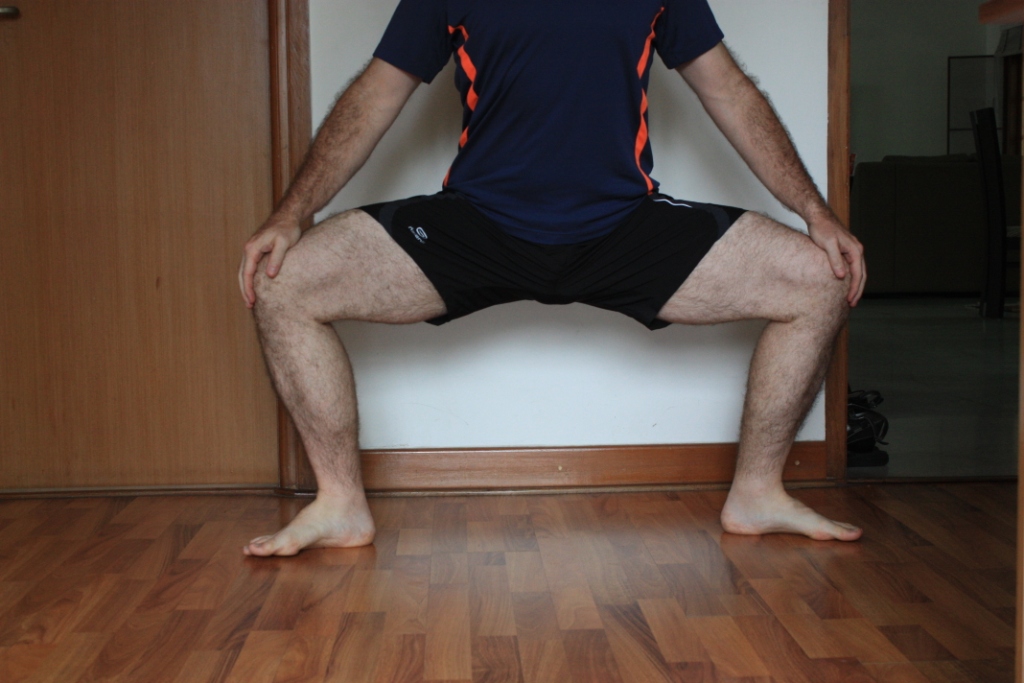
Utkatakonasana (often called goddess pose) variations will show you whether you're getting your knees and toes in line.

Utkatakonasana (often called goddess pose) variations will show you whether you’re getting your knees and toes in line.

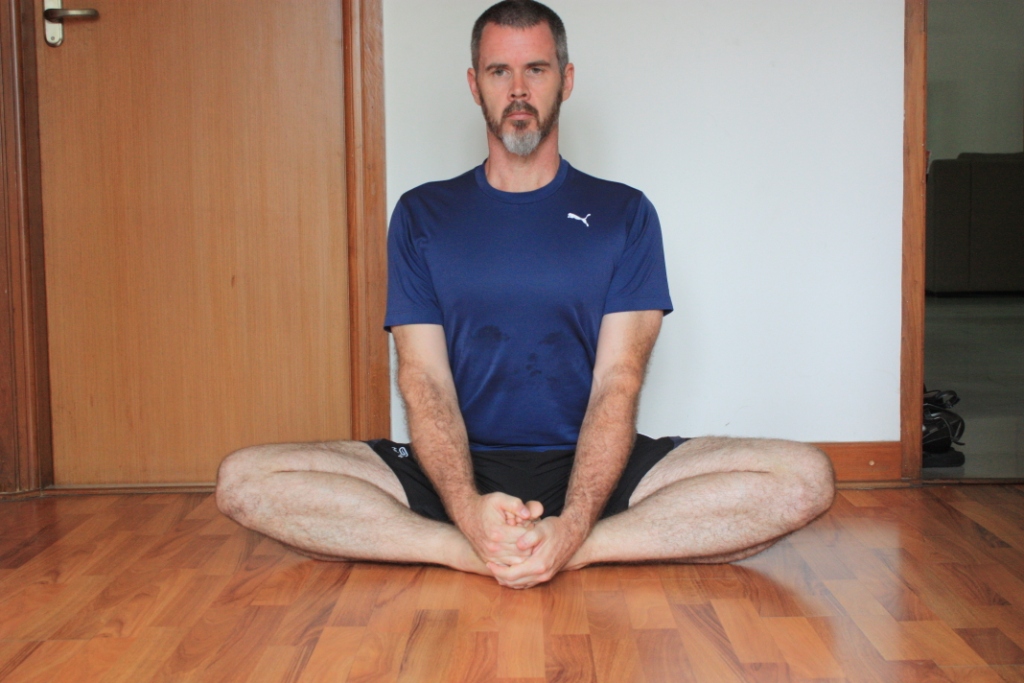
Badhakonasana (often called the butterfly stretch): Work on getting those knees down

Badhakonasana (often called the butterfly stretch): Work on getting those knees down

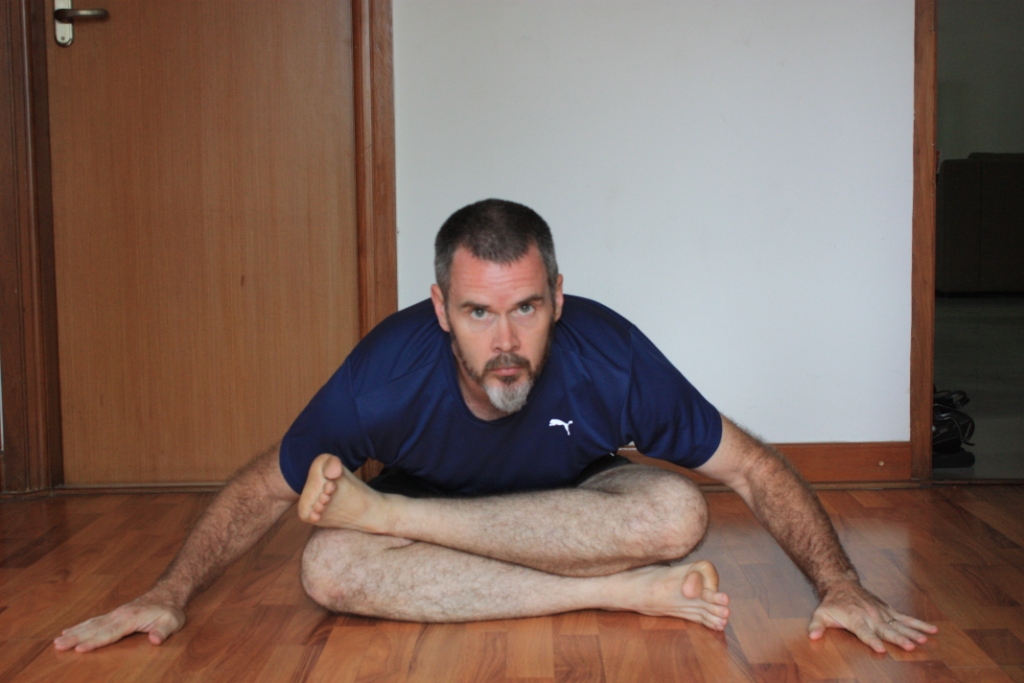
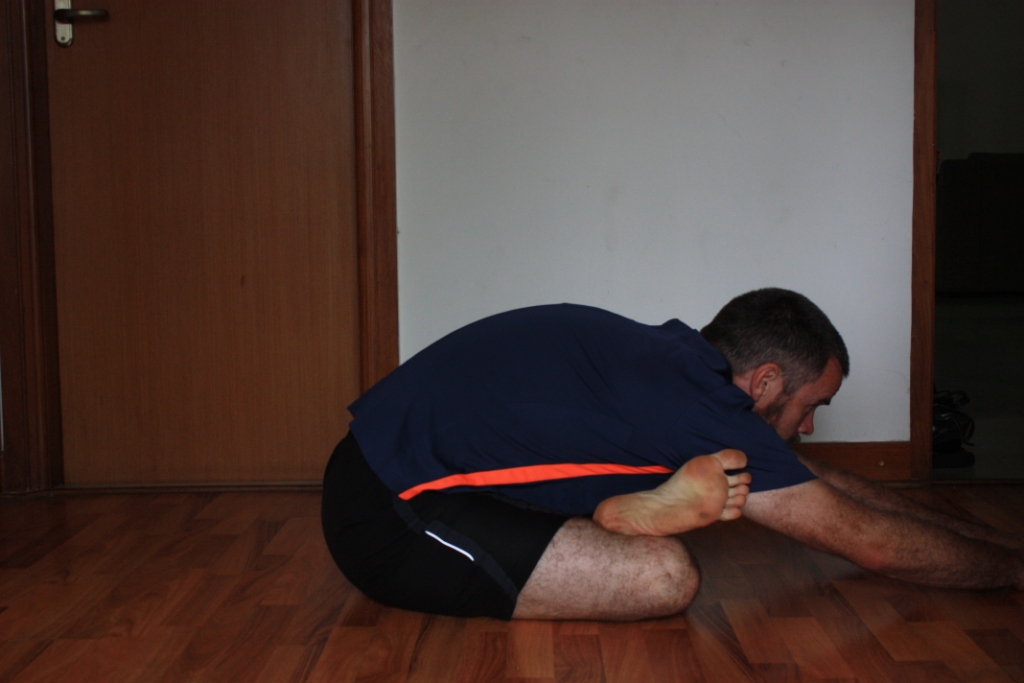
Place one foot on top of the opposite knee (and vice versa for the other side) carefully shift weight forward. This puts an intense stretch on the hip joint to help rotate the thigh sufficiently

Place one foot on top of the opposite knee (and vice versa for the other side) carefully shift weight forward. This puts an intense stretch on the hip-joint to help rotate the thigh sufficiently

Same as the last from the side

Same as the last from the side

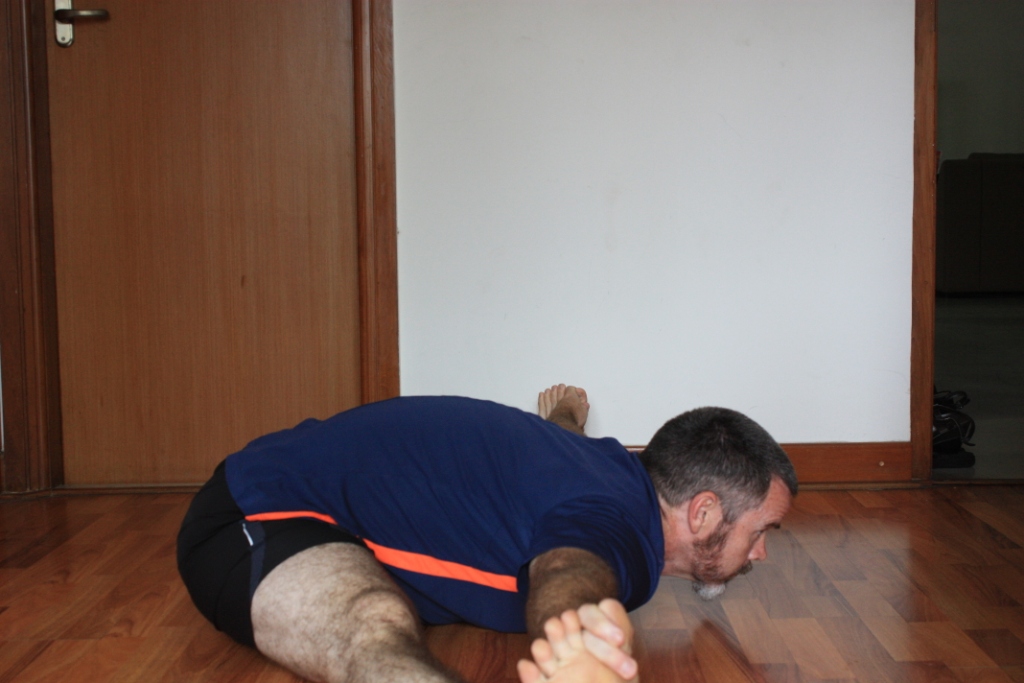
Upavistakonasana: put legs at about 90 degrees relative to each other, and then lean forward with a flat back placing the stomach, chest, and chin on the floor (in that order.)

Upavistakonasana: put legs at about 90 degrees relative to each other, and then lean forward with a flat back placing the stomach, chest, and chin on the floor (in that order.)

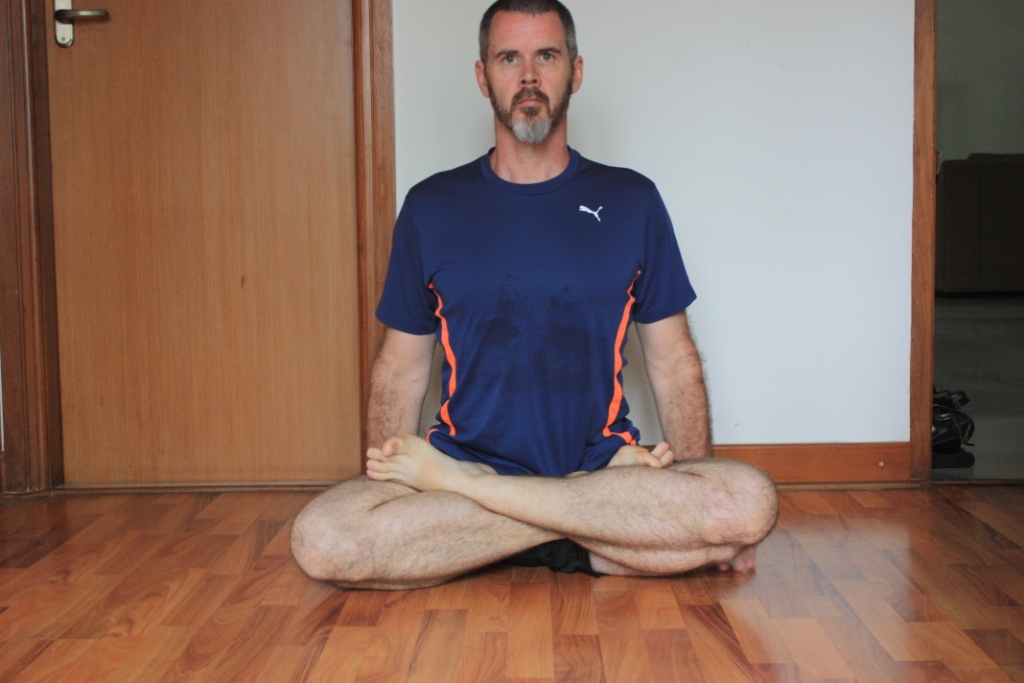
Padmasana (lotus): If you meditate in padmasana, you probably already have the range of motion necessary. Note: if padmasana hurts your   knees, you need to go back to hip openers and discontinue the practice.

Padmasana (lotus): If you meditate in padmasana, you probably already have the range of motion necessary. Note: if padmasana hurts your knees, you need to go back to hip openers and discontinue the practice.


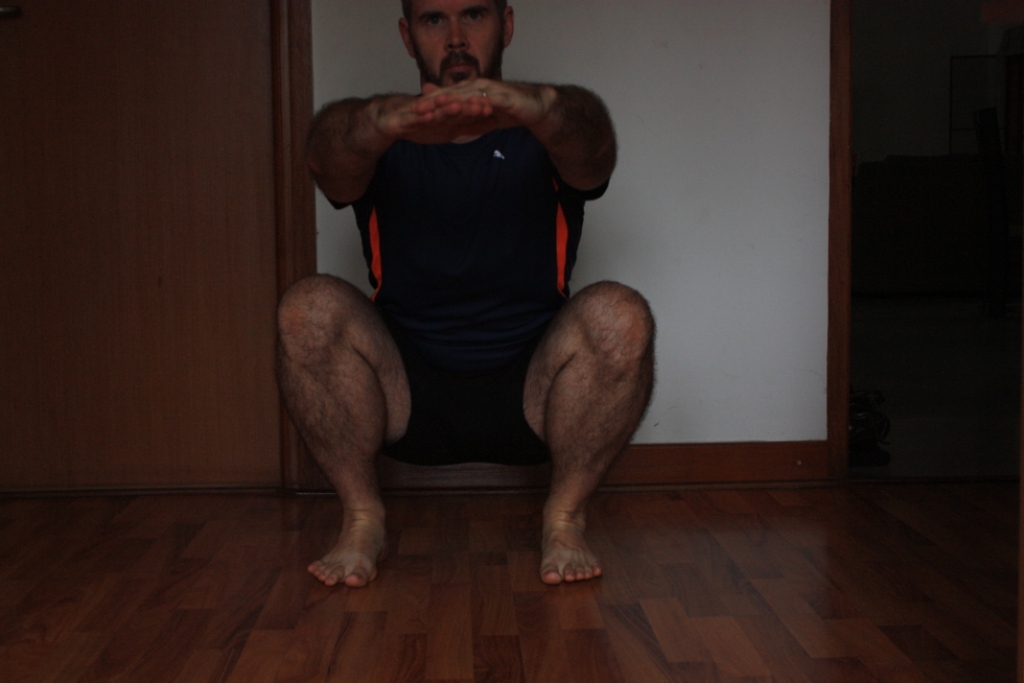
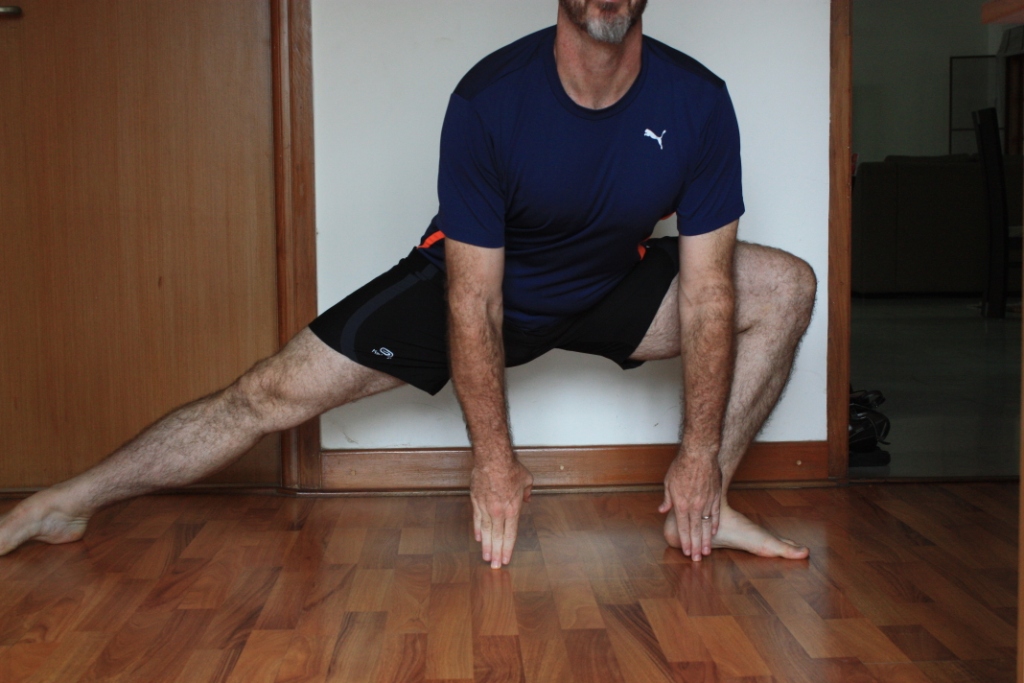
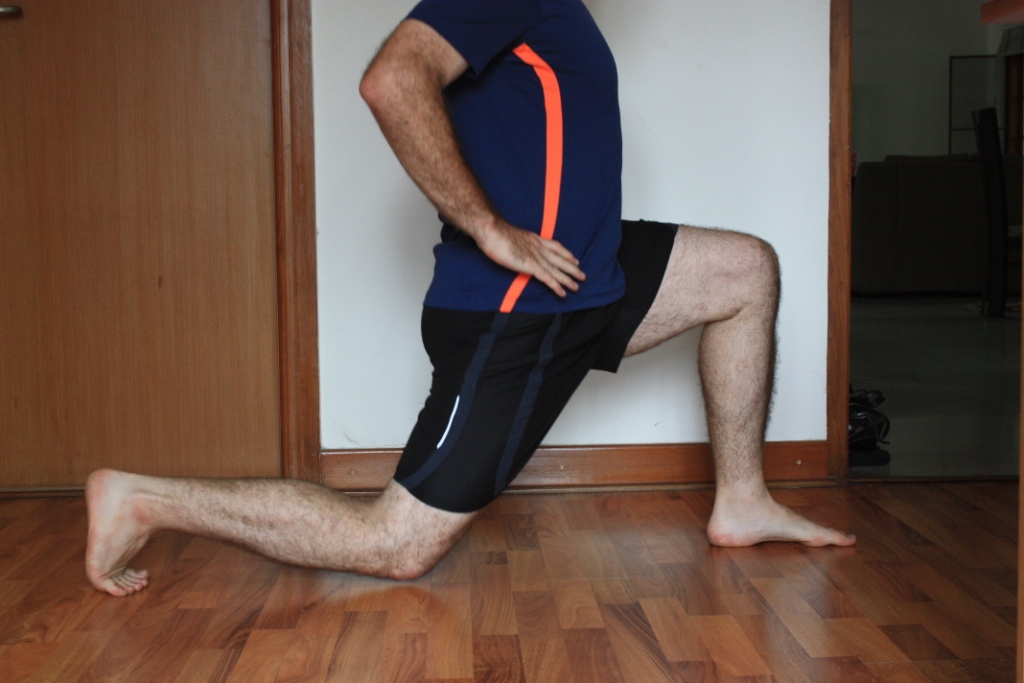
-Strengthen the muscles that stabilize the knee-joint. One begins this process with the usual suspects of leg exercise. One just needs to focus intently upon alignment. Here are a few of the exercises you may already be doing.


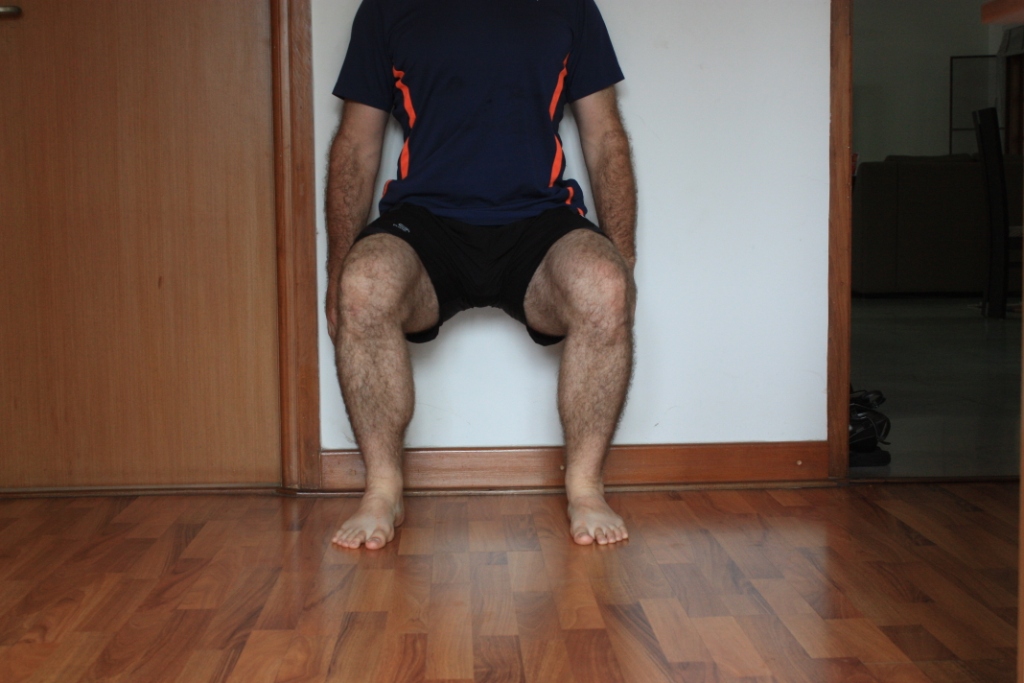
Wall squat: just like sitting on a chair with one's back  to the wall--sans the chair.

Wall squat: just like sitting on a chair with one’s back to the wall–sans the chair.

The classic squat

The classic squat

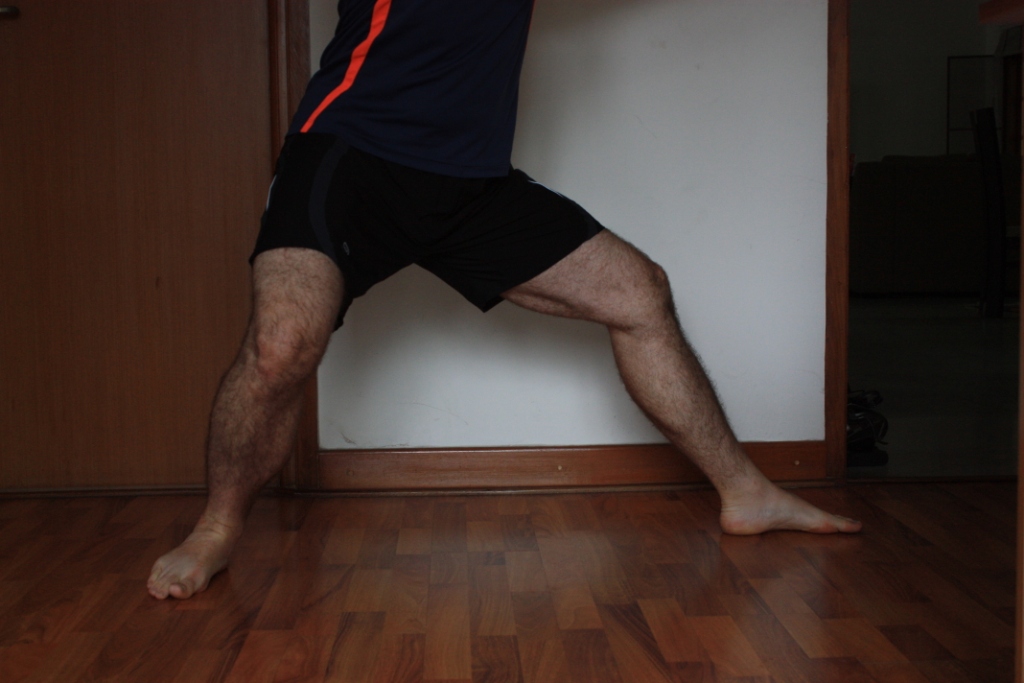
Side lunge: This one is  particularly important to get the knee aligned with the foot.

Side lunge: This one is particularly important to get the knee aligned with the foot.

The basic lunge: can be done stepping forward, backward, or both (the latter in an alternating fashion)

The basic lunge: can be done stepping forward, backward, or both (the latter in an alternating fashion)


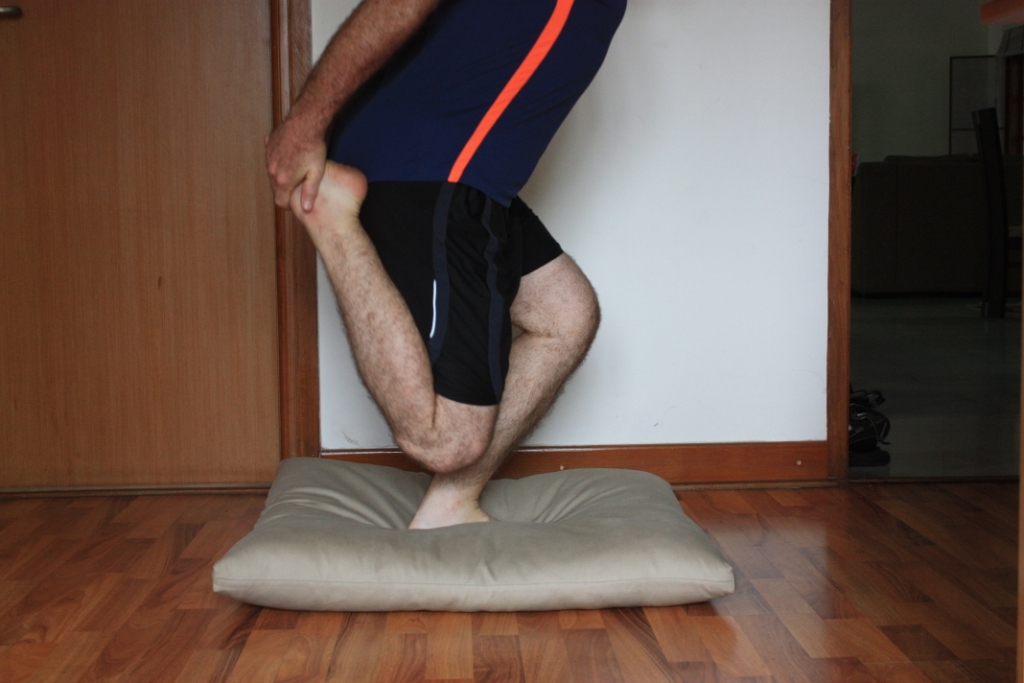
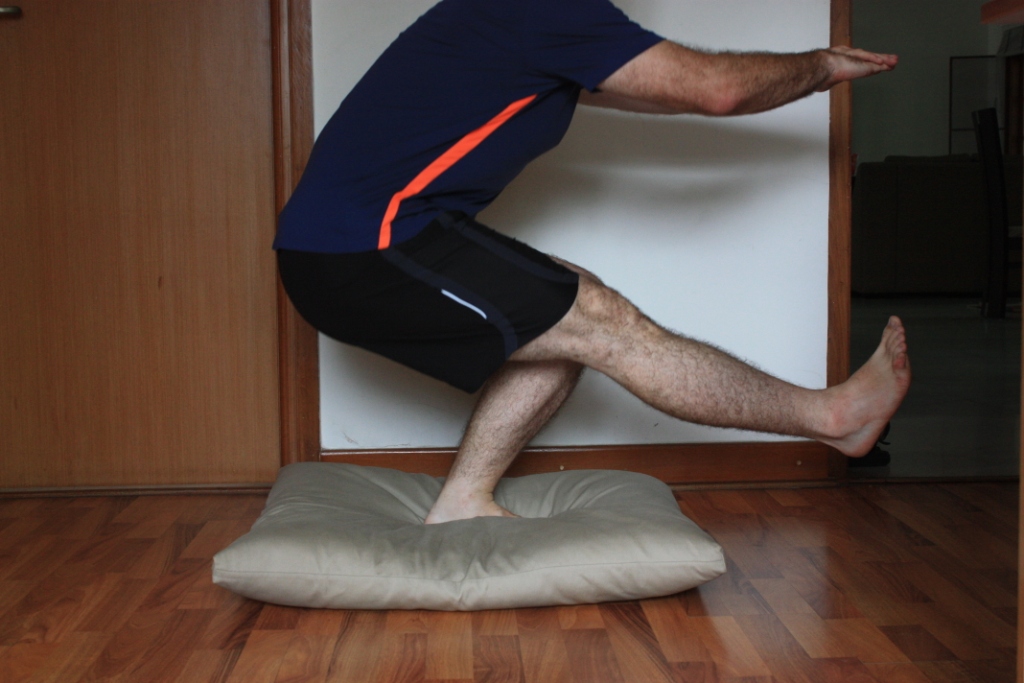
As one needs more challenge, one can achieve it in the usual ways (single-legged, unstable surface, add weight, or combinations thereof.) Below are a couple of variations that combine single-limbed work with an unstable surface.


IMG_1537 IMG_1532


-Save static stretching for after the joint has warmed up. It used to be common to begin a workout with static stretching. While few do this anymore, it’s a practice that needs to be replaced. Stretch warm.


-Don’t neglect the opposing muscle groups: When I said that one needs to increase flexibility in adductors and internal rotators, that doesn’t mean to ignore the opposing muscles. Nothing  good comes of stretching or strengthening in an unbalanced fashion. Your musculature works as a team with agonists, antagonists, and stabilizers all working  in conjunction to produce effective movement.


-Don’t go overboard with stretching: If your aim is to be a contortionist, then by all means go ahead. However, highly flexible martial artists need to be concerned about joint laxity. Laxity is when the joint gets so loose that it’s vulnerable to popping out-of-place.  A martial artist needs a balanced style of fitness. Extreme flexibility results in weakness and lack of joint robustness, just like extreme strength training produces a body that lacks range of motion and stamina.


Most importantly, don’t ignore pain when it’s still at the minor twinge point. If you have knee pain you’re doing something that joint doesn’t like. One should reevaluate your movement and, if necessary, considering stepping back from your current practice to work on capacity building exercises.


The Science of Inversions: or, Why and How to Get Off the Wall

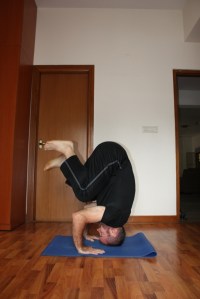
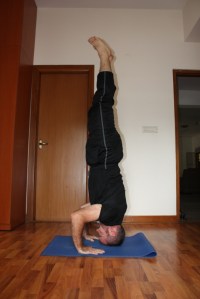
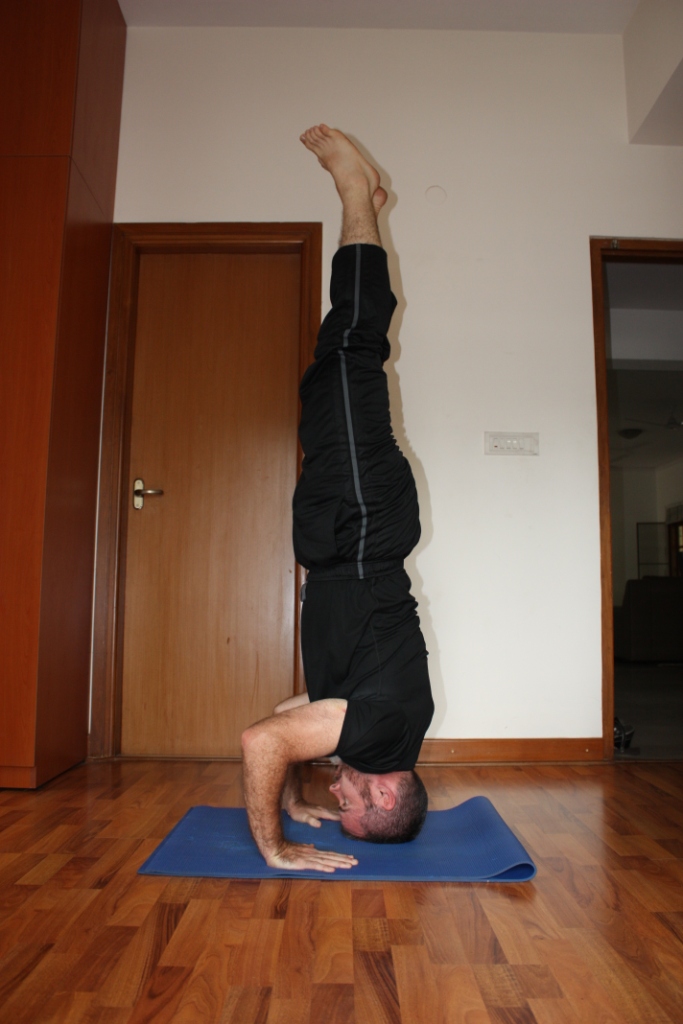
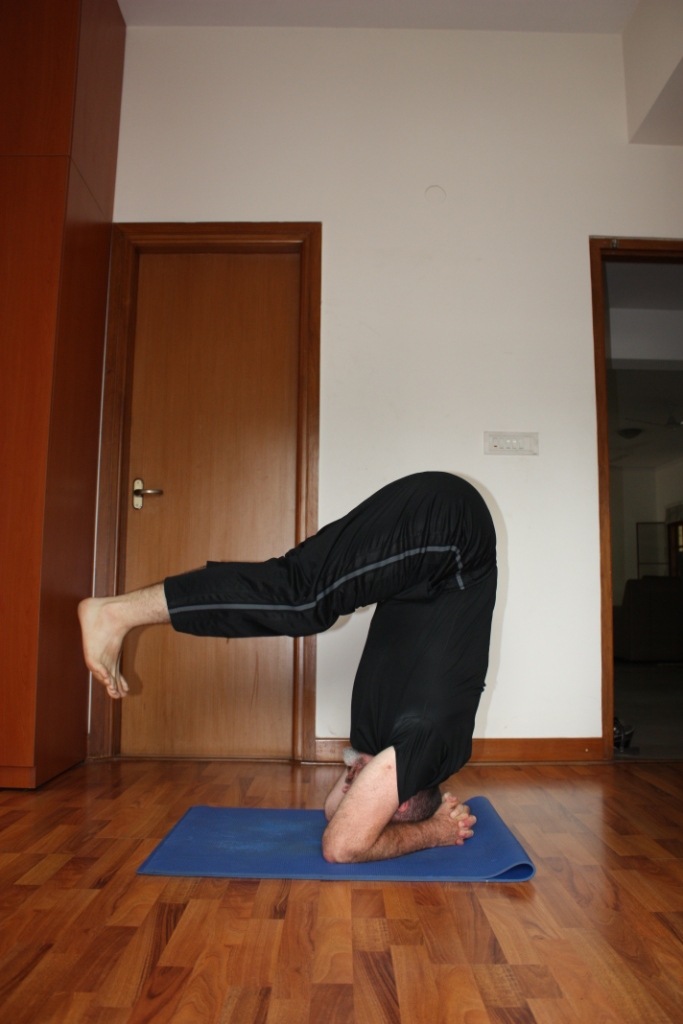
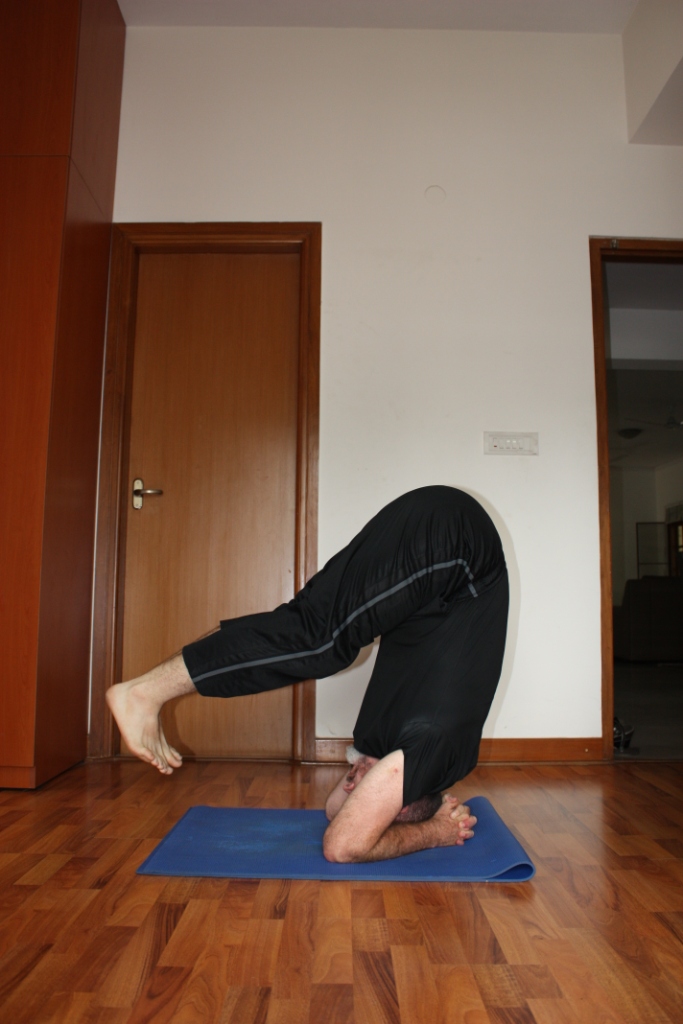
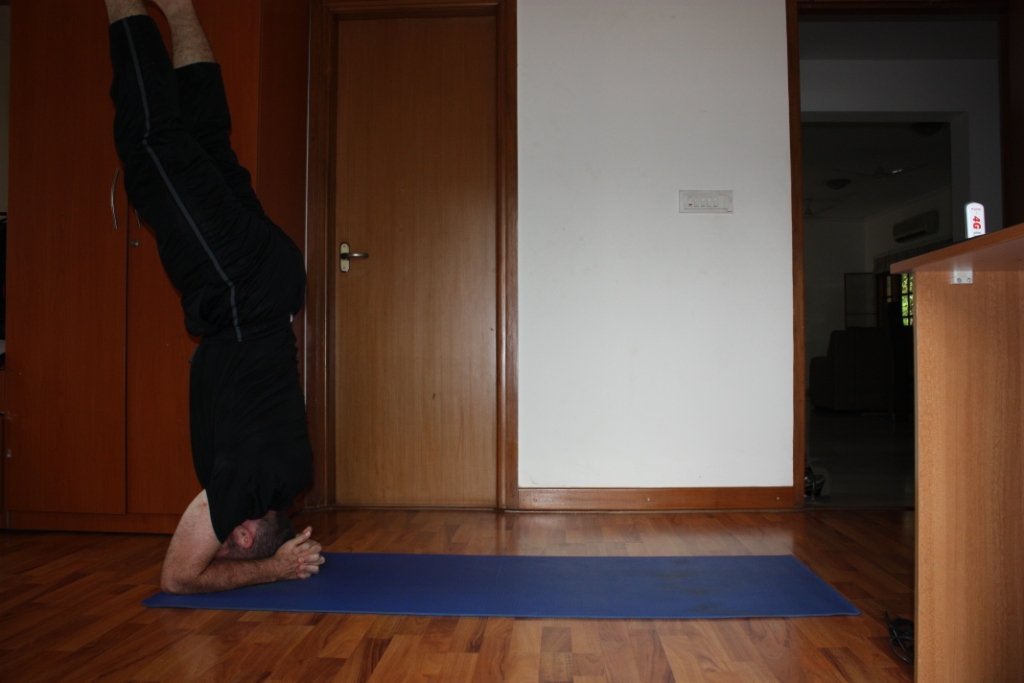
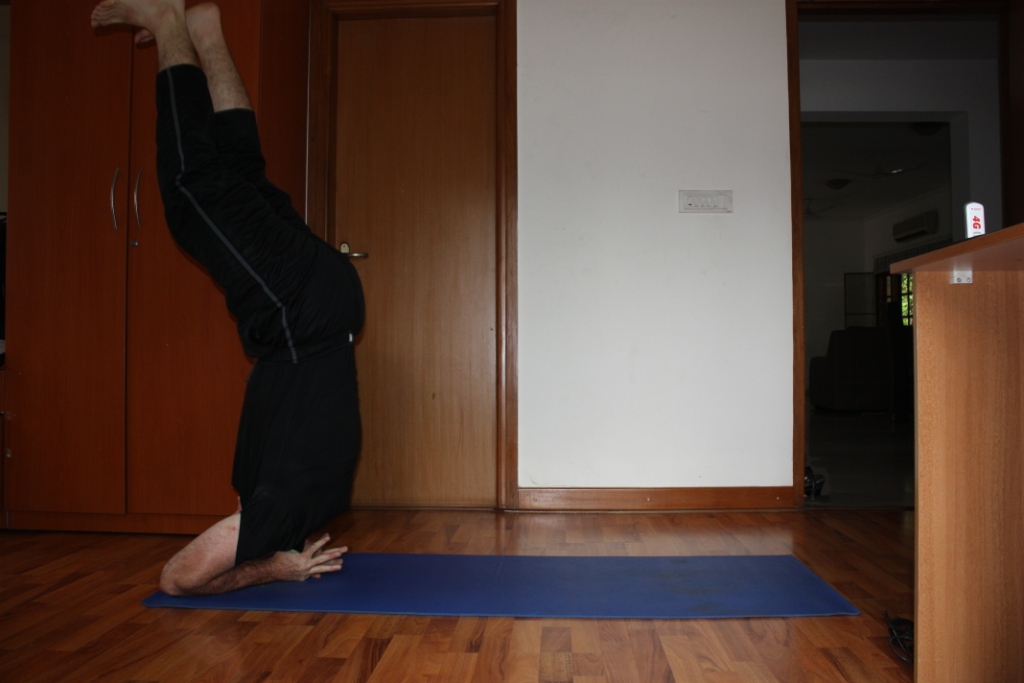
IMG_0835Inversions are a class of postures (asana) in which part or all of the body / limbs are raised above the head. The classic inversions are: headstand [shirshasana], shoulder-stand [sarvangasana], plow pose [halasana], forearm-stand [pinchamayurasana], and handstand [adho mukha vrksasana], but there are many more–some of which are easier and others of which are more challenging than these basics. Other than a few partial inversions (e.g. down-dog [adho mukha svanasana] and leg-up-the-wall pose), inversions tend to be daunting for beginners (and even intermediate students) at a mental as well as a physical level.

In this post I’ll focus on headstands. Most students seem to achieve shoulder-stands and plow pose relatively easily because it feels more stable. I’ll note that those two asana require as much or more care and caution as any inversion given the flexed state of the neck. On the other hand, by the time one is perfecting one’s handstand, one will likely be over the issues that I’m addressing in this post. I’ll save those poses for a later post with a different thrust.

Let’s first consider the effect inversions are supposed to have (and then the effect they tend to have in reality.)

What inversions are supposed to do:  The story is supposed to go like this: 1.) The body inverts. 2.) Our body’s sensors recognize that the blood flow to the brain is far beyond its needs.  3.) The body quiets our vital signs.

What inversions (too often) actually do: It may surprise some readers that inversions are supposed to have a calming effect because the chain of events is often as follows: 1.) The body inverts. 2.) The amygdala fires, triggering the physiological responses associated with fear. 3.) One’s conscious mind imagines the pain and suffering of falling. 4.) The amygdala fires some more. One is in “fight or flight” mode, and the flight the body wants to make is to a right-side-up position.

While I’ve had to work hard to improve my inversions, I had a much easier time with this issue than many. Before you dismiss me as a narcissist, let me state unequivocally that I have no special gift for inversions . I’m not claiming to be a yoga prodigy by any stretch. Why was it easier for me? I’ve practiced a martial art for many years that required training in breakfalls (ukemi.) Therefore, I had no particular fear of falling over onto my back, because my body is trained to tuck and roll. [My only fear when I first started doing headstands in studio sessions was that someone, e.g. the teacher, would walk into my blind spot. Note to all: don’t walk behind someone’s back when they’re inverted unless you’re sure you’re out of the “timber” zone.]

Why are breakfalls so beneficial to the development of one’s inversions?  Because it allows one to get off the wall. A lot of practitioners get addicted to the wall. “Addicted” may sound like a harsh term, but like addicts they think they can quit anytime and that they will quit at some undesignated point in the future–sometimes they do, but often they don’t. Reliance on the wall is reinforced by the fact that one may find one can only spend a couple anxiety-filled seconds inverted without the wall, but one can spend minutes comfortably against the wall. There’s a reason for this great disparity, and understanding this reason is crucial for knowing why doing 2 or 3 seconds unsupported (at first) is better for one’s long-term development than staying for three minutes leaning on the wall.

Here’s the deal. When you invert, your body needs to make subtle corrections to keep you on balance–at least until you reach the level of yoga genius. If you stand up with your feet together, your eyes closed, and you pay attention to your feet and legs, you’ll see that this is true when you’re upright as well. It’s just that your body is used to being upright. It knows how to make all these micro-corrections without conscious thought. The good news is that one’s nervous system rapidly learns to do the same thing when one is upside-down. When I say “rapidly” I’m not talking about the first, second, or even the twelfth time you try to do an inversion. [Trust me, despite what your mother may have told you about her darling genius, you didn’t achieve stability upright on your first few tries either.] The first several times, you’ll fall down almost immediately. However, if you keep trying, your body will learn and you’ll achieve progressively longer inverted stays. You can’t make these corrections at the speed of conscious thought. But the beauty part is that your body will learn to achieve stability solely through practice without any intellectual activity whatsoever.

Why doesn’t your body learn this when you use the wall? The cornerstone biological principle for those interested in fitness, movement, and sports is: Your brain and body are lazy; they will not develop any capability that you don’t force them to by challenging activity. Your muscles don’t get bigger without overloading them and causing little micro-tears in them that they must heal up better than before. Your bones don’t get more dense unless you put more load on them (see: Wolff’s Law.) And your nervous system will not wire itself to keep you upright in an inversion if you’re propped up against a wall. You can invert against a wall for a thousand years and not get the same benefits as from an hour of struggling to get off the wall. This principle is reflected in nature from Darwinian evolution onward.  Gazelles don’t learn to run 500 miles an hour. Once it can accelerate (on average) fast enough to survive the cheetahs that prey on it, it passes on genetic material and the evolutionary pressure is off. Gazelles don’t keep getting increasingly faster than their predators for shits and giggles.

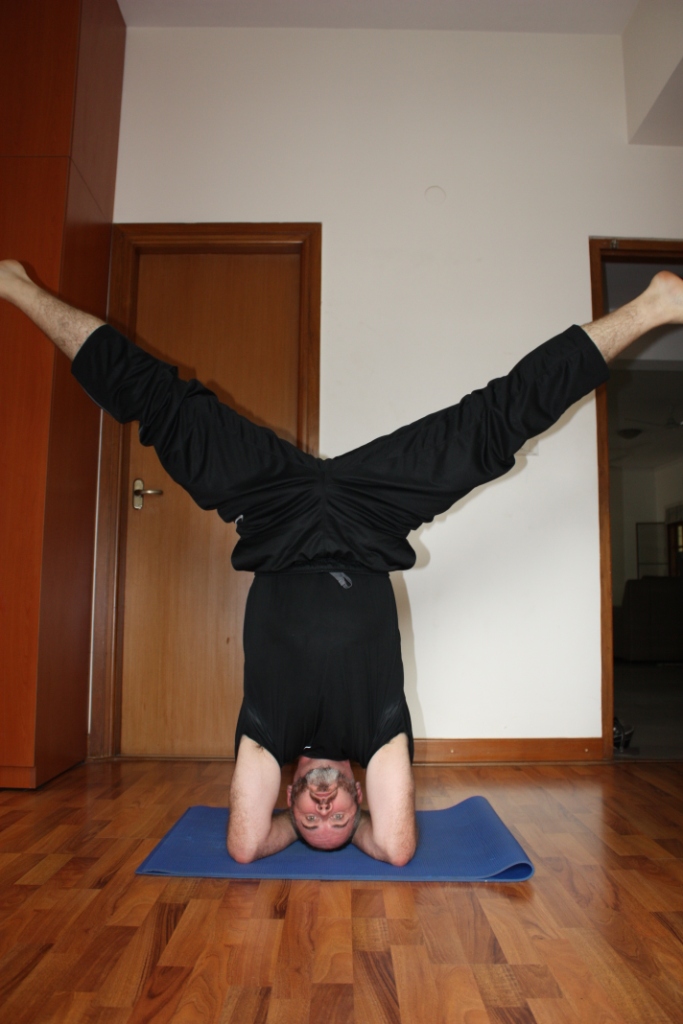
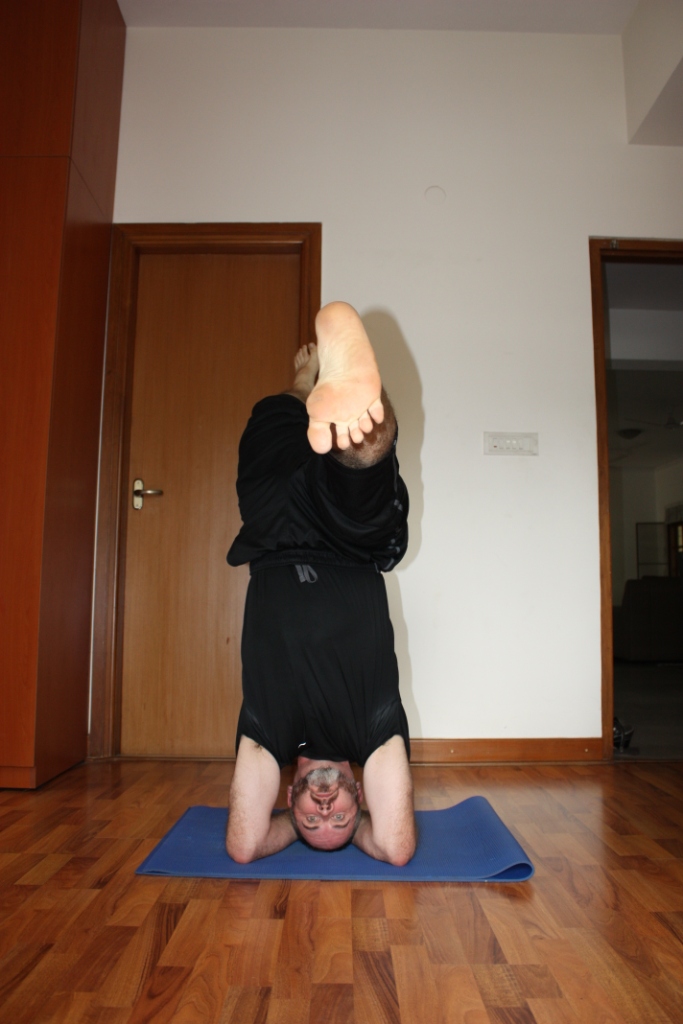
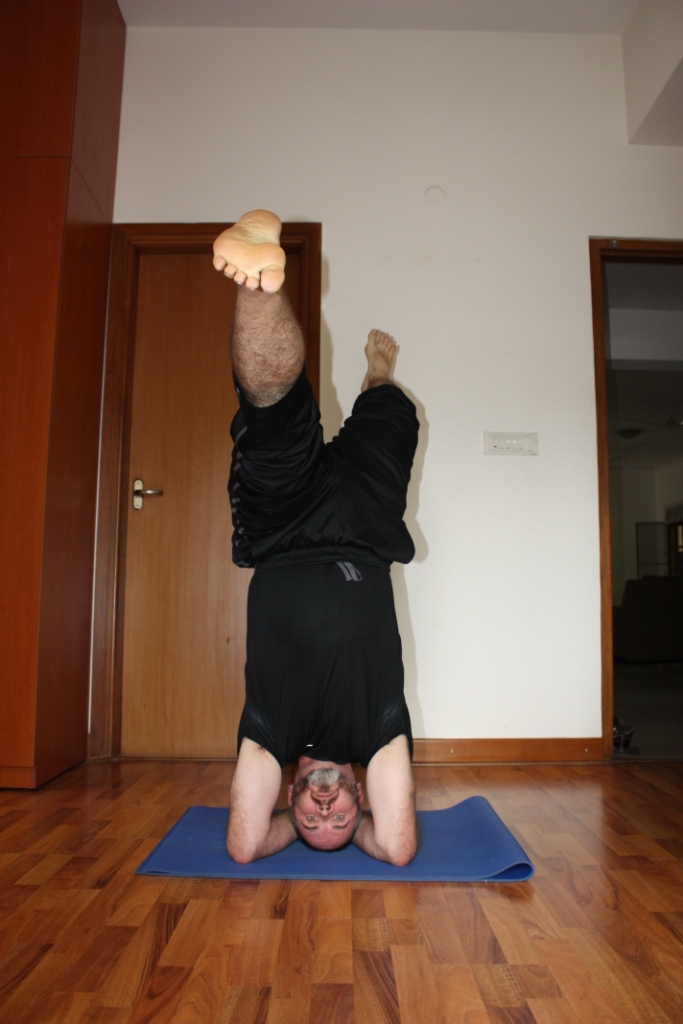
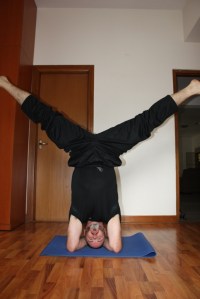
Incidentally, this is also why you should keep challenging yourself, and not rest with getting the basic form. There’s always somewhere new to take it. For example, one can look at moving between splits like so:
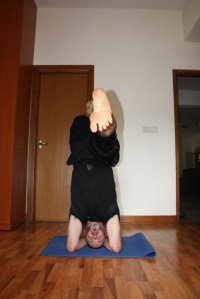
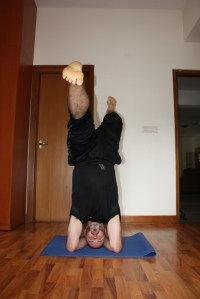
IMG_0834IMG_0836IMG_0837


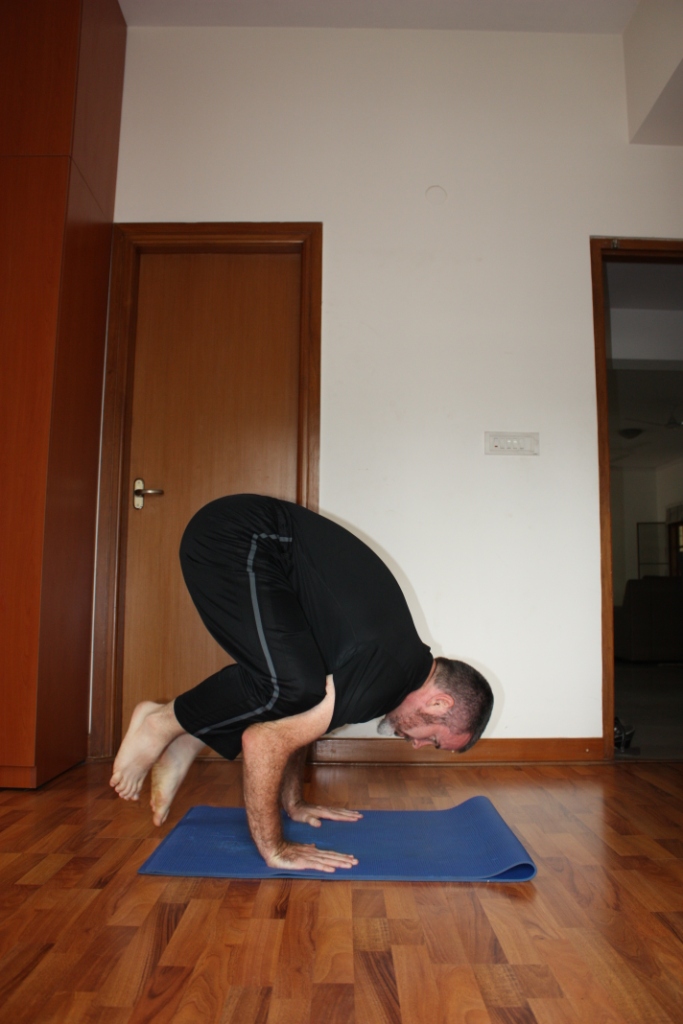
Alternatively, one can work on a different form of the pose, such as the tripod headstand. Transitioning from crow pose [kakasana] to tripod headstand is a good way to start to learn the bodily control that will serve one well in intermediate and advanced practice.
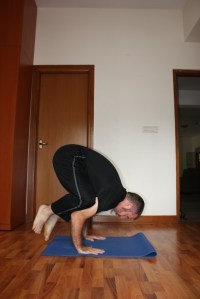


IMG_0851IMG_0853IMG_0859


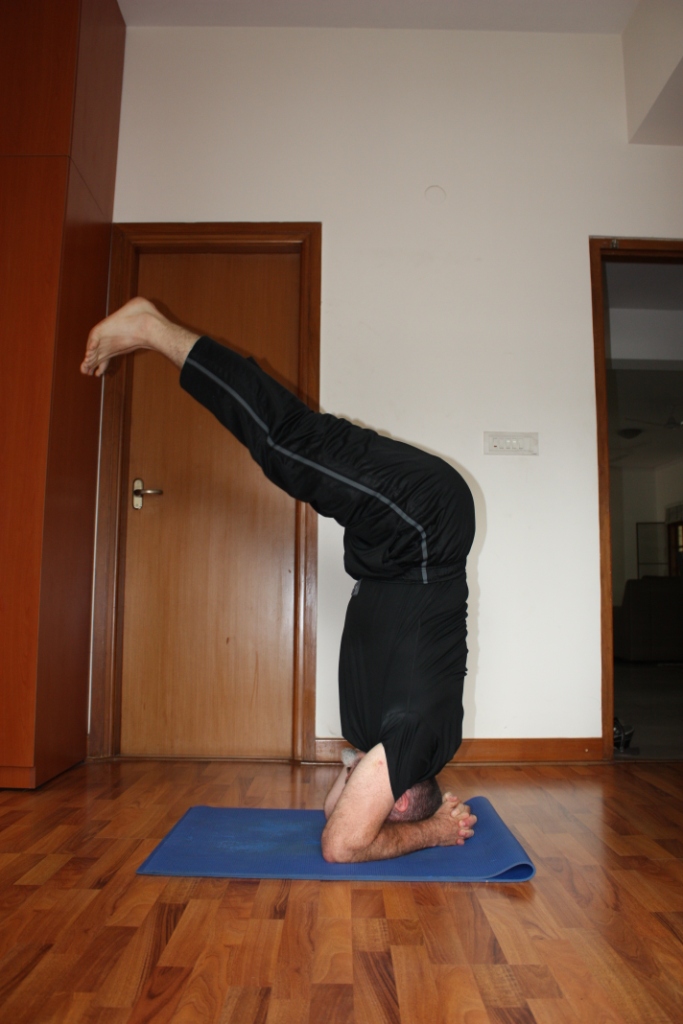
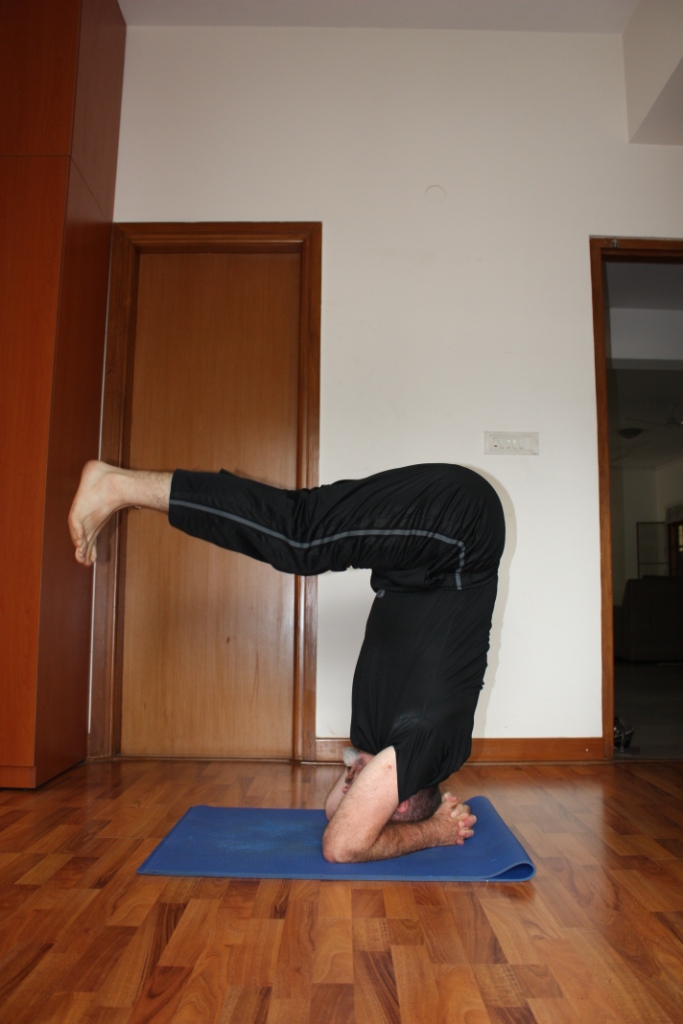
Yet another option is to practice a controlled descent. The inverted “L” is quite a challenge. Not as one might think because it requires tremendous core strength, but because it requires gradually leaning into the direction of falling backwards in order to counterbalance the weight of your legs.
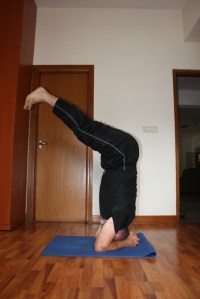
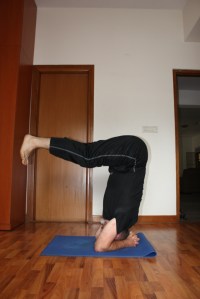
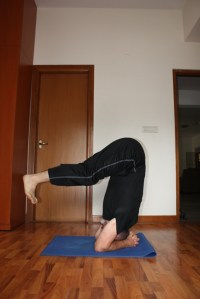
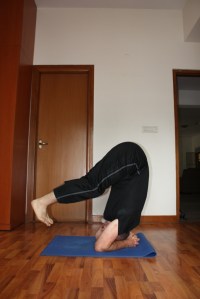
IMG_0844IMG_0846IMG_0847IMG_0849


A few notes on headstand breakfalls:

– Make sure you have room in all directions to fall without crashing into anything or anyone. While it would be nice to always fall back onto one’s feet, it’s neither realistic nor beneficial to your development. Why not? If you’re always distributing your weight to fall onto your feet, you will be keeping muscles tense and will have trouble finding a relaxed state of balance. Furthermore, there is a tendency toward panicked motion if one starts to lose balance in the wrong direction, and speed is your enemy in inversions.  (One wants to do everything from entering the inversion to falling in as slow and controlled a manner as one can possibly manage.) If you get your feet up high enough to be on balance, you need to accept the fact that you’re as likely to roll onto your back as on to your feet.

– If one is doing the basic forearm-supported headstand, don’t tightly interlock one’s fingers. “Tightly” is the key word here. It’s alright to interlock your fingers, but one doesn’t want to create ridged hands such that one’s neck rolls over a 3 to 4 inch (7 to 10 cm) ledge if one falls backwards.  One wants the hands to collapse.

– Tuck and roll. Don’t reach back with your foot / feet and try to arrest your fall. If you have enough strength, flexibility, and timing to make that work you probably don’t need my advice and haven’t read this far. (i.e. you have advanced gymnastic skill.) If you’re the more typical yoga practitioner, you’re more likely to injure your back, toes, feet, or some combination thereof by arching into a back-bend to arrest your fall.

– Counter-intuitively, you probably don’t want to put anything behind you to soften your fall. You don’t want your spine rolling over surfaces that are at different levels–even if one them is relatively soft. It’s usually best to roll over a level surface, even if that surface may be a bit hard. Furthermore, if you think you’re going to save yourself by working entirely on a softer surface, you’ll probably find yourself falling more often and for a longer period. Softer surfaces are harder to maintain balance on. That’s why one of the primary ways that we make an exercise more challenging is to do it on a softer (more rolly) surface.

– Don’t let your neck crumple. On a related aside, never look around while you’re in a headstand. If you need to see something, e.g. the teacher’s demonstration, come out of the headstand.

– However you come out of an inversion, don’t neglect the counter-pose. For the headstand, child’s pose is a common counter posture, and you should spend some time there upon exiting the pose.

– It’s best to begin one’s practice of inversions under the supervision of a qualified teacher. As one develops confidence and one’s body begins to learn how to maintain stability, one can make these postures an increasing part of one’s practice.

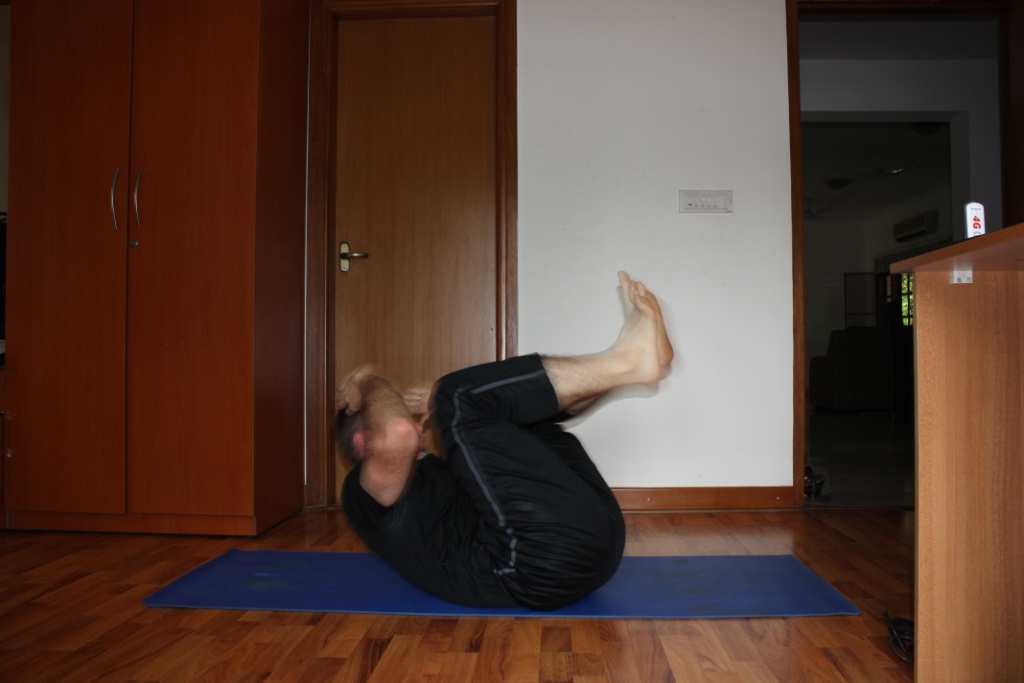
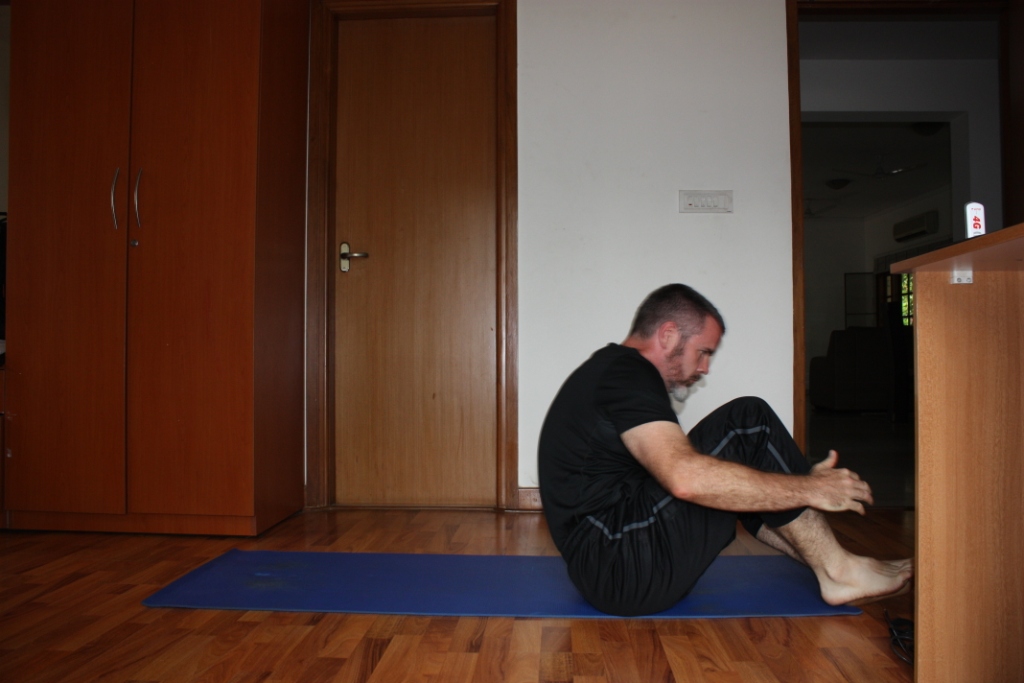
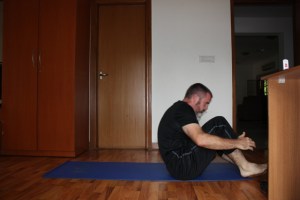
It’s hard to get get a good sequence of pics to show how to breakfall–given my limited photography skills, that is. But here’s my attempt.
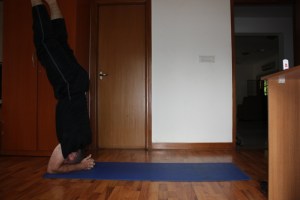
So it begins with crumpling balance
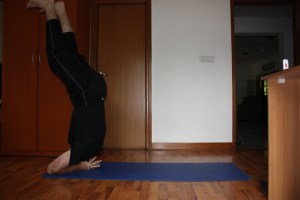
So it begins with crumpling balance

Get those fingers open so your neck doesn't flow over an interlocked fist

Get those fingers open so your neck doesn’t flow over an interlocked fist
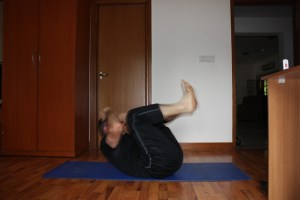
Tuck and roll
Tuck and roll

Don't arrest your roll.  Let momentum carry you forward. Gradually dissipate the energy.

Don’t arrest your roll. Let momentum carry you forward. Gradually dissipate the energy.

Happy inverting.

3 Levels of Movement Coach

I.) New teachers and coaches often over-rely on their personal experience. In other words, one may think that the skills that came easily for one will be a piece of cake for one’s students as well. Conversely, such a teacher tends to be more sympathetic and lax when it comes to skills that kicked his or her own ass. This may work for some students, but it’ll be way off the mark for others. There’s a risk of pushing students too hard on skills that may be dangerous for them, and / or not helping them achieve a breakthrough that they are capable of because of one’s own baggage.


II.) The next level of coach recognizes that there are different body types. Such teachers put this knowledge to use in determining what skills present greater or lesser risk for a student given the strength, power, speed, flexibility, etc. associated with such a body. This coach will recommend modifications and capacity building exercises based on the student’s body type.


III.) Then there is the coach or teacher who can see the individual idiosyncrasies of a given student’s body and make recommendations based the unique conditions, strengths, and weaknesses of a particular person.

9 Lessons Learned During Children’s Yoga Teacher Training

I recently finished the course requirements for Registered Children’s Yoga Teacher (RCYT) training at a1000 Yoga in Bangalore. (As of this writing, I still have a kid-specific teaching requirement to meet before I can add this to my Yoga Alliance certification portfolio.)  When I did my seva (charitable teaching) requirement for RYT-200 at an orphanage, I discovered that teaching kids was a different monster. That’s what led me to take up this specialization, and I thought I’d share some of what I learned.


IMG_1580

1. Eight is [soon] enough:  The traditional age for introducing children to a practice of yoga is eight. This doesn’t mean that kids aren’t taught postures (asana) or other yogic techniques earlier, but for younger kids it’s typically done as play. Traditionally, surya namaskara (sun salutation), nadi shodhana (alternate nostril breathing), and Gayatri mantra (a particular chant) serve as the core of the child’s practice.
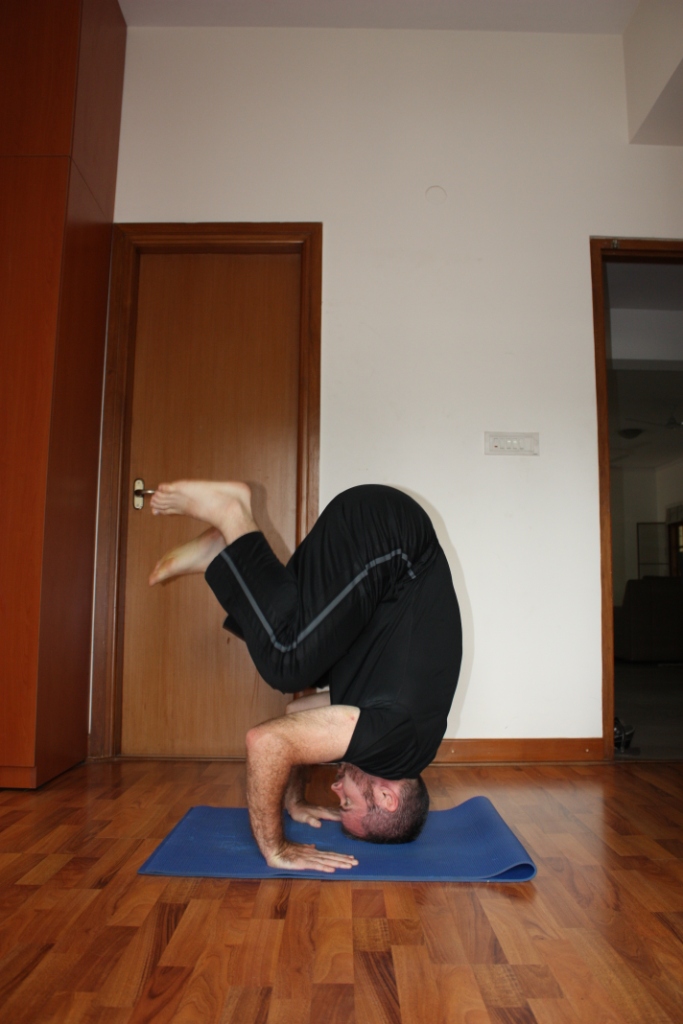
Why eight? It has to do with a number of physical and mental development factors including lung development, the state of the pineal gland, and the arrival of abstract reasoning capacity.

Kids_contortionism2.) There are no youth-related contraindicated postures: I expected to spend a fair amount of the course learning what postures one shouldn’t teach children and why. However, instead we were told that kids could be exposed to any Hatha yoga postures.

Of course, this is predicated on: a.) the fact that one is dealing with a child eight and up; b.) one recognizes that the strengths and weaknesses of children will need to be taken into account and modifications or capacity building may be necessary in some cases. (For example, the flexibility of kids may allow them to achieve postures that few adults can, but at the same time their lack of strength and balance may be limiting factors for some postures.); c.) obviously, one needs to take into account that kids may have contraindicated conditions that aren’t age-related but are due to their particular physical condition.

It should also be noted that children are typically not taught breath retention (khumbaka) as part of their (breath exercise) practice. So it’s not true to say that there are no contraindicated practices.

3.) In stillness, your results may vary: One of the nice things about a yoga practice for kids is that it acknowledges that most kids, by nature, don’t want to be still. As opposed to mainstream education, which attempts to force stillness upon them, yoga offers a mixture of activity and stillness. However, it was interesting to see the range of abilities to remain motionless during yoganidra (“yoga sleep,” i.e. a hypnogogic state) practice. There is, of course, an age component to this. That is, young kids have a harder time staying still than older kids. However, that isn’t all there is to it. A few of the older kids couldn’t stay still in savasana (corpse pose) for five seconds, but a few of the young seemed able to be still for as long as required–not necessarily awake, but still.

the exception

the exception

4.) Balance isn’t in a child’s wheelhouse:  I knew that strength was ill-developed in prepubescent children, but I didn’t realize how challenging kids would find even simple balance postures. They’re a little like drunks in this regard.

Obviously, kids tend to be freakishly bendy, and so it’s not a surprise that most of them could learn to do chakrasana (wheel pose, i.e. a full back bridge) from a standing position in short order. In fact, the challenge for those who had one was more likely to be confidence with not falling on one’s head than with a lack of back-bending flexibility.

The moral of the story is that one must recognize that children are a little like senior citizens in this one domain. That is, consideration must be given to the risk that they will fall down during balancing poses. Unlike seniors, they don’t have too far to fall, and they’ll heal lickety-split if they do, but–still–they’ll fall like a drunken sailor.

5.) Teaching kids’ partner yoga requires a different approach:  The usual advice is that one should teach kids from “inside the circle.” That is, one shouldn’t set oneself off at the head of a class like one would usually do with an adult class. One sits with with the kids and does the class with them. (You probably won’t be doing 6 classes a day that way.)

I had the opportunity to teach a pairs yoga class and found that an entirely different approach was needed. First let me say that pairs (partner) yoga is a great approach for teaching kids. Many kids will enjoy the interaction, and they can learn about teamwork and (in some cases) take advantage of the stabilization of additional limbs / grounded surface area. However, because it requires so much attention to be focused on the partner, it’s best not to teach it from inside the circle. One won’t necessarily be able to see what one’s students are doing, and that can be dangerous.

6.) There’s a yoga for special needs children: Among our guest speakers, we had a yoga teacher from Prafull Oorja, which is an organization that teaches special needs children using yoga, dance, and various other methods. These approaches are used to increase bodily awareness, which is a common problem across many different afflictions. We learned about the range of challenges faced by such children and how the usual approach is varied to adapt to their needs.


The course included information about several non-yogic methods that could be used to complement yoga practice to achieve the objectives of a yoga course. I write this by way of explanation as to why the last few lessons seem to have little to do with yoga.


7.) Stories must be physical, animated, and repetitive for small kids:  These features serve to help adjust to the child’s limited vocabulary, while helping them to build vocabulary. We had a speaker from Kathalaya (House of Stories) who offered a great deal of insight into story-telling for kids.

Lest one think that story-telling is just filler in the yoga context, I’ve been learning a great deal about how our minds need stories, and am inclined to believe that one’s insight into the mind will be limited if one doesn’t understand story and why stories appeal to our minds. I recommend the book Wired for Story by Lisa Cron.

8.) Games used in theater can go hand-in-hand with yoga practice:  I was completely new to the idea of theater games before this course, but we had someone teach us a number of these games, and the logic behind building our own. Games which aren’t too cerebral can go help build some of the same skills that are sought in a course of yoga. Such games include practices that help develop one’s voice and physical expressiveness. These games can also help bring some kids out of their shells so that they are more ready to actively participate in a yoga class.

9.) We need mental hygiene as much as dental hygiene: This actually comes from a quote by Sir Bat Khalsa, a Harvard Neurologist who studies the effects of yoga. When I was doing research for my final presentation, I ran across said quote, which goes:

“There’s no preventive maintenance. We know how to prevent cavities. But we don’t teach children how to be resilient, how to cope with stress on a daily basis… We’ve done dental hygiene but not mental hygiene.”

IMG_1582

READING REPORT: April 17, 2015

This wasn’t a big week for reading, but I’ve completed about 60% of a book by Richard Wiseman entitled Night School: Wake up to the power of sleep. (I may or may not finish it over the weekend.) This book examines topics such as sleep deprivation, sleepwalking, dreams, nightmares, night terrors, and the power and purpose of sleep. I like that this book crosses boundaries. There are a number of dry self-help books to teach one about how to sleep. There are also a number of creative nonfiction books with fascinating historical and scientific tidbits about sleep, but which have no practical implications beyond providing some intriguing cocktail party banter.  This book crosses streams to good effect. It also helps keep one’s attention by using the “night school” premise to interactive ends. There are little quizzes along the way that serve as summaries and encourage one to retain key information.

NightSchool


I only bought one book this week, and that was a short, technical book by Loren Fishman M.D. entitled Pain in the Butt: Piriformis Syndrome: Diagnosis, Treatment, and Yoga Fishman is a medical doctor who uses yoga therapeutically–primarily for musculoskeletal afflictions like back pain, scoliosis, plantar fasciitis, arthritis, and–obviously–piriformis syndrome.

PainInTheButt


That’s all for this week. I hope to have more to mention next week.