BOOK REVIEW: Philosophy for Gardeners by Kate Collyns

Philosophy for Gardeners: Ideas and paradoxes to ponder in the gardenPhilosophy for Gardeners: Ideas and paradoxes to ponder in the garden by Kate Collyns
My rating: 5 of 5 stars

Amazon.in Page

Out: March 1, 2022

This book can benefit not only gardeners interested in philosophy, but also philosophers interested in gardening. [If you’re in the intersect of people expert in both philosophy and gardening, the book probably won’t hold a great deal of intrigue as it’s written for a more general audience.] The gist is examples and analogies from gardening applied to elucidating philosophical concepts. In a few cases, these examples feel a bit forced. In most cases, they work just fine. But in a few other cases, the gardening analogies offer a powerful and unique insight that one would be unlikely to take away from a single-axis philosophy guide. For example, I found the relating of utilitarianism to the gardener’s dilemma of whether to start with a wildly overgrown bed or a relatively clean one offered a fresh perspective on the topic.

The book’s twenty chapters are divided into four parts. The parts are labeled “Soil,” “Growth,” “Harvest,” and “Cycles;” which I took to apply to fundamentals, change, outcomes, and the cycle of life and death. Part I, “Soil,” investigates topics in metaphysics, governance, and taxonomy. The second part, “Growth,” explores evolutionary adaptation, altruism / cooperation, the blank slate (and its critique,) and Zeno’s paradoxes. The penultimate section, “Harvest,” delves into topics such as forms, aesthetics, the reliability of senses, epistemology, and economic philosophy. Finally, “Cycles” discusses identity, logic and linguistic limitations, ethics, and pragmatism.

The book uses retro illustrations that look like the plates one might see in a book from the 19th century. There’s a brief bibliography, primarily of philosophical classics.

I’m always on the lookout for books that consider the perspective that humans exist within nature and our ways can’t be understood divorced from our place in the natural world. In that sense, I believe the book has much to offer.

View all my reviews

BOOK REVIEW: Darjeeling by Jeff Koehler

Darjeeling: A History of the World's Greatest TeaDarjeeling: A History of the World’s Greatest Tea by Jeff Koehler
My rating: 5 of 5 stars

Amazon.in Page

As Bordeaux or Tokaj are to wine, Darjeeling is to tea, producing a quality beverage considered by many to be the best in the world. However, this isn’t merely the story of how this region of northern Bengal (or, alternatively, Gorkhaland) came to produce a unique kind of tea that would be sought-after around the world. It’s also a story of empire and how Britain’s insatiable demand for tea drove major developments in geopolitics. It’s yet further the story of recent troubled times of Darjeeling tea, from labor shortages to environmental degradation, and what tea estates have done to adapt – from management / organization changes to organic production techniques.

Lessons in the history and geography of tea may seem niche and uninteresting, but the story of tea is actually quite fascinating, involving Opium Wars, the Black Hole of Calcutta, and an industry shakeup resulting from India’s independence.

I found this book compelling, and thought it did a good job of zooming in and out between local and global (and past to present) to maintain the interest of a diverse readership. Whether the book is exploring attempts to transplant tea shrubs and expertise from China or the changing customer base for Darjeeling tea, it’s an engaging and thought-provoking story. If you’re interested in tea, world history, or agribusiness, you’ll likely find something in this book to hold your attention.


View all my reviews

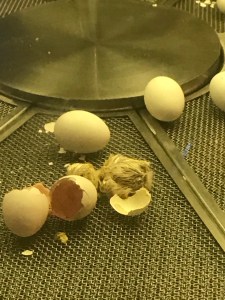
Born in Struggle [Haiku]

born in struggle;
the chick pops from its shell
and must fight to its feet

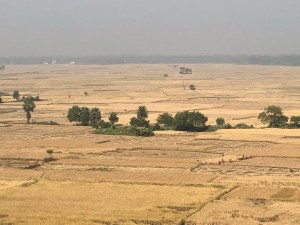
Ripe Rice [Haiku]

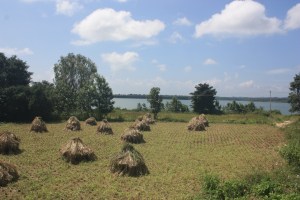
fields of ripe rice
as far as the eye can see -
sickle harvested

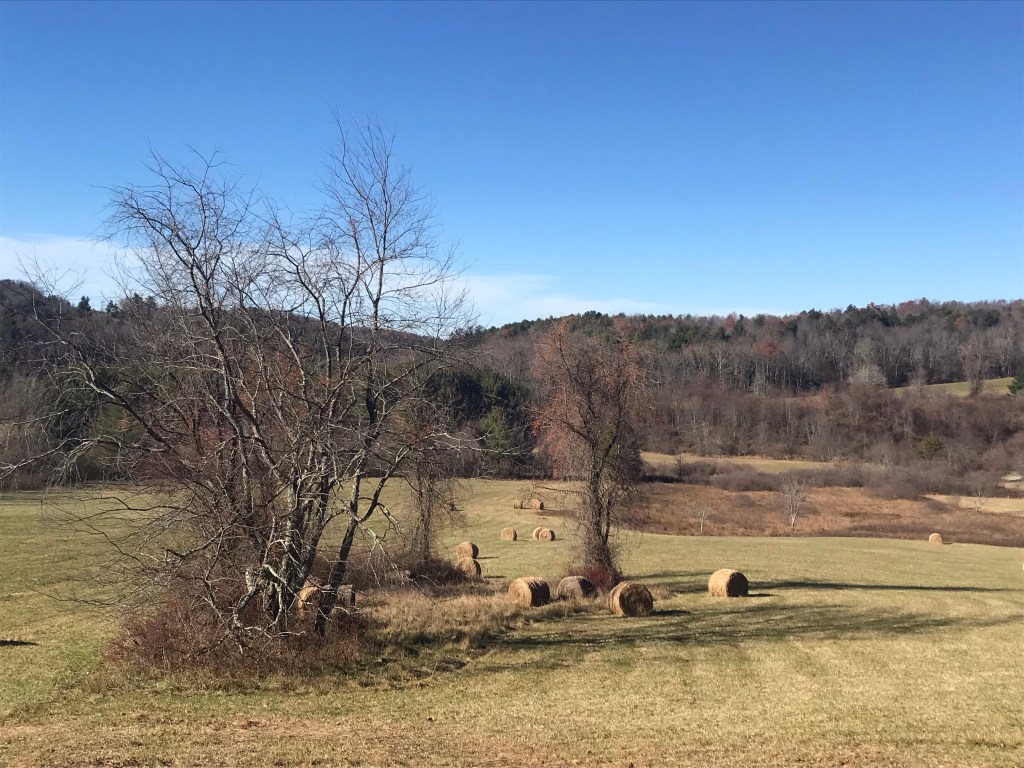
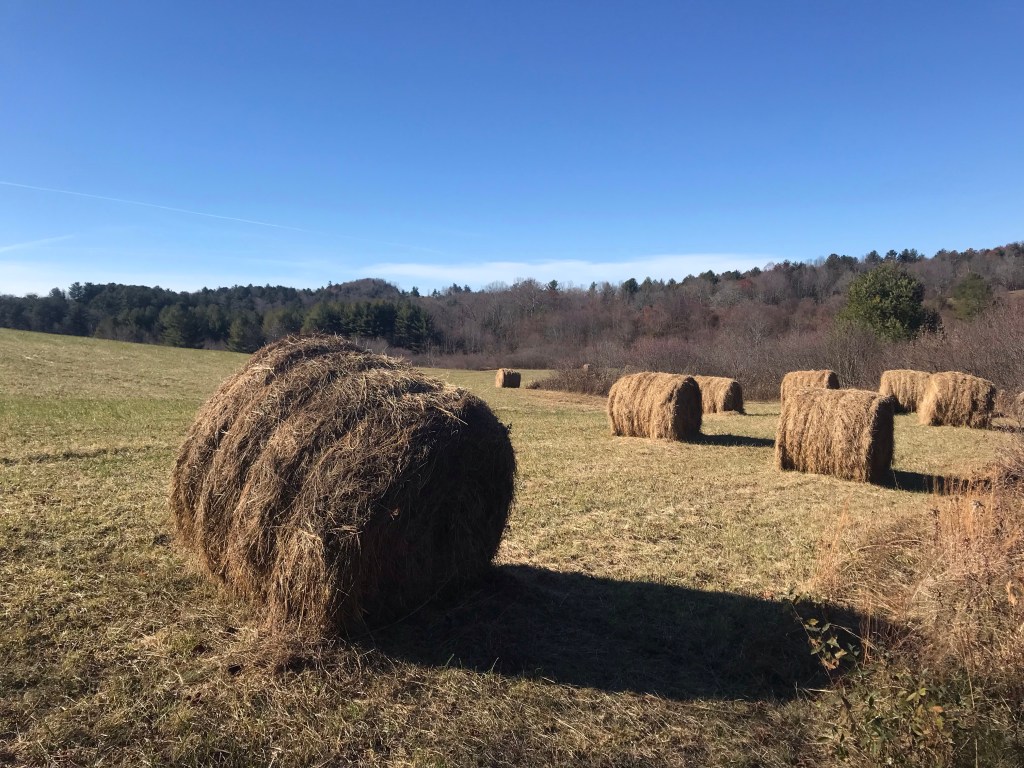
DAILY PHOTO: Farmland on the Blue Ridge

Taken on November 23, 2021 near the NC / Virginia border

Patchwork Lands [Free Verse]

patchwork 
in shades of green, 
beige, 
and rust-red clay

geometries formed
of odd angles

spreading ahead
to the edge of
sight 
& 
imagination

so many fields
in so many states -
yet, all in one
time
&
place

there, I felt
a tad bit infinite,
being stretched
from a stable center
in all directions
as time sprawled
first to last
in no particular order

Harvest Cycle [Common Meter]

The field is neat; the stalks are baled;
the grain sits in baskets
to be carried back home to dry 
on thin sheets of plastic.

The chaff will be cracked from the grain
so that it can be ground
into flour, and baked into bread
that I'll eat sans a sound

as I enjoy the view.

POEM: Fallow Field Heroics [Ottava Rima]

I wander though the fallow field.
The weeds and unintended plants
are stealing food of increased yield,
but soil is churned by worms and ants
whose labors stay subtly concealed.
It looks like nothing at a glance,
but bold heroics are afoot
to till the soil for fine output.

Agriculture & Nature Haiku

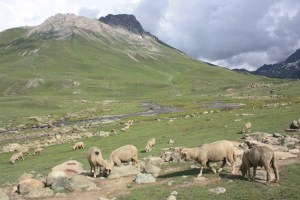
grazing sheep,
loitering head down;
what awes them?


rice terraces,
disguising man’s order
in nature’s green


ripe wheat,
bobbing in a breeze —
sea-like moves


on a range
that stretches beyond sight
but not mind


tea plantation,
a snake slithers through
amid the pickers

BOOK REVIEW: Food: A Very Short Introduction by John Krebs

Food: A Very Short IntroductionFood: A Very Short Introduction by John R. Krebs
My rating: 4 of 5 stars

Amazon page


This volume in the Oxford University Press AVSI series examines human eating habits. The first chapter puts the human diet in the context of evolution, reflecting upon how we got where we did in terms of food consumption. Here one gains insight into where the Paleo-diet fad is flawed, and one learns how cooking had a huge influence on human evolution.

The second chapter delves into the issue of likes and dislikes in food. We see that there are species-wide commonalities, but there are also differences both at an individual and cultural group level. e.g. Why is spice so common in the tropics and so rare in the great white north?

The third chapter looks at the ways food can do us in and what we’ve done – besides [and including] the aforementioned cooking – to reduce the threat of food gone awry. The penultimate chapter examines nutrition and how we get what we need from food.

The last chapter takes a bit of a turn, but investigates the fascinating topic of how (and whether) we will continue to feed our species. Readers will likely remember the name Malthus from either history or economics classes. He was an economist who suggested humanity was in dire straits, vis-à-vis food. Malthus noticed that population was growing geometrically while agricultural output grew arithmetically, and he reasonably noted that this was unsustainable. Of course, Malthus failed to foresee the huge technological advances from fertilizer to mechanization. However, that doesn’t make his concerns forever moot – perhaps just tardy. It remains far from clear whether the limited land space and resources can take billions more humans – especially without killing off all the other species. (Especially, if we aren’t willing to give up eating resource-intensive foods like cow in favor of less intensive one’s like grasshopper.)

The book has some graphics as well as both a “references” and a “further reading” section.

If you’re interested in food in a general sense, I’d recommend this as a great way to take in the outline of the topic.

View all my reviews