
winter forest;
the dead silence
makes itself known
as a vague feeling
of untethered angst

winter forest; the dead silence makes itself known as a vague feeling of untethered angst
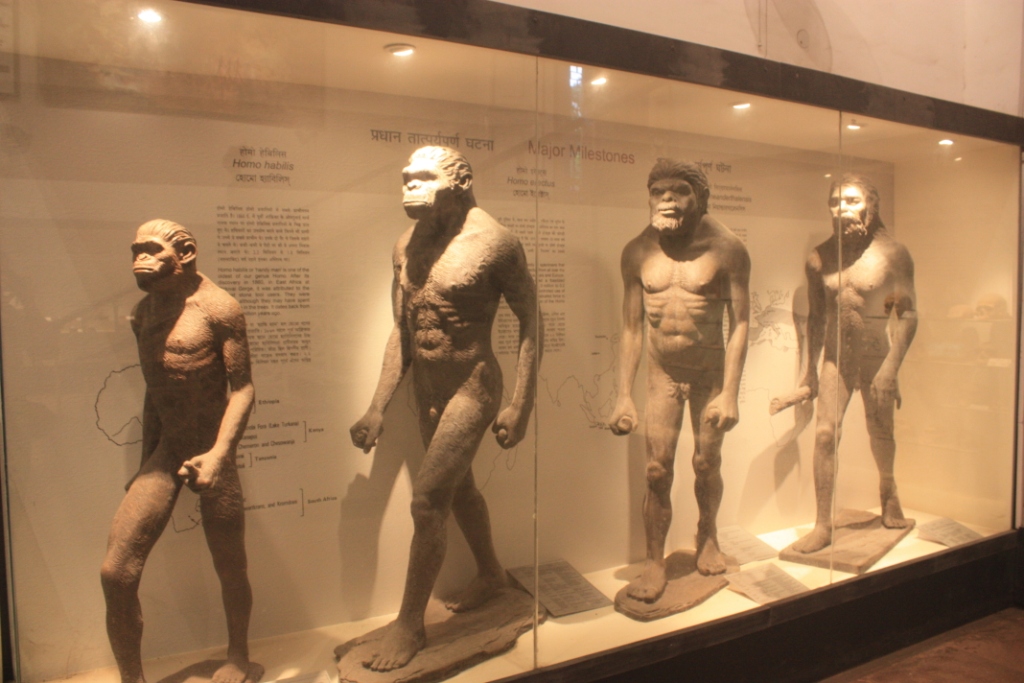
We laud our rational side

- The Thinking Man -

But we're emotional beasts
to the core.

To use that old
[and disparately applied]
chestnut:

Of emotions,
better master
than servant.

Poetry is a conduit
to emotional savvy.

That's part of the reason
Plato urged poetic restraint;

he found the emotional
inferior to the rational,
and thought most youngsters
couldn't behave responsibly
in the face of poetry's
emotional power.

It's also where Aristotle
found virtue in poetry,
its ability to induce
catharsis.

Could they both
be right?

Note: This post is not advocating a new distraction yoga mashup of the type that I’ve been known to rant about, but is merely a discussion of the synergy to be found in practicing both yoga and poetry.
In Patanjali’s conception, the problem for which yoga presents a solution is the mind’s tendency to run amok. One would like to be able to hold the awareness on a given object, effortlessly and for extended periods of time, but the mind is insistent in its desire to roam. This roaming can be to many different ends, but often it’s ultimately about eliminating uncertainty. The mind wants a plan against the unexpected. It seeks solutions to problems — existing, anticipated, or imagined. It wants to replay entertaining stories, which is really a way to learn and store general solutions for later surprise problems that might otherwise catch one off-guard. The more anxious or emotionally charged the mind, the more turbulent it will be.
Poetry is the use of metaphor, imagery, and sound to strike an emotional chord. I don’t mean “emotional” exclusively in the sense of displaying strong, behavior-driving emotions. I mean all sorts of internal, subjective feelings, including nostalgia and the residue of memories and dreams.
Sometimes, the feelings a poem seeks to generate are primal emotions. For example, consider Emily Dickinson’s poem “A Narrow Fellow in the Grass” [1096] (about a snake, if you didn’t make that connection) that concludes:
But never met this FellowAttended or aloneWithout a tighter BreathingAnd Zero at the Bone.
Or, from Poe’s “The Raven:”
Deep into that darkness peering, long I stood there wondering, fearing,Doubting, dreaming dreams no mortal ever dared to dream before;
O to go back to the place where I was born!To hear the birds sing once more!To ramble about the house and barn, and over the
fields, once more,And through the orchard and along the old lanes
once more.
So, emotion is the connection. Poetry helps one form, shape, and refine emotional content, and yoga helps one to experience that emotion without applying value judgments or allowing the motive force of emotion to drive one into endless cycles of destructive feedback. That is, one feels the need to think about an emotionally charged situation, and the more one thinks about it, the more intense the emotion becomes, and the more intense the emotion, the more one thinks about it. I’ll just call this process “wallowing” — wallowing in emotion.
The word “emotion” carries with it a lot of baggage. Emotion is often juxtaposed with rationality / reason, which isn’t accurate. (Reason works great for making decisions when there is adequate information, emotion forces one to move one’s ass when there isn’t sufficient information. So they are not so much opposites as complimentary systems supporting decision and behavior.)
In the common conception, emotion also tends to be more linked to the expression of emotion rather than the experience of emotion — which are necessarily related. (Some people very readily express intense emotion despite an easy life and others are non-expressive despite constant uncertainty or even challenges to survival.) When one imagines someone unburdened of emotion — e.g. fearless — one might picture a hero — bold and courageous — but what one sees among people who suffer afflictions (e.g. brain damage) that prevents them from feeling emotion is often paralysis by analysis. Without emotion to make decisions under uncertainty, such individuals simply get bogged down. Individuals who don’t feel fear, in particular, are also prone to carelessness.
The key to making one’s yoga and poetry practices simpatico is avoiding that very popular form of poetry — the wallowing poem. If one’s poems constantly spiral into ever greater depths of angst (as many a famous — and, sadly, suicidal — poet’s work has been known to) you might want reevaluate. And, perhaps, start with haiku and that forms Zen distaste for hyperbole or analysis.
 Anxious: Using the Brain to Understand and Treat Fear and Anxiety by Joseph E. LeDoux
My rating: 5 of 5 stars
This book examines the neuroscience of anxiety, though psychology also makes a prominent appearance in the discussion – particularly toward the end of the book. It’s written by one of the top researchers in the field emotional neuroscience, though LeDoux discusses the work of other labs, comparing and contrasting their work with that of his own, and thus giving an idea of the fault lines in the field. (By that I mean more the questions that remain in dispute, not who hates whom.)
The book addresses a number of key questions such as: How does brain activity result in the emotional experience? How do conscious emotional feelings relate to and interact with non-conscious responses to threatening stimuli? Is the human emotional experience a hand over from animal ancestors or a uniquely human condition? How effective are drug-based versus psycho-therapeutic approaches to anxiety disorders? What has been learned about extinguishing anxious responses to threatening stimuli? Needless to say, this book doesn’t answer all the questions, as many of the questions – particularly those regarding consciousness – remain to be definitively answered. It does offer a great overview of the state of understanding in the present day.
I won’t present a chapter by chapter outline, but rather a look at the book’s general flow. LeDoux starts by laying groundwork, and in this case that means clarifying the relationship between fear and anxiety. While the former often captures the imagination because of its dramatic and traumatic causes, the latter is more of a concern as its grinding long-term effects can cripple the immune system and have other adverse effects. The early chapters also discuss what has been learned about how emotions are formed in the brain and how views about this have changed over time.
Chapter five is where LeDoux explores the relationship between animal emotionality and human emotional life. This is an important subject as it relates to the question of whether research with animals can teach us anything relevant to the human experience. As it has become progressively more difficult to conduct any research that causes human subjects any emotional distress, this question may be instrumental to making progress in the field.
Chapters six through eight are interconnected by the question of consciousness. Chapter six discusses the nature of consciousness, which remains one of the most slippery and least understood concepts in the natural world. Chapter seven delves into memory and consciousness – an important topic as anxious responses can be viewed as learned responses and this begs the question of unlearning. Memory will later be revisited with respect to the question of whether it’s possible to erase painful or anxiety-inducing memories (ala, “Eternal Sunshine of the Spotless Mind”) – based on work that came out of LeDoux’s lab – and, if so, whether it’s a good idea. The final consciousness chapter gets into consciousness of emotion, specifically (as opposed to all the other thoughts and feelings of which one can be consciously aware.)
The last three chapters are also interconnected by movement from the question of how is anxiety felt / experienced to the question of what one can do about it. The first of these chapters discusses an epidemic of anxiety (entitled “40 million anxious minds,” and that refers to the US alone) and what has been learned about drug-based treatments. As it happens, drug-based treatments haven’t proven reliably effective, leaving plenty of room for other approaches, e.g. psychotherapy. This fact is the basis for the last two chapters that discuss different approaches to extinguishing the connection between a stimulus and the anxious response. The first of theses chapters (ch.10) is more general and the last chapter dives deep into the research that has been done in recent years. Chapter 11 also offers a nice discussion of how breath exercises and meditation can be instrumental in reducing the adverse effects of anxiety.
As would be expected of a scholarly work, the book is heavily annotated, has an extensive bibliography, and uses a great number of graphics in an attempt to lend clarity.
I would put this work in the same category as the works of Robert Sapolsky. That is to say, it resides in a space between the level of detail usually seen in works of popular science and that which is seen in textbooks for specialists. That is to say, LeDoux does get into some detail and this isn’t a light read for anyone without a heavy-duty background in biological sciences. That said, if you have a basic scientific literacy (and / or don’t care too much about the fine detail), it’s by no means impossibly dense. When it’s not diving into the various brain regions and neuronal pathways, it’s quite readable.
I’d recommend this book for anyone who is interested in a detailed look at how anxiety arises and how it can be quelled.

a flower
became the pivot
of my mind
thoughts form,
float ephemerally,
then burst
quiet came
my mind wordless
as pictures gel
feel emotion,
but don’t ever feed
that old goat
perfectionist?
the perfect can’t be loved,
only vied for
 Descartes’ Error: Emotion, Reason and the Human Brain by António R. Damásio
My rating: 5 of 5 stars
I’ve joked that there must be a law requiring any author writing a book on neuroscience for a popular audience to tell the story of Phineas Gage. This book is no exception. Its first couple chapters explore the case of Gage in detail. For those who don’t read much on this subject, Phineas Gage was a foreman for a construction company. By all accounts he was a reliable and solid individual, respected by his employees, trusted by his employer, and beloved by his family. Then one day a four-foot tamping rod was blown through his skull – literally, in one side and out the other. One might think that having a chunk of brain skewered out by a steel rod on a gunpowder-fueled ride through the skull would leave one – at best — a glassy-eyed, drooling, catatonic lump. Surely, a steel rod would wreak more havoc than the narrow needle used in lobotomies? However, what makes Gage’s story fascinating is that the injury resulted in no readily apparent disruption in cognitive function. Gage could still speak fluidly. He retained his memories. He could do math at the same level as before. However, this isn’t to say that the hole through his brain left him unchanged. The even temperament that made him an ideal employee and that endeared him to friends and family was gone. Gage became angry and unreliable.
So what is the relevance of the Gage story to Damasio’s book? Quite a lot, actually. Damasio’s book is about emotion, its influence on decision-making, and how bodily states create emotion. In parts two and three of this three-part book, after introducing the reader to the role of the brain in emotion via the cases of those with selective brain damage, Damasio lays out an argument for what he calls the “Somatic Marker Hypothesis” which says that bodily states are what create the sensations that we associate with emotion. The title-referenced error made by Descartes will be apparent to those familiar with Cartesian dualism. Descartes believed there was a dualism between mind and body – i.e. that there was this physical stuff that got us about from place to place, but there were these intangible thoughts and feelings that were matter-independent that were the makings of mind and which were really you (i.e. you think, therefore you are.) Damasio believes that you cannot separate what it feels like to be you from the body and all its hormones, neurotransmitters, vital statistics, neuronal firing, etc.
The book consists of eleven chapters divided into three parts. In the first part, the author lays out not only the case of Gage, but other examples of individuals who had injury or illness in the brain that disrupted emotion and its influence on decision-making. We learn that an unemotional being isn’t like Spock, but instead is paralyzed by indecision. It turns out that it’s emotion that give us a kick, particularly when he have no sound basis on which to make a rational judgement. The second part draws the connection between body and our emotional self, culminating in a description of the Somatic Marker Hypothesis. The final part describes how the Somatic Marker Hypothesis could be tested and where this line of study seems to be going. The book is annotated and has a bibliography as one would expect of a scholarly work – even one written for a popular audience. The book has a few graphics – graphs, charts, and diagrams, but not very many and of a clear and simple nature.
I’d highly recommend this book for anyone interested in the working of the mind. It’s a thought-provoking look at what it means to be an emotional being and challenges our preconceptions about feelings.
 The Unthinkable: Who Survives When Disaster Strikes – and Why by Amanda Ripley
My rating: 5 of 5 stars
Ripley investigates a range of disasters and tragedies – natural and man-made – with an eye toward her sub-titular question of who survives and why. Of course, in the process she answers the [often more interesting] converse question of who dies and why? By that I’m specifically referring to those who die while facing the same situations as survivors. i.e. Who dies having had the capacity to survive? Obviously, some people fail to survive because they face a fundamentally unsurvivable event (e.g. a plane explodes in mid-air with said person in it), but a surprising number die who could have walked to safety if they’d have managed to get moving – and some die because they play out a mental script that makes no sense contextually, e.g. trying to get a carry-on out of the overhead compartment as though one is at the gate at Heathrow Airport when in fact one is sinking into the ocean while the crashed airliner one is in is being buffeted by ocean waves.
Over the course of eight chapters, an introduction, a conclusion, and ancillary material, the author presents cases involving airplane crashes, tsunami, hurricanes, police shootings, hostage situations, fires, stampedes (of humans by humans), and even touches on the psychology of tragedies of a personal [rather than mass] nature (e.g. sexual assault.) A particular emphasis is given to events that the reader will likely be familiar such as 9/11 and Hurricane Katrina, but the book also opens up the reader to events they may have scarcely heard of from the many crushing deaths in Mecca during recent Hajj pilgrimages to the Halifax harbor incident of 1917. Along the way, the reader hears from survivors, heroes, and a wide-range of experts on subjects such as gunfights, risk perception, evacuation dynamics, the physics of crowds, evolutionary psychology, and emotional resilience.
After an introduction that sets the context for the book, the first chapter discusses one of the most salient features of whether ones lives or dies, delay. The case of the evacuation of the World Trade Center (WTC) on September 11, 2001 is used to examine why some people loiter about while others are johnny on the spot to hit the road. The WTC on 9/11 makes an interesting case because there were certainly people who died who could have survived if they’d had better knowledge or training. However, at the same time, it could have also been vastly worse if some of the people didn’t have the training they did (famously, a huge WTC tenant, Morgan Stanley, had a man in charge of emergency procedures, Rick Rescorla, whose persistent drills no doubt saved many lives [though he did not survive, himself.])
Chapter two discusses risk, and the weird way in which human beings perceive and respond to uncertainty. For example, the author describes Kahneman and Tversky’s Prospect Theory, which showed that a person responds to risk much differently if there’s a possibility of losing something rather than only of making gains. (Prior to work of these two social scientists, the prevailing view was that humans were rational actors, i.e. a $100 is a $100.) Prospect theory confirmed that anxiety mattered, and people didn’t just use their clockwork frontal cortex to calculate and compare expected values. (This may seem self-evident, but it began the process of up-ending the precise and predictable rational actor model from classical economics.)
Chapter three is entitled “fear” and it discusses that emotion and the various behaviors (and lack of behavior) that goes hand-in-hand with it, including: distortion of the experience of time, tunnel vision, and self-talk. (Panic and paralysis behaviors are each given their own chapter later in the book.) This chapter presented a fascinating discussion with a man who may have been involved in more shoot outs than any other police officer (the officer, no doubt, having a valuable perspective on how to respond in fearful situations.)
Chapter four is about the personality traits that link to resilience and the survivor personality. There is a fascinating discussion with an undercover agent in Israel, a man who faced a number of situations in which he had to coolly make a life-or-death decision in the way that most of us only experience in Hollywood movies. It should be pointed out that while we all admire such people when they save the day, the personality traits they display aren’t necessarily ones that we find desirable in daily life. Chapter five is entitled “groupthink” and it discusses the role that social dynamics play in survival, which is often considerable. Some survivors are people who would’ve perished if left to their own devices – i.e. if a more resilient stranger hadn’t taken them by the hand or shouted in their face.
The last three chapters discuss three relatively common behaviors that occur in the decisive moment of a tragedy. Chapter six discusses panic behavior. As it happens, there are some types of tragedies in which panic is almost unheard of and others in which it is nearly ubiquitous. Personality does play a role. Just as some people have personality traits that make them more resilient, others have traits that make them more likely to panic. However, researchers also found that there are characteristics – e.g. people feeling trapped but as if there’s a glimmer of hope of escape. [People who know they are unequivocally doomed are often surprisingly calm.] The chapter also offers some useful insights into how crowds kill people that may be useful for those who find themselves in massive crowds like those seen during pilgrimages or at any number of festivals in India (where human stampede deaths are disturbingly common.)
Chapter seven is about “paralysis” behavior. Readers may be familiar that there’s been a tendency of experts to add either one or two new “F’s” to the phrase “fight or flight” – such as “freeze” or “fright” – to describe other extremely common responses to severe sympathetic nervous system engagement. It’s common to dismiss such behavior as that of cowardly or milquetoast people, but the reality is more complex. On the evolutionary timescale, there was one tragedy that counted for an overwhelming percentage of such dire events — being in the jaws of an apex predator. It turns out that if a grizzly bear or lioness is atop you, freezing isn’t a bad strategy. You aren’t going to pop up and out run a tiger or defeat it in unarmed combat, your only hope may be to make it think you are a diseased carcass – i.e. shit yourself and lie limply. One has to train alternative behaviors; otherwise, the body does what is evolutionarily programmed into its genetic code.
The last chapter is on heroic acts and why some people engage in them when most people don’t. (Consider the people in the Titanic lifeboats who listened to people struggle and drown for fear that their [almost empty] boat would be swamped with clawing victims. Or, the case of Catherine Genovese who was screaming bloody murder for half-an-hour while being raped and stabbed to death while none of the 40-ish witnesses so much as called the cops.) As with the question of what makes a survivor, the answer to what makes a hero is a mixed bag. While we tend to idolize people who engage in heroic actions, the evidence suggests that the image of pure beneficence – lacking all self-interest – may be mythical. Many a hero is as much responding with a combination of subconscious mind and genetic programming as is the individual who burns to death 100 feet from an unlocked exit – just to vastly greater adoration.
I found this book to be fascinating. There are many books on this topic, but I think the author did an excellent job of choosing cases and experts to produce an interesting and informative read — even for a reader for whom this literature is not new.
 How We Feel by Giovanni Frazzetto
My rating: 4 of 5 stars
Frazzetto’s book tells us what neuroscience can and can’t tell us about seven core emotions: anger, guilt, anxiety, grief, empathy, joy, and love. Doing so puts the neuroscience of emotion into a broader context of art, philosophy, the humanities, and the legal / political domains. Most often this serves to make the book more interesting by offering stories beyond the case files of neurologists and neuroscience researchers, but it does result in occasional editorializing.
The book consists of seven chapters, each of which is linked to one of the emotions listed in the preceding paragraph. These chapters always tell us the rudiments of what science has learned about the brain’s role in said emotion, but they often offer insights from other disciplines as well as providing more general information about the brain that the author found particularly relevant to the topic at hand.
The first chapter delves into anger. Besides the neuroscience of rage, we learn a bit about the expression of emotion (e.g. through facial appearance; a theme revisited in other chapters), and the degree to which genetics plays a role in proclivity towards anger. This chapter serves to set up general concepts, and so we also learn about what an absence of emotion looks like (e.g. indecisiveness.) And in compliance with the law that every pop science book on neuroscience tell the story of Phineas Gage (the foreman who got rebar shot through his brain and lived to tell the story—though in an uncharacteristically hostile way), Frazzetto knocks it out early.
Chapter two explores the topic of guilt. It should be noted that some of these chapters discuss more than one related emotion, and here we learn how shame and regret are differentiated from guilt. There’s an interesting story about Caravaggio and how his own guilt-ridden story influenced one of his most famous paintings.
Chapter three is about anxiety, and also takes on fear. In addition to the neuroscience, we get a discussion of relevant philosophy, specifically that of Heidegger. Here, the author also describes brain plasticity.
The next chapter investigates grief. As I suggested above, there are multiple points where emotional expression is discussed, and this chapter has one of the most extensive of such discussions. In terms of general concepts, Frazzetto introduces the reader to neurotransmitters. One also learns how grief is related to physical pain.
Chapter five elucidates empathy. A lot of this chapter discusses acting, and the need for actors and actresses to be able to acquire empathy from the audience. The reader learns the story of Stanislavski, and how he went about creating his self-named acting system which remains widely used. This chapter also explains mirror neurons that allow one to recognize expression and to mimic others.
The penultimate chapter is about joy, and here we learn more about expression of emotions and, specifically, the seeming universality of smiles. There is a discussion of poetry as it pertains to the emotion at hand. Having introduced neurotransmitters earlier, the reader learns about dopamine, its role in happiness, and how a number of drugs have been created that increase our natural dopamine’s effect or mimic it.
The last chapter is about love. Of course, we learn about oxytocin and vasopressin, two neurochemicals famously associated with loving behavior. There is also a fascinating discussion of Capgras Syndrome. In this condition, the patient feels that his loved ones have been replaced by impostors. That may not seem relevant until one realizes that the proposed mechanism for this illness is damage to parts of the brain that control emotional connection. Without an emotional connection, the person feels that said individuals can’t be his / her dearest friends and family—though his senses register that they are exact duplicates in every way. The brain builds a rationalization that they must be impostors. Of course, no emotion evokes more resentment towards materialist explanations rooted entirely in biology than that of love.
The book is extensively annotated and also has a bibliography. There are many graphics throughout the book from line drawn diagrams of brains to photos of brain scans to the artwork “David with the Head of Goliath” mentioned relative to the discussion of Caravaggio’s guilt.
There are a number of books in this domain (i.e. the neuroscience of emotion) and if you were only going to read one, I don’t think I’d recommend this one as it. However, if you are into this topic, it is definitely worth a read. It’s interesting and insightful, and has a unique approach.

Stand atop the wall.
Feel the conch sound.
Watch the arrows sail.
Survey the killing ground.
Know you’ll someday die.
As will all, I suppose.
For those who die well,
it is no tale of woe.
5.) Take a class / Join a group: While I’m partial to yoga and the martial arts, the class could be in any area that presents a challenge. However, there are a couple of advantages to the aforementioned two (to which I would add dance.)
First, these disciplines train one to be expressive with one’s body and to move more freely. This can do wonders for confidence. People store tension in their bodies without even realizing it. Many have postural problems that effect confidence and self-perception. A 2014 New Zealand study found that posture can have a strong effect on emotional state.
Second, no matter who one is, one will be challenged by new approaches to movement. The average person has great difficulty learning to use their body in new ways. One needs to drill in movements conscientiously to achieve competency. Our conscious mind, frequently gets in the way. Even the most athletic and coordinated people will need to work it, failing repeatedly until they succeed.
Why is the challenge so important? Many people go through life afraid to fail, but far too few fear never failing. Sounds idiotic. Nobody wants to fail. I have some hard news. If you’ve never failed, it’s not because you are unmitigatedly awesome in all things. It’s because you’re living in a box and cherry-picking life experiences that feel unthreatening.
If, like me, you’re an introvert, this approach offers the additional benefit of social interaction that is of a predictable / schedulable nature. One needs the interaction, but the problem comes when one has social interactions and / or sensory stimulation that go on too long and in an unpredictable fashion. Therefore, being able to schedule such time is a good way to go about being a more productive introvert.
4.) Writing / Visualization: These two approaches to mentally rehearsing allow one to keep one’s inner critic in check. The problem with simply day-dreaming it is that critic can chirp in without being that cognizant of it.

In visualization, one quiets the mind and can then non-judgmentally acknowledge and dismiss the negative thoughts. In writing–be it as a journal entry, poem, or a story–we may not notice the nagging voice of the inner critic on the first draft, but you can take note of it and undo it in rewrites.
3.) Travel / Living abroad: I should point out that not just any old travel will have the desired effect. Many people plan their travel with the objective of being comfortable at the fore. They eat at places that serve the same kind of food as at home. They stay in hotels with virtually all of the comforts of home, and sometimes many more. This is understandable because the traveler might just be seeking rest. However, if one is seeking the epiphany or enlightenment experiences talked of by backpackers and ashram-dwellers, that’s not something that comes from staying in resorts or eating at American fast food joint. Those kinds of brain changing experiences come when one is stripped from the familiar and has to surrender one’s attachments to the way one thinks the world should be. One’s perception of culture and worldview changes radically when immersed in a foreign environment.
2.) Game it / Roleplay: There’s a big movement to gamify all manner of everyday activities. In her book, “Reality is Broken,” scholar of game design Jane McGonigal describes a game called “Chore Wars” that incentivizes the doing of mundane household chores.
What is it about games that help one move beyond one’s limits? First of all, it incentivizes actions. And if you’ve ever noticed people playing games on their phone or FB for hours on end, you’ll note that it doesn’t take much reward to keep people plugging away—as long as the game is structured well.
Second, good games provide a built-in process of “leveling up.” This means that the challenge keeps being intensified as our skill level advances. Those familiar with Csikszentmihalyi’s conception of “Flow” will recognize that matching skill level to challenge level is one of the most crucial elements in facilitating flow-state.

Roleplaying is a bit like the previously mentioned tools of visualization and gaming in that it’s a way to have a low-cost rehearsal. If one has someone with whom one can engage in such a roleplay, than one also has someone to help make you aware of your inner critic and its deleterious effects. And that brings us to the final tool:
1.) Have a spouse, partner, and or confidant: In “Why Zebras Don’t Get Ulcers” Robert Sapolsky tells a story of being interviewed by a magazine. He was asked what the number one thing that they could tell their readers about reducing stress. To which he replied that the most well-established factor in stress reduction is to have a spouse / life partner with whom to share one’s challenges. Unfortunately, this was a magazine for women business leaders, a significant portion of whom had given up on permanent relationships and families. They, therefore, asked him what else he had. Still it’s hard to overlook the anxiety-fighting effects of having someone around with whom to share one’s dread.


