BOOK REVIEW: Black Panther: A Nation Under Our Feet, Vol. 2 by Ta-Nehisi Coates

Black Panther: A Nation Under Our Feet, Book 2Black Panther: A Nation Under Our Feet, Book 2 by Ta-Nehisi Coates
My rating: 4 of 5 stars

Amazon page


This volume contains the middle portion of a three-part story arc written by Ta-Nehisi Coates. The books included are “Black Panther (2016)” #5-8 and “The Black Panther: Jungle Action” #6&7.

As the subtitle suggests, the fate of Wakanda is at stake and King T’Challa, a.k.a. the Black Panther, must find a way to keep his nation from falling. Public displeasure with T’Challa is being exploited by a man named Tetu who heads a revolutionary group called “The People.” Tetu is allied with a powerful psychic named Zenzi and—in contrast to the populist message his organization’s name suggests–the arms dealer Ezekiel Stane. However, while the might of Tetu and his allies represents a dire threat, the greatest challenge might be from a beloved scholar named Changamire, who holds both the moral high ground and the voice of reason. As Tetu sought to co-opt ex-Dora Milaje members Aneka and Ayo (now called the Midnight Angels) to gain legitimacy as well as their strength, he also seeks to get Changamire in his corner.

As the main plot of political intrigue unfolds, there is a subplot involving T’Challa’s sister Shuri who is trapped in the Djalia—Wakanda’s plane of collective memory. For a time T’Challa is forced by events to set aside his desire to get his sister back in order to battle Tetu both outright and by rekindling goodwill in the hearts and minds of his people. However, Shuri’s lessons in the Djalia, delivered by a griot in the form of her mother, are interspersed throughout the story, and by this segment’s end T’Challa finds it impossible to delay his search any longer.

Coates presents us with a human T’Challa, one who makes mistakes and whose mistakes exacerbate the threat to Wakanda. His most notable mistake is allowing himself to be talked into convening a council of “counter-revolutionary” experts who, in fact, consist of heads of the security apparatus for several corrupt regimes. His only saving grace is that Tetu has even more skeletons in his closet. T’Challa has to deal the best he can with situations in which there is no clear high ground, and that makes for a more intriguing story than one normally associates with superhero comic books. By the end of this Volume, it seems that Black Panther—along with his allies Manifold, Luke Cage, Misty Knight, and Storm—has turned things around by defeating Stane and uncovering the lair of “the People,” but then one realizes how fragile Wakanda remains.

The two bonus books “Jungle Action” #6&7 are from the early 1970’s and feature an earlier challenge to T’Challa’s throne from his archenemy Erik Killmonger. I can see why these two comics were included. Said books might be viewed as influences on this story, but there may have been better choices. At the end of the third volume (reviewed concurrently), there’s material from a 2013 run that offers great insight into why T’Challa is on the outs with his people. For those of us who pick up select stories (i.e. not all-reading fanboys), the insight offered in Volume 3’s supplementary material would be useful earlier in the reading process. (Preferably it would be in Volume 1.) The first volume includes a single book from “Fantastic Four.” It’s fun to read because it’s Black Panther’s introduction into the Marvel-verse and it shows us how formidable Black Panther is as well as letting us in on the secret that Wakanda is the most technologically advanced nation on the planet. However, I think knowing why the Wakandans are so disgruntled would help make Coates’s story more powerful.

As it’s a comic book, I should mention the artwork–even though I have no particular insight into graphic artistry—comic book or otherwise. All I can say is that I liked the art and found it effective and clear. I viewed the book in black-and-white, so I have nothing to say about color palette.

I enjoyed this arc and thought this section of it had a good balance of peril and victory for our hero. I’d recommend it broadly. I don’t think you have to be solely interested in comic books or the Black Panther character specifically to find this story intriguing.

View all my reviews

BOOK REVIEW: A Study in Scarlet by Sir Arthur Conan Doyle

A Study in Scarlet (Sherlock Holmes, #1)A Study in Scarlet by Arthur Conan Doyle
My rating: 5 of 5 stars

Amazon page

Get Speechify to make any book an audiobook 

This is the first book of the Sherlock Holmes canon, and is also the first Holmes novel (most of Arthur Conan Doyle’s Sherlock Holmes stories are short stories published in collections.) The book was first published in 1887.

There are actually two stories told in the novel. The first part of the novel describes a mysterious murder that happens in London and whose victim displays a gruesome death mask. Later a second murder is discovered. It’s not clear whether the two killings are connected but the two men were associates and so it’s a likely conclusion—though the victims’ manner of death is quite different. Because, it’s the first story, there’s also the meeting of Holmes and Dr. Watson–who becomes Holmes’s roommate and who soon becomes fascinated by the work of the world’s first consulting detective.

Part I is as one would expect of a Holmes’ story in setting and characters, the second part is out of the ordinary but none-the-less fascinating. Part II begins with a man and a little girl being rescued by a caravan of Mormons. The two are the sole survivors of a Donner Party-style ill-fated wagon train through the Rockies. The man and the girl go on to live with the Mormons, if uneasily. Eventually, the girl reaches age. While she falls for a non-Mormon hunter, the polygamous Mormon’s face a situation in which the demand for wives far outstrips supply. This sets up the intrigue of the story. That intrigue is eventually tied up by Holmes at the end of the second part.

It seems like it would be an odd way to tell such a story, in two disparate parts, but both parts of the story are well-told and gripping. Though, I found the adventure in Utah to be particularly edge-of-the-seat. There’s a reason Holmes was such a popular character. Arthur Conan Doyle wove fascinating tales.

I’d recommend this book for all fiction readers—unless you’re a Mormon with anger issues, then you might want to just pass.

View all my reviews

BOOK REVIEW: Steppenwolf by Hermann Hesse

SteppenwolfSteppenwolf by Hermann Hesse
My rating: 5 of 5 stars

Amazon page


Harry Haller lives out-of-step with virtually every aspect of modern society. He finds the prevailing music, art, and entertainment to be trivial and low-brow. He has pacifist tendencies amid strongly nationalist peers. This disjoint between his individual nature and society’s has made him depressed to the point of being suicidal—but he hasn’t been able to bring himself to commit the act, and has instead given himself a deadline.

Enter Hermione (note: her name seems to be rendered “Hermine” in some editions), a woman who is in many ways the exact opposite of Haller. She loves Jazz, enjoys dancing, and doesn’t like to be too serious or analytical about anything. She becomes his Yoda. She teaches him to dance, introduces him to a lover, and exposes him to the delights of frivolity. While the book opens in a way that makes one think it might be an indictment of modern society, what it really shows is how Haller’s unhappiness comes from insisting that society should be fitted to his worldview and proclivities. If he can find a way to get beyond that insistence, he can transcend his unhappiness.

One of the fascinating intrigues of the book is that Hermione early on promises that she will get Haller to do two things: fall in love with her and something else which I’ll leave to the reader but which seems even more unfathomable. This sets up an intense tension that one eagerly follows through the rest of the book. (It’s not so surprising that Haller will fall for Hermione. That seems to happen immediately. Still, you’ll remember that I pointed out that Hermione played cupid and set Haller up with her friend Maria, so it’s fascinating that she intends to make him fall in love with her.)

The organization of the book is a bit unconventional, but it works both in terms of being easy to follow and in providing a multi-dimensional story. (Though if one missed the first part on wouldn’t be at a terrible loss.) The first part is an “Editor’s Preface” as told by the nephew of Harry Haller’s landlady. He comes into possession of Haller’s manuscript and explains what it is that made him go to the trouble of publishing it, despite—as he tells us—he ordinarily would not. It explains how this man’s limited interaction with Haller intrigued him and made him want to tell the story. The second part is labeled “Harry Haller’s Notebooks (for mad people only),” and is from Haller’s perspective. This section shows us a depressed Haller walking the streets and railing against the futility of the world when his attention is captured by a sign for a theater that announces: “Admission not for everybody. For mad people only.” From that point we enter the story itself, which is entitled “On Steppenwolf: A Tract (for mad people only.)”

The novel gets bizarre / surreal at the end as Haller is going through his “Magic Theater” experience. One doesn’t know exactly what is real, what is hallucinogen-induced, and what flows from madness. However, this warped reality works well for a story of transcendence and transformation.

I’d recommend this book for readers generally. It’s short, readable, has intriguing characters, and is thought-provoking. If you like stories that make you think, you’ll enjoy this book.

View all my reviews

BOOK REVIEW: Satantango by László Krasznahorkai

SatantangoSatantango by László Krasznahorkai
My rating: 4 of 5 stars

Amazon page


This was the first novel by László Krasznahorkai, who’s considered perhaps the most important living Hungarian writer (a country with a literary tradition disproportionate to its small population.) “Satantango” was first published in 1985, and it’s been said to remain Krasznahorkai’s best known novel—though winning the 2015 Man Booker Prize may have pointed people toward his more recent works.

If there’s one thing one must know about the Hungarian mindset in order to feel where this novel will take one, it’s the national proclivity for gloominess. You may have heard of the song “Gloomy Sunday” by Rezső Seress, which is often called the “suicide song” because of the number of people who’ve quoted its lyrics in suicide notes, clutched its sheet music as they committed suicide in the Danube, or had it on the phonograph when their bodies were found. If “Gloomy Sunday” is the epitome of melancholy put to song, “Satantango” just might be its literary counterpart—the perfection of gloom in novel form. The book scores highly on emotional evocativeness.

The story is set in a small Hungarian village that is swamped in by perpetual rains. The village has been shrinking as many of the villagers have abandoned it, and the few remaining residents are often known to interact at the village’s only pub—you know how alcohol-fueled scenes can be cheerful or depressing, this is the latter. I won’t get into the details of the story, but suffice it to say that constant tension results from this situation in which everyone knows everyone else and all are more or less trapped together in the confines of the village. Some have wronged others. Some covet that which belongs to others. And everybody’s dirty laundry has been seen flapping in the wind by everyone else. For literary fiction, there’s an intriguing story told using this tense atmosphere.

So, it’s a good story that’s highly emotionally charged. What more could one want? Well, the warning I feel obliged to issue is that this novel’s readability is low. In other words, it’s challenging reading in almost every way that a novel can be challenging to read, except being bad—of course. There are changing points of view and a non-linear story line, but that’s not the worst of it. I read it in an e-format, and it has near zero white space. By that I mean there are no indented paragraphs and pages are just huge, solid blocks of text. I suspect the same is true of hard-copies, but I can’t recall picking one up. The author is stingy with information early in the story, and this leaves one little by way of mnemonic handholds to keep a grip on the story through to the heart of narrative arc. The book is presented and organized to be knocked out in a day or two of intense reading. The problem is, it’s not that type of novel–both because it would be an overdose of gloominess and because it would be mentally tiring to read this style of writing in that way.

I would recommend this book for readers of literary fiction unless: a.) you are prone to depression; or b.) you find it extremely frustrating when a writer / publisher make no efforts to make the reading experience a pleasure. This book is optimized for masochistic readers. If you love a difficult read, this is the book for you.

View all my reviews

5 Great Literary Malcontents

When I first thought about this post, I was reading Steppenwolf, and I realized that the book wasn’t about the lead being dissatisfied with society as much as with his inability to function in the modern world. Then it occurred to me that this was just the flip-side of the same coin. I’m avoiding the hardcore literary dystopias.


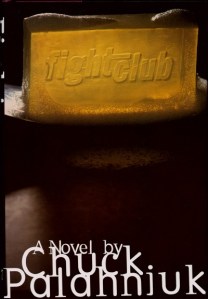
5.) The Narrator & Tyler Durden of Fight ClubThe lead feels that modern society emasculates.


4.) Christopher McCandless of Into the Wild:  This is non-fiction, but it’s a great story of a man who believes that modern society robs individuals of self-reliance.


3.) Ray Smith of Dharma Bums: The lead character and his compatriots feel that modern society is devoid of a spirit of transcendence.


2.) Narrator [and Ishmael] in Ishmael: Author, Daniel Quinn, suggests that modern society is composed of “takers”–in contrast to the “leavers” of aboriginal societies.


1.) Harry Haller of Steppenwolf: Haller can’t cope with what he sees as the triviality of modern society.

BOOK REVIEW: Collected Poems 1947 – 1997 by Allen Ginsberg

Collected Poems 1947-1997Collected Poems 1947-1997 by Allen Ginsberg
My rating: 5 of 5 stars

Amazon page


This “collection” is actually 13 collections bound together in one volume that presents much of the published poetry of the Beat poet Allen Ginsberg over the second half of the 20th century—till his death in 1997. Ginsberg is probably best known for “Howl,” which is both the name of the third collection in this book and the poem for which it was named (i.e. “I saw the best minds of my generation destroyed by madness,…”) However, Ginsberg’s work is extensive, and one can find many a lesser known gem inside.

Ginsberg’s body of work isn’t just copious; it’s also highly varied stylistically. While Ginsberg most commonly uses free verse, he also uses rhyming / metered poems, shaped poems, variations on haiku, musical lyrics, and–in rare instances–prose form poems and puzzle poems.

While Ginsberg’s work is also thematically varied, there are a number of recurring themes. First, as one might expect of the author of “Howl,” Ginsberg’s work is highly politically charged. One gets a history review of the latter 20th century from reading this volume. Ginsberg rails against the war in Vietnam, against the Iran-Contra affair, and against alleged CIA drug dealing at home and abroad. It should be noted that while Ginsberg’s views are expectedly counter-culture, there isn’t the delusional glorification of the opposition that one often sees from many political writers. That is to say, as Ginsberg rebukes capitalists and conservatives, he also takes on the Soviets and other leftist regimes who engaged in human rights violations or war-mongering.

Second, as one might expect from the inspiration for Alvah Goldbook in Jack Kerouac’s “Dharma Bums,” Ginsberg frequently references Eastern spiritual traditions—notably Tibetan Buddhism and Zen. There are a number of poems set in places like Varanasi (Benares) and Siem Reap (Angkor) that reflect Ginsberg’s traveling exploration of these systems. Of course, Ginsberg was a traveler in general, and so there are a number of poems set in the Western Hemisphere and Europe as well. Ginsberg also writes a little bit on his birth religion, Judaism, but usually in a secular manner and sometimes while rebuking the actions of Zionists.

Third, there are many [mostly homoerotic] sex poems in the collection. For those who are sensitive about such matters, I don’t use the term “sex poem” as a sloppy substitute for the word erotica. These aren’t erotic love poems in the conventional sense, they are usually graphic and Ginsberg purposefully uses provocative, shocking, and sometimes lurid wording to evoke a response in the reader. If reading about Ginsberg’s sexual adventures will cause you emotional trauma, be forewarned.

There are end-notes that can be quite helpful, particularly if you’ve forgotten some of your 20th century history, are unfamiliar with Beat trivia (all of the characters from Kerouac’s “Dharma Bums” make an appearance), or aren’t familiar with the various yogic and Buddhist gurus who Ginsberg refers to. (The first set of notes oddly comes after the 10th collection. that’s because this collection is actually even more of a matryoshka doll than I suggested. The first 10 collections are actually collections inside a collection (“Collected Poems 1947 – 1980”) that’s inside a collection (“Collected Poems 1947 – 1997”.) The last three collections have their own end-notes immediately following them.

There are few graphics, mostly the music to poems that are—or can be—set to music.

I’d recommend this collection to poetry readers, particularly those who enjoy Beat period language. As I mentioned, the delicate political or sexual sensitivities of some readers may be offended. On the other hand, as I always say: If you’re not reading outside your comfort zone, you shouldn’t consider yourself so much educated as indoctrinated.

View all my reviews

BOOK REVIEW: Doors of Perception & Heaven and Hell by Aldous Huxley

The Doors of Perception and Heaven and HellThe Doors of Perception and Heaven and Hell by Aldous Huxley
My rating: 5 of 5 stars

Amazon page


The two essays collected in this thin volume recount Aldous Huxley’s experience taking mescalin (a psychedelic drug / hallucinogen derived from a cactus root) in the 1950’s, and the insights derived from that experimentation. The book contains descriptions of what Huxley observed under the influence, such as the hallucinations of “sacred geometry” that are common among those consuming hallucinogens. However, much of these essays are about how what he witnessed mirrors art and the text of mystical religions. Huxley provides a steady diet of food-for-thought on these topics. It is when Huxley relates the psychedelic experience to the mystical, religious, and artistic experience that I found this volume to be the most intriguing. “The Doors of Perception” is a mix of description and discussion of these linkages. “Heaven & Hell” delves much more deeply into said linkages, and I was blown away by some of the ideas in the latter essay. There is also a bit of discussion of the commonalities between schizophrenia and psychedelic experience.

Huxley devotes some space in both essays to discussing the science of these experiences, but I don’t see those parts as the strength of the volume. While Huxley was a scientifically minded fellow, his reporting on science errors on some of the grand scale issues (e.g. memory, which is far more fallible than was thought in his day.) (Specific [small-scale issue] findings are probably accurate.) The thing is, Huxley was also a mystic and he viewed biology as a “reducing valve” that mitigated our experience of consciousness—a grand field existing wholly beyond the nervous system, such that our experience of it was hemmed in by biology—rather than being created by it. This isn’t particularly a criticism. For one thing, when one beholds the bold sensory experiences that Huxley witnessed and contrasts them to the visualization of everyday consciousness, it’s hard not to believe that one is on a plane entirely outside the bonds of biology. While I’ve never done psychedelic drugs, my limited experience with the more-real-than-real world of lucid dreaming makes me sympathetic to this long-held and widely held belief. Additionally, neuroscience was still in it’s infancy during Huxley’s time. [It may still be in its infancy, but a great deal has been learned—particularly since the technology of the 1990’s—that points to biology being the source of many of these experiences that seem amaterial.]

The two essays are each short. “The Doors of Perception” is about 50 pages, and “Heaven & Hell” is about 40. Even with the front matter and appendices, the book comes in at only a little over 120 pages.

There are no graphics in this volume, nor is it annotated—except for in-text references and a few footnotes. With respect to front matter, there is a Forward by J.G. Ballard and an Introduction / bio-sketch of Huxley by David Bradshaw. There are also a series of appendices that report on various topics related to mystical / psychedelic experiences such as the effects of CO2, strobe lights, and starvation, as well as the relationship to lighting, works of art, and mental illness.

If one is interested in alternate states of consciousness, I’d highly recommend this book. Huxley’s ability to capture his experience vividly and his thought-provoking suggestions about the experience make these essays worth the read.

View all my reviews

BOOK REVIEW: Lab Girl by Hope Jahren

Lab GirlLab Girl by Hope Jahren
My rating: 5 of 5 stars

Amazon page


This book is in part the autobiography of a female scientist with a career in a field that is both male-dominated and in which basic science is the meat and potatoes—by which I mean a discipline with few of the commercial applications at which companies, foundations, venture capitalists, and governments are willing to throw millions. Interspersed into the autobiographical chapters are short essays on trees and the ways they survive, grow, and interact with each other and their environments. So it’s a mix of biography and pop science, and was one of the most well-received science-themed books of last year (2016.)

The book is arranged into three parts. The first 11 chapters are entitled “Roots & Leaves” and these cover Jahren’s path to becoming a scientist from her childhood in an unexpressive Scandinavian family in rural Minnesota, through her college job in a hospital lab, and onto her graduate education. Part II consists of 12 chapters that cover Jahren’s years as a junior faculty member, most of which takes place at (my alma mater and former employer) Georgia Tech. The title of this chapter, “Wood & Knots,” gives one some indication of where the author’s story sits in this part of her life. She experiences both growth and set-backs during her time in Atlanta. The last part, “Flowers & Fruit,” describes the period in which not only her professional life, but also her personal life begins to bear fruit. During these years she moved her lab to Johns Hopkins, got tenure, built a family, and eventually moved to Hawaii to work for the University of Hawaii.

Besides Jahren, the only other major character in the book is her side-kick Bill, who was an undergraduate where she did her doctorate in California. The two met when Jahren was the Teaching Assistant for a course that Bill took, and subsequently he followed her from lab to lab as her research assistant. Bill’s mix of workaholic diligence, nerdiness, dysfunction, and adroit sarcasm made him a sort of soulmate of science. Their strange, platonic relationship is at the heart of the book, and is in part what keeps the reader wondering and turning pages. Her dog, her husband, and her child are all secondary characters by comparison (perhaps not in her life but in the science-centric story she is telling) though her son becomes a central player near the book’s end. The other people are cameos by grad students and other faculty members.

Jahren’s use of language is skillful and at times poetically beautiful. There’s a great deal of humor in the book, much of which stems from the dialogue between her and Bill. While the parts of the books about trees didn’t wow me as much as Wohlleben’s “The Hidden Life of Trees,” that may be because I read his book first and, therefore, was clued into some of the fascinating arboreal secrets. That said, these botanical sketches are intriguing and readable. The only place that the book bogged down for me was in incessant complaints about the difficulty of keeping a lab funded. (And this is from a person who was paid from grant money—job perpetually at risk–at the same Institute where Jahren struggled. But now I’ve lived in India for the past four years so… first world problems, right?)

I’d recommend this book for readers generally. I think it may be particularly insightful for young women choosing a career in science, but the book shouldn’t be shunted into a parochial box. There are a number of elements that will keep one reading. For some it will be a fascination with the unexpectedly complex life of trees. For some, the tension of this life story may have a lot to do with the mental health issues that Jahren struggles with. These issues aren’t put front and center in the book, but there are points at which their impact is felt. A few will just be wondering what exactly is going on with her relationship with Bill.

View all my reviews

BOOK REVIEW: Jnana Sankalini Tantra by P. Prajnanananda

Jnana Sankalini TantraJnana Sankalini Tantra by P. Prajnananda
My rating: 3 of 5 stars

Amazon page


Tantra is in a class with quantum physics as a topic that everybody likes to talk about but no one seems to understand. But the situation is worse because everybody can have an opinion about what Tantra is and who’s to say one is correct and another is not. Therefore, there are many conceptions of Tantra floating around out there. Unfortunately, I can’t say that this book will clear up the topic, though it does offer a great deal of information in a readable package.

In the West, Tantra is mostly about having longer and more satisfying orgasms during sex. In India, that is seen a great oversimplification, but there’s an entirely different muddling of the topic. If there were pro-Tantra and anti-Tantra parties, the topic could remain clear despite differing views on the validity of the approach. Everybody might agree about what Tantra is, but veer apart as they say why they like it or loath it. However, there’s another faction, and that’s the mainstream religious personalities who want to selectively utilize bits and pieces of Tantra that they find useful, while suggesting other parts of it are all just a misunderstanding. And, again unfortunately, that is where this book stands.

As my criticism may not make sense otherwise, I’ll try to explain something I was taught about Tantra. As it was described to me, Tantra (the yogic version, Buddhist Tantra may vary entirely) was—at least, in part–a practice of engaging in endeavors that might be considered distractions on the path to overcome them. Whereas, mainstream religion says, “x is bad, never do x,” Tantra says “x can be a distraction, and so I should engage in x in a mindful way so that it no longer controls me.” This is where the focus on sex comes in. It’s not that Tantrics were perverts; they just believed they could achieve some manner of transcendence through its practice.

My primary complaint is that this book selectively takes what it likes and strains credulity by suggesting the material it dislikes is all a misunderstanding of a selective code. So there is this idea of the five principles (panchatattvas or panchamakara) and they are five practices of Tantrics consisting of consumption of: alcohol, meat, fish, roasted/fried foods, as well as sexual activity. Now, most of these are objectionable to the modern Hindu, but the author says that these were all just code for a practice of breathing with one’s tongue pressed to a certain spot on the roof of one’s mouth. Why was kechari mudra so super-secret that one had to call it sex or fish-eating? (And why would one use a code consisting of activities one finds severely objectionable?) I don’t know, the reader is just left to believe that it makes sense.

Now, should I conclude that the entire work is in code? For example, when it says that finding a good teacher and following them is important, might they really be saying that I should “Find a river otter to take to Disneyland?” No. Because only the parts that the author and his sect finds contrary are encoded, everything else is to be taken literally.

Now, the offending section is only a small part of the book, and the topic of yogic Tantra. However, the degree to which it strains credulity makes it difficult to believe anything else the books says.

The book is in two parts. The first part is an introduction to jnana sankalini tantra (JST), and the second part is the 110 verses of the JST—said to be a dialogue between Shiva and Parvathi on Tantra—with analyses by the author.

I believe that this book contains a lot of interesting ideas, but, being a neophyte to the subject but with a degree of expertise in detecting faulty logic and religious dogma, I didn’t feel I could trust the book entirely.

If you are a mainstream Hindu who wants a palatable description of Tantra that doesn’t offend your sensibilities, this is probably a great book for you. If not, I don’t think you’ll have any better idea of Tantra is than when you started.

View all my reviews

BOOK REVIEW: Anatomy of Hatha Yoga by H. David Coulter

Anatomy of Hatha Yoga: A Manual for Students, Teachers, and PractitionersAnatomy of Hatha Yoga: A Manual for Students, Teachers, and Practitioners by H. David Coulter
My rating: 5 of 5 stars

Amazon page


There are many books on anatomy for yoga, and I’ve read my share, but this is my favorite.

What did I like about it? First, Coulter examines the anatomy and physiology of breathing in some detail, and that’s an important topic that is overlooked by many others. A lot of yoga anatomy books stick exclusively to the musculo-skeletal system. Second, this book doesn’t mix science and pseudo-scientific mythology. Sometimes books shift from talking about arteries and veins to nadis and chakras in a manner that can be confusing and counterproductive. Third, the book discusses how postures can be safely varied for individuals with limits, as well as discussing the most advanced expression of postures for more flexible or skilled students.

What’s the catch? There must be a downside? Well the book is dense and it’s a challenging read. It’s not that the writer uses too many technical terms. That isn’t the case at all. In fact, Coulter is careful not only about using anatomical terms, but also avoids reliance on Sanskrit names as well. It’s just that there is a lot of material that one must read painstakingly while visualizing and–in some cases—tactically probing around one’s body (or someone else’s–if they’ll let you.) I don’t know that there’s much that could be done about this, given the desire to convey the material that the book does—and it’s valuable information. The book has a large number of graphics that mostly consist of anatomical drawings and photographs of the various versions of the postures. It’s possible that more graphics could have been used to reduce the amount of descriptive text, but—on the other hand—reading it slowly and carefully is a useful and productive exercise. And, if you’re not reading it for your RYT-500, you can take your time and read it section by section, as time permits, over the course of more than a year as I did.

The ten chapters of the book are mostly divided up by classes of posture (asana.) Chapter 1 is about “movement and posture” and provides the necessary background that one will need to understand the later chapters. Chapter 2 is on breathing–both the musculature involved and the physiology of it. The rest of the chapters are on core exercises, standing postures, back bends, forward bends, twists, headstands, shoulder-stands, and meditative postures, respectively.

The book has a glossary, a short bibliography, and two indexes (one by anatomical parts and the other by practices/postures.) I normally don’t bother to mention indexes, but in this case it’s useful to know because the book’s organization is by type of posture, and so it’s not always straight forward where various muscles or tissues are being covered.

As I say, I found this book to be tremendously informative. I recommend it for yoga teachers as well as intermediate / advanced practitioners.

View all my reviews