BOOK REVIEW: Don’t Kill Him by Ma Anand Sheela

Don't Kill Him! The Story of My Life with Bhagwan RajneeshDon’t Kill Him! The Story of My Life with Bhagwan Rajneesh by Ma Anand Sheela

My rating: 3 of 5 stars

Amazon page

There are some nonfiction books that one reads because one wants the objective, unvarnished truth about events. This is NOT that book. Some books you read knowing they are going to contain a mix of truth and falsehood–fact and fiction–and you read them believing you can gain insight from both the truth and the falsehood–if you consider the words analytically in light of known facts. This is that kind of book.

Don’t Kill Him is an autobiographical account of Ma Anand Sheela’s (a.k.a. Sheela Ambalal Patel’s) life as the secretary / spokeswoman / project manager / Pepper Potts for Bhagwan Rajneesh (a.k.a. Osho.) As such, while it is about the life of Sheela, the central character is the Bhagwan Rajneesh. This is indicative of the narcissistic but charismatic cult leader—who must be the center of attention—and the infatuated cult member for whom the “guru” is everything. What one really gets in this book is insight into the mind of a person prone to join a cult.

Chances are you know of the Bhagwan Rajneesh in one of two very different ways. As Osho, he’s an enlightened guru who penned over 600 books on spiritual topics from Taoism to Tantric sex, who attracted a vast following of wisdom seekers, and who to this day has a centers globally in his name—despite having died in 1990. As the Bhagwan Rajneesh you may know of him as a petty narcissist who built a stunningly successful cult of personality, and who in all likelihood green-lighted a salmonella attack on a rural populace in Oregon in an attempt to sway a local election so that certain dodgy practices could be carried out at his commune.

Sheela comes across as quite reasonable in the book. Gone are the days when she made replies to questions such as “tough titties” or a horrifying Holocaust joke. She claims that her former outlandishness was part of a role that she played on behalf and at the behest of the Bhagwan, but playing the victim in the face of entire world that conspired against her in her selfless virtuousness is a prevailing theme throughout the book.

Read carefully, there is plenty of evidence that all is not right with the author’s mind. She barely addresses criminal charges for which she was given sentences in total of 64 years (though, because they were to be served concurrently, the most she would have served would have been 20—and in reality she served less than two-and-a-half.) She talks more about the least of the charges–visa fraud then the attempted murder and assault convictions. She merely asserts that there was a vast conspiracy involving the German government (who extradited her), the U.S. criminal system (which indicted her), and at least two different factions of the Rajneeshee cult (one being exemplified by the Bhagwan, himself, and the other by David Berry Knapp, the mayor of Rajneeshpuram (the incorporation of the cult compound) who not only dropped a dime on Sheela but also implicated the Bhagwan)

While it’s fair to say mistakes are made in the American criminal justice system now and again, the scale of conspiracy that would have to be involved in Sheela’s case strains credulity. Her suggestion that a criminal justice system that protects defendants as much as anywhere in world is completely corrupt comes off as a bit sad and pathetic. Here and there she points out that there were one or two good people in the jail or justice system, but one soon suspects that these are just other deluded cult-prone individuals ready to drink the Kool-Aid themselves. Interestingly, while she claims there was not a shred of evidence against her, she made an Alford plea. (You’ll be forgiven for not knowing what an Alford Plea is, as it’s something only the mind of a lawyer could come up with. One pleads guilty while asserting one’s innocence. In essence, one says, “I’m really not guilty, but there’s enough evidence to convict me so I want to make a deal to get less prison time.” Of course, she makes paranoid-sounding claims that the American criminal justice system as justification for not standing up for her own innocence.

The only bad decision of any note that the author ever admits to making is slapping one of the followers, an act for which she claims both Bhagwan Rajneesh and the commune forgave her. These repeated claims that while her life was falling apart it was because almost everyone else was wicked while she was a victim wear a little thin. She claims that all the accusations against her resulted from her decision to leave because of her guru’s latest decision to bilk wealthy followers to pay for more Rolls-Royces. There may be a seed of truth in this. The Bhagwan also claimed that she embezzled money, a charge that was not covered in the charges for which Sheela was convicted. It’s as likely as not that any shortage of funds resulted from the Bhagwan’s own materialistic addictions. Whether his accusations about the bioterror attack were spurred by being spurned by this assistant cannot be known. Of course, it could also be that he wanted to separate himself from the felony indictments that were becoming increasingly inevitable.

The title, Don’t Kill Him, comes from Sheela’s repeated suggestion that, while the Bhagwan was a madman, one shouldn’t destroy the legacy. It’s this back and forth between deifying and castigating the Bhagwan that gives one insight into the mind of a cultist—but also leaves one scratching one’s head at what the author’s point is. When she suggests that he was a petty, narcissistic, greedy drug addict who should be exalted, it’s a bit dumbfounding for the average individual. It seems to be a textbook case of infatuation with the charisma of an otherwise deplorable human being. There is this widespread confusion of charisma with enlightenment that is intriguing. Early in Chapter 4 and later in Chapter 5, the author suggests that the Bhagwan set up her imprisonment as part of her education. That level of delusion is astounding.

There are those who’ll say that Sheela is right and others who’ll tell you that she is just trying to bash the Bhagwan—albeit in a very ambivalent way. I’m here to tell you that this book leaves the reader with one logical conclusion, and that’s that both Sheela and the Bhagwan were coo-coo for Coco-Puffs.

View all my reviews

BOOK REVIEW: Cabinet of Curiosities by Preston & Child

The Cabinet of Curiosities (Pendergast, #3)The Cabinet of Curiosities by Douglas Preston

My rating: 3 of 5 stars

Amazon page

Cabinet of Curiosities features many of the hallmarks of a Preston and Child novel. First, the lead is FBI Agent Pendergast. Special Agent Pendergast has three things that no FBI Special Agent in the history of the FBI has ever had: 1.) a fortune, 2.) the ability to pick and choose both his assignments and the jurisdiction he works in, and 3.) about 200 vacation days a year to learn things like ikebana and to read random scholarly publications in disparate fields such that he is an expert on the known Universe.

Regardless of the incredulity his character may inspire, Pendergast is a fascinating character. He has a New Orleans accent and an almost albino complexion, which intrigues–and puts him outside the New York / Chicago/ LA nexus in which cop fiction frequently gets stuck. (Don’t worry; the NYPD quota is still met.) Furthermore, his encyclopedic knowledge of everything allows him to constantly get the better of any and all unlikable characters in the book—and, in these books, you are either likable or loathable. It also features other Preston & Child familiars, including Nora Kelly and William Smithback Jr.

Second, it features the supernatural, preternatural, or at least the appearance of the aforementioned. This is all part of a dark and mysterious tone they have down to an art. This goes back to their first book Relic.

Third, one of the likable characters gets killed off.

The title, Cabinet of Curiosities, refers to collections of natural anomalies that were all the rage in the 19th century, and which served as mini museums of natural history. These cabinets (sometimes also called “wonder rooms”) might feature genuine exhibits, fakes, or some combinations thereof.

The novel begins with Agent Pendergast seeking Nora Kelly’s expertise to assist him in investigating a 19th century mass murder. The remains of the deceased were found in a building that’s being torn down to put up a high-rise, but it used to be the basement of a cabinet of curiosities.

We don’t get any clue as to why an active duty FBI agent would take an interest in 19th century murders until late in the book. [Of course, we never find out why Pendergast is allowed to investigate it.] I’ll leave it to readers to determine whether the ultimate explanation makes any sense or not. Needless to say, the murder and mayhem come to the present day over the course of the novel.

While I might sound down on both this book and the series, I’ve read seven of the books jointly authored by Preston and Child (and one or two from each as solo authors.) It’s, therefore, unreasonable to say that I dislike their work. However, I will say that I didn’t like this one as much as some others (e.g. Relic and Still Life with Crows.) I’m not entirely certain whether this one was just not as good, or whether I’ve become a bit jaded from over exposure to their formula. (Maybe doing so many book reviews of late has made me over analytical, and commercial fiction—like popular movies—are easy pickin’s for criticism.)

That said, I have three major criticisms of this book:

First, there’s a critical happening that requires someone so brilliant (yet unknown and working solo) that they could invented a technology in the 19th century that modern scientists couldn’t even fathom duplicating. This is sort of a common theme in some steampunk works (e.g. the Will Smith Wild, Wild West movie). However, steampunk creates its own world, distinct from the world as we know it. I can buy some kinds of “lost knowledge” lines, such as the idea that some plant-based medicinal compounds have been lost due to deforestation and loss of the experience of native peoples (this was the premise in Preston’s solo work, The Codex). However, in Cabinet of Curiosities there is a scientific discovery critical to this novel which is of a complex nature. It’s impossible to believe that it could be done by someone without modern equipment or access to the vast scientific literature of the intervening century.

Second, while I don’t want to sound like someone who poo-poos cross-genre novels, there’s a problem with this book not knowing whether it’s a mystery/thriller or supernatural/horror. In general, I love cross-genre work. However, a thriller needs some sort of realism to pull us in and mysteries call for some sort of rules or the game. If anything can happen (or if we don’t know the rules of what can happen) it’s a bit unsatisfying to try to noodle out whodunit.

Third, the reveal of the villain seems a bit forced. It’s not quite Scooby-Doo because they create several despicable characters to choose from—and not just one grumpy old man who you know is going to be the guy. However, it seems a little like they rolled dice to determine which detestable character would be the villain. In retrospect one can find foreshadowing, but no more for the actual villain then for the others one might suspect.

If you’re willing to suspend a truckload of credulity this is a good read for beaches, airports, and trains. The authors know how to pique your interest and build tension. It’s not their smartest book, but it’s a fast and fun read.

View all my reviews

BOOK REVIEW: Higher Judo by Moshe Feldenkrais

Higher Judo: GroundworkHigher Judo: Groundwork by Moshe Feldenkrais

My rating: 4 of 5 stars

Amazon page

If you’re at all familiar with Dr. Moshe Feldenkrais, most likely it’s for the system of bodily awareness and efficient movement that bears his name (i.e. the Feldenkrais Method.) You may be completely unaware that Feldenkrais was a first-rate judōka who trained under judō’s founder Jigoro Kano, and that his experience with judō played a major role in his understanding of the principles of natural and efficient movement. (It should be noted that Feldenkrais was neither a medical doctor nor a doctor in a medical / biological field, but was a physicist by training.)

Higher Judō was originally published in 1952, and was out of print for many years until a new addition was brought out in 2010 (with three new forwards and some additional back matter.) It’s not hard to imagine why the book made a comeback after such a hiatus–and 26 years after the death of Dr. Feldenkrais. The book explains the ground fighting techniques of judō, which are the basis of Brazilian Jujutsu (BJJ), and BJJ is a dominant form of ground and submission work within Mixed Martial Arts (MMA.) Given the immense popularity of MMA, and the desire of fighters to hone their technique to the utmost, it’s a good time to bring this half-century old book back to the fore.

The book consists of twelve chapters. The first half of these chapters deals with preliminaries such as principles of movement, philosophy, and basic movement exercises. The second half gets into the tactics of ground work. The arrangement for the latter chapters is largely by position of the competitors relative to each other (e.g. the mount, 12 o’clock, side control, in the guard, etc.)

The first half has few graphics, but the last half is packed with line drawings that are based on photographs (ostensibly it was cheaper or easier to reproduced the line drawings back in the day.) The line drawings offer sufficient detail so that one can see what is being done (to the degree one would be able to see it in a photo or even in person—i.e. some of the techniques are subtle and the written description becomes essential.)

The book is a good overview of the basics of ground work with a few unusual and rare techniques thrown in. Feldenkrais points out that some techniques are more important than others, and that one should drill a few of the most critical ones rather than focusing a lot of time on the more eccentric techniques. As I’ve written many times before, I don’t believe that one can learn a martial art from a book. However, if you’ve been taught these types of techniques, you’re sure to find this book an interesting reference with some ideas for approaching ground work training.

Some of the characteristics of the book could be taken as positive or negative, and I’ll leave it to the reader to decide. First, Feldenkrais avoids using names for techniques. He uses neither the common Japanese names for the techniques (e.g. there’s no reference to juji gatame, tomoe nage, or hadaka jime) nor the common English names. He goes by figure number attached to the aforementioned line drawings. Second, he has thoroughly cross-referenced the book such that you might be on the page containing figures 228 and 229, and he’ll make reference to figure 52. So the book involves a lot of turning back (I wrote in the page numbers where off-page figures were referenced so I wouldn’t have to find what page the figure was on each time.) Third, Feldenkrais is a scholar by training and is not averse getting a bit wordy and verging on abstruse. Of course, the flip-side of this is that he provides a great deal of precision in his language. That being said, I found this book readable and much less ponderous than one of his Feldenkrais Method books that I read.

I’d recommend this book for anyone interesting in gaining a better understanding of ground fighting. In the early sections of the book he provides excellent food for thought about the judō approach to movement, and in the latter half he catalogs the basics in a thorough and logical fashion.

View all my reviews

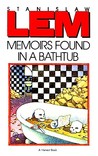
BOOK REVIEW: Memoirs Found in a Bathtub by Stanislaw Lem

Memoirs Found in a BathtubMemoirs Found in a Bathtub by Stanisław Lem

My rating: 5 of 5 stars

Amazon page

If you enjoyed Joseph Heller’s Catch 22, which is to say you like gallows humor that scoffs at the folly of thinking of “bureaucratic logic” as anything other than an oxymoron, then Stanislaw Lem’s Memoirs Found in a Bathtub will be right up your alley. The premise is that future archeologists are trying to decipher what happened to humanity from a dearth of remaining documentation. One of the best and most extensive of these records is the memoirs of a bureaucrat telling of his experience in a subterranean complex that reads a lot like a spoof on the Pentagon. The 31st century timeline in which a future generation tries to understand the intervening dark ages is only discussed in the prologue, the remainder is the first person account of this bureaucrat of ill-chosen profession.

The narrator tells us about his final assignment, one that was so secret that his superiors couldn’t even tell him what it was. When he finally does get some written guidance, it’s stolen. Throughout the story, the author is shifting through various departments of this complex trying to figure out what is going on and with little initial success. At first he’s trying to figure out what his mission is, but later he’s just trying to figure out what’s real and meaningful–and if those concepts retain any usefulness. Along the way, odd and spectacular events occur that leave him thinking he’s being framed. He doesn’t know if he’s in a test, in the middle of a conspiracy, or amid a collection of lunatics.

There are sections that read quite like a Monty Python sketch, and the absurdist humor is sometimes like that of Douglas Adams–though more sparing and dark. There’s a scene featuring an officer who tries to talk the narrator into confessing, and I could only picture said officer in my mind as Eric Idle. Among the absurdist elements is the explanation of office operations. We are told that command was unable to deal with accurately and swiftly circulating memos because of the volume, and so they took to a random system in which paperwork was indiscriminately circulated until it happened upon the correct desk. There’s an officer who begins to chew and swallow envelopes to prevent information from falling into the wrong hands. One of the best examples of absurdist humor is a conversation with a cryptologist who suggests that everything is a code and, ignoring messages that seem to be of military value and that are not coded, takes to using a machine to “decipher” random literature into nonsensical messages.

Nothing is as it seems in this book, and the humor derives from the narrator being the only individual who insists on the world making sense. If you’ve ever been in a position where you had to interact regularly with a bureaucracy, you’ll understand the value of laughing at such humor to avoid weeping. Much of the humor comes from the desire to keep things secret while trying to know everything there is. The narrator keeps finding not-so-subtle fly-shaped spy devices on his coffee saucer. There are blatant lies about behavior that takes place right before the narrator’s eyes. When he’s institutionalized, it turns out that the other inmates are not at all who they seem to be either.

If Stanislaw Lem is not an author familiar to you (he’s a Polish writer who died in 2006), this is a good work to cut your teeth on. It’s not one of his most well-known pieces, but it’s humorous and easier to follow than Solaris. Fans of Kurt Vonnegut and Robert Heinlein are also likely to enjoy this book. I recommend it.

View all my reviews

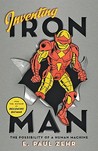
BOOK REVIEW: Inventing Iron Man by E. Paul Zehr

Inventing Iron Man: The Possibility of a Human MachineInventing Iron Man: The Possibility of a Human Machine by E. Paul Zehr

My rating: 4 of 5 stars

Amazon page

As the title suggests, this book examines whether Iron Man could exist in the real world. As with Michio Kaku’s book Physics of the Impossible, answering the question involves defining the various meanings of “impossible.”

One way to parse the question is, “Is Iron Man possible today given the existing state of technology?” In and of itself, this question is of limited interest because the answer is, “no.” There’s certainly a demand, and so if Iron Man could exist given current technology, he probably would. That’s not to say it isn’t interesting to learn about what technologies are holding us back and where the cutting edge of relevant technologies lies—both of which are addressed by the book.

Still, a more interesting inquiry is, “Will Iron Man ever be reality given the physical laws that we know to govern the universe?” While more intriguing, it’s also a harder question to definitively answer. It’s impossible to foresee all the technological developments that might come along to answer the seemingly insurmountable challenges (e.g. Tony Stark’s inevitable Traumatic Brain Injury (TBI).) The book deals with the critical question of what challenges would have to be overcome for Iron Man to be reality.

As Zehr suggests, the appeal of Iron Man is that he’s considered to be among superheroes for the common man. Like Batman, the sufficiently bright and diligent nerd may fantasize that, “That could be me.” You or I can’t be Superman or Wolverine, but given enough money, smarts, and training we could be Batman, or—even better—pilot the Iron Man suit. Put in this light, the book may seem like just another frivolous attempt to capitalize on the popularity of superheroes to sell books. However, there’s actually a great deal of food for thought packed in the book. Like others, I read the book because its title is Inventing Iron Man and not Neuro-motor control of a self-propelled armor system or some other suitably scholarly title.

Dr. Zehr has the bona fides to delve into this topic. He is a Professor who investigates questions of how the nervous system controls movement. That subject may not constitute the sum total of critical concerns, but it’s one of the most important challenges. For Iron Man to move the way he does in the movies and comic books, Tony Stark’s impulses to move have to be transmitted seamlessly to the servo-motors that move the suit. From dodging Col. Rhodes’ (i.e. War Machine’s) punches to ducking RPGs, Stark can’t be quick enough if he has to manually steer the device. Then, of course, there’s the issue of feedback. Any neophyte meditator who’s had his or her foot fall sound asleep will know how difficult it is to walk surefootedly when one can’t feel anything through one’s foot.

[Iron Man 3 spoiler commentary in this paragraph.] One of the most damning challenges for making Iron Man a reality is the high probability of severe concussions. Let’s say you make the suit out of a material that is virtually indestructible? This may be possible. However, the pilot’s mushy brain is still sloshing around inside that impenetrable armor. One can remotely pilot the suit in order to negate this (as has been done in the comic books and the third movie), but—at that point—is it still Iron Man? I know from a writer’s perspective it’s a lot harder to maintain tension if there’s nothing human on the line. In the third movie about 30 autonomously piloted suits get wiped out and the viewer doesn’t care—the only source of tension is that Tony Stark is without armor half the time.

Some of the most interesting discussions are about where the current state of the art lies with respect to: a.) direct mind control over mechanical systems; b.) a “flying suit”; and c.) robotic movement enhancers. Zehr conducts interviews with those engineers and technologists involved in such technologies, and finds out where we are presently. Letter “a” above seems to be the least developed of the three technologies, but they are all active lines of research.

I enjoyed this book and found it interesting. I think anyone who is interested in the state of technology and its limits will find it a nice pop-sci introduction to the subject. The use of superheroes as a pedagogic device may be overdone, but it continues to work because we are fascinated by the edge of possibility, and that’s what superheroes represent.

View all my reviews

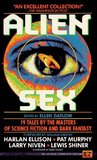
BOOK REVIEW: Alien Sex Ed. Ellen Datlow

Alien Sex: 19 Tales by the Masters of Science Fiction and Dark FantasyAlien Sex: 19 Tales by the Masters of Science Fiction and Dark Fantasy by Ellen Datlow

My rating: 4 of 5 stars

Amazon page

Alien Sex is an anthology of 19 works of short fiction that revolve around sex, attempted sex, or sex-like behavior with non-human entities. While the title leads one to believe the book is specifically about sex with aliens from outer space, that’s not the case in all these stories. There are also stories where the object of affection is a lesser primate, an incubus, a new species, and a biologically-modeled robot. As one would expect with life forms from other worlds, the “sexual” act is not always what we would recognize as sex. (e.g. One planet’s whoopee might be another’s mundane act.) As a last warning about what the book is not, it’s not—on the whole—a collection of sci-fi erotica. A number of the stories probably wouldn’t be arousing to the freakiest of super-freak, and I can only assume weren’t meant to be.

While there’s a unifying theme, the works included cover a lot of ground in terms of style and format. It’s not even true to say it’s 19 short stories because there’s one poem and one chapter that reads more like an essay (i.e. lacks a narrative structure.) Some of the works are written in the language, tone, and style of erotica, but others aren’t. A few of them read like thinly veiled commentary on problems in the author’s own love life—i.e. cheating spouses, feeling a lack of attentiveness, or porn addiction. (Each work has a brief author commentary at the end, and a couple of the authors suggest that what was going on in their own life or those close to them shaped the idea.)

While the appeal of the works varied significantly, overall this was a fun and intriguing read. The works included are as follows:

1.) Her Furry Face by Leigh Kennedy
A primate handler who is in a waning marriage falls for one of his super-intelligent orangutan students.

2.) War Bride by Rick Wilbur
The world is going to end tomorrow unless you’ve been taken as a pet by one of the aliens.

3.) How’s the Night Life on Cissalda by Harlan Ellison
A man sent to investigate an alien race becomes inextricably sexually entangled with one of the aliens. Eventually, he’s forcibly separated from the alien—of a race that are apparently thin-skinned—and lives to see the descent of mankind.

4.) The Jamesburg Incubus by Scott Baker
A teacher in a Catholic school finds that he can make out-of-body nocturnal visits to some of his more attractive female students.

5.) Man of Steel, Woman of Kleenex by Larry Niven
This reads more like an essay than a short story. The work delves into the physics of why sex with Superman would be fatal for Lois Lane.

6.) The First Time by K.W. Jeter
This is a variation on the old coming of age story in which a young man is taken to a brothel for his first sexual encounter. It’s just that this encounter is of the 3rd kind.

7.) The Jungle Rot Kid on the Nod by Philip José Farmer
The premise behind the story is what if William S. Burroughs (author of Naked Lunch) had written the Tarzan stories instead of Edgar Rice Burroughs. In essence, it’s a risqué take on Tarzan.

8.) Husbands by Lisa Tuttle
After the extinction of husbands, a woman develops a new species to serve the companion role.

9.) When the Fathers Go by Bruce McAllister
A husband confesses to his wife that while she was in stasis waiting for him to come back from interplanetary travel, he sired a child with an alien. Furthermore, the child is coming to live with them. But wait there’s more…

10.) Dancing Chickens by Edward Bryant
This story reads more like an overly elaborate joke than a short story. It begins with the question, “What do aliens want?” and ends with a pun punch line. That being said, the lead is an unappealing but intriguing character.

11.) Roadside Rescue by Pat Cadigan
A stranded motorist is made an indecent proposal by a chauffeur on behalf of his alien employer.

12.) Omnisexual by Geoff Ryman
This is about an intergalactic brothel, but it’s the story in the collection that reads most like literary fiction—meant in both the best and worst possible ways.

13.) All My Darling Daughters by Connie Willis
While there are several really good works in this anthology, I’d have to rank this as my favorite—if only by a narrow victory. A sassy, sexually-liberated co-ed has her sex life torn asunder when all the young men come back from break with little, furry creatures in their possession and no interest in the female student body. Besides a neat concept for a story (though it may be implying that men are overwhelmingly rapey), the author does a great job of character development making the lead character both interesting and likable, while juxtaposing her with her apparently goodie two-shoes roommate.

14.) Arousal by Richard Christian Matheson
A woman who cheats on her husband with a stranger is cursed with permanent post-coital euphoria that swamps all interest in her family and life in general.

15.) Scales by Lewis Shiner
A woman’s husband is having an affair with what she thinks is a student assistant, but who turns out to be a soul-sucking seductress from the netherworld.

16.) Saving the World at the New Moon Hotel by Roberta Lannes
A woman waiting for her spouse to meet her at a bar to apologize for his infidelities decides to get a little herself. The man she hooks up with turns out not to be a man at all.

17.) And I Awoke and Found Me Here on the Cold Hill’s Side James Tiptree, Jr.
An experienced man offers advice to a newbie to get away before he ends up seduced by the aliens. This story talks about sex, but is about something much broader.

18.) Picture Planes Michaela Roessner
This one is a poem about alien sex, rather than a story. It stands alone as the only non-prose entry.

19.) Love and Sex Among the Invertebrates Pat Murphy
In a post-apocalyptic world, a dying scientist–who no longer believes in science–creates robots capable of engaging in the act. The creatures she makes are based on a range of real animals which are written about interspersed with the story-line.

I’d recommend this book for those who enjoy science fiction. One need not be into erotica to enjoy the stories and, the more one is seeking erotica, the less appeal the book may have. It’s a collection of big name writers in science-fiction, and the anthology’s diversity makes it particularly interesting.

View all my reviews

BOOK REVIEW: Mind Over Medicine by Lissa Rankin

Mind Over Medicine: Scientific Proof That You Can Heal YourselfMind Over Medicine: Scientific Proof That You Can Heal Yourself by Lissa Rankin

My rating: 4 of 5 stars

Amazon page

This book is one of many that challenge the conventional approach to medical care in which a patient is a passive character who just goes to the doctor and does (or ingests) whatever the doc tells them to. In the vein of works by Deepak Chopra and Bernie Siegal, this book is written by medical doctor who has different beliefs on healing. So what’s the niche of Mind Over Medicine, given that there are already a number of prominent medical doctors preaching the same message? That message is that your body is a healing machine and will do MOST (not ALL, none of these individuals advocates abandoning modern medical science) of the heavy lifting of healing, if you create the right conditions. Rankin presents results from scientific studies as the thrust of her book. I’m not really that familiar with Siegal, but you’ll find Rankin’s work a great deal less spiritual and more scientific than the works of Deepak Chopra.

There’s a lot of scientific interest in understanding why some people experience spontaneous remissions from the most lethal of ailments while others succumb to diseases that most people weather with ease. While many people will chalk it up to divine will or chakra nudging or having one’s demons expunged, these aren’t satisfying answers for the scientifically minded individual. However, neither is the extreme skeptic’s suggestion that these are just randomly distributed flukes of nature—and it’s a waste of time to try to explain the outliers. The latter being unsatisfying because phenomena like the placebo effect are well documented.

So what conclusion does Rankin draw from the scientific literature. As suggested earlier, the conclusion is that the body is extremely good at healing what ails it, but it has to be in the right mode to have this healing take place. What’s the right mode? It has to be in relaxed mode, or, in scientific parlance, the parasympathetic system must be engaged. The problem is that when a person is under stress, the body switches into a fight or flight mode. Humanity hasn’t really come to grips with the fact that work deadlines, fears about ailments, or fears that our spouse may be cheating aren’t really the same as our ancestor’s experience of being chased by a saber-tooth tiger. When that ancestor was being chased by a tiger, his or her body shut down everything that wasn’t germane to immediate survival (e.g. digestion is interrupted, blood isn’t evenly distributed but goes to lungs and skeletal muscles, etc.) The tiger chase is over shortly, and the body returns doing its regular at-rest functions (e.g. digesting, healing, etc.) However, if we let our stressors kick us into that immediate survival mode–and just having a disease can be stressing enough in itself–then our healing can be severely or completely curtailed.

Can faith healing, karma cleansing, chakra fluffing, or sugar pills contribute to healing? Sure, but not in the way that the faithful thinks. These systems–each of which has proponents who’ll swear they witnessed first-hand the power of faith or magic or invisible energy (and they are probably not lying)–work because the person who firmly believes in these therapies is able to relax and let their bodies can do what they do.

Does this mean that those who don’t believe in religion or cosmic energy manipulation are out of luck? No. You just skip the middleman and engage in activities such as meditation, yoga, tai chi, or breathing exercises that allow you to put the body in a relaxed state. Secular meditation works just fine if practiced consistently, and particularly if one confronts, addresses, and eliminates the long-terms stressors in one’s life.

At the heart of the book is a discussion about how to go about performing one’s own diagnosis and writing one’s own prescription. As I mentioned earlier, this isn’t about cutting the doctor out. In this case one is diagnosing one’s stressors and prescribing activities to eliminate them. This doesn’t mean one should pass up medical treatment or doctor’s advice. However, it may entail switching doctors if you have a doctor that firmly believes you are incapable of getting better—you don’t need any doubts about your body’s ability to do its thing being foist upon you.

I’d highly recommend this book for scientifically-minded individuals interested in learning how they can help their bodies get into a state conducive to healing.

View all my reviews

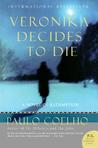
BOOK REVIEW: Veronika Decides to Die by Paulo Coelho

Veronika Decides to DieVeronika Decides to Die by Paulo Coelho

My rating: 4 of 5 stars

Amazon page

Veronika Decides to Die is about a young Slovenian woman, Veronika, who attempts suicide, fails, is institutionalized, and is informed that her attempted suicide damaged her heart and she has only five days to live. In the hospital she has to come to grips with what it means to be dying, but also what it means to be insane.

The book deals with the effect of Veronika’s death sentence diagnosis on her as well as on other patients with whom she interacts. The first patient Veronika comes in contact with is a depressive named Zedka who offers Veronika advice and insight. Then there is Maria, a woman who withdrew from her professional and family life to be institutionalized because she was having inexplicable panic attacks. Finally, there is Eduardo, a schizophrenic who is virtually non-functional when he meets Veronika, but who ends up in a relationship with the young woman nonetheless. These patients come to realize that they are hiding out at the hospital. They stay in the hospital because they are free to defy norms without judgment. When Veronika decides she doesn’t want to die hiding out, it has a profound impact on the others.

The book borrows heavily upon Coelho’s personal experience. He was institutionalized as a young man by parents who were disturbed when he went artsy and began hanging out with undesirables. Interestingly, Coelho has a cameo role in the book as himself. In the book he writes an article that playfully asks the question, “Where is Slovenia?” When Veronika is waiting to die from her overdose, she reads the article and decides to write a letter to the editor claiming that she killed herself because of the depressing effect of Coelho’s suggestion that nobody who’s anybody knows or cares where Slovenia is located.

In the end Veronika finds that she is truly free. Veronika seems to have everything at the beginning of the story: a job, boyfriends, and popularity. However, it’s those things that she comes to feel enslave her, and that’s what leads to the attempted suicide. In a way, Veronika is doubly freed. She is free because she is dying, and what can one do to a dying person. Second, she has been labeled crazy, and, having such a label, people expect her to act oddly. She has the freedom to do those things she has been too frightened to do all her life.

I’d recommend this book. It’s short, readable, and offers clear food for thought.

View all my reviews

BOOK REVIEW: Auschwitz by Miklos Nyiszli

Auschwitz: A Doctor's Eyewitness AccountAuschwitz: A Doctor’s Eyewitness Account by Miklós Nyiszli

My rating: 5 of 5 stars

Amazon page

Auschwitz is the account of a Jewish medical doctor who performed autopsies at the crematoria of Auschwitz at the behest of the infamous Dr. Mengele. It’s gut-wrenching reading. One is constantly reminded of the words of another famous Holocaust chronicler, Viktor Frankl, who said, “We who have come back, by the aid of many lucky chances or miracles – whatever one may choose to call them – we know: the best of us did not return.” That’s a sad fact with which Dr. Nyiszli had to live. Nyiszli lent his expertise to many despicable acts in the process of surviving, and it’s to his credit that he had the courage to write this work. He was the only one who could have told much of this story, and it’s a story that he felt the world must know–even if it meant rehashing the nightmare scenario of his life during the holocaust years, even if he was not always to be seen at his most virtuous.

While Nyiszli was a man of science who tried to stick to the objective task of conducting autopsies, his results were routinely perverted to support Nazi pseudo-science—the pseudo-science used by Nazis to justify elimination of the Jews and other despised classes of humanity. Nyiszli stayed alive first-and-foremost because Dr. Mengele valued Nyiszli’s expertise, and perhaps the credibility that expertise offered to the Nazi’s insane attempts to emulate science.

Sometimes by just answering basic scientific questions, Nyiszli was contributing to the advancement of dire atrocities. There’s no better example than when Mengele asked Nyiszli how one could obtain a skeleton from a corpse. These skeletons displayed deformities, and were thus to be sent to the Kaiser Wilhelm Institute for Anthropology, Human Heredity, and Eugenics to support the absurd assertion that Jews were genetically degrading. Of course, as Nyiszli points out the disease these two people were afflicted with was no less common among blond-haired, blue-eyed Aryans than it was among the Jewish people. At any rate this resulted in two corpses (made corpses by force, not nature) being boiled to remove the skeletons so they could be sent to an institute as pseudo-evidence.

Nyiszli’s forthcomingness is astounding. Nyiszli performed many objectionable actions at the behest of Mengele, but it’s clear he couldn’t have survived disobeying the Nazi doctor. However, there were also times when Nyiszli acted on his own in a way that was, arguably, detestable. After Auschwitz was abandoned, Nyiszli used his former position–and Mengele name-dropping)-to cut in line to get into an encampment (essentially a refugee camp) so he could get a shower and food for the night when others were left out in the cold.

I don’t mean to make Nyiszli look evil. He did many virtuous things in the process of surviving as well. This included sneaking medical supplies from the crematoria infirmary (where there was abundance) to barracks infirmaries (where there was a dire shortage.) He did his best to save those he could. It’s to Nyiszli’s credit that he shows us a complete picture. One expects such a book to be distorted when it comes to the author, but Nyiszli’s book seems honest.

This is an important book as it lets us peer into one of the darkest hours of humanity, and gaze upon a terribleness that would have been lost to posterity. The book gives a chilling account of what it must have been like to be in the gas chambers, told by someone who saw the aftermath in person. Nyiszli saw the piles of bodies reaching to the ceiling—dog piles in which the weakest were trapped on the bottom as the strongest tried to climb over women and children to get a gulp of good air. (Another proof of Frankl’s thesis.) Nyiszli also describes how one little girl, in a freak occurrence, managed to survive the chambers owing to an air pocket, only to have the SS finish the execution by cruder means.

I think everybody should read this book, but I’ll offer a warning that it’s not for the faint of heart. One has to keep righteous rage in check to just get through the book. However, to ignore this wicked moment in history is to fail to see the traps humanity is capable of falling into through simple refusal to do the right thing or a willingness to try to feel better about oneself by casting aspersions on those with slightly different physical features.

View all my reviews

BOOK REVIEW: The Equanimous Mind by Manish Chopra

The Equanimous MindThe Equanimous Mind by Manish Chopra

My rating: 4 of 5 stars

Amazon page

Imagine going to a meditation center and living by the following rules:

1. You may not have access to any reading materials.

2. You may not have access to any writing materials.

3. You must leave behind cell phones, tablets, laptops, watches, radios, and other portable electronic devices.

4. While there will be other people around, you are only allowed to talk to your instructor/mentor, and mustn’t acknowledge or interact with others. You will scarcely hear a voice unless you are in meeting with your teacher or listening to the taped lessons in the evening.

5. You will be segregated from the other sex. They will have separate living and meditation spaces.

6. You will eat only the vegetarian meals provided by the center.

7. You will spend your days mostly in meditation—meditation of a rigorously prescribed nature.

8. You have to live by these rules for ten straight days. You are strongly discouraged from attending if you don’t believe yourself capable completing of all ten days.

Could you do it? If your response is, “Sure I can, piece of cake,” you are either an exceptional person or a little deluded. And it’s probably more likely you are like the person who imagines they will be a hero in a bank robbery or mugging, but who ends up catatonically cowering in a puddle of their own piddle. Maybe it shouldn’t be a tough proposition, but it is.

The ten days described are the basic course offered at Vipassana meditation centers around the globe. Except your travel costs, there’s no cost to attend, and you aren’t even allowed to tip the staff–though you can make a donation at the end of the course to assist others. If you happen to be near a center, there’s nothing but will and 10 consecutive days of freedom to keep one from taking the course.

The Equanimous Mind charts Manish Chopra’s personal experience with the course. I bought the book because I intend to attend the course myself, and I craved insight into what the experience is like.

For those who are unfamiliar with Vipassana meditation, it’s nominally a Buddhist method, but practitioners are quick to point out that it’s actually areligious. One need not be Buddhist to attend. One could be a Hindu, a Methodist, or an atheist and get the same value from attendance. Adherents believe that this is the meditation method that Buddha himself taught. For those who thought this sounded awfully cult-like when I described it above, in many ways it’s the antithesis of a cult. There is no central guru to worship. The closest thing to the overarching guru, S.N. Goenka, passed away last year. You don’t have to join a group or swear allegiance. And not only don’t you surrender your life-savings, you don’t have to surrender one, thin dime to have the experience.

Chopra doesn’t write at all about the background of Vipassana, nor much about its philosophy or method. Instead, this book is a retelling of Chopra’s personal experience with the camp. There are many books that deal with those aforementioned topics, and so it’s no loss that this book doesn’t. It does give the reader a first-hand look at what it’s like to live in the camp and what prolonged meditation is like, and thus meets a valuable niche in lending comfort to those who are considering the course–but who are leery of what they will go through.

It’s remarkable that the author had the detailed recollections necessary to construct an entire book. The organization of the book chapters is by day, and so there are ten core chapters. (This is a good way to arrange it as there is apparently some universality to experience day-by-day. Not only are people being taught the same methods, but it seems most people who quit do so on days two or six—indicating many people hit “walls” at the same point.) One will remember that notebooks and writing utensils are prohibited. The last chapter informs the reader that Chopra began frantically outlining the book on his way home. It’s surprising that an entire book sprang from memory. The author does claim that the clarity gained through the course improved his memory.

One can’t help but wonder what the book would have read like if it had been compiled day-by-day as a journal. In other words, how much was the book was framed by the euphoria of just having completed the course? Chopra does mention some low points of the course, but, overall, the picture he paints is rosy. It may be that his experience was just overwhelmingly positive, or he could have been on a high from completing something quite difficult.

Chopra suggests that by the end he had greater mental clarity, decreased vice, increased mental capacity, and was living an idyllic life. I don’t want to sound like I’m treating the account as suspect, and I certainly wouldn’t suggest that Chopra is being blatantly dishonest. However, I worry that Chopra might have oversold the course. It almost reads like he’s been imbued with superpowers (mental, not physical–think Professor Xavier, not superman) at the end of the book. (He doesn’t suggest anything magical, but the claims are pretty impressive.) Maybe this is genuinely his experience, but it sounds a little too good to be true.

I’d definitely recommend this book for people who are considering taking the course. I’m not sure it would be of much interest to a more general reader. As I indicated, one isn’t going to learn a lot about the philosophy or history of Vipassana. One does learn a little about the methods from Chopra’s description, but it is fairly cursory. There is a fair amount of mundane information that people interested in the course will love to know (e.g. what kind of food was served and what it’s like to have to sit through one’s body aches), but which will be less than thrilling for someone who has no interest in taking the course.

View all my reviews