BOOK REVIEW: Hormones: A Very Short Introduction by Martin Luck

Hormones: A Very Short IntroductionHormones: A Very Short Introduction by Martin Luck
My rating: 4 of 5 stars

Amazon page

Let’s face it; the word “hormone” is usually reserved for questions of why a male is so horny (e.g. “His hormones were raging.”) or why a female is so moody (e.g. “She’s hormonal.”) Yet, the endocrine system is about much more than horniness and moodiness. It’s the body’s lesser known communication system, transmitting signals more slowly than the nervous system, but over a broader area and with longer-lasting results. Yes, it’s instrumental in sex, but it’s also involved in regulation of almost everything else the body does. Though we associate hormones with sex, when it comes to mass appeal it’s clearly not the sexiest of systems.

Dr. Luck’s book allows one to rectify one’s ignorance of hormones without a major investment of time or money. This is one volume in a series put out by Oxford University Press that’s designed to convey the fundamentals of a subject in about 100 pages or so (in this case it’s more like 130pgs.) I’ve done several reviews of books in this series, and will likely do more. These “Very Short Introductions” are a good way to get the gist of a topic quickly and painlessly, and they are reasonably priced on Amazon Kindle and in hard-copy at my local discount bookseller. (FYI: Your results may vary. i.e. Hard-copies at some bookstores may be pricey for what these books are—i.e. subject summaries that are optimized for concision and not for entertaining reading.)

The book has nine chapters. The first is a history of the science related to hormones and the endocrine system. (It took a while to figure out that there even was a system because of the nature of hormonal action.) The second chapter hits the basics, such as what hormones are and how they work. Chapter three tells us about the role hormones play in reproduction. The next chapter is about how hormones regulate the body’s levels of water and salt (and the effects on blood pressure.) Next, there is a discussion of the calcium cycle and how calcium is banked in bone and borrowed for the purposes of other cells. There’s a chapter that educates one about diabetes and how hormones (notably insulin) regulate blood sugar. Chapter seven is devoted to the thyroid. Chapter eight describes the role of hormones in circadian rhythms and the cycles of the body. The final chapter is about where science is going with its knowledge of hormones and the advances that are being pursued.

There are few graphics in this book. Most of them are chemical diagrams in dialogue boxes that many readers will skip because of their ominous appearance. The lack of graphics isn’t a problem. Luck does use a narrative approach on occasion (such as his telling of the story of the giant William Rice of Sutton Bonington.) This enhances the book’s readability, and is noteworthy because it’s a rarity among books in this series, which—again—are written to shotgun information and not to be entertaining reads.

I’d recommend this book for those who want to learn (or brush up on) the basics of the endocrine system. It does what it’s supposed to do, and does it quickly.

View all my reviews

BOOK REVIEW: Budō by Morihei Ueshiba and Kisshōmaru Ueshiba

Budo: Teachings of the Founder of AikidoBudo: Teachings of the Founder of Aikido by Morihei Ueshiba
My rating: 4 of 5 stars

Amazon page

This book is really three separate booklets bound into one. In this case, I believe the three parts work together quite well, and it doesn’t feel like a trick of padding to make a pamphlet into a salable book. I only mention this to point out that the three sections are quite different on several levels (i.e. authorship, subject, and content), and to put the reader on notice of it.

The first part is an “Introduction” by Kisshōmaru Ueshiba. The reason I put introduction in quotes is that it’s really a brief biography of Morihei Ueshiba (often called Ōsensei by practitioners of his art.) At 16 pages, it would be somewhat long for an introduction to the (130pg) book, but it introduces the martial arts master who founded the martial art of aikidō and who wrote the second part of the book nicely. The bio is a good use of space. Morihei Ueshiba wasn’t only an accomplished martial arts master, but he led an interesting life as well. I found this biography to be intriguing, and it made me want to read a full biography of the man. I must point out that there are a couple spots that will trigger the BS-meter of any rational skeptic (i.e. comments about Ueshiba being bulletproof or invincible.) Even though I don’t believe for a minute that the man was either bullet-proof or invincible, I think that most of this biography is true, and even that which isn’t gives one insight into the man as a combat veteran (and it certainly says something that some of his students literally deified him.) In addition to biographical text, this part includes various photos from both inside and outside the dōjō.

The second part is the beating heart of the book. This is a manual on martial arts written by Morihei Ueshiba, himself. It features prose, photos, technique descriptions, and even poems. While the bulk of the section consists of descriptions of techniques along with illustrative photos, there’s some philosophy of martial arts in both the early text and poems at the beginning and ending of the section. This section is almost 50 pages long, and the translator provides explanatory end-notes that help to make sense of the text for non-specialists.

The last section is technically the longest. However, it contains almost no text other than a translator’s introduction and technique names. It’s a series of technique sequence photos. The photos were taken in 1936 and were taken at the behest of the president of Kodansha Ltd. at the time, Seiji Noma—hence, they’re referred to as the “Noma Dōjō Techniques.” The shots of the sequences are tight enough that one can follow the flow of Ueshiba’s movement. For me, this section wasn’t particularly valuable. However, for practitioners of Aikidō, I can imagine how it could be invaluable. In other words, if one is familiar with the techniques, one might spot something that would give one a new insight. For the rest of us, this section just gives a crude taste of the nature of Aikidō.

I found this book to be interesting and informative. I’d recommend it not only for aikidō practitioners, but for those interested in the martial arts more generally. There is certainly insight to be gained from this phenomenal martial arts master.

View all my reviews

BOOK REVIEW: Judō: Skills and Techniques by Tony Reay

JudoJudo by Reay
My rating: 3 of 5 stars

Amazon page

Tony Reay wrote this book when he was both a 6th degree black belt and Development Officer for the British Judō Association. So his qualifications are beyond a doubt. The book is an overview of the sport of judō that covers techniques, etiquette, rules, warm-up exercises, grading approaches, and other specialty topics. It covers the gamut of issues related to the sport of judō, but without going into much detail. It would be a suitable book for a youngster who is considering whether they might want to get involved. I emphasize that it’s about “sport judō” because there are those who consider judō to be an approach to self-defense and others who think of it as a whole-life philosophy. This isn’t the book for those who want to learn more about judō as anything other than a competitive sport.

The eight chapters of the book cover: history, the grading structure, recreational judo, fitness, techniques, competition, the judō instructor, and judō as an art. However, most of the chapters are cursory. The bulk of the book is devoted to showing 69 of the art’s most fundamental techniques, including: 40 throws, 12 holds, 10 chokes, and 7 arm-locks. For each of these techniques there is a line drawing and a brief description. In a few cases there are black and white photos taken of the technique being performed in competition. This overview of techniques is mostly of value for learning names and accounting for what techniques one has (or hasn’t) learned. There’s not enough detail–either graphically or textually–to help a practitioner improve a technique that they’ve learned. (The latter isn’t a point of criticism, but rather to let people know what they are and aren’t getting in the book.) Still, there are tips scattered throughout the book that might help a practitioner improve their techniques in a general sort of way.

There is a glossary of Japanese terms commonly used in judō.

I found this book to be a fine overview of the sport of judō, and would recommend it for that purpose. While I’ve found other books on the art much more useful for my purposes, I think this is a fine book for someone looking to get into the sport from ground zero. I should point out that the book is from the mid-80’s, and so there will probably be details on rules, scoring, and grading that have changed, but the bulk of it will remain of value.

View all my reviews

BOOK REVIEW: The Invention of Nature by Andrea Wulf

The Invention of Nature: Alexander von Humboldt's New WorldThe Invention of Nature: Alexander von Humboldt’s New World by Andrea Wulf
My rating: 5 of 5 stars

Amazon page

If you’re like me, you had no idea who Alexander von Humboldt was prior to this surprisingly well-received book. So why read a book about him? Well, you’ve surely heard of the people he influenced: e.g. Darwin, Thoreau, Jefferson, Bolivar, Wordsworth, Samuel Taylor Coleridge and John Muir—to name a few.

Humboldt was one of the top scientists of his time, but his influence extended far beyond that aspect of his life. Much of the thrill of this book comes from Humboldt’s expeditions to Latin America and Russia. He faced alligators, electric eels, a capsized ship, and natural disasters. He also made Herculean efforts to arrange a Himalayan expedition, but politics and personalities intervened to delay him until he was too old to make the trip. (It should be noted that when Humboldt summited Mount Chimborazo in Ecuador in the early 1800’s, it was believed to be the highest peak in the world [at 6268m, or 20,600ft.] Needless to say there was a lot unknown about the Himalaya at the time—e.g. Everest is 8848m, or over 29,000ft.) While Humboldt produced specific breakthroughs and discoveries (e.g. inventing isotherms and discovering the magnetic equator), much of the inspiration he provided was in showing the interconnectedness of nature and the potential for unintended consequences.

As a Prussian aristocrat, Humboldt was born into a position to have influence but it was his ideas and his personality that made him so sought after. He could be arrogant, but was humbled in the face of nature. He was charismatic, but did not suffer fools kindly. He was adamantly anti-slavery and strongly opposed efforts of religion to stymie science in order to delay the toppling of their sacred cows.

The book is arranged into 23 chapters, divided among five parts. Part I describes his youth and the time leading up to the American expedition that would make him a legend. Part II describes his experiences gathering specimens and observations in Latin America, with a chapter about his meeting with Thomas Jefferson on his way back to Europe. Part III covers the period he spent in Europe after his expedition to the Americas. It was during this time that he wrote up his observations and hypotheses about nature. It was a productive time, but Humboldt missed nature. Part IV covers two important topics: the expedition through Russia and some of the more important ideas and people Humboldt influenced—e.g. Darwin. By this time he was well-known, and the books that had thus far come out were much in demand. Part V continues the theme of Humboldt’s influence on great thinkers, but with a focus on ideas that were a bit slower to develop.

I enjoyed this book. Interestingly, it follows a chronological format. That may seem a less than profound observation for a biography, but it’s less common to begin with the earlier years of life because those are typically the boring bits and there’s a desire to get into the meat of the story. (To some degree the author does this with a prologue that describes the Chimborazo trek.)

I’d recommend this book for those who are interested in science, ecology, and nature, as well as those interested in what it was like to make a scientific expedition in those days, well before Darwin.

View all my reviews

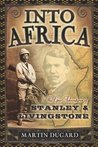
BOOK REVIEW: Into Africa by Martin Dugard

Into Africa: The Epic Adventures of Stanley and LivingstoneInto Africa: The Epic Adventures of Stanley and Livingstone by Martin Dugard
My rating: 5 of 5 stars

Amazon page

“Doctor Livingstone, I presume?” These iconic words are culturally embedded in the psyche of Americans (and, I assume, the British as well), but I had only a vague understanding of their meaning before reading Dugard’s account of the two expeditions that would bring the phrase into household immortality—the first of which was Dr. David Livingstone’s search to once-and-for-all find the source of the Nile and the other was Henry Stanley’s search to discover whether Livingstone was still alive.

If one isn’t a diehard history buff, it can be hard to maintain one’s interest in events of almost 150 years ago. Let me assure you, this isn’t the case for stories of African explanation—including “Into Africa.” If the author is at all skilled, these books read like novels with an almost improbably high level and pace of tension. That’s because almost everything in Africa in those days was working against the explorer, and most things were actively trying to kill him. A summary of threats include: a panoply of diseases (e.g. malaria, dysentery, etc.), an ark of animals and insects (e.g. poisonous snakes, lions, elephants, rhinos, etc.), and of course tribes and other humans (e.g. one could find oneself caught in the cross-fire between Arab slave traders and tribes who resented being enslaved, even if one had no stake in the fight.) And if none of those killers got one (and at least some of them always did), your men might desert you in the middle of the night while absconding with all your goods—and those goods were how one paid for both one’s food and for safe passage through tribal lands. In Dugard’s work, one sees each of these threats played and replayed, as well as a host of others from political conflicts, incompetence, and disgruntledness. It should be noted that there was almost no precedence for sending someone to look for a lost explorer—it was considered so unlikely to succeed in that era, not to mention likely getting a lot more killed.

The book largely alternates chapters featuring Stanley with those featuring Livingstone. This is particularly the case once the book reaches the point at which Stanley is actively on the trail. These were very different men, but the name of each man became synonymous with courage. Stanley was an American journalist who made it to the top based solely on willingness to go places and do things other reporters wouldn’t. In fact, he had trouble making a go of his career starting out, and it wasn’t until a traumatic adventure that he developed the assertiveness to make something of himself. Livingstone was already a legend when he took on this expedition, and was arguably too far past prime to be taking on such an adventure. The men were also quite different as expedition leaders. Stanley ran his caravan with an iron fist, while Livingstone was known for being lax and easily distracted—while they were at opposite end of the spectrum in this regard, it seems likely that both would have succeeded better with more moderation.

At the book’s beginning there’s a conflict at the Royal Geographical Society between Richard Burton (the explorer, not the actor) and John Speke over the source of the Nile. Livingston, a living legend, was asked to investigate and settle the issue—an objective he didn’t complete. It should be noted that finding the river’s source isn’t as easy as it sounds. Speke was correct in that the Nile reached at least to Lake Victoria (at the equator), but it wasn’t clear whether Victoria was connected to other lakes in the southern hemisphere, and—if so—how far down it went. There was a chain of lakes to the south that might have drained into the Nile, but, as it happens, flow into the Congo River.

I found this to be fascinating reading. The book consists of 40 chapters divided among five parts, and so most of the chapters are quick reads and the interspersal of the Stanley and Livingstone story lines keeps the pacing going nicely. Dugard did a good job structuring the narrative.

I’d recommend this book for anyone interested in learning about Stanley, Livingstone or who just want to know what it was like to be an explorer on the Dark Continent. [Fun-fact: While “dark continent” sounds blatantly racist, it turns out that the phrase was originally used in reference to the fact that so much of the map was blank—i.e. it was largely unmapped.]

View all my reviews

BOOK REVIEW: Choke by Sian Beilock

Choke: What the Secrets of the Brain Reveal About Getting It Right When You Have ToChoke: What the Secrets of the Brain Reveal About Getting It Right When You Have To by Sian Beilock
My rating: 4 of 5 stars

Amazon page

“Choke” in this book means to under-perform under high stakes. It doesn’t mean to be a poor performer, generally. This book is designed to help those who perform at a lower level when the pressure is on. It’s a condition that’s even been witnessed in Olympic caliber athletes–world champions who couldn’t get on the podium in the most important games of their careers. The book isn’t just about choking in sports; in fact, much of it is about bombing tests, and it also addresses under-performance in business environments.

“Choke” is organized into nine chapters. The first is called the “curse of expertise,” and it deals with just that—how experts are notoriously bad judges of how successful novices will be. This is because the causes of under-performance aren’t always straight forward. For example, some qualities that serve to make individuals strong contenders under low pressure conditions (e.g. a large working-memory) contribute to the cracking of the same individuals under high stakes. The second chapter explains how practice improves performance. Chapter three investigates why using our Prefrontal Cortex (i.e. our conscious mind) can do us in when the task calls for procedural memory that is unconscious to do its work.

Chapter four delves into the differences between the sexes in academic endeavors. Chapter five is about choking on tests in a scholastic environment, and it deals a lot with why minorities under-perform on standardized tests. Chapter Six presents some activities that have been shown to be successful in reducing choking including therapeutic writing, meditation, and changing one’s mode of thinking. There is a box at the end of the chapter that summarizes many of these cures.

Chapter seven discusses choking in sports. Choking in sports has some common ground with academic under-performance. However, it’s also different in that the object is often to quiet the conscious mind altogether. Some solutions for the yips in sports, such as mantras repeated in one’s mind to let the procedural memory take over, may not be as useful in an academic setting. Chapter 8 presents a range of techniques to prevent choking from practicing under more realistic conditions to getting on with it (i.e. not overthinking or slowing down) to distracting oneself to focusing on the goal (not the process.) The chapter also looks at the flip-side, why those who excel in physical performance often stink at coaching (i.e. they aren’t analytical about how it’s done.) This chapter also has a nice summary box of solutions. The final chapter looks at under-performance in a business setting, which again shares some things in common with choking in other domains, but also presents its own problems.

I found this book to be useful and thought-provoking. The advice is sound.

The discussion of bombing at tests and in the academic setting is largely applicable only to females or minorities as it focuses heavily on the issue of why these groups are disproportionately affected by academic under-performance. With respect to sports and business, the only condition necessary to benefit from the advice is a proclivity to choke or a desire to know how to help oneself or others avoid the fate. So depending upon what domain one is considering and one’s demographic, there may be other books that are either more or less relevant to one’s personal issue.

I’d recommend this book for those interested in the science of human performance.

View all my reviews

BOOK REVIEW: Brainwashing by Kathleen Taylor

Brainwashing: The Science of Thought ControlBrainwashing: The Science of Thought Control by Kathleen Taylor
My rating: 4 of 5 stars

Amazon page

There are few terms more loaded with myth and misunderstanding than “brainwashing.” For many it conjures up images from “The Manchurian Candidate.” [For those who’ve never seen either of the two movies of this name (1962 and 2004, starring Frank Sinatra and Denzel Washington, respectively) or read the Richard Condon novel on which they were based, they involve American POW’s who return home brainwashed—one to commit a political assassination and the others to talk the assassin up so that he’ll be able to gain a position to conduct the murder.] Some think brainwashing is complete bunk and others assume it’s reality just like in the movies. Few know the nuanced truth that’s somewhere in between—brainwashing is real but much less reliable than the movies depict. (Projects like America’s MKUltra proved unsuccessful at producing reliable mind control results.)

Taylor’s book is like a number of others that try to get to the truth about brainwashing. Where her book is unique is in its focus on neuroscience rather than psychology. That fact may make it worth reading even if you’ve read other scholarly works on the subject. The middle section does get technical as it attempts to bring a general readership up to speed on topics like neurotransmitters and neurons.

While one might expect a book on this topic to deal overwhelmingly with entities like the CIA and KGB, readers may be surprised to see how much the book focuses on advertising agencies, religions, and the educational system. While the term “brainwashing” has many nefarious connotations, it’s not unrelated to terms like persuasion and indoctrination. The book does provide many less blasé cases–and even discusses the fact in fictitious works like Orwell’s “1984” and Huxley’s “Brave New World.”

The 15 chapters of the book are organized into three parts. The first part lays the groundwork for understanding what the author does—and doesn’t—mean by brainwashing. This section covers many of the same topics as one would expect from a psychologist writing on brainwashing. The middle part of the book (chapters 7 through 11) delves into neuroscience and how it applies to brainwashing. (The book assumes no particular knowledge of brain science, and so this section begins with a crash course on your brain.) The final part explores some of the ramifications of brainwashing as well as asking the question of the degree to which brainwashing can be resisted (and by whom.)

I found this book interesting on many levels. Even if you’re not so interested in the intricacies of the science of the mind, you may learn something about how susceptible you would be to brainwashing (if you can be sufficiently honest with yourself) and how you might become less susceptible (if that’s your goal.)

I’d recommend this book for readers interested in not only brainwashing, but related topics such as free will, persuasion, and emotion.

View all my reviews

BOOK REVIEW: Dreaming: A Very Short Introduction by J. Allan Hobson

Dreaming: A Very Short IntroductionDreaming: A Very Short Introduction by J. Allan Hobson
My rating: 4 of 5 stars

Amazon page

Dreaming is one of the most interesting and ill-understood activities of human existence. Many of us don’t remember most of our dreams—to the extent that a number of people don’t think they even have dreams (while not completely conclusive, the scientific evidence suggests that all of us dream every night—except people who live on RedBull and 2 hours / night until they tragically die young.) However, when we do remember a dream, it’s often a vivid and profound experience. Some people dream lucidly (are aware they are inside a dream as it occurs), and a few people have lucid dreams on a regular basis. This has led people to draw all sorts of conclusions about dreams existing in a realm beyond the physical, and what not.

While there remains a lot that we still don’t know about dreams, a great deal of science has been advanced in recent decades—enough to take dreamland out of the realm of spiritual mumbo-jumbo and even away from the weak (and largely wrong) science of Freud, and into the realm of legitimate science. This book summarizes much of that science in a concise package. The “A Very Short Introduction” (VSI) series from Oxford University Press offers this type of guide for many subjects. They’re usually about 100 pages long, and give a quick and gritty rundown of the subject at hand.

This book is organized into eleven chapters covering: What is dreaming? Why the Freudian approach (and earlier dream interpretation schemes) failed? How the brain is activated during sleep? What is happening at the level of neurochemistry? Why we dream? What can go wrong with dreams? (i.e. sleepwalking, night-terrors, etc.), How dreaming relates to delirium and mental illness? (i.e. it is, after all, a state of hallucination in which we take often bizarre imagery for granted.) There’s a discussion of the new psychology of dreaming which is based in neuroscience and not on an Austrian with a pipe suggesting that it all comes down to penises and vaginas. (Hobson isn’t anti-Freud, though he does want to make clear that the psychology pioneer was quite wrong on this subject.) There’s a discussion of how learning and memory can (and can’t) be advanced through sleep. Hobson discusses the interaction of consciousness and dreams, e.g. lucid dreaming. And there’s a discussion of interpretation of dreams that is rooted in more modern thought.

An interesting feature of this guide is that the author uses his own dream diary entries as case studies to make points clear. That helps make this VSI guide a little less dry than they tend to be by their nature.

I do enjoy the VSI series. I’ve read quite a few of them, and find they are a good way to study up on a subject with a minimal of effort or pain. I also enjoyed this volume specifically. It’s certainly one of the most fascinating topics on which I’ve read a VSI, and the author doesn’t disappoint in bringing interesting facts and anecdotes to the table.

I’d recommend this book if you want to get up to speed on dreaming in a little over a hundred pages.

View all my reviews

BOOK REVIEW: Night School by Richard Wiseman

Night School: Wake up to the power of sleepNight School: Wake up to the power of sleep by Richard Wiseman
My rating: 4 of 5 stars

Amazon page

This book is a two-in-one. It’s a pop sci book covering the science of sleep. However, it’s arranged as a self-help guide to teach one how to get the most from one’s sleep life. It covers a wide range of sleep related issues from how to minimize jet lag to how to master lucid dreaming. It also describes the sometimes dire effects of not getting enough quality sleep. Along the way one also learns about interesting anecdotes and research that may not change your quality of sleep, but could prove interesting or useful nonetheless—such as the research that shows a strong correlation between the position in which one usually sleeps and one’s personality.

The meat of the book is divided up into eight sections (called “Lessons” in accord with the theme of “Night School.”) The first few lessons begin with general background on sleep and sleep deprivation, and cover how much sleep one needs and how one can achieve the best possible sleep life. Then the book delves into more specialized topics such as night terrors, sleepwalking, “power napping,” and the question of whether one can really learn in one’s sleep. The last couple chapters deal with dreaming (normal and lucid.)

Along with the eight lessons, there are also eight assignments. Most of these assignments are surveys that help the reader understand what will work for them best specifically—as not all sleep advice is one-size-fits-all. However, there are other assignments like a mid-course recap exam, a call to attempt interpreting one’s own dreams (as opposed to relying on the generic dream interpretation guides which the science suggests are bunk,) and a suggestion to start a dream diary—with instructions for how to go about it.

Another nice feature of the book are its boxed discussions of relevant research on such topics as segmented sleep (instead of sleeping through the night), narcolepsy, snoring, children’s sleep issues, etc. There’s also a Conclusion that reviews key information from the book in the form of a refutation of the common myths that abound on the subject of sleep, as well as a “manifesto” that repeats key elements of advice on good sleep. It’s a scholarly work, and so it include source citations.

I learned a lot from this book. Granted a lot of the advice is commonsense (e.g. sleep in a dark, cool, and quiet place), but there are plenty of not so obvious tidbits as well (e.g. red light is okay, but blue light will keep one from sleeping.) There are also a lot of fascinating stories in the book to keep one interested.

I’d recommend the book for anyone who wants to learn to improve their sleep lives.

View all my reviews

BOOK REVIEW: Running with the Mind of Meditation by Sakyong Mipham

Running with the Mind of Meditation: Lessons for Training Body and MindRunning with the Mind of Meditation: Lessons for Training Body and Mind by Sakyong Mipham
My rating: 4 of 5 stars

Amazon page

Tibetan Buddhists believe Sakyong Mipham is the reincarnation of a great teacher from late 19th century Tibet. He’s also completed many marathons—nine at the time of this book’s publication. He’s certainly qualified to comment on meditation, running, and the nexus of the two–if there is such a thing. However, it may not be clear that the topics are particularly connected. Readers may have an intuitive sense that they are closely connected, but without sufficient understanding of both elements to draw sound conclusions.

The author, himself, proposes that one should recognize the points of contrast as well as comparisons between the two activities. A couple quotes make this clear:
“People sometimes say, ‘Running is my meditation’… in reality, running is running and meditation is meditation… It would be just as inaccurate to say, ‘Meditation is my exercise.’”
“The body benefits from movement, and the mind benefits from stillness.”
Later in the book, the author suggests that the apparent clarity after running usually has more to do with the “wild horse” of the mind being tired, rather than it being tamed. (Taming the mind being the objective of meditation.) That said, Mipham Rinpoche clearly believes that there are benefits to be had from an interaction between these two activities.

The book is divided into six parts. The first part gives background on basics like base-building, breath, what meditation is, and the challenge of starting to build a regime (either of running, meditation, or both.) The rest of the book is organized by way of a Tibetan Buddhist conception about how new skills are learned. This schema relies on animal symbolism. The first level is that of the tiger, and this is when one works on attentively and conscientiously building one’s technique. The lion level follows the tiger. The lion phase is a joyful one because a base capacity and fundamentals have been built and the initial struggle is in the past. The next phase is represented by the Garuda (a mythical eagle-like creature that features in Hindu as well as Buddhist mythology), and it’s expressed by challenging oneself to more demanding practice. The final phase is the dragon, and it involves moving beyond doing the activity for oneself to doing it for others. There’s a final part, entitled the windhorse, that is based on the notion of an energy that Tibetan Buddhists believe accumulates when one follows the aforementioned 4 phase path. This last part is a description of events that might be seen as the culmination of the author’s running career.

Within the aforementioned six parts, there are 40 chapters—most of which are only a few pages and deal with a specific aspect (or pitfall) of that phase of training.

I found this book interesting. Learning about the four phases (tiger, lion, garuda, and dragon) of skill development was illuminating, and I found myself thinking about how this idea could be more widely applied. It’s a handy conception with broad utility. The author uses stories from his own experience to add credibility as well as light-heartedness to the philosophy lessons being taught. While the book may seem ethereal, much of the discussion is on down-to-earth subjects like dealing with pain and injury. It should be noted that the introductory and tiger parts make up a little more than half the book—suggesting the importance of fundamentals. There’s a lot of valuable information on fear, confidence, and how to view pain.

I’d recommend this book, especially for runners and meditators—but not exclusively so. Many people who are interested in mind / body interaction will be able to draw useful lessons from the book, even if running isn’t your thing.

View all my reviews