Unknown's avatar

About B Gourley

Bernie Gourley is a writer living in Bangalore, India. His poetry collection, Poems of the Introverted Yogi is now available on Amazon. He teaches yoga, with a specialization in pranayama, and holds a RYT500 certification. For most of his adult life, he practiced martial arts, including: Kobudo, Muay Thai, Kalaripayattu, and Taiji. He is a world traveler, having visited more than 40 countries around the globe.

BOOK REVIEW: Trying Not to Try by Edward Slingerland

Trying Not to Try: The Art of Effortlessness and the Power of SpontaneityTrying Not to Try: The Art of Effortlessness and the Power of Spontaneity by Edward Slingerland
My rating: 5 of 5 stars

Amazon page


This book’s paradoxical title is perfect for its paradoxical subject matter, which is famously expressed in such quotes as, “When nothing is done, nothing is left undone” [ver. 48 of the Tao Te Ching.]  Slingerland lays down the ancient Chinese wisdom of wu-wei and de, but provides something novel by putting it in the context of the positive psychology and neuroscience of today. Wu-wei literally means “no doing,” but can be more meaningfully defined as “effortless action.” De (pronounced “duh”) is a charisma seen in people who have mastered the effortlessness and spontaneity of wu-wei.

While the book is built around the varied approaches of four Chinese philosophers—two Confucians (i.e. Confucius and Mencius) and two Taoists (i.e. Laozi and Zhuangzi)—the author relates this philosophy to the present-day thinking found in Daniel Kahneman’s “Thinking, Fast and Slow,” Mihaly Csikszentmihalyi’s conception of Flow, and the neuroscience of the subconscious.

The book consists of eight chapters. The introduction and the first two chapters outline the concepts of wu-wei and de using both Chinese and Western stories and examples to help clarify these arcane ideas and put them in the context of the social and spiritual spheres. Chapter 1 offers an extensive discussion of the operation of the brain as it relates to the discussion of effortlessness and spontaneity.

Chapters three through six make up the core of the book, and present the approach and thinking of Confucius, Laozi, Mencius, and Zhuangzi, respectively. This “boy-girl-boy-girl” Confucian-Taoist organization offers the reader sound insight into the varied approaches and allows one to see the evolution of thinking. Confucius gets the first cut, but his approach to effortlessness and spontaneity involves a great deal of effort and planning. It might seem that Laozi’s approach–which does away with effort and planning–might be more apropos, but it’s hard to imagine anything of benefit actually being spawned by such a loosy-goosy approach. The more nuanced approaches of Mencius and Zhuangzi offer additional insight, but do not eliminate the paradox. It’s this paradox that’s the subject of chapter seven.

The final chapter examines what the reader can take away–given that the paradox of wu-wei seems inescapable. The author proposes that, paradox or not, there is value in pursuit of effortlessness and spontaneity, and progress can be made by understanding and accepting said paradox.

The book has no graphics, but is annotated and has a bibliography–as well as an appendix table that summarizes the various approaches to wu-wei.

I enjoyed this book and found it fascinating. It’s highly readable, having humor and a wide range of examples from ancient myths to pop culture. The book offers a great value-added by considering the relevance of modern science and psychology to this ancient concept. I’d highly recommend this for individuals interested in Chinese / Eastern philosophy, as well as anyone hoping to bring a little more effortlessness and spontaneity into his or her life.

View all my reviews

DAILY PHOTO: Landscapes of Ladakh

Taken in August of 2016 on the Srinagar-Leh Highway in Ladakh


The ubiquitous Buddhist Monastery (Lamayuru, I believe)


Green oases line the valleys among otherwise desolate landscapes.

DAILY PHOTO: Trees on the African Savannah

Taken in May of 2017 in Kenya


DAILY PHOTO: Meditating Sculpture

Taken in March of 2014 in Madikeri

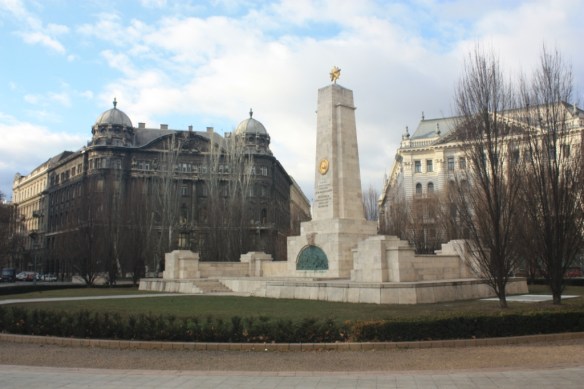
DAILY PHOTO: Scenes from Szabadság Tér

Taken in December of 2016 in Budapest


DAILY PHOTO: Vijayanagaram Ghat at Dawn

Taken in October of 2015 in Varanasi (Benares)

DAILY PHOTO: Ghanta Ghar, Jodhpur

Taken at Jodhpur in November of 2015


DAILY PHOTO: West End Station at Twilight, Budapest

Nyugati pályaudvar; Taken in Budapest in December of 2016

BOOK REVIEW: Round Ireland with a Fridge by Tony Hawks

Round Ireland with a FridgeRound Ireland with a Fridge by Tony Hawks
My rating: 5 of 5 stars

Amazon page


When Tony Hawks and his friend Kevin see a man hitching with a refrigerator one night, a debate ensues that results in a ₤100 bet that Hawks can circumnavigate Ireland entirely by hitching rides–while carting a fridge with him. (When Kevin insists that no one could get a lift with a fridge, Hawk’s response sets the book’s tone and theme, “They could in Ireland, it’s a magical place.”) Showing a lack of business acumen, Hawks purchases a compact dorm fridge for ₤130, and sets off from Dublin in a counterclockwise fashion. The rules of the bet stipulate that Hawks must visit Tory island at the extreme north and Clear Island at the extreme south but otherwise can use whatever route he likes as long as he gets around only by hitchhiking, he keeps the fridge with him during his travels, and it takes him less than a month. Hilarity ensues.

Hawks’ book is a hoot. If there is anything that he makes funnier than a person questioning his intelligence / sanity for carting a fridge about, it’s his description of the people who politely ignore the absurdity of him hitching with a fridge. There’s also a fair amount of sour grapes humor as sometimes it seems the fridge has gained more of a celebrity status than the author. Of course, not all the humor is fridge-centric; some of it takes place in pubs with the people the gregarious Hawks meets along the way. The book mixes travelogue with humor writing, and nicely captures both the scenery of Ireland and the national character of the Irish. The book also has its serious moments, particularly as it draws to a close and the author realizes his adventure is at an ends.

In the end, Hawks proves that it can be done—in theory, at least. It should be pointed out that Hawks had the benefit of appearing on a national radio show regularly as well as on TV at the start and finish of his trip. Because of this, people were often on the lookout for him and likely more willing to give him a lift than if he were the average schlub. On the other hand, the need to meet scheduled appointments with media is one of the sources of tension in the book because they usually involve close calls. It seems it’s not always easy to call in from remote locations in rural Ireland while on the move, and the best example may be Hawks’ attempt to make it to Dublin on the last day to meet a PR event that a radio show had set up. He puts the reader on the edge of his seat, despite the lack of any real peril (it is just a guy trying to make media events related to his absurd adventure, after all.)

I’d highly recommend this book. If you’re interested in traveling in Ireland, it’s a light read to give you some ideas about places you might want to hit (or miss.) However, on its humor alone it’s worth a read even for readers who don’t normally read travel writing.

View all my reviews

BOOK REVIEW: A Confederacy of Dunces by John Kennedy Toole

A Confederacy of DuncesA Confederacy of Dunces by John Kennedy Toole
My rating: 5 of 5 stars

Amazon page


If you’ve heard of this book, but not read it, you’re probably aware of the troubled circumstance of its publication. Several years after having failed to be published, Toole committed suicide. The story of the book would have ended there, except Toole’s mother found the typescript and carted it around to people in the literary community. After much persistence and not taking no for an answer, she managed to get Walker Percy to read the manuscript, and the rest is posthumous Pulitzer Prize winning history.

It would be easy to dismiss the editors involved in rejecting this manuscript as grade-A lunkheads, or as the lead character (Ignatius J. Reilly) likes to verbally skewer his victims “Mongoloids.” However, one can see how said lunkheads would find this much-beloved novel risky. It’s a character-driven novel in which the lead character is obnoxious and unlovable in the extreme. Reilly is a pretentious and pedantic professorial type–verbally speaking– wrapped into the obese body of a man-child who is emotionally an ill-mannered five-year old with a bombastic vocabulary. Reilly has no impulse control, takes no responsibility, and is prone to tantrums, sympathy-seeking dramatic displays, and wanton lies. He’s the worst because he thinks he’s better than everyone despite the fact that in all ways except his acerbic tongue, he’s worse than everyone.

That said, the book—like its unsympathetic lead character—is hilarious through and through. What it lacks in a taught story arc and a theme / moral argument (the latter being why the editor at Simon and Schuster rejected the book after showing initial interest in it) it more than makes up in hilarity.

I should point out that when I say that this isn’t a plot-driven book, it doesn’t mean that it doesn’t have an interesting wrap-up at the end—which I will not discuss to avoid spoiling it. The plot revolves around events in the life of a lazy man-child forced to go to work. It’s not a journey of change, discovery, or adventure. While, in most cases, a character-driven story with an unmalleable lead would be a recipe for a book that flops, here it keeps one reading to the last page because it’s Ignatius’s failure to become a better man that ensures the book is funny to the end. Reilly is constantly making decisions that are both overly contemplated and yet ill-considered.

The book follows Ignatius Reilly through an event that results in a tremendous loss of money for Ignatius’s mother. This forces her to finally put her foot down and insist the man—who she still thinks of as her little boy—get a job. It should be noted that Ignatius’s mother’s eventual coming around to the monster her son has become is a major driving force in the story—though we can see a distinct lack of taking of responsibility that echoes that of Ignatius, himself. Ignatius gets a fine—if lowly, clerical–job at the slowly-dying Levy Pants Company, but gets fired after he encourages a worker protest that goes awry. He then gets a job as a hot-dog cart vendor—a job considered the lowest of the low by both his mother and New Orleans’ society-at-large. The latter is the job he has at the end when a final chain of events unfolds (not without tension and drama, I might add.)

On the theme issue, the Simon & Schuster editor was correct that the book isn’t really about anything except how to muddle through life as a lazy, cranky, emotionally-stunted, and overly-verbose doofus. (But he was oh-so wrong about that being a lethal deficit—according to the Pulitzer Prize committee as well as innumerable readers.)

I’d recommend this for any reader with a sense of humor. You won’t like Ignatius J. Reilly, but you’ll find his antics hilarious, and you’ll want to know what happens to him in the end even if he is irredeemable.

View all my reviews