
Taken at Barachukki Falls in July of 2014
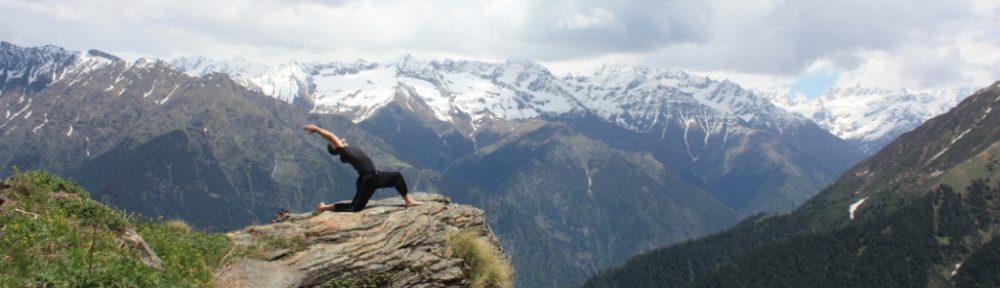

Taken at Barachukki Falls in July of 2014
 Sonnets by Sri Aurobindo
My rating: 5 of 5 stars
This booklet collects together the 88 sonnets written by Sri Aurobindo. Aurobindo was a guru who set up his ashram in Pondicherry because he was on the lam from the Brits, and Pondicherry was under French control at the time. Sri Aurobindo is a karma yogi (yogi of action and good works) who – together with a partner who the community came to call “Mother” – set up Auroville with the intention of making it a utopia.
The eighty-eight sonnets are arranged in two parts. The first seventy-four were written in the 1930s and 40s, and part II consists of 14 sonnets that were written between 1898 and 1909. The sonnets of the first part are more mystical and also more stream of consciousness. The poems of Part I use vivid language, but aren’t always easy to follow – if one is seeking a coherent meaning from each. The sonnets of part II are less sophisticated (and more easily interpreted) and feature a degree of angst that is completely absent in the latter poems (latter chronologically, earlier in the volume.) The sonnets presented are in varying styles. While they are all fourteen lines of pentameter, the rhyme scheme varies.
At the end of the book there are notes on the collection as a whole, as well as short notes on individual poems. There is also a short section in the back that shows a few of the poems under edits so that one can gain a little insight into the poet’s sausage-making process.
I found these poems intriguing to read. As I suggested, they aren’t always easy to interpret but they have a thought-provoking spirituality to them as well as some beautiful use of language. One needn’t necessarily have an interest in Sri Aurobindo to enjoy the poems, although they are overwhelmingly of a mystical / spiritual nature.
 Tom Sawyer, Detective by Mark Twain
My rating: 5 of 5 stars
The adventures of Tom Sawyer and Huck Finn continue in this novella as the duo travels to visit Aunt Sally and Uncle Silas in Arkansas. On the riverboat, they meet an old acquaintance who they didn’t know was still alive, the twin of a man who still lives near Aunt Sally and Uncle Silas. He tells them how he’s in a bind because he conspired in a diamond theft with two partners, and subsequently swindled the two by making off with the diamonds. The reason he’s headed home is because he figures he can hide out there as long as he makes himself look like his twin, as long as no one sees the two twins together, he can play like he’s his brother. While Tom and Huck agree to be helpful, the last time they see this man, he’s jumped ship and is being followed by the two men, and Tom and Huck assume he’s a goner.
In time Tom and Huck arrive at Aunt Sally’s. Shortly thereafter a man goes missing, the twin of the diamond thief. Eventually, evidence mounts that the murderer is none other than Uncle Silas. Despite the fact that Silas has been a little off, Tom doesn’t believe his kind uncle, a pastor, is capable of such a feat. However, Silas confesses, having thwacked the man on the head, he believes that the man must have died from it. Testimony convinces Silas that he must have gone out to bury the man in an act of incredible somnambulism, and while he has no recollection of it, he believes it must be true.
When it comes to the trial, Tom sits in with the incompetent public defender, committed to proving Silas’s innocence — despite his Uncle’s vociferous admissions. At the last second, Tom does figure it out, and explains what really happened. He’s furthermore able to substantiate his claims using no more than the individuals in the courtroom. By the times he’s finished, even Uncle Silas acknowledges that he didn’t commit a murder.
This is a fine little mystery story, but what makes it really enjoyable is the first-person narration by Huck Finn. While Tom Sawyer does the brainwork to solve the crime, Huck offers a telling that is humorous and whimsical.
If you like “Adventures of Tom Sawyer” and “Adventures of Huck Finn” don’t miss this follow-up.
over the boulder fields, and the
stubbled but glassy rice paddies
rises a red ball, the dawning sun
farmers wade, lungi to their knees
bending to plant as the steam rises
day’s just begun, yet needs a breeze

Taken in the Summer of 2010 at Ek Balam
 My Heroes Have Always Been Junkies by Ed Brubaker
My rating: 5 of 5 stars
As the title suggests, this story’s lead romanticizes drug abuse, to the point that she believes the only great art comes from those who are wasted. Said lead is a teenage girl who we know as Ellie, and whom we find in an upscale drug rehab center. She’s a troublemaker and resistant to treatment, and why wouldn’t she be as she believes that drugs make one a musical genius. (Most of her romanticization is directed toward rock-n-roll artists, but she also admires novelists such as William Burroughs and assorted other creative types who were generally blotto in the act of creation.)
Most of the story is a budding romance between Ellie and a young man who is a bit of a mystery but who encourages her to play along for her own good. Ultimately, however, his good influence is no match for her bad influence, and they end up running off together, hanging out in vacant vacation houses. In the latter quarter of the book, the story unfolds and we learn that the relationship isn’t the product of spontaneous chemistry that we’ve been led to believe.
Brubaker creates an addict driven to myopic and impulsive behavior, and so the reader can readily believe how she ends up in her own sort of hell in which she has no good options, only various flavors of terrible ones. The necessary foreshadowing was done for a twist ending, but it gets a little heavy handed at one point. However, to be fair, the reveal takes place in a short space as the overall work is fairly short, and the climax and resolution are late in the work.
I’m not such an expert on artwork in comics. The art and coloring seemed good to me, but I remember thinking that Ellie looked old to be approximately 18 – but then that could have been purposeful as she’s supposed to have drug years on her.
I found this to be a thought-provoking work and read it straight through. It’s not preachy, but does suggest an inevitability of life going sour when one lives such a life. I’d recommend this book for those intrigued by the premise.

Taken in August of 2018 in Houston

frost on grass
early morning chill
felt through eyes
wave wall warps,
becoming tubular
surf crashes
mountains turn
to smooth, round boulders,
then to pebbles
lost ruins
a temple overgrown,
recycled
slate gray lake
will be turquoise in time
new eyes, new lake
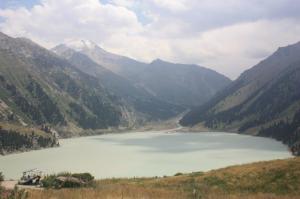
Taken in August of 2019 at Big Almaty Lake

Taken in Bangkok Thailand in October of 2012


