Minor tigers fighting for air.
This one? That one? The world don’t care.
All the pretty ponies prancing,
showing tribal styles of dancing.
All the while the world is burning
’cause of minor tiger yearnings.


Minor tigers fighting for air.
This one? That one? The world don’t care.
All the pretty ponies prancing,
showing tribal styles of dancing.
All the while the world is burning
’cause of minor tiger yearnings.

Taken in Assam in April of 2017
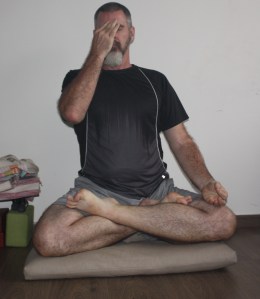 To the average person, yoga consists of a series of poses that stretch the muscles and strengthen the core. In truth, often the most profound and life-altering experiences had by yoga practitioners involve only a seated or lying posture. If you practice yoga, you’re probably aware that postural practice, or asana, is just only one element of yoga, and perhaps you’ve experienced some of the other elements of yogic practice. However, it’s not always easy to access such training at the local studio.
These days there’s another way. These practices can be accessed through apps such as EKA.
Below are five powerful yogic practices that you might not find taught at your local yoga studio, but that you’ll find on EKA.
5.) Yoga Nidra: Yoga Nidra translates to “yogic sleep.” It’s a practice in which one stays in the mind-state between wakefulness and sleep, i.e. hypnagogia, for an extended period while working through a sequence of practices. Yoga nidra is extremely relaxing, but also allows one to access the subconscious in a manner similar to that of self-hypnosis. This makes the practice useful both for people who have trouble with sleep or settling into rest, but it also allows one to influence the subconscious so that one can make changes in areas where subconscious influence is strong.
For example, a person seeking to lose weight understands that they need to be careful about what they eat. However, the subconscious isn’t always on the same page as the conscious mind, and cravings for sugary or fatty foods may win the battle. In yoga nidra, we use sankalpa — a resolution, to help win the subconscious over. We also use practices like visualizations to gain insight into what is happening outside the bounds of conscious thought, and to exercise influence over it.
4.) Kaya Sthairyam: Kaya Sthairyam translates to bodily stillness, or steadiness. If you’ve done any meditation, you were probably taught to adopt a position in which you could be as still as possible throughout the practice. The reason for this is that even subtle movements can distract one, weaken one’s concentration, or have a stimulating effect. In yoga, kaya sthairyam is used to achieve a state of maximum stillness. If one wishes to increase one’s ability to concentrate for extended periods, one must build one’s capacity to remain still. That said, kaya sthairyam need not be thought of as only a prelude to meditation. The tranquility that arises from these practices make them worthwhile in their own right.
3.) Bija Mantra: In India, chanting is a very popular practice among yoga practitioners, and many have found great clarity in it. In one of my early classes teaching yoga to children, I found that as soon as the kids sat in a cross-legged pose many of the younger children spontaneously started softly reciting the gayatri mantra. That’s how intense was their association between sitting down cross-legged and chanting.
In the West, mantra chanting is less familiar. The six bija mantra, or seed mantra, are a beautiful way to introduce oneself to mantra chanting because of their simplicity. Because the bija mantra (LAM, VAM, RAM, YAM, HUM, and AUM) are all monosyllabic, easily pronounced, and are related sounds, they can be picked up quickly and easily.
2.) Witnessing Meditations: The yogic teaching that has had the most life-changing effect on me has been dispassionate witnessing. While it’s not a complex idea, it requires some explanation.
Let’s first consider what minds usually do in the face of a problem. There are two common responses that are not particularly healthy.
The first is to distract oneself from the problem. In some cases, this distraction can be an unhealthy activity — such as drug abuse, but it might also be something neutral like watching television. However, even if you distract yourself with a wholesome activity like volunteering at a soup kitchen, the problem is still there and it will have its say. If not directly, then indirectly through nightmares, indigestion, or a stress-induced illness.
The second option is obsessing. The brain tries to lessen the sting by anticipating the worst possible scenario. The trouble with this obsession is that to find our worst case scenario — we have to hang toxic labels on all possible events and invent possibilities that are so unlikely as to be nearly impossible. And having invented such dire cases, we often give them too much weight. As Mark Twain put it, “I’ve had a lot of worries in my life, most of which never happened.” The negativity piles up and causes stress and anxiety to balloon out of control.
In dispassionate witnessing, we don’t ignore or distract ourselves, but we also don’t strap on value judgements or build worst cases. We simply recognize what we are feeling, acknowledge it, but don’t feed our anxieties.
One of the most basic witnessing practices involves watching sensations in the body. Imagine you’re doing this practice and you feel an ache in your back. If you try to ignore the sensation, the mind may turn up the intensity to get your attention. If you obsess, you’ll soon convince yourself that this sensation is really an ache… no, a pain… no, it’s agony… oh no, could there be a tumor growing on my spine? [That may be exaggerating a bit, but you see the point.] However, if you focus your attention on the sensation without labeling it, you’ll probably find that the sensation passes. In essence, the body says, “Hmm, the brain examined this sensation and didn’t think it was anything to be concerned about, let’s move on.”
1.) Pranayama: Probably the most under-rated yogic practice is pranayama, or breathing exercises. By controlling one’s breath, one can influence one’s emotional state, one’s physiological processes, and the state of agitation in one’s mind. Breath practices are the most direct means to counteracting the stress response. However, despite constantly breathing — day in and day out — most people remain unaware of the incredible power of consciously controlling the breath.
There are a variety of types of breath exercises. There are breaths that have a stimulating effect on the body and mind, and those that have a calming effect. Scientific evidence has accumulated that there are benefits to practicing slower and deeper breathing, and pranayama offers a systematic approach to building this capacity. No matter what kind of pranayama one is doing, there is a side benefit from holding one’s focus on one point, the breath.
Pranayama is a great lead-in to meditative practices. It helps achieve a state of mind which is neither drowsy nor agitated. That said, pranayama is also beneficial on its own.
If you’re interested in exploring any of these practices, the EKA app is a great place to start.
 There was a quivering soul string
that was bounced into a wild swing
by a chord amped to the nines
played beside some profound lines
belted out in a subtle suite of chaos.

Taken in Bangkok’s Wachirabenchathat Park in September of 2015.

Taken in the Annapurna Sanctuary in May of 2018
 The Three Stigmata of Palmer Eldritch by Philip K. Dick
My rating: 5 of 5 stars
This trippy sci-fi novel takes place in a future in which near colonization (e.g. the moon and Mars) has taken place, and life is so dismal that much of the population (especially on the colonies) take a drug that allows them to partake of a communal hallucination of a more idyllic life. This substance is called CAN-D, and – like many drugs – is largely illegal but widely available. But the CAN-D business is about to be turned upside-down, because the tycoon Palmer Eldritch is returning from the Prox System with a new drug based on a lichen that is indigenous to that solar system, a drug called CHEW-Z. CHEW-Z, it is claimed, is better in every way, but it has two readily apparent advantages: it’s cheap, and it’s not yet illegal. Beyond that, what CHEW-Z is is a question the reader will be forced to confront.
The book has shifting perspectives and isn’t focused upon a single central character through its entirety, but the lead character is Barney Mayerson. [If you’re wondering why the titular character, Eldritch, isn’t the lead, it’s because the mystery of him is crucial to the intrigue of the story. Throughout most of the story, Eldritch is more of a legend than a character, and the reader is presented with the question of whether the Eldritch coming back from Prox is the same one who left for it.] Mayerson is in the employ of the firm that runs the layouts central to the CAN-D trade. He has powers of precognition and his job is predicting whether potential products will sell or not so that the corporate powers-that-be can decide whether to invest in them. But two problems loom over his head. First, his number has been called in a draft to force him to move to Mars, away from his prestigious New York life. Second, his position is going to put him right at the center of the battle between CAN-D and CHEW-Z.
The book explores topics of religion and mystic experience. Mayerson, like most of the population, is secular and has little inclination toward religiosity. For many, CAN-D is a sort of pseudo-religion, or at least it frees them from their egos and helps the feel empowered in a way many seek through religious practice. One of Mayerson’s love interests (he has three over the course of the book, but this is the one he meets when he moves to Mars) is a hardcore Christian (by the standards of the day.) The interaction of these two characters brings the philosophical / religious component to the fore.
Much of the story plays out a product war between CAN-D and CHEW-Z, but, in the latter chapters, as the story plays out in large part in the minds of individuals on CHEW-Z, one starts to reflect upon just what CHEW-Z really is. And that reflection leads one into some profound questions such as: What is the nature of consciousness? What does it mean to be a god?
I enjoyed this book. I’m a fan of the work of Philip K. Dick, anyhow, but this book is among my favorites. Hopefully, I haven’t made it sound like a confusing or cumbersome read. It’s actually quite easy to follow despite the perspective shift from Mayerson to his boss Leo Bulero and back as well as the dreamlike quality of life for characters on CHEW-Z. In fact, I’d say its one of the most skillfully written mind-bending reads that I’ve read.
If you like trippy, mind-bending fiction, you should definitely check this book out, and if you like books that spur philosophical deliberations — all the more so.


