
There was a clever salesman from Sri Lanka
who tried to decide on a corporate lingua franca.
“Not Tamil,” Helas said…
“No Sinhala,” Tamil’s pled…
“English? – the tongue of imperial propaganda?”

There was a clever salesman from Sri Lanka
who tried to decide on a corporate lingua franca.
“Not Tamil,” Helas said…
“No Sinhala,” Tamil’s pled…
“English? – the tongue of imperial propaganda?”

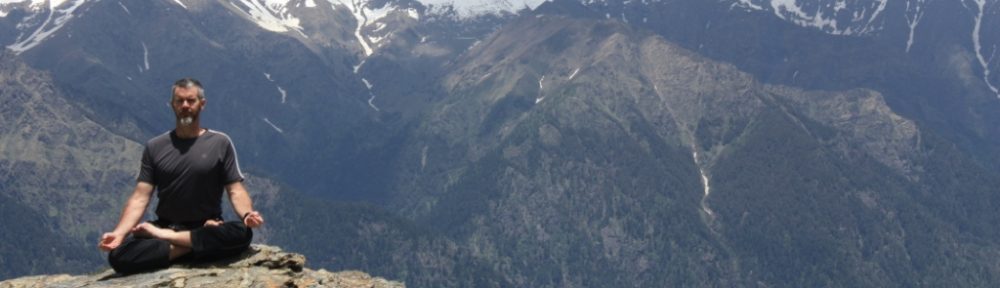
Taken on the South River Trail in Georgia [US] in December of 2010
 Snow by Orhan Pamuk
My rating: 5 of 5 stars
Written by the Nobel Prize winning Turkish novelist, Orhan Pamuk, Snow is one of the most effectively atmospheric novels I’ve ever read and is as riveting a story as I’ve read in quite some time. The protagonist is Ka, an erudite – if young – poet and writer who is given a journalistic assignment in Kars, a small city in the far eastern portion of Turkey — near the border with Armenia. The assignment is to write about an epidemic of cases of high school girls committing suicide over headscarf policies, and it is amid this climate of hostility between Atatürk-style secular pro-Western reformists and the militantly anti-secular Islamists that this story plays out — and from which it draws its tension. [To further complicate matters, there are also Kurdish separatists who don’t agree with either of the others’ causes, but would like to have autonomy in their own nation. However, these are more a garnish to the story than a primary flavor.]
Ka’s arrival in Kars is followed by an extended period of snowfall which cuts the city off, setting the stage for the conflicting parties to commence feuding. An Islamist murders a bureaucrat, and an actor-cum-reformist political powerhouse stages a controversial play that results in troops firing into the audience at agitated Islamist high school boys. Throughout this period trapped in Kars, Ka is repeatedly sucked into the middle of the conflict. The reformists see him as a potentially powerful ally as he has the communicative reach of a famous poet. Being a scholarly (and modern) young man who’s been living in Germany, in the heart of the West, Ka is seen as a natural comrade. The Islamists quietly despise Ka, but also see him as one who can give them voice. When I say “quietly despise” I mean they clearly have disdain for him because he an atheist [or so they all assume] and they, furthermore, assume that he believes he is better than them. However, on a personal level they find Ka to be personable, likable, and respectful. As it happens, Ka is prone to a kind of mystical experience while in Kars. Poems flood his mind with unprecedented ease. He is amid the bliss of falling in love. It’s not clear whether his waffling on the question of the existence of god is the result of the inhabitants of Kars wearing off on him, if it’s the atmosphere of pristine snowy beauty, if it’s the joy of being madly in love, or some combination of the above. [A side question touched upon throughout the book is what spurs creativity? Is it misery? Is it happiness? Is it some combination of the two, rightly timed? Is it neither?]
Despite the description of Ka as being a young man throughout the book, in the first half of the book I pictured him as a middle-aged / older man. He seems so wise and well-reasoned, and people seem to seek him out for his opinion (granted, this has a lot to do with his fame.) However, when he finally receives some indication of reciprocation from the girl that he’s obsessed with, he immediately turns into a fifteen-year-old lovelorn boy. From that point onward, Ka succumbs to petty jealousy and becomes smotheringly needy. This will be Ka’s downfall — though not immediately. At first, this change seems to be almost flattering to the girl, turning her feelings from those of an acquaintance to those of a tentative lover. I must say, the most discordant part of this book is Ka’s transformation, but it does set up an intriguing chain of possibilities — and Ka wouldn’t be the first person to be transformed into a crazy person by way of a love affair.
The book’s approach to storytelling is quite interesting as well. It’s written as though the author, himself, is telling Ka’s story — not as a dispassionate witness but a secondary participant. Throughout most of the book this is not noticeable, and the telling comes across as run-of-the-mill third person narration, but in the latter third of the book it becomes quite prominent because of what I think of as literary fourth wall breaking, using shifts to first person narration to let the reader know that the author is actively in the story. [In plays and movies, the 4th wall break is when an actor turns to the audience and talks to them, in effect acknowledging that he or she knows they are in a movie.] The reason for these perspective shifts is that in the last part of the book, the author is trying to piece together what happened during Ka’s last hours in Kars.
If one is the type of reader who likes all outstanding plot questions tied up with a nice bow, one may find the ending a little bit trying. The author employs what I call “strategic ambiguity,” leaving certain facts unknown so that the reader is forced to draw his or her own conclusion [or to live with the lack of a conclusion.] I enjoy this approach as it gives me a little more to chew over as a reader, and, also, because it more reasonably captures the state of the real world, in which perfect certainty is a rarity. However, I do realize this tactic irritates some readers.
I was spellbound by this story. It was engrossing both on the level of the protagonist as an individual, but also offered great insight into the societal level conflict in the region. If you’re looking for a great novel, and not put off by religious-secular conflict being at the heart of a story, I’d highly recommend Snow.
 Shakespeare’s Sonnets and Poems: A Very Short Introduction by Jonathan F. S. Post
My rating: 5 of 5 stars
Today, Shakespeare is known as a playwright (who performed every other occupation in the theatrical world,) and while it is true that some of his sonnets are quite well-known and anthologized, few read (or even know of) his narrative poems. That was not always the case, and there was a time when it seemed probable that Shakespeare would become as well know for “The Rape of Lucrece” as for any of his plays. There’s a reason for his poetic work that we can very much relate to today, and that’s that when the Plague was in town, the theaters were closed down. Of course, there is no ironclad distinction between these two career tracks – poet and playwright. All of Shakespeare’s plays contain verse, and a couple of the histories are written entirely in verse (i.e. King John and Richard II.) Of course, muddying the waters are doubts about what works attributed to Shakespeare were actually composed by him.
In this “A Very Short Introduction,” Post offers the reader insight into the historical and cultural context in which these poems exist, offering elaborations that will help the reader to better understand these poems. The book also helps one see the poems in the larger context of Shakespeare’s work and of literature, itself. Chapter one provides an overview of Shakespeare’s career as a poet and contrasts it to his work as a playwright.
Chapter two is about the narrative poem entitled “Venus and Adonis.” This poem shows us the lovelorn goddess, Venus, continually trying to woo Adonis who is, as they say, just not that into her. Post explores the linkage between Shakespeare’s poem and the source material (e.g. Ovid’s “Metamorphoses,”) comparing and contrasting earlier versions of this Greek myth with the Bard’s telling. He also dives into the psychology a bit, asking us to consider who is the more sympathetic character. As in other chapters, Post highlights stanzas that he believes provide particular insight into the story.
Chapter three is about Shakespeare’s most well-known narrative poem, “The Rape of Lucrece.” This poem is about the defilement of a Roman noblewoman and the sad ending to which her tragedy plays out. Besides relating the poem to source material and to Shakespeare’s broader work, the author also shows how the story was portrayed in paintings, as well as discussing how pertinent parts of the poem relate to the story in Homer’s “Iliad” (the story of the war and besiegement of Troy by a coalition of Greek states.)
Chapters four and five both explore the sonnets. The first (Ch. 4) provides insight into the form of sonnet employed by Shakespeare and relates it to sonnets, generally. A section is devoted to breaking down one particular sonnet (116,) to deconstruct a typical example. Other sonnets are included in the text to emphasize particular points — as opposed to offering a generic overview. Chapter five considers themes and points of emphasis that cut across the collection of 154 sonnets. Here we get an explanation of how the “young man” and “dark lady” poems are distinct, but can be seen as part of an interrelated whole. Still other sonnets are printed in full or in part to elucidate the author’s points.
The final chapter (Ch. 6) investigates two works that are widely (but not universally) attributed to Shakespeare that might be considered the Black Sheep of his poetic family. [There is, of course, a connection between these works being atypical of form and / or content and their authorship being challenged.] The first work is “A Lover’s Complaint,” which like “The Rape of Lucrece” tells the tale of a woman used and abandoned, but – in this case – not an aristocratic woman. Its authorship is less in doubt because it was published together with the sonnets while Shakespeare was still alive, and while the content is a bit different the poem is not wildly outside Shakespeare’s body of work. “The Phoenix and Turtle” is a short, highly lyrical, love story that uses lines with three and a half feet (catalectic trochaic tetrameter.) [A metering which appears in Shakespeare’s other work, but not nearly to the extent as pentameter.]
This book contains graphics that mostly consist of artistic takes on the events of the narrative poems along with a couple title page photos. Like the other books in this series, there is both a “references” section and a “recommended reading” section. This edition also has a brief timeline that puts Shakespeare’s career into broader context of Elizabethan literature, and also shows when the poems came out relative to Shakespeare’s plays.
I found this book to be compelling and educational. I had no idea that — in Shakespeare’s time — it seemed as likely that he would become well-known for his poetry as that he would for his plays. (Apparently, the plays weren’t collectively published until well after the Bard’s death.) It’s easy to lose informational value from Shakespeare’s work when one lacks a background in history and how language has morphed. Among these “A Very Short Introduction” guides from Oxford University Press, I have found volumes that greatly rounded out my readings of Shakespeare’s works. I’d highly recommend this book if you are planning to read Shakespeare’s poems.

I washed up on the same shore from
which I had tried to swim.
I breathed so hard, but couldn’t recoup
a face that wasn’t grim.
The currents toyed with me, but then
spit me back on the shore
just down the river from that place
I’d been moments before.
With Einsteinian insanity,
I tried again-and-again.
For every river must change its
ways, every now and then.

 I
treed monkeys —
each set of roving eyes
finds its own mark
II
a squirrel sniffs,
smelling the plump acorn
beneath damp leaves
III
a housecat
stalks prey, tiger-like,
no-mind / tail-mind
 Aster of Pan by Merwan
My rating: 5 of 5 stars
Out: Individual issues are available now, but this edition comes out on February 16, 2021.
This is one of the most compelling graphic novels I’ve read in some time. It’s a bit challenging to describe in simple terms because when I say its about a game of dodgeball played in a post-apocalyptic setting for the fate of a people, “dodgeball” makes it sound more frivolous than it is, and “post-apocalyptic” makes it seem bleaker and more ominous than it is. Yet, strictly speaking, it’s a sound description. The “nation” of Pan has largely reverted to a state of tribal living, surviving on rice and goods scavenged from the abandoned urban areas. While Pan seems quite tribal with respect to religious and social beliefs and behaviors, it mixes elements of communism and a simple barter economy with those superstitions and in-group preferences.
When a militaristic nation called “Fortuna” comes to call, the people of Pan are given an ultimatum: pay a part of their crop yield to Fortuna or face the consequences. It’s essentially a protection racket – i.e. pay us and we’ll offer you protection, BTW we’ll mostly be protecting you from us. But then they are introduced to a third option: challenge Fortuna to a game of “celestial mechanics,” a game that is strikingly similar to dodgeball, but which allows for some pretty wild variations on the basic premise. While the ball game seems preferable to the other two options, there is a problem: nobody in Pan knows how to play the game, or has any experience with it — while Fortuna is passionate about the sport and has elevated the game to its national pastime. Fortunately, the Chief’s son, Juba, has been away in Fortuna playing as a second-stringer, he will become the team captain. [It also sets up tension with the Father / Chief who resents Juba’s having left.]
The setting is in the latter part of this century in what is now France. We learn that this is in the distant wake of a multi-part catastrophe that has killed off most of the population, and reshaped the map. There is a highly radioactive area that is presumably either the result of a major nuclear power plant meltdown or, possibly, a nuclear war. The fact that Pan has flooded ruins tells the reader that it is also post-climate change crisis. The fact that one can grow paddy rice near present-day Paris is also a big clue about the role of climate change. However, we don’t learn precise details of what happened, or how the events were (or were not) interrelated. There may be more tragedies that are or aren’t connected to those mentioned, but the present day seems far enough down the road that Pan doesn’t have much of a sound memory of the collapse. [It strains credulity a bit that a brand-new religion and such an intense reversion to primitive living would occur, selectively in Pan, over less than 50 years – i.e. Ceres and Fortuna both have seen technological advancement, while Pan – except for scavenged materials – has reverted to early agrarian living. But it serves to make them a greater underdog.]
The titular character, Aster, is a rambunctious young woman who is “un-Pan,” which is to say that she is not a member of the “tribe” and neither gets food rations nor is allowed to participate in Panian politics. When the dodgeball game comes up, they make an exception of their laws to allow Aster to participate because: a.) they need to maintain a balance between the sexes (no more than four of a given sex on the seven-person team,) and; b.) because she is one of the most naturally athletic people who live in Pan. Over the course of the story, we eventually learn a great deal about Aster’s backstory, but she starts as a mysterious outsider. While she has at least on close friend and is treated well by the Chief, we also see that she is subjected to repeated discrimination. The artist draws Aster in huge, over-the-top movements that create a perception of rough-and-tumble dynamism. Despite the post-apocalyptic dystopian situation, the book is drawn in a manner more like “Peter Pan” than “Mad Max.” It’s green and kind of magical — despite the detritus of a collapsed civilization (overgrown high-rise buildings and repurposed container ships.) [And, yes, I assume the reference to “Pan” is a callback to the Neverland of the Barrie books.]
The tournament is a best two-out-of-three affair that rotates locations between the three nations we know of. The first game is played in Ceres, a third-party nation that is also agrarian, but much more advanced than Pan with respect to technology and governance. [Ceres secretly becomes a Pan ally because they are already under the thumb of Fortuna’s militaristic dystopia and hope to show the cracks in that hegemonic superpower by helping the underdog win. Ceres’s court is the simplest version of a celestial mechanics court. It’s essentially just a sunken basketball court — sans the hoops and with lines drawn suitably to the futuristic sport’s rules. The other two rounds are played out on Fortuna and Pan, respectively, becoming progressively more militant affairs. [It’s not clear how Fortuna is able to set the version of rules they play by regardless of where they play – except on Ceres. But it’s clearly meant to allow them to make the game ever more challenging.]
I found this book to be immensely intriguing. The story was engaging, and presented a solid standalone story arc. Both the art and the text create an emotional richness that provides story tension that might easily be lost given the fanciful premise. The book subtly teaches the value of teamwork and the need to put one’s petty impulses and ego behind one. The book’s art creates a wonderland, as well as endearing characters. [“Wonderland” may seem a strange descriptor for a post-apocalyptic world, but it’s only demoralizing if one thinks about what must have happened in the past to cause it. Otherwise, it seems like a green and quiet – if somewhat anarchistic — place to live.]
I’d highly recommend this book for readers of graphic novels.

 Witchcraft: A Very Short Introduction by Malcolm Gaskill
My rating: 5 of 5 stars
Witches, like ninja, so excite the popular imagination that everyone knows about them, but most of what we know is incorrect — either by virtue of being exaggerated or being imbued with cultural and narrative coloring. Gaskill’s book shows us the changing landscape of popular belief about witches and witchcraft, and it contrasts those perceptions with what the historical records show. So, for example, while there was undeniable persecution of individuals accused of witchcraft, it was less of a widespread mania than one might have been led to believe.
There were several fascinating discussions throughout the book. One such discussion is how surprisingly widespread the phenomena of witchcraft is, with witches being found in Africa who demonstrate remarkably similarities to those we are familiar with from the stories of Europe and New England. One can imagine how societies in which medicine was rooted in shamanistic practices, e.g. mixing herbal medicine with superstitious rituals, might produce practitioners that the modern, Western viewer would associate with witchcraft.
Another interesting question under discussion involved the psychology of accusations of witchcraft. For example, it’s not like every time a child died the parents leapt to the conclusion that there was some sort of voodoo witchcraft being practiced against their child, but in some circumstances it definitely happened. Under our current understanding of science and medicine, it’s hard to imagine how anyone would reach such conclusions, but it’s illuminating to explore the conditions under which our ancestors did. It tells us a great deal about humanity’s changing understanding of the world.
The book consists of eight chapters and the usual ancillary matter for the AVSI series (preface, graphics, references, and recommendations for further reading.) It begins by asking: “what is a witch, exactly.” It’s not as simple a question as one might think. Is a witch an herbal healer? Is she a malicious devil-worshipper? Is he or she just a neighbor with whom one had a beef, resulting in the use of that person’s perceived nefariousness to explain an unexpected tragedy? Is a Wiccan a witch? (This is addressed later because Wicca is a relatively recent phenomenon.) Is a witch just a popular Halloween costume based on stereotypes and story details? In some sense, the witch is all of these things wrapped into a messy mélange.
Chapter two recounts how the rise of Christianity warped the way witchcraft was viewed. As Christians attempted to both eliminate the competition of existing spiritual beliefs and to fit those who practiced witchcraft into the context of the Christian belief system, a new kind of witch came to be introduced. Chapter three delves into how the popular image of witches came to be associated with older, haggish women. (In the early days of witchcraft, women were no more associated with the practice than were men.) This chapter also has a fascinating section about cases of neighborly disputes playing out through accusations of witchcraft.
Chapter four explores how witchcraft came to be conflated with demon-worship in the popular imagination, and how beliefs about witchcraft were influenced by competing takes on Satan and what powers the devil was believed to have (or not have.) It also discusses the topic of witch hunts, and proposes that, while horrific things happened, there are many more examples of rationality and calm reflection winning the day. As I was reading this book, it sometimes felt to me like the author was acting as an apologist for the forces of persecution, but upon closer reflection I realized that he was just trying to combat an overly exaggerated view of what it was like to be amid witch hunts and trials. From what most of us have heard about the Salem Witch trials one might be led to believe that any woman in the seventeenth century who was accused of being a witch would immediately be drowned by an insane and angry mob. That was [mostly] not the case. Which is not to say it’s not horrible that it happened at all, but it is useful to understand the scale of any problem.
Chapter five investigates the nature of witch trials, and the changing face of how witchcraft was treated under the law. Witch trials have become synonymous with a vicious catch-22 in which a woman is tied to a rock and thrown into a river: if she floats out, she’s immediately killed as an agent of Satan; if she doesn’t, they say “our bad” and reward her with a Christian funeral. Gaskill emphasizes that there were people at the time who recognized and challenged how horrible and insane that approach was. [I often mention Dr. Sherrill’s formulation of the “Outhouse Fallacy,” the idea that because earlier people didn’t have indoor plumbing that they must have been complete dimwits, and the fallacy tends to apply to our popular conception of people of that era.] Chapter six dips further into crazes and panics over witchcraft. Chapters seven and eight consider different dimensions of how fantasy and reality became intertwined in how witchcraft was seen – from Macbeth’s trio of witches to modern Hollywood adaptations.
I read a lot of these AVSI titles from Oxford University Press; they are a good way to get a quick overview of a subject with which one has a limited familiarity, while ensuring the source has a high degree of scholarly competence. This edition is no different, and – in fact – owing to its fascinating topic, it’s probably more engaging than most. I enjoyed learning how my perception of witchcraft varied from reality, and how perception becomes a kind of reality unto itself. If you’re interested in learning about witch hunts, witch trials, and the like, this book provides an excellent and brief overview of the subject.


