Unknown's avatar

About B Gourley

Bernie Gourley is a writer living in Bangalore, India. His poetry collection, Poems of the Introverted Yogi is now available on Amazon. He teaches yoga, with a specialization in pranayama, and holds a RYT500 certification. For most of his adult life, he practiced martial arts, including: Kobudo, Muay Thai, Kalaripayattu, and Taiji. He is a world traveler, having visited more than 40 countries around the globe.

BOOK REVIEW: You Only Live Twice by Ian Fleming

You Only Live Twice (James Bond, #12)You Only Live Twice by Ian Fleming

My rating: 3 of 5 stars

When the film Casino Royale came out, it was panned by Roger Ebert, but not because it was a bad film. What Ebert didn’t like about that movie was that it looked and felt a lot more like the lead should have been named Jason Bourne rather than James Bond. In other words, Daniel Craig portrayed the super-suave secret agent with a license-to-kill as a gritty brawler and not the superman who could take on a swarm of SPECTRE henchmen without getting dust on the labels of his impeccable Armani. The latter is the archetypal James Bond.

The problem for film-makers is that the old Bond hasn’t aged well and seems a more suitable basis for Austin Powers’ style parodies than gripping thrillers.

You Only Live Twice is an entertaining read, but it’s best described as delightfully campy. However, it wasn’t meant to be camp when it came out. That being said, the film–which bears only a superficial resemblance to the novel–made changes specifically to make the storyline make more sense (that’s an odd twist for Hollywood.)Specifically, the arch-villain’s motivation doesn’t seem to make much sense in the novel. We are supposed to accept that the fact that the man is mad and evil to the core is sufficient for him to do something randomly quasi-evil, even if it offers him no benefit.

The synopsis is as follows: At the beginning, we find James Bond in turmoil. His wife died in the last book (within 24 hours of their marriage), and Bond has taken it hard. Since then he’s botched a couple of missions. He’s called into M’s office and thinks he is about to be canned. (He’s almost right.) Instead, M sends him on an assignment to Japan. It’s a challenging mission, but–theoretically–one of a diplomatic nature. Bond is to get Japan to turn over information from a code breaking technology they’ve developed. The Japanese only give this information to the U.S., and America is spotty at passing on relevant information to Britain.

Bond strikes up a friendship with “Tiger” Tanaka, who has no use for the bargaining chip which Bond has to offer. However, Tanaka agrees to hand over the information if Bond will take care of a delicate situation for Japan. In the country’s remote south, a European has set up a “toxic garden” of poisonous plants, animals, and insects. This garden has become a Venus flytrap for (the apparently infinite waves of)suicidal Japanese people.

Bond agrees to the proposal, and latter finds out that the European horticulturist is actually none other than the arch-nemesis who killed his wife, one Ernst Stavro Blofeld. Bond spends a couple of days in a fishing village reconnoitering and establishing the book’s romantic interest in the form of Kissy Suzuki–a pearl diver who was for a brief time a Hollywood starlet.

Bond makes his ninja-like infiltration of the Blofeld castle. I won’t get into how the climax of the book unfolds, but needless to say our hero wins the day.

The most thought-provoking part of the book may just be what happens after Bond finishes his mission. At the mission’s end, he develops amnesia as a result of a head injury. This amnesia makes the book’s title apropos.

There are some interesting themes addressed in the book. For example, there is considerable discussion of the difference of perspective on suicide between the West and Japan. Japan retains some of the samurai era notion that suicide can be used to restore honor, while Bond defends the Western view that suicide is a cowardly out. Still, while the Japanese attitude toward killing oneself when added to the stresses of a Japanese lifestyle (e.g. salaryman living) has resulted in a somewhat heightened suicide rate, the issue is greatly exaggerated to make the premise of Blofeld’s “Death Garden” seem remotely credible.

There’s also a great deal of discussion of Britain’s decline and America’s rise. Great emphasis is put on the fact that the Pacific is “America’s domain” and that the Brits have to be sneaky to operate there–lest they be at the mercy of their former colony.

This novel (and its film) introduced many exotic elements of Japanese culture to an audience beyond the Japanophiles for whom they were no surprise. This exotica includes ninja (spies of medieval Japan), fugu (poison blowfish–a potentially lethal delicacy), and Geisha (female entertainers and escorts.) It’s clear Fleming put some research into these matters. However, it also seems like he picks every element of Japanese history and culture that Westerners would find odd and unusual. At some points, one wonders what stereotype Fleming will next exploit.

There are a lot of patently ridiculous happenings in the book. At one point while Bond is hiding out on the grounds of the garden in a manner reminiscent of the ninja of old, biding his time, he decides that he simply must have a cigarette. Now, I’m not going to get into the plausibility of someone with that bad of an addiction having been able to swim a mile through waters with treacherous currents after having spent a few days rowing out to pearl dive. However, the notion that a special operative would light up in the middle of a covert operation is pretty far-fetched. It’s like saying, “I don’t care if this mission succeeds or even if you kill me, I’m going to have my Marlboro moment.” Some readers may think I’m engaging in hyperbole, but not those of you who’ve been in the military. The scent of cigarette smoke is extremely potent, and then there’s the glow. You don’t get out of boot camp without learning that you don’t smoke on LP/OP (Listening Post / Observation Post,) let alone into Her Majesty’s Secret Service.

Bond’s transformation through makeup into a person who looks passably Japanese is another point at which credulity is strained. This make up survives ocean swims, fights, and even after the mission when Bond has amnesia, he can’t recognize that he, himself, looks nothing like the villagers of his hometown hamlet. (Tiger Tanaka has a card printed that says that Bond is deaf and dumb to get around his inability to speak the local language. [Props to Fleming for not going the Hollywood route and making his spy fluent in every imaginable language.])

The most ridiculous piece of the book involves an elaborate machine works that Blofeld uses to make the volcano let off liquid hot magma every 15 minutes like clockwork. He has this ready in anticipation of a need to test whether a victim can understand his instructions to get up and walk out to avoid being burned with hot lava. If Bond understands, he must not be deaf and dumb like the card says, and if he stays put–oh, well, he’s just a deaf and dumb coal miner who went sleepwalking in his ninja suit and ended up inside the heavily guarded castle retreat of the SPECTRE leader. What’s more, he puts the control for this Rube Goldberg contraption where the interrogated can see it (a fact that Bond later puts to use), and even though it’s inside a box, Bond knows exactly what it must be (he’s just that good.)

And, of course, in the most mocked device in this genre, Blofeld gives a long speech when he should be killing Bond.

You’ve got to read this with a certain mindset, and if you want a realistic, gritty thriller you’re not in the right mindset.

View all my reviews

As I said, the movie doesn’t have a whole lot to do with the book besides borrowing some character names and a few scenes. However, below is the trailer for the movie.


DAILY PHOTO: Selbe River in Ulaanbaatar, Mongolia

Selbe Gol

Selbe Gol; Taken in 2007

DAILY PHOTO: Piccadilly Circus, London

Taken 1989

Taken 1989

Imagine my dismay as a hayseed teenager to discover that Piccadilly Circus wasn’t really a circus at all. There was not an elephant or a trapeze artist in sight.

It’s All Fish Balls and Kipper Snacks From Here on Out

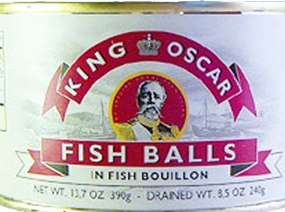
FishballsOwing to a freakish and inexplicable popularity of this blog with Norwegians, I recently received a quasi-lucrative endorsement offer from the King Oscar Canned Fish Corporation. In exchange for tweaking this blog’s content, I will receive all the canned fish products that I can eat– for life. Yeah, that’s right, I get all the minced mackerel, pickled herring, and fish balls that I can stomach. (FYI- Fish balls aren’t aquatic rocky mountain oysters, if you were wondering.)  This is almost as good an offer as was received by Flipper, and he had immense star power. The first truckload arrived this morning as promised, putting me on retainer. Therefore, from this moment onward, the content of this blog will be devoted to the delectable joys of such foods as herring fillets in monkfish sauce or Kipper snacks in oil.

Rest assured, I’ll continue to present the same type material I have in the past, but it will now all have a canned seafood theme running through it. For example, for those who have enjoyed my poetry, I have a doozy coming up entitled “Ode to the Happy Anchovie.”  I will continue to produce humorous postings. There is only one subject off the table… no, not pedophilia… I will never make fun of the delicious Norwegian canned fish snacks of the King Oscar Corporation. However, I have a scathing rant against people who don’t want anchovies on their half of the pizza that I think you’ll find particularly rib-tickling.

In conclusion, I’d like to wish you all a happy April Fool’s Day.

DAILY PHOTO: Easter Bunny

Maybe not "The Easter Bunny", but an Easter bunny

Maybe not “The Easter Bunny”, but an Easter bunny

DAILY PHOTO: Khlong Toei Wet Market

Need some wriggling snakes for dinner? This is your place.

Need some wriggling snakes for dinner? This is your place.

Why I’m a Slacker Lately: or, Mysterious India

What's this India I hear so much about?

What’s this India I hear so much about?

I haven’t been writing, editing, or conducting research much as of late. This has probably gone unnoticed in the vastness of the cyberspace, but in the spirit of blogging I thought I’d answer a question that no one asked. I recently learned that my wife and I will probably be moving to Bangalore, India later in the year. This has kept me physically occupied with home repair and boxing up the house. In my non-labor moments, my mental faculties are largely devoted to understanding the country in which I will be living. I’ve never been there before.

India is a harder nut to crack than one might think. Yes, there is the obvious. At 1.2 billion people, it has the world’s second largest population and is screaming up on China for number one. It’s the seventh largest country by land area. It’s the birthplace of that most excellent yoga that keeps all the twisty people twisty. It’s home of tandoori chicken and naan bread, both of which I love.

However, that’s all superficial. I must sadly admit that–until recently–my in-depth knowledge has come from three sources:

1.) The Jungle Books by Rudyard Kipling

2.) A junior high school field trip to see the film Gandhi, which I had been under the impression was six hours long, but, according to Wikipedia, is only a little over three hours long. I guess that, just as kids think everyone is taller, a kid’s perception of Oscar-winning motion picture run times is greatly distorted.

3.) A ton of reading about the Indo-Pakistani rift and its strategic implications as a graduate student studying International Affairs with a focus on Strategic Studies.

With respect to number 3, the amount of study of this region was not commensurate with the fact that the Indo-Pakistani border region is generally voted “Most Likely Point of Origin for Global Nuclear Winter.” I’m not suggesting that the relationship between India and Pakistan is any more dysfunctional, unstable, or rooted in irrationality than other relationships between nuclear powers. However, the adjacency of the two countries is a problem from the perspective of strategic stability.  When alarms went off in the U.S. or the U.S.S.R. back in the day, there was at least a little time to evaluate and communicate. Being next-door neighbors makes the Indo-Pakistani conflict particularly troubling. That said, they’ve had some pretty big strain tests on their relationship without blowing up the world, so that’s a positive sign.

So why does this country, which should be so front and center in the global consciousness, remain so mysterious? One way we know countries is by those grand competitions through which nations–friends and enemies alike–interact.   In this domain, India really hides its light under a bushel. India has won 26 Olympic medals in 23 games, this is fewer than either Kenya or Jamaica–and both of those countries did it in fewer games. Yesterday, in a post about a book by Nobel Prize-winning Hungarian, Imre Kertész, I may have mentioned that Hungarians have won 12 Nobel Prizes–that’s more than India by a large margin.  Now, while India has had its problems, it’s 100 times more populous than Hungary, and has a history of publishing scientific literature in English (an undeniable advantage in this domain.) Depending upon which country Rudyard Kipling is counted toward, India has either eight or nine Nobel Prize wins. Of course, it would be ridiculous to think that India doesn’t have the human capital to excel in such domains.  While I realize it may not be a representative sample, I think almost every Indian I’ve met in person has had an advanced degree and has been smart as a whip. So it’s certainly NOT true that this is a country that undervalues education.  With a third of the world’s population, statistically speaking, they must be home to physical and mental specimens of humanity that are as impressive as any, but somehow either the will or ability to convert that human capital into winners on the global stage is missing.

I do know a little more about India. It’s the birthplace of both Hinduism and Buddhism, as well as a bunch of other religions. As a martial artist, I’ve heard that  many believe most Asian fighting systems could trace their origins back to India. I don’t know how much truth there is to this belief. Martial arts always evolve into optimization with the local conditions and culture, and, therefore, a lack of superficial similarities doesn’t discount the possibility of such a connection. One of the origin myths the Indo-centric martial arts is the story that Bodhidharma brought a fighting style to China that would be the stepping off point for most of the myriad Asian martial arts. The current consensus among historians seems to be that this part of the Bodhidharma story is not true (See: Meir Shahar’s The Shaolin Monastery.) However, that being said, there is an odd but clear connection between this most pacifistic of world religions, Buddhism, and some of the world’s most kick-ass martial arts. Whether one is talking about China’s Shaolin monks or Japan’s legendary warrior-monk Benkei, it’s clear that some exceptional martial arts have developed in tandem with the spread of Buddhism. Of course, even this just creates more questions, namely: Why should a pacifist religion have legendary fighters sprouting up anywhere near it?

I’m looking forward to getting to know more about India than that it’s huge and its Chicken Vindaloo is scrumptious. It’s a country with a long and intriguing history. I want to see its jungles, its deserts, its mountains, and its beaches. I want to visit its temples and learn from its sages. I’m eager to see its vivid colors and smell [at least some] of its pungent scents. At some point I expect to have some awesome posts about my time there, and hopefully some bold pictures as well. In the mean time, please forgive my slacking.

DAILY PHOTO: Pisaq Landscape

The Urubamba River Valley lies unseen between these ridges

The Urubamba River Valley lies unseen between these ridges

BOOK REVIEW: Detective Story by Imre Kertész

Detective StoryDetective Story by Imre Kertész

My rating: 5 of 5 stars

Amazon page

Hungarians have won their fair share of Nobel Prizes–more than most for a country of Hungary’s size. However, these awards are overwhelmingly in the hard sciences, and so you’ll be forgiven for not being familiar with the country’s sole Nobel Prize winner in Literature to date. If you’ve read Imre Kertész, you probably read Fateless (Sorstalanság.) Fateless (aka Fatelessness) is his semi-autobiographical novel about a boy in Auschwitz.

Detective Story is a short novel (some might call it a novella) whose protagonist is a rookie torturer for the secret police of an unnamed Latin American dictatorship. As the novel begins, we find that the protagonist, Antonio Martens, is on death row. The novel is written as his death row journal of how he came to be in this predicament. It tells how Martens came to have his despicable job, but mostly it describes the one case that was his undoing. That case involved the arrest of the son(Enrique Salinas)of a powerful, wealthy, and well-connected merchant, and the subsequent arrest of the merchant himself (Federigo Salinas.)

Being a Holocaust survivor, Kertész is intimately acquainted with the mixed bag that resides within all of us. It’s hard to imagine a more detestable person than one who would torture confessions out of people who are either political dissenters or who are altogether innocent. Kertész subverts our expectations by showing us a perfectly ordinary and likable chap who has a distaste for his work, but thinks that he is defending his country. As they say, Hitler was probably a likable enough fellow in his own mind. So we see Martens’ rationalizations that allow him to do what he does. We also see how he is trapped by the system. He wants to be reasonable, but, once inside, the system won’t let him be.

This theme of being trapped is not applied to the main character alone. The idea that underlies the entire story-line is that an authoritarian regime’s secret police has one shot to get it right, and that’s before the arrest is made. Once they made the arrest, the men involved (the protagonist’s boss and his boss’s boss)felt compelled to move in one direction, even once they realized that they were wrong and that each additional step was only digging their grave deeper. At one point Martens’ boss’s boss, the Colonel, asks what they should do, and the rookie interrogator unwisely suggests that they should let both the father and son go–even given their tortured appearance. However, a dictatorship is built on a fiction of infallibility, and to admit being mistaken is to become vulnerable.It’s like Machiavelli’s advice to the prince that while it would be nice to be both loved and feared, if one has to make a choice, it’s safer to be feared.

There is another character into which we gain insight, and that is Enrique Salinas. Most of this insight comes from excerpts of Enrique’s journal that Martens presents us. We see that Enrique is badly depressed and is questioning whether there is even a point to living. We find out from the interrogation of Federigo that Enrique’s “suspicious activities” are really just wild-goose chases designed to satiate Enrique’s need for adventure and purpose in a safe manner. We also find out that Enrique longs for the authorities to put him to death–suicide by authoritarian regime, if you will. So the idea that the secret police will be punishing the young heir by putting him to death is just another way in which expectations are turned on their head in this novel.

If you only read one book by Imre Kertész, perhaps it should be Fateless, but I’ll contend you have room for this short work as well.

View all my reviews

DAILY PHOTO: Indianapolis City Market

Looking down from the top of the stairs.

Looking down from the top of the stairs.