Taken in July of 2009 on Isla Mujeres at Tortugranja
Tortugranja is a turtle sanctuary on Isla Mujeres (Island of Women) in Mexico. Seahorses are not actual horses.

Taken in July of 2009 on Isla Mujeres at Tortugranja
Tortugranja is a turtle sanctuary on Isla Mujeres (Island of Women) in Mexico. Seahorses are not actual horses.
This will be a brief reading report. I finished just one book this week, as well as purchasing only one book.
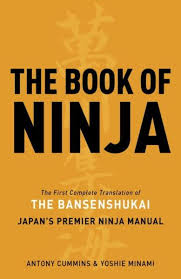
The book that I finished was a translation of the Bansenshukai, which is a 17th century ninja manual written / compiled by Fujibayashi Sabuji. The Japanese title means “10,000 Rivers Flow into the Sea,” but this English translation by Anthony Cummins and Yoshie Minami was re-titled The Book of Ninja. I ran into a hard-copy of this book in a Kuala Lumpur bookshop, but ended up purchasing the much cheaper Kindle e-book. I read about half of the book months ago, and only got around to finishing it this week.
There’s much that will forever remain unknown about the ninja and their medieval practices. The Bansenshukai is one of three well-known manuals that survived into the modern era–along with the Ninpiden and the Shoninki (each of which also has at least one English translation.) It should be noted that these manuals were generally written after the heyday of ninja activity, and still the most common sentence in this book is some variant of the phrase “There is an oral teaching”, meaning that important details have been kept out to preserve secrecy. This is a book of tradecraft, don’t expect thrilling exploits of the ninja, much of the book deals with minutiae about medieval lock picking and recipes for incendiaries. While the English translation title may beckon images of black-clad ninja stealthily rolling over the top of a wall to dispatch an unsuspecting sentry via death from above, the bulk the material is much more mundane. This is a great book for people who geek out on Japan’s Warring States period or who are doing research regarding this topic (I fit in both categories as my novel takes place in part in medieval Japan.)

The book I bought is Sam Harris’s Free Will. Harris is a neuroscientist who studies issues that have historically been considered the domain of religion and spirituality, but he does so from a scientific point of view. What one believes about free will is likely to form the bedrock of one’s personal philosophy of life, so this is a very important topic, and I have high hopes for learning something new from this book.
The only other book that took a significant portion of my time is one that I introduced earlier:
 Leader and Corfield explored the immune system and issues related specifically to cancer in the chapters that I read this week. It was a pleasant turn for the book into a more scientific and less psychobabbly landscape. I continue to be intrigued by this book and it’s title question.
That’s it for now. I’ll be posting reviews for The Book of Ninja as well as last week’s Antifragile in the upcoming week.
Taken in July of 2008 in Beijing

Taken in Peru of 2010
 The Mandala of Sherlock Holmes: The Adventures of the Great Detective in India and Tibet by Jamyang Norbu
My rating: 2 of 5 stars
I gave this book the lowest rating that I’ve ever given a book I reviewed. However, there’s a selection bias at work. I don’t finish (and rarely start, for that matter) books that are so horrible that they’d get a lesser rating. Ergo, any book that I finish and review has some redeeming qualities. I’ll leave it to the reader to determine whether these redeeming qualities will outweigh the deficiencies of story in this book.
The Mandala of Sherlock Holmes takes our beloved detective out of London and onto a trip from Bombay to Shangri La by way of Shimla (India) and Lhasa (Tibet.) It’s one of several pieces of Great Hiatus fan fiction out there. (I recently saw an addition that took Holmes to Japan.) Fans of Sherlock Holmes will be aware that Sir Arthur Conan Doyle became tired of the character at one point and killed him off (along with Professor Moriarty) at Reichenbach Falls. Holmes was “revived” several years later due to popular demand (and—perhaps—Doyle’s need for funds), leaving fans / authors to speculate what the detective did during his time in hiding (i.e. the so-called Great Hiatus.) This particular work tells us that Holmes spent his time in the Himalayas. It’s as good a setting as any, given that fascination with the esoteric Himalayan world was building in the West during this time. In an interesting feature, Norbu’s book brings in a fictional character from Rudyard Kipling’s Kim, Hurree Mookherjee, to serve as Holmes’s sidekick. (FYI: Kim was published during the Great Hiatus years.) The story involves shadowy plots against both Holmes and a young 13th Dalai Lama (this was the predecessor of the current Dalai Lama) that are incidental to obtaining a powerful mandala.
I’ll begin with the strengths of the work before I tear into what I found objectionable about the book. The author, Jamyang Norbu, clearly did his research, and there are some fascinating tidbits and insights into that era of South Asia history. As a Tibetan, Norbu, paints an intriguing travelogue of the territory that Holmes and Hurree traverse. Also on a positive note, I’d rate the readability of this work to be high. It doesn’t follow the 19th century so closely that it falls into the purple prose and general verbosity of that century’s literature, and I think that’s a good thing. The author manages to create a bit of the feel of 19th century literature without falling off the abyss.
The book’s negative qualities are disproportionately loaded toward the back of the book. (Part of what keeps one reading and engaged is that it seems like the book could turn out well.) Let me begin with one minor character defect of the book which is that not all of the chapters advance the story; a few are descriptive like travelogues. However, most of said chapters are so short that it’s not that problematic.
I should note that one star that might’ve been obtained for originality must be forfeited because there’s no shortage of books following the same general premise.
But the story’s major flaw is that devolves into supernatural speculative fiction done poorly. Let me say, I’m not against the supernatural genre in theory. However, as with stories about Superman, these tales are exceedingly easy to do poorly and extremely difficult to do well. In the real world, tension is easily created because the reader knows many of the limits that characters face, and a good writer forces his characters up against some of those limits. However, when characters seem to be limited by the laws of physics, but then just start pulling magic rabbits out of their hats, the tension drains. We assume our protagonist will prevail and the antagonist will be thwarted. The odds stacked against our hero(es) don’t matter if one expects they’ll pull out a—proverbial or otherwise–magic wand and claim a cheap victory. If one wants to do the supernatural well, one needs to not only make the antagonist stronger (which Mr. Norbu does), but one has to know what everybody’s limits are. Otherwise, it’s just a cheap spectacle. [I should point out that Hurree does engage in a non-magical action that is critically timed during a key moment of the story, and some readers may feel that this absolves the novel of its ham-handed introduction of the supernatural.]
There’s another problem with the degree to which the book hinges on the supernatural, and that is specific to the domain of Holmes. The supernatural is usually something to be debunked in the Holmesian domain. Sir Arthur Conan Doyle’s Holmes is a product of the dawning of the age of rationality, and he is a man of science. [Want to know more? See this Tor article entitled “No Ghost Need Apply.”]Doyle’s Holmes may accept the possibility of the supernatural and apparently supernatural elements may make appearances, but Holmes is always looking for an explanation rooted in logic and favoring the possible. While Norbu goes to great lengths to capture the flavor of Holmes in many aspects, he abandons the character altogether in favor a world that looks neither like our own nor the one Arthur Conan Doyle created.
The disappointment of this book is that it looks like it’s on a trajectory to hit its mark, but then sails wildly off target.
If you like supernatural fiction and you don’t mind that magic suddenly pops up to shape the climax of the book out of the blue, by all means pick this book up. Otherwise, I can’t say that I’d recommend it for Holmes’ fans.

Taken in July of 2010 in Peru
 The Pyjama Game: A Journey Into Judo by Mark Law
My rating: 4 of 5 stars
Mark Law’s book contains two types of book in one volume, unified by the theme of judō. On the one hand, it’s a microhistory of the martial art and sport of judō–and, no, it’s not redundant to say the martial art and the sport because while these aspects overlap they aren’t identical. On the other hand, the book presents a personal account of Law’s experience as a judōka who began his practice at the ripe age of 50. The two elements of the book are interwoven together, and aren’t forced into distinct sections by the book’s organization. The history is obviously organized in a chronological fashion, but personal accounts are peppered throughout, and sometimes stories appear in history chapters.
As a history of judō, Law begins with the pre-history of the art in its ancestor martial art of jujutsu, he travels through the arts influence on off-shoots like Sambo and Brazilian Jujutsu, and he examines how the art has contributed to mixed martial arts—the 800 pound gorilla of present-day combative competitions. Particular emphasis is given to Kanō Jigorō’s role as founder of the art and the evolution of judō as an Olympic sport. Interestingly, besides founding Kodokan Judō, Kanō’s other claim to fame was in being the first Asian member of the International Olympic Committee (IOC). However, he never saw judō become an Olympic event, and—ironically–at least a few among those close to him doubted that Kanō would’ve been pleased with his art’s inclusion in the international games.
While Japan dominated judō when the sport first entered the domain of international competition, it wasn’t long before there were a number of other countries including the Netherlands, Russia, the United Kingdom, France, Cuba, and Korea that were producing first-rate judōka. Law devotes considerable discussion to the global blossoming of this sport, including entire chapters on some of the more prominent nations. The book discusses the double-edged sword that Japan faced. On one hand, the Japanese were heart-broken when other nations started beat them at their own game. On the other hand, it was clear that this had to happen for the sport to retain a global following. (Otherwise, the sport might have gone the way of baseball—being pulled out of the Olympics because only a handful of North American, Caribbean, and East Asian nations had any interest in it.
There are also chapters on women’s judō, a development that no doubt faced a good deal more misogyny than many sport’s bi-genderifications. There’s always been resistance to encouraging women’s participation in combative activities—even judō, a martial art whose dangerous edges were supposed to have been rounded off through rules, equipment (e.g. sprung flooring), weight classes, and close monitoring. Law discusses the hard fought evolution of the women’s side of the sport.
As a personal narrative, Law talks about the lessons he learned from training in judō and from testing for rank—an arduous process that requires beating other rank-pursuers in randori (free-form grappling, i.e. the grappling version of sparring.) Many of these lessons will be familiar to anyone who has practiced a martial art (e.g. while it’s more intimidating to fight someone who’s much more experienced in the art, it’s usually vastly more safe—both because senior players are more in control of their bodies and because they have less need to prove anything—i.e. they won’t injure an opponent to protect a fragile ego), but much of this discussion is specific to the culture and practice of judō.
If you’re interested in the history and development of judō, I’d recommend this book. I found the book to be at its most interesting when it addresses the history and globalization of the sport. However, those who haven’t practiced martial arts may find Law’s personal insight to be useful—particularly if you’re considering taking up judō and all the more if you intend to take it up past mid-life.
It should be noted that—judging by the identical table of contents and subtitle—this book was also released under the title Falling Hard: A Journey into Judo. The book does is annotated and provides references. Law is a journalist, and the niceties of that discipline are followed throughout.

Taken in July of 2010 in Cuzco, Peru.

Taken in July 2010 in the Peruvian Andes