Taken in December of 2014 at the University of Pécs

Taken in December of 2014 at the University of Pécs
Welcome to a special–not really–Friday the 13th edition Reading Report. Were I one to plan ahead, I might have read something horrifying for this week, but I’m afraid there’s nothing to inspire dread… well, I don’t really know what your dread threshold is, but unless you have phobias about good posture or classic literature, I think you’re safe.
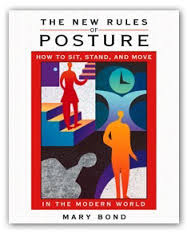
I bought The New Rules of Posture this week, and spent a lot of my reading time with my nose in it. It’s one of those books that has one periodically getting up to try some movement or postural experiment, but I’m about 2/3rds of the way through nonetheless. It’s written by a dancer turned Rolfer, and offers good insights on the subjects of posture and breathing for those of us who are interested in evaluating and improving such things. The line drawings, many anatomical in nature, are helpful and the readability is high for a such a book. I suspect I’ll finish it in the upcoming week and will have a review up within a couple weeks.
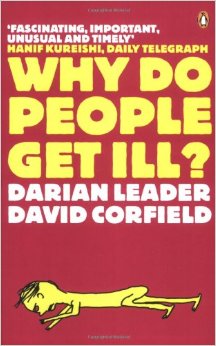
I finished only one book this week, Why Do People Get Ill? I’ve mentioned this book in earlier reports, and will soon be doing a review, so I won’t spend much time on it now. It’s essentially about the roles that stress and the inability to articulate one’s feelings about illness play in catching a disease as well as its progression.
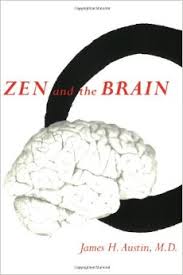
As one can see, I’ve been on a body-mind nexus reading kick lately. I’m trying to educate myself about anatomy, physiology, and related biological sciences as a means to improve the operation of body and mind. In addition to the featured titles above, some of the other books I’ve been reading during the past week include: Zen and the Brain (there was a fascinating chapter on indigenous opioids–i.e. morphine-like substances produced within the body–among this week’s chapters), The Trigger Point Therapy Workbook, and The Sensual Body.
Moving beyond the body / mind books, I did do some reading that wasn’t research related. I’m about 40% through The Painted Word, having read the entries for the letters D, E, and (part of) F. My favorite word from the week was “dromomania” which means an intense passion for travel or wandering. As in, “I, Bernie Gourley, have a bad case of dromomania.”
The short story collection that I’m currently reading (I try not to neglect this medium) is Meeting the Dog Girls. I read about half-a-dozen stories this week (most of them are short, and a few of them–it could be argued–don’t really constitute stories), and I’m about 20% of the way through. Absurdism is a prevailing theme, though in some stories more than others. So far, I’m enjoying this collection. It’s mostly light and easily digestible reading, but has some intense moments.

With respect to novels, I slipped away from Mo Yan’s Life and Death are Wearing Me Out, and resumed reading Victor Hugo’s Les Misérables–a book which I started a while back. I’ve got to admit that reading 19th century literature can be a struggle, and–at the risk of offending–Hugo could’ve used a modern-day editor. (I realize that an alternative interpretation is that modern-day people–myself included–could use an attention span.) I’m only about 10% in, but I got through a powerful moment during which the gendarmes bring Jean Valjean before the Bishop. If you’ve read it (or seen one of the movie or theatrical adaptations) you’ll know what I’m talking about.
The only other book I spent any significant time was The Taiheiki, and if–like me–you think reading a translation of 19th century French literature can be a challenge, try reading a translation of 14th century Japanese literature. As I’ve mentioned, this book is research for the novel I’m working on. The challenge is the vast cast of characters. It’s a blend of history and fiction, and if you don’t know who was allied with whom during the war between Emperor Go-Daigo and the Hojo, it’s hard to figure out who you should be rooting for–unless it’s talking about the legendary warrior Kusunoki Masashige or one of the few other really well-known samurai. (Kusunoki was the lord of a small and inconsequential province and his name would likely have been lost to history–despite being a brilliant General–had he not become Japan’s national paragon for the virtue of loyalty.)

Taken in the summer of 2011 on Seurasaari Island, Finland
Last week I attended a five-day workshop on pranayama, the breathing exercises practiced in hatha yoga. (Yes, I’m aware that that definition may be a radical oversimplification to many.)
Breath is like water. It’s easy to take for granted as long as it’s unimpeded, but the moment it’s cut off life is miserable–not to mention short. (If you’ve never been at an altitude that your body wasn’t adjusted to, this may not seem profound, but trust me.) We reduce breath to an autonomic function–mindless and effortless. It’s easy enough to do this if one doesn’t have an interest in getting control over one’s emotional life or one’s health.
FUN FACT: Exhalation inhibits the firing of the amygdala–two structures in the brain that are partially responsible for our experience of fear. Ergo, elongating exhalations may diminish the expression of fear. [This isn’t a fact that I learned at the workshop, but was something I recently read in the book Zen and the Brain, which is a neuroscientist’s explanation of the nervous system and the effect of meditation on it.]
The workshop was educational and offered plenty to work on as I expand the pranayama portion of my practice. Here are a few of the takeaways I brought from the workshop:
1.) There’s a thorough system of classification of the various pranayama practices. This might seem self-evident, but it’s not something I’d thought of before.
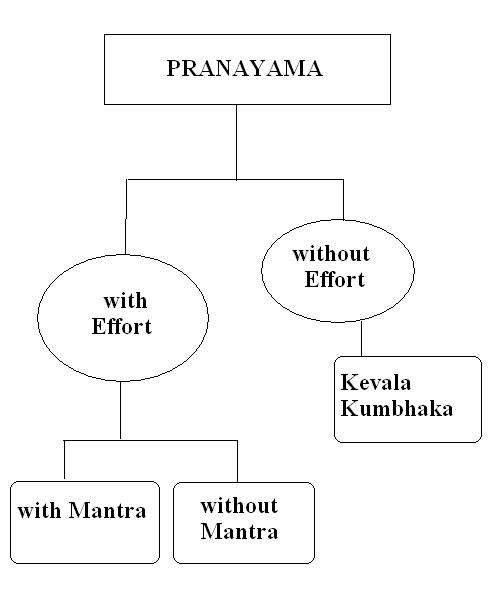 Classification begins with the tree above, but there’s much more to it. For example, one might group practices lying under the “without mantra” box as vitalizing (e.g. Bhastrika) or tranquilizing (e.g. Sheetali/Sheetkari.) One can also classify pranayama by whether there’s a retention of breath or not, and–if so–whether the retention is done with air in (Antar Kumbhaka), air out (Bahya Kumbhaka), or both (Sahit Kumbhaka.)
2.) [Related to lesson # 1.] Some of my favorite pranayama aren’t necessarily considered pranayama. Nadi Shodhana (alternate nostril breathing) is classified as a shatkarma (cleansing practice) rather than a pranayama by many. Furthermore, some think of kapalbhati (forced exhalation breathing) more as a shatkarma–though many accept that they can be classified either way. Certainly, it’s more important that you do it than put it in the right box, but I found it interesting nonetheless.
 3.) Ghee is to yogis as duct tape is to a handyman. It’s a readily available multi-purpose tool. But seriously, I learned that hot milk and ghee–for some reason–have different characteristics in the body than regular cold milk. One wants to minimize mucus producing foods when one does a lot of pranayama for obvious reasons. (Blowing snot bubbles is neither dignified nor sexy.) So it came as a surprise when ghee and warm milk were suggested foods. (Milk, when taken cold, is about as mucus-producing a food as there is.)
4.) I learned why I can hold my breath so long after kapalbhati (or bhastrika) breathing. (Kapalbhati is a breath in which the exhalation is forced out; in bhastrika both the inhalation and exhalation are forced [pumped]–i.e. these are hyperventilating breathes.) I noticed a while back that as I practice kapalbhati, doing internal retention afterward was easy to hold for a long time. This is probably one of the most counter-intuitive facts I’ve experienced in practicing breathing exercises. The body has shed a bunch of carbon dioxide and has time and capacity to build up more without the body responding severely. It should be noted that the feeling of suffocation what we experience as being “short on breath” isn’t a lack of oxygen. It’s an excess of carbon dioxide. [One should also note that the reason that one needs to exercise great caution and graduality with these breathing methods–i.e. the reason that people have been known to pass out–is that the body reacts severely to carbon dioxide levels that are outside the appropriate ranges.]
5.) Diet is considered more important in starting a pranayama practice than in starting an asana (postural) practice. The basis of this statement is that one of the most prominent hatha yoga manuals (e.g. Hatha Yoga Pradipika) recommends dietary considerations for those beginning a serious pranayama practice, but it makes no similar statements with regard to beginning an asana practice. This doesn’t mean that what / when one eats isn’t important for postural practice. Anyone who’s ever eaten a heavy meal too close to an intense asana practice will know that it’s not true that food is irrelevant for asana practitioners. However, there seems to be a belief that many specific foods can be quite detrimental to pranayama practice–and a few really mesh well with such a practice.
FUN FACT: Conscious breathing stimulates the Vagus nerve, and the Vagus nerve is crucial in the functioning of the parasympathetic nervous system (PNS)–i.e. advancing the “relaxation response” or “rest & digest” functions. Therefore, conscious breathing practices can help one to be healthier because PNS activity supports healing functions.
6.) There’s an established sequence of advancement that can be used across many different breathing exercises. One will see breath ratios that consist of up to four numbers. (e.g. 1:1 means that inhalation and exhalation are the same length (whatever that length may be, it will vary by person); 1:2:1 means that one internally holds the breath for twice as long as one does the inhalations and exhalations; and 1:1:1:1 means that one will inhale, internally retain, exhale, and externally retain all for the same length.)
Note: the counts that those numbers represent can and should increase over time–e.g. a 1:2:1 ratio may represent a six count inhalation/exhalation with a twelve count retention or it could be an eight count inhalation/exhalation and a sixteen count retention.
The aforementioned sequence is 1:1, 1:2, 1:1:1, 1:2:1, 1:2:2, and 1:4:2.
Happy breathing.

Taken in July of 2009 at Tulum, Mexico

Taken in December of 2014 in Budapest
 Amphibious tour vehicles have been around for a while. However, most of the ones that I’ve seen are “Ducks”–the converted DUKW military amphibians. In Budapest this winter was the first time I’d seen one that looked like a run-of-the-mill tour bus–at least as it was tooling down the Danube. (Granted, most of my travel is in the developing world, so maybe these “buses” are old news throughout Europe and North America.)

Taken in July of 2010 on Lake Titicaca
No, that’s not land. It’s an island made of reeds that’s floating on Lake Titicaca. It’s a pain in the butt to live there because of the long boat commute for school, shopping, errands, or work. However, there’s no property tax because, well… there’s no property.
 Antifragile: Things That Gain from Disorder by Nassim Nicholas Taleb
My rating: 4 of 5 stars
Nassim Nicholas Taleb has a gift for uncovering simple and fascinating topics that have remained buried–not because they are unfathomable, but–because of the institutional blinders and group-think present in academia (at least within the social sciences.) I don’t mean to diminish what Dr. Taleb does by saying these are simple ideas, it takes a great intellect to not only recognize the ideas others have missed but to clarify them for a broad audience and to unravel the challenging ideas that must be made clear as one moves beyond the crux of the idea. Furthermore, it takes a bold writer to push these ideas out into the open against brute institutional antagonism. (If Taleb hadn’t written books that were highly readable and that presented the ideas in a manner readily digested by a broad audience, he’d likely still be being completely ignored by academicians.)
By “simple” I mean ideas that can be captured in a single sentence—often a pithy one at that. In his second book (his first work for popular audiences), Fooled by Randomness, the idea was that randomness is more pervasive than most people imagine and that false explanations are often built for chance occurrences. Black Swan told us that statistical forecasting fails catastrophically when one has “800 pound gorillas” in the data set (e.g. if one is comparing countries—a situation in which one will virtually always be in, as Taleb calls it, “Extremistan.”) The book in question, Antifragile, is built around the notion that some entities get stronger when subjected to stressors and disorder.
One can see many “antifragile” elements in one’s own body. A muscle subjected to exercise often gets tiny tears in fibers, but when the body does its repair work those fibers will be stronger than ever before. Wolff’s Law tells us that bones subjected to an increased load will increase their density. In fact, our bodies are testaments to the concept of antifragility on many levels. For this reason, Taleb uses many examples from the field of medicine—in addition to those from disciplines more closely related to his own, e.g. finance, economics, and risk. A lot of the medical discussion deals with the proclivity of Western medicine towards interventionism (in contrast to the “first, do no harm” motto often heard.) An example with which many people are familiar is that of the over prescription of antibiotics. While there are obviously cases for which antibiotics are necessary and beneficial, prescribing them willy-nilly robs the body of antifragility (i.e. if the body defeats the infection itself, it has inborn resistance.)
As with other of Dr. Taleb’s writings, I found Antifragile to be interesting as well as informative. The author does a good job of providing examples to elucidate and bolster his arguments and puts it all together in a readable package. He also does a great job of pulling examples and discussions from a number of different fields. This book doesn’t read like it’s about an Economics or Business subfield as much as it’s a book that can teach you something applicable to whatever your field might be. The book also covers a number of other critical but related ideas, such as the value of heuristics in decision-making, how antifragility can be increased (and fragility reduced), and the ethical issues involved.
My primary criticism is that the book overdoes the jabs at scholars and economists. I can understand where Taleb might have some pent-up rage against many academics. He has certainly had to weather a lot of equally petty assaults from the academics who loath him. The work of many a social scientist and economist looks pretty silly to those who grasp the concepts Taleb is presenting. Still, we got it. Halfway through the book, one wonders why Taleb is still so vigorously and maniacally whipping such a skeletal horse. While it’s hard to imagine anyone less strong-willed than Dr. Taleb could get these messages out in the face of the institutionalized opposition he faced, the flip side is that he will probably strike you as a pretentious jackass on occasion.
The book is organized into seven sections (each of multiple chapters.) It begins by describing antifragility and then proceeds through relevant concepts like optionality, nonlinearity, via negativa, and ethics. The book has handy appendices for those who prefer graphic or mathematical representations. (Like all popular science / social science works, there’s an attempt to keep the overly technical and visually intimidating material out of the body of the work.) There is also a works cited section.
I’d recommend this book for those interested in wonky type books.

Taken in July of 2009 in Playa Del Carmen