Unknown's avatar

About B Gourley

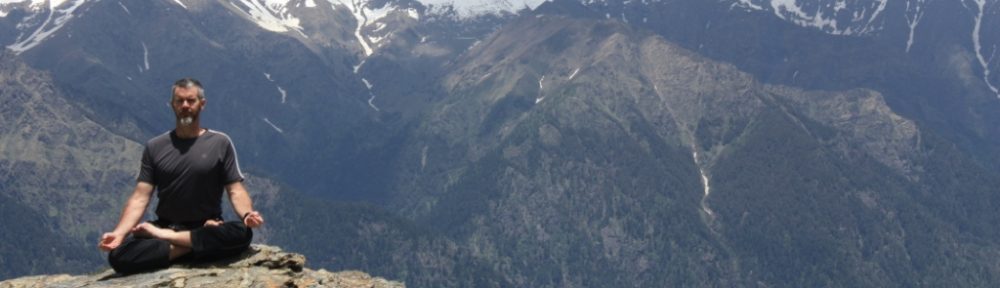
Bernie Gourley is a writer living in Bangalore, India. His poetry collection, Poems of the Introverted Yogi is now available on Amazon. He teaches yoga, with a specialization in pranayama, and holds a RYT500 certification. For most of his adult life, he practiced martial arts, including: Kobudo, Muay Thai, Kalaripayattu, and Taiji. He is a world traveler, having visited more than 40 countries around the globe.

2015 Top 10: Highlights From the Year That Was

These aren’t necessarily in any order.


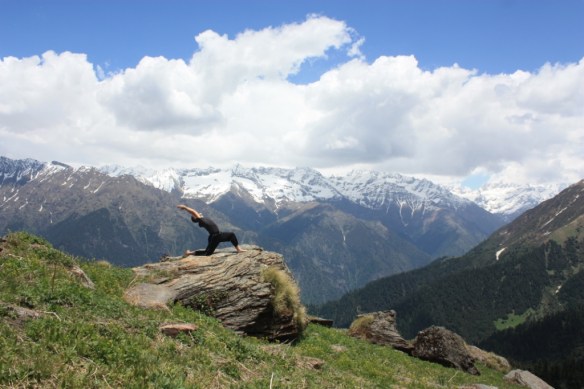
1.) Trekking the Great Himalayan National Park [June]:

IMG_1898


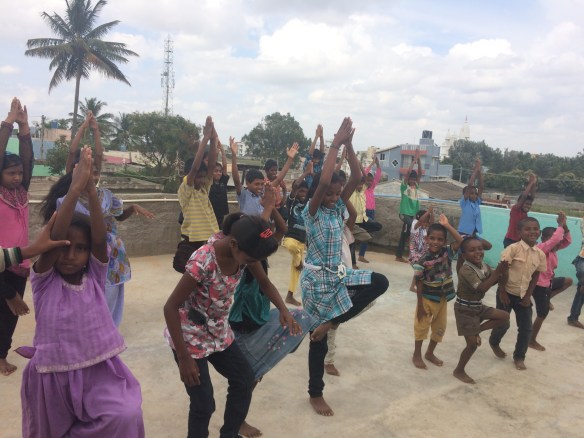
2.) Teaching kids at KAMMS and Socare [September & October]: I finished my RCYT course in April and have been teaching kids when I have a chance:

IMG_0101


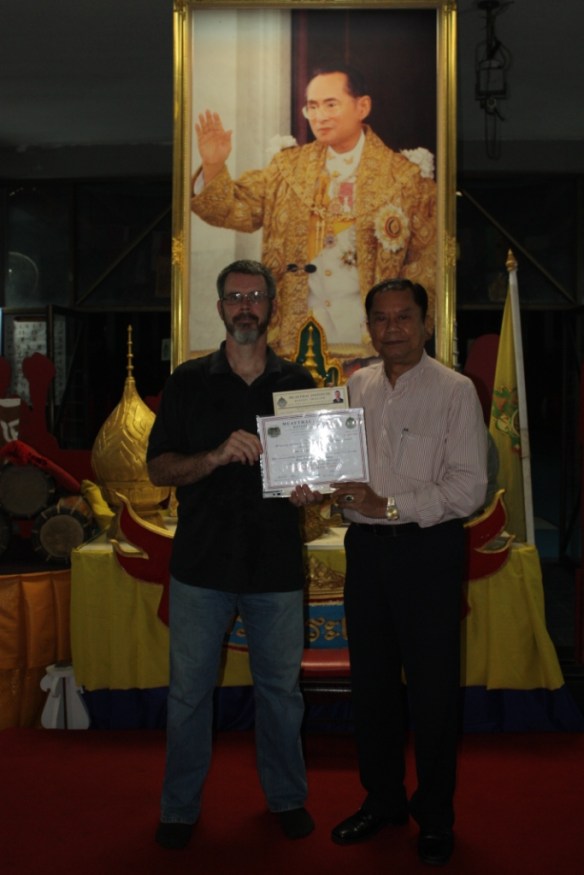
3.) Completing Level I Examination at the Muay Thai Institute [September]:

IMG_1926


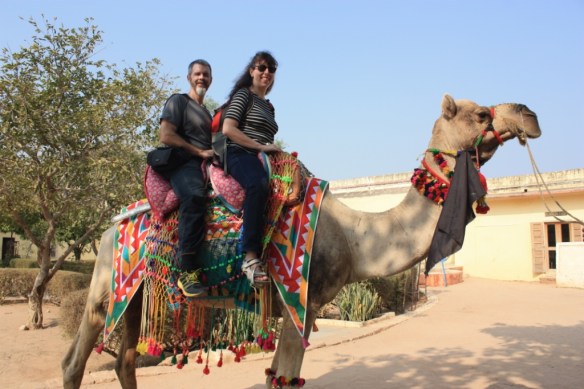
4.) Riding camels at Pushkar and Jaipur [November]:

IMG_3002


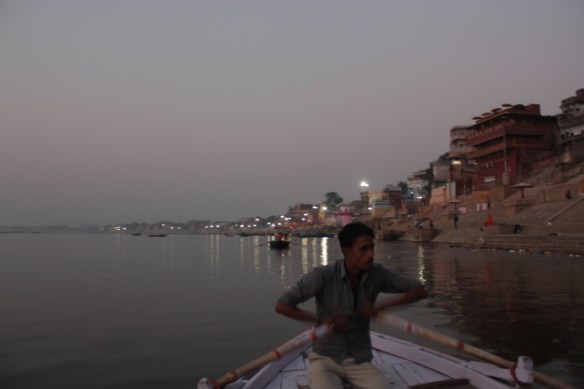
5.) Boating on the Ganges in Varanasi [October]:

IMG_3538


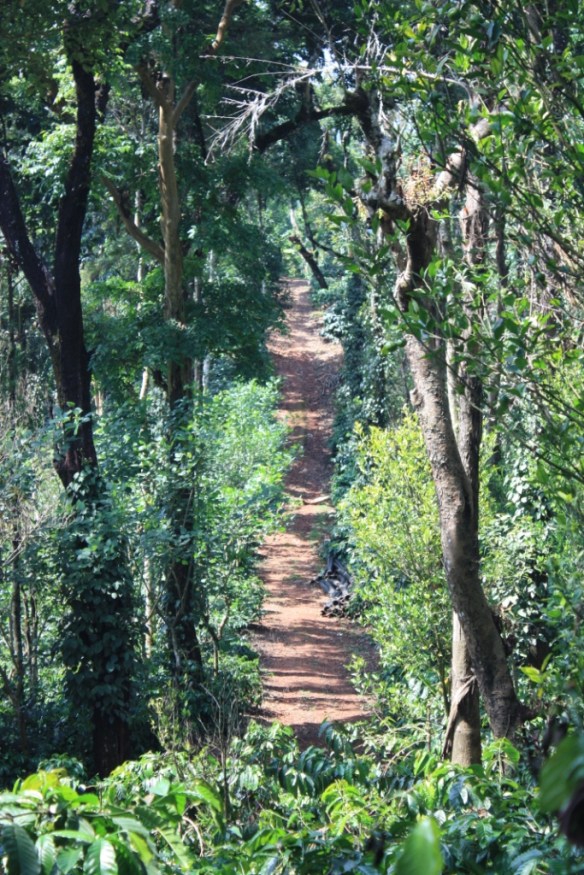
6.) Wandering around a coffee plantation near Chikmaglur [April]:

IMG_1966


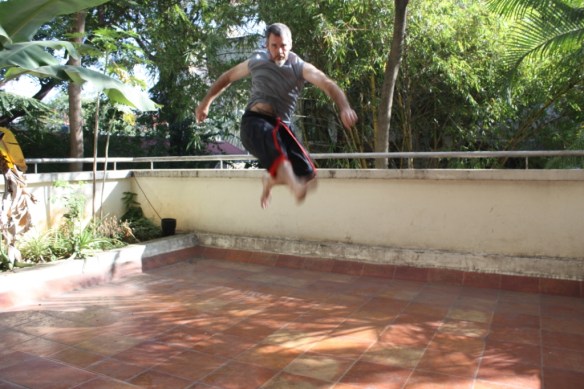
7.) Completing the Level III and IV reviews in Kalaripayattu [February & August]:

IMG_4289


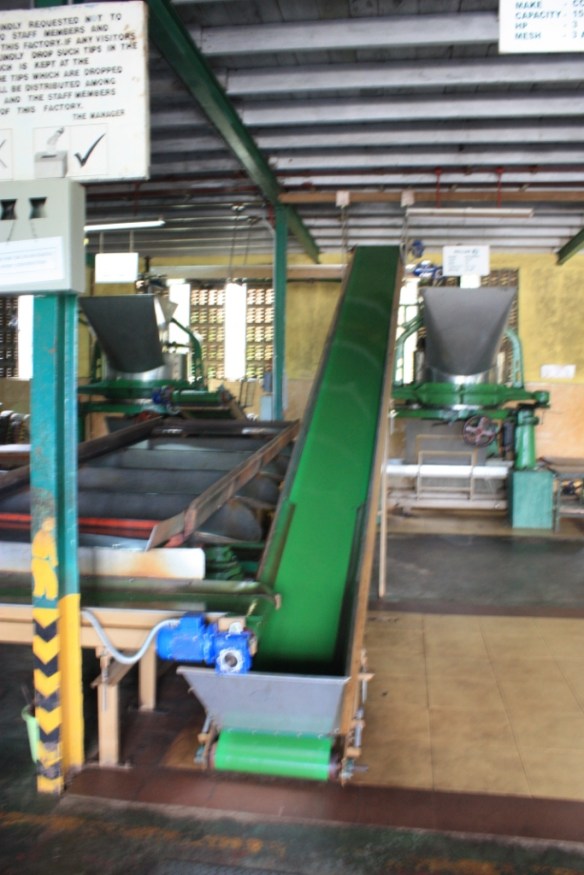
8.) Touring the Glenloch tea factory in Sri Lanka [May]:

IMG_0572


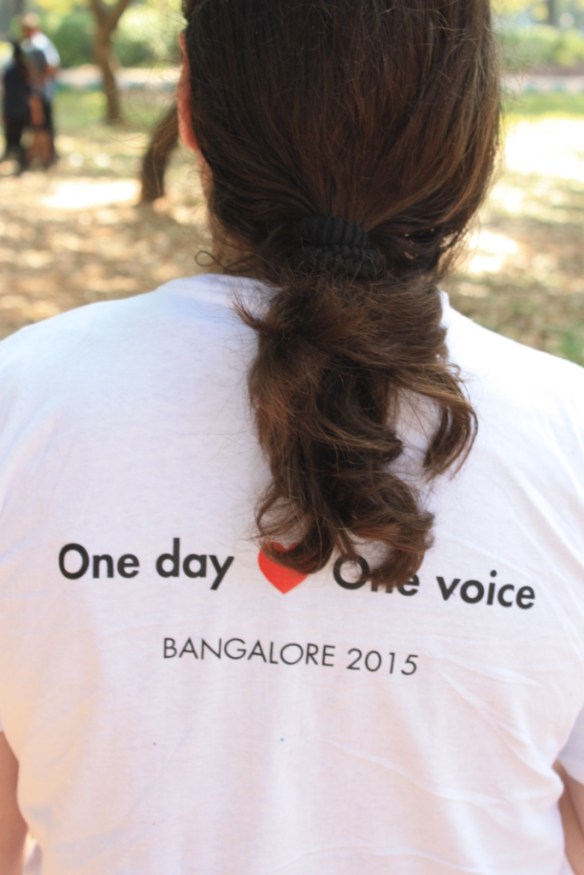
9.) 108 Surya Namaskara Against Child Trafficking [March]:

IMG_3331


10.) Junk boat tour of Ha Long Bay, Vietnam [December]: This may be jinxing us to put it on the list,  before we’ve been (we leave tomorrow) but I’m optimistic that our three weeks in Vietnam will be awesome, and I’m told Ha Long


What to expect in 2016? Lilla and I will be moving back to the States around mid-year. (To where, exactly, remains a mystery.) In January and February I’ll be doing an RYT-300 course to round out my 500 hour yoga teacher certification. I plan to make at least one more trip to Thailand to MTI for Level II. I’d also like to complete the 10-day Vipassana meditation course before returning. Lilla and I are thinking about another Himalaya trek for the summer.

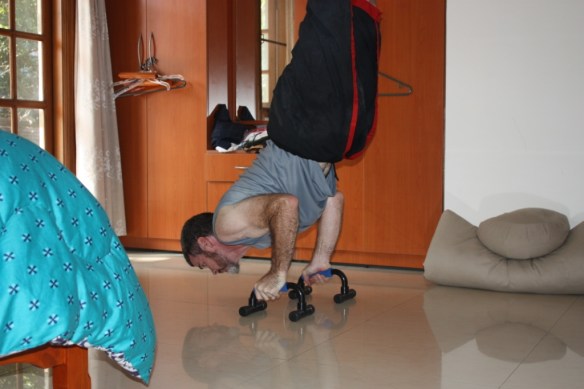
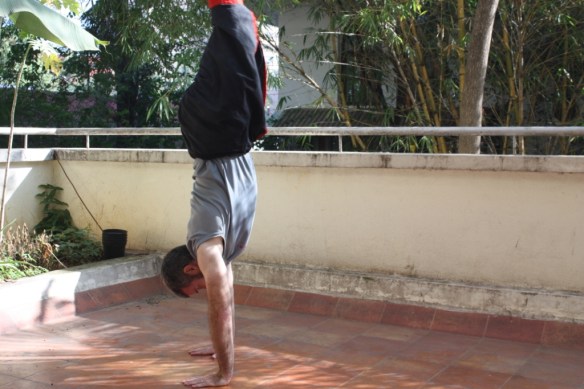
I’ll also be continuing to work on press handstand progression, as that’s been a focus for me of late and I still have a ways to go.

IMG_4354

IMG_4342

BOOK REVIEW: Yoga Education for Children, Vol. 1 by Swami Satyananda Saraswati, et. al.

Yoga Education for ChildrenYoga Education for Children by Swami Prakashanand Saraswati
My rating: 3 of 5 stars

Amazon page

This is the first of a two-volume set on teaching children yoga, and was the textbook for the Registered Children’s Yoga Teacher (RCYT) training course that I completed earlier this year. The focus is on integrating yogic teachings as part of a child’s broader education. It’s not just about how one can squeeze some postures into the life of a busy student, but about what yogic education can provide that mainstream education is lacking and how mainstream and yogic education can work together to produce healthier and more well-balanced children.

The book consists of three parts. Part I is entitled “Yoga and Education” and it considers a range of topics at the intersect of yoga and education. Here we learn why formal yogic education begins at age eight, and what the differences between children and adults are as they pertain to learning yoga—and learning in general. This section presents the specific practices that have historically been a child’s introduction into yoga (surya namaskara, nadi shoudhana [alternate nostril breathing], and a specific chant known as the Gayatri mantra.) The tone of the book is scientific, although it does vastly oversimplify some topics—e.g. the deterioration of the pineal gland—over what is being reported by scientists.

The middle section considers yoga as a therapeutic tool for emotionally troubled children, disabled children, and those with juvenile diabetes. This is the shortest part by far. It’s just three chapters, each linked to a subject mentioned in the topic sentence. The chapters are short and general. It should be noted, that the first section also addresses the issue of behavioral problems in a more general and less clinical sense.

The final part of the book, and the largest by page count, is yogic practices for children. There’s a brief section on pre-school exercises. As mentioned, children are formally introduced to yoga around age seven or eight. Younger children’s yoga training best takes the form of play. Therefore, the practices for younger children are more game-like. There’s a section on yoga for the classroom. In other words, practices that one can complete at a desk–as opposed to needing the full mat space.

The bulk of part three is taken up by asana. The postures are laid out as they are in the “Asana Pranayama Mudra Bandha” (APMB) book that is also put out by the Yoga Publications Trust of Bihar. For each posture there’s a line drawing, a description, and a list of benefits and contraindications. In some cases these posture listings look exactly the same as those in the APMB, but in many cases they are “marketed” differently. That is, a posture might be listed by its similarity of appearance to an animal or letter of the alphabet so that asana can be taught in conjunction with other topics—as well as be made more interesting for the young student. The grouping of asana is meant to assist in creating child-suitable lessons (as opposed to being grouped by type of posture–e.g. forward bends, back bends, twists, etc.)

The last part doesn’t deal only in asana, it also talks about pranayama practices suitable for children as well as other common practices like trataka (concentrating gaze) and yoga nidra (yogic sleep.) It’s important to note that not all pranayama practices are deemed suitable for children. Practices like yoga nidra have to be modified for children because they will not be able to sit still for extended periods, and so the yoga nidra practice must be abbreviated. Children may also have trouble following some of the instructions as used for adults.

I’d recommend this book for yoga teachers who are interested in teaching children. There are many unique features of teaching children that must be considered. This volume is under 300 pages, and the second volume is about the same thickness. I haven’t read volume two but it seems to take a similar approach, expanding on some items and focusing on a different set of practices. That volume also apparently reports on the findings of a couple studies on yoga in the educational environment.

View all my reviews

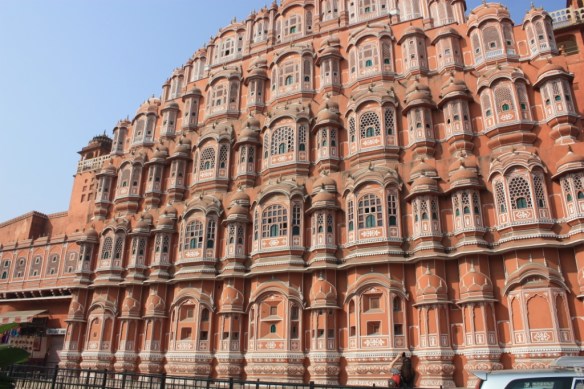
DAILY PHOTO: Hawa Mahal Front and Back

Taken on November 30, 2015 in Jaipur

The back: Taken on November 30, 2015 in Jaipur

IMG_2778

The front (i.e. the picturesque side) of the Hawa Mahal.

DAILY PHOTO: Március 15 Tér

Taken in December of 2014 at Március 15  Tér in  Vác

Taken in December of 2014 at Március 15 Tér in Vác

IMG_2712

BOOK REVIEW: The Snows of Kilimanjaro and Other Stories by Ernest Hemingway

The Snows of Kilimanjaro and Other StoriesThe Snows of Kilimanjaro and Other Stories by Ernest Hemingway
My rating: 5 of 5 stars

Amazon page

This book collects ten pieces of short fiction penned by Hemingway. Each of them is a stand-alone short story; though there’s indication that they all take place in the same universe. Notably, the character Nick Adams recurs in four of the stories (“Fathers and Sons,” “In Another Country,” “The Killers,” and “A Way You’ll Never Be.”)

The first and last stories present intriguing similarities that make them interesting bookends to the collection. The first, and eponymous, story—“The Snows of Kilimanjaro”—follows the last hours of a man who is dying of gangrene from an infected wound he sustained on Mount Kilimanjaro. The dialogue pits a wife in denial against the man who seems resigned to the inevitability of his death. The last story, “The Short Happy Life of Francis Macomber” is also set in Africa and features a man and wife whose adventure goes awry. In this case the story begins with the man having been emasculated when he bolted in the face of a charging lion, and all in front of his harpy-esque wife. Francis Macomber manages to redeem himself only in the last seconds of his life.

Besides the aforementioned book-ending stories, among the most substantial and well-developed stories in the book include: “The Gambler, the Nun, and the Radio,” “The Killers,” and “Fifty Grand.” The first of these is about a gambler put in the hospital by a disgruntled competitor and the happenings in the hospital while he is on the ward. “The Killers” is about two hitmen who venture into a small town diner looking for a boxer who apparently owes someone money or decided not to take a dive. “Fifty Grand” is about an aging boxer who bets against himself (and will probably soon be in the same boat as the boxer in “The Killers.”)

There are a couple of stories that feel fragmentary, including: “A Clean, Well-Lighted Place” and “A Day’s Wait.”

This collection features the usual elements of Hemingway fiction, e.g. punchy and spare prose, artfully constructed dialogue, tales of manliness and inadequacy. It’s a short readable book of only about 150 pages.

The stories included are:

1.) The Snows of Kilimanjaro
2.) A Clean, Well-lighted Place
3.) A Day’s Weight
4.) The Gambler, the Nun, and the Radio
5.) Fathers and Sons
6.) In Another Country
7.) The Killers
8.) A Way You’ll Never Be
9.) Fifty Grand
10.) The Short Happy Life of Francis Macomber

I’d recommend this for readers of short fiction who haven’t gotten around to it yet.

View all my reviews

DAILY PHOTO: Jantar Mantar

Taken on November 27, 2015 in Jaipur

Taken on November 27, 2015 in Jaipur

IMG_2105 IMG_2120


Jantar Mantar is one of the five observatories built by Maharaja Jai Singh II. (The others were built at Varanasi, Mathura, Ujjain, and Delhi.) This one, built in Jaipur, is the most well-preserved and extensive of the five. The observatory largely consists of sun-dials that use shadows to mark the time or describe the movement of the Earth relative to the Sun. It’s impressive how accurately one can tell the time by these sun-dials.


Apparently, the devices have some astrological significance / role as well. [I didn’t ask.] Our guide asked whether: “I believed in astronomy and astrology.” Which is a question that sounds a lot to my ear like, “Do you believe in gravity and ghosts?”


Jantar Mantar is one of Jaipur’s most impressive sights.


DAILY PHOTO: Daulatabad Minaret

Taken in November of 2014 at Daulatabad Fort

Taken in November of 2014 at Daulatabad Fort

DAILY PHOTO: Christmas Market Photos

Taken in December of 2014 in Budapest

Taken in December of 2014 in Budapest

IMG_1848 IMG_1815

DAILY PHOTO: Budapest Christmas Street Scene

Taken in December of 2014 in Budapest

Taken in December of 2014 in Budapest

DAILY PHOTO: Jaswant Thada

Taken on November 29, 2015 at Jodhpur

Taken on November 29, 2015 at Jodhpur

IMG_2728


This beautiful white marble monument dates to 1899.  It can be seen from the Mehrangarh Fort, and has the same translucent marble that one sees at the Taj Mahal. It was built by the Maharaja Sadar Singh for his father the Maharaja Jaswant Singh II.

What light through yonder wall breaks

What light through yonder wall breaks