DAILY PHOTO: Blue Lagoon, Padang Bai

Nature [Free Verse]

it's beauty & chaos
& pristine vistas
& unfiltered slop soup
& kungfu fighting animals,
madly mauling each other

but it's also creatures pulling 
critters of another kind
out of the mud pits

sea turtles keeping afloat 
sailors pitched overboard

it moves in mysterious ways,
but never malicious ways

it's savage & vicious,
but knows not evil --
for evil is solely the domain 
of the labeling class

it knows not virtue either,
the closest it knows to goodness  
is the experience of experience

the Now,

a moment unfolding 
with the least possible effort,
and with no thought whatsoever

DAILY PHOTO: From Lake Pichola, Looking toward the Monsoon Palace

Image

A Madman’s Lament [Common Meter]

Sitting naked beside the road,
stripped of all I'd once owned.
I see a flower stare at me,
and recall being stoned.

The painful thumps upon my flesh,
the cracks internal heard,
the racing breath, the anxious feel
as my sight slowly blurred.

What crime is madness, I wonder?
What is it to be free?
A slap to faces of all those
tied to the old birch tree?

BOOK REVIEW: Introducing Hegel: A Graphic Guide by Lloyd Spencer

Introducing Hegel: A Graphic Guide (Introducing...)Introducing Hegel: A Graphic Guide by Lloyd Spencer
My rating: 5 of 5 stars

Amazon.in Page

This book combines a biography of the German philosopher Hegel with a quick and dirty overview of his most well-known philosophical ideas. Today, Hegel is best known for his approach to dialectics (thesis confronts antithesis, resulting in synthesis,) and for having a profound influence on the thinking of Karl Marx. However, the book addresses a broad collection of philosophical ideas including those in aesthetics, political philosophy, philosophy of history, and philosophy of religion. (With respect to the latter, it should be noted that Hegel was a believer [of the Protestant Christian persuasion,] lest one think that, given frequent co-utterances of Hegel and Marx [of the “religion as opiate of the masses” persuasion,] that the two philosophers were in complete lockstep; they were not.)

I found this book to be readable, and to be successful in conveying Hegel’s philosophical ideas – at least in a rudimentary form. It’s useful that the book wraps up by reflecting upon whether Hegel is even relevant in the world as we know it, and – if so – why? Hegel might have been a name lost to time if he hadn’t come to be so enthusiastically cited by Marx, a scholar who left a huge imprint on twentieth century history.

If you’re interested in the life and philosophy of Hegel, but don’t want to be inundated by minutiae or complexity, this is a fine work to investigate.


View all my reviews

Sunrise River [Haiku]

orange river
streaked in yellow; groggy
rowers clueless

BOOK REVIEW: Humanism: A Very Short Introduction by Stephen Law

Humanism: A Very Short IntroductionHumanism: A Very Short Introduction by Stephen Law
My rating: 4 of 5 stars

Amazon.in Page

In this guide, Law lays out the basic principles of humanism, discusses the arguments for and against belief in a deity, and examines the humanist conceptions of morality and meaning of life (two constructs that religious people often claim can only exist in a deist world.) Humanism is an ill-understood system, in large part because it isn’t so much a set of ideas ascribed to as a way of approaching ideas in a questioning and secular way. Therefore, defining humanism isn’t as straightforward as listing a set of common beliefs because humanism can cover a wide variety of different worldviews. That makes this a particularly useful book as it clears up a number of false equivalences. Many think that humanism is the same as atheism or agnosticism, and while humanists generally follow one of those two approaches to the question of whether there is a god, humanism isn’t identical to either.

This book does a good job of organizing the debate and laying out arguments and counterarguments. I learned a lot by reading the book and by deliberating over the points of contention. There were points where I think more could have been said. For example, in the chapter on the meaning of life, after systematically dismantling the religious argument that a meaningful life is the sole domain of religion, Law doesn’t offer any guidance as to the humanist approach to pursuing a meaningful life (stating merely that most humanists agree with the religious about what is a meaningful life, even if they disagree about why it is.) I realize this is a brief guide, and the author might have wanted to avoid stepping on the toes of other guides in the series that investigate the question, but it stands as a deficiency. True, there wouldn’t be a list of what makes a meaningful life so much as an outline of how to approach it, but, still, even an overly simplified statement would have been useful.

I learned a lot from this book and would recommend it for anyone wanting to gain insight into the debates around humanism.


View all my reviews

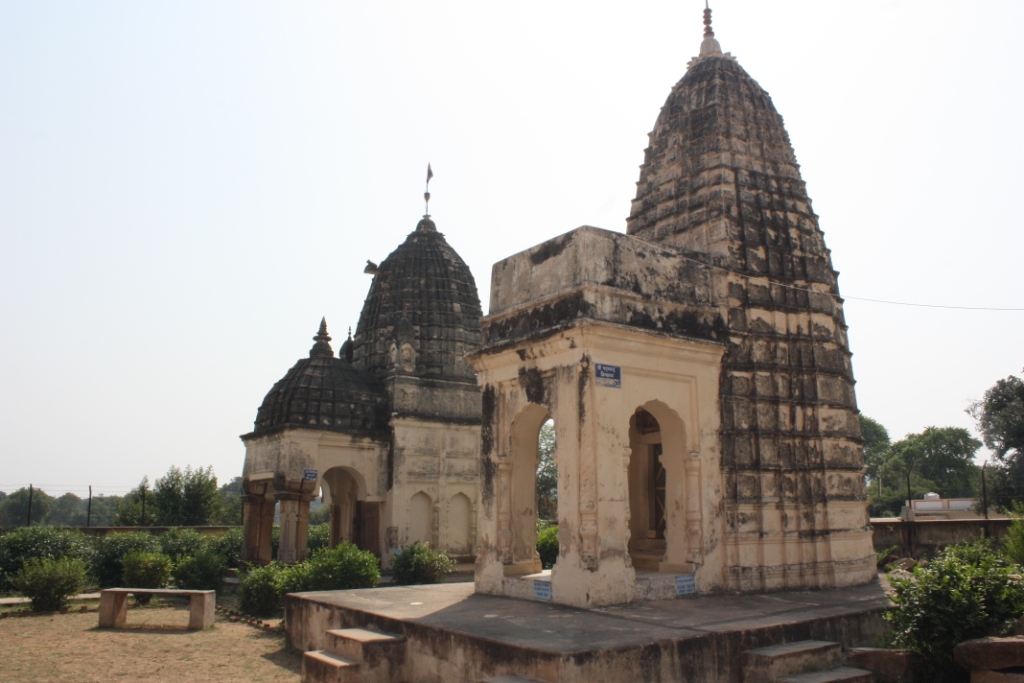
DAILY PHOTO: Khajuraho Temples

BOOK REVIEW: Made in Chicago by Monica Eng & David Hammond

Made in Chicago: Stories Behind 30 Great Hometown BitesMade in Chicago: Stories Behind 30 Great Hometown Bites by Monica Eng
My rating: 5 of 5 stars

Amazon.in Page

Release Date: March 21, 2023

Chicago is a food city. Once famous for its stockyards and still a major transit point for the products of America’s breadbasket, the city is home to a diverse people, a gathering of migrants and immigrants who brought a wide variety of foods from their homelands and put the necessary twists on them to make them salable to Chicagoans while using available ingredients. This book features entries on thirty foods and beverages that are products of Chicago ingenuity, be they dishes that were wholly invented in the Windy City or one’s that have a distinctive Chicago-style variant. Foodies know exactly what is meant by Chicago-style hot dogs, pizza, or tamales.

If all you know about Chicago cuisine is that ketchup on a hot dog is considered a sin, you’ll learn about some colorfully named Chicago inventions such as: “the Jim Shoe,” “the Big Baby,” and “the Mother-in-Law,” as well as many others that are more prosaically named, if equally calorically dense. One also sees the mark of Chicago’s immigrant story in the Akutagawa, Flaming Saganaki, Gam Pong Chicken Wings, the Maxwell Street Polish, and Chicago Corn Roll Tamales.

Each chapter discusses the nature of the respective dish, its influences, the [often contentious] origin of each item, where one can obtain said dish, and (for most) includes a recipe for making one’s own home variant. So, it’s mostly food history, but with a bit of cookbook, as well. There are pictures throughout, of the foods and in some cases of the location that invented or popularized each dish.

Be forewarned, while Chicago is a city that loves food, it’s not a place that’s wild about nutrition or moderate serving sizes. In fact, I feel certain that many people attempting to consume every item in this book in, say, one month’s time would drop dead of a coronary shortly thereafter (if not during.) Most of these dishes are foods done fast and served with an allowance of fat, sugar, and / or meat suitable for a family (for several days.)

If you’re a traveler (or a Chicagoan) and want to know more about quintessential windy city foods and where you can sample them, you must read this book.


View all my reviews

Nature Stacks [Haiku]

tree sits on boulder,
its roots curled over rocks;
child sits on the roots