BOOKS: “Four Quartets” by T. S. Eliot

Four QuartetsFour Quartets by T.S. Eliot
My rating: 5 of 5 stars

Available online

Four Quartets is a collection of four long poems by T.S. Eliot, written over several years before and during the Second World War. The poems are: “Burnt Norton,” “East Coker,” “The Dry Salvages,” and “Little Gidding.” They share a theme of metaphysical inquiry, particularly regarding time and man’s relation therewith. The book came out about five years before Eliot won the Nobel Prize for Literature, and was the last of his major poetry collections, and so it reflects a mature phase of his poetry writing.

I loved this collection, which combines food for thought with beautiful turn of phrase. As far as I could see, most of the disgruntlement with the collection had to do with Eliot’s religious / spiritual references, which offended the sensibilities of some of the most stridently atheist / agnostic individuals in the poetic community. Besides reflecting his own Christian worldview, Eliot had clearly been moved by reading the Bhagavad Gita and makes a number of references to Krishna.

Four Quartets is a pleasant read and I’d highly recommend it for poetry readers.

View all my reviews
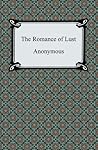
BOOKS: “The Romance of Lust” by Anonymous

The Romance of LustThe Romance of Lust by William Lazenby
My rating: 3 of 5 stars

Public Domain — Wikisource

This book is classed as a “Victorian Erotic Novel,” but I’d call it pornography rather than erotica. I don’t mean that as condemnation, but as an application of the criteria “without the sex scenes, is there anything left?” In this case, without the sex, there isn’t really a story. If one took the sex scenes out of any erotica it wouldn’t be erotic anymore (and would probably be much less interesting,) but it could still have character development, a discernable plot in non-sex events, or an overarching moral. This book doesn’t really have any of that beyond some expository mentions of life events outside the sack.

This novel tells the story of a well-hung fictional character named Charlie Roberts through his myriad sexual adventures, which stretch from schoolboy / adolescent sex acts with his governess and his sisters to his wife-swapping adult years. The approach reminded me of the Marquis de Sade’s The 120 Days of Sodom The book under review has none of the Sado-Masochism (beyond the odd spanking or consensual flagellation) of Sade’s work, but it is a series of episodes that try to gradually one up each other in terms of their perceived level of perversity. Unlike The 120 Days of Sodom’s dark cruelty, The Romance of Lust reaches its extremes by way of incest, bisexual [omni-sexual?] orgies, and sex involving youths of ages that are undefined but clearly under our current conception of age of consent — but consent / amicability is present throughout.

Not long ago, I reviewed Venus in India. This work has some things in common with that one. For example, both books are set in the same era defined by a highly repressive culture that spurred a covert highly perverse counterculture, and both books were anonymously published. [FYI: It is known that The Romance of Lust was published by William Lazenby, but the author is unknown — though William Simpson Potter and Edward Sellon are among subjects of speculation.] However, in other ways, I think the books were quite different. I would say that Venus in India is to The Romance of Lust as Justine is to The 120 Days of Sodom, which is to say that former titles had something going on besides the sex scenes, while the latter titles really didn’t.

If you’re looking for an erotic novel that would stand without detailed descriptions of one sex scene after the next, this probably isn’t for you. However, if you like porn pacing and the lack of intrusions by non-arousing happenings, you may find this book compelling.

View all my reviews

“Thou Strainest Through the Mountain Fern” (A Fragment) by William Wordsworth [w/ Audio]

Thou strainest through the mountain fern,
A most exiguously thin
Burn.
For all thy foam, for all thy din,
Thee shall the pallid lake inurn,
With well-a-day for Mr. Swin-
Burne!
Take then this quarto in thy fin
And, O thou stoker huge and stern,
The whole affair, outside and in,
Burn!
But save the true poetic kin,
The works of Mr. Robert Burn'
And William Wordsworth upon Tin-
Tern!

“Wanderers” by Walter de la Mare [w/ Audio]

Wide are the meadows of night, 
And daisies are shinng there,
Tossing their lovely dews,
Lustrous and fair;

And through these sweet fields go,
Wanderers amid the stars --
Venus, Mercury, Uranus, Neptune,
Saturn, Jupiter, Mars.

'Tired in their silver, they move,
And circling, whisper and say,
Fair are the blossoming meads of delight
Through which we stray.

Note: the word “shinng” seems to be spelled that way in all sources. I don’t know whether it was a typo, dialectic, or a heterodox spelling.

Sonnet 53 by William Shakespeare [w/ Audio]

What is your substance, whereof are you made,
That millions of strange shadows on you tend?
Since every one hath, every one, one shade,
And you, but one, can every shadow lend.
Describe Adonis, and the counterfeit
Is poorly imitated after you;
On Helen's cheek all art of beauty set,
And you in Grecian tires are painted new.
Speak of the spring and foison of the year:
The one doth shadow of your beauty show,
The other as your bounty doth appear;
And you in every blessèd shape we know.
In all external grace you have some part,
But you like none, none you, for constant heart.

“Daybreak” by John Donne [w/ Audio]

STAY, O sweet, and do not rise!
The light that shines comes from thine eyes;
The day breaks not: it is my heart,
Because that you and I must part.
Stay! or else my joys will die
And perish in their infancy.

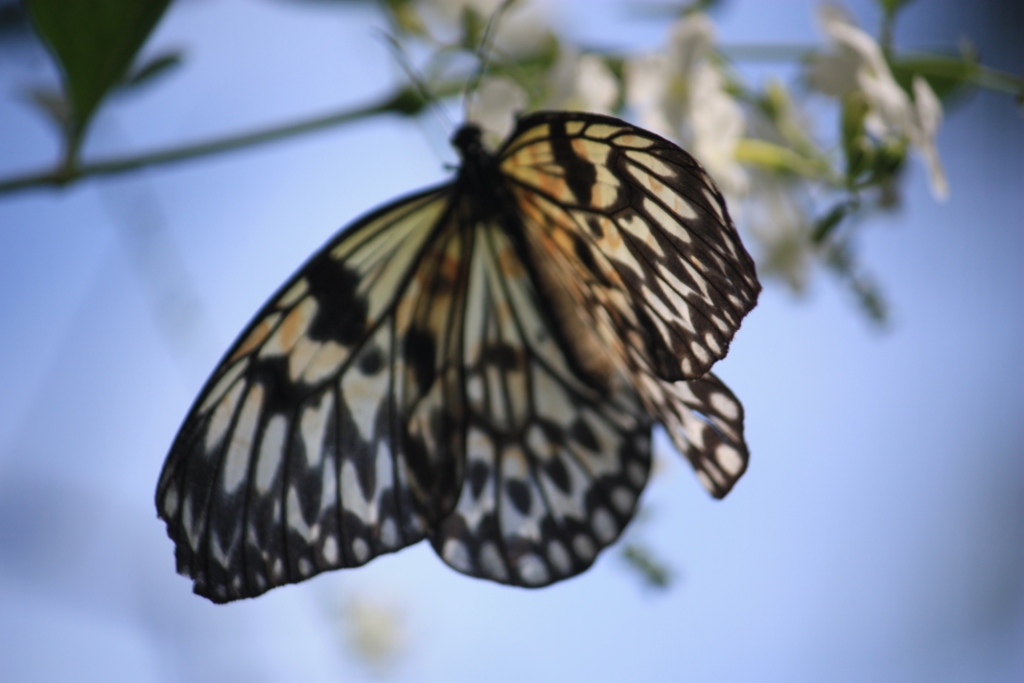
“To a Butterfly” by William Wordsworth [w/ Audio]

Stay near me—do not take thy flight!
A little longer stay in sight!
Much converse do I find in Thee,
Historian of my Infancy!
Float near me; do not yet depart!
Dead times revive in thee:
Thou bring'st, gay Creature as thou art!
A solemn image to my heart,
My Father's Family!

Oh! pleasant, pleasant were the days,
The time, when in our childish plays
My sister Emmeline and I
Together chased the Butterfly!
A very hunter did I rush
Upon the prey:—with leaps and springs
I follow'd on from brake to bush;
But She, God love her! feared to brush
The dust from off its wings.

“Quantum Mutata” by Oscar Wilde [w/ Audio]

There was a time in Europe long ago,
When no man died for freedom anywhere,
But England's lion leaping from its lair
Laid hands on the oppressor! it was so
While England could a great Republic show.
Witness the men of Piedmont, chiefest care
Of Cromwell, when with impotent despair
The Pontiff in his painted portico
Trembled before our stern embassadors.
How comes it then that from such high estate
We have thus fallen, save that Luxury
With barren merchandise piles up the gate
Where nobler thoughts and deeds should enter by:
Else might we still be Milton's heritors.

“Adieu, Adieu! My Native Shore” by Lord Byron [w/ Audio]

Adieu, adieu! my native shore
Fades o'ver the waters blue;
The night-winds sigh, the breakers roar,
And shrieks the wild sea-mew.
Yon sun that sets upon the sea
We follow in his flight;
Farewell awhile to him and thee,
My native Land-Good Night!
A few short hours, and he will rise
To give the morrow birth;
And I shall hail the main and skies,
But not my mother earth.
Deserted is my own good hall,
Its hearth is desolate;
Wild weeds are gathering on the wall;
My dog howls at the gate.

“The Crocodile” by Lewis Carroll [w/ Audio]

How doth the little crocodile
Improve his shining tail,
And pour the waters of the Nile
On every golden scale!

How cheerfully he seems to grin,
How neatly spreads his claws,
And welcomes little fishes in,
With gently smiling jaws!