Five Wise Lines from Leaves of Grass

Why, who makes much of a miracle? As to me I know of nothing else but miracles.

Walt Whitman, “miracles”

The American contempt for statues and ceremonies, the boundless impatience for restraint…

Walt whitman, “Song of the Broad-axe”

I exist as I am, that is enough. If no other in the world would be aware I sit content. And if each and all be aware I sit content.

walt whitman, “Song of myself”

I am not the poet of goodness only, I do not decline to be the poet of wickedness also.

walt whitman, “song of myself”

If any thing is sacred the human body is sacred.

Walt whitman, “i sing the body electric”

NOTES: Numerous editions exist between the 1855 and 1892 (deathbed) edition. It’s available for free on Project Gutenberg at: https://www.gutenberg.org/ebooks/1322

In Homage to Leaves of Grass

You're my Analects,
           my Gita,
           my Dao De Jing,
           my sutras,
           my Meditations,
           and my Republic
 all rolled into one.

You are the scripture by which I live.

You present a path to that rare place:
            extreme confidence
            which tears no one down,

            but, rather, lifts all.

You achieve this by crushing 
            the ordinary.

Nothing is common.

Everything is a miracle. 
            (Even those leaves of grass
                      you repeatedly reference.)

No one is so rough
             or promiscuous
             or simple
as to be lowly.

Your author's unbridled enthusiasm 
             glowed with the insane confidence
             of an adolescent boy,
but his awesomeness was never gained
             by subtracting from others.
Rather by seeing the bright, beautiful spark 
             in each body,
             mind,
             pair of hands,
             & burdened shoulder. 

You are America,
             the America we want to be.

The America that labors,
             but which takes time to see
             its natural wonders. 

The America that heard what Jesus said,
             and became less excelled at stone-throwing,
             and more at cheek-turning.

The America that could see beyond dogma
             and hard-edged tribalism,
             and could learn from all the 
             grand & glorious people 
             who reached its shores --

So that we could be the best version of ourselves
            through the strengths of all of us,
            and not be stymied by missing 
            the great beauty & knowledge
           among us. 

You pair away the extraneous burdens
            which tax the mind,
and show us what the world looks like
             unfiltered. 

You teach one to see a beauty
            that is so well hidden 
            that its own possessor doesn't 
                      recognize it.

You are the song of a life well lived.

BOOK REVIEW: American Poetry: A Very Short Introduction by David Caplan

American Poetry: A Very Short IntroductionAmerican Poetry: A Very Short Introduction by David Caplan
My rating: 5 of 5 stars

Amazon.in Page

Get Speechify to make any book an audiobook

This book does a great job of helping the reader understand what distinguishes the American strain of poetry from other poetic traditions, particularly the one from which it sprang and to which it’s most closely related, linguistically speaking: i.e. English poetry. Among the unique aspects of American poetry are a shift toward more idiosyncratic poetry, a shift that flows from America’s individual-centric orientation, the employment of American idiom – especially informal language, the connection to other American artforms (e.g. Blues music,) the diversity of form and style that resulted from being a diverse population, and the loud and clear expression of dissenting voices.

The page limitations of a concise guide keep this book from drifting wide in its discussion. The reader will note that it’s focused on mainstream poetry, and there’s little to no mention of counter-cultural movements, e.g. the Beats (e.g. Ginsberg and Synder) are not discussed. However, even within the restriction to mainstream poets, there’re only a few poets that are discussed in depth. Of course, these include the two poets largely considered the pillars of the American form: Walt Whitman and Emily Dickinson. It also includes two poets who were challenging cases for a discussion of national poetic movements: W.H. Auden, a Brit by birth who spent most of his poetry writing years in America; and T.S. Eliot, who was an American by birth but moved to Britain. Both poets produced poetry of importance while on both sides of the Atlantic, and, so, the question is whether anything of note can be said about their poetry vis-a-vis its location of origin (and, if not, have we exited the era in which nationality of poetry is worth discussing?)

I learned a great deal from this book. Again, if you’re looking for a broad accounting of American poetry, this isn’t necessarily the book for you, but if you want to gain a glimpse of the interesting and unique elements of American poetry through a few of its most crucial poets, this is an excellent choice.


View all my reviews

Quotations Stumbled Upon [Recently]

To survive in this world you have to be many times a coward but at least once a hero.

Adam Johnson, The Orphan Master’s son

The metaphysical assumptions upon which you want to build your life cannot be an inherited duty.

Patrick levy, Sadhus

It is true that if there were no phenomena which were independent of all but a manageably small set of conditions, Physics would be impossible.

Eugene wigner, the unreasonable effectiveness of mathematics in the natural sciences

I feel about literature what Grant did about war. He hated it. I hate literature. I’m not a literary West Pointer; I do not love a literary man as a literary man, as a minister of the pulpit loves other ministers because they are ministers: it is a means to an end, that is all there is to it.

Walt whitman, as quoted in Yone Noguchi’s the spirit of japanese poetry

Know that all the sects in existence are a way to Hell.

Nichiren, as quoted by yone Noguchi in the spirit of japanese poetry

It is so easy to convert others. It is so difficult to convert oneself.

oscar wilde, the critic as artist

If you meet at a dinner a man who has spent his life in educating himself — a rare type in our time, I admit, but still one occasionally to be met with — you rise from the table richer, and conscious that a high ideal has for a moment touched and sanctified your days. But Oh! my dear Ernest, to sit next to a man who has spent his life trying to educate others! What a dreadful experience it is!

Oscar wilde, tHE CRITIC AS ARTIST

Clerihew of American Literary Greats

I
Edgar Allan Poe
always lacked for dough.
Still, he always strived
to not be buried alive.


II
Emily Dickinson
lived a bit like a nun,
but her verse was insightful —
even sans an earthly eyeful.


III
Samuel Clemens, or Mark Twain,
wrote personas known to speak plain.
His nom de plume
means “fathoms, two!”


IV
The poet Walt Whitman
had a startled milkman.
Never one to be subdued,
if you just dropped by, he might be nude

Around the World in 5 Works of Poetry

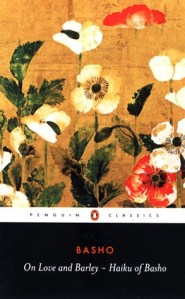
5.) On Love and Barley by Matsuo Basho [Japanese]: One doesn’t get better haiku [and other traditional Japanese poetry forms] than Basho.


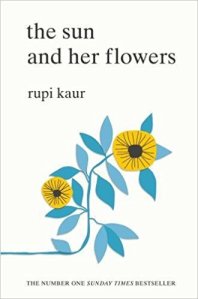
4.) The Sun and Her Flowers by Rupi Kaur [Indian-Canadian]: This isn’t the expected fair for an “around the world” post as it’s not blatantly infused with setting / geography, but culture does factor in prominently.


3.) Leaves of Grass by Walt Whitman [American]: Not only does Whitman explore the many dimensions of America, he also references other cultures and locales. [There was a fascination with the East brewing in Whitman’s day.]


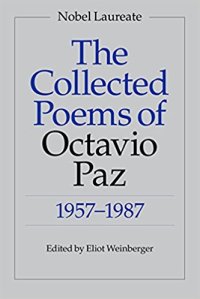
2.) Octavio Paz / Selected Poems by Octavio Paz [Mexican]: Paz was a diplomat as well as a Nobel Laureate, and his poems include many references to India (where he was posted) as well as Mexico.


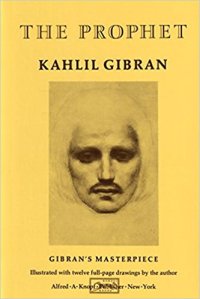
1.) The Prophet by Kahlil Gibran [Lebanese-American]: Featuring an intriguing melange of advice in poetic form.


NOTE: It’s not as global a list as I’d like. I’d love to hear what works others might include in the list. I don’t think poetry gets translated as much as fiction and so it’s a bit of a challenge. It’s much easier to find examples of novels & short story collections from far-flung corners of the world.

BOOK REVIEW: Leaves of Grass by Walt Whitman

Leaves of GrassLeaves of Grass by Walt Whitman

My rating: 5 of 5 stars

Amazon page

There are a number of editions of this collection of poems, as Whitman apparently continued to revise it right up until his death. The 1855 edition is popular but there is a “Deathbed Edition” which–as the name implies–is the closest thing to a final draft that exists.

Back in the day (the late 19th century), this was considered racy and controversial stuff, and the collection got Whitman fired from is civil service job as well as a great many vitriol-filled reviews. Like the works of Emerson and Thoreau, with whom Whitman shared some beliefs, it was also controversial in that the poem put man at the fore and religion was shunted out of the picture. (Trust in yourself and don’t blindly follow anyone was still a heretical notion among many at the time.) This isn’t to say that Whitman eliminated spirituality from his work (any more than Emerson did), references to the soul are commonplace—but it’s a mystic spirituality. There were features outside the “prurient” and religious that angered many, such as Whitman’s shining of light on the barbaric institution of slavery. However, today Leaves of Grass is considered one of America’s greatest and most beloved works of poetry, and for good reason. It beautifully reflects an America that was changing, an America subject to a new era of ideas both from science and from distant lands.

It should be noted that this is a life’s work. If you are expecting a typically thin poetry collection, you will be in for a surprise. Leaves of Grass is of a page count normally reserved for histories and epic novels. The collection consists of 35 “Books” that are quasi-themed sub-collections of poems. Individual poems vary greatly with some being only a few lines and some running for pages. Most of the poems are free verse, though there are sections that display a meter (specifically iambic pentameter.) Free verse is poetry without meter or rhyme. If you didn’t know there was such poetry, you may want to work through your Doctor Seuss before you crack open a tome like this one.

There are a few themes that are repeatedly revisited. One idea that made the collection so controversial is that it exalted in the human form and the physicality of humanity. In recent years, a lot of discussion of this work revolves around whether Whitman was or wasn’t homosexual or bisexual. Not that it matters, but the fact is there is a dearth of information about what form of sexuality Whitman practiced—if any, but one can imagine why people wondered. Whitman writes descriptively about both the male and female forms, and was not shy about verse that suggested lying with this gender in one poem and the other in the next. The poem “I Sing the Body Electric” is probably the most famous example of Whitman’s discussion of the body.

However, perhaps the most striking theme is a celebration of America, both in its natural state and as it was shaped by the people who settled there. In multiple poems one sees long strings of description and exposition about the various states of the United States. Whitman paints pictures of the nation as a collage showing the variations among its constituent parts. To a lesser extent, he does the same for the world (e.g. see Book VI.)

I enjoyed this collection, although I will admit I read it a bit here and a bit there over a long time period. I, therefore, probably missed some of the depth of meaning coming from how the poems were arranged. Maybe someday I’ll have time to go back and read it once more. However, the beauty of this collection is that it’s so many different things. It meanders like a river, and peers overland with an eagle-eyed view. It offers scenes that are like a hard-boiled work of film noir and ones that are like Ansel Adams pictures. It’s not anti-god, but rather about the god within, or the god within the blade of grass. Leaves of Grass offers brilliant turns of phrase, bold descriptions, and always interspersed with the author’s personal philosophy.

View all my reviews