
#3 Party Supplies; Taken December 24, 2015 in Hue

#2 Filing Cabinets; Taken December 25, 2015 in Hue

#1 Lesser Bicycles: Taken December 25, 2015

#3 Party Supplies; Taken December 24, 2015 in Hue
#2 Filing Cabinets; Taken December 25, 2015 in Hue
#1 Lesser Bicycles: Taken December 25, 2015

Taken on December 23, 2015 in Hoi An
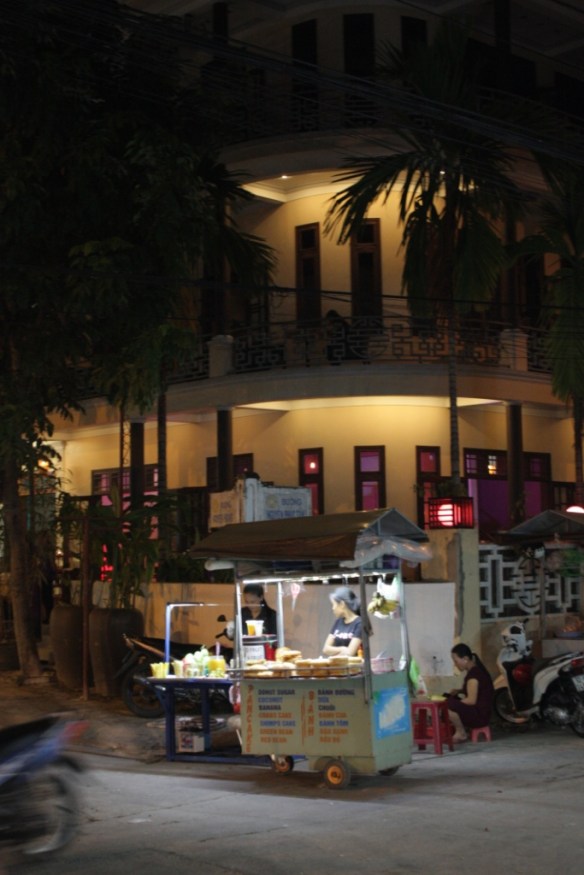
Street food

Floating lanterns
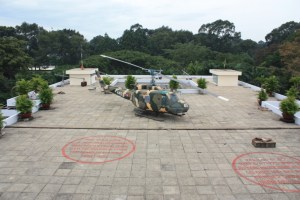 I was five when Saigon fell. So I can’t say that I remember the war as breaking news. However, by the time I was coming into adulthood, Vietnam remained front and center in the American psyche. Many of the most prominent movies on the war came out when I was in high school or shortly thereafter (e.g. Platoon (1986), Full Metal Jacket (1987), Bat 21 (1988), Casualties of War (1989), and Born on the Fourth of July (1989).) Even films that weren’t explicitly or solely about the war often featured characters transformed by its crucible (e.g. Lt. Dan from Forrest Gump.)
It wasn’t just cinema. While many of the most prominent books on the war came out in the 70’s and early 80’s, bestsellers were still coming out during my early adult life (e.g. The Things They Carried (1990) and We Were Soldiers Once… and Young (1992).) Even once the war wasn’t news anymore, discussion of the aftershocks continued to grace news and talk shows. I do remember my father watching an episode of 60 Minutes which showed footage of helicopters being pushed off of aircraft carriers into the sea as American forces steamed back home. I have no idea what that story was about (perhaps the ecological and environmental effects of the war,) I just thought it was too bad that they were destroying perfectly good whirly-gigs.
Terms like “the fall of Saigon” were etched into my consciousness before I had any capacity to understand them. It fell from what? To what? I didn’t know. It’s a city, right? How can a city fall? Balls fall. People fall. Dinner plates, unfortunately, fall. Of course, I’d eventually be taught what it meant, and would mistakenly think I knew what it meant for many years. I thought it meant the defeat of those forces that would keep Vietnam from becoming a totalitarian dystopia akin to the Soviet Union or, even more apropos, Kim dynasty North Korea. Sure enough, one side–the side that America had supported–had been defeated, but otherwise this “fall” was false.
 As one walks around Saigon today, passing a few Starbucks, a Carl’s Jr, and innumerable Circle-Ks, it’s difficult to imagine how a victory by the other side would have resulted in a more entrepreneurial or vibrant Vietnam. The college kids at the dinner, largely ignoring the friends around them in favor of texting someone else on their iPhones, seem strikingly like their counterparts in Bangalore and Atlanta. They seem mirthful and exuberant. A tour guide lets fly little criticisms about the bureaucracy, and nobody sweeps in and throws a black hood over his head. People just don’t seem scared, brainwashed, or crazy, and–believe me–everybody who survives in North Korea fits one of those criteria. (While I’ve been impressed by cool, gregarious, and well-spoken North Korean diplomats; they’re always accompanied by a sinewy, mirthless “assistant” who I’m pretty sure has a syringe of strychnine in his pocket to silence the diplomat if he goes off script.)
I’m aware that it’s difficult to see the dysfunctions of a nation as a traveler or tourist. I also realize that–to twist Tolstoy– “All happy nations are alike; each unhappy nation is unhappy in its own way.” However, what Tolstoy’s quote doesn’t convey is that all families are unhappy in some measure–and the same is true of nations. However, it’s easy enough to see extremes of dysfunction. That’s why the Kims mostly keep foreigners out of the DPRK and carefully select and manage the experience of those they do let in. It’s difficult to imagine a degree to which things could be better in Vietnam that would have made the cost of that war worth it.
I also know that hindsight is 20/20, but where fear runs rampant foresight is 20/100 with a nasty astigmatism. In my International Affairs graduate program, I specialized in asymmetric warfare, writing a thesis entitled, “Playing a Poor Hand Well.” While my thesis didn’t focus on Vietnam, one can’t study asymmetric warfare without learning a thing or two about the Vietnam war. One learns that the mathematical, attrition rate-based formulas that analysts love are worthless in deciding a victor when one side is fighting in their backyard and the other is fighting in a place of marginal importance to a population who mostly couldn’t point said country out on a map. Will matters. What made America take on such a burden on the other side of the world? Many feared a domino effect. If Vietnam was lost to the forces of communism, soon we’d be surrounded by tyrannical totalitarian states blaring “one of us, one of us…” through loudspeakers until we relented–or something like that. In retrospect, it seems like an astounding lack of faith in the appeal of democracy and rule of law, but that’s what happens when one stews in one’s fears.
What worries me is that I still see a desire to make mountainous threats out of mere ant hills.

Taken on December 21, 2015 in the Mekong Delta
Being able to see the color of a crocodile’s tongue, but not the color of its eyes, isn’t comforting.
But could someone get in there and floss the green gunk out of this fella’s teeth.
These aren’t necessarily in any order.
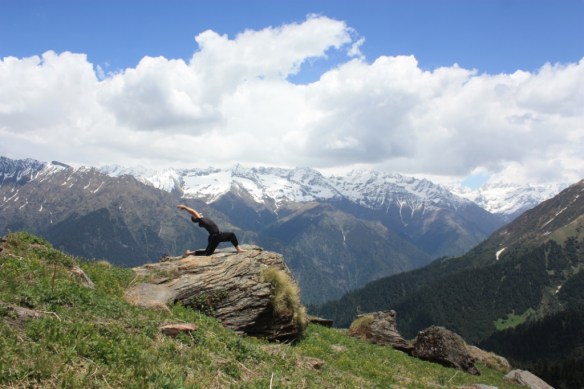
1.) Trekking the Great Himalayan National Park [June]:
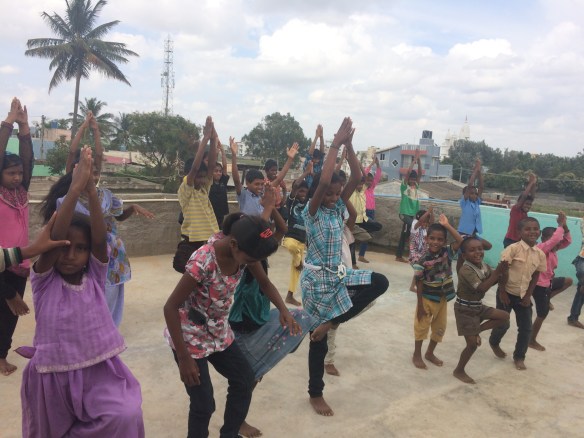
2.) Teaching kids at KAMMS and Socare [September & October]: I finished my RCYT course in April and have been teaching kids when I have a chance:
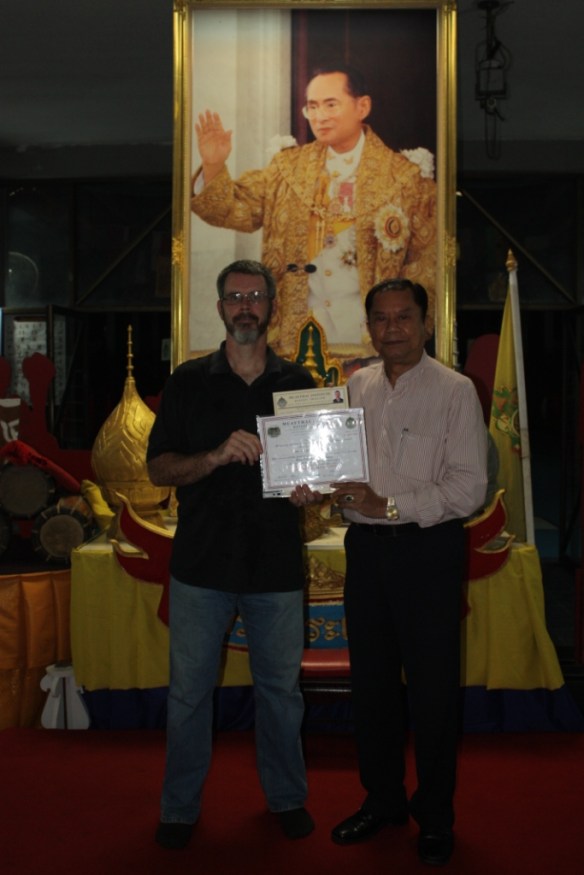
3.) Completing Level I Examination at the Muay Thai Institute [September]:
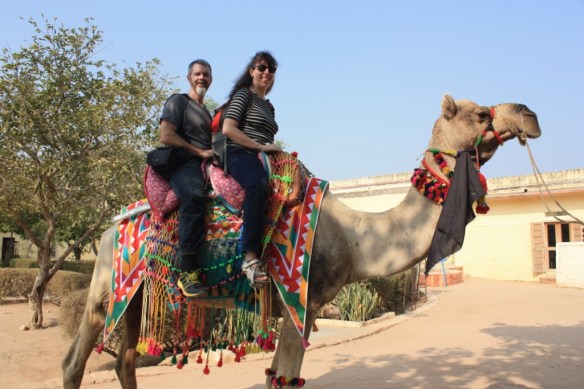
4.) Riding camels at Pushkar and Jaipur [November]:
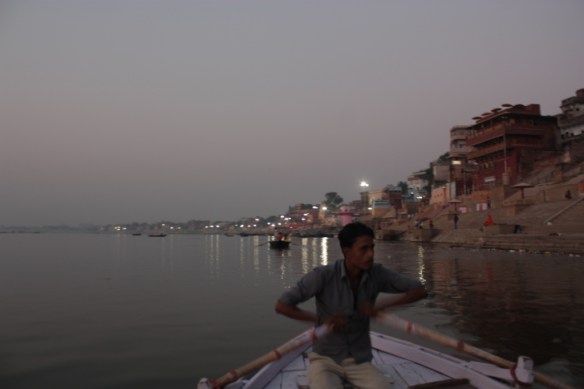
5.) Boating on the Ganges in Varanasi [October]:
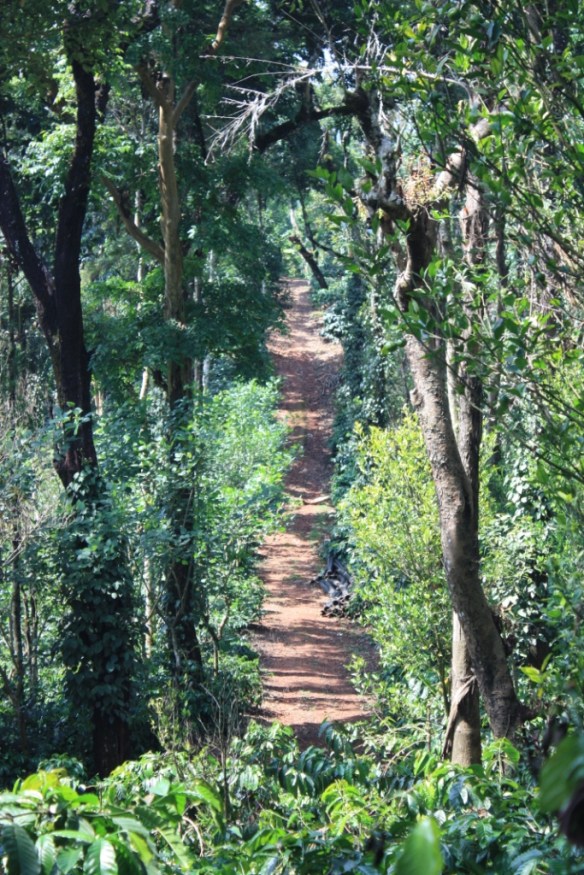
6.) Wandering around a coffee plantation near Chikmaglur [April]:
7.) Completing the Level III and IV reviews in Kalaripayattu [February & August]:
8.) Touring the Glenloch tea factory in Sri Lanka [May]:

9.) 108 Surya Namaskara Against Child Trafficking [March]:
10.) Junk boat tour of Ha Long Bay, Vietnam [December]: This may be jinxing us to put it on the list, before we’ve been (we leave tomorrow) but I’m optimistic that our three weeks in Vietnam will be awesome, and I’m told Ha Long
What to expect in 2016? Lilla and I will be moving back to the States around mid-year. (To where, exactly, remains a mystery.) In January and February I’ll be doing an RYT-300 course to round out my 500 hour yoga teacher certification. I plan to make at least one more trip to Thailand to MTI for Level II. I’d also like to complete the 10-day Vipassana meditation course before returning. Lilla and I are thinking about another Himalaya trek for the summer.
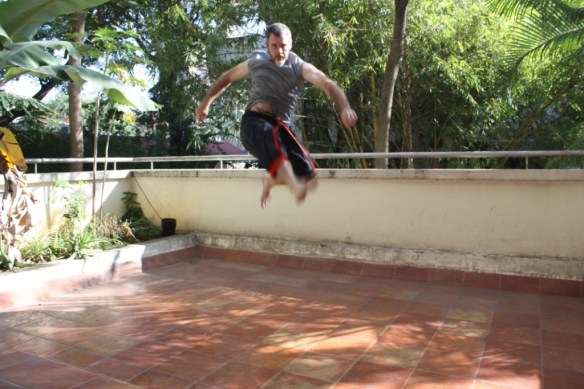
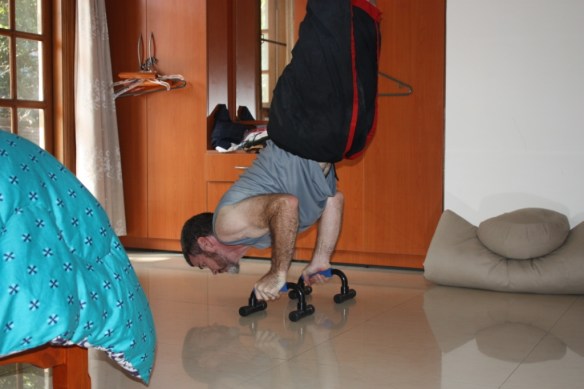
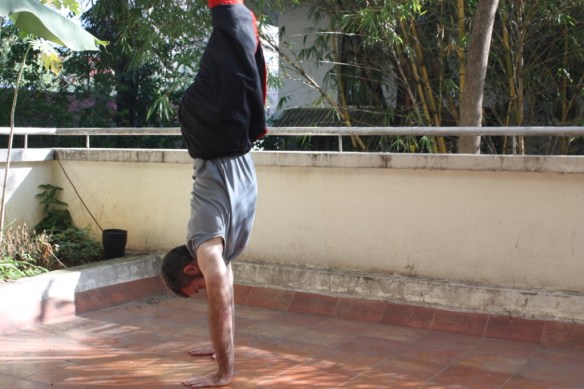
I’ll also be continuing to work on press handstand progression, as that’s been a focus for me of late and I still have a ways to go.
 A Million Shades of Gray by Cynthia Kadohata
My rating: 4 of 5 stars
This young adult (YA) novel is set in the Central Highlands of Vietnam during the last few years of the war. The lead character, Y’tin, is an adolescent whose life ambition is to be an elephant handler, a dream which he’s well on the way to achieving and which he’d be a shoo-in for if he didn’t live in war-torn times. His life is complicated by the fact that his father has worked for the American Special Forces (as a tracker), and the war is turning in the favor of the North.
When US forces withdraw and South Vietnamese forces are overrun, Y’tin escapes into the jungle with a couple of other boys and their elephants. Almost immediately a fault line freezes out Y’tin. The three boys had been close friends in the village, but under the stress of jungle life, the other two resent that Y’tin’s father worked for US Special Forces and that Y’tin, himself, had once gone on mission with the Americans. They believe that this is what has brought the war to their village. On the other hand, they recognize that Y’tin is more gifted in jungle craft than they, especially tracking, because of the education of his father.
Because of these skills, Y’tin is chosen to go back on a mission to reconnoiter their village, and he finds it’s been bombed out and nobody is to be seen. This leaves it unclear how many of the villagers escaped versus being executed by the North Vietnamese forces—but he does know many were killed. [Incidentally, the title comes from Y’tin’s view of the jungle after seeing the remnants of his village—i.e. instead of being a million shades of green, all he can see is gray.]
Besides telling the story of Y’tin’s adventures in surviving the war, the novel pivots on Y’tin’s role as a mahout—and ultimately as a protector of the elephants. Y’tin finds himself in a position in which his dream is no longer tenable, and he must decide whether take a heroic risk to save the elephants or hold on to his dream in the face of unfavorable odds.
The book is only a little over 200 pages arranged into 14 chapters, and—as would be expected of YA fiction—is readable. The book’s strength is in building a lead character who’s interesting by virtue of his mix of worldly naiveté and jungle [local] wisdom and giving him intense challenges and dilemmas. Weakness? The strict chronological progression results in a slow start in which the author spends a chapter establishing that the lead character loves elephants without anything interesting happening. However, if one gives the book til the second chapter, things start happening.
I’d recommend this book for readers of fiction, and particularly those interested in YA fiction and stories of war.
 The Miracle of Mindfulness: An Introduction to the Practice of Meditation by Thích Nhất Hạnh
My rating: 4 of 5 stars
This book by the renowned Vietnamese Buddhist monk, activist, and poet, Thich Nhat Hanh, offers pointers on how to live a life of mindfulness. Like most of Hanh’s works, this one is brief, concise, and the front and back matter account for about as much verbiage as the chapters themselves.
The seven chapters that make up the book proper examine mindfulness from various angles, with various approaches, and have a loose organization. The most readable of these chapters–owing to its narrative format–is the last, which retells a Tolstoy story about an Emperor who receives three questions and–unable to find suitable answers by offering a reward to his subjects–dons a disguise and visits a hermit sage. Needless to say, the sage (and life events) enlighten the Emperor, and the answers revolve around the theme of mindfulness. Among the most thought-provoking of the chapters is one that proposes that one take one day of the week to focus on mindfulness. Hanh offers advice on how to best select and structure such a day.
While the appended matter of some of Thich Hhat Hanh’s books can read like filler (intended to reach a page quota), that isn’t so much the case with this book. The most valuable of the appendices gives 32 exercises for building mindfulness. Many of these exercises are variations on a theme, and some are much more extensive than others, but it’s a crucial section and might even be called the heart of the book. Likewise, there are five sutra translations that will be appreciated by readers who are actually Buddhist. (Non-Buddhists may find the sutras to be a less colorful and more repetitive restatement of what Hahn has told them in the chapters. If one pays attention to the chapters and does the exercises, reading the sutra’s isn’t necessary for those who are not students of the religion.)
There is an odd postscript by one of Hanh’s students that is like those I’ve seen in other Hanh books. It’s an odd little testimonial. I put it in the filler category as anyone buying the book knows who Thich Nhat Hanh is and about the accolades he has received and, therefore, they don’t need a prologue telling them how awesome he is. It actually detracts from his persona as a wise man, because it makes one wonder who inspired the little ego trip. I suspect this is more a publisher desired addenda than an author inspired one, but, at any rate, it’s not useful. It can be interesting to hear about the war days, but there’s an outlet for that. Furthermore, I would think the place to tell us how awesome the author is would be at the beginning of the book–not the end. If one gets to the back matter, he must have done something to impress one.
I’d recommend this book for meditators, would-be meditators, and anyone who thinks that life is slipping through his or her fingers because of constant stress and a runaway mind.
 The Novice: A Story of True Love by Thích Nhất Hạnh
My rating: 5 of 5 stars
The Novice is the retelling of a Vietnamese folk tale about a young monk who is repeatedly wronged, but who always does the virtuous thing. As I read this book, I thought the story seemed familiar, and I realized that I read the same story as The Martyr by Ryūnosuke Akutagawa. Akutagawa does a much better job of story building. The Japanese writer doesn’t reveal to the reader that Lorenzo (his novice and the equivalent of Thich Nhat Hanh’s Kihn Tâm) is a female until the end—thus definitely resolving the claim that the young monk fathered a child out-of-wedlock and in contravention of vows f0r the reader at the same time as the characters in the story learn it.
Thich Nhat Hanh tells us that the novice is a female at the beginning, and he does so via backstory that serves both to give justification for why Kihn Tâm chooses to disguise herself and become a monk and to pile onto the injustice. We learn that Kihn Tâm’s female alter ego had been married, but the marriage ended with a false accusation of attempted murder of her husband. This backstory probably isn’t worth the drag for either of the aforementioned purposes—but the former is more justifiable than the latter.
What Thich Nhat Hanh lacks in gripping narrative structure, he gains in provoking thought. The Zen monk and poet gives the reader insight into how Kinh Tâm manages to be preternaturally virtuous. In The Martyr this is a black box affair. Hanh also encourages the reader to see Kihn Tâm’s accusers as the novice does, i.e. with compassion. Akutagawa does what any writer would do; he vilifies the accusers so as to make the story resonate with the average, petty, martyr-complex prone reader—as opposed to the enlightenment-aspiring reader. Hanh leaves the other monks in Kinh Tâm’s corner, i.e. when everyone else is condemning the novice, they still believe in her. In Akutagawa’s story, monastics are not inherently so perfect.
The book offers some interesting back matter. The most substantial of the appendices is an account by Sister Chan Khong of the works of Thich Nhat Hanh and his followers both during the war and afterword when they tried to establish a monastery in Communist Vietnam. The essay echoes the themes of loving-kindness and compassion that form the core of the novella, as does the essay by Hanh that brings the book to a conclusion. While this back matter is filler to make up for the fact that the story is not novel length, it nevertheless makes for interesting reading.
I’d recommend this book for those with an interested in Zen. If you’re looking for a good story, read Akutagawa’s The Martyr, but if you want to be inspired to compassion, read Thich Nhat Hanh.
 Matterhorn: A Novel of the Vietnam War by Karl Marlantes
My rating: 5 of 5 stars
Marlantes gives one insight into what it was like to be a soldier, in particular a young officer, during the Vietnam War. For those confused by the name, “Matterhorn” is the name of a fictional encampment in central Vietnam in the book.
In Matterhorn, war is as it has famously been defined, “long periods of intense boredom punctuated by brief instants of sheer terror.” The author builds his characters such that the periods of intense boredom are informative. We see how the tension of the war boils over into fresh hell that interrupts the boredom.
Racial issues play a major part in the drama of the book. The main character, Waino Mellas, is white and of the variety who are almost apologetic in the presence of blacks. However, within the unit there are both black-power movement types as well as good ole boys, making for one powder kegs that erupts during the course of the book.
Race is not the only fault line we see in Matterhorn. There is also a tension between “lifers” and draftees. However, the bigger tension is between the front line troops and those who direct them from afar. The most intense section of the book involves a raid on a hill for which the men are undernourished and under-supplied.
The author was a Marine in Vietnam, and this experience no doubt contributed to the book’s authenticity.
I highly recommend this book as a powerful examination of the role that valor and vice play in war.
 We Are Soldiers Still by Harold G. Moore
My rating: 3 of 5 stars
This book is a mix of the story of meetings between American and Vietnamese military men a couple of decades after the war and a treatise on leadership and war –plus some filler material. It’s a follow-up to a book written by the same authors on the Battle of Ia Drang, We Were Soldiers Once… and Young. That book was the subject of a movie starring Mel Gibson.
Both parts of the book are interesting, but this book is at its best when it discusses the meetings with Vietnamese officers. General Moore (Lt. Col. at the time of Ia Drang) gets to meet with the opposing commander at Ia Drang, Lt. Gen. Nyugen Hu An, and get his perspective on the battle. While the meetings go from being tentative to cordial with changing political winds, one gets a feel for the tension and the melting away of those tensions. With the latter meetings, additional U.S. fighters from Ia Drang are present, and not all have as easy of a time letting bygones be bygones as Gen. Moore. The group of U.S. soldiers spends the night on the Ia Drang battlefield (in an area that was near the border and not entirely settled at the time of their return.)
I don’t wish to suggest that the second part, which talks about leadership strategies and views on war, is not worthwhile, but it very much felt like padding to get the book up to a salable thickness. Gen. Moore is obviously quite competent to address these subjects, but the shift in the book is glaring and jarring.
This is very different kind of book than its predecessor. If you are expecting a tale of war, that’s not what you’ll find. If you are interested about how mortal enemies can be come close friends, you’ll find this book intriguing.


 Tiger Riding for Beginners