“West River Moon” by Su Shi [w/ Audio]

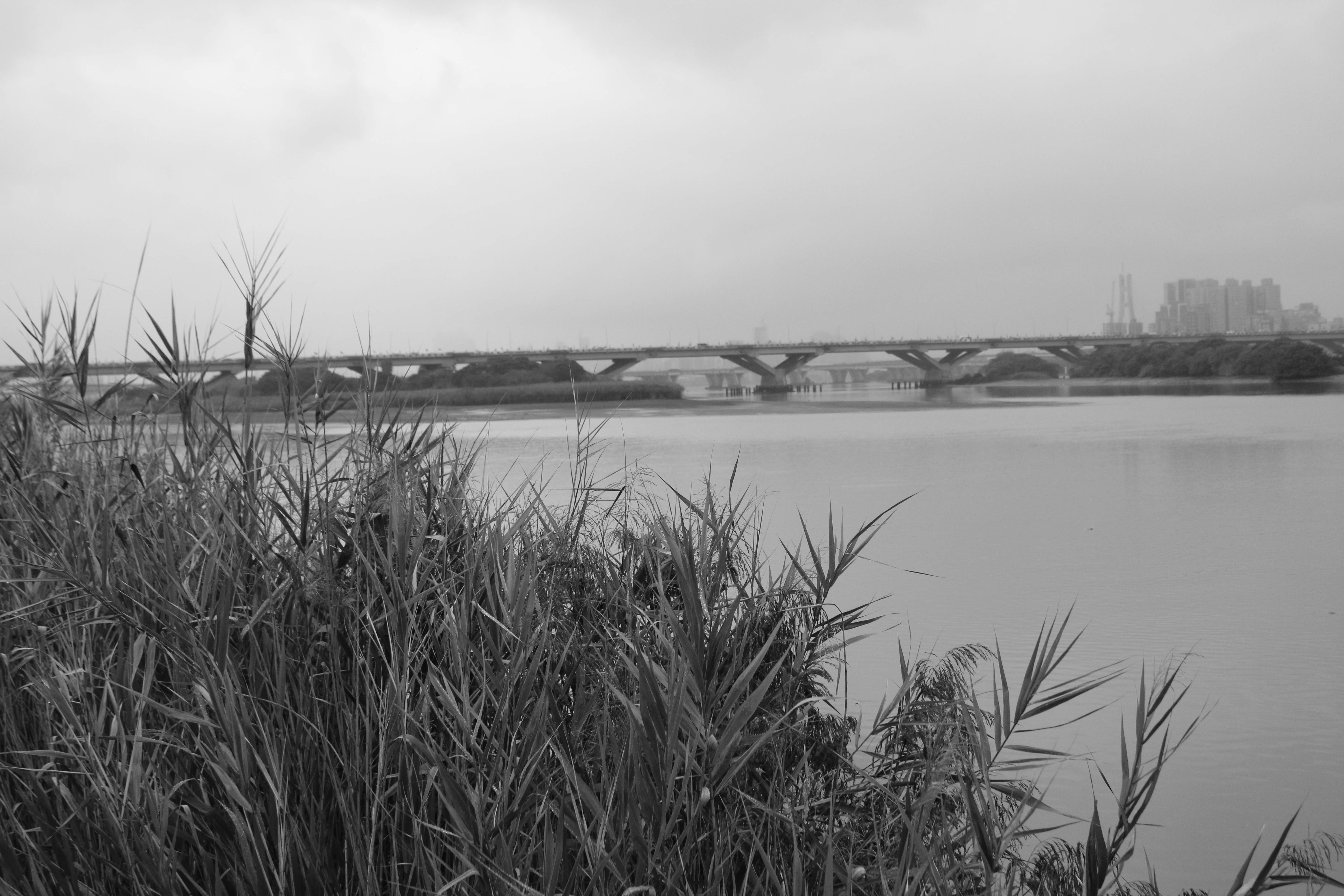
Wavelet on wavelet glimmers by the shore;
Cloud on cloud dimly appears in the sky.
Unsaddled is my white-jadelike horse;
Drunk, asleep in the sweet grass I'll lie.
My horse's hoofs may break, I'm afraid,
The breeze-rippled brook paved by moonlit jade.
I tether my horse to a bough of green willow.
Near the bridge where I pillow
My head on arms and sleep till the cuckoo's song awakes
  A spring daybreak.

Translation: Xu Yuanchong [translator]. 2021. Deep, Deep the Courtyard. [庭院深深.] Cite Publishing: Kuala Lumpur, p. 238

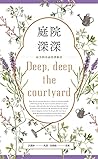
BOOKS: “Deep, Deep the Courtyard” [庭院深深] trans. by Xu Yuanchong

庭院深深:最美的宋詞英譯新詮 (Traditional Chinese Edition)庭院深深:最美的宋詞英譯新詮 by 吳俁陽(賞析)
My rating: 5 of 5 stars

Publisher Website

This is a bilingual (Chinese / English) anthology of Song Dynasty poetry. It features more than 140 poems by almost fifty poets of the Song Dynasty, but a few of the Song poetic rockstars are particularly well represented (e.g. Su Shi, Qin Guan, Ouyang Xiu, and Xin Qiji.) The principal language of the book is Chinese (Mandarin) and so, while the poems themselves appear in English as well as Chinese, the ancillary matter is only in Chinese. Said ancillary matter includes notes, contextual information, bio-blurbs on the poets, and brief front and back matter.

I learned after reading the translations, that the translator was Xu Yuanchong and that he was (i.e. he’s now deceased) a very big deal as a translator, translating classical Chinese poetry into both English and French. All in all, I enjoyed the translations and found them to be sound as poems in their own right. That said, my personal preference would have been to have had less effort put into maintaining rhyme. I suspect a closer transmission of the ideas of the originals could have been achieved without the forced constraint of rhyme. Furthermore, while in many cases metering was attended to, sometimes it was not, leaving those poems to have a doggerel quality. [I come to this conclusion by comparing a few of the poem’s translations to those by other translators as well as to literal translations.] That said, the translator was clearly no slouch, and his stylistic choices were likely informed by what was popular during his career.

This book is part of a series. Other volumes include: In the Thick Woods a Deer Is Seen at Times (Tang Dynasty poems) and A Pair of Swallows Fly (from The Book of Songs, a.k.a. The Classic of Poetry.) I picked this book up in Taipei’s Zhongshan Book Street (Eslite Bookstore,) and don’t know how widely available the books of this series are outside of Taiwan, but if you are interested in Classical Chinese poetry and can find a copy, I’d recommend it.

View all my reviews

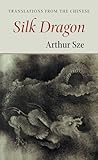
BOOKS: “Silk Dragon II” ed. & trans. by Arthur Sze

Silk Dragon: Translations from the Chinese (Kage-an Books)Silk Dragon: Translations from the Chinese by Arthur Sze
My rating: 5 of 5 stars

Amazon.in Page

Release Date: May 28, 2024

Let me begin with a note of clarification: The edition that I read was the “Silk Dragon II” collection, which is due out in May of 2024. I mention this because there is potential for confusion in that this book looks like a sequel (i.e. a completely new set of poems,) but really it is something between a new edition and a sequel. That is to say, while it has a substantial amount of new material, it is built on the original “Silk Dragon” volume. This edition adds eighteen new poem translations, most of which are from poets of the modern era (I mean that loosely, not technically, so 20th century onwards.) I’d recommend readers get this edition, but not both this and the original.

This collection includes a wide range of poems from ancient times through China’s various dynasties to the modern day. It includes translations that are extremely well-known, such as Li Bai’s “Drinking Alone with the Moon” and Liu Zongyuan’s “Snow on the River.” But it also includes many pieces that are likely to be new to most poetry readers, particularly given they will be reading translations (i.e. Non-specialists in Chinese poetry.) As mentioned, the bulk of the new poems are from recent decades and tend to be free verse. [Though there are four new classical poems, as well.]

I found the translations to be evocative and approachable. I am unable to comment on how well Sze captures the feel of the original, but I can say that the translations of poems I’m familiar with were at least on par with other translations that I’ve read. The translations don’t always display the sparseness one sees in classical Chinese poetry, but the challenge of conveying form and meaning and metaphor through translation is immense and, at some level, impossible.

I’d highly recommend this poetry collection for readers of poetry and translated literature.

View all my reviews

“Grass of the Ancient Plains” by Bai Juyi [w/ Audio]

Lush grass covers the plains.
  One year it withers; the next, it thrives.
Wildfires burn, but not to eradication.
   With Spring winds, it's rejuvenated.
Its aroma floats in to subdue derelict paths.
  Vivid green overtakes the ghost town.
I say farewell to departing friends
  as intense feeling swells within.
In Chinese [Simplified]:

离离原上草  一岁一枯荣
野火烧不尽  春风吹又生
远芳侵古道  晴翠接荒城
又送王孙去  萋萋满别情

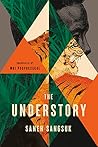
BOOKS: The Understory by Saneh Sangsuk

The UnderstoryThe Understory by Saneh Sangsuk
My rating: 5 of 5 stars

Amazon.in Page

An elderly monk tells stories from his life to the kids living in a small [and fictitious] Thai village. This is one of those works of literary fiction that you have to give a chance. The pacing, the subject matter, and the approach of the first part of the book is such that anyone without an intense interest in Thai village life or the thoughts of a Thai monk on the state of Buddhism in India (almost non-existent) will find it a bit of a slog. However, as the story shifts to the young man’s (pre-monk) life, adolescence through life as a newly married man expecting his first child, it becomes an intensely gripping story.

In the early parts, there’s a lot of violation of that old chestnut, “show, don’t tell” and — like much literary fiction — it’s not clear that there will be a story (versus exposition, character development, and description of events of a non-story like nature.) However, this transitions into the evocative story of how the narrator came to be a monk after a tragic farming householder experience. I can’t even give an accurate description of how far in I think the book makes this swing because my reading pace in the second part was so much quicker and more compelled than early on.

The book has hints of supernatural elements in it but can be read as realism in an environment of intense superstition.

I’d highly recommend this book for those who enjoy literature in translation. Give it a chance to win you over. It will, soon enough.

View all my reviews

BOOK REVIEW: The Translations of Seamus Heaney by various [Trans. by Seamus Heaney / Ed. by Marco Sonzogi]

The Translations of Seamus HeaneyThe Translations of Seamus Heaney by Seamus Heaney
My rating: 5 of 5 stars

Amazon.in Page

Release Date: March 21, 2023 [for the reviewed edition]

I’d read Heaney’s approachable yet linguistically elegant translation of Beowulf long ago, and was excited to see this collection of his translations coming out. The one hundred pieces gathered make for a diverse work, from single stanza poems to epic narratives and timed from Ancient Greece through modernity. The pieces include works from well-known poets such as Baudelaire, Cavafy, Dante, Brodsky, Horace, Sophocles, Ovid, Pushkin, Rilke, and Virgil. But most readers will find new loves among the many poets who aren’t as well-known in the English-reading world, including Irish and Old English poets. I was floored by the pieces by Ana Blandiana, a prolific Romanian poet who’s a household name in Bucharest, though not so well-known beyond.

I’d highly recommend this anthology for poetry readers. Besides gorgeous and clever use of language, the power of story wasn’t lost on Heaney and his tellings of Antigone (titled herein as “The Burial at Thebes,) Beowulf, Philoctetes (titled “The Cure at Troy,”) and others are gripping and well-told.


View all my reviews

BOOK REVIEW: The Medea by Euripides [Trans. Gilbert Murray]

The Medea of EuripidesThe Medea of Euripides by Gilbert Murray
My rating: 5 of 5 stars

Amazon.in Page

Project Gutenberg

This tragedy follows up the myth of “The Golden Fleece.” That hero’s journey culminated in three trials which Jason (of Jason and the Argonauts) must complete in order to acquire the golden MacGuffin. Jason succeeds in large part because (arguably, entirely because) Medea, daughter of the fleece’s owner, i.e. King Aeetes, gives Jason some potions to make the trials a cinch. She does this in exchange for Jason’s everlasting love.

And, herein, lies the heart of this play’s conflict. Jason – like many heroes of Greek Mythology – is kind of a jerk. In flashing forward to the beginning of this play, we find Jason has traded Medea in for a younger and higher stature wife (i.e. a princess whose father doesn’t despise and disown her). [Note: Technically, Medea may not be married to Jason because of legalities, but she did bear him two boys.] To add insult to injury, Jason’s new father-in-law (King Creon) insists that Medea and her two boys be exiled, effective immediately.

What makes this play so fascinating is that we have sympathy for Medea’s plight, but then her inner monologue turns to the nuclear option she will employ – killing Jason’s new princess-wife and, more disconcertingly, her own children. Medea goes back and forth about her plan, showing reluctance to kill her boys, at least. So, the reader (viewer) ends up finding Jason loathsome because he steadfastly refuses to accept any blame for how poorly things have gone, but – on the other hand – he’s being more reasonable. (i.e. He talks kindly and isn’t murdering anyone.) It’s a fascinating reflection on the battle between rationality and passion.

I’d highly recommend this play. It’s a short and straightforward story, but it does present a great deal of food-for-thought.


View all my reviews