BOOK REVIEW: Reality: A Very Short Introduction by Jan Westerhoff

Reality: A Very Short IntroductionReality: A Very Short Introduction by Jan Westerhoff
My rating: 4 of 5 stars

Amazon page


If one has an inquisitive nature and finds oneself with a bit of time on one’s hands, one is likely to question reality eventually. What is reality? What does it mean to be real? (Yeah, just like Morpheus’s “How do you define ‘real?’”) How could we know if we weren’t in the reality we think we are? Does it matter? i.e. If we aren’t in the reality we think we are, do we have any other choice than to behave as if we are—in other words is there any hope of escaping whatever unreality our consciousness exists in?

Does the quantum world not make a lick of sense relative to the world as we know it because the ancestors who are simulating us never expected us to get far enough to investigate that scale before we crashed? And now, like the writers and directors of an unexpectedly popular and long-lived TV show, they have to find a way to cobble some convincing story together because their overlords aren’t willing to scrap a perfectly functional simulation as it’s churning out huge amounts of data. Of course most people quickly dismiss such possibilities as sci-fi, but—then again—that dismissal is what one would do if one was programmed to be psychologically pained by the idea that the lunatic shouting and running naked through the streets may have found freedom, while you–who appears to be fully successful in living life—are an automaton, a slave pure and simple?

Philosopher Jan Westerhoff provides a brief survey of the many ways reality has been questioned over time and what evidence proponents cite—or, if not evidence per se, what inexplicable phenomena at least make the possibility seem feasible. The book consists of just four chapters. The first chapter offers a context by discussing dreams and simulations. Dreams are one of humanity’s first sources of doubt about reality. This was most famously summed up by the Taoist philosopher Zhuangzi’s quote “Now I do not know whether I was then a man dreaming he was a butterfly, or whether I am now a butterfly, dreaming I am a man.” The simulation hypothesis suggests that societies eventually develop a capacity to run extremely advanced simulations that would feel very real, and, furthermore, the proliferation of such simulations would make it much more likely that we are in one than in a real world.

The next three chapters examine three subjects where reality is taken for granted, but which each face challenges. The author starts with the most basic component of reality, matter. If you ask someone how they know the world is real, they might just knock on wood or kick a stone. Of course, that response only goes so far because there are a lot of entities we consider real that aren’t made of matter (e.g. is an economic recession real?) and so it’s definitely not a complete way of looking at the topic. There’s also the fact that all this hard and solid stuff we experience is mostly empty space. In this chapter, Westerhoff spends much of his time examining the basics of quantum mechanics, and the quantum strangeness that has put it in the minds of many that the world is probably not what we think it to be.

Chapter three explores the reality of a person. This is where people have the hardest time questioning reality, because most of us are quite certain that we exist. Descartes statement of: “I think, therefore, I am” nicely sums it up. But is there a place associated with personhood, or is it an emergent property? If it has a point of origin, where is it? Westerhoff describes the famous rubber hand experiment that shows that the connection between mind and body is more illusory than we think. He discusses many of the syndromes that challenge our intuitive beliefs about what it means to be a person, e.g. Cotard syndrome, in which individuals firmly believe that they don’t exist. (Note: this topic—at least the scientific dimension—is covered in detail in Anil Ananthaswamy’s book “The Man Who Wasn’t There.”)

Chapter four explores whether time is really what we think it is, and what it feels like to us. A lot of this chapter takes up findings about free will. A famous study in the neurosciences showed that before people make a decision at a conscious level, there is activation of subconscious parts of the brain such that what feels like a decision freely and consciously made is actually already made before the consciousness ever becomes aware of it. This study, now overwhelmingly validated by replication, presents a major challenge to our notion of free will—which isn’t to suggest we’re necessarily being fed a decision from some mysterious elsewhere but if some combination of our limbic and enteric nervous systems are making decisions without conscious input, then what is the nature of freedom in free will?

The book has an interesting Conclusion that gives the reader a map to consider the various ways reality might exist (or not.) This isn’t a dichotomous question—i.e. it’s not necessarily a matter of the world is real or it’s not. Instead, it can be thought of more as a continuum between everything is real and nothing is real with various way-points in between such as “I am all that is real” or “Everything is real, but me” and various ways of considering how some of the world might be real while some of it is not. Among the latter models, the relevant factor maybe consciousness (i.e. conscious may be unreal or maybe it’s the only thing that’s real.)

There are a number of graphics used to support the text, most of these are photographs and artworks, but some are diagrams. There is a “References and Further Readings” section in this book that is more substantial than most of the ones I’ve seen in AVSI (A Very Short Introduction) series books. It’s organized by chapter.

I’d recommend this book for anyone interested in the topic. I think the author does a great job in a small space of introducing various conceptions of reality. He draws on well-known works of film and literature to help clarify issues, and provides many thought-provoking ideas. It’s readable and doesn’t get bogged down in minutiae.

View all my reviews

5 Neuroscience Fun Facts for Yogis & Yoginis

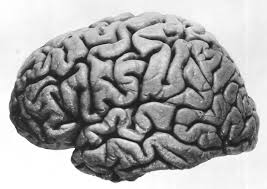
5.) IDEA: While our conscious mind feels like the sum of our mental world, in fact, it’s the tip of the iceberg of mental processes. Our decisions and actions are guided to a large degree by happenings below the waterline.

INTRIGUING EXAMPLE: In one study, interview subjects were randomly assigned to hold either iced or hot coffee. No attention was drawn to the coffee and it was set up as a mere accident of happenstance (the HR person directing the interviewees had her hands full.) The coffee was retrieved before the subjects made handshakes with interviewers. Unrelated to their verbal responses, those who had held the iced coffee were disproportionately described more in terms suggesting a cold personality (e.g. calculating, devious, etc.) and those who had held hot coffee were credited with a warmer personality.

RELEVANCE: Get your hands warm before you start making corrections.

REFERENCE: The coffee study is discussed by David J. Linden in his book Touch. However, there are many books on this topic, several that I’ve reviewed. In particular, I can recommend Eagleman’s Incognito and Mlodinow’s Subliminal.


4.) IDEA: Emotions play a crucial role in decision-making. We aren’t nearly so rationale and calculating as we think ourselves to be–particularly when there is uncertainty in the mix.

INTRIGUING EXAMPLE: Giovannni Frazzetto’s book describes cases of patients with lesions in their medial prefrontal cortexes who would deliberate ad nauseam and still couldn’t reach a decision.

RELEVANCE: This is why we don’t silence or stamp out emotions, but rather watch them dispassionately while avoiding a mental drift into a frenzy of illusion building.

REFERENCE: The Frazzetto book I referenced is: How We Feel, and it deals with anger, guilt, anxiety / fear, grief, empathy, joy, and love.  However, the patients described in his book were those of Antonio Damasio, and so you may want to check out Descartes’ Errorwhich I’ve heard good things about, but haven’t yet read.


3 .) IDEA: Experiences once thought to be supernatural, mystical, or fraudulent are increasingly being understood in scientific terms.

INTRIGUING EXAMPLE: For some, an Out-of-Body-Experience (OBE) is an impossible flight of fancy, while for others it’s a mystical / transcendent state beyond the physical realm. However, in recent years scientists have not only confirmed that people have these experiences, they’ve come a long way toward understanding such occurrences by actually inducing them via electrodes applied to the right angular gyrus. It seems that area of the brain is responsible for integrating sensory information from various senses, and its disruption creates an illusion of one’s consciousness floating outside the body.

RELEVANCE: As many have wisely advised, don’t spend a lot of time chasing siddhis–not only might it stunt your growth toward the ultimate goal, it might just be running after tricks of the mind.

REFERENCE: I highly recommend Anil Ananthaswamy’s The Man Who Wasn’t There. The book looks at the various ways in which “self” has been defined (one’s memories, one’s body, etc.) and it shows how neuroscience has learned a thing or two about the various dimensions of self, and how none of them fully defines an “I.” (i.e. The Buddhist conception of the self as illusion might turn out to be not far off the mark.)


2.) IDEA: Our brains can be rewired through practice and training. The property is called neuroplasticity, and it’s often described by the verse: “neurons that fire together, wire together.”

INTRIGUING EXAMPLE: You may have heard about  how London taxi cab drivers develop an enlarged hippocampus, which helps them meet the vast spatial memory needs required of the job. However, an even more fascinating example may be how some blind people have developed a capacity for echolocation–i.e. their mind registers changes as sound bounces off walls, curbs, and other obstacles.

RELEVANCE: One takes advantage of neuroplasticity when one works to be more kind and compassionate by recognizing and changing one’s behavior patterns.

REFERENCE: Fascinating reading on the topic can be gleaned from Kathleen Taylor’s book Brainwashing, but the most widely-cited book on the topic may be Norman Doidge’s The Brain That Changes Itself.


1.) IDEA: We have neural circuitry that predisposes us to spiritual belief and inclinations toward the sacred.

INTRIGUING EXAMPLE: The evidence suggests that it’s not so important who or what you believe in, but the more positive the message the better. People of religion have demonstrated both better and worse health outcomes–all else equal–and it seems linked to whether you have one of those smiting gods or a more compassionate one.

RELEVANCE: Belief and surrender–religious or secular–can play an important role in one’s personal development.

REFERENCE: Newberg and Waldman’s How Enlightenment Changes Your Brain deals with these issues in detail.

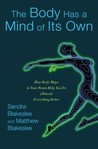
BOOK REVIEW: The Body Has a Mind of Its Own by Blakeslee and Blakeslee

The Body Has a Mind of Its Own: How Body Maps in Your Brain Help You Do (Almost) Everything BetterThe Body Has a Mind of Its Own: How Body Maps in Your Brain Help You Do (Almost) Everything Better by Sandra Blakeslee
My rating: 5 of 5 stars

Amazon page


This book examines the role of the nervous system in movement and bodily activity. It describes how one’s body is able to perform extraordinarily complex maneuvers that we often take for granted because they feel effortless. It investigates some of the ways in which the interface between body and brain go awry, as well as the various effects this can have. It also offers insight into how we can be deceived because we are experiencing the world less directly and more through the shaping activities of the brain than we feel is true.

The book contains ten chapters, plus a little forward and back matter. The first chapter is entitled “the body mandala” and it provides an overview of how the nervous system can be thought of as a series of maps layered upon maps that routes various input from outlying areas to the brain and commands from the brain to the outlying areas. A “mandala” is a symbolic representation of the universe [from Hindu and Buddhist traditions], and this notion is repeatedly revisited throughout the book.

Chapter 2 explores the mapping of the homunculus and its ramifications. If you’ve ever seen a 2-D or 3-D image /model of a human being that has gigantic lips and hands and disproportionately small torso and thighs, you’ve seen said homunculus (as the term is used in neuroscience.) The reason it’s scaled this way is that body part size is reflective of space in the nervous system dedicated to said parts and not their actual size. If you’ve ever seen one of those maps–called cartograms–in which the size of a country reflects a statistic, say, population (thus India, China, and Singapore are much larger than their physical size, but Canada is much smaller than its), you get the drift. This chapter also answers the question everyone wants to ask (and many do) which is “why–if the lips are so large because of their dedicated territory in the brain—are the genitals unexpectedly small in the homunculus?

Chapter 3 describes how body maps can be in conflict and what effect this can have. It talks about why people who lose weight often still feel fat and move in ways that are not reflective of their actual figure. It also gets into anorexia (and the lesser known bigorexia) which reflect mismatches between perceived body image and actual body schema.

Chapter 4 investigates a fascinating phenomenon in which visualization can often result in strength and performance gains. Said gains aren’t on the same scale as among those who actually exercise or practice, but the fact that one can make gains without moving a muscle is certainly intriguing. Of course, the takeaway is that one can get the best of both worlds by augmenting physical conditioning and practice with visualization—one has a more finite number of feasible physical training hours in a day (i.e. there are diminishing returns on physical training at some point.)

Chapter 5 is the first of two chapters that deal with problems related to improper interaction between the nervous system and the body. Here we learn about “the yips” that plague golfers and other occupational dystonias. When one begins practicing any physical activity, the objective is to build up muscle memory so that the movements can be completed purely unconsciously. This works through neuroplasticity—the fact that sequences of neurons that frequently fire together become more strongly linked—but neuroplasticity can have a dark side at the extremes.

Chapter 6 considers the way in which the system of maps can fail such that one fails to recognize one’s own limbs, one recognizes extra ones, or the like. Chapter 7 is about peripersonal space—i.e. the physical bubble of space that one needs to feel comfortable, and which varies both culturally and individually.

Chapter 8 delves into the role that upcoming technology may have in changing how we look at the body-brain connection. Mirror neurons are the subject of the penultimate chapter. You’ve probably heard of these neurons which fire when we see someone else perform an action. Usually there is an inhibitory signal to keep our body from actual mimicry, but sometimes you may find yourself unconsciously mimicking the position or body language of another person when one is engaged in an engrossing conversation. (Yawning contagiousness is a featured example.) Mirror neurons play a role in how we learn so quickly, how we sometimes anticipate the behavior or emotions of others, and deficient activity in these cells has been speculated to be responsible for autism.

Chapter 10 describes the role of the insula in human activities. The insula has been found to be involved in emotion and rewards system by which humans are motivated to engage in a number of bodily activities.

The book has many graphics to clarify technical points, many of these being line drawings of the brain and other physiological structures. There is also a glossary of key scientific terms.

I found this book to be fascinating. It was highly readable despite its technical subject matter, and it described these systems and the research about them in a clear manner. I’d highly recommend it—particularly if one is interested in movement, fitness, and optimal human performance.

View all my reviews

5 Physiological Fun Facts for Yoga Teachers and Practitioners


5.) FACT: People who lose weight often still feel heavy and commonly maintain the body language and movement characteristic of an overweight person.

REASON: A conflict exists between the body schema (which is largely up-to-date on the current state of the body, but is largely unconscious) and body image (which relates to how we feel about our bodies, can lag behind the state of the body, and of which we are conscious.)

RELEVANCE: It may take unconventional activities to help a student realign his or her body schema and body image. e.g. Wobble boards have been shown to be effective.

REFERENCE: “The Body Has a Mind of Its Own” by Blakeslee and Blakeslee


4.) FACT: The busiest skeletal muscles in the body are the extraocular muscles (i.e. more than 100,000 moves per day.)

REASON: We don’t see over a broad area as clearly as we think we do. The illusion that we can is created by rapid saccades by which the eye is constantly moving to take in sights from the point at which our sight is best. You can prove this to yourself by fixing your gaze forward, and then–from the side–draw a playing card at random so the face is towards your cheek while holding the card out to one’s side at shoulder height, and then–eyes still fixed forward–gradually move it in an arc at arm’s length towards one’s center-line until you can make out which card it is. You might think you’d be able to make it out at say a 30-degree angle from center-line, but you’ll find it’s almost directly in front of your eye when you can make it out. If if isn’t: a.) your eyes made a cheating saccade so quickly you didn’t notice it or, b.) you are an android and have eyes (and nervous system interface) that aren’t constructed on the same principles as the human system of vision.

RELEVANCE: One may want to brush up on eye yoga. Yes, there is such a thing.

REFERENCE: There’s a section on exercises for the eyes in Swami Saraswati’s “Asana Pranayama Mudra Bandha” (commonly called APMB.)


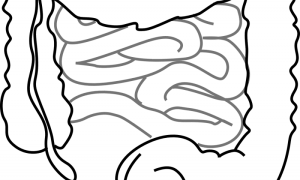
3.) FACT: The gut has its own nervous system (i.e. the enteric nervous system) that can interact with our body’s nervous system, and increasing evidence suggests that it’s not always mental stress that causes stomach aches, but sometimes problems in the gut result in mental / emotional turmoil.

REASON: There’s a lot that remains unknown at the moment, but a lot of research is going on in this area. It seems reasonable to guess that there’s probably an evolutionary advantage for the digestive tract to be able to express its dissatisfaction in a way that changes behavior (and emotions are all about behavior change.)

RELEVANCE: Unexplained depression or emotional outbursts may have unexpected origins.

REFERENCE: I can highly recommend “Gut” by Giulia Enders, but I’ve also heard great things about the more recent “I Contain Multitudes” by Ed Young, though I haven’t gotten around to reading it yet myself.


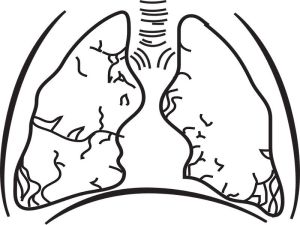
2.) FACT: The problems that can arise due to hyperventilation aren’t about oxygen levels, they are about too little carbon dioxide.

REASON: Lack of carbon dioxide can cause arteries and arterioles of the brain and spinal cord to constrict.

RELEVANCE: Introduce kapalbhati and bhastrika with caution.

REFERENCE: H. David Coulter’s “Anatomy of Hatha Yoga” chapter on breathing (Ch. 2) deals with the physiology of breathing in an excellent fashion.


1.) There are oh-so-many more than five senses in the human body. Within the realm of “felt sensation” alone there’s not only touch (one of the five senses we usually think of), but also: thermoception (sense of temperature), nociception (sensation of pain), proprioception (sense of the location and motion of our various body parts, and balance (which relies on vision and proprioception but also vestibular sensation.)

REASON: Without these sensations we couldn’t function as we do. I don’t have to tell experienced meditators how difficult it can be to simply stand up or walk when proprioception is dampened by the pins-and-needles from sitting cross-legged such that one doesn’t notice one’s drooping foot.

RELEVANCE: At some point one should begin to practice relying on proprioception more and visual confirmation less. (Proper drishti–focal points–rarely allow one to visually confirm one’s position.)

REFERENCE: Besides the book mentioned in #5, check out David J. Linden’s “Touch.” I’ve also begun reading a Harvard Medical School Guide entitled “Better Balance” that gives insight into how to improve the sense of balance–particularly if one serves senior citizen students.


BOOK REVIEW: Doors of Perception & Heaven and Hell by Aldous Huxley

The Doors of Perception and Heaven and HellThe Doors of Perception and Heaven and Hell by Aldous Huxley
My rating: 5 of 5 stars

Amazon page


The two essays collected in this thin volume recount Aldous Huxley’s experience taking mescalin (a psychedelic drug / hallucinogen derived from a cactus root) in the 1950’s, and the insights derived from that experimentation. The book contains descriptions of what Huxley observed under the influence, such as the hallucinations of “sacred geometry” that are common among those consuming hallucinogens. However, much of these essays are about how what he witnessed mirrors art and the text of mystical religions. Huxley provides a steady diet of food-for-thought on these topics. It is when Huxley relates the psychedelic experience to the mystical, religious, and artistic experience that I found this volume to be the most intriguing. “The Doors of Perception” is a mix of description and discussion of these linkages. “Heaven & Hell” delves much more deeply into said linkages, and I was blown away by some of the ideas in the latter essay. There is also a bit of discussion of the commonalities between schizophrenia and psychedelic experience.

Huxley devotes some space in both essays to discussing the science of these experiences, but I don’t see those parts as the strength of the volume. While Huxley was a scientifically minded fellow, his reporting on science errors on some of the grand scale issues (e.g. memory, which is far more fallible than was thought in his day.) (Specific [small-scale issue] findings are probably accurate.) The thing is, Huxley was also a mystic and he viewed biology as a “reducing valve” that mitigated our experience of consciousness—a grand field existing wholly beyond the nervous system, such that our experience of it was hemmed in by biology—rather than being created by it. This isn’t particularly a criticism. For one thing, when one beholds the bold sensory experiences that Huxley witnessed and contrasts them to the visualization of everyday consciousness, it’s hard not to believe that one is on a plane entirely outside the bonds of biology. While I’ve never done psychedelic drugs, my limited experience with the more-real-than-real world of lucid dreaming makes me sympathetic to this long-held and widely held belief. Additionally, neuroscience was still in it’s infancy during Huxley’s time. [It may still be in its infancy, but a great deal has been learned—particularly since the technology of the 1990’s—that points to biology being the source of many of these experiences that seem amaterial.]

The two essays are each short. “The Doors of Perception” is about 50 pages, and “Heaven & Hell” is about 40. Even with the front matter and appendices, the book comes in at only a little over 120 pages.

There are no graphics in this volume, nor is it annotated—except for in-text references and a few footnotes. With respect to front matter, there is a Forward by J.G. Ballard and an Introduction / bio-sketch of Huxley by David Bradshaw. There are also a series of appendices that report on various topics related to mystical / psychedelic experiences such as the effects of CO2, strobe lights, and starvation, as well as the relationship to lighting, works of art, and mental illness.

If one is interested in alternate states of consciousness, I’d highly recommend this book. Huxley’s ability to capture his experience vividly and his thought-provoking suggestions about the experience make these essays worth the read.

View all my reviews

BOOK REVIEW: Lab Girl by Hope Jahren

Lab GirlLab Girl by Hope Jahren
My rating: 5 of 5 stars

Amazon page


This book is in part the autobiography of a female scientist with a career in a field that is both male-dominated and in which basic science is the meat and potatoes—by which I mean a discipline with few of the commercial applications at which companies, foundations, venture capitalists, and governments are willing to throw millions. Interspersed into the autobiographical chapters are short essays on trees and the ways they survive, grow, and interact with each other and their environments. So it’s a mix of biography and pop science, and was one of the most well-received science-themed books of last year (2016.)

The book is arranged into three parts. The first 11 chapters are entitled “Roots & Leaves” and these cover Jahren’s path to becoming a scientist from her childhood in an unexpressive Scandinavian family in rural Minnesota, through her college job in a hospital lab, and onto her graduate education. Part II consists of 12 chapters that cover Jahren’s years as a junior faculty member, most of which takes place at (my alma mater and former employer) Georgia Tech. The title of this chapter, “Wood & Knots,” gives one some indication of where the author’s story sits in this part of her life. She experiences both growth and set-backs during her time in Atlanta. The last part, “Flowers & Fruit,” describes the period in which not only her professional life, but also her personal life begins to bear fruit. During these years she moved her lab to Johns Hopkins, got tenure, built a family, and eventually moved to Hawaii to work for the University of Hawaii.

Besides Jahren, the only other major character in the book is her side-kick Bill, who was an undergraduate where she did her doctorate in California. The two met when Jahren was the Teaching Assistant for a course that Bill took, and subsequently he followed her from lab to lab as her research assistant. Bill’s mix of workaholic diligence, nerdiness, dysfunction, and adroit sarcasm made him a sort of soulmate of science. Their strange, platonic relationship is at the heart of the book, and is in part what keeps the reader wondering and turning pages. Her dog, her husband, and her child are all secondary characters by comparison (perhaps not in her life but in the science-centric story she is telling) though her son becomes a central player near the book’s end. The other people are cameos by grad students and other faculty members.

Jahren’s use of language is skillful and at times poetically beautiful. There’s a great deal of humor in the book, much of which stems from the dialogue between her and Bill. While the parts of the books about trees didn’t wow me as much as Wohlleben’s “The Hidden Life of Trees,” that may be because I read his book first and, therefore, was clued into some of the fascinating arboreal secrets. That said, these botanical sketches are intriguing and readable. The only place that the book bogged down for me was in incessant complaints about the difficulty of keeping a lab funded. (And this is from a person who was paid from grant money—job perpetually at risk–at the same Institute where Jahren struggled. But now I’ve lived in India for the past four years so… first world problems, right?)

I’d recommend this book for readers generally. I think it may be particularly insightful for young women choosing a career in science, but the book shouldn’t be shunted into a parochial box. There are a number of elements that will keep one reading. For some it will be a fascination with the unexpectedly complex life of trees. For some, the tension of this life story may have a lot to do with the mental health issues that Jahren struggles with. These issues aren’t put front and center in the book, but there are points at which their impact is felt. A few will just be wondering what exactly is going on with her relationship with Bill.

View all my reviews

BOOK REVIEW: Anatomy of Hatha Yoga by H. David Coulter

Anatomy of Hatha Yoga: A Manual for Students, Teachers, and PractitionersAnatomy of Hatha Yoga: A Manual for Students, Teachers, and Practitioners by H. David Coulter
My rating: 5 of 5 stars

Amazon page


There are many books on anatomy for yoga, and I’ve read my share, but this is my favorite.

What did I like about it? First, Coulter examines the anatomy and physiology of breathing in some detail, and that’s an important topic that is overlooked by many others. A lot of yoga anatomy books stick exclusively to the musculo-skeletal system. Second, this book doesn’t mix science and pseudo-scientific mythology. Sometimes books shift from talking about arteries and veins to nadis and chakras in a manner that can be confusing and counterproductive. Third, the book discusses how postures can be safely varied for individuals with limits, as well as discussing the most advanced expression of postures for more flexible or skilled students.

What’s the catch? There must be a downside? Well the book is dense and it’s a challenging read. It’s not that the writer uses too many technical terms. That isn’t the case at all. In fact, Coulter is careful not only about using anatomical terms, but also avoids reliance on Sanskrit names as well. It’s just that there is a lot of material that one must read painstakingly while visualizing and–in some cases—tactically probing around one’s body (or someone else’s–if they’ll let you.) I don’t know that there’s much that could be done about this, given the desire to convey the material that the book does—and it’s valuable information. The book has a large number of graphics that mostly consist of anatomical drawings and photographs of the various versions of the postures. It’s possible that more graphics could have been used to reduce the amount of descriptive text, but—on the other hand—reading it slowly and carefully is a useful and productive exercise. And, if you’re not reading it for your RYT-500, you can take your time and read it section by section, as time permits, over the course of more than a year as I did.

The ten chapters of the book are mostly divided up by classes of posture (asana.) Chapter 1 is about “movement and posture” and provides the necessary background that one will need to understand the later chapters. Chapter 2 is on breathing–both the musculature involved and the physiology of it. The rest of the chapters are on core exercises, standing postures, back bends, forward bends, twists, headstands, shoulder-stands, and meditative postures, respectively.

The book has a glossary, a short bibliography, and two indexes (one by anatomical parts and the other by practices/postures.) I normally don’t bother to mention indexes, but in this case it’s useful to know because the book’s organization is by type of posture, and so it’s not always straight forward where various muscles or tissues are being covered.

As I say, I found this book to be tremendously informative. I recommend it for yoga teachers as well as intermediate / advanced practitioners.

View all my reviews

BOOK REVIEW: How Enlightenment Changes Your Brain by Andrew Newberg and Mark Waldman

How Enlightenment Changes Your Brain: The New Science of TransformationHow Enlightenment Changes Your Brain: The New Science of Transformation by Andrew Newberg
My rating: 5 of 5 stars

Amazon page


This book busted me over the head with some profound food for thought. I’d been skeptical of the notion of Enlightenment. [Note: the authors distinguish big-E Enlightenment as a permanent and substantial brain change, in contrast to the little-e enlightenment which is just a momentary epiphanies or insight—a number of which may precede the big-E Enlightenment.] It’s not that I disbelieved that some people had life-changing and / or perspective-changing experiences, but rather that such events represented permanent change. My skepticism was influenced by the many gurus who have been said to be Enlightened, but who behaved to all appearances like petty, materialistic douche-bags. It’s not that I couldn’t believe that these teachers achieved some momentary heightened state of consciousness during their youth, but—if they had—they clearly couldn’t maintain it under the pressure of being idolized. I’d, therefore, come to think that life is a perpetual struggle to try to be a better version of oneself, and backsliding can and will happen at any moment. This book, however, suggests there is a possibility for permanent brain changes. [Though Dalberg’s “Absolute power corrupts absolutely” seems to still apply.]

Andrew Newberg is a neuroscientist who has made a career out of conducting brain imaging studies of people engaged in various spiritual, religious, and meditative activities. His co-author is a psychologist, Mark Robert Waldman, who works on applying neuroscientific understanding to positive psychology. In this book, the two examine what Enlightenment is from a neuroscientific standpoint and then try to cull the common features across a population of cases of Enlightenment / enlightenment. Discovering the common elements of Enlightenment is no easy task. While it seems everybody is theoretically capable of achieving Enlightenment, it also seems that the experience is different for everybody and the collection of systems (religious, spiritual, and secular) by which it’s pursued is vast. However, the authors present a five-step outline by which readers can prime themselves to achieve Enlightenment, and it can be personalized depending upon one’s beliefs (or lack thereof—Enlightenment occurs among agnostics and atheists as well as religious practitioners) and background.

The book consists of 12 chapters divided among three parts. Part I (Ch. 1 to 5) lays the groundwork for readers to understand what Enlightenment is, how it feels, how it’s experienced between people with radically varying belief (and disbelief) structures, and it presents a model of human awareness that is crucial to the later discussion. Part II (Ch. 6 to 9) considers what happens in the brain during various practices by which individuals advance towards Enlightenment. Concepts like unity, surrender, and belief are explored in detail. Part III (Ch. 10 to 12) describes the process by which readers can pursue Enlightenment for themselves. If one is inclined to chart one’s own path, versus adopting an existing program, one has all the insight and tools to begin constructing one’s personal method by the time this section is complete.

The book has graphics as necessary (e.g. brain diagrams) that largely consist of line diagrams. There is an appendix that consolidates tools and resources, and the book is annotated by chapter.

I found this book to be both interesting and potentially beneficial to readers who take it beyond a popular science book and into the realm of self-help. The authors do a great job of navigating the waters between religion and science. Obviously, they are scientists and are agnostic about that which cannot be proven, but they don’t question other people’s beliefs and–if anything–error on the side of being open-minded. Still, I suspect that there will be religious types offended by the very notion that all humans are biologically primed to achieve this heightened state. It should be pointed out that the book could be supremely useful for such individuals because it points out the need to engage in exercises to challenge one’s most closely held beliefs. (Those with less mental flexibility and capacity for tolerance seem to be less likely to achieve Enlightenment.)

I’d recommend this book for anyone trying to figure out how to be the ultimate version of oneself.

View all my reviews

POEM: Sick of Being Bossed Around

I’m sick and tired of Gravity

telling me where I should go.

Why must I have more entropy?

And approaching c I must slow?

I’m all for conservation,

but electrical charge and mass?

What authoritarian nation

could get such laws to pass?

BOOK REVIEW: The Science of Breath by Swami Rama et. al.

Science of BreathScience of Breath by Swami Rama
My rating: 4 of 5 stars

Amazon page


This is an oldie, but a goody. The first edition came out in 1979, but as its intent is to provide an overview of the anatomy and physiology of breath for yoga practitioners, the fact that it doesn’t access the bleeding edge of respiratory science isn’t all that detrimental.

This short book consists of four chapters. Two chapters are by the famous yogi Swami Rama, and the other two are written by medical doctors. The first chapter is an introduction to breath from the yogic perspective. It both explains why it’s so important to understand and work with breath and introduces the mythic physiology (prana, nadi, chakra, etc.) that has historically been used to explain pranayama (breath exercises.)

The second chapter is written by Dr. Alan Hymes and it explains the mechanics of respiration. While Chapter 2 focuses on the anatomy of breathing, it begins with an explanation of cellular respiration to introduce the role of breath in powering muscles. There is a fine explanation of the operation of the diaphragm and the intercostal muscles in breathing.

Chapter 3 is written by Dr. Rudolph Ballentine, and it delves into the role of the nose and nasal cavities in respiration. Breathing through the nose is emphasized in both yoga and many other systems of breath training (e.g. the Buteyko and Wim Hof methods.) This is because the nasal cavities perform many useful functions such as moisturizing and warming air, capturing pollutants, and extract heating and moisture from exhaled breath. Besides exploring nasal anatomy and physiology, Dr. Ballentine describes jala neti shatkarma (nasal cleansing with salt water) and nadi shoudhana (alternate nostril breathing.)

The final chapter, written by Swami Rama, mostly describes various techniques of pranayama (breathing exercises) and related practices bandhas and mudras (locks and seals in which bodily parts are contracted or constricted.) However, the chapter begins with a mix of physiology and mythic physiology. That is, it explains some topics not addressed earlier–such as the interaction between the nervous and the cardiovascular systems as well as chakra.

My standing complaint about books that weave together science and pseudo-science is mitigated a bit herein. My problem with putting these ideas together is that it can be difficult for the reader to determine what concepts reflect reality and which offer models to help one visualize energy. However, except for the last chapter, this book does a good job of keeping these ideas separate. The chapters by the medical doctors present the science with minimal intrusion of unscientific concepts. Swami Rama does present science and mythology together, but not so much scrambled together in a confusing mish-mash.

Chapters 2 through 4 use a number of graphics to help present the material. In the middle chapters these largely consist of line drawings to convey the relevant anatomical features or physical actions. The last chapter adds photographs to demonstrate relevant postures. There is a page of recommended readings, but it’s more of an advertisement for other books put out by the Himalayan Institute than the recommendation of books on the science of breath.

I found this book to be educational. It packs a lot of useful information into a concise package and is readable to a layman. I’d recommend it for yoga practitioners and others who are engaged in breath work.

View all my reviews