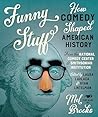
BOOKS: “Funny Stuff” ed. by Laura LaPlaca and Ryan Lintelman

Funny Stuff: How Comedy Shaped American HistoryFunny Stuff: How Comedy Shaped American History by Laura LaPlaca
My rating: 4 of 5 stars

Publisher Site — Rutgers University Press

Release Date: May 12, 2026

As the subtitle suggests, this book explores the nexus between American History and comedy across many, varied media (i.e. writing, theater, standup, improv, radio, television, movies, etc.) It’s an interesting book, but I don’t know that it has the right title. Considering the title, a reader might expect a fuller coverage of American History, drawing on whatever humorous outlets existed at the time (e.g. op-eds and satirical articles.) This book is more of a history of comedic content in the US with a substantial discussion of how comedy addressed / participated in changing views on sex, race, and sexuality and with occasional mention of how comedy was involved in other social issues, such as changing views on free speech and expression. You’re not going to learn how comedic writers addressed Smoot-Hawley or the Sinking of the Maine. (i.e. The book leads with comedic content and leans the discussion toward societal influence [rarely toward policy influence.] It does not lead with historical events and draw on appropriate comedic content.)

The book covers a lot of the same ground as Kliph Nesteroff’s The Comedians, though with quite different emphases. Nesteroff focuses on the gritty underside of comedy and the oft unseen dark side of comedians, while this book focuses on comedy as a factor in changing views on race and sex [as well as on the changing technological outlets for comedy.] Funny Stuff does spend a little more time on pre-20th century America than does Nesteroff, but not much more. Both books are heavily weighted toward the late 20th century to present. To be fair, there is much more volume of comedic output in this period. (That said, there were artists I expected coverage of, e.g. Josh Billings, that weren’t included. That’s where the book seems more like a history of comedy and its varied outlets.)

If you’re interested in the development of comedy in America, and its influence on social issues — most extensively attitudes towards race — I’d recommend this book.

View all my reviews

BOOKS: “The Comedians” by Kliph Nesteroff

The Comedians: Drunks, Thieves, Scoundrels, and the History of American ComedyThe Comedians: Drunks, Thieves, Scoundrels, and the History of American Comedy by Kliph Nesteroff
My rating: 5 of 5 stars

Amazon.in Page

This book presents a fascinating history of standup comedy and the various ancillary activities that comedians have taken on to make ends meet, to advance their careers, and – in a surprising number of cases – to pay for drugs — e.g. from writing to radio and television performances to hosting interview shows. The book’s exploration runs from the days of Vuadville to today’s world of Twitter and podcasts.

The book reveals a great deal about which readers may be unaware. If you, like me, watched The Marvelous Mrs. Maisel and wondered whether the mob was really that involved in the entertainment industry, turns out, they were. In fact, Nesteroff addresses the violence and threats experienced by comedians in a way that is much more explicit than in that TV show. There are tales of early insult comedians running afoul of wiseguys who were in the audience unbeknownst to the comedian. There is even a chapter devoted to the building of Las Vegas to meet certain needs of organized crime, as well as discussion of the mob’s decline (or, perhaps, legitimization) in the industry.

Another discovery that was interesting to me was how wild some of the early comedians were, both in their stage and in their personal lives. There were a number of names that were familiar to me from re-runs of highly censored network television programs. I’d wrongly assumed that these individuals were as bland and wholesome as their on-air personas. Buddy Hackett is a prime example of someone who wasn’t at all what I expected.

It’s remarkable to see how many ups and down standup comedy has had in its relatively short life span — cycles of boom and bust.

If you’re interested in standup comedy and how comedy has progressed as a form of entertainment in America, I’d highly recommend this book.

View all my reviews

BOOK REVIEW: The Power of Podcasting by Siobhan McHugh

The Power of Podcasting: Telling stories through soundThe Power of Podcasting: Telling stories through sound by Siobhan McHugh
My rating: 5 of 5 stars

Amazon.in Page

This book is in part a how-to guide, and in part a history of podcasting’s rise, though a history that tries to look from within rather than from a distance as much as possible. The two major thrusts of the book are story and sound. Of the many varieties of podcasts that exist today, the focus of this book is on ones that are story-centric, be they non-fiction or fiction. [Of course, there’s an argument that all podcasts should employ story to some degree, even if they aren’t of a format that facilitates an overarching story.] McHugh, herself, uses stories and what I’d call meta-stories (i.e. the stories of how various podcast-delivered stories got told) extensively throughout the book.

With respect to sound, there’s a lot of background sound and music that makes the difference between a professional sounding podcast and one that’s not. This is a particularly difficult subject to grasp because – while one often experiences background sound and music drawing one deeper into the story (or – perhaps more accurately – one feels its absence as a vague sense of detachment,) one tends not to be aware of this background audio on a conscious level. Therefore, discussions that point out the thinking about background audio choices can be profoundly eye-opening for a neophyte, such as myself.

When I say that the book has a podcasting how-to aspect, I should emphasize it doesn’t get into the technical aspects (i.e. what kind of mic to buy and how to use it,) but rather it discusses such topics as scripting, interviewing, editing / reorganizing for effect, and starting out. The book also has chapters at the end about increasing diversity in what has been an extremely Caucasian-centric industry as well as offering insight into potential future directions of audio storytelling. Throughout. there are short interviews with individuals with expertise in the industry, and there’s an extensive appendix, listing podcasts and podcasting resources.

If you’re interested in starting a podcast or learning more about podcasting, I’d highly recommend this book.


View all my reviews

TODAY’S RANT: Punked by NPR

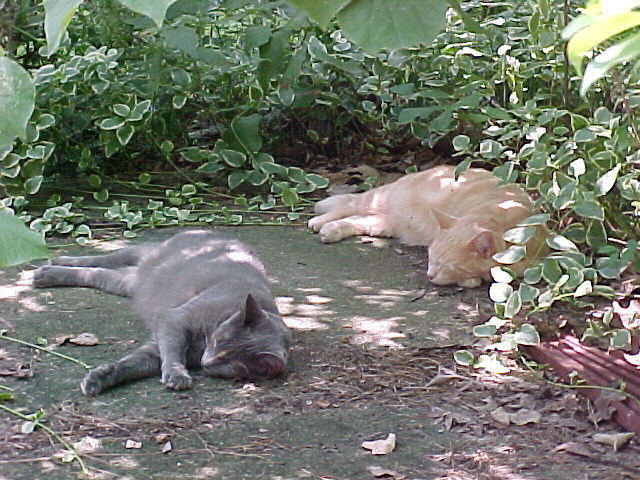
Sleeping CatsI’m driving along, my mind roving, the droning radio only faintly registering in my subconscious, and suddenly I’m ripped from my reverie by a shrieking siren. I punch the brakes, slowing from a present speed that, unbeknownst to me, is two miles an hour below the limit to an octogenarian crawl. I hear the screech, and look into my rear-view mirror to see the black behemoth, an  SUV, becoming ever bigger. The driver’s solitary finger pressed up against the window, not pointing  at me accusingly, but rather straight up in the air. The SUV slows just enough to not ram me. We travel onward in our respective soiled underwear, I not looking back, her boiling rage now just a flush face and a fading headache (or at least that’s what I expect from my vast experience in her shoes.)

I’ve been punked by a stranger, an audio tech who likes to put background noises into every news story or ad spot to gain the attention of an ADD -riddled populace. Yes, I should have been more in the moment; that’s how they get you.

I would be remiss if I didn’t act as a mouthpiece for another individual wronged by similar antics. I have a cat that only gets about 20.5 hours of sleep per day, and he’s inevitably robbed of precious slumber whenever he hears a “BING-BONG.”  This is another much beloved sound effect for the wicked curs in radio. This particular cat can comfortably ignore any other sound in the universe–including my high-volume rants about use of various personal possessions as a scratching post. I don’t know why our cat knows what a doorbell is. Does he get lots of visitors when we are not there? Who is he expecting? These are questions that I cannot answer.