POEM: Elusive Lunatic

img_4320

he’s not your run-of-the-mill maniac

thrice escaped and twice hauled back

steely-eyed with a devil’s grin

he invented seven new deadly sins


he watches the “can haz cheezburger” cats

and will stop to fix an old lady’s flat

he’s got two souffles baking in the oven

and is cooking meth on the stove above ‘em

BOOK REVIEW: Narrow Road to the Interior: And Other Writings by Matsuo Bashō

Narrow Road to the Interior: And Other WritingsNarrow Road to the Interior: And Other Writings by Bashō Matsuo
My rating: 5 of 5 stars

Amazon page


Bashō was a traveler, and much of his poetry came from what he witnessed and experienced on the road. This volume contains four travelogues (each containing interspersed haiku); the most famous of these being the title piece, but also including: “Travelogue of Weather-Beaten Bones,” “The Knapsack Notebook,” and “Sarashima Travelogue.” In addition to the travel writings, there is a section of select Bashō poems. The word “travelogue” may create a misapprehension. These weren’t diaries of the minutiae of his travels. They offer a poet’s eye view of highlights and insights, and—of course—interspersed poems. [There is a term for this genre of prose mixed with poetry, haibun.]

Matsuo Bashō was born in Iga-Ueno (famously a center of ninja warriors during the Warring States Period), and traveled extensively within Japan. He lived from 1644 to 1694, during the time between the end of the Warring States Period and the Meiji Restoration that brought Japan into modernity. It was a period of relative peace ruled by a military dictatorship, lying in the long shadow of war. Zen touches are prevalent throughout Bashō’s writings, but so are references to Chinese philosophy and history, Shinto, not to mention the Japanese poets who preceded him.

In addition to the aforementioned content, the book includes some nice ancillary features. First, there is a Translator’s Introduction that helps provide necessary context about Bashō’s life and times, as well as offering insight into what was valued in Japanese poetry of this time–including influences of systems like Zen, Taoism, and Confucianism. There is an Afterword describing the last years of Bashō’s life, as well as end-notes and a bibliography. Notes are useful for this type of book because most readers face both cultural and historical barriers to understanding (myself included.) As for graphics, there is a map to help readers grasp the extent of the poet’s travels. There is also a chronology to help keep the events of Bashō’s life—most notably the timeline of his travels—straight.

I’m not sure how the translator’s (Sam Hamill) version compares to an ideal, but I enjoyed it. For example, Bashō refers to an innkeeper called Hotoke Gozaemon, which Hamill translates as “Joe Buddha.” I suspect that is an example of veering away from literal translation to communicate an essence in a way that is readily grasped by the English-language reader. Some of the haiku translations seem clunky, but it’s extremely hard to put haiku into English, so I can’t say it could be avoided. English syllables and words can be chunky and our grammar doesn’t lend itself to being sparse. I will say that a nice feature of the “Selected Haiku” section is that it includes the Romanized Japanese poem under the translation. This isn’t done throughout the haibun “travelogues,” but it’s done in that last section. The main benefit of this is allowing the reader to hear the sound of the poem, but it can also allow one to compare different translations of the same poem.

There are several translations of these same writings available (often gathered together into a single volume like this because it makes for an acceptable length book–rather than the pamphlets that the individual haibun would be.) This is the only version that I’ve read to date, and so I can’t compare it to others. However, I was quite pleased with this version and found it to be both readable and evocative.

I’d recommend this book for haiku lovers, travelers, and those who want to see what awesome travel writing can look like.

View all my reviews

BOOK REVIEW: On Love and Barley by Matsuo Bashō

On Love and Barley: Haiku of BashoOn Love and Barley: Haiku of Basho by Bashō Matsuo
My rating: 5 of 5 stars

Amazon page


This is a short collection of English translations of the haiku poetry of Matsuo Bashō. Bashō is one of the seminal figures in Japanese literature, and was a fascinating person. Living in 17th century Japan, his hometown was Iga-Ueno (a city whose other claim to fame was being one of two centers of medieval black-ops warriors known as ninja,) but he was also an ardent traveler and Zen Buddhist. One will note that many of his poems are about traveling.

The name of the collection is drawn from one of the poems (labeled “152” in this collection) that reads: “girl cat, so thin on love and barley”

Translating poetry is one of the hardest language tasks imaginable—and translating haiku to English is the hardest of the hard. This is because Japanese is grammatically sparse and the number of beats per syllable is limited, while English… not so much. Therefore, if one literally translates, not only would one likely get circa-2000 Babel Fish gibberish, the Zen simplicity vanishes. One has to appreciate any haiku to English translation that gets some of the feel of haiku right while still conveying meaning. This collection does a nice job in many cases, and maybe does it as well as can be expected.

The original poems [i.e. the Japanese] aren’t included. This may not seem like an issue to a reader who doesn’t know Japanese, but it can be nice to read the original poem phonetically (Japanese is a very phonetic language—unlike English.) The sound of a poem can be as evocative as its meaning. Some haiku translations offer three versions of the poem (i.e. the Japanese characters [useful only for Japanese readers], a Romanized spelling of the Japanese poem, and the translated poem), but—except for some of the poems referenced in the introduction—this one only gives the translation.

There is a substantial introduction that both gives one insight into Bashō as a person and poet, and puts his haiku into a broader context. There are also some end-notes for many of the poems to make sense of words and phrases that may not make sense to a contemporary English reader. There are some drawings that aren’t necessary, but they don’t hurt either, making a nice way to break up the collection. The book consists of about 50 pages of poems (with 5 haiku / page, or 250+ poems), and is less than 100 pages in total.

I would recommend this collection for poetry lovers. While poetry translations can be perilous, they can also offer new insight–even if one has read multiple translations of the same poem in the past.

View all my reviews

The Moors of Your Mind: A Halloween Poem

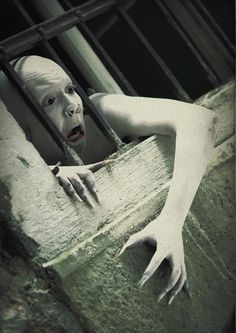
Butoh artist, source unattributable

Butoh artist, source unattributable

in the moors of your mind
where lurk the moles of souls unkind
spying out your darkest dreams
amid the hum of silent screams

awakened hip deep in the mud
as chest-high waters rise in flood
you struggle but it pulls you down
in a boat, up drifts a blood-soaked clown

his hand grips a shiny new bone-saw
his other hand, a twin-hooked claw
your only hope; that you’re still dreaming
but wouldn’t you waken from your own screaming?

POEM: Midnight Ride

let me take you on a midnight ride

through endless fields of wounded pride

memories grown in the silhouette of nought

where valiant soldiers stealthily fought


you’ll see the carnage but not the fight

you’ll feel the dawn but never see the light

it all went south, FUBAR, they claimed

only smoke and shadow left to be blamed

POEM: Trans-Temporal Vase–Possibly a Vaaz of Ming Origin

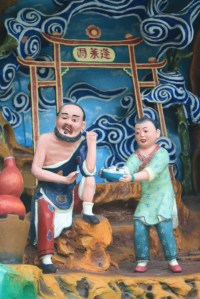
img_1075


Mama said, “Don’t touch that!

“That’s a Ming vase.”

[pronouncing it “vaaz”]

It probably wasn’t.

Mama calls things pricier things—e.g. Timex = Rolex.

Her gist is she can’t afford a broken one.

I’ll admit I’m no stranger to breaking stuff,

and not just flimsy stuff– cast iron, granite, you name it.

You could say breaking things is my superpower.

Anyhow, the vase is Chinese and looks old.

But my hand was already on it.

You’d think it would be cool and smooth.

But, it was tingly and, well, not solid.

My fingers seemed to sink into it–

like a hologram or a ghost.

So I nudged it a bit.

Turns out it was solid; it tipped.

I moved to catch it,

but it just hung there, tilted on air.

Well, I had to know how long it would stay tipped.

I stared, wondering if mama would snap a pic with her camera.

As I had this thought, the vase tumbled off its stand.

I grabbed for it, touching it with my fingertips

just as its lip—it was upside-down—crashed into the floor.

***

Time oozed; cracks spread through the vase and the world.

It shattered in slow motion.

A crackly light—blue and white—crinkled through the room.

Silence.

No breaking noise, nor the expected holler from mama.

Just white and blue arcs of light, becoming blinding.

***

Then I was squatting and reaching in another room.

I toppled face-first onto brown floor boards.

The vase was upright, whole, and sitting by the wall,

seeming like a person watching me fall in quite amusement.

The vase’s glistening white and blue stood out in the dark brown room.

Dust or tarps covered everything else.

It was a storehouse packed with fancy junk.

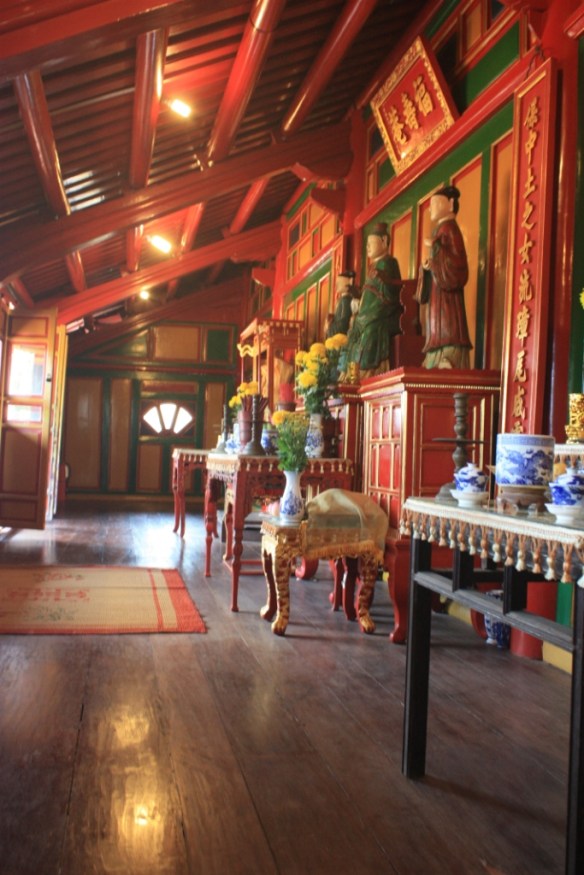
It couldn’t be confused with the temple I’d been touring with my mom.

That was bright and neat, red and gold, and had ornamental dragons.

The door flew open.

I gasped, expecting a whooping, or at least a stern talking to.

I crab-walk scurried when I saw the man who charged in.

He wore an armor that looked like rows of little roof tiles.

And he had a straight sword stuck into his belt.

I feared he’d draw the sword and poke me in my tender bits,

but he didn’t seem to see me—hard to miss as I was.

Calmed by my invisibility, my attention went to soldier’s hand.

In it I spied the spitting image of the vase I’d knocked over.

I thought the soldier would notice the resemblance,

but he didn’t notice the vase on the floor–

even though it was clean and shiny like nothing else in the room.

He put his vase on a shelf with some cobwebby bric-a-brac.

Then he spun, moving back toward the door.

He didn’t get outside before a woman barged in.

She had a lot of hair parked up on top of her head.

She was pretty, except that her skirt went from her armpits to the floor.

She was shouting in Chinese.

I don’t know exactly what she was saying,

but she was angry and her gist was that she wanted the vase.

And it didn’t seem like she just needed to hold some flowers.

Well, the soldier shoved her roughly.

She fell square on her caboose.

He drew the sword, and started shouting back.

His gist was that the vase wasn’t hers anymore.

He pointed the tip of the sword right at her face.

I shouted, but he didn’t hear me any better than he saw me–

my voice like one of those whistles that dogs hear, but people can’t.

I was going to shove him,

but shoving an angry man with a pointy object seemed like a bad idea.

Anyhow, she stood, sobbed, talking less angry and more pleading.

He backed her out the door at sword point.

The door closed to wailing sobs and rattling chains.

It occurred to me then that I was locked in a storehouse for confiscated fancy junk.

I searched my musty new cell up and down.

There were stairs to a loft, and I climbed them.

It was more storage,

but there was a door to bring things up by a pulley that dangled from the ceiling.

But it wasn’t a door, more of a piece of wood cut to cover the opening.

I unlatched it.

It fell smack down onto the head of a green, glassy doggish-liony statue.

The dog-lion’s head broke right off at the neck.

[Establishing that my knack for breaking stuff extends to worlds in which I can’t be seen or heard.]

Anyhow, I looked out to see if I was clear to escape—

forgetting that no one seemed to be able to see me.

There was just the woman—once angry, now sad.

She was kneeling in the mud in her fancy up-to-the-armpits skirt.

She sure was broken up about that vase.

You’d think it was her dog or her granddaddy.

I couldn’t see why she was so upset,

but it only seemed right to give the vase back to her.

So I went and got the vase that the soldier put on the shelf.

[Right then, my plan was to put the vase that came with me in its place, but more on that…]

I couldn’t very well chuck the vase down to her, her all teary-eyed.

So I snagged a small tarp, folded it, and put the vase into the tarp.

Taking the tarp upstairs, I called to the lady.

But she couldn’t hear me—maybe she was just too sobby.

So I took a shard of the lionish-dog’s neck, and winged it in her direction.

The green piece bounced, spattering some mud onto her skirt.

She looked over.

She scurried toward the storehouse, wiping her eyes, when she saw me lowering the vase.

Wouldn’t you know it, that slippery vase shifted in the tarp, falling out the end.

I gasped again, remembering that my superpower worked here,

but the woman caught it, hugging it to her chest.

I dropped her the tarp, and she swaddled the vase in it.

She cradled the vase like a baby,

looking up in my direction, seemingly happy and grateful.

I had to work my nerve up to jump out of that loft,

but figured I should put the other vase in place of the one I’d given away.

I was sick with sad and lonely.

I was stuck in a place where I knew no one and couldn’t speak the language.

Even if I had spoken Chinese, no one could see or hear me.

But an idea formed.

I picked the vase up, and, instead of putting it on the shelf,

I smashed it against the floor.

***

[blue and white crackly light]

And there I was once again, a tourist in a temple in a far away land,

my fingers barely touching the vase.

I yanked my hand back like that vase was a scalding pot.

Mama said she had something called “temple fatigue.”

So we went for ice cream.

Ice cream is safe.

Ice cream never banished anyone to ancient lands or to an alternate dimension.

At least, I’d like to think that…

POEM: Tangles

Source: Wikipedia; Sculptor Hermon Atkins MacNeil

Source: Wikipedia; Sculptor Hermon Atkins MacNeil


bunch your words up and throw ’em in a satchel

and see if they mean fuck all after you’ve ridden across the plains

pull the letters out one-by-one to see if words gel

or whether what spills out is a wicked mass of tangled confusion

tangles blurted like a Tourette’s sufferer with a machine gun stutter

POEM: Worse Ways

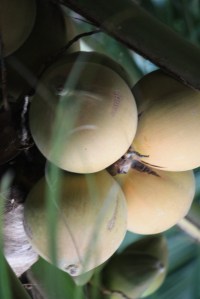
img_0488

Every few days a villager steps from his hut

only to be killed by a falling coconut.

It’s a death with the taint of the inglorious.

Dying should somehow be more laborious.

But what’s more the mark of courage and grace,

than causing people to smile at Death in its face?

A life punctuated by one misstep is not to be bemoaned.

It beats a life whose living has been indefinitely postponed.

img_0486

POEM: A Zombie’s Dilemma

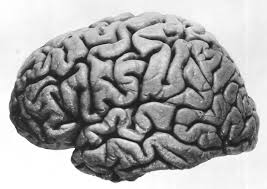
brain


I ambled out the gate, down the street, and noticed:

  • Everyone was going my way.
  • Everyone was on foot.


Well, you can imagine what I thought,

I’ve fallen in with a zombie horde!


But, how to check?

Somehow asking,

“What is your stance on raw brain?”

seemed awkward.


So I concluded that I was—unquestionably—among zombies.


A sadness followed.

Couldn’t they smell that my brains were fresh, disease-free, and everything a Zombie finds delicious?

Did they know something that I didn’t?

Had my brain gone bad without my knowing?

And how could one ever know whether the thing one knows with is sour?


The sadness was short-lived.

A dilemma followed.

For I saw a man walking toward me, against the horde’s flow.

If I didn’t club him in head and try to eat his brain—given his clear unhorde-like behavior–would the horde realize that I was an imposter?


If I did… Well, I would be worse than Tom Hanks trying to get into that coconut in “Cast Away.”

Quite frankly, I had no idea how to get to the brains.

Should that be something I should know?

A piece of common knowledge I’d lost when my brain curdled?


But the horde didn’t descend on the man.


So I concluded it was–unquestionably–a defective zombie horde.


And I went about my day.

POEM: Kashmiri Haiku

img_1423


mountain torn in twain

a ridge rended like a child’s

paper crafts project


the shikara slips

through inky predawn waters

a bare bulb aim point


burbling waters

ubiquitous, mountain soul

resonate to it


a glacier-fed lake

mirror clear until fog forms

filling the valley


foal copies its mom

grazing on neat pasture land

it’s never rushed


img_1662