Mud [Kyōka]

the mud patterns
carved in the tidal zone
beat any
work of art by
Andy Warhol

Suicide Slide [Free Verse]

One burning moment --
taffy-stretched to the edge of reason:

stretched so broadly that one 
can't fathom escape -
like Monkey on the Buddha's palm

One burning idea --
cloned, and then carved
to make infinite variants,
and painted infinite shades:
the dark tone of each
darker than the last

Burning ideas populating
the vast expanse of a
burning moment,
until the urge to escape
insists that one carve a hatch 
into living tissue

But what is it that does
the stretching of the burning moment
&
the cloning of the burning idea?

Can't that stretcher and cloner
 be wound back,
scaling all to proper proportions?

And can't it be done before 
that terminal instant 
is carved in jagged stone?

Billion Bee March [Haiku]

bees huddle
in uncountable numbers;
i watch, alone

I Read the News Today, Oh Boy! [Free Verse]

I
A young man set his ex-fiancé on fire.
(Or, so the story goes.
[He claims she self-immolated.])

She succumbed to third-degree burns...
but not right away.
She lived long enough to know
the agony of third-degree burns. 

They'd met in college,
both studying to be engineers --
I mention that because
at the heart of the issue was caste.
It seems absurd enough
to murder a fiancé over
some imaginary mark of superiority,
but even more so when one considers
that they would have had the same qualification --
possibly similar jobs --
but for the boy's bigoted parents,
who insisted he call off the engagement,
and the boy, himself, 
who took things that extra murderous mile.

So, it wasn't even about who the couple were,
it was about what their grandfathers 
did for a living.

What a world.
 

II
The war is still burning. 
Among the latest questions are:

 Will Belarus be forced to join in the fighting?
&
If so, will having another set
of soldiers who are completely uninterested in the war -- 
other than as a trial to be survived, that is --
help or hurt Putin's position?

A related question is whether Putin
would rather watch the world burn 
than to lose face?

What a world.


III
The Pandemic said, "Psyche!"

This means America will roll the odometer
on COVID deaths.

We had things almost back to normal,
and then the virus caught its breath,
got it's footing,...
whatever viruses do.

What a world.

***

I think I'll check the news, again,
maybe sometime next year.

Four Aphorisms

1.) If you spend more time each day faultfinding than feeling grateful, your philosophy is fucked.

2.) Drop useless ideas as one would drop a flaming marshmallow. 

3.) If you shop recreationally, consider square dancing or kung fu.

4.) No idea should be beyond critique, but you don't have to be an ass about it.

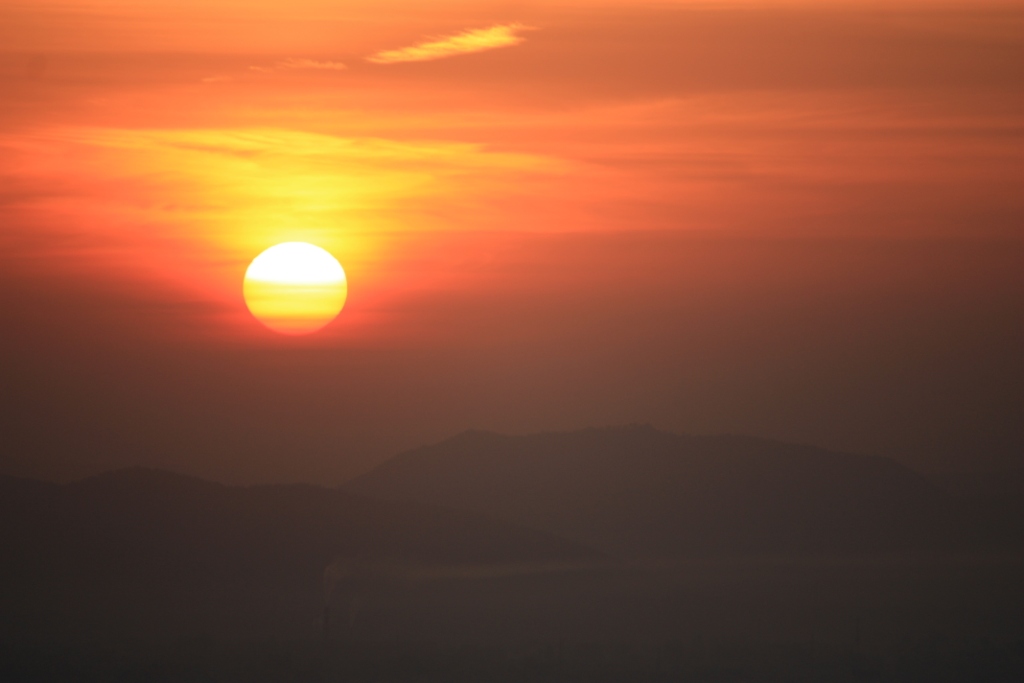
Painted Skies [Haiku]

the rising sun
paints from a vivid palette,
but - soon - skies cool 

Warm Morning Light [Common Meter]

My walk is in the early hours,
in dawn's buttery light.
There's a gold glint to all that's pale,
whether a wall of white
or waters of a placid lake
or eucalyptus trunks
or on the waving Pampas grass
or on the robes of monks.

And by the time I've lost that light,
the walking hour is done.
And I'll be looking forward to
when next the day is dun.

BOOK REVIEW: Native American Literature: A Very Short Introduction by Sean Teuton

Native American Literature: A Very Short IntroductionNative American Literature: A Very Short Introduction by Sean Teuton
My rating: 5 of 5 stars

Amazon.in Page

This VSI (Very Short Introduction) stimulates curiosity from its very title. One might be interested in, but not necessarily intrigued by, titles such as: “Native American Folklore,” or “Native American Mythology.” However, when one thinks of the world of Native American story and language-centric art, one is likely to first think of oral storytelling, and then, secondarily, about the immensely popular genre / commercial fiction of someone like Stephen Graham Jones. Even if one is aware of some of the Native American literary works that got widespread attention and praise, works such as Momaday’s “House Made of Dawn” or the poetry of Joy Harajo, one may wonder whether there’s the basis for such a broad overview style book.

That’s just the notion that this book seeks to challenge. That said, until the final two chapters, it doesn’t always feel like the topic is as advertised. That is to say, with the exception of chapter two — which discusses the oral storytelling of various Native American tribes, much of chapters one through five is historical and cultural background designed to provide context for the creation of a Native American literary canon, but without talking about the canon’s components much. Some of the questions addressed include: how Native tribes came to written language, in general, and then to the English language, specifically; how self-image of tribal peoples shifted over time (and how that impacted the nature of written works;) the nature of various strains of Native literature (e.g. literature of resistance v. literature of assimilation, and so on.)

I learned a lot from this brief guide. I’m not going to lie, it does have some sections that are dry and quite scholarly, but it also raises some interesting ideas while introducing the reader to books that will be wholly unfamiliar to some and largely unfamiliar to most.

If you’re interested in how Native American literature came to be, I’d recommend one check it out.


View all my reviews