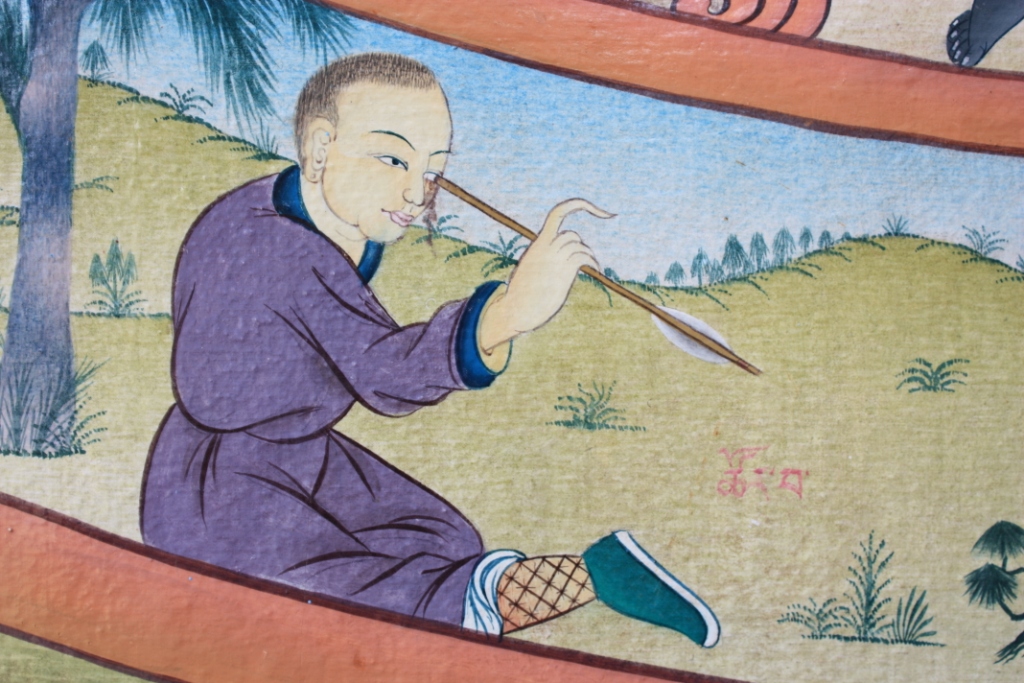
PROMPT: Hard Work

Daily writing prompt
In what ways does hard work make you feel fulfilled?

Hard work makes me feel full of aches and filled with pain. So full. So filled.

BOOK: “The Mind Electric” by Pria Anand

The Mind Electric: A Neurologist on the Strangeness and Wonder of Our BrainsThe Mind Electric: A Neurologist on the Strangeness and Wonder of Our Brains by Pria Anand
My rating: 5 of 5 stars

Publisher Site — Simon & Schuster

There are A LOT of pop neuroscience books out there that reflect upon what we know about the brain from what goes wrong with it. I thought I was done reading such books because, while the first few are fascinating, they tend to retell the same stories.

That said, I’m glad I read this one, and what made it worth reading was that the science was explored in a very personal way, and I don’t just mean that the author recited her own personal experiences or those of her patients (though she does both,) but rather that the whole book is imbued with her worldview. She relates maladies of the mind to works of literature, of Greek and Hindu mythology, and to other aspects of culture in a relatable manner.

Another factor that sets this book apart is that its author shows a passion for language. In that sense, it reminded me of the works of Oliver Sacks (who she references a number of times,) rather than your average — articulate but linguistically conservative — neuroscientist.

I’d recommend this book for any readers interested in neuroscience, particularly anyone looking for a book that sets itself apart from the crowd. (I don’t recall it even mentioning Phineas Gage, which I thought was a requirement of all such books.)

View all my reviews

A Strange Pain [Common Meter]

What is this thing I never saw
   that poked me from nowhere.
 I felt a pain that dripped insane
   and gave me quite a scare.

I know it came from outside-in,
   and not from bones or brain.
 And yet it's not a break, a bruise,
   a lesion, or a sprain. 

Some demon breached a ghost portal,
   and stabbed me from hell's pit
 with an inferno-fired poker...
   oh wait, I'm fine. It quit.

BOOK REVIEW: Hurts So Good by Leigh Cowart

Hurts So Good: The Science and Culture of Pain on PurposeHurts So Good: The Science and Culture of Pain on Purpose by Leigh Cowart
My rating: 5 of 5 stars

Amazon.in Page

Out: September 14, 2021

Humans devote a lot of effort to avoiding unpleasant sensations. I’ve even heard people philosophize that all human activity is about moving toward pleasure or away from pain, but this claim fails on two grounds. First, people don’t invariably flee from pain, sometimes they run into its arms. Second, the dichotomization of pleasure and pain, categorizing them as opposites, also fails for a wide variety of human endeavors.

This book reflects upon a diverse set of cases in which the pleasure-pain dichotomy breaks down, attempting to glimpse why this is the case. Cowart investigates pepper-eating contests, ultramarathons, Polar Bear Club mid-winter dips, flagellation by religious adherents, and sexual sadomasochism. One thing these diverse activities have in common is that individuals voluntarily and purposefully subject themselves to intensely painful sensations. Throughout the book, the author is forthright about the varied ways that she has been attracted to pain, including: ballet dancing, an eating disorder, and sexual masochism.

This book takes a story-centric approach. As the subtitle suggests, it does present scientific findings, but this information is tucked in amid the stories – both her own confessional tales and the stories of the masochists (broadly speaking, i.e. not referring only to sexual pain-seekers) she meets during her research trips.

As a student of both martial arts and yoga, I found that the changing of one’s perception of, and relationship to, sensation is one of the most profound and empowering aspects of these practices. I, therefore, was curious what brought people to the purposeful pursuit of pain and what benefits others found. Not surprisingly, there isn’t just one reason for all cases, and Cowart discusses neurochemical, social, and psychological reasons. If you’re curious about why people engage in pain purposefully and voluntarily, this book is a must-read.

View all my reviews

POEM: Agony’s Anchor

pain nails me to The Now

there is no pulling away

the only escape lies
in finding the drift,
riding the swells
until there is nothing
but those sacred undulations

POEM: Pleasure-Pain Principle Gone Awry

run to pleasure — run from pain
some call it the way to be sane
can you feel the wind in your hair?
lot of running — getting nowhere

you can’t catch happy — can’t flee sad
you’ll only find a passing fad
instead, reframe and remeasure
what is pain and what is pleasure

that’s where freedom lies

BOOK REVIEW: Pain: Considering Complementary Approaches by NCCIH

Pain: Considering Complementary ApproachesPain: Considering Complementary Approaches by National Center for Complementary and Alternative Medicine
My rating: 4 of 5 stars

Online here


The National Center for Complementary and Integrative Health (NCCIH) has put out a new edition (dated 2019) of its pamphlet (about 50 pages) about how useful various complementary practices are in helping patients reduce, or cope with, pain. The NCCIH is a center in the National Institutes of Health (NIH) that serves as a clearinghouse for information about how alternative and complementary practices perform in treatment of various ailments. While alternative (instead of mainstream medicine) and complementary (in conjunction with mainstream medicine) are quite different, in almost all cases this work herein is reporting on the latter basis. The complementary practices in question include: yoga, taiji, meditation and mindfulness, massage, acupuncture, chiropractic manipulation, relaxation methods, and others.

Complementary approaches to treatment of pain is a particularly salient topic these days as the mainstream medical approach (giving patients pills to gobble down) has resulted in what many have called a “crisis” of opiate addiction. So, if it’s possible to reduce the grip of pain with practices that at best have numerous other health benefits and at worst do no harm, than that’s a pretty good outcome.

Chapters three through eleven form the pamphlet’s core, and all but the last of those look at one complementary practice each, including (in order): acupuncture, massage, meditation, relaxation techniques, spinal manipulation, taiji (a.k.a. tai chi, or tai chi chuan), yoga, and dietary supplements and herbs. Chapter 11 discusses a few additional (less popular) practices. These chapters follow a three-prong approach: 1.) is it safe? 2.) does it help mitigate pain? and 3.) where can I find more information? [Spoiler alert: In almost all cases the answer to #1 is roughly “Yes, for most people, but possibly not for you. Check with your doctor,” and to #2 is usually something like: “there is some preliminary evidence that in certain cases certain people may have benefited.”] The chapters before (ch. 1 & 2) and after (ch. 12 to 14) provide background context and additional information.

On the positive side, it’s great that this information has been gathered together and packaged into a readable format with pictures and easy to read text.

On the down side, this was clearly a document put together by a committee of bureaucrats in consultation with lawyers. It is so laden with qualifiers and spongy speak that it’s impossible to discern how strong the evidence is for the various practices or how one compares to another. I felt that they could have given the same information in a three-column table in which the first column is the practice, the second column is “can’t hurt to try*” [*provided your physician concurs,] and the third column would be “nah, this stuff is fake.” [Spoiler alert: almost everything besides homeopathy would have the first column checked, but the consensus seems to be that homeopathy is pseudo-scientific quackery designed to sell water at medicinal prices.]

This booklet is available on the web for free, so if you’re interested, check it out. But don’t expect to come away with any profound insights. It’s not that kind of booklet.

View all my reviews

BOOK REVIEW: Prescriptive Stretching by Kristian Berg

Prescriptive StretchingPrescriptive Stretching by Kristian Berg
My rating: 4 of 5 stars

Amazon page


Many people have problems that they are only aware of through symptoms like head aches or back pain that result from imbalances in muscle tightness. This book explores stretching, systematically.

The book is divided into four parts. The first, entitled “Stretching Fundamentals,” presents fundamental principles and background information. Besides basic guidelines for stretching, it also discusses anatomy and physiology of the muscular system at a rudimentary level.

The second part is about targeted stretches, and it forms the heart of the book. This section, literally, goes from head to toe (and then back to the arms) explaining techniques for stretching major skeletal muscles. For some muscles, there is more than one stretch shown, but for others there is just one. Each entry on a muscle is divided into two parts. The first, “Muscle Facts,” describes the muscle, the causes of tightness, the symptoms of tightness, tests to gauge how tight the muscle is, and any precautions that should be considered when stretching the muscle. The second presents the stretching technique with a line drawing and mention of any mistakes to avoid. There are a mix of solo and partner stretches, as well as those using a ball.

The third part presents programs for pain relief. There’s a useful section that discusses morning aches and pains, and the ways in which one is sleeping might be leading to a crick in the neck or shoulder pain. This section not only lists the muscles that one should stretch to address various issues, but it gives little anatomical drawings in the context of the stretch that both help show what one is stretching and gives a reminder of the stretch.

I came to this book from the perspective of a yoga practitioner and teacher. If you’re wondering how these stretches differ from yoga, a major factor is that balance is taken out of the equation. The stretches in the book are done in a stable position. The downside of this is two-fold. First, if you want to build and maintain balance, you need to do an entirely separate set of exercises for that (depending upon the condition of the individual that could be necessary or a waste of time.) Second, one needs access to a wide range of equipment such as tables, adjustable benches, etc. (not to mention a partner, in some cases) to make these exercises work. The upside is that the individual is in a safe and stable position, so if they have poor balance they are at minimal risk.

The last section is one assessing flexibility and muscle balance. People think more about the former than the latter, but for most people, how balanced opposing muscle groups are probably contributes more to painful problems in the body. Because some muscles are easier to stretch than others, a book that shows how to get to the more challenging muscles is a great thing to have.

The ancillary matter includes a variety of graphics (mostly line drawings and anatomical drawings), a section upfront on the major components of the muscular and skeletal systems, and a references section in back.

I found this book to be useful and informative. I’d recommend it for individuals such as trainers, yoga teachers, athletes, and others who want to understand stretching at a level beyond technique.

View all my reviews

BOOK REVIEW: Piriformis Syndrome by Loren Fishman, M.D.

Piriformis Syndrome: Diagnosis, Treatment, and Yoga: Pain in the ButtPiriformis Syndrome: Diagnosis, Treatment, and Yoga: Pain in the Butt by Loren Fishman
My rating: 4 of 5 stars

Amazon page


This short book (<50pp.) describes piriformis syndrome, what causes it and how it’s diagnosed and treated. Piriformis Syndrome is a malady in which a nerve is pinched by the piriformis muscle. Because of the way pain (and other sensations) radiate, it’s not necessarily easy to differentiate this syndrome from a low back injury. However, the descriptions of the specifics of this condition, and the test used to diagnose, it may give one insight as to whether one is looking in the right direction for the cause of one’s butt and leg pain.

One nice feature of this book is that it explains how yoga can be used both as part of the treatment regimen and as a preventive measure. The yogic treatment consists of just four classical postures of Hatha Yoga: Janu Shirshasana (head to knee pose), Parivrtta Trikonasana (twisted triangle pose), Matsyendrasana (a simple twisting pose named for a sage), and Parivrtta Parsvakonasana (twisted side angle pose.) However, yoga teachers who have students who’ve been diagnosed with this condition will find it nice that the book gives modifications and clarifications pertaining to use of the postures to help such people.

There are seven chapters in the book. The first describes the condition and its cause. The second chapter explains the connection between the condition of piriformis syndrome and the symptom of sciatica. Chapter three clarifies the ways in which this condition may be misdiagnosed, and this is followed up by the chapter that shows how it is diagnosed by both physical examination and by imaging technology. Chapter five gives a basic overview of the available treatment options including injections, drugs, physical therapy, surgery, and yoga. The next chapter talks about the state of research. The last chapter explores the yoga asana that can be used to help treat or prevent piriformis syndrome. There are a few graphics. These include line drawings such as of the diagnostic physical exam, and photos of modified versions of the yoga postures.

I’d recommend this book for those who’ve been diagnosed with this ailment, who believe they might have it, but also for yoga teachers who are interested in expanding their understanding of the afflictions of which their students may suffer—so as to be prepared to help them or, at least, not hurt them.

View all my reviews

POEM: The Pain

img_1863


pain advances its speary phalanx
i watch–a dispassionate witness
like some Buddha once told me to
it’s sour march is not so daunting


and yet it makes for cruel, cruel masters
kicking at a puppy for peeing on the rug
when everyone knows a puppy is a lovable bundle of carpet-peeing madness
its service to help one see the beauty entwined in all happenings despised
elsewise, how might one learn the futility of despising?